
See a Demo
You're just one step away from seeing Call Loop in action.
Enter your information below to watch a demo right now.

You're just one step away from seeing Call Loop in action.
Enter your information below to watch a demo right now.

If you want to pack your event, you can't just blast out a few emails and hope for the best. A truly successful, sold-out event starts with a rock-solid foundation, built long before you even think about sending that first invite.
This is all about getting inside the heads of your target audience, figuring out what makes them tick, and crafting a message so compelling they’d feel crazy to miss out.
Trying to promote an event without a crystal-clear picture of your ideal attendee is like shouting into the void. A packed house begins with strategy—specifically, understanding who you want in those seats.
This goes way beyond basic demographics. We're talking about building detailed attendee personas that uncover their real-world motivations, their biggest professional headaches, and what they're desperately hoping to get out of an event like yours.
This is where the real magic happens. It’s your chance to create a value proposition so sharp that your ideal attendees feel like the event was made just for them.
First things first: get specific. Don't just target "marketing managers." Instead, picture "Sarah, a 32-year-old marketing manager at a mid-sized tech startup who’s struggling to prove ROI on her campaigns and is looking for actionable analytics strategies."
See the difference? This level of detail helps you nail down the important stuff:
A quick pre-event survey or a look at the data from your past events can give you a goldmine of information to build these personas. This is how you ensure your content, your marketing copy, and your promotion channels all hit the mark.
Once you know who you're talking to, you have to give them a damn good reason why they should show up. Your value proposition is the core promise you're making, and it needs to be laser-focused on the benefits.
A strong value prop isn't a boring list of features; it screams outcomes.
Instead of saying, "Our event features ten expert speakers," reframe it as, "Learn proven strategies from ten industry leaders to cut your marketing spend by 20% while increasing leads."
That simple tweak shifts the focus from what your event is to what your event does for the attendee. It directly answers their unspoken question: "What's in it for me?"
Before we go further, let's boil this down. Your entire attendance strategy rests on these core pillars.
Here's a quick look at the fundamental strategies for boosting event attendance from the ground up.
Nailing these three elements sets the stage for every promotional tactic that follows.
Finally, you need a finish line. Set clear, realistic attendance goals that will guide your entire promotional strategy. Don't just pull a number out of thin air; base your goals on past event data, your venue's capacity, and what your marketing budget can realistically support.
Think about these key metrics:
The events industry is booming, with the global market projected to hit a staggering $1,346.92 billion in 2025. With 59% of attendees saying they prefer in-person formats and two-thirds feeling more positive about a brand after an event, the opportunity is massive. Setting precise goals helps you get your slice of that pie. You can discover more insights about the growing event industry to see just how big the opportunity is.
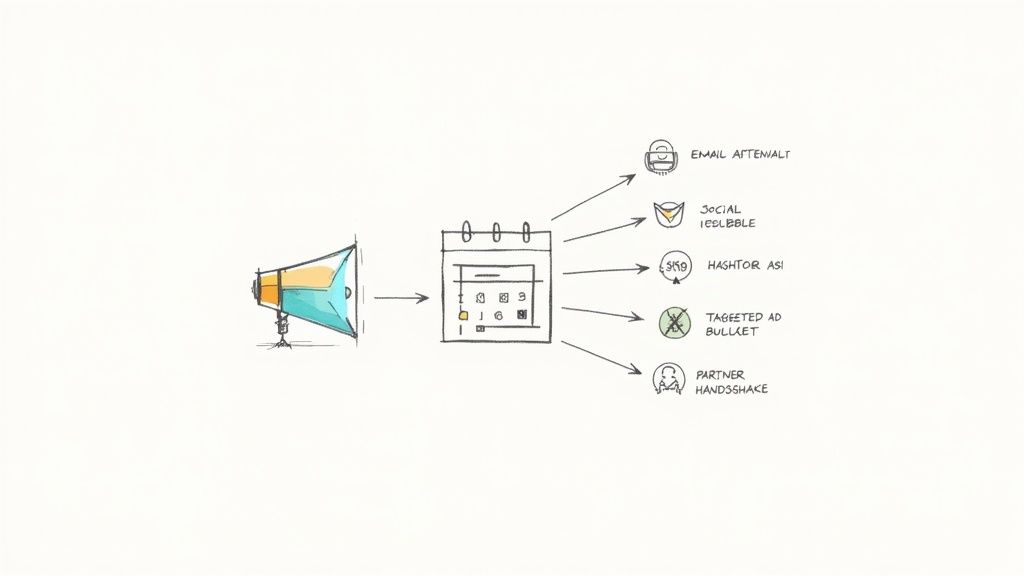
Once you’ve got a solid foundation—clear personas, a compelling value proposition, and smart goals—it's time to shift gears and actually get the word out. To really move the needle on event attendance, you can't just lean on one channel. You need to build a coordinated, multi-channel promotional engine where every part works together to meet your audience right where they are.
This isn't about blasting the same generic message everywhere. It's about tailoring your communication for each platform. Think nurturing interest with a powerful email sequence, grabbing attention with hyper-targeted social media ads, and cutting through the noise with direct outreach. It's a full-on playbook for timing your messages, segmenting your lists for maximum impact, and writing copy that turns clicks into actual registrations.
This simple flowchart breaks down the process: nail down your personas, define the value, set your goals, and then launch your promotion.
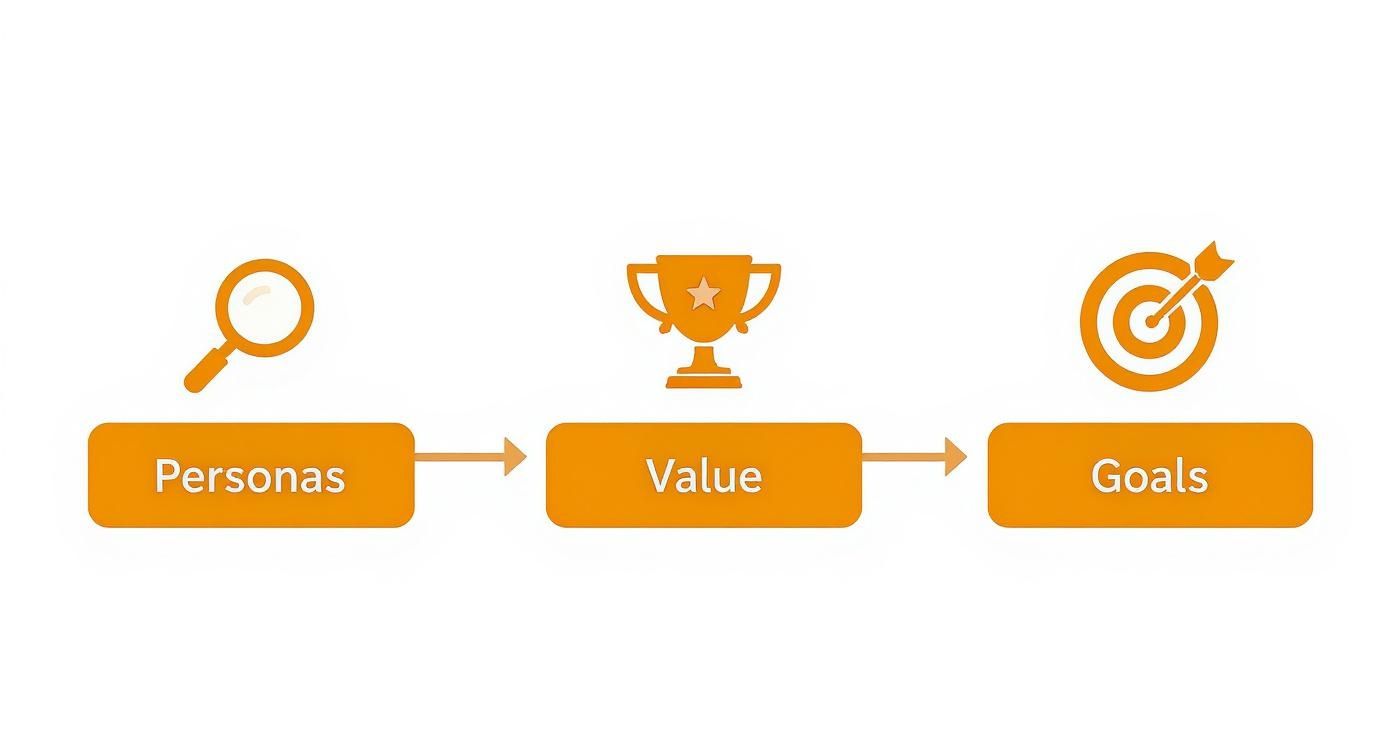
It’s a visual reminder that a killer promotional plan starts with a deep understanding of who you're talking to and what they actually care about.
Despite all the noise out there, email marketing is still an absolute powerhouse for event promotion. In fact, studies consistently show that 95% of marketers hit their main business goals using email. It's your direct line to an audience that's already raised their hand and shown interest in what you do.
The real secret to a winning email strategy is segmentation and sequencing. Don't just send every email to your entire list. That’s a recipe for unsubscribes. Instead, break your audience into smarter groups:
Your email sequence should tell a story. Kick things off with a big announcement, then follow up with speaker spotlights, agenda highlights, and powerful testimonials. As deadlines get closer, ramp up the urgency to push people to take action.
Social media is your playground for creating buzz and reaching way beyond your existing audience. The trick is to combine a steady drumbeat of organic content with a laser-focused paid advertising plan.
On the organic side, share behind-the-scenes glimpses, run polls asking what people are most excited to see, and create a branded event hashtag. This gets people talking and encourages user-generated content, which builds a genuine community around your event.
For paid ads on platforms like LinkedIn or Instagram, put those detailed personas you built to work. You can target people by job title, industry, interests, and even company size. This makes sure your ad spend is working as hard as possible.
And don't sleep on the power of partnerships. Find complementary businesses, speakers, or industry influencers who have the ear of your target audience. You can offer them a cross-promotional deal, like a unique discount code for their followers in exchange for a shout-out on their channels. It’s a classic win-win.
In a world of overflowing inboxes and endless social feeds, sometimes a direct approach is what you need to stand out. This is where channels like SMS and innovative voice messaging come in. Text messaging is a beast for time-sensitive updates, boasting open rates as high as 98%.
You can use SMS for things like:
To get the full rundown on how to manage group messaging, you can send a mass text without losing that personal touch.
For your high-value contacts—think VIPs or potential sponsors—consider using a ringless voicemail drop. This cool tech delivers a pre-recorded message straight to their voicemail without their phone ever ringing. It's way less intrusive than a cold call but feels much more personal than another email. A short, enthusiastic message from the event host can build a real connection and make the recipient feel like a big deal.
By layering these different channels, you create a comprehensive plan that ensures your message is heard, seen, and felt. For a deeper dive, check out these proven event marketing strategies.
The days of one-size-fits-all events are officially over. Your potential attendees have higher expectations now; they want flexible ways to join in and, more importantly, they want experiences that feel like they were made just for them. Bumping up your attendance numbers means you have to fundamentally rethink your event's design to meet these modern demands.
This isn't just about adding a few bells and whistles. It’s about using data to make every single touchpoint—from the first email to the final Q&A—feel personal and uniquely valuable. This is how you turn a generic conference into an unmissable experience.
Personalization is so much more than just sticking {{first_name}} in an email subject line. Real personalization means digging into the data you already have—like past attendance history, survey answers, or job titles—to customize the entire event journey for each person.
Imagine sending a targeted email to a past attendee that says, "Hey, we know you loved the advanced marketing track last year, so here’s a sneak peek at the expert sessions we’ve lined up for you this time." That simple gesture shows you're paying attention and makes them feel seen. It’s a small detail with a huge impact on your bottom line; in fact, 96% of marketers say personalized experiences have directly increased their sales. You can discover more insights about event statistics on Swoogo.
To get started, you can use tools for sending personalized SMS messages to share session recommendations or exclusive networking invites based on an attendee's registered interests. Small, thoughtful touches like these can dramatically improve the attendee experience and push registrations over the line.
Not every event needs to be a massive, sprawling conference. Actually, there's a growing hunger for smaller, more focused get-togethers called micro-events. These events zero in on a specific niche within your broader audience, which allows for deeper connections and way more targeted content.
Think about trying formats like these:
These smaller events are often easier to plan and promote, and they create a sense of exclusivity that big conferences just can't replicate. They're powerful touchpoints for building loyalty and can even act as lead generators for your flagship event.
Micro-events are less about scale and more about substance. They provide a forum for genuine conversation and relationship-building, which is a powerful draw for attendees tired of being just another face in a massive crowd.
Today's attendees, especially the younger crowd, care deeply about the values of the brands and events they support. One of the biggest priorities on the rise is sustainability. An event's environmental impact isn't an afterthought anymore; for many, it's a deal-breaker.
Showing your commitment to sustainability can be a powerful way to increase event attendance. This can include things like:
Just be sure to communicate these efforts loud and clear in your marketing. Showing that your event's values align with your attendees' can be the final push someone needs to click "register," turning your principles into a real competitive advantage.
Getting someone to click "register" is a huge win, but let's be real—it's only half the battle. A registration doesn't guarantee a person in a seat, whether it's in a conference hall or a Zoom room. Now comes the critical part: bridging the gap between that initial "yes" and getting them to actually show up, ready to participate.
This is all about a smart, thoughtful strategy to keep your event top-of-mind and build some genuine excitement. You have to nurture that early interest and turn it into that "can't-miss" feeling. It’s about making your future attendees feel seen and prepped long before the doors ever open.
That window between registration and event day is your golden opportunity to crush no-show rates. An automated sequence of reminders, spread across a few different channels, is easily your most powerful tool here. The goal isn’t to spam people, but to consistently provide value and build momentum.
Think of it as a pre-event journey you’re guiding them on. This sequence should be a smart mix of practical info and exciting teasers. A multi-channel approach works best:
This blend of channels makes sure your message cuts through all the noise. For a deeper dive into the nuts and bolts, learn how to set up automated text message reminders to keep your audience locked in.
Every single reminder you send is a chance to reinforce why your event is worth their time. Generic "don't forget!" messages are destined for the trash folder. Reminders that deliver real value, on the other hand, get attention.
Your content could include sneak peeks of exclusive presentations, behind-the-scenes photos of the setup, or introductions to key people they can network with. This simple shift turns a boring reminder into a piece of content they actually want to see, building a much stronger connection.
A great reminder doesn't just say, "See you on Tuesday." It says, "Get ready for Tuesday—here’s a sneak peek at the exclusive Q&A with our keynote speaker that you won't want to miss."
See the difference? It reframes a logistical message into a hype-building moment. You're reminding them why they signed up in the first place and making them genuinely eager for the event to finally start.
Once your attendees have arrived, the focus pivots to creating an experience that's interactive and memorable. An engaged attendee is way more likely to come back next year and tell all their friends about it. The key is to make it easy and rewarding to participate.
Here are a few tactics I’ve seen work wonders for sparking on-site (and virtual) engagement:
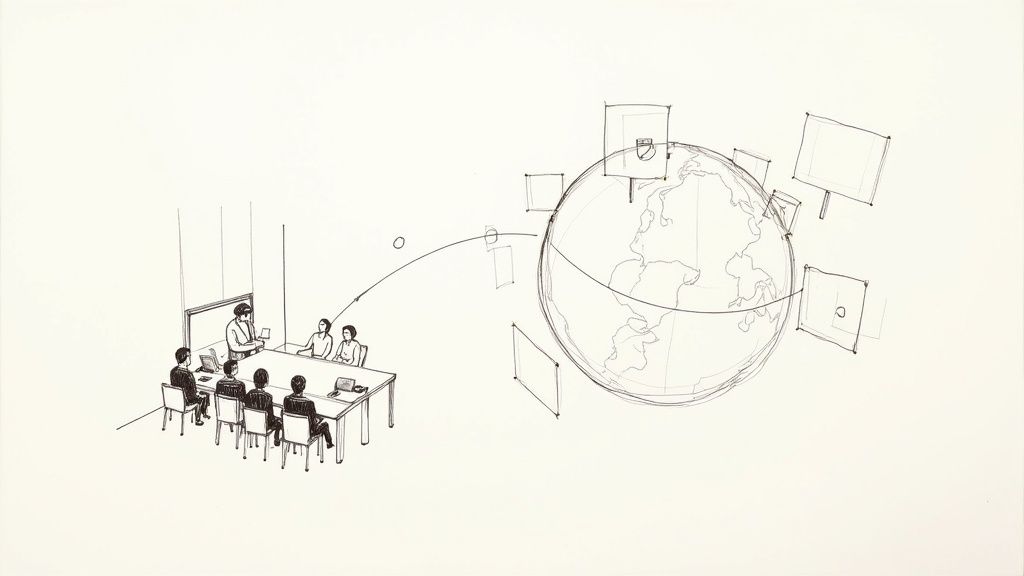
Why cap your attendance at whatever your venue’s fire code allows? If you really want to blow the lid off your registration numbers, you need to think beyond physical walls. Bringing in a virtual component lets you smash through geographical barriers and open your doors to a global audience.
Going hybrid isn't about replacing the magic of an in-person event. It's about amplifying it.
You immediately tap into a whole new group of people—those who can't travel because of budget, time, or other commitments. Your event transforms from a single-location gathering into a worldwide conversation. That’s how you build a more inclusive and accessible experience for everyone.
Deciding between in-person, virtual, or a hybrid model is one of the first big calls you'll have to make. Each format has its own strengths and weaknesses, and the right choice really depends on your specific goals, audience, and budget. Here’s a quick breakdown to help you figure out which path makes the most sense for your event.
Ultimately, the best format aligns with what you want to achieve. A hybrid model offers incredible flexibility, but it requires a solid strategy to pull off well.
The success of your hybrid event hinges on tech that feels seamless for everyone, both in the room and online. A clunky, unreliable setup will kill the vibe for your remote audience in a heartbeat, so picking the right tools is a must. Your focus should be on reliability, ease of use, and features that spark interaction.
Here’s what you absolutely need in your toolkit:
Virtual elements aren’t just a nice-to-have anymore; they’re a core strategy for maxing out attendance. Projections show that 74.5% of event planners will be running hybrid formats by 2025, with the virtual event market expected to hit an insane $236.69 billion. Technology is driving this shift, and 44% of pros believe AI will be the next big thing to shape events. You can dig into more of these key event industry statistics to see where things are headed.
This is where a lot of organizers trip up. They just point a camera at the stage and call it a day. That’s not a hybrid event; that’s a webinar with a live studio audience.
To really nail it, you have to design your content for both groups from the ground up. Think about creating experiences that feel native to each format.
A traditional hands-on workshop, for instance, probably won't work well for someone watching on a screen. Instead, you could create a separate, fully digital workshop with interactive tools built for an online audience. It's also a great idea to have a dedicated virtual host whose only job is to engage with the remote attendees, manage their Q&A, and make them feel seen.
The goal isn’t to run two separate events. It’s to create one cohesive experience that people can join in two different ways. When your virtual attendees feel just as valued as the folks in the room, they’ll stay engaged and keep coming back.
Even with all this high-tech wizardry, a simple, personal touch can make a huge difference. This is where something like direct voice messaging really shines.
Think about using a ringless voicemail drop to send a personalized welcome from the event host to all your VIPs—both in-person and virtual—the day before the show.
A quick, energetic message like, "Hey, [Name]! Just wanted to say how excited we are to have you joining us for [Event Name] tomorrow, whether you're here in the room or online. Get ready for an amazing day!" This tiny gesture feels exclusive and helps build a real connection with your most important attendees, no matter where they are. It’s a simple way to create a unified, welcoming vibe that boosts engagement from the get-go.
You've built the strategy, you've designed the experience, but let's be real—questions always pop up when you're deep in the trenches of event promotion. Getting straightforward, practical answers is what separates a smooth final push from a last-minute scramble.
We've rounded up some of the most common questions we hear from event organizers. From picking the right channels to nailing your timing, these are the insights you need to turn those well-laid plans into a sold-out success.
Everyone's looking for that one magic bullet, but the truth is, it doesn't exist. The most effective approach is always a coordinated, multi-channel strategy.
Sure, email marketing is a powerhouse for reaching an audience that already knows you, but its impact multiplies when you layer in other channels. Social media is fantastic for building buzz, partner marketing blows up your reach, and a well-timed text or call can cut straight through the noise.
The right mix is all about your audience. A B2B tech conference will live on LinkedIn and in targeted email inboxes. A local music festival? That's going to thrive on Instagram, Facebook, and partnerships with community influencers. The golden rule is simple: show up where your people already are.
This one really depends on the scale of your event. If you're running a large conference where people need to book flights and get budget approvals, you need to start your promotion four to six months out. Anything less and you're rushing your attendees.
For smaller local events, workshops, or webinars, you can get away with a much shorter runway—think four to eight weeks. A solid timeline usually starts with an early-bird announcement to test the waters, followed by a steady drumbeat of content revealing speakers and sessions, and then a final "last chance" blitz in the last two weeks. Pro tip: always build in a buffer for those inevitable curveballs.
The single biggest mistake you can make is starting too late. A longer runway gives you time to build real momentum, nurture leads, and actually use registration data to adjust your strategy. It’s the difference between a controlled campaign and a panic attack.
Ah, the dreaded no-show. The key to reducing them is to keep the excitement and sense of value high after someone has already signed up. An automated reminder sequence isn't just nice to have; it's non-negotiable. Start with an instant confirmation, then hit them up a week before, the day before, and even an hour before go-time.
But don't just send boring logistical reminders. Use these touchpoints to build anticipation:
For free events, this is even more critical. Gently remind people about the limited spots and ask them to cancel if their plans change. It’s a small courtesy that makes a huge difference in your final attendance numbers.
Absolutely. Ringless voicemail is a killer tool for adding a personal, human touch without being disruptive. It's not for blasting your entire list; it's for making your most important segments feel special. Think past VIPs, confirmed speakers, or high-value sponsors.
One of my favorite plays is sending a personal welcome message from the event host a few days out. It feels incredibly exclusive and builds a connection that an email just can't match. Another great tactic is a short, energetic reminder the day before. Keep it brief: "Hey [Name], it's [Your Name] from [Event]. Just wanted to say how excited we are to see you tomorrow at 9 AM. Get ready for a great day!" It’s a tiny effort that powerfully reinforces their decision to attend.
For an even deeper dive into what works, check out these more proven strategies for increasing event attendance to really guarantee a packed house.
Chris Brisson
Chris is the co-founder and CEO at Call Loop. He is focused on marketing automation, growth hacker strategies, and creating duplicatable systems for growing a remote and bootstrapped company. Chat with him on X at @chrisbrisson


Trusted by over 45,000 people, organizations, and businesses like


