
See a Demo
You're just one step away from seeing Call Loop in action.
Enter your information below to watch a demo right now.

You're just one step away from seeing Call Loop in action.
Enter your information below to watch a demo right now.

In today's fast-paced market, connecting with customers requires more than just email. To truly capture attention and drive action, businesses must adopt a multi-channel approach that meets customers on their preferred platforms. This means moving beyond traditional methods and embracing a more dynamic, personalized, and automated set of customer communication strategies.
From the immediacy of SMS to the personal touch of voice and the non-intrusive impact of ringless voicemail, the tools available can change how you engage your audience. However, simply using these channels is not enough; success lies in a cohesive strategy that integrates them effectively.
This comprehensive guide will explore 10 actionable strategies that small to medium-sized businesses, healthcare providers, event organizers, and ecommerce brands can implement immediately. You will learn to scale your outreach, improve engagement, and see measurable results. We will cover practical applications, compliance considerations like HIPAA and DNC, and automation techniques that save time while delivering a superior customer experience. Prepare to modernize your communication and build stronger, more profitable customer relationships.
Effective customer communication strategies today must meet customers where they are. Multi-channel messaging integration achieves this by unifying SMS, voice calls, and ringless voicemail into a single, cohesive workflow. Instead of managing separate tools for each channel, this approach uses one platform to orchestrate campaigns, ensuring a consistent brand voice and a seamless customer journey. This method is fundamental because it allows a business to adapt its outreach to the situation and the customer's preference, significantly improving engagement rates.
A truly integrated strategy goes beyond just using different channels; it sequences them intelligently. For instance, an ecommerce store could send an SMS with a flash sale promotion. For customers who don’t click the link within a few hours, a ringless voicemail could be automatically delivered, adding a personal touch to the reminder without being intrusive. This coordinated follow-up is impossible when your communication tools are siloed.
Healthcare providers can also use this for HIPAA-compliant patient engagement. An automated SMS can remind a patient of an upcoming appointment. If the appointment is high-value, like a specialist consultation, a follow-up voice broadcast can provide pre-procedure instructions, ensuring the patient is fully prepared.
To get started with a unified messaging approach, consider these steps:
Moving beyond generic, one-size-fits-all messages is crucial for effective customer communication strategies. Personalization and dynamic content accomplish this by tailoring messages to individual customers using data-driven insights. This approach uses custom fields and merge tags to make each person feel individually recognized by addressing them by name, referencing specific interests, or citing their history with your business. The result is communication that feels relevant and personal, dramatically boosting engagement.
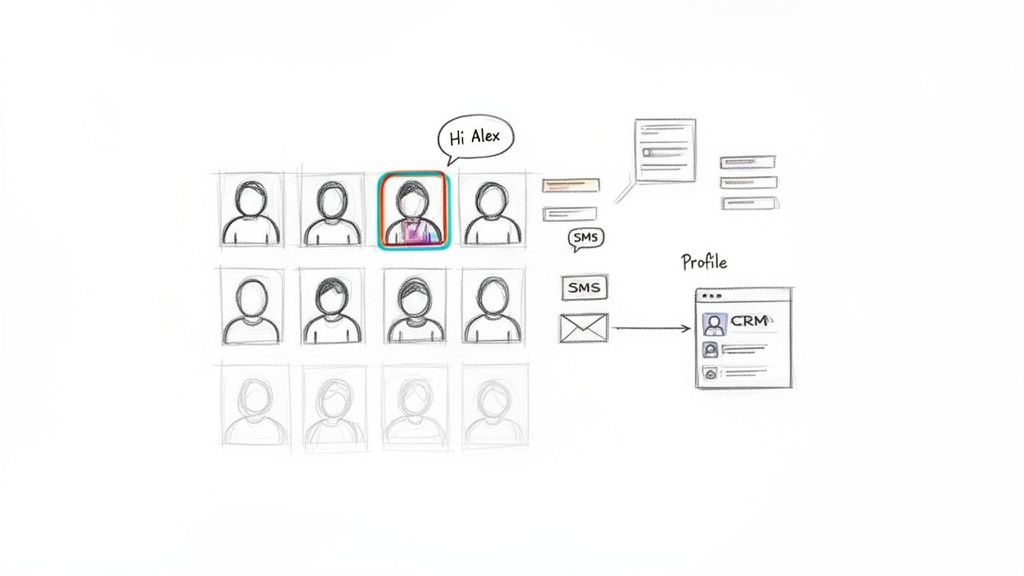
Dynamic content pulls information directly from your customer database into your messages. For an ecommerce store, this could mean sending a text that reads, "Hi [FirstName], we noticed you looked at our [ProductCategory] collection. It's back in stock with a [DiscountPercent]% discount just for you." This level of detail shows you are paying attention to their individual journey.
This strategy is also highly effective in service-based businesses. A karate studio can automate class reminders with a personalized touch: "Hi [FirstName], a friendly reminder that your [DayOfWeek] class with [InstructorName] starts soon at [Time]." Similarly, healthcare providers can send HIPAA-compliant appointment confirmations like, "Hi [PatientName], this confirms your appointment with Dr. [DoctorName] on [Date] at [Time]." Each message feels like a one-to-one conversation, building trust and reducing no-shows.
To begin using personalization effectively in your customer outreach, follow these steps:
[FirstName]) and one other key identifier, like a product name or appointment time.[FirstName]," immediately breaks the personal connection.One of the most powerful customer communication strategies is automating a series of coordinated messages sent at specific intervals or triggered by customer actions. Drip campaigns nurture leads gradually, maintain engagement, and guide customers through predetermined journeys without manual intervention. This strategic approach automates SMS, voice, and ringless voicemail sequences with precise timing and logic-based triggers, ensuring consistent and timely follow-up.

A well-designed drip campaign moves a contact from initial interest to conversion and beyond. For example, a real estate agent can set up a sequence that starts the moment a lead inquires about a property. An immediate SMS confirms the inquiry, followed by an automated voice call a day later to offer a personal connection. If unanswered, a ringless voicemail can be sent on day three, and a final SMS with new property listings arrives on day seven.
SaaS companies can apply this to user onboarding. A new user might receive a welcome SMS, a text on day two with a link to a tutorial, a personalized voice check-in on day five, and a ringless voicemail on day ten offering advanced tips. This keeps users engaged and helps them discover the product’s value.
To create effective automated sequences, follow these steps:
Blanket messaging rarely works because not all customers are the same. A data-driven approach to customer communication strategies involves segmentation, which divides your audience into distinct groups based on shared characteristics. By tailoring your messaging to each segment, you ensure that every communication is relevant, personal, and far more likely to get a response. This method moves beyond one-size-fits-all broadcasts to deliver value that resonates with specific customer needs, behaviors, and lifecycle stages.
Effective segmentation means your messages feel like a one-to-one conversation. For example, a karate studio can create separate campaigns for different member types. "Trial students" might receive an SMS with a special sign-up offer, "active members" could get a ringless voicemail about an upcoming belt test, and "inactive members" might receive a "we miss you" text after 30 days of absence. Each message addresses a specific relationship with the business.
Similarly, an ecommerce brand could segment customers by purchase frequency. High-value, frequent buyers might get exclusive access to new products via text, while first-time buyers receive a follow-up SMS with a discount on their next purchase. This targeted approach makes customers feel understood and valued, which builds loyalty and drives repeat business.
To start using segmentation without getting overwhelmed, follow these steps:
One of the most effective customer communication strategies is using SMS keywords to generate opt-ins and enable direct engagement. This method uses a specific word (the keyword) and a number (a short code or long code) to let customers initiate contact. When a customer texts a keyword like "DEAL" to your number, they are explicitly opting into your marketing list, creating a clear record of consent and a direct line for future communication. This approach is powerful because it's permission-based, customer-initiated, and simplifies compliance.
Keyword marketing turns passive interest into active engagement. A fitness studio can place a sign at their front desk that says, "Text CLASS to 12345 for schedule updates and class reminders." Members who opt-in receive timely information, reducing no-shows and improving class attendance. Similarly, an ecommerce store could promote "Text VIP to 12345" across their website and social media to build an exclusive list for flash sales and special offers.
Healthcare providers can also use this for patient communication. A clinic could use the keyword "APPT" for appointment confirmations or "INFO" for patients to request office hours and location details. This automates routine inquiries, freeing up administrative staff while providing patients with instant answers. Each keyword can trigger a unique automated response, delivering relevant information immediately.
To get started with SMS keyword marketing, focus on a clear and simple execution:
Ringless voicemail is a powerful communication strategy that delivers a pre-recorded audio message directly to a customer's voicemail inbox without their phone ever ringing. Recipients simply see a voicemail notification and can listen at their convenience, avoiding any disruption. This method effectively merges the personal touch of a voice message with the non-intrusive nature of a text, making it ideal for important announcements and follow-ups. It is a key part of modern customer communication strategies because it commands attention without being intrusive.
This technique, also known as a ringless voicemail drop or direct-to-voicemail messaging, is especially useful when a message is too nuanced for SMS but doesn't require a live conversation. For example, a real estate agent can send a ringless voicemail to qualified leads announcing a new, high-demand listing. The agent's voice conveys excitement and urgency in a way that plain text cannot, prompting immediate interest.
Similarly, collections agencies use this tool to send professional account status updates in a discreet manner. The message is delivered without a confrontational live call, giving the recipient the space to process the information and respond according to the provided instructions. Sales teams also find it valuable for following up with high-value decision-makers, leaving a personal, no-pressure message that stands out from a crowded email inbox.
To get started with ringless voicemail for impactful messaging, consider these steps:
A sound customer communication strategy is built on a foundation of trust and legal adherence. Prioritizing compliance means protecting your business from costly violations while respecting customer consent through transparent practices like double opt-in verification. This approach involves managing do-not-call (DNC) lists, documenting consent accurately, and following all relevant regulations to build strong, positive relationships with your audience.
Rather than just collecting a phone number, a compliance-focused strategy confirms a contact's willingness to receive messages. For example, after a customer signs up for SMS updates on a website form (the first opt-in), they receive an automated text asking them to reply "YES" to confirm their subscription. This second confirmation, or double opt-in, creates an indisputable record of consent.
Healthcare providers use this for HIPAA-compliant communications. A patient might verbally agree to receive appointment reminders, but sending a confirmation text that requires a "YES" reply documents their express written consent. Similarly, a marketing agency must ensure its clients' campaigns meet TCPA requirements, using double opt-in to validate every contact before sending promotional SMS or ringless voicemail drops.
To integrate compliance into your communication workflows, follow these steps:
A data-driven approach is essential for modern customer communication strategies. Real-time analytics and performance tracking provide the insights needed to measure campaign effectiveness, understand customer engagement, and refine your outreach. Instead of guessing what works, this strategy uses concrete data on delivery rates, engagement metrics, and ROI to make informed decisions and optimize campaigns quickly.
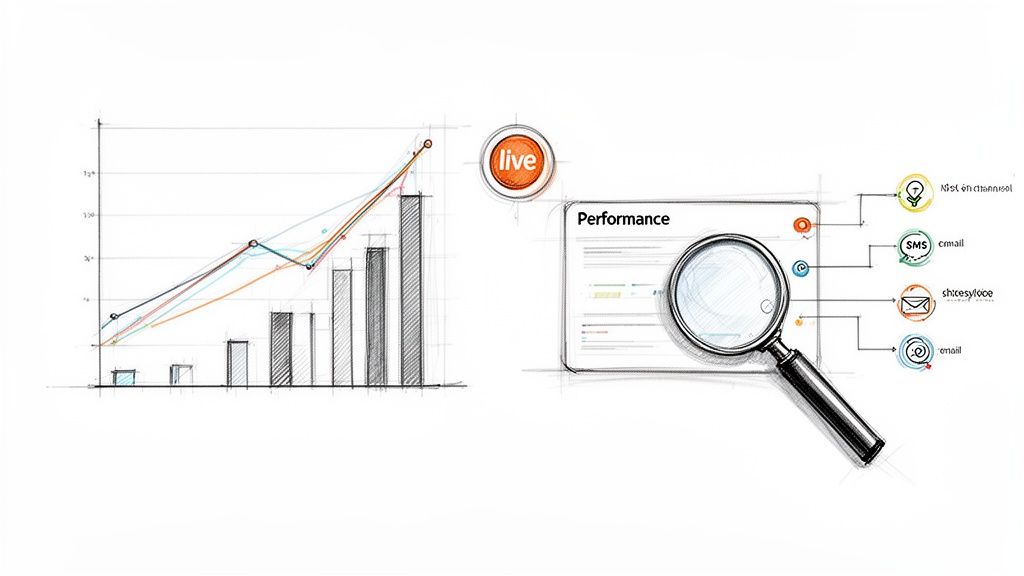
Tracking performance in real-time allows businesses to react and adapt instantly. An ecommerce store can monitor the revenue generated per SMS campaign, identifying which promotional offers resonate most with specific customer segments. If a campaign underperforms, the team can immediately pause it and reallocate the budget to a proven winner.
For event organizers, analytics reveal which reminder channel drives the highest attendance. They might find that a ringless voicemail drop 24 hours before an event results in a 15% higher attendance rate than an email sent at the same time. This data provides a clear path for maximizing future event turnouts. Sales teams can track click-through and conversion rates from their SMS follow-up sequences to pinpoint the most effective messaging and timing.
To build a data-centric communication workflow, apply these practical steps:
Powerful customer communication strategies depend on connecting your messaging tools with your core business systems. CRM integration and workflow automation achieve this by linking SMS, voice, and ringless voicemail platforms directly to your Customer Relationship Management (CRM) software. This connection enables automated communication sequences that trigger based on specific customer actions or data updates, eliminating manual tasks and ensuring every interaction is timely and relevant. This approach is essential for scaling personalized outreach and maintaining a single source of truth for all customer data.
A well-integrated system makes your CRM the command center for customer communication. For example, a real estate agent using a CRM can have a new lead entry automatically trigger a welcome SMS message. If the lead doesn't respond within a day, the system could send a follow-up ringless voicemail from the assigned agent, adding a personal touch without interrupting the prospect's day.
This automation is also perfect for ecommerce. A customer who abandons their cart in a Shopify store can be automatically added to a multi-step SMS reminder sequence. The first message might offer a simple reminder, while a second message sent 24 hours later could include a small discount code to encourage them to complete their purchase. Each step is logged back to the CRM, giving the support team full context.
To get started with integrating your communication and CRM platforms, consider these steps:
Voice broadcasting is a powerful customer communication strategy that delivers pre-recorded audio messages to large contact lists, offering speed and scale. By incorporating an Interactive Voice Response (IVR) system, this one-way broadcast becomes a dynamic, two-way conversation. This combination allows businesses to not only inform but also to gather feedback, qualify leads, and route customers by enabling them to respond using their phone’s keypad. It is a critical tool for high-priority messages where you need to capture immediate attention and prompt a direct action.
Voice broadcasting with IVR automates outbound calling and response handling. For example, a financial institution can send an automated voice call to a customer about a suspicious transaction. The message can instruct them to "press 1 to confirm this was you, or press 2 to speak with our fraud department immediately," providing instant resolution and security. This is far more immediate than an email that might go unread for hours.
Similarly, a political campaign can broadcast a get-out-the-vote message and ask recipients to press 1 if they plan to vote, press 2 if they need a ride to the polls, or press 3 to be removed from the list. This interaction gathers valuable data and segments the audience for targeted follow-up, all from a single automated call.
To effectively launch a voice broadcast and IVR campaign, follow these guidelines:
We've explored a powerful set of ten distinct customer communication strategies, moving from high-level concepts to practical, on-the-ground implementation. The journey from a generic "blast" approach to a finely tuned, multi-channel dialogue is not about adopting every single tactic at once. Instead, it’s about making deliberate, incremental improvements that compound over time to build stronger, more profitable customer relationships.
The core lesson is that effective communication is a system, not an isolated event. It begins with understanding your audience through segmentation, respects their inbox with proper compliance and opt-in verification, and engages them on their preferred terms using a mix of SMS, voice, and even ringless voicemail. Each message, whether a simple appointment reminder or part of a complex automated sequence, is a reflection of your brand.
To turn these ideas into results, focus on these central themes. These are the cornerstones of modern customer communication strategies that deliver tangible outcomes.
Integration is Non-Negotiable: Your channels must talk to each other. A customer who responds to an SMS should not receive a redundant voice call moments later. Integrating your messaging platform with your CRM is the first step toward creating a single, coherent customer view and automating workflows that save time and prevent errors.
Personalization Drives Engagement: Moving beyond [First Name] is critical. Use dynamic content based on purchase history, appointment dates, or membership status. This level of detail shows you see your customers as individuals, not just entries in a database, dramatically improving response rates.
Compliance Builds Trust: Adhering to regulations like HIPAA and DNC list requirements isn't just about avoiding fines; it's about demonstrating respect for your customers' privacy. A clear, double opt-in process and easy-to-use opt-out commands are fundamental to building long-term trust and brand loyalty.
Measurement Guides Improvement: You cannot improve what you don't measure. Pay close attention to KPIs like delivery rates, click-through rates, response rates, and conversion rates for each channel. This data provides the objective feedback needed to refine your message timing, content, and channel selection.
Feeling overwhelmed by the options? Don't be. The most successful businesses start small and build momentum. Here is a simple, actionable path forward:
Pick One High-Impact Use Case: Don't try to boil the ocean. Is your biggest pain point appointment no-shows? Start with an automated SMS reminder sequence. Struggling with event attendance? Implement a campaign combining SMS alerts with a high-impact ringless voicemail drop 24 hours before the event.
Establish Your Baseline: Before you begin, know your current numbers. What is your current no-show rate or webinar attendance rate? This baseline will allow you to accurately measure the impact of your new communication strategy.
Deploy and Monitor: Launch your chosen campaign. Use a platform that provides clear, real-time analytics to track performance from day one. Watch how your audience responds and be prepared to make small adjustments.
Mastering these customer communication strategies is what separates businesses that merely exist from those that grow and thrive. It's about creating a system that works for you, automating the routine tasks so you can focus on building genuine connections. Each text, call, and voicemail is an opportunity to strengthen that bond. By choosing the right tools and applying these proven methods, you can build a communication engine that not only reaches your audience but truly resonates with them, turning one-time buyers into lifelong advocates.
Ready to put these strategies into action? Call Loop provides the all-in-one platform to seamlessly manage your SMS, voice, and ringless voicemail campaigns. Start your free trial today and see how easy it is to automate, personalize, and measure your customer communications.
Chris Brisson
Chris is the co-founder and CEO at Call Loop. He is focused on marketing automation, growth hacker strategies, and creating duplicatable systems for growing a remote and bootstrapped company. Chat with him on X at @chrisbrisson


Trusted by over 45,000 people, organizations, and businesses like


