You're just one step away from seeing Call Loop in action. Enter your information below to watch a demo right now.
8 Customer Retention Strategies for Small Businesses
Chris Brisson
on
August 15, 2026
Acquiring a new customer can cost five times more than retaining an existing one. For small businesses, this is not just a statistic; it is the key to sustainable growth. In a competitive market, keeping your hard-won customers coming back is not about grand gestures. It is about smart, consistent, and personalized communication that builds lasting loyalty.
The core challenge is moving from theory to practice. You know retention is important, but what specific actions can you take that actually make a difference? This article breaks down eight proven customer retention strategies for small business, focusing on actionable steps you can implement today. We will move beyond generic advice and dive into practical tactics that deliver measurable results for businesses of all types, from ecommerce stores and marketing agencies to healthcare providers and karate studios.
We will explore how leveraging multi-channel messaging, including SMS, voice, and even powerful tools like ringless voicemail, can transform your customer relationships. The goal is to build a loyal base that fuels your long-term success. To deeply understand the financial and relational benefits of keeping your current clientele, explore these powerful customer retention strategies for small business before we dive into our own list.
In the following sections, we will detail how to implement personalized communication, loyalty programs, win-back campaigns, and more. Each strategy includes implementation steps, key metrics to track, and real-world examples, providing a clear blueprint for boosting your customer retention and, ultimately, your bottom line.
1. Personalized Multi-Channel Communication
One of the most effective customer retention strategies for small business owners is to move beyond generic, one-size-fits-all broadcasts. Personalized multi-channel communication involves using customer data to send highly relevant messages across SMS, email, and voice channels. This tailored approach ensures your customers feel seen and valued, receiving the right message on the platform they prefer, which significantly boosts engagement and long-term loyalty.
Instead of sending the same text blast to everyone, you can segment your audience based on their purchase history, preferences, or engagement level. For small businesses, this strategy creates a powerful connection that larger competitors often miss. It’s about making each customer feel like they are having a one-on-one conversation with your brand, even when you're communicating at scale.
How to Implement This Strategy
Segment Your Audience: Group customers based on meaningful criteria. For example, an ecommerce store could create segments for "first-time buyers," "VIP customers," and "customers who haven't purchased in 90 days."
Leverage Merge Tags: Use custom fields like [FirstName] or [LastPurchase] to dynamically insert customer-specific details into your messages. This simple step transforms a generic message into a personal note.
Automate Triggers: Set up automated campaigns that respond to customer actions. A new purchase could trigger a thank you SMS, while a birthday could trigger a special offer via email and a follow-up ringless voicemail.
Key Insight: The goal is to deliver value through relevance. A personalized message that acknowledges a customer's history with your business is far more impactful than a generic promotion.
Real-World Examples
Healthcare Providers: An orthodontic office sends an automated SMS reminder to a patient named Sarah that says, "Hi [Sarah], just a friendly reminder of your appointment tomorrow at 2 PM with Dr. Smith. Please reply YES to confirm." This reduces no-shows and provides a better patient experience.
Karate Studios: A studio segments its members by belt level. It sends a targeted SMS notification only to the "Intermediate" group about an upcoming advanced seminar, avoiding irrelevant messages to beginners.
Ecommerce: A Shopify store sends a personalized ringless voicemail to a high-value customer: "Hi [David], this is Mark from [Store Name]. We saw you just purchased the X1 Pro drone. We have a new advanced battery pack that just arrived, and we wanted you to be the first to know. Check your email for a special 15% off code just for you."
This kind of targeted outreach is a cornerstone of modern customer retention. By building automated sequences that feel personal, you can nurture customer relationships without manual effort. Exploring marketing automation workflows can show you how these pieces fit together.
2. Automated Appointment Reminders and Follow-ups
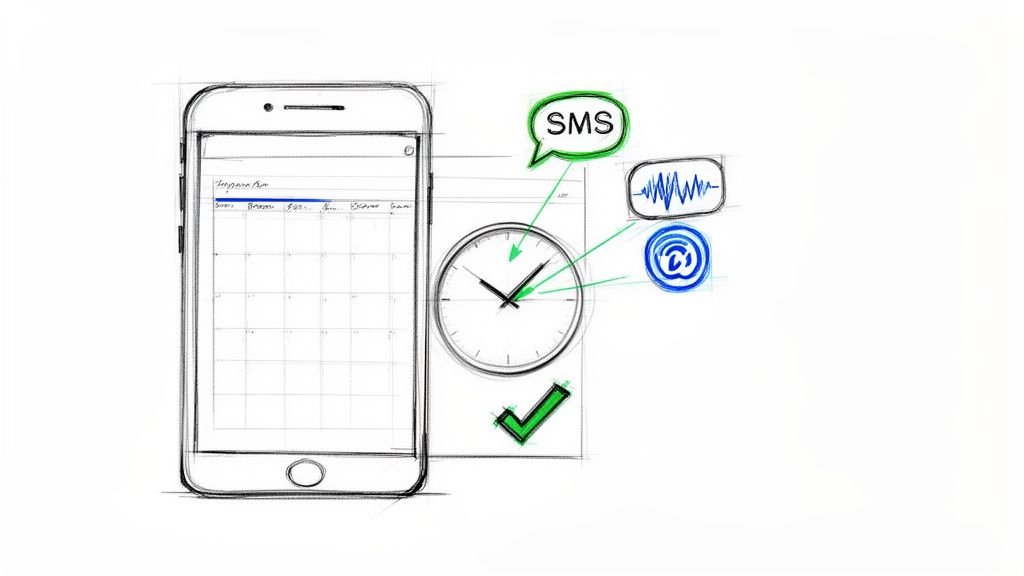
For any service-based small business, no-shows and last-minute cancellations can be a significant drain on revenue and resources. Automated appointment reminders and follow-ups are a powerful customer retention strategy that directly tackles this issue by using scheduled SMS, voice, and ringless voicemail to confirm upcoming appointments. This proactive communication not only drastically reduces no-shows but also shows customers you value their time and commitment.
This strategy ensures that your business stays top-of-mind and helps clients feel prepared and appreciated. For small businesses, automating this process frees up valuable staff time that would otherwise be spent on manual reminder calls, allowing your team to focus on delivering excellent service instead of administrative tasks. It's a simple yet highly effective way to improve operational efficiency and reinforce customer relationships.
How to Implement This Strategy
Integrate with Your Calendar: Connect your scheduling software (like Google Calendar) to an automation platform. This allows reminders to be triggered automatically when an appointment is booked, without any manual data entry.
Create a Multi-Channel Sequence: Set up a workflow that sends reminders across different channels at strategic times. For instance, an email confirmation upon booking, an SMS reminder 24 hours before, and a ringless voicemail follow-up post-appointment.
Enable Two-Way Communication: Allow customers to confirm, cancel, or reschedule directly by replying to your SMS reminders (e.g., "Reply YES to confirm"). This interactivity simplifies the process for them and provides you with real-time updates.
Key Insight: Consistency is crucial. An automated, reliable reminder system builds trust and sets a professional standard that customers appreciate, making them more likely to return.
Real-World Examples
Healthcare Providers: A dental practice sends an automated voice call reminder two days before a cleaning: "Hello [Jessica], this is a reminder of your appointment with Dr. Evans on [Date] at [Time]. Please press 1 to confirm." This helps minimize costly gaps in their schedule.
Karate Studios: A studio sends a group SMS to all "Advanced Class" members 24 hours before their session. This simple text boosts attendance and ensures students come prepared.
Webinar Hosts: To maximize live attendance, a business coach schedules an automated SMS with a login link to be sent 15 minutes before their webinar begins, ensuring attendees can join easily.
By implementing a robust reminder system, you can significantly improve attendance and customer accountability. This is a foundational tactic for service-based businesses looking to build a loyal customer base. You can explore a complete guide to reduce no-show appointments to further refine this strategy.
3. Customer Loyalty Programs with SMS Engagement
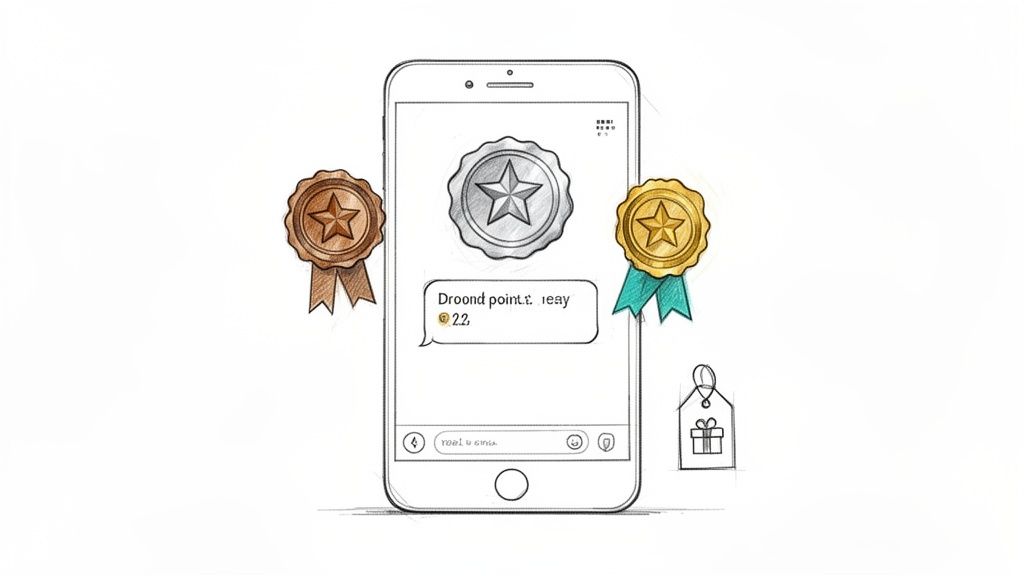
One of the most powerful customer retention strategies for small business owners is creating a loyalty program that lives where your customers are: their phones. SMS-based loyalty programs reward repeat customers with points, discounts, or exclusive perks delivered directly through text messaging. This approach incentivizes repeat purchases and fosters a sense of community, significantly increasing customer lifetime value.
Unlike email-based programs that can get lost in a crowded inbox, SMS notifications are immediate and have near-perfect open rates. For small businesses, this creates a direct and highly effective channel to acknowledge and reward loyalty. You can automate updates, point notifications, and member-only offers, keeping your best customers engaged and motivated to return.
How to Implement This Strategy
Simplify Enrollment: Use a "text-to-join" keyword (e.g., "Text REWARDS to 555-1234") to make signing up effortless for customers in-store or online.
Automate Reward Notifications: Set up triggers to send an instant SMS notification when a customer earns a reward. For example, a text saying, "Congrats [FirstName]! You just earned a free coffee on your next visit," provides immediate positive reinforcement.
Create Tiered Benefits: Encourage higher spending by offering escalating rewards. A simple bronze, silver, and gold tier system can motivate customers to reach the next level for better perks.
Send Exclusive SMS-Only Deals: Make your loyalty members feel special by sending offers that aren't available to the general public. This reinforces the value of being in the program.
Key Insight: An SMS loyalty program turns a transactional relationship into an interactive one. Immediate rewards and exclusive access make customers feel like valued insiders, not just another number.
Real-World Examples
Coffee Shops: A local cafe sends an automated SMS after a customer's fifth purchase: "You did it, [Maria]! Your 6th coffee is on us. Show this text to your barista to redeem. Thanks for being a regular!"
Retail Stores: A boutique uses tiers to reward its best customers. When a member reaches the "Gold" tier, they receive a ringless voicemail: "Hi [Jenna], it's Sarah from [Boutique Name]. I just wanted to personally thank you for being one of our top customers. You've officially reached Gold status, which means you get 20% off all new arrivals for the rest of the year. Welcome to the club!"
Restaurants: A family restaurant announces a "Double Points Weekend" exclusively to its SMS loyalty members, driving a surge in reservations and repeat business during a typically slow period.
It costs significantly more to acquire a new customer than to retain an existing one, which is why win-back campaigns are a crucial customer retention strategy for small business owners. This approach involves systematically targeting customers who have become inactive or "lapsed" over a specific period, typically 30 to 90 days. Using automated drip campaigns across SMS, voice, and ringless voicemail, you can re-engage these dormant segments with special incentives and reminders of your brand’s value.
Rather than letting past customers fade away, a win-back campaign gives you a direct line to reignite their interest. For a small business, this is an efficient way to recover lost revenue and gather valuable feedback on why customers may have left. A well-timed message with a compelling offer can be all it takes to bring them back into the fold, turning a potential loss into a renewed relationship.
How to Implement This Strategy
Segment Inactive Customers: Identify and group customers based on how long they've been inactive. Create lists for 30, 60, and 90+ days to tailor your offers and messaging intensity accordingly.
Create a Multi-Touch Sequence: Don't rely on a single message. Build an automated sequence that starts with a gentle "we miss you" SMS, followed by a more personal ringless voicemail for high-value customers, and finally an email with a time-sensitive offer.
Test Different Incentives: Experiment with various offers to see what works best. This could be a percentage discount (e.g., 25% off), a free product with their next purchase, or exclusive access to new inventory.
Key Insight: A customer who has purchased before is already familiar with your brand and products. Re-engaging them is often a lower-cost, higher-conversion effort than starting from scratch with a cold audience.
Real-World Examples
Ecommerce: An online clothing boutique sets up an automated trigger. If a customer hasn't purchased in 60 days, they receive an SMS: "Hi [FirstName], we miss you at [Store Name]! To welcome you back, here's 30% off your next order. Use code COMEBACK30. Expires in 72 hours!"
Fitness Studios: A yoga studio identifies members whose passes expired two months ago. They send a personalized ringless voicemail: "Hi [Sarah], it's Jen from [Studio Name]. We haven't seen you in class lately and wanted to offer you a special renewal rate of 15% off your next 10-class pass. We'd love to see you on the mat again!"
SaaS Platforms: A subscription-based software company targets users who canceled their service. After 30 days, they send an email and a follow-up SMS asking for feedback and offering a free month to entice them to reactive their account.
By systematically identifying and reaching out to lapsed customers, you can reclaim lost revenue and strengthen your overall customer base. Automated tools make it easy to set up these sequences, allowing you to focus on running your business while your system works to bring customers back.
5. Educational Content and Value-Based Messaging
One of the most powerful customer retention strategies for small business owners is to provide consistent value beyond your products or services. Educational content and value-based messaging involve sharing useful information, tips, and insights that help your customers, establishing your brand as a trusted expert. This approach shifts the relationship from purely transactional to one built on trust and mutual benefit, keeping your business top-of-mind.
Instead of constantly pushing for the next sale, this strategy focuses on nurturing your audience by helping them solve problems or achieve goals. When you regularly deliver genuine value through SMS, email, or voice channels, customers are more likely to turn to you when they are ready to buy. It’s a long-term play that builds a loyal community around your brand.
How to Implement This Strategy
Establish a Content Calendar: Plan your value-based messages in advance to ensure consistency. A simple calendar can help you map out weekly tips, monthly insights, or seasonal advice.
Segment for Relevance: Not all content is relevant to every customer. Segment your audience to send targeted information. For example, a fitness studio could send nutrition tips to one group and advanced workout techniques to another.
Use the Right Channel for the Content: Keep SMS messages short and impactful, perhaps with a link to a longer blog post or video. Use ringless voicemail to deliver a more personal, in-depth audio tip that feels exclusive.
Ask for Feedback: Engage your audience by asking them what topics they want to learn more about. This not only provides you with content ideas but also makes customers feel heard and valued.
Key Insight: Retention is built between purchases. By becoming a reliable source of information, you create a deeper connection that price and promotions alone cannot replicate.
Real-World Examples
Healthcare Providers: A chiropractic clinic sends a weekly SMS with a link to a short video demonstrating a new stretch to alleviate back pain. This positions them as a proactive partner in their patients' wellness journey.
Fitness Studios: A yoga studio sends a motivational ringless voicemail to members at the start of the week: "Hi [FirstName], this is Jane from [Studio Name]. Just a little motivation for your week: remember that every practice is progress. We’d love to see you in class soon!"
Digital Agencies: An agency sends a monthly "marketing minute" via SMS to its clients, highlighting a new social media trend or a quick tip for improving their online presence. This reinforces their expertise and value.
By focusing on education, you transform your marketing from an interruption into a welcome resource. This value-first approach is a cornerstone of modern customer loyalty and one of the most effective customer retention strategies for small business success.
6. Feedback and Survey Campaigns for Continuous Improvement
One of the most powerful customer retention strategies for small business owners is actively listening to their audience. Feedback and survey campaigns allow you to systematically gather customer insights, identify pain points before they cause churn, and demonstrate a genuine commitment to improvement. By using channels like SMS and voice, you make it easy for customers to share their thoughts, turning feedback into a conversation rather than an interrogation.
This approach transforms customer service from a reactive function into a proactive growth engine. Instead of waiting for complaints, you are actively seeking opportunities to enhance your products, services, and overall customer experience. This not only provides invaluable data but also makes customers feel heard and valued, strengthening their emotional connection to your brand.
How to Implement This Strategy
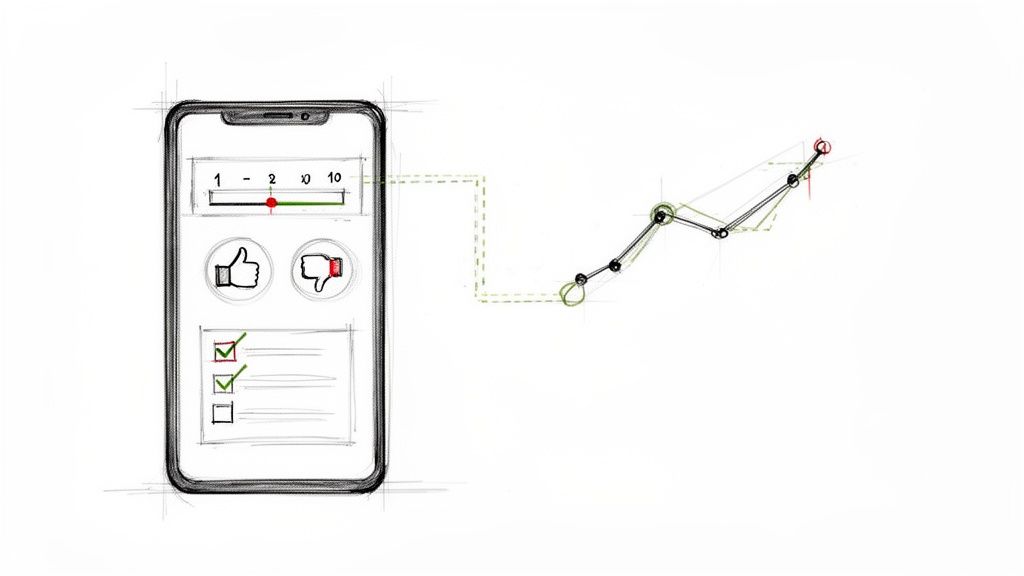
Choose the Right Survey Type: Use Net Promoter Score (NPS) surveys quarterly to gauge overall loyalty. Send short, targeted satisfaction (CSAT) surveys via SMS immediately after a specific interaction, like a purchase or support ticket resolution.
Keep It Simple on SMS: For text-based surveys, limit questions to one or two. Use simple response formats like "Reply YES/NO" or "Rate your experience from 1 to 5." This maximizes completion rates on mobile devices.
Automate the Follow-Up: Trigger surveys automatically after key customer actions. More importantly, create automated workflows to respond to feedback. A low score could trigger a notification for a team member to make a personal follow-up call, while a high score could trigger an automated thank you message with a small discount.
Key Insight: The goal of collecting feedback is not just to listen, but to act. Closing the loop by communicating the changes you've made based on customer suggestions is what truly builds loyalty and trust.
Real-World Examples
Service Businesses: A home cleaning service sends an automated SMS 24 hours after an appointment: "Hi [FirstName], how would you rate your cleaning service today on a scale of 1-10? Your feedback helps us improve!" A response below 7 triggers an alert for the manager to call the customer personally.
Healthcare Providers: A dental clinic sends a post-visit SMS survey to gather patient satisfaction feedback. This helps them monitor their quality of care and address any issues, which is a key part of their patient retention efforts.
SaaS Platforms: A software company sends a ringless voicemail to its power users: "Hi [Jennifer], this is Kevin from [SaaS Company]. We're exploring new reporting features and would love your expert opinion. We just sent an email with a link to a quick survey. Your feedback is incredibly valuable to us."
7. Proactive Customer Service and Problem Resolution
One of the most powerful customer retention strategies for small business owners is to shift from reactive to proactive service. Proactive customer service involves anticipating customer needs and addressing potential issues before they escalate. Instead of waiting for a customer to complain about a late shipment or a billing error, you reach out first with information and solutions using SMS, email, and voice channels.
This approach transforms the customer experience from one of frustration to one of appreciation. By sending automated order confirmations, shipping updates, and service alerts, you demonstrate that you are on top of the details and value their business. This level of care builds immense trust and loyalty, significantly reducing customer churn and turning potential problems into positive interactions.
How to Implement This Strategy
Automate Key Communications: Set up automated workflows for common events. An ecommerce purchase should immediately trigger an SMS confirmation, followed by another message with tracking information once the order ships.
Anticipate and Alert: Identify common friction points and address them proactively. If a subscription payment is about to fail, send an automated text alert with a link to update billing information, preventing service interruption.
Use the Right Channel for Urgency: Use SMS for timely updates like shipping notifications or appointment reminders. For more critical issues, like a significant service outage or a complex billing problem, a direct voice call or ringless voicemail can provide a more personal and reassuring touch.
Key Insight: Proactive service turns customer support from a cost center into a loyalty-building engine. Solving a problem before the customer even knows it exists is a memorable experience that larger competitors often fail to deliver.
Real-World Examples
Ecommerce: A Shopify store sends an automated SMS: "Hi [Jessica], great news! Your order #12345 has just shipped. You can track it here: [Link]. It should arrive in 3-5 business days." This prevents "Where is my order?" inquiries.
Service Businesses: An HVAC company sends a ringless voicemail to clients in a specific zip code: "Hi, this is Mike from [Company Name]. We've noted a severe weather warning for your area tomorrow. To prevent system strain, we recommend setting your thermostat to 78 degrees. Stay safe!"
Subscription Services: A subscription box service sends a text message five days before a customer's credit card on file is set to expire: "Hi [Sam], a quick heads-up from [Service Name]. Your card on file ends in [XX/XX]. Please update it here to ensure you get your next box on time: [Link]."
By getting ahead of problems, you control the narrative and reinforce customer trust. This approach is fundamental to turning customer support into a profit center and is a key driver of long-term retention. You can learn more about how to turn customer support into a profit center for your business.
8. Exclusive VIP/Premium Customer Programs
Rewarding your most valuable customers is a powerful customer retention strategy for small business owners. Creating an exclusive VIP or premium customer program makes your best clients feel recognized and appreciated, encouraging them to continue doing business with you. This tiered approach involves offering special perks, early access, and personalized service that aren't available to the general customer base.
This strategy focuses on the Pareto principle, the idea that roughly 80% of your revenue comes from 20% of your customers. By identifying and nurturing this crucial segment, you fortify your relationship with the customers who have the biggest impact on your bottom line. It builds a sense of belonging and exclusivity that transforms loyal customers into passionate brand advocates.
How to Implement This Strategy
Define VIP Criteria: Clearly establish how customers qualify. This could be based on annual spending, purchase frequency, customer lifetime value, or the number of successful referrals.
Communicate the Benefits: Once a customer qualifies, send them a personalized welcome message via SMS and email that outlines their new perks. Make them feel special from the very beginning.
Create Exclusive Communication Channels: Use dedicated SMS keywords or lists for your VIPs. Send them offers and updates before anyone else, reinforcing their elite status.
Offer Tangible Perks: Provide benefits that have real value, such as early access to new products, exclusive discounts, free shipping, or invitations to special events.
Key Insight: A successful VIP program isn't just about discounts. It's about creating an elevated experience and a sense of community that makes your best customers feel truly valued for their loyalty.
Real-World Examples
Ecommerce: A Shopify store offers its VIP members free two-day shipping on all orders and 24-hour early access to major sales events, notified first via a targeted SMS blast.
Fitness Studios: A yoga studio provides VIP members with priority booking for popular classes, a free monthly guest pass, and a personal check-in call from the owner to discuss their progress.
Subscription Services: A coffee subscription box sends its premium members an exclusive "roaster's choice" blend each quarter and a personalized ringless voicemail from the founder thanking them for their continued support.
By segmenting your top-tier customers, you can use automated yet personal touchpoints to deliver a premium experience. A well-timed, exclusive offer sent via text or a congratulatory ringless voicemail can significantly strengthen these critical relationships, ensuring your most important customers stick around for the long haul.
8-Point Comparison: Small Business Retention Strategies
Strategy
Implementation complexity
Resource requirements
Expected outcomes (ROI)
Ideal use cases
Key advantages
Personalized Multi-Channel Communication
Medium
Clean customer data, segmentation, multi-channel platform, initial data organization
High — personalized messages often show 50–80% higher engagement
Protects top revenue drivers; increases loyalty and spending; enables premium pricing
Start Building Unbreakable Customer Loyalty Today
You've just navigated through a comprehensive roundup of powerful customer retention strategies for small business, each designed to transform one-time buyers into lifelong advocates. We’ve explored everything from the deep impact of personalized multi-channel communication to the revenue-recovering power of automated win-back campaigns. The journey has taken us through the mechanics of engaging loyalty programs, the importance of proactive customer service, and the value of exclusive VIP experiences.
The central theme connecting all these tactics is a fundamental shift in perspective. Instead of pouring all your resources into the endless chase for new leads, you can achieve more sustainable and profitable growth by focusing on the customers you already have. Retention is not a passive outcome; it's an active, ongoing process of delivering exceptional value and building genuine relationships.
The Power of Consistent, Automated Engagement
One of the most significant takeaways is that modern technology allows you to scale personal connections. Small businesses no longer need to choose between high-touch service and efficient operations. By integrating tools for SMS, voice calls, and even non-intrusive ringless voicemail drops, you can automate critical touchpoints without sacrificing the authenticity that makes your business unique.
Imagine systematically re-engaging every inactive customer, automatically reminding every client of their appointment, or instantly delivering a valuable piece of educational content to your entire customer base. These aren't complex, enterprise-level dreams; they are accessible and actionable customer retention strategies for small business that you can implement today. The key is to start small, choose one or two strategies that align with your immediate goals, and build from there.
Key Takeaways for Immediate Action
To turn these ideas into tangible results, focus on these core principles:
Prioritize Personalization: Use the data you have to make every customer feel seen and understood. Address them by name and send messages that reflect their history with your brand.
Embrace Automation: Leverage technology to handle repetitive but crucial tasks like appointment reminders, feedback requests, and follow-ups. This frees you to focus on high-value interactions.
Be Proactive, Not Reactive: Don't wait for a customer to complain or leave. Reach out with helpful content, check in after a purchase, and solve potential problems before they escalate.
Measure Everything: Track your Customer Lifetime Value (CLV), churn rate, and Net Promoter Score (NPS). Data will tell you which of your retention efforts are making the biggest impact.
Ultimately, building unbreakable customer loyalty is the most reliable path to long-term success. It creates a stable foundation of recurring revenue, generates powerful word-of-mouth marketing, and insulates your business from market volatility. The strategies outlined in this article provide the blueprint. Now is the time to select your tools, define your first campaign, and start investing in the relationships that will define your future. Your most valuable asset is the customer base you’ve already earned; nurturing it is your greatest opportunity.
Ready to put these strategies into motion? Call Loop provides the powerful SMS, voice, and ringless voicemail tools you need to automate your communication and build lasting customer relationships. Start your free trial today and see how easy it is to implement these effective customer retention strategies for small business.
Chris Brisson
Chris is the co-founder and CEO at Call Loop. He is focused on marketing automation, growth hacker strategies, and creating duplicatable systems for growing a remote and bootstrapped company. Chat with him on X at @chrisbrisson
On this page
Share this article
Trusted by over 45,000 people, organizations, and businesses like