
See a Demo
You're just one step away from seeing Call Loop in action.
Enter your information below to watch a demo right now.

You're just one step away from seeing Call Loop in action.
Enter your information below to watch a demo right now.

Drip marketing is the engine of modern automated outreach, turning one-time interactions into lasting customer relationships. It's the art and science of sending a pre-written sequence of messages to leads or customers over time, but what does a successful strategy look like in practice? This guide moves beyond theory to showcase 10 powerful, multi-channel drip marketing examples you can implement today. We’ll break down the strategy, triggers, and messaging for each campaign, focusing on channels like SMS, voice, and even ringless voicemail that cut through the noise.
While many guides focus solely on email, the most successful sequences often integrate multiple touchpoints. To understand the foundational strategies behind successful sequences, delve into the specifics of effective drip email campaigns to see how that channel fits into a broader plan. Here, we expand on that foundation to show how businesses leverage platforms like Call Loop to automate welcome sequences, recover abandoned carts, nurture leads, and re-engage dormant customers using a full communication stack.
You will see how to build automated campaigns that drive measurable results, complete with timeline diagrams, sample copy, and step-by-step implementation notes. Prepare to learn not just the 'what,' but the 'how' and 'why' behind building automated systems that convert. From appointment reminders to win-back flows, each example provides a replicable blueprint for growth. Let's explore the specific tactics that make these campaigns work.
A welcome series is a foundational drip campaign that engages new contacts right after they join your list, make a purchase, or sign up for a service. This automated sequence is your first, best chance to make a strong impression, establish your brand’s voice, and guide new customers toward key actions. These campaigns are one of the most effective drip marketing examples because they capitalize on the moment of highest interest, building immediate rapport and setting clear expectations.
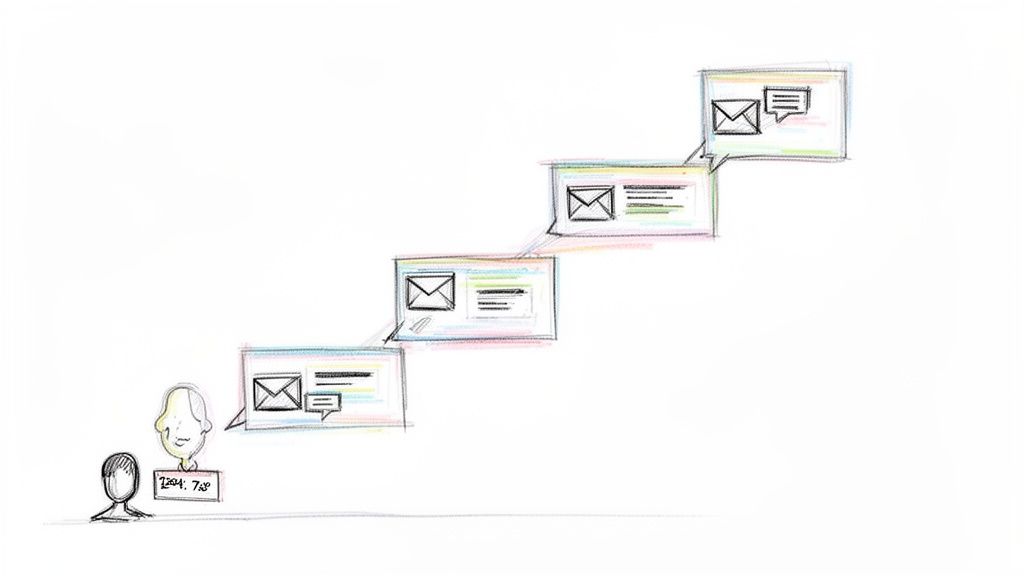
This multi-channel approach often spans 5-7 days and mixes SMS, voice calls, and even ringless voicemail to create a rich onboarding experience without overwhelming the user. The goal is to nurture the initial spark of interest into a long-term relationship. If you're new to this concept, you can learn more about the fundamentals of a drip marketing campaign and how it functions.
A new patient schedules their first appointment online. A well-designed welcome series can reduce no-shows and prepare them for their visit.
“Hi [Patient Name], your appointment with Dr. Smith is confirmed for [Date] at [Time]. We look forward to seeing you!”“Hello [Patient Name], this is Sarah from Dr. Smith’s office. We’re excited to welcome you. Please remember to bring your insurance card and a list of current medications to your visit. Have a great day!” This adds a human touch without being intrusive.“Save time at your visit! Complete your new patient paperwork here: [link]”“Friendly reminder of your appointment tomorrow at [Time] with Dr. Smith. Please reply C to confirm.”Strategic Takeaway: Combining different communication channels makes the welcome sequence feel more personal and important. A ringless voicemail, for example, can convey warmth and critical information in a way that a simple text message cannot. This multi-touch strategy ensures key information is received and acknowledged.
An abandoned cart recovery campaign is a targeted drip sequence designed to re-engage customers who add items to their shopping cart but leave without completing the purchase. This automated workflow uses timely, incremental messages to remind shoppers of what they left behind, often layering in incentives to motivate them to finish the checkout process. This strategy is one of the most profitable drip marketing examples for e-commerce because it targets users with high purchase intent, recovering revenue that would otherwise be lost.
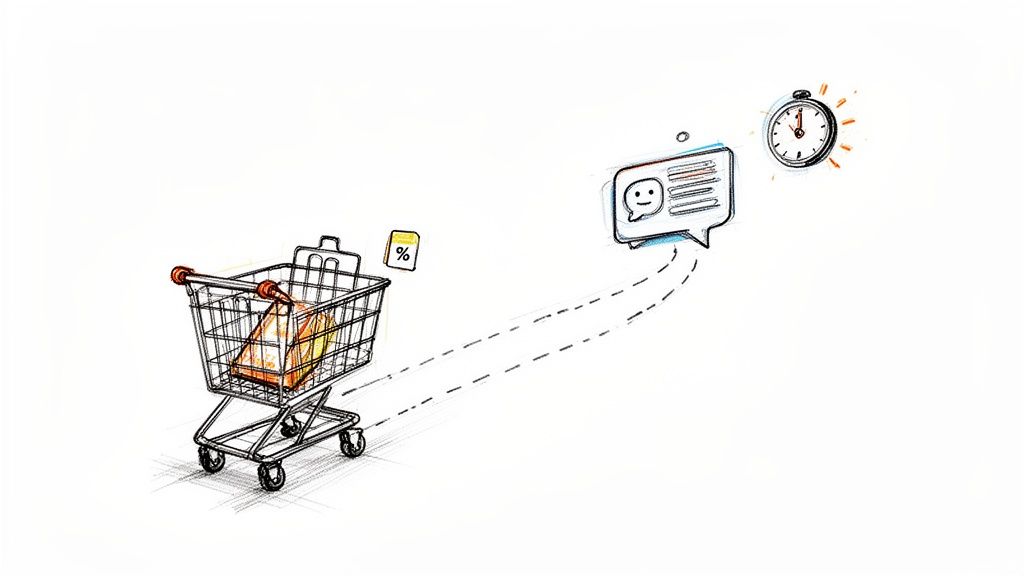
The key to a successful abandoned cart series is speed and relevance. By combining SMS, ringless voicemail, and other direct channels, businesses can create a sense of urgency and provide a frictionless path back to the cart. The campaign's logic is built to escalate the offer, turning a moment of hesitation into a completed sale and a happy customer.
A shopper adds a pair of expensive boots to their cart but gets distracted and closes the browser tab. An automated recovery sequence immediately kicks in to win back the sale.
“Still thinking it over? Your items are waiting! Your cart is saved and ready for you when you are. Complete your order: [link]”“Hi [Customer Name], this is Chloe from [Brand Name]. I saw you were looking at the leather boots and wanted to let you know we have limited stock. I’ve gone ahead and reserved your pair for the next 24 hours and added free shipping to your order. We hope to see you soon!”“Your cart is about to expire! We don’t want you to miss out. Use code SAVE15 for 15% off your entire order, valid for the next 3 hours only. Checkout now: [link]”Strategic Takeaway: Segment your abandoned cart drips based on cart value. For high-ticket items, a ringless voicemail can feel like a premium, concierge-level service that justifies the price. For smaller carts, a simple two-step SMS sequence with a modest discount is often enough to secure the conversion without eroding margins.
An appointment reminder drip campaign is an automated sequence designed to reduce no-shows and prepare clients for their upcoming appointments. By sending timely reminders through multiple channels, businesses like healthcare providers, salons, and professional services can significantly improve attendance rates, often cutting no-shows by more than half. This sequence is one of the most practical drip marketing examples because it provides direct, measurable value by protecting revenue and optimizing staff schedules.
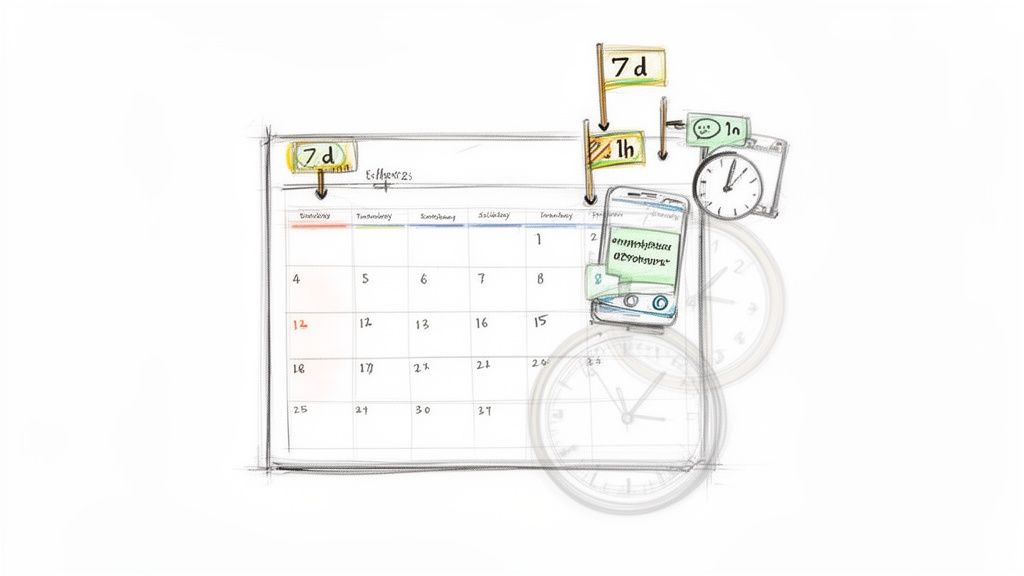
This type of campaign is essential for any appointment-based business. The key is to space out communications strategically to keep the appointment top-of-mind without causing annoyance. A mix of SMS, voice calls, and ringless voicemail ensures critical information is delivered effectively, confirming appointments and providing necessary pre-visit instructions.
A patient schedules a routine dental cleaning six months in advance. An automated reminder drip keeps them engaged and ensures they don't forget the distant appointment.
“Hi [Patient Name], this is a reminder of your appointment with [Dental Practice Name] on [Date] at [Time]. Please reply C to confirm or call us to reschedule.”“Hello [Patient Name], this is the office of Dr. Davis. Just a friendly reminder about your cleaning this week. Please remember to complete any updated insurance forms online beforehand to save time. We look forward to seeing you.”“Your appointment with Dr. Davis is tomorrow at [Time]. See you then! For directions, visit: [link]”“Quick reminder: your appointment is in one hour. We're ready for you!”Strategic Takeaway: The power of an appointment reminder drip lies in its multi-channel, multi-touch approach. Using ringless voicemail for important details like pre-visit instructions feels more personal and is less likely to be ignored than a long text. This combination of quick texts and detailed voice messages ensures patients are prepared and committed to their appointments.
A post-purchase educational drip campaign is a value-added sequence designed to teach customers how to get the most out of their new product or service. Instead of focusing on the next sale, this campaign prioritizes customer success and confidence. It is one of the most powerful drip marketing examples for reducing returns and buyer's remorse, as it reinforces the value of the purchase and empowers the user.
This approach builds brand loyalty by proactively helping customers achieve their goals. By delivering timely tips, tutorials, and support resources, businesses can turn a simple transaction into a long-term, supportive relationship. The goal is to make the customer feel smart and capable, ensuring they have a positive experience from the very beginning.
A new user signs up for a project management software platform. An educational drip guides them from basic setup to advanced feature adoption, boosting retention.
“Welcome to ProjectFlow, [User Name]! Your first step is to create a new project. Here’s a 1-min video to show you how: [link]”“Hi [User Name], this is Alex from ProjectFlow. I wanted to make sure you saw our quick start guide for setting up your first team. It’s a game-changer for collaboration. Check it out in our welcome email. Happy planning!” This non-intrusive drop directs traffic to a more detailed asset.“Pro Tip: Did you know you can automate weekly reports in ProjectFlow? Save hours every week. Learn how here: [link]”“Hello, this is an automated check-in from ProjectFlow. Press 1 if you’re finding everything you need, or press 2 to schedule a free 15-minute onboarding session with a specialist.”Strategic Takeaway: The key is to match the message channel to the content's complexity. Use SMS for quick, actionable tips with links. A ringless voicemail is perfect for pointing users to larger resources like video tutorials or guides without interruption. This staged, multi-channel approach helps users learn at a comfortable pace, which dramatically increases product adoption and long-term value.
An event promotion drip campaign is a time-sensitive sequence designed to maximize registrations and ensure attendees show up. Whether for a webinar, conference, or a local workshop, this multi-stage approach builds excitement and communicates vital information at precisely the right moments. This is one of the most practical drip marketing examples because it directly addresses the two biggest challenges for event organizers: driving sign-ups and preventing no-shows.
The campaign works by segmenting contacts into two primary groups: those who have not yet registered and those who have. Each group receives a different set of messages tailored to their status, moving from broad promotion to specific logistical reminders. This ensures non-registrants are persuaded to sign up, while confirmed attendees are nurtured and prepared for the event.
A company is hosting a free webinar on digital marketing. The goal is to get as many qualified leads to register and attend the live session as possible.
“Join our free webinar: 5 SEO Secrets to Triple Your Traffic! Learn from expert John Doe on [Date]. Limited spots. Register now: [link]”“Hi, this is Emily from aMarketing Co. Just a friendly note about our upcoming SEO webinar with John Doe. He’ll be sharing the exact framework that helped our clients grow their organic traffic by over 200%. Don’t miss out on these insights. Hope to see you there.”“Hi [Name], you're all set for the SEO webinar in 2 days! Get ready to take notes. Here is the agenda: [link]”“The SEO webinar starts in 1 hour! Join the room here: [Zoom Link]. See you soon!”Strategic Takeaway: Segmenting your audience into "Registrants" and "Non-Registrants" is critical. Non-registrants receive messages focused on urgency and value to drive conversion, while registrants get reminders and materials that confirm their decision and prepare them for the event. This dual-path approach makes your communication relevant and effective for everyone on your list.
A B2B lead nurture campaign is a systematic process designed to guide qualified leads through a longer sales cycle. Unlike quick consumer purchases, B2B decisions often involve multiple stakeholders and require significant education. This drip sequence uses a mix of informational content, social proof, and direct outreach to build trust and keep your solution top-of-mind. These campaigns are great drip marketing examples for complex sales because they methodically build a case for your product over weeks or months.
This multi-channel strategy coordinates SMS, voice, and ringless voicemail to deliver the right message at the right time, moving leads from initial awareness toward a purchase decision. The goal is to educate prospects, address their pain points, and position your company as the ideal partner. You can learn more about how to set up these complex sequences with the right marketing automation tools.
A prospect downloads a whitepaper about "Improving Manufacturing Efficiency," becoming a marketing-qualified lead (MQL).
“Hi [Lead Name], thanks for your interest. Here is your whitepaper on manufacturing efficiency: [link]. I’m John from [Your Company], your resource for any questions.”“Hi [Lead Name], John here from [Your Company]. I saw you downloaded our efficiency guide. We recently helped ACME Manufacturing cut production waste by 18% using our platform. I thought you might find their story interesting. No need to call back, just a heads-up.”“Quick tip for [Company Name]: Many manufacturers overlook real-time monitoring for reducing downtime. Our latest blog post covers 3 ways to implement it: [link]”Strategic Takeaway: The key to B2B nurturing is a 70/30 split between education and promotion. Use SMS for quick links and tips, and use ringless voicemail to share powerful case studies and testimonials. This approach builds credibility and ensures that when you finally ask for a demo, the prospect is already convinced of your expertise.
A win-back or re-engagement drip is a strategic sequence designed to reactivate dormant customers or subscribers who have stopped interacting with your brand. It’s far more cost-effective to retain an existing customer than to acquire a new one, and this campaign aims to remind inactive contacts of your value, reignite their interest, and prevent permanent churn. This is one of the most critical drip marketing examples for sustainable growth, as it directly addresses customer lifecycle decay.
This campaign often uses a mix of SMS, ringless voicemail, and targeted voice broadcasts to deliver personalized incentives. The goal is to break through the noise and make the customer feel valued and missed. Segmenting your audience based on their last activity or purchase history is key to delivering a relevant and compelling message.
An e-commerce customer who previously bought from a monthly subscription box service has been inactive for 90 days. A re-engagement drip can bring them back.
“We miss you, [First Name]! Your favorite [Product Category] just got an upgrade. Check out what's new: [link]”“Hi [First Name], it’s Jessica from [Brand Name]. We haven’t seen you in a while and wanted to offer you 20% off your next box on us. We’ve added some exciting new products we think you’ll love. Hope to see you back soon!”“Last chance, [First Name]! Your 20% off 'welcome back' discount expires in 24 hours. Don't miss out: [link]”Strategic Takeaway: Lead with value before presenting an offer. Reminding a customer about new features, product improvements, or what they loved about your service re-establishes the connection. A ringless voicemail can deliver a high-value discount in a more personal way, making the offer feel exclusive and less like a mass-market promotion.
A seasonal or holiday drip campaign is a time-sensitive sequence designed to maximize sales during peak shopping periods like Black Friday, Christmas, or back-to-school season. This strategy builds anticipation, creates urgency with countdowns, and deploys escalating offers to capture customer attention when they are most ready to buy. These campaigns are some of the most powerful drip marketing examples because they align messaging directly with high-intent purchasing behavior, driving significant revenue in short, concentrated bursts.
The campaign often starts weeks in advance, combining SMS for rapid-fire deals, voice broadcasts for more detailed announcements, and ringless voicemail to create a sense of scarcity. The goal is to stay top-of-mind and guide customers through the entire holiday shopping journey, from initial gift ideas to final last-minute reminders.
An online fashion retailer wants to maximize sales from its existing customer base for its Black Friday/Cyber Monday (BFCM) event.
“The biggest sale of the year is coming! Get ready for our Black Friday event. VIPs get early access. Not a VIP? Join now: [link]”“Hi [Customer Name], this is Chloe from [Brand Name]. As a thank you for your loyalty, your VIP early access to our Black Friday deals starts tomorrow! We’ve set aside some of our best-sellers just for you.”“IT'S ON! Our Black Friday sale is live with up to 50% OFF. Don’t wait, top styles are selling fast! Shop now: [link]”“LAST CHANCE! Our Cyber Monday deals end at midnight. Use code CM20 for an extra 20% off your order. Go, go, go! [link]”Strategic Takeaway: Use different channels for different purposes. SMS excels at creating urgency and driving immediate clicks. A ringless voicemail provides a personal touch that makes loyal customers feel valued, which is perfect for granting early access or announcing an exclusive offer without being intrusive.
A product launch drip campaign is a powerful sequence designed to generate excitement and drive adoption for new products or features. This multi-stage process builds anticipation before the release, educates users on the value at launch, and encourages sustained usage afterward. It's one of the most strategic drip marketing examples because it transforms a simple announcement into an engaging customer journey, maximizing visibility and initial momentum.
This campaign often unfolds over several weeks, using a mix of channels to keep the audience engaged without causing fatigue. By segmenting users based on their existing relationship with your brand (e.g., freemium vs. paid, basic vs. advanced), you can deliver highly relevant messages that speak directly to their needs and pain points, making the new feature feel indispensable.
A SaaS company is launching a new "Advanced Analytics" module. The goal is to get both free and paid users excited, show them the value, and drive upgrades or adoption.
“Big news from [SaaS Company]! A powerful new way to understand your data is coming next week. Stay tuned.”“Hi [User Name], this is Mark from [SaaS Company]. Our new Advanced Analytics module is officially live! It's built to give you deeper insights instantly. Watch a quick demo video here to see it in action: [link]”“Hi [User Name], with the new analytics module, you can now track [Specific Metric] in real-time. This helps you solve [Pain Point] instantly. Log in to your dashboard to try it now.”“Ready for next-level insights? Get 25% off your first 3 months when you upgrade to access our new Advanced Analytics. Claim your offer: [link]”Strategic Takeaway: The success of a launch campaign hinges on a phased approach. A teaser builds curiosity, a multi-channel announcement captures attention, and a post-launch adoption sequence provides the education and motivation needed to turn interest into active use. Using voice and ringless voicemail helps cut through email noise and explain complex features more effectively.
Multi-channel customer journey automation represents a highly advanced drip campaign that guides a contact through their entire lifecycle with your brand. It orchestrates coordinated SMS, voice, and ringless voicemail messages based on specific behaviors and customer data. This strategic approach moves beyond single-purpose sequences to create a persistent, personalized conversation that adapts to user actions. These campaigns are some of the most powerful drip marketing examples because they align communication with the customer's actual experience, delivering the right message on the right channel at the right time.
This long-term strategy requires deep integration with your CRM (like HubSpot, ActiveCampaign, or Keap) to use custom fields, merge tags, and segmentation effectively. The goal is to build a cohesive experience that feels personal and responsive, from initial interest to long-term loyalty. For effective execution, it's crucial to follow actionable marketing automation best practices to properly scale your efforts.
An e-commerce brand wants to create a seamless journey that nurtures leads, recovers lost sales, and encourages repeat business.
“Hi [First Name]! Saw you checking out our new arrivals. Use code WELCOME10 for 10% off your first order. Happy shopping!”“Hi [First Name], this is Alex from [Brand Name]. Just wanted to let you know the items in your cart are saved and waiting for you. If you have any questions, just reply to our last text. Have a great day!” This provides a gentle, non-intrusive nudge.“Thanks for your order, [First Name]! Your order #[Order Number] is confirmed. We’ll notify you when it ships.”“Hello [First Name], we hope you’re loving your new [Product Name]. We’d be so grateful if you could share your experience by leaving a review. Check your texts for a direct link. Thanks again!”“We miss you, [First Name]! It’s been a while. Here’s a special 15% off just for you: [link]”Strategic Takeaway: True customer journey automation connects otherwise separate campaigns into one fluid experience. By using behavioral triggers from your CRM, you can make each message feel perfectly timed and contextually relevant. This requires good data hygiene and a clear understanding of the full customer lifecycle, but the payoff is a significantly more engaged and loyal customer base. You can review more drip campaign best practices to refine your strategy.
| Campaign | Implementation complexity | Resource requirements | Expected outcomes | Ideal use cases | Key advantages |
|---|---|---|---|---|---|
| Welcome Series for New Customers | Low–Medium (triggered 5–7 day flow) | Low (templates, basic personalization) | Immediate engagement; higher retention; ~40–60% open rates | New subscribers/customers; e‑commerce, SaaS, events | Fast setup; controls first impression; strong early ROI |
| Abandoned Cart Recovery Campaign | Medium (real‑time e‑commerce triggers) | Medium (product data, links, incentives) | Recovers ~10–30% carts; high ROI potential | Online retail, subscriptions, high‑volume stores | Timely revenue recovery; high conversion via urgency |
| Appointment Reminder Drip Campaign | Medium (calendar triggers, timing rules) | Medium–High (PHI handling, practice system integration) | Reduces no‑shows (20–30% → 5–10%); better utilization | Healthcare, dental, salons, fitness studios | Cuts operational cost; HIPAA‑aware confirmations |
| Post‑Purchase Educational Drip Campaign | Medium (sequenced educational content) | Medium (quality content, tutorials, links) | Increased product adoption; fewer returns; higher LTV | SaaS, electronics, appliances, fitness, retail | Lowers support load; drives retention and upsells |
| Event Promotion and Attendance Drip Campaign | Medium (multi‑stage calendar‑based funnel) | Medium (scheduling, speaker/logistics content) | +20–40% registration/attendance; reduced no‑shows | Webinars, conferences, workshops, classes | Builds excitement; delivers logistics; boosts attendance |
| Lead Nurture Campaign for B2B Sales | High (long timeframe, CRM/score integration) | High (consistent content, CRM sync, sales handoff) | Better MQL→SQL conversion; longer but higher‑quality sales | B2B SaaS, consulting, enterprise sales | Establishes trust and thought leadership; scalable nurture |
| Win‑Back and Re‑engagement Drip Campaign | Medium (inactivity triggers, segmented offers) | Medium (incentives, personalized content) | Recovers lapsed customers cost‑effectively; variable lift | Subscriptions, retail, SaaS, fitness | Reactivates dormant users; gathers churn insights |
| Seasonal Promotion and Holiday Drip Campaign | Medium–High (advanced scheduling, high volume) | High (creative, inventory coordination, segmentation) | Short‑term sales spikes; higher conversion during peaks | Retail, e‑commerce, travel, gift/grocery promotions | Capitalizes seasonal demand; urgency drives immediate action |
| Product Launch and Feature Release Drip Campaign | Medium–High (cross‑team coordination, phased rollouts) | Medium–High (demos, tutorials, segmented messaging) | Faster awareness and adoption; initial usage uplift | SaaS, apps, hardware, platform features | Drives adoption and momentum; educates before sales |
| Multi‑Channel Customer Journey Automation | Very High (complex orchestration, conditional logic) | Very High (CRM hygiene, data, ongoing optimization) | Improved conversions across lifecycle; personalized scale | Enterprise e‑commerce, SaaS, subscriptions, healthcare | Delivers right message at right time; automates lifecycle at scale |
The ten drip marketing examples we've explored reveal a powerful truth: automation is not about removing the human touch. It’s about scaling it. By sending the right message on the right channel at the right time, you create consistent, valuable touchpoints that build real relationships and drive meaningful action. These campaigns are more than just a series of automated messages; they are carefully orchestrated conversations.
From the immediate connection of a welcome series to the critical recovery of an abandoned cart, the common thread is relevance. Each message is a direct response to a user's action or inaction. The true power lies in moving beyond a single channel. As we saw, combining SMS, ringless voicemail, and even live calls creates a layered communication strategy that grabs attention and gets results. A text can be missed, but a follow-up voicemail can make the message impossible to ignore.
Reviewing these examples, several core principles for successful drip campaigns become clear. Mastering these is your key to building sequences that don't just send messages but deliver outcomes.
Strategic Insight: The goal of a drip campaign isn't just to "drip" information. It's to guide a contact from one stage of the customer journey to the next. Each message should have a clear purpose that contributes to that forward momentum.
Knowledge becomes power only when applied. Reading about these drip marketing examples is the first step; building your own is the next. Start small. You don't need to implement all ten campaigns at once.
The path to mastering drip automation is an iterative one. By applying the tactical insights and strategic frameworks from these real-world examples, you can move beyond basic email blasts and create dynamic, responsive communication systems that foster loyalty and accelerate growth.
Ready to build the powerful drip campaigns we've discussed? Call Loop provides all the tools you need to create and manage sophisticated multi-channel sequences using SMS, voice broadcasts, and ringless voicemail. Turn these drip marketing examples into your reality by starting your free trial of Call Loop today and see how easy it is to automate your communication.
Chris Brisson
Chris is the co-founder and CEO at Call Loop. He is focused on marketing automation, growth hacker strategies, and creating duplicatable systems for growing a remote and bootstrapped company. Chat with him on X at @chrisbrisson


Trusted by over 45,000 people, organizations, and businesses like


