
See a Demo
You're just one step away from seeing Call Loop in action.
Enter your information below to watch a demo right now.

You're just one step away from seeing Call Loop in action.
Enter your information below to watch a demo right now.

In a world of overflowing inboxes, the standard "just checking in" email is a guaranteed path to being ignored. An effective email to follow up isn't just a reminder; it's a strategic move designed to add value, create urgency, and build relationships. Often, follow-ups fail before they're even opened; learning to craft proven email subject lines is critical to overcoming this hurdle. But a great subject line is only the first step.
The real key is to stop thinking in single channels and start orchestrating a multi-touchpoint strategy. This guide breaks down eight powerful follow-up templates that go beyond simple text. We'll show you how to combine email with SMS and even ringless voicemail to cut through the noise, get responses, and drive action.
From landing a client to securing an unpaid invoice, these examples provide the exact copy, timing, and strategic analysis needed to turn silence into a conversation. This collection offers actionable strategies and real examples, complete with subject lines, body copy, and tips on integrating a multi-channel approach using a platform like Call Loop to amplify your results. Prepare to master the art of the follow-up.
The first follow-up is often the most critical. The Initial Value Proposition Follow-up is an email sent 24-48 hours after your initial contact, designed to reinforce your core message and connect it directly to a prospect’s specific need. Instead of simply repeating your first message, this email introduces a new, compelling piece of information, such as a powerful statistic, a concise case study, or a piece of social proof. This approach prevents your message from feeling repetitive and adds another layer of credibility.

This method is particularly powerful when integrated into a multi-channel strategy. For instance, if you’ve already sent a text message about a trial class or a product demo signup using Call Loop, this email to follow up serves as a professional, detail-oriented touchpoint that builds on the initial, brief interaction. A voicemail drop can also be used as a subtle, non-intrusive heads-up before this email arrives, further increasing the chance it gets noticed.
Let's look at an example from a SaaS company that had an initial, brief interaction with a prospect who showed interest in their project management software.
Subject Line: A better way to manage your team's workload
Email Body:
Hi
{{ first_name }},Following up on our initial chat about streamlining project management at
{{ company }}.Teams similar to yours that switched to our platform reported a 35% reduction in missed deadlines within the first quarter. This is achieved by automating task assignments and providing real-time progress dashboards.
Would you be open to a quick 15-minute call next week to see how this could apply to your team?
Best,
Alex
The Problem-Agitation-Solution (PAS) framework is a classic copywriting technique that creates a powerful email to follow up. Instead of just listing features, this method first identifies a known pain point, then illustrates the negative consequences of leaving that problem unsolved, and finally presents your product or service as the clear solution. This approach builds urgency and connects with the prospect on an emotional level, making it exceptionally effective in complex sales cycles.
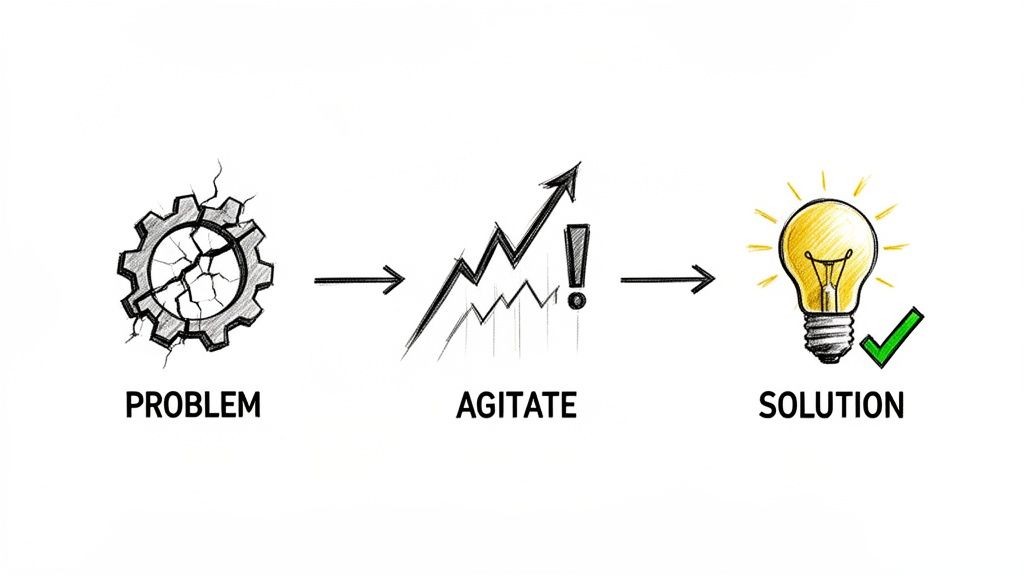
This email is not just a message; it’s a narrative that guides the prospect from frustration to relief. For businesses using a multi-pronged approach, such as sending an initial ringless voicemail with Call Loop, the PAS email provides the logical and emotional reasoning that supports the initial, brief touchpoint. It’s the follow-up that makes the prospect think, "Yes, this is exactly the problem I'm facing, and I need to fix it."
Here’s an example from a marketing agency following up with a potential client who struggles with managing their digital campaigns manually.
Subject Line: Stop losing hours to manual campaign reports
Email Body:
Hi
{{ first_name }},Following up on our chat, I was thinking about your team's process for managing campaign analytics.
Manually pulling data from different platforms every week isn't just time-consuming; it's a drain on your most valuable resources. Every hour spent on spreadsheets is an hour not spent on strategy, which can lead to missed opportunities and stagnant growth.
Our agency provides clients with a unified dashboard that automates reporting, giving you back those hours and delivering clear insights to drive your next move.
Would 15 minutes next Tuesday be enough time to show you what that looks like in action?
Best,
Sarah
When an initial contact doesn't lead to a conversion, the Social Proof and Case Study Follow-up builds credibility and addresses the prospect's unspoken question: "Will this really work for me?" This email to follow up moves beyond your own claims and uses real customer success stories to prove your value. By presenting tangible results from a similar business, you build trust and make your solution feel both credible and attainable.
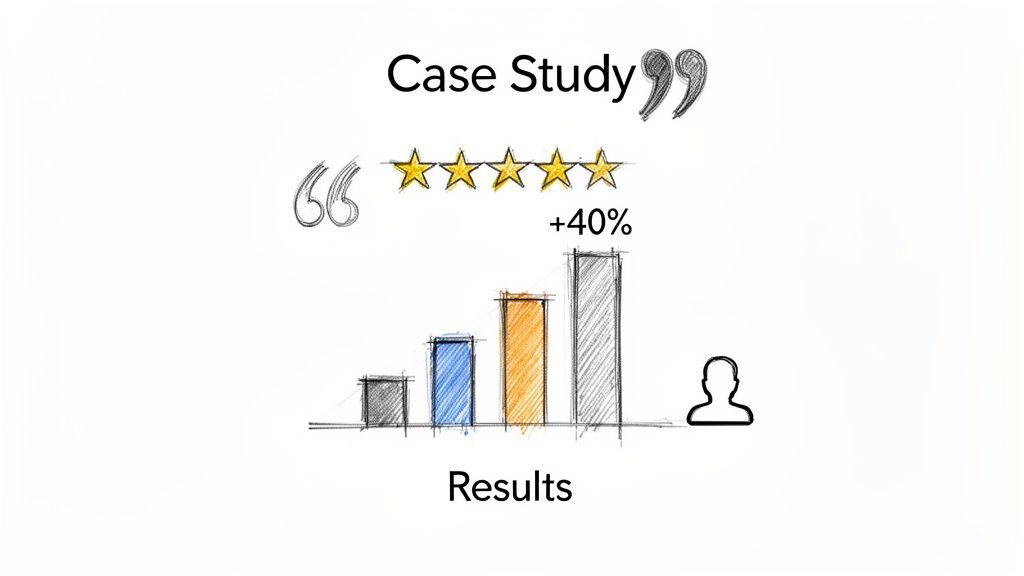
This method is highly effective for building trust, especially after a less personal first touchpoint like a ringless voicemail drop. While the initial message may have grabbed their attention, this follow-up provides the hard evidence needed to prompt a serious evaluation of your offer. It demonstrates that you don't just talk about results; you deliver them.
Let's examine how a marketing agency could use this approach to secure a martial arts studio as a client, referencing a past success story.
Subject Line: How another studio increased class attendance by 40%
Email Body:
Hi
{{ first_name }},Following up on my previous message. I wanted to share how we helped another martial arts school, similar to
{{ company }}, solve their attendance challenges.By implementing our targeted SMS reminder system, they achieved a 40% increase in class attendance in just two months. This also led to a significant boost in student retention and word-of-mouth referrals.
We put together a short breakdown of their story here: [Link to Case Study]
Would 15 minutes next Tuesday be a good time to discuss how a similar strategy could benefit your studio?
Best,
Sarah
Sometimes, the most effective email to follow up is one that doesn't ask for anything. The Educational Value-Add Follow-up centers on providing genuinely useful content, such as a guide, checklist, or insightful article, that helps your prospect solve a problem. This approach builds trust and positions you as an expert in your field, making future sales conversations feel more like collaborative consultations. It is a cornerstone of inbound methodology, showing you’re invested in their success, not just your sale.
This strategy is especially effective for nurturing prospects who aren't ready to buy or for those in industries with longer decision-making cycles, like healthcare. By delivering value first, you create a positive association with your brand. For Call Loop users, this can be part of a sophisticated automated marketing workflow, warming up leads before a sales call is ever initiated.
Let's look at an example where a company is nurturing a lead at a busy healthcare clinic, offering a patient communication platform.
Subject Line: A quick tip for reducing patient no-shows
Email Body:
Hi
{{ first_name }},I was thinking about our conversation regarding patient engagement at
{{ company }}.Many clinics struggle with last-minute cancellations. One simple but effective tactic we've seen work is sending a "Day Before" confirmation text that also includes a helpful tip, like "Remember to bring your insurance card and a list of current medications."
We put together a short guide on SMS best practices for healthcare providers that you might find useful. You can view it here.
No need for a call, just thought this might help your team.
Best,
Sarah
This type of follow-up prioritizes genuine relationship-building over an immediate sales pitch. A Personal Connection Follow-up references something specific and meaningful about the prospect, like a recent achievement, company news, or a shared interest. This demonstrates that you’ve done your research and view them as more than just a name on a list. It builds trust and rapport, which is critical for high-value B2B relationships.
This approach is highly effective for converting leads who may be resistant to traditional sales messages. Instead of pushing a product, you’re opening a conversation based on mutual respect and genuine interest. For Call Loop users, this email can set the stage for a more personal follow-up, like a brief, non-intrusive text message from the salesperson’s direct line to check in.
Let's examine an example where a consultant follows up with a prospect after finding their work online.
Subject Line: Your recent post on healthcare automation
Email Body:
Hi
{{ first_name }},I just finished reading your latest blog post on the challenges of implementing healthcare automation, and it really resonated. Your point about patient data security being the biggest bottleneck is something I’ve seen firsthand.
It reminded me of a project with a regional clinic where we navigated similar HIPAA compliance issues to get their new system live.
I'm curious to hear more about the specific hurdles you're facing at
{{ company }}. No sales pitch, just a professional conversation.Best regards,
Sarah
This type of email to follow up taps into a powerful psychological trigger: the fear of missing out. The FOMO Follow-up creates genuine urgency by highlighting a limited-time offer, expiring access, or a fast-approaching deadline. It nudges prospects who are on the fence by framing inaction as a potential loss. This method moves beyond a simple reminder and introduces scarcity, which motivates people to act sooner rather than later.
This email is especially effective when there are real constraints, like the last few spots for a webinar or a seasonal promotion ending soon. Combining it with other channels amplifies its impact. For instance, an SMS alert sent via Call Loop on the final day of an offer can significantly boost conversions, creating a one-two punch of detailed information (email) and immediate alert (text).
Let’s examine an example from an event organizer promoting a popular marketing workshop with limited seating.
Subject Line: Last chance: Only 3 spots left for the Digital Marketing Workshop
Email Body:
Hi
{{ first_name }},Hope you're having a great week. I’m reaching out one last time about the Digital Marketing Workshop happening next Tuesday.
We have just 3 seats remaining, and we expect them to fill up by the end of today. This is the final opportunity to join us and learn the strategies that helped our past attendees increase their lead generation by an average of 50%.
If you want to secure your spot, please register before 5 PM EST today: [Link to Registration Page]
Hope to see you there,
Sarah
{{ first_name }}, just a reminder that registration for the workshop closes at 5 PM today. Don't miss out!" adds another layer of urgency and ensures your message is seen.A single email to follow up can easily get lost. The Multi-Channel Persistence Follow-up combats this by creating a coordinated campaign across several channels, such as email, SMS, and ringless voicemail. This approach doesn't just send the same message everywhere; it uses each platform for its unique strength, building a cohesive and hard-to-ignore communication sequence. It's a method built on planned persistence, designed to increase visibility and response rates significantly.
This strategy is a core function of platforms like Call Loop, which integrate these channels into a single, automated workflow. Instead of sending one-off messages, you create a deliberate sequence that unfolds over days, keeping your message top-of-mind without overwhelming the contact. This is especially effective in high-compliance fields like healthcare or for high-value sales outreach where getting a response is critical.
Let's break down a sequence for a sales team trying to book a demo with a high-value prospect. The goal is to make contact and secure a meeting over a week.
Sequence Overview:
{{ first_name }}, just sent you an email with a few ideas on improving X for {{ company }}. Let me know what you think. - Alex"{{ first_name }}, Alex here. I was thinking about your team's goals and had a quick idea on how you could hit your Q3 targets faster. Dropped you an email yesterday with the details. Hope to connect soon."Subject Line (Day 6 Email): A case study for {{ company }}
Email Body (Day 6 Email):
Hi
{{ first_name }},Thought you might find this interesting. We recently helped a company in your industry achieve a 25% increase in lead conversion by implementing a similar strategy to what I proposed.
You can see the full story here: [Link to Case Study]
Does a 15-minute chat on Thursday make sense to discuss if this is a fit?
Best,
Alex
A simple confirmation email can be the difference between a successful meeting and a costly no-show. The Appointment/Meeting Confirmation Follow-up is a critical communication sent immediately after a booking and in timed intervals leading up to the event. Its purpose is to reduce absenteeism, reinforce the value of the upcoming interaction, and ensure the attendee is fully prepared with all necessary details like links, agendas, or preparation materials.
This type of email to follow up is especially powerful for businesses that depend on scheduled attendance, such as healthcare providers, sales teams, and educational institutions. By confirming the commitment, you not only secure the time slot but also start building a professional and reliable relationship before the meeting even begins.
Let's examine how a local karate studio can use this follow-up sequence to maximize attendance for a free trial class, a key part of their new student acquisition funnel.
Subject Line: Confirmed: Your Free Trial Karate Class is on the calendar!
Email Body:
Hi
{{ first_name }},This is a confirmation that your free trial class at Dragon Fire Karate is booked for
{{ appointment_date }}at{{ appointment_time }}. We're excited to have you join us!To make sure you have a great experience, please arrive 10 minutes early and wear comfortable clothing. Our studio is located at
{{ location_address }}.We'll send a quick reminder before your class. See you on the mat!
Sensei Mike
| Template | Implementation complexity | Resource requirements | Expected outcomes | Ideal use cases | Key advantages |
|---|---|---|---|---|---|
| The Initial Value Proposition Follow-up | Low — simple timing and single CTA | Minimal content, one metric/stat, Call Loop drip setup | Maintains momentum, modest conversion uplift | Post-initial outreach (demo signups, SMS leads) | Quick to deploy, low cognitive load, multi-channel synergy |
| The Problem-Agitation-Solution (PAS) Follow-up | Medium–High — structured copy and sequencing | Research per prospect/segment, tailored messaging, follow-up channels | Higher persuasion and conversion in long sales cycles | Complex B2B, compliance-heavy industries | Creates urgency, addresses deep objections, highly persuasive |
| The Social Proof and Case Study Follow-up | Medium — assemble quality proof assets | High-quality case studies, testimonials, segmentation | Builds credibility, reduces perceived risk, improved conversions | SMBs, agencies, healthcare, risk-averse buyers | Demonstrates ROI with real results, trust-building |
| The Educational Value-Add Follow-up | Medium — content creation and curation | Educational assets (guides, webinars), automation integrations | Long-term engagement, higher open/engagement rates, slower conversions | Long sales cycles, nurture programs, thought leadership | Positions brand as expert, low unsubscribe rate |
| The Personal Connection Follow-up | High — individualized research and personalization | Research time per prospect, CRM notes, rep effort | Highest response rates for targeted accounts | Enterprise, high-ticket, account-based selling | Builds genuine rapport, differentiates from mass outreach |
| The Fear of Missing Out (FOMO) Follow-up | Low–Medium — clear deadline and messaging | Genuine limited offers, timing, tracking, short copy | Fast decisions, spike in short-term conversions | Promotions, event registration, seasonal offers | Drives urgency and quick action when authentic |
| The Multi-Channel Persistence Follow-up | High — sequence design, timing, compliance | Multi-channel assets (email, SMS, voice), integrations, compliance expertise | Significantly higher response rates and brand recall | Large outreach, healthcare, events, sales cadence | Omnichannel reach, trackable metrics, leverages Call Loop strengths |
| The Appointment/Meeting Confirmation Follow-up | Low–Medium — automation and accuracy needed | Scheduling integrations, reminder templates, calendar invites | Dramatic reduction in no-shows, improved attendance quality | Healthcare, webinars, consultations, classes | Reduces no-shows, improves customer experience and preparedness |
We've explored a wide array of templates, from the initial value proposition to the multi-channel persistence sequence. It’s clear that a single, generic email to follow up rarely secures the deal or inspires action. The real art lies in understanding the context of your conversation and deploying the right message at the right time.
The most successful follow-up strategies are not one-off events but deliberate, orchestrated campaigns. Think of each template we've covered as a tool in your communication toolkit. The Problem-Agitation-Solution (PAS) email is perfect for re-engaging a cold lead, while the Social Proof follow-up works wonders when a prospect is on the fence and needs a confidence boost.
Mastering the follow-up is a process of implementation and refinement. Don't try to overhaul your entire strategy overnight. Instead, choose one or two templates from this article that align with your most common follow-up scenarios.
By transforming your follow-up from a single email into a thoughtful, multi-channel sequence, you move from simply checking a box to building real momentum. This strategic persistence is what turns lukewarm leads into loyal customers and prospects into partners.
Ready to build a powerful multi-channel follow-up system? With Call Loop, you can easily automate and integrate SMS, ringless voicemail, and voice broadcasts into your existing workflow. Start turning your follow-up emails into complete communication sequences by trying Call Loop today.
Chris Brisson
Chris is the co-founder and CEO at Call Loop. He is focused on marketing automation, growth hacker strategies, and creating duplicatable systems for growing a remote and bootstrapped company. Chat with him on X at @chrisbrisson


Trusted by over 45,000 people, organizations, and businesses like


