
See a Demo
You're just one step away from seeing Call Loop in action.
Enter your information below to watch a demo right now.

You're just one step away from seeing Call Loop in action.
Enter your information below to watch a demo right now.


Need a free group text messaging service, but not sure which kind of "free" you are getting?
That question matters more than the feature list. Some tools offer a real trial with enough access to test opt-ins, scheduling, replies, and reporting. Others give you a developer tier that works only if your team can handle APIs, routing, and compliance setup. Some look free until you hit contact limits, carrier filtering, shared numbers, or weak deliverability.
Texting earns attention quickly, which is why businesses keep testing it first. As noted earlier, SMS usage and response behavior are strong enough to justify a trial run. The distinction is important because fast reach only helps if your messages are delivered, compliant, and tied to a workflow your team can manage.
Free plans also hide different risks.
A trial can be useful for a small campaign launch. A sandbox can be useful for product teams building custom flows. Neither automatically fits a business that needs consent records, team inboxes, segmentation, number reputation, and clear upgrade options once volume starts growing. That is where many roundup articles fall short. They lump every "free" option together and skip the operational differences that decide whether a tool helps or creates rework.
This guide separates those options clearly. It covers free trials, developer-friendly tiers, and lightweight plans, then looks at the trade-offs around compliance, deliverability, and scaling. If your goal is serious outbound growth, SMS alone is rarely the end state. The stronger path is usually a platform that can expand into voice and ringless voicemail without forcing a full rebuild later.
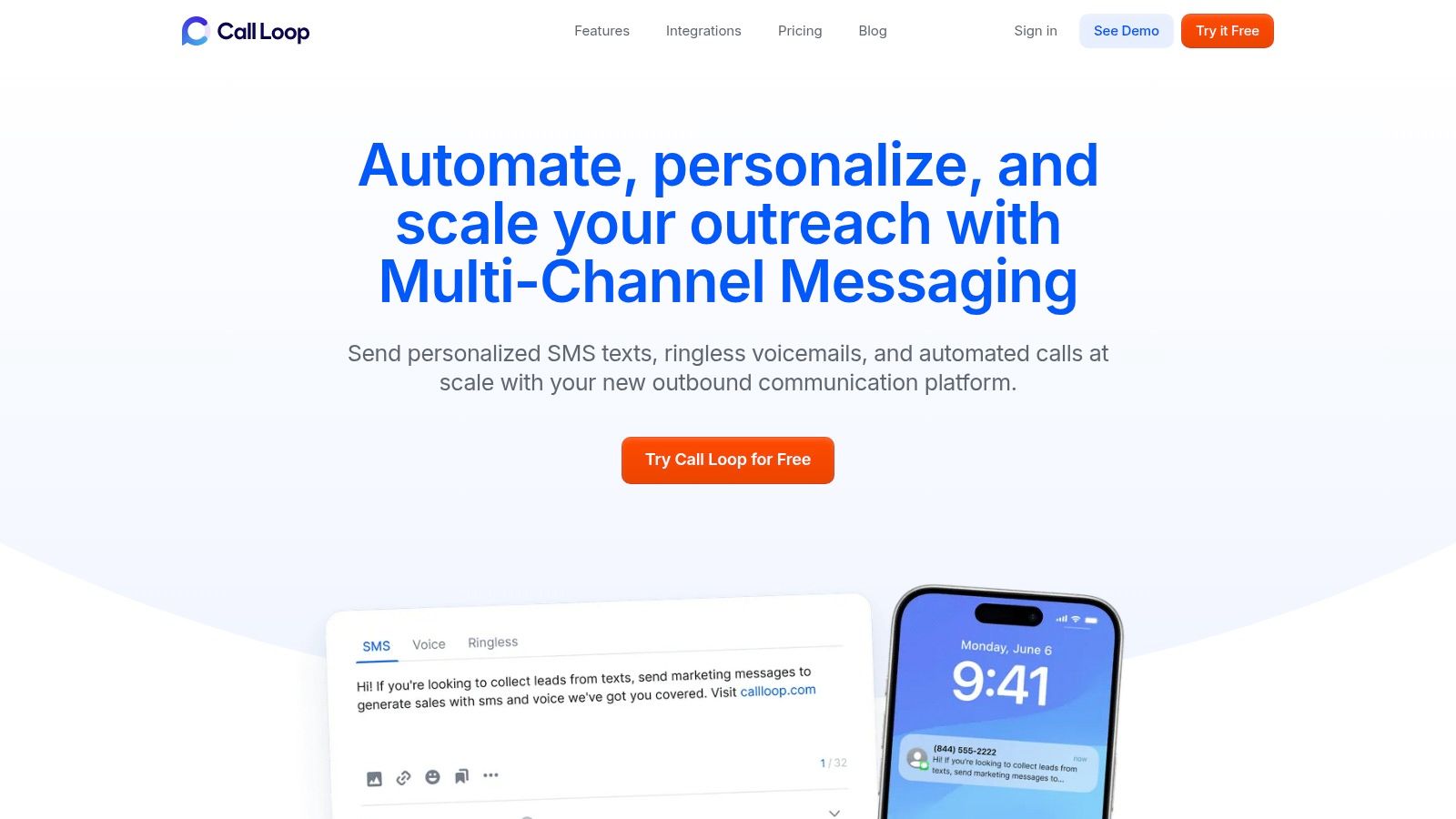
If you're serious about outreach, Call Loop stands out because it doesn't trap you in SMS-only thinking. That's the biggest weakness I see with many “free” tools. They let you test group texts, but once you need voice broadcasting, ringless voicemail, better sequencing, or tighter compliance controls, you end up rebuilding your workflow from scratch.
Call Loop is built for outbound messaging across SMS, MMS, voice, and ringless voicemail. That matters for businesses that don't all respond the same way. Some contacts answer texts. Some respond better to voicemail reminders. Some need a voice broadcast for urgency. The current market gap is that free SMS comparisons rarely explain when single-channel tools become limiting, especially once campaign complexity rises, as noted in this analysis of the channel-switching gap.
The platform combines list growth tools, segmentation, custom fields, scheduling, drip sequences, and tracking in one place. It also supports compliance-focused workflows like double opt-in, DNC management, number validation, and toll-free setup. For healthcare teams, that HIPAA-ready positioning matters. For agencies and event teams, the bigger win is operational simplicity.
Ringless voicemail is the feature that changes the conversation. Instead of forcing every reminder or follow-up through SMS, you can add voicemail drops into the same broader outreach strategy. That's useful when you want a message to feel more personal, or when a text-only cadence starts fatiguing your list.
Practical rule: If your campaign needs reminders, follow-ups, missed-call recovery, and segmented outreach, SMS-only free tiers stop being “free” once your team starts patching together extra tools.
A few details worth knowing:
Call Loop isn't the cheapest-looking option at first glance because public pricing details are limited. If you're a buyer who wants to compare costs line by line before talking to anyone, that's friction. Also, ringless voicemail and voice campaigns bring legal and regional compliance questions, so you need to verify fit before scaling sends.
Still, this is the most practical pick for teams that know “group text messaging service free” is only step one. If you want to test and then grow into a real outbound system, Call Loop gives you a cleaner path than trial-only SMS tools.
Need a free group text messaging option that a non-technical team can start using today? SimpleTexting is one of the cleaner trial-based choices for that job.
I usually put it in the "trial for operators" category, not the "free long-term" category. That distinction matters. If your goal is to test opt-ins, send a few broadcasts, and confirm that staff can handle replies without training on APIs or routing logic, SimpleTexting does that well. If your goal is ongoing low-cost outreach, the free angle fades fast once the trial ends.
SimpleTexting makes sense for teams that want a quick proof of concept and care more about usability than customization:
The primary trade-off is scope. This is an SMS-focused platform. That is fine for many local businesses, service teams, and event-driven campaigns. It becomes limiting if you later need voice drops, ringless voicemail, or a broader outbound system without stitching together more tools.
Compliance is also where buyers need to stay realistic. Free trials are useful for testing the interface, but they do not remove the work around consent, sender registration, and deliverability. A team can like the dashboard and still hit friction once it starts sending at business volume.
SimpleTexting is a solid fit for businesses that want clarity fast and are still validating whether texting belongs in the mix. Teams that already know they want multi-channel outreach should treat it as a short-term test platform, not the final setup.
For current plans and trial details, review SimpleTexting.
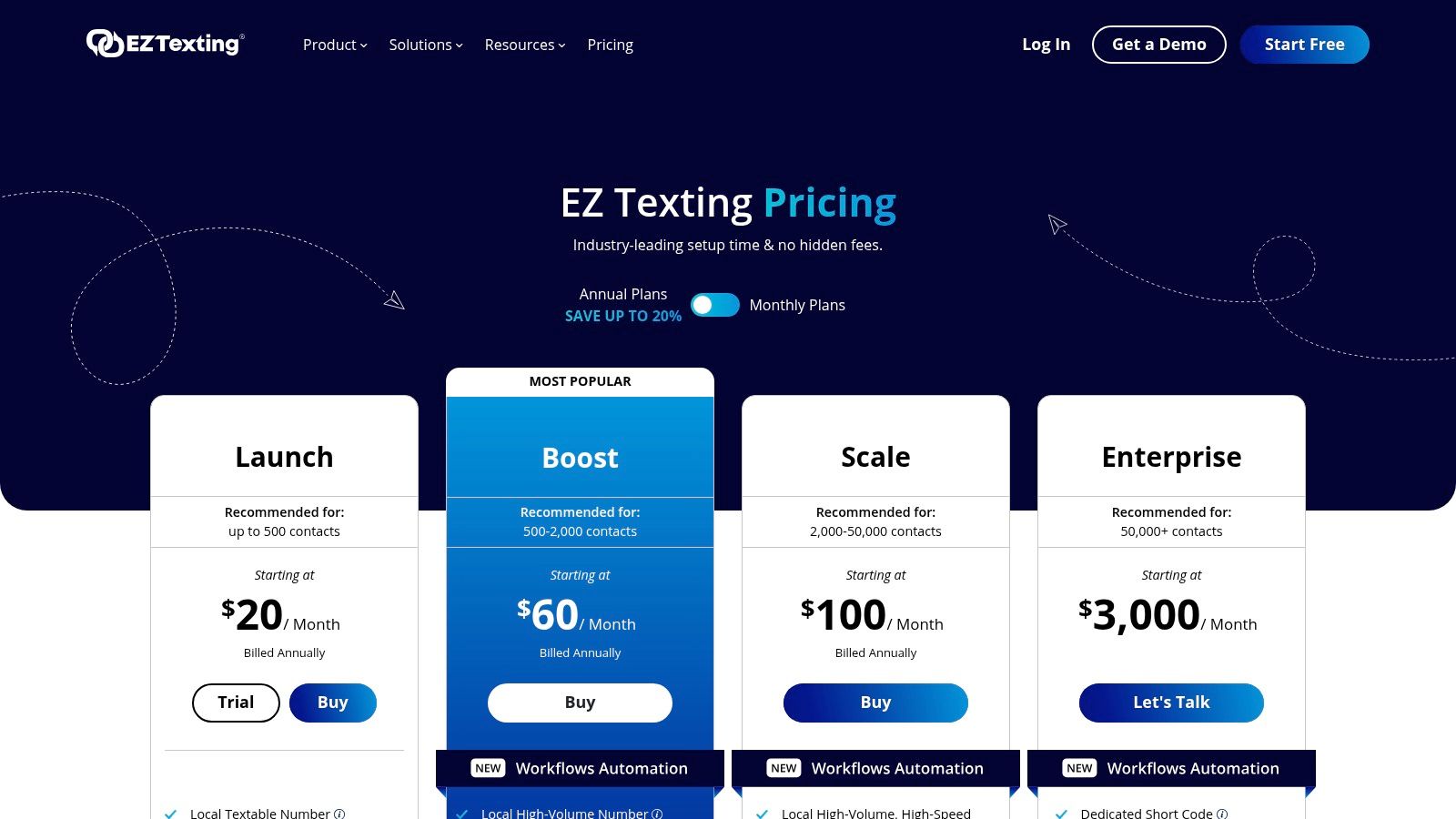
Need a group texting tool your staff can start using without calling a developer? EZ Texting is one of the clearer options in that category. It is built for small business operators, franchise teams, nonprofits, and local service brands that want guided setup, familiar campaign tools, and less technical friction on day one.
Its free angle sits in the trial camp, not the true free-forever camp. That distinction matters. If you are comparing platforms, EZ Texting is better viewed as a fast way to test workflows and team adoption than as a long-term free messaging service.
EZ Texting does a good job with the parts that usually slow down non-technical teams:
The trade-off shows up after the trial. If your sending volume grows, or if you need deeper automation and reporting, costs can climb faster than expected. That is common with beginner-friendly tools. Ease of use often comes with less pricing flexibility for heavier programs.
There is also a strategic limit to keep in mind. EZ Texting is strongest as an SMS and MMS platform. Businesses that expect to add voice broadcasting, ringless voicemail, or a broader multi-channel outbound system will likely outgrow it and need a more connected setup later.
For businesses still validating text messaging, that can be fine. For businesses already planning serious outreach at scale, treat EZ Texting as a practical test platform, then map the upgrade path before your list, compliance workload, and channel mix get more complex. You can review current trial and pricing details at EZ Texting.
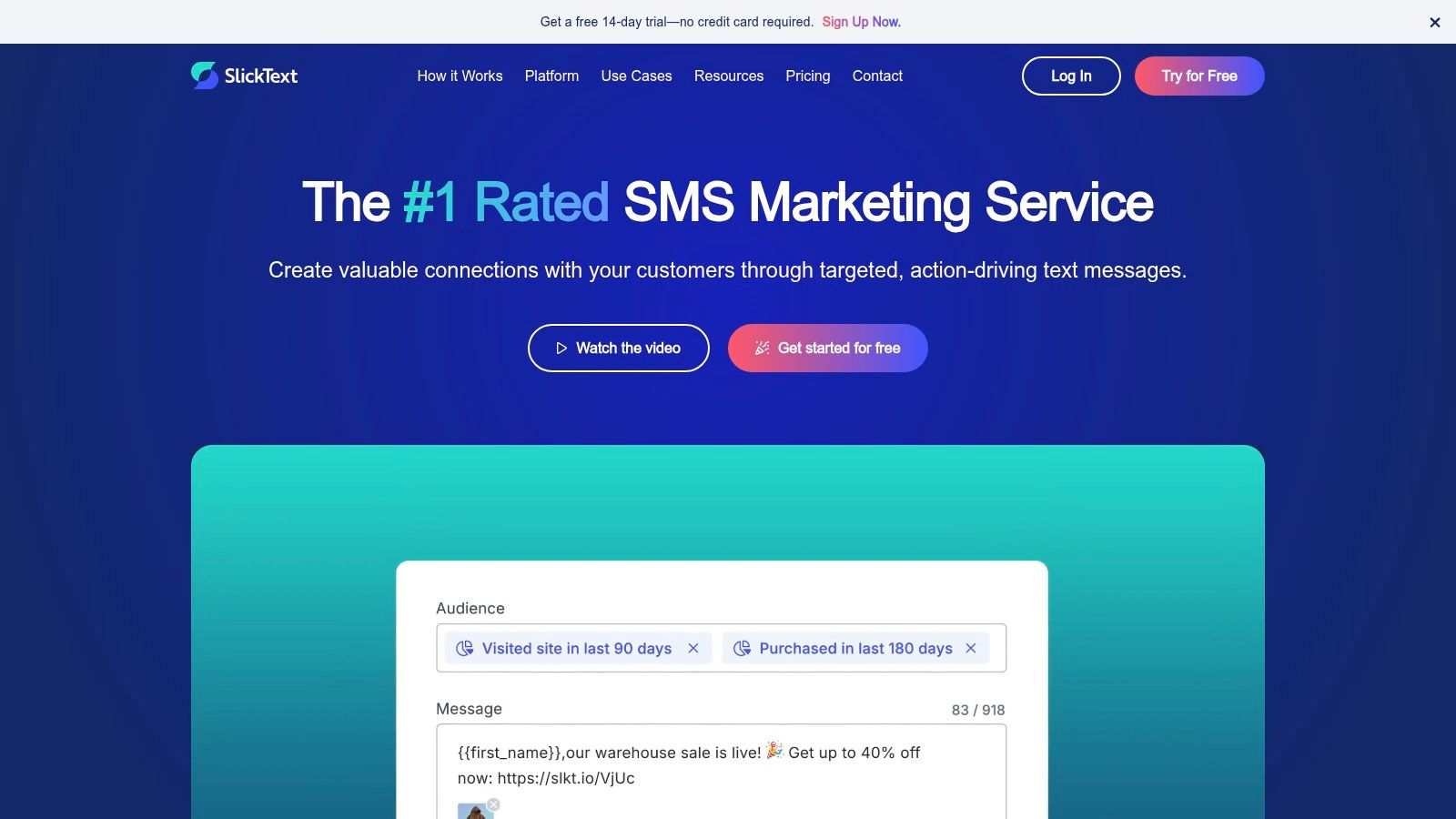
SlickText is a practical choice when compliance and list-building sit near the top of your checklist. It's one of the better picks for businesses that need web opt-ins, keyword workflows, segmentation, and simple promotional execution without sending their staff through a technical setup project.
Its trial is useful because it exposes most of the workflow, not just a bare demo. That makes it easier to judge how your team would use it day to day.
SlickText tends to fit teams that want structure. You can build segments, create campaigns quickly, use templates, and track links without a lot of friction. For promotions, event notices, and recurring customer alerts, that's enough for many small businesses.
The limitation is familiar. It's still mostly an SMS and MMS play. If your outreach strategy later needs voice calls or ringless voicemail, SlickText won't solve that broader orchestration problem by itself.
A free trial is available, and the platform leans into onboarding support. That's helpful for businesses that want guidance while setting up opt-in language, basic automations, and segmentation. You can check the current offer at SlickText.
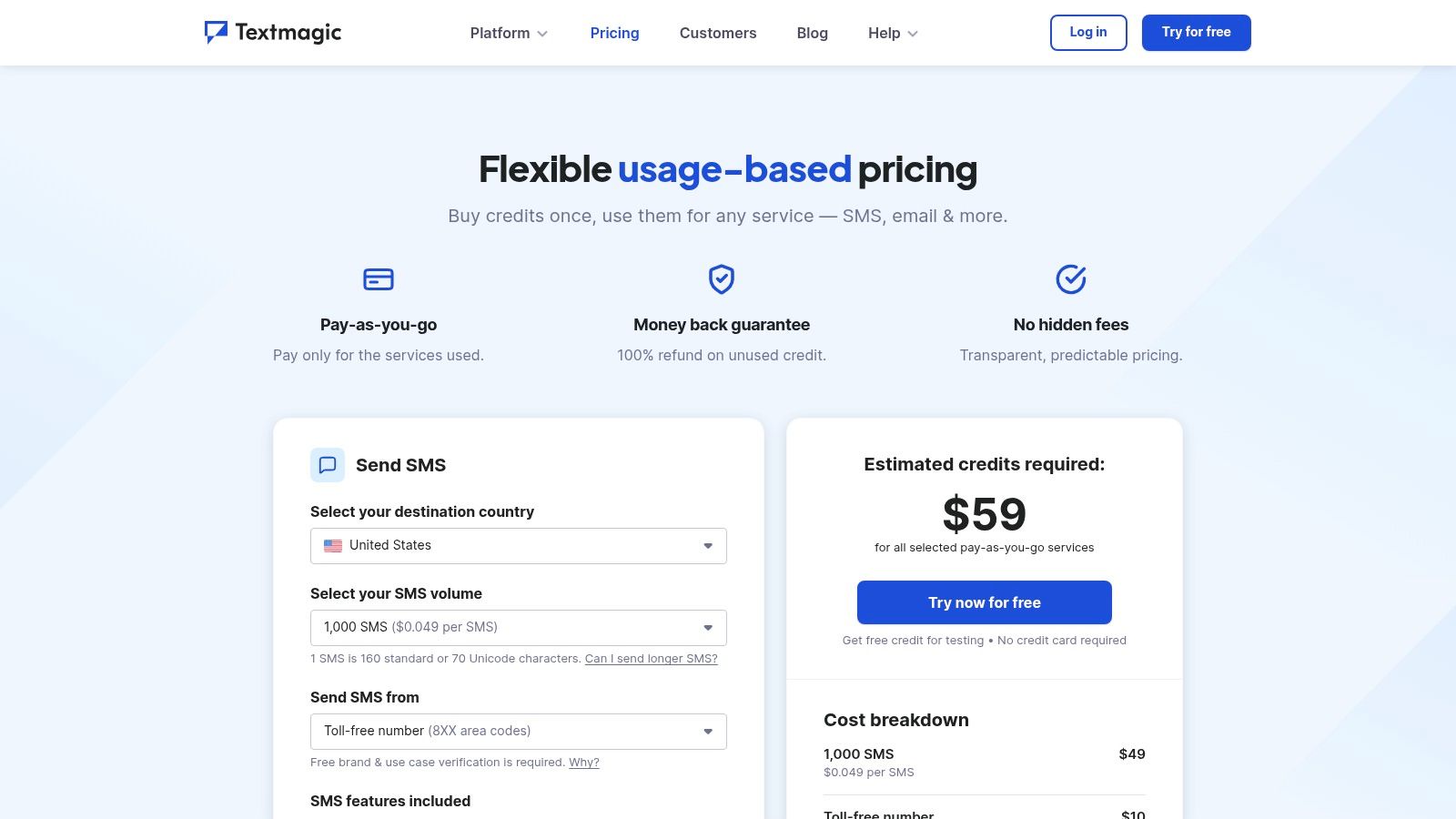
TextMagic makes sense for teams that hate subscriptions more than they need deep marketing features. Its pay-as-you-go structure is the appeal. You can start small, test real sending, and avoid committing to a larger monthly plan before you know your usage pattern.
That's especially useful for seasonal senders, occasional campaigns, or organizations that send alerts rather than constant promos.
The main reason to choose TextMagic is pricing flexibility. Textmagic is priced at $0.049 per text with refundable credits and support across 200 countries. If your volume fluctuates, that simplicity can beat a monthly credit package that you either outgrow or underuse.
A few strengths stand out:
If you send in bursts instead of every week, pay-as-you-go often beats an attractive-looking monthly plan that leaves unused credits sitting around.
The trade-off is feature depth. TextMagic is effective, but it feels more utilitarian than a platform built around full campaign orchestration. For plain business texting, that's fine. For multi-step marketing journeys, it starts to feel narrower. You can review the service at TextMagic.
Need a free group text messaging service, or do you need messaging infrastructure? Twilio sits in the second category.
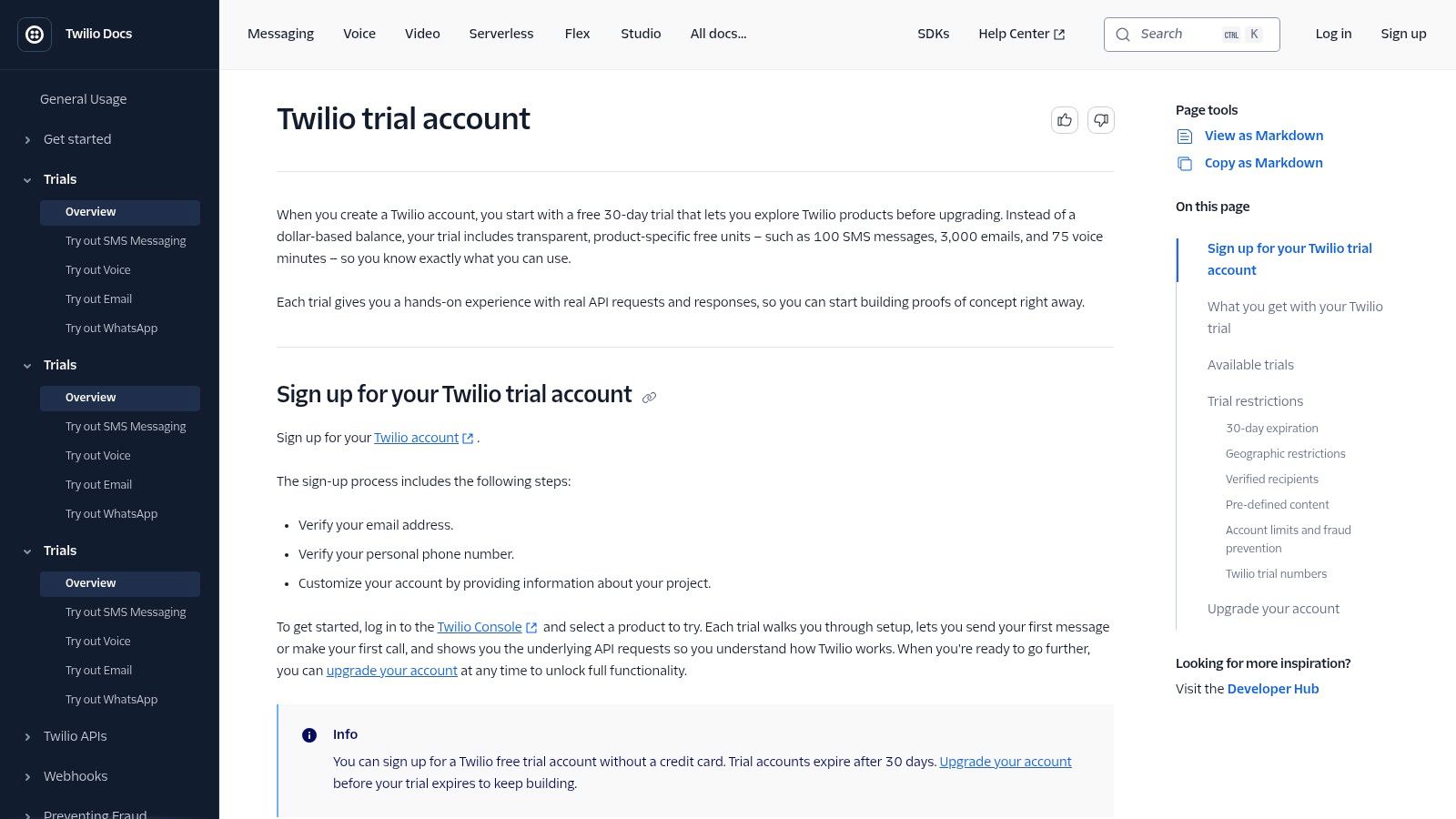
That difference matters. Twilio is not a plug-and-play SMS marketing tool for a front-desk team or a local business owner who wants to send a campaign in ten minutes. It is a developer platform with a trial tier, APIs, and room to build custom messaging flows across SMS and other channels.
Twilio fits teams that want control more than convenience:
The trade-off is setup overhead.
Free access here usually means a trial environment for testing, not a finished group texting app for non-technical staff. You still need to configure sender details, handle opt-in and opt-out rules, and prepare for carrier compliance requirements before real production use. In the US, that work can be the difference between messages that go through and messages that stall in review or get filtered.
Free options generally split into two categories. Some tools give you a simple trial so you can send a few campaigns. Twilio gives you building blocks. If your team has engineering support, that can be a smart long-term choice. If not, the hidden cost shows up in implementation time, compliance work, and the lack of a polished marketing interface.
For businesses that are serious about growth, Twilio often works best as a backend layer, not the whole solution. If you need fast execution, easier list management, and a clearer path into SMS, voice, and ringless voicemail campaigns, a platform built for business users will usually get you there faster. You can review Twilio's trial terms and product docs at Twilio.
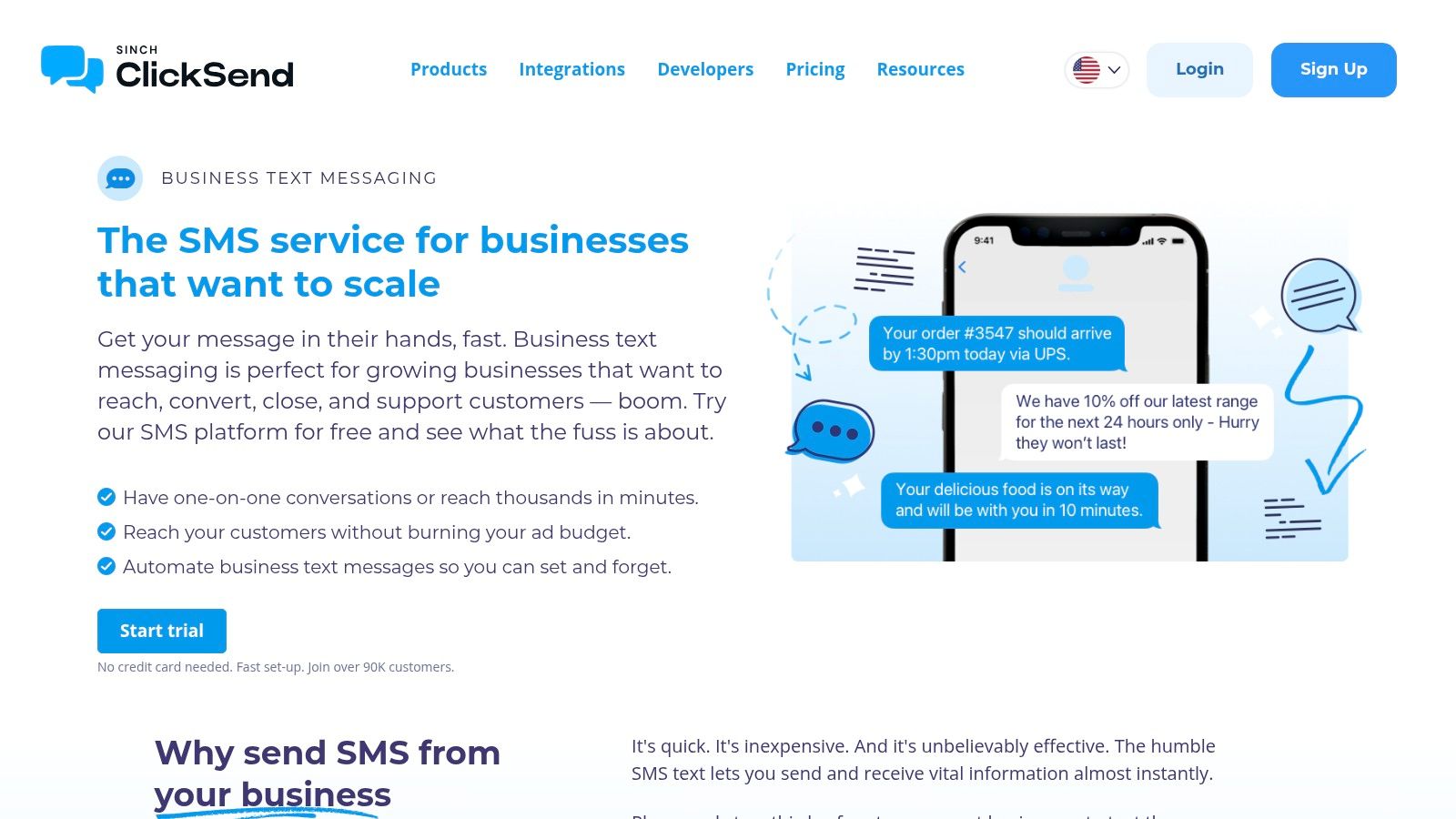
ClickSend is a useful middle ground. It gives you a web app for broadcasts, APIs if you need them, and messaging beyond SMS in the broader product family. If you want to test business texting without locking yourself into a long contract, it's a practical option.
Its biggest strength is that it serves both simple and technical teams reasonably well. You can use the dashboard, or wire it into workflows later.
ClickSend is often a good proof-of-concept platform for businesses that want basic bulk texting with room to expand. Contact uploads, scheduling, automations, MMS support, and two-way messaging cover most short-term needs.
The biggest caution is analytics depth. It's fine for sending and tracking basics, but if you want more advanced campaign analysis and richer marketing-layer features, the platform won't feel as specialized as some dedicated SMS suites.
For organizations that want to test first, the free trial helps. After that, you'll still need to account for compliance setup before serious US sending. You can explore it at ClickSend.
Plivo is another API-first option, and in practice it competes less with polished SMB texting dashboards and more with infrastructure platforms. If your team has a developer or technical admin and wants to manage sending logic more directly, Plivo is worth a look.
It's a strong candidate for alerts, transactional messages, and custom messaging flows where control matters more than built-in campaign convenience.
Plivo tends to work best for:
What you give up is the easy SMB packaging found in tools with built-in templates, popups, and campaign UX. That doesn't mean Plivo is weaker. It means your team needs to know what it's doing.
The free trial lowers the risk, but this is still a build-oriented product. If your staff wants to send a campaign today without involving technical help, pick something else. If your team wants infrastructure with room to shape workflows over time, look at Plivo.
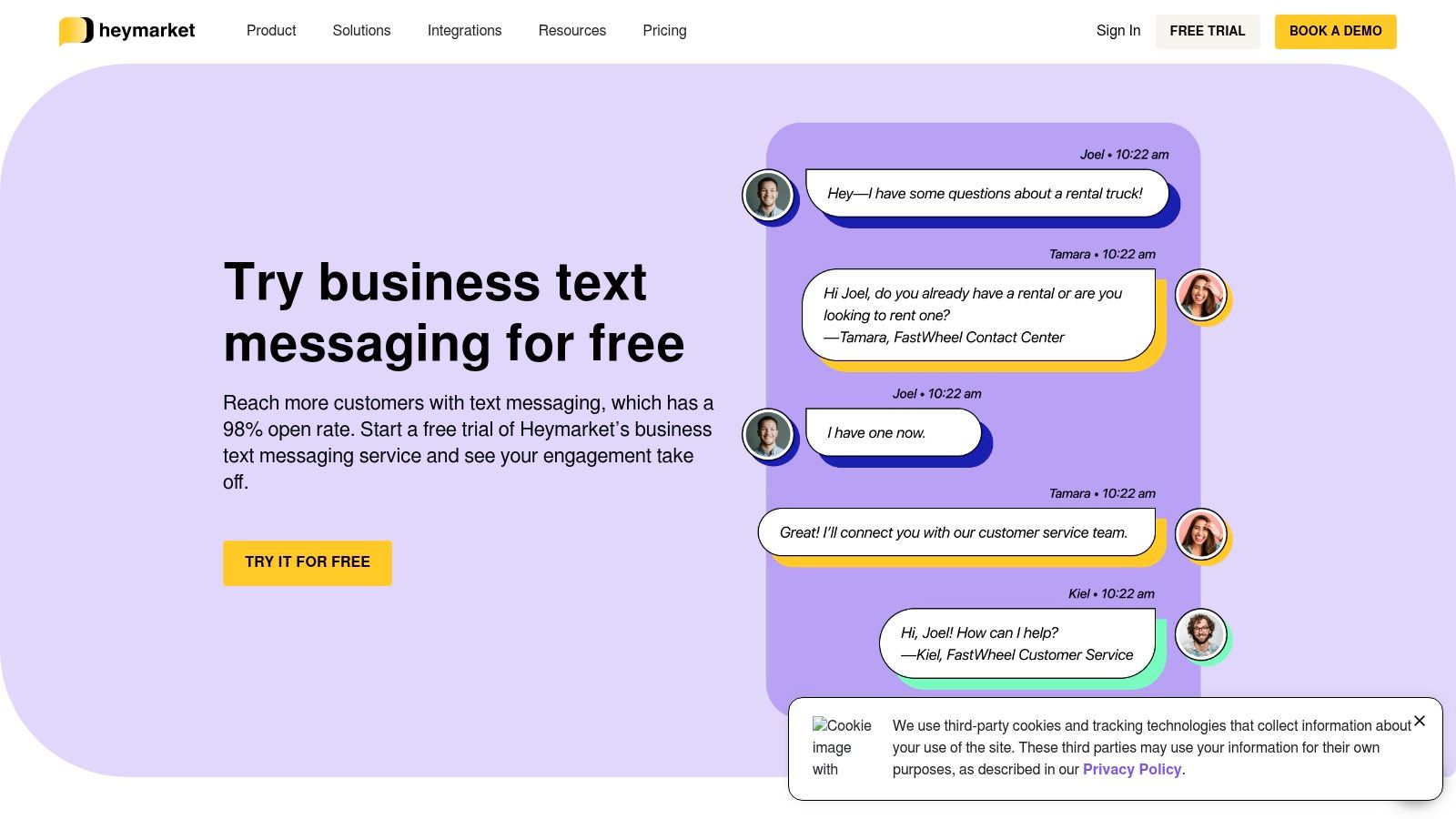
Heymarket makes more sense when texting is part of team communication, not just campaign broadcasting. The shared inbox, assignments, comments, and collaboration features are the point. If multiple people need to manage replies, it's easier to run than a platform built mainly for one-way sends.
That makes it attractive for support, sales, front-desk operations, and service teams that need context inside conversations.
Heymarket stands out because it combines mass texting with an omnichannel inbox. SMS is there, but so are other messaging surfaces. That's useful when your team wants one place to coordinate replies instead of bouncing between disconnected inboxes.
It still has the usual free-trial logic. You can provision a number, test group messaging, and see whether the inbox model matches your workflow. The compromise is lighter marketing automation compared with more campaign-focused tools.
For teams that answer messages together, collaboration features matter more than a few extra broadcast options.
There's another practical market signal behind tools like this. Industry comparison data cited by TXTImpact says platforms with free tiers or trials account for 42% of new registrations in the mass texting sector, which helps explain why inbox-first and SMB-friendly products keep getting traction in this category, according to TXTImpact's 2026 comparison of low-cost mass texting platforms. You can try Heymarket.
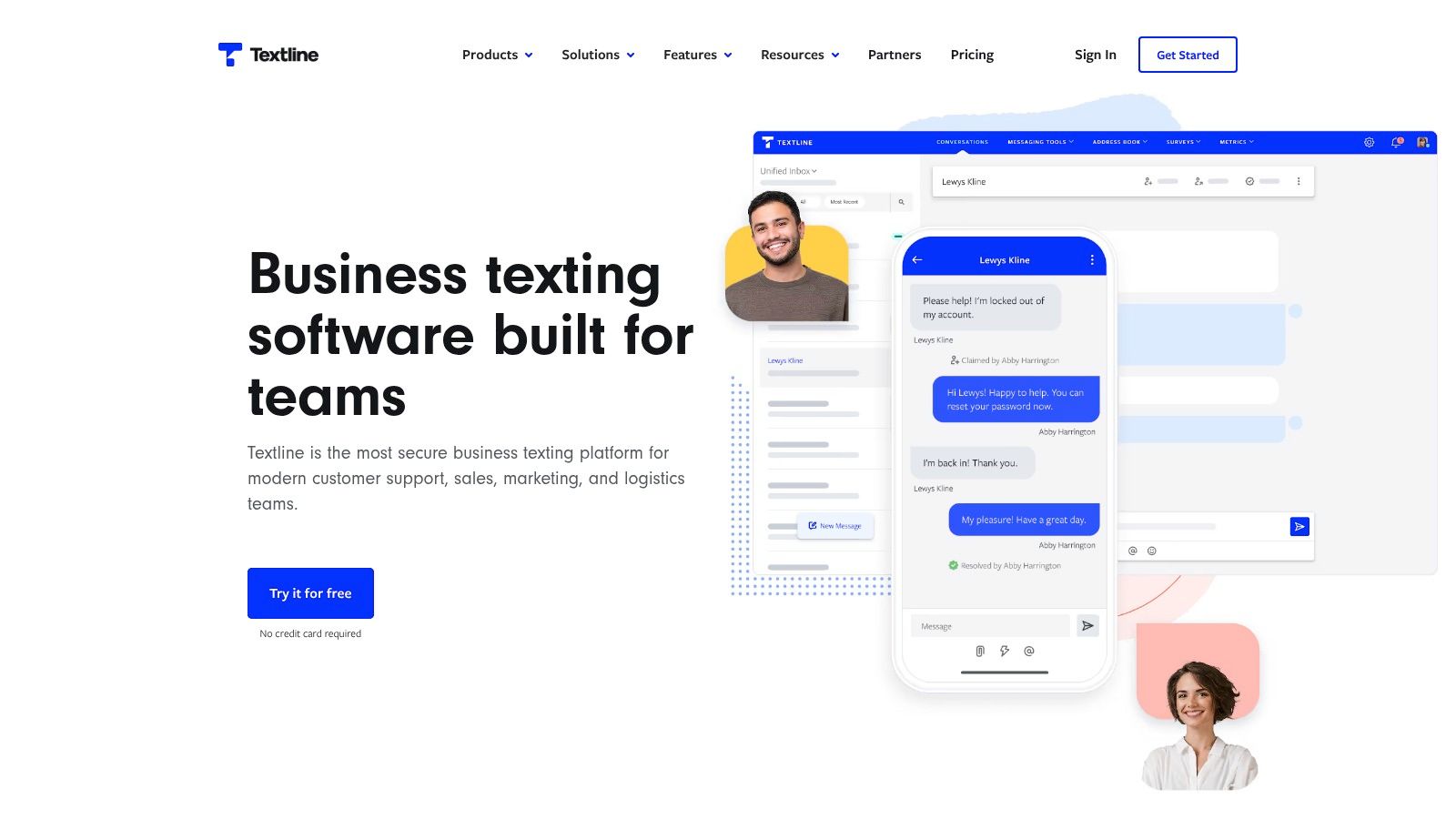
Textline is best thought of as business texting software for conversation-heavy teams. If your work revolves around support, sales follow-up, appointment coordination, or service conversations, Textline's shared inbox model feels natural.
It's less of a pure marketing tool and more of a texting workspace. That distinction matters.
Textline's strengths are clean collaboration, roles and permissions, scheduled messages, and enough list functionality to support group sends when needed. If your team needs to manage replies well, it does the job.
What it doesn't try to be is a full outbound growth engine with voice, ringless voicemail, and deep campaign orchestration. So if your roadmap includes layered follow-up sequences across multiple channels, you'll likely outgrow it.
That said, free trials are useful here because the primary test is workflow fit. Can your team handle inbound and outbound communication faster in this inbox? If yes, Textline may be enough. If no, you'll know quickly. Review the platform at Textline.
| Platform | Core features | Target audience & use cases | Key strengths (USPs) | Pricing & trial |
|---|---|---|---|---|
| Call Loop (Recommended) | SMS/MMS, voice broadcasting, ringless voicemail, drips, segmentation, integrations | SMBs & mid-market needing multi-channel outreach, healthcare (HIPAA) | Unified SMS+voice+ringless, HIPAA-ready, deliverability tools, 4,000+ app integrations | Try free; per-drop ringless billing; contact sales for volume pricing |
| SimpleTexting | Mass SMS/MMS, keywords, 2‑way inbox, scheduling | Small businesses, marketers testing group messaging | Fast to test (number + starter credits), strong list growth tools, easy UI | 14‑day free trial with number + 50 messages; carrier fees apply |
| EZ Texting | Group texting, sign‑up forms, templates, 10DLC support | SMBs & agencies needing quick onboarding and compliance help | Quick setup, helpful onboarding, clear number guidance | |
| SlickText | Mass texting, keywords, segmentation, automations | SMBs running promotions, alerts, local marketing | Full‑feature trial (no card), strong support and onboarding | 14‑day free trial; carrier pass‑through fees; tiered credit caps |
| TextMagic | Bulk SMS/MMS, 2‑way messaging, team inbox, BYOC | Small teams that prefer pay‑as‑you‑go and simple scaling | Transparent per‑message pricing, no‑card trial credits, free number (some regions) | No‑card trial with credits; pay‑as‑you‑go top‑ups |
| Twilio | Programmable SMS/MMS, phone types, Flows/Studio, APIs | Developers and platforms needing API control and scale | Highly flexible, extensive docs/ecosystem, scalable | Free trial product units; trial limits and compliance before production |
| ClickSend | Web app + APIs for bulk SMS/MMS, scheduling, 2‑way | Teams wanting quick proofs of concept or easy web broadcasts | 14‑day trial, easy web UI + API option, competitive pay‑as‑you‑go | 14‑day free trial; competitive post‑trial rates; A2P verification needed |
| Plivo | Programmable SMS/MMS, direct carrier routes, webhooks | Developers and high‑volume senders focused on cost | Lower per‑message costs, API‑first, good docs | Free credits trial; generally lower per‑message pricing |
| Heymarket | Shared inbox, omnichannel (SMS + apps), templates | Support/sales teams needing team collaboration & messaging | Strong teamwork features, omnichannel in one UI, easy number setup | 14‑day trial; carrier fees apply; marketing automations lighter |
| Textline | Shared inbox, 2‑way messaging, integrations, campaigns | Support and sales teams handling conversational workflows | Clean UI for support/sales, solid collaboration tools | Free trial available; pricing scales with seats and message volume |
Want to test a group text messaging service free option without backing your team into the wrong system six weeks later?
Start by sorting free options into the right bucket. Some are short trials built for SMB operators. Some are developer credits meant to validate API workflows. Some are collaboration tools that let a support or sales team test shared inboxes before paying for more seats. Those paths solve different problems, so the best choice depends on what you need to prove first.
For a local business, the first goal is usually simple. Can text drive confirmations, reminders, offers, or replies faster than email or phone calls alone? For a product team, the question is different. Can the API support the workflows, routing, and reporting you need? For a customer-facing team, the definitive test is whether agents can manage conversations without creating inbox chaos.
Free plans also hide the problems that show up after the pilot.
The common failure points are predictable: carrier registration, consent records, throughput limits, weak segmentation, and deliverability issues that do not matter on day one but matter a lot once message volume rises. A free trial can make sending easy. It does not guarantee that your setup will hold up once compliance requirements tighten or multiple teammates need access.
That is why the upgrade path matters as much as the free offer. SimpleTexting, EZ Texting, and SlickText make sense for businesses that want a fast, low-friction way to launch campaigns. Twilio and Plivo fit teams that need API control and can handle more technical setup. Heymarket and Textline are better choices when the job is managing ongoing two-way conversations across a team.
Businesses that expect to grow beyond basic SMS should plan for that early. SMS works well for many campaigns, but it is not the right tool for every contact or every moment. Voice broadcasting can work better for urgent alerts. Ringless voicemail can help with follow-ups that need a more personal tone. Running those channels in separate tools creates extra list management, duplicate reporting, and more room for mistakes.
Call Loop stands out for teams that want that expansion path without replacing their system later. You can start with texting, confirm that the channel works, then add voice broadcasting and ringless voicemail inside the same platform. That matters for healthcare practices, agencies, event teams, ecommerce brands, and local service businesses that need one place to run outreach instead of patching together separate apps.
Use the free tier or trial to answer a narrow question. Does the audience respond? Can the team handle replies? Does the platform support compliant growth? Once you know that, pay for the system that fits your next stage, not just the cheapest starting point.
If you want to test texting without getting stuck in an SMS-only setup, Call Loop is the strongest option here. You can start with a free trial, validate your outreach, and then expand into voice broadcasting, ringless voicemail, segmentation, drip campaigns, and compliance-focused workflows in one system.
If you're also evaluating tools that support long-term customer and lead management beyond messaging, the same start-simple, expand-with-purpose approach applies to platforms like a Homebase investment platform.
Chris Brisson
Chris is the co-founder and CEO at Call Loop. He is focused on marketing automation, growth hacker strategies, and creating duplicatable systems for growing a remote and bootstrapped company. Chat with him on X at @chrisbrisson


Trusted by over 45,000 people, organizations, and businesses like


