
See a Demo
You're just one step away from seeing Call Loop in action.
Enter your information below to watch a demo right now.

You're just one step away from seeing Call Loop in action.
Enter your information below to watch a demo right now.

Multi-channel campaigns use more than one marketing channel to move a buyer toward action, but that does not automatically make them cross-channel or omnichannel. In plain English: multi-channel means a brand shows up in several places; cross-channel means those places influence each other in a connected sequence; omnichannel goes further by making the experience feel unified around the customer across channels, devices, and often online-to-offline touchpoints. That distinction matters because some campaigns here are primarily broad-reach multichannel plays, while others are true coordination systems with handoffs between TV, retail, email, apps, social, and service teams.
That shift from optional tactic to operating model happened because buying behavior changed. One recent market summary reported that 73% of shoppers use three or more channels before deciding, and consumers now average roughly six touchpoints before purchase, versus about two touchpoints 15 years ago according to a compiled industry summary from Jobera. A separate roundup noted that 85% of digital customers start on one device or channel and finish on another, with 60% using mobile while in-store and 52% switching between devices during the journey, based on figures summarized by WorldMetrics. In my review, that was the pattern that stood out most: the best campaigns were not everywhere for the sake of it; they assigned each channel a job.
Here’s the lens used in this article: each example had to show real channel coordination, documented business impact, a lesson that can be adapted beyond enterprise budgets, and a meaningful mix of digital and offline touchpoints where possible. If you need product-launch inspiration, start with Apple and Amazon. Need loyalty and retention ideas? Start with Starbucks and Nike. Need community or UGC plays? Start with Coca-Cola and GoPro. Need a lower-budget challenger model? Start with Dollar Shave Club and Old Spice.
Large brands usually coordinate this kind of work through a centralized campaign calendar, one shared creative theme, local or channel-specific execution teams, and one measurement framework that rolls back to a few agreed KPIs. That is why Apple could synchronize keynote, retail, PR, and web updates; why Starbucks could connect app behavior to in-store fulfillment; and why Amazon can turn Prime Day into a tightly timed promotional event rather than a pile of unrelated ads. In other words, how large brands coordinate multi-channel advertising campaigns is usually less about being on every platform and more about running one disciplined multi-channel marketing system.
For those building their own systems, outside inspiration can help, but the practical value comes from seeing how timing, ownership, and channel roles fit together. For additional perspective on smaller-business execution, these multi-channel advertising tips are a useful companion resource.
These examples were selected for operating substance, not just fame. Each campaign had to show at least some coordination across channels rather than a single great ad that happened to get reposted. That meant looking for evidence of sequencing, shared messaging, online-offline links, or a measurable feedback loop between channels.
I also filtered for business impact. Some campaigns here drove direct sales, some lifted loyalty, and some built long-term brand equity, but all of them earned inclusion because they changed behavior in a documented way. Where possible, I prioritized examples with brand, investor, or trade-source reporting rather than recycled listicle claims.
The list intentionally mixes enterprise campaigns with ideas smaller teams can borrow. Apple and Amazon demonstrate launch discipline and governance at scale. Starbucks shows what happens when marketing and operations are tightly linked. Dollar Shave Club and Old Spice are more realistic models for leaner teams because they prove that one sharp message, distributed intelligently, can outperform a bloated channel mix. I excluded campaigns that were effectively one-channel only, even if they were culturally famous.
Coca-Cola's "Share a Coke" campaign is still one of the clearest examples of a brand turning packaging into media. By replacing the logo with first names, the company made the shelf the trigger point for the campaign. What looked simple to shoppers was a tightly coordinated retail, experiential, web, and social program designed to turn a bottle purchase into a shareable moment.
The idea also produced measurable results. Coca-Cola reported that the U.S. rollout helped deliver more than 1 billion impressions and restored sales growth after a long decline, according to its own Share a Coke recap. Trade coverage has also noted that the program rolled out across dozens of markets and became one of the company's most recognized personalization efforts, as summarized by Campaign.
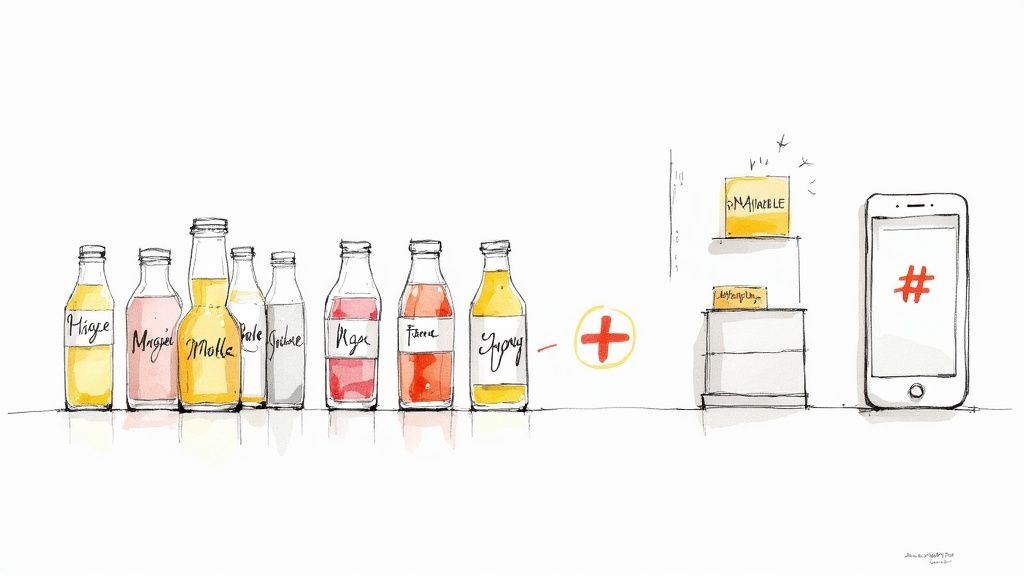
Most campaigns push traffic toward a website or app. Coca-Cola flipped that model. The first moment of engagement happened in stores, where finding your own name or a friend's name created a miniature treasure hunt. That mattered because it converted routine retail behavior into a personal interaction. The product itself became the first ad, the first conversion point, and the first share prompt.
What made the campaign multi-channel was not merely that Coke used social media. It was the handoff. A shopper found a bottle offline, photographed it, posted it with #ShareACoke, and extended the campaign to their network. Coca-Cola supported that behavior with digital can-creation experiences and live events where people could print custom names, bridging the gap for consumers who could not find their exact name in stores.
That is the deeper lesson: a physical object can be the spark, but distribution can come from customers. The social layer worked because the retail layer gave people something specific to share.
Most brands cannot customize national packaging runs, but they can still borrow the structure. The minimum viable version is surprisingly manageable:
A realistic version for ecommerce: include a personalized card in each shipment with a QR code that opens a branded landing page. From there, trigger an automated sequence:
Smaller teams can often outperform bigger brands: they cannot mass-produce custom bottles, but they can create highly personal post-purchase flows faster.
Apple's launch campaigns for the original iPhone and its successors set the gold standard for multi-channel marketing, masterfully building anticipation and controlling a global narrative. The strategy was centered around a single, theatrical event: the keynote presentation. This served as the epicenter from which a perfectly synchronized wave of marketing activity was unleashed across multiple channels, creating an unprecedented level of consumer excitement and demand.
The campaign's brilliance was in its phased release of information. It began with controlled leaks and media hype, culminated in the keynote reveal, and was immediately followed by a coordinated blitz of TV ads, print media, and digital content. This created an immersive experience that made the product launch feel like a cultural event, not just a product release.
Apple's approach was a masterclass in narrative control and channel synergy. Each channel had a specific role, but all worked in concert to reinforce a singular message of innovation and desire. From the iconic keynote to the in-store experience, the messaging was consistent, premium, and powerful.
Key Insight: The campaign succeeded by orchestrating a slow, deliberate reveal that built incredible suspense. By treating the product launch like a blockbuster movie premiere, Apple transformed consumers into an eager audience waiting for the curtain to rise.
While few can match Apple's scale, the principle of a coordinated, multi-channel launch is highly replicable. The goal is to make your audience feel like they are part of an exclusive event. For a new product or service launch, a business could use a similar sequenced approach with modern tools.
Imagine launching a new online course. You could build anticipation with a series of automated communications:
This sequence creates a VIP experience and uses different channels to keep your audience engaged. By building anticipation, you can ensure your launch day is a success, demonstrating how effective multi channel marketing campaign examples can be adapted for any business. You can explore how to set up these kinds of sequences by learning more about marketing automation workflows.
Nike's "Just Do It" campaign is the gold standard for long-term, integrated multi-channel marketing. For over three decades, this simple yet powerful slogan has transcended advertising to become a cultural mantra. The campaign masterfully weaves a consistent brand philosophy across every conceivable channel, from iconic TV spots and print ads to cutting-edge digital apps and athlete sponsorships. This consistency ensures that whether you see a billboard with Serena Williams or get a notification from the Nike+ app, the core message of empowerment and action remains the same.
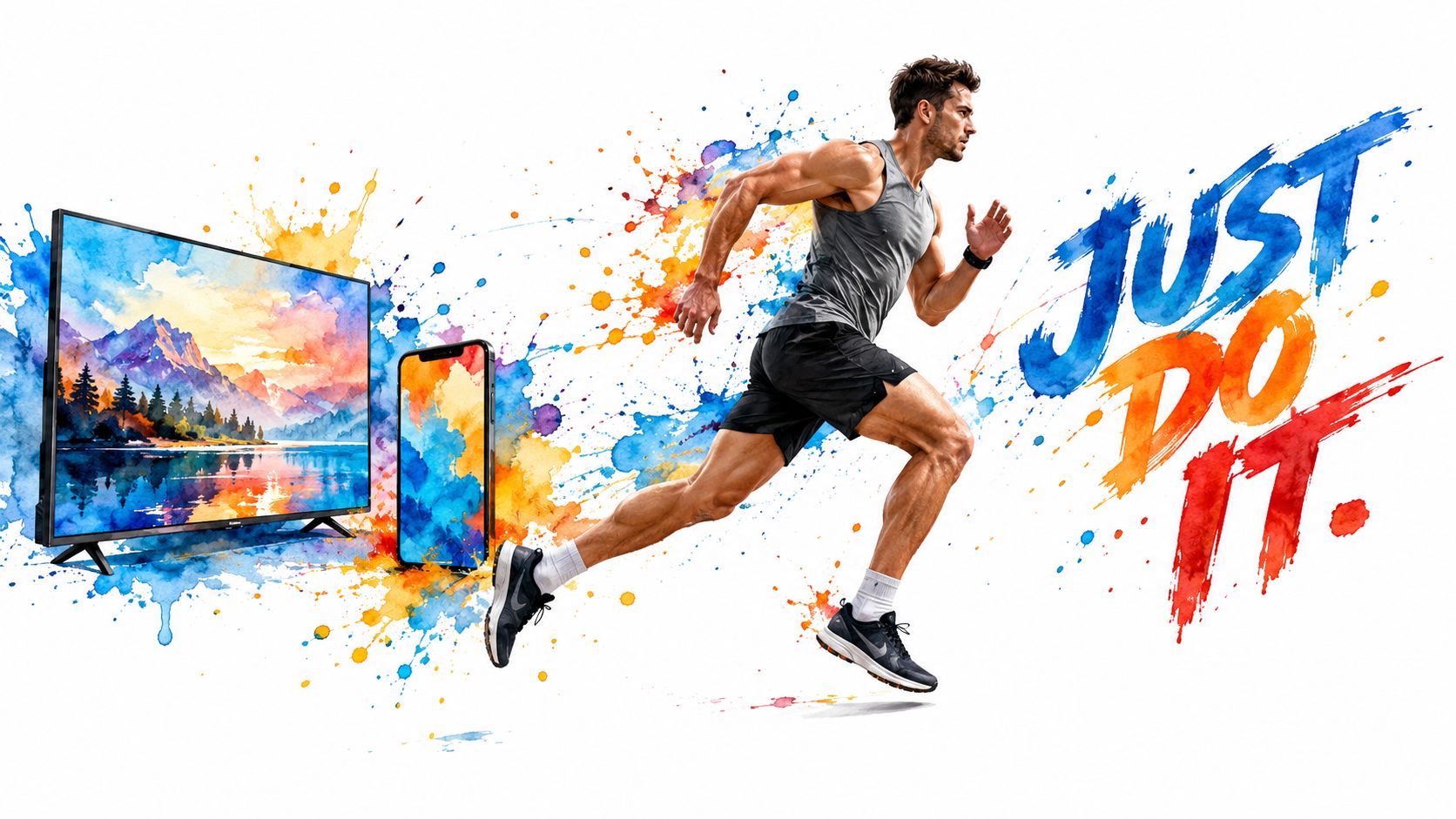
The campaign's longevity comes from its ability to evolve while staying true to its core. It began with traditional media featuring athletes like Bo Jackson and Michael Jordan, creating a powerful association with peak performance. As technology shifted, Nike seamlessly pivoted, integrating the "Just Do It" ethos into digital experiences like the Nike+ ecosystem, which transformed a solitary run into a connected, social activity.
The brilliance of "Just Do It" lies in its focus on a core brand value rather than a specific product. This allows the message to be adapted and applied across decades of changing media landscapes and cultural moments, creating one of the most powerful multi channel marketing campaign examples in history.
Key Insight: A truly effective multi-channel strategy is built on a timeless core message that can be consistently translated across any platform, from a physical retail store to a digital app, creating a unified brand experience.
Your business can adopt Nike's principle of a unified core message, even without a global budget. The key is to define your central brand promise and deliver it consistently across different touchpoints. For example, a local fitness studio promoting a "6-Week Challenge" could create an integrated follow-up sequence.
After a prospect signs up online, an automated workflow can engage them across channels:
This multi-channel approach reinforces the studio's core message of support and motivation, creating a cohesive and encouraging customer journey that boosts engagement and retention.
Red Bull has masterfully transcended being just an energy drink to become a global media and lifestyle brand, a testament to its long-term multi-channel marketing vision. Instead of focusing on the product itself, Red Bull built an entire culture around extreme sports, music, and adventure, creating content and experiences that resonate with its target audience. This strategy positions the brand as an authentic participant in these communities, not just a sponsor.
The campaign integrates spectacular live events, high-production original content, athlete partnerships, and owned media platforms. From the jaw-dropping Felix Baumgartner stratosphere jump to the annual Red Bull Rampage mountain biking competition, the brand creates moments that are highly shareable, fueling a self-sustaining marketing engine that blurs the lines between advertising and entertainment.
Red Bull’s genius lies in its content-first approach. It doesn't sell a drink; it sells the adrenaline and inspiration associated with what people can achieve when they have "wings." This allows the brand to own the conversation across a diverse set of channels where its audience lives and breathes.
Key Insight: Red Bull succeeded by building a brand around a lifestyle, not a product. Their marketing provides genuine value and entertainment to their audience, making the product a natural part of the experience rather than the focus of a hard sell.
While staging a stratosphere jump is out of reach for most, the principle of building a community around shared values is not. A local business, like a martial arts studio, can replicate this by creating a lifestyle brand around discipline and personal growth. They can use multiple channels to engage students and prospects:
This sequence fosters a sense of community and provides value beyond just the classes, creating one of the most effective multi channel marketing campaign examples for local businesses.
Starbucks has mastered the art of creating a cohesive ecosystem where digital and physical experiences merge, making it a benchmark for loyalty-driven multi-channel marketing. The strategy revolves around its powerful mobile app and the Starbucks Rewards program, which together create a smooth journey from ordering at home to picking up in-store. This approach transforms transactional purchases into an integrated, personalized experience that builds powerful brand loyalty.
The campaign connects every customer touchpoint, from personalized email offers based on purchase history to in-app mobile ordering that syncs directly with in-store operations. This integration not only provides convenience for the customer but also gathers valuable data that Starbucks uses to further refine its personalized marketing efforts, creating a virtuous cycle of engagement and retention.
Starbucks' strategy is built on a foundation of technology designed to solve real customer problems, like waiting in line. By making the customer's life easier, they drive adoption of their digital channels, which in turn fuels their marketing engine with rich, first-party data for personalization.
Key Insight: The success of this strategy lies in its seamless integration. The transition from a digital action (ordering on the app) to a physical one (picking up in-store) is frictionless, making the technology feel like a natural extension of the brand experience.
Any business can adopt Starbucks' focus on creating a unified customer journey. The goal is to use technology to bridge the gap between your digital marketing and your physical product or service. You can use platforms that support multiple channels to create a connected experience. For instance, a local service business could confirm appointments and gather feedback.
This sequence provides value at each stage of the customer journey, demonstrating that powerful multi channel marketing campaign examples can be built by thoughtfully connecting different communication tools. To see more ways to connect with your audience, you can learn more about the best customer engagement platforms.
Old Spice's "The Man Your Man Could Smell Like" campaign is one of the cleanest examples of cross-channel marketing because each channel changed what happened in the next one. TV created awareness, social platforms surfaced audience prompts, YouTube became the response engine, and PR amplified the whole feedback loop. That is more than a brand appearing in multiple places; it is channels interacting in sequence.
The performance was exceptional. According to coverage from Advertising Age, Old Spice generated massive earned media attention during the response phase, and the brand reported sharp sales gains after the campaign. Wieden+Kennedy case coverage has also documented how the live video response phase transformed a successful ad into a participatory media event.
The original TV creative did the job most brands stop at: it got attention. But Old Spice did not stop there. Once the commercial started circulating online, the team used social listening to identify comments, jokes, celebrity mentions, and fan questions worth answering. Then it built a rapid production workflow to turn selected prompts into custom videos featuring Isaiah Mustafa, published at speed on YouTube and circulated back through Twitter and Facebook.
The result was a campaign that behaved more like a newsroom than a classic ad buy.
A lot of brands call any channel mix cross-channel. This one qualifies. Viewers saw the TV ad, went online to react, those reactions shaped new creative, and the new creative generated more press and more social conversation. Each channel informed the others. It provides a clear example because the handoffs are visible. It is also a useful reference point when people ask about cross-media campaigns versus true cross-channel coordination: media variety alone is not the same as channels actively influencing each other.
The operational lesson is easy to miss because the campaign feels spontaneous. It was fast because it was pre-structured. The team had a strong character, a simple set, a clear approval boundary, talent on hand, and a social team empowered to choose which prompts to escalate. In other words, governance was built before the public interaction started.
Smaller brands can copy that model without filming 180 videos. The minimum version is:
That is why I think Old Spice remains so useful: it teaches process, not just humor.
Amazon Prime Day is a masterclass in creating a manufactured sales holiday through an intense, coordinated multi-channel marketing blitz. This annual event leverages nearly every available channel to build anticipation and drive a substantial volume of sales in a short period. The campaign transforms a standard e-commerce platform into a global retail event, demonstrating how to orchestrate a high-stakes, time-sensitive promotion.
The core strategy is to create an inescapable sense of urgency and exclusivity for Prime members. Amazon initiates its marketing efforts weeks in advance, building momentum that culminates in a multi-day sales frenzy. This immersive approach ensures that consumers are aware, excited, and primed to purchase across a multitude of touchpoints.
Recent Amazon reporting shows the scale of the event. In its official Prime Day announcement, Amazon has framed Prime Day as a member-acquisition and deal-discovery engine, while its corporate updates on About Amazon have highlighted record sales and strong independent seller participation in recent editions.
The brilliance of Prime Day lies in its omni-channel saturation. Amazon doesn't just promote the event; it makes it impossible to ignore across online channels for weeks. By coordinating every channel to point toward a single, time-bound event, it creates a powerful gravitational pull that captures consumer attention and spending.
Key Insight: Prime Day's success comes from manufacturing urgency at a massive scale. By creating a limited-time event and using every channel to amplify scarcity (e.g., "Lightning Deals"), Amazon compels immediate action and overcomes purchase hesitation.
While replicating Amazon's scale is impossible for most, the principle of a coordinated, multi-channel "flash sale" event is highly effective. A business can create its own "Annual Sale Day" and build a promotional sequence around it. Using automation, you can create a powerful customer communication flow.
For example, a week before your big sale, you can launch a sequence for your SMS subscribers:
This type of integrated campaign creates excitement and ensures your message is seen across multiple platforms. It's a prime example of how to execute effective multi channel marketing campaign examples that drive significant revenue. You can learn more about SMS marketing for ecommerce to build similar high-impact events.
Dollar Shave Club’s launch is a masterclass in how a challenger brand can use an authentic voice and a lean, multi-channel approach to disrupt a legacy industry. The campaign centered around a low-budget, hilariously irreverent YouTube video that directly addressed consumer pain points with wit and personality. This video didn't just sell razors; it sold an identity and a community that people wanted to join.
The strategy brilliantly used a single piece of viral content as the gravitational center for a broader digital ecosystem. The video drove massive traffic to their website, which was optimized for a single purpose: to convert viewers into subscribers. That smooth transition from entertainment to transaction was the key to its explosive growth, proving that powerful branding can be a formidable marketing channel in itself.
Trade reporting from Forbes and long-running discussion of the launch in startup and ad circles have kept this campaign relevant because the production was modest but the message discipline was not.
The genius of Dollar Shave Club's approach was its focus on creating shareable content that felt organic, not like a corporate advertisement. They understood that their target audience valued authenticity and humor, and they built their entire multi-channel funnel around that core insight. The viral video was the hook, but the subscription model and subsequent customer communications created long-term value.
Key Insight: The campaign succeeded by building a brand, not just selling a product. They created content that was so entertaining and relatable that people wanted to share it, turning their initial audience into a powerful, word-of-mouth marketing engine.
Startups can replicate this by focusing on a single, high-impact piece of content and building a simple, automated funnel around it. Instead of a high-production video, it could be a powerful case study, a webinar, or an insightful blog post. The goal is to drive traffic to a landing page and then use automated follow-ups to nurture the lead.
A business could use a compelling piece of content to capture email addresses and phone numbers, then trigger a multi-touchpoint sequence:
This approach combines high-value content with personalized, automated follow-up, creating one of the most effective multi channel marketing campaign examples for building relationships and driving conversions on a startup budget.
Unilever's Dove brand redefined purpose-driven marketing with its enduring "Real Beauty" campaign, a masterclass in building brand equity over the long term. Instead of focusing solely on product features, Dove initiated a global conversation about narrow beauty standards, using its platform to advocate for body positivity and diverse representation. This long-form approach transformed the brand from a simple soap manufacturer into a cultural advocate.
The campaign's strength lies in its emotional resonance and multi-channel execution, which has spanned decades. It began with traditional channels like print ads and broadcast commercials featuring real women, not models. This foundation was then massively amplified through viral digital content, such as the "Evolution" and "Real Beauty Sketches" videos, which generated billions of views and sparked worldwide dialogue across social media platforms.
Dove continues to position the campaign as a long-term platform rather than a one-off ad concept through the Dove Self-Esteem Project, which gives the brand a concrete educational extension beyond media impressions.
Dove's strategy was to build a brand identity closely linked to a social mission, making the two inseparable. It created content that resonated on a human level and distributed it across a wide array of channels to ensure the message reached audiences in different contexts.
Key Insight: The campaign's success proves that a powerful brand purpose, consistently communicated across multiple channels over time, can create a deeper customer loyalty than product-focused advertising ever could.
Building a purpose-driven campaign requires authenticity and commitment. A local service business, like a wellness clinic, could create a campaign around community mental health awareness. This initiative could be one of the most effective multi channel marketing campaign examples for a local business.
They could start by hosting a free community webinar on stress management, promoted via local social media ads and email lists. Using automation, they can manage the follow-up to build a relationship:
This sequence transforms a single event into an ongoing, supportive conversation, positioning the clinic as a trusted community resource and nurturing potential clients through a thoughtful, multi-channel journey.
GoPro masterfully transformed its customers into its most powerful marketing department, creating a self-sustaining ecosystem built on user-generated content (UGC). Instead of just selling a camera, GoPro sold a lifestyle of adventure and the ability to capture it. This strategy turned product users into passionate creators, whose authentic content became the core of GoPro's multi-channel presence.
The campaign created a powerful flywheel effect: customers buy a camera, capture incredible footage, and share it with the brand. GoPro then curates and distributes this content across its vast network, which inspires new customers to buy a camera and join the movement, starting the cycle anew. This model demonstrates one of the most effective multi channel marketing campaign examples powered by community.
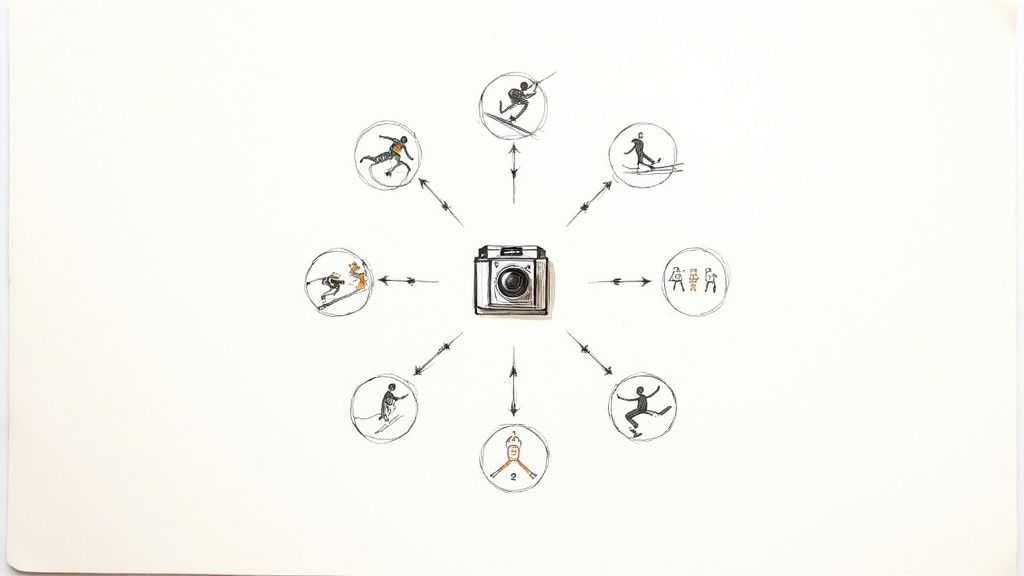
The brilliance of GoPro's strategy lies in its ability to generate high-quality, emotionally resonant marketing assets at a massive scale with minimal internal production cost. The company provides the tools and the platform, then empowers its community to tell the brand's story across every conceivable channel.
Key Insight: GoPro’s success came from selling an identity, not just a product. The camera was the ticket to a community of adventurers, and sharing content was the proof of membership.
Any business can foster a UGC-powered community by making it easy and rewarding for customers to share their experiences. A local service business, like a martial arts studio, could run a "Student of the Month" campaign encouraging students to submit videos of them practicing a new move.
This can be managed through a simple, automated multi-channel follow-up to engage participants:
This approach not only generates authentic marketing content but also strengthens community bonds and increases student engagement, all through a coordinated and automated communication flow.
Before the table, it helps to pull out the repeatable patterns. Across these campaigns, the strongest performers all had one campaign owner, one message architecture, and channel-specific roles. Apple did not ask every team to invent a different launch story; the keynote set the narrative, retail reinforced it, PR expanded it, and the website converted demand. Starbucks did something similar in a retention context: the app acted as the hub, email personalized offers, and stores fulfilled the promise. Amazon's Prime Day playbook is another version of the same rule, with each channel assigned to anticipation, urgency, conversion, or reminder.
The second shared pattern is sequencing. Multi-channel campaigns rarely work when every message lands at once. The better model is staged release: broad awareness first, then interest capture, then direct-response prompts, then follow-up and measurement. In my view, this is also the biggest difference between campaigns that look expensive and campaigns that perform. Coordination beats channel count.
A third pattern is feedback. Old Spice listened before it responded. GoPro lets community content shape what gets amplified next. Starbucks uses purchase behavior to inform future offers. That feedback loop is what turns a campaign into a system.
Large brands usually run these campaigns through a central owner or integrated marketing lead, then distribute execution to specialist teams, agencies, local markets, and channel operators. Apple is the clearest governance example: one launch narrative, strict brand control, synchronized asset release, and retail execution trained to mirror the keynote message. Starbucks shows a more operational model where marketing, app product teams, loyalty, and store operations have to align because a bad handoff at pickup breaks the campaign promise. Amazon adds the contractor and vendor complexity layer: merchandising, paid media, CRM, app teams, logistics, and seller communications all need the same event calendar and approval windows.
If you work with multiple contractors or vendors, the practical takeaway is simple: keep one approval chain, one shared calendar, one source of truth for offers and dates, and one KPI dashboard. Without that, multi-channel quickly becomes channel conflict. That same governance logic also applies to channel marketing and vendor marketing campaigns, where shared assets and timing matter just as much as channel selection.
| Campaign | Implementation complexity | Resource requirements | Expected outcomes | Ideal use cases | Key advantages | Key risks / challenges |
|---|---|---|---|---|---|---|
| Coca‑Cola — "Share a Coke" | High — complex personalization & multi‑channel coordination | High production & inventory management; digital tools | Increased engagement, large UGC volume, modest sales lift (~2%) | Mass‑market personalization, seasonal or viral initiatives | Strong emotional connection; social buzz; online‑offline integration | Inventory complexity; higher costs; environmental criticism |
| Apple — iPhone Launch (2007–2010) | Very high — tightly orchestrated global launch and PR control | Very high budgets for production, retail partnerships, events | Massive anticipation, category creation, huge earned media | Major product launches, premium positioning | Consistent messaging; demand generation; extensive media coverage | Requires strong brand equity; very high cost; hard to replicate |
| Nike — "Just Do It" | High but repeatable — long‑running global consistency | High investment in talent, sponsorships, content | Sustained brand equity, market share growth, cultural impact | Long‑term lifestyle branding and emotional positioning | Consistent global identity; flexible creative framework | Athlete controversies; message fatigue; ongoing investment |
| Red Bull — Lifestyle & Extreme Sports | High — events, owned media, and content ecosystem | Significant spend on events, content production, media teams | Differentiated lifestyle brand, strong community engagement | Content‑led positioning, youth and extreme‑sport audiences | Authentic owned media; strong community and organic reach | High event costs; safety/PR risks; need for continual innovation |
| Starbucks — Customer Experience | High operationally — tech + global in‑store consistency | Investment in mobile app, loyalty platform, staff training | Higher retention, repeat visits, operational efficiency | Retail with repeat customers; omnichannel convenience | Seamless digital‑physical experience; rich customer data | Tech failures; privacy concerns; global consistency challenges |
| Old Spice — "The Man Your Man Could Smell Like" | Moderate — creative with real‑time social execution | Moderate production cost; active social team | Rapid viral engagement, big short‑term sales lift | Rebranding, viral/social campaigns targeting younger audiences | Extremely cost‑effective earned media; strong short‑term impact | Short‑lived virality; hard to sustain; easy to imitate |
| Amazon — Prime Day | Very high — coordinated promos, logistics & IT at scale | Massive fulfillment, IT capacity, marketing spend | Massive sales spikes, increased subscriptions, media attention | Large‑scale e‑commerce promotions and subscriber activation | Drives urgency; leverages customer data; multi‑channel reach | Operational strain; site outages; environmental impact |
| Dollar Shave Club — Viral Launch | Low–Moderate — simple production + subscription ops | Low initial production cost; scaling investment later | Rapid awareness, fast subscription growth, market disruption | Startups/DM brands seeking disruptive launches | Low‑cost viral reach; authentic voice; subscription revenue | Viral unpredictability; scaling challenges; niche humor appeal |
| Dove — "Real Beauty" | High — long‑form, research, programs and partnerships | Significant long‑term investment; partnerships and research | Strong purpose positioning, positive social impact, long‑term sales gains | Purpose‑driven branding and reputation building | Differentiation via purpose; measurable social programs | Risk of "purpose washing"; backlash on inclusivity; ROI hard to quantify |
| GoPro — UGC Ecosystem | Moderate — platform & community management focus | Investment in platforms, creator partnerships, curation tools | Authentic content flywheel, low ad spend, strong advocacy | Products that inspire user content and demos | Low‑cost authentic content; product demonstrated in use; community loyalty | Dependent on UGC volume/quality; rights management; narrative control |
A more useful conclusion than "be present everywhere" is to design a system where each channel has a role and each handoff feels intentional. Multi-channel means using several channels; cross-channel means those channels connect; omnichannel means the customer experiences that connection as one brand relationship. Most businesses do not need to reach omnichannel maturity to improve results, but they do need more coordination than random posting plus a newsletter.
For channel marketing teams, vendor marketing groups, and agencies working together, the operating model matters as much as the creative. Set one campaign objective, one audience definition, one offer hierarchy, and one source of truth for assets. Then map which team owns awareness, which owns capture, which owns follow-up, and which owns reporting. I have seen multi-channel plans break less from bad ideas than from unclear ownership. That is especially true for channel marketing and vendor marketing campaigns, where distributed execution can either extend reach or create conflicting messages.
Recalling the strategic breakdowns, several core principles stand out as essential for replication:
If your plan includes direct mail, flyers, inserts, or local election-style print as part of a cross-media campaigns rollout, it helps to evaluate production partners early rather than treating print as an afterthought; for one example of how print can fit into a coordinated campaign workflow, see The Print Warehouse Ltd's page.
Moving from inspiration to implementation requires a clear, step-by-step approach. Start by selecting one specific customer journey you want to improve, such as new lead follow-up, appointment reminders, or post-purchase engagement.
Next, define the sequence. What is the ideal communication flow? Perhaps it begins with an instant welcome text message, followed by a personalized ringless voicemail drop 24 hours later to add a human touch, and then a follow-up SMS with a valuable resource or special offer a few days after that. This layered approach ensures your message is heard without being intrusive. As you build these funnels, remember that turning a prospect into a customer is only half the battle. To maximize the impact of your integrated efforts and ensure your campaigns drive real results, you might also explore effective conversion rate optimisation strategies that help you fine-tune every touchpoint.
Ultimately, the power of multi-channel marketing lies in its ability to build stronger, more meaningful relationships at scale. By thoughtfully integrating direct and digital channels, you cut through the noise, show customers you value their time, and create experiences that foster trust and drive long-term loyalty.
It means a brand uses more than one channel to reach or influence customers. Those channels might include email, SMS, social media, paid ads, direct mail, retail, phone, or in-app messaging. The term by itself does not guarantee those channels are well connected.
A multi-channel marketing system is the operating setup behind the campaign: channels, automation, audience data, message rules, calendars, approvals, and reporting. In practice, it is the combination of tools and processes that lets a team send the right message through the right channel at the right time.
Multichannel means the brand is active across several channels. Omnichannel means those channels are coordinated around the customer so the experience feels unified. A retailer sending separate email, SMS, and in-store promotions is multichannel. A retailer whose app, loyalty account, offers, service history, and store pickup all work together is closer to omnichannel.
Old Spice is a strong example. A TV commercial created awareness, social comments and mentions shaped the next wave of content, YouTube hosted personalized responses, and PR coverage spread those responses further. The channels were connected in sequence rather than operating independently.
Usually through centralized planning and distributed execution. There is typically one campaign owner, one message framework, one timeline, and one KPI set. Specialist teams then adapt the work for PR, retail, paid media, CRM, social, and local markets without changing the core offer or theme. Apple, Starbucks, and Amazon each show different versions of that model.
Ready to build your own powerful multi-channel campaigns? Call Loop provides the tools to seamlessly integrate SMS, voice calls, and ringless voicemails into your marketing automation. Start your free trial today and see how easy it is to implement the strategies you've learned about.
Chris Brisson
Chris is the co-founder and CEO at Call Loop. He is focused on marketing automation, growth hacker strategies, and creating duplicatable systems for growing a remote and bootstrapped company. Chat with him on X at @chrisbrisson


Trusted by over 45,000 people, organizations, and businesses like


