
See a Demo
You're just one step away from seeing Call Loop in action.
Enter your information below to watch a demo right now.

You're just one step away from seeing Call Loop in action.
Enter your information below to watch a demo right now.

An opt-in text is simply a message where a customer gives you their explicit permission to send them marketing messages via SMS. Think of it as the digital version of a friendly handshake—it establishes consent before you even start the conversation. This permission isn't just a nice-to-have; it's a legal and practical must for any successful text message marketing.
Picture your customer's phone as their personal space, almost like their home. Sending a text out of the blue is like knocking on their door unannounced to make a sales pitch. It feels intrusive, it's usually unwelcome, and it's quickly ignored.
An opt-in text, on the other hand, is like being invited in. The customer has willingly opened the door, showing you they're actually interested in what you have to say. This permission-first approach is the bedrock of respectful, and seriously effective, communication.

This move from interruption to invitation is exactly why SMS text messaging has such ridiculously high engagement rates. When people agree to hear from you, they're way more likely to open, read, and act on your messages. It’s a strategy built on trust, not annoyance.
Getting that opt-in does more than just keep you on the right side of the law; it completely changes the quality of your marketing for the better. When you focus only on people who've raised their hands and said "yes," you guarantee your messages are hitting a receptive audience.
This leads to some huge benefits:
The big idea behind opt-in text is simple: marketing should feel like a welcome conversation, not an unwanted interruption. Earning the privilege to talk to customers on their most personal device is a game-changer when you treat it with respect.
Opt-in text marketing is now a cornerstone of digital engagement worldwide. In fact, its acceptance is so widespread that 93% of consumers in the U.S. have either signed up for or are open to receiving texts from businesses. For those looking at other text-based channels, these Actionable WhatsApp Marketing Tips offer some great related insights.
Let's talk about compliance. I know, it's not the sexiest part of marketing, but getting it right is the bedrock of a solid text marketing strategy. While the rewards are massive, the penalties for messing up are just as big. Think of the rules as your greatest asset, not a hurdle.
The main law you need to know in the United States is the Telephone Consumer Protection Act (TCPA). It was created to stop people from getting slammed with unwanted calls and texts. Under the TCPA, you can face fines up to $1,500 per message for violations. For a small business, that could be a knockout blow.
Imagine a local bakery, "Sweet Bites." They're eager to drive more foot traffic, so they take their customer email list—which happens to have phone numbers—and start blasting out daily deals. At first, sales tick up. But then, the complaints start rolling in. A customer who gave their number for a delivery order never agreed to get marketing texts, and they file a TCPA complaint. Suddenly, that little bakery is staring down a massive lawsuit because they didn't get the right kind of permission.
That cautionary tale brings us to the most critical piece of the puzzle: express written consent. Now, this doesn't mean you need a pen and paper. In our world, it means a customer takes a clear, undeniable action to say, "Yes, please send me marketing texts."
Here’s what that looks like in practice:
The bottom line is that consent must be unambiguous. You can't just assume someone wants your texts because they bought something from you. And it's not just about staying legal; it's about smart business. Running a global campaign? You'll also want to get a handle on the financial side by understanding international text message costs.
On top of the TCPA, there's the Cellular Telecommunications Industry Association (CTIA). They set best practices that big carriers like Verizon and T-Mobile follow to a T. These aren't laws, but if you ignore them, your messages will get filtered or blocked. Good luck running a campaign then.
The core idea behind both the TCPA and CTIA guidelines is simple: be transparent. Your subscribers should always know who is texting them, why, and how to make it stop.
Here are a few key CTIA principles you need to live by:
If you frame compliance as a tool for building trust, you're on the right track. When you respect your audience's inbox, you're not just protecting your business—you're building the kind of long-term relationships that actually grow it. For a deeper dive into our approach, you can check out our full anti-spam policy.
Once you’ve got the rules down, it's time for the fun part: growing a list of subscribers who are genuinely excited to hear from you. Building your audience isn't about casting the widest net possible. It’s about creating clear, compelling invitations for the right people to join your conversation.
Effective list growth comes down to making the opt-in text process simple, valuable, and easy to find at every customer touchpoint. Your goal is to weave SMS sign-up opportunities into the places where your audience already hangs out, from your website to your physical storefront. The key is to always offer a clear incentive—what’s in it for them?
This visual guide breaks down the absolute core principle of compliant messaging: before you send a single text, you must have consent. Period.
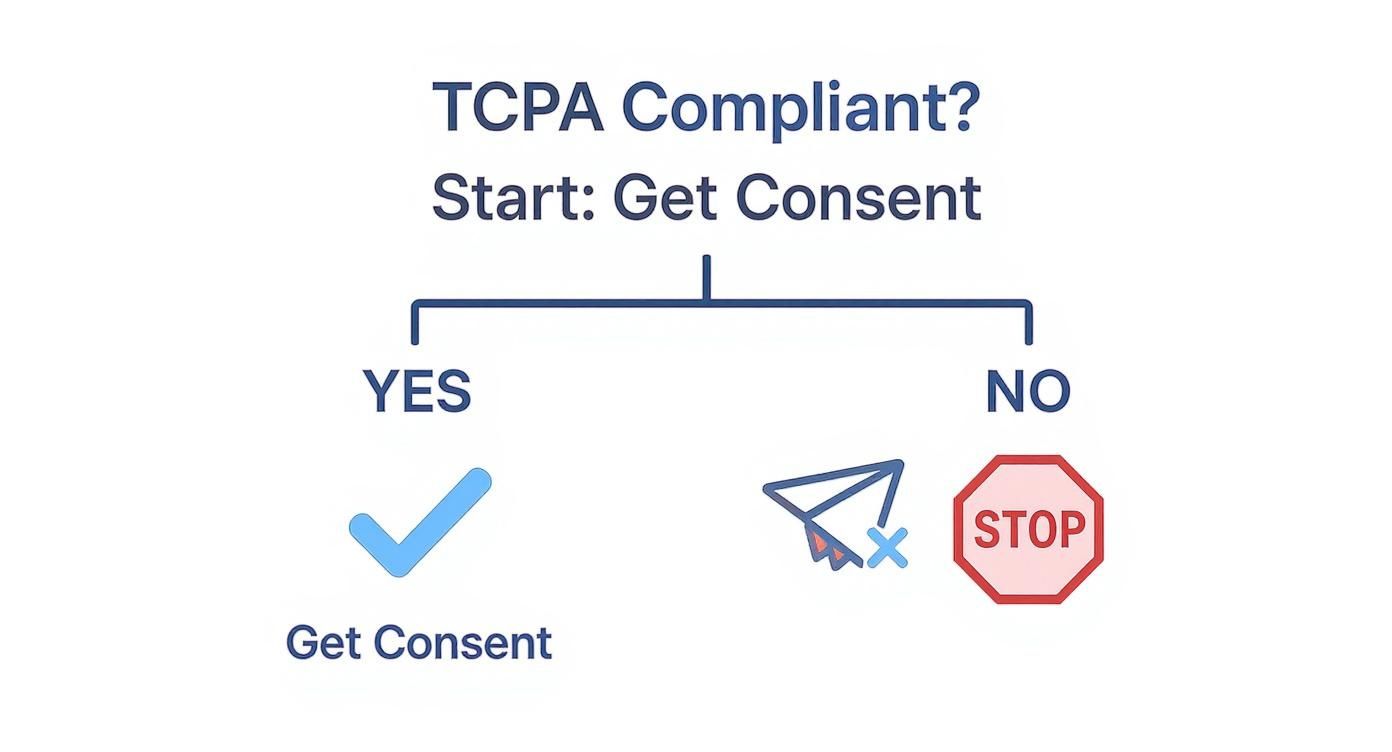
This simple decision tree highlights a non-negotiable rule. If you haven't secured consent, all messaging activities must stop to stay compliant.
To get customers to opt in, you need to offer real value right out of the gate. A powerful incentive can turn a moment of hesitation into a decisive "yes." Think about what would make your ideal customer instantly reach for their phone.
Here are a few proven methods that just plain work:
For even more creative ideas, check out our guide on 5 ways to grow your SMS marketing list starting today.
When someone subscribes, you have two main ways to confirm their consent: single opt-in and double opt-in. While single opt-in is faster, it comes with some serious risks. For our money, double opt-in is the gold standard for building a high-quality, engaged list that will actually drive results.
Let’s break down the two approaches.
This table lays out the core differences between single and double opt-in. Choosing the right method is crucial for balancing list growth speed with list quality and legal compliance.
While the extra step in double opt-in might seem like a barrier, it's your best defense against compliance headaches and list fatigue. It guarantees that every single person you text actually wants to be there. This quality-over-quantity approach pays off big time in the long run.
Getting the opt in text is the first big hurdle, but it’s really just the starting line. Now the real work begins: proving to your new subscribers that giving you their number was a smart move. The messages you send next will decide if you build a loyal community or just a list of people scrambling to text "STOP."
The goal here is to move past that initial permission slip and earn genuine, lasting engagement. That means every single text needs to be built around your subscriber's interests, delivering real value without wasting their time. It’s all about turning that first "yes" into a profitable, long-term relationship.
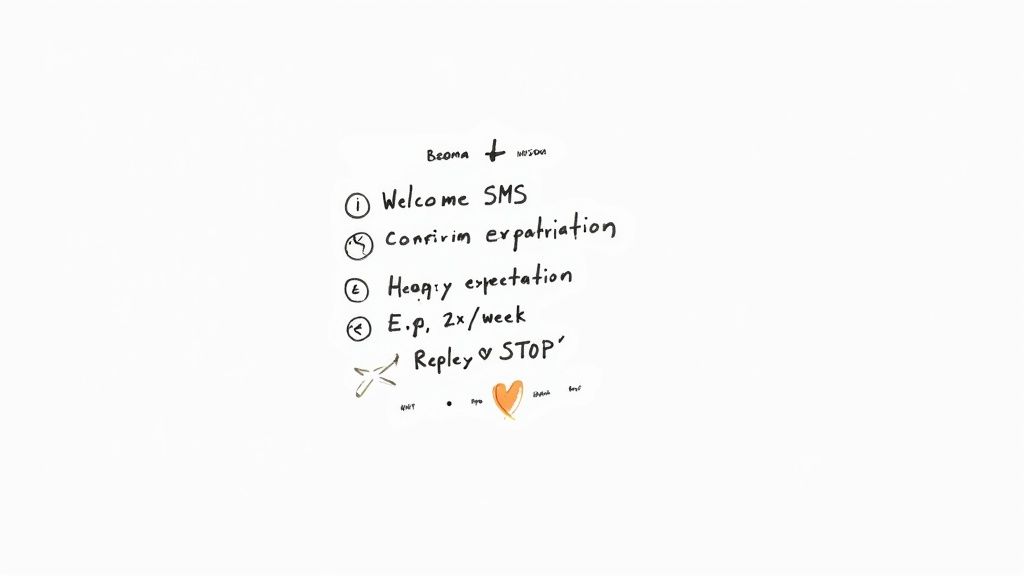
This kind of planning shows the level of thought that should go into every campaign, from that first hello to your ongoing promos.
Pay attention here, because your very first text after someone opts in is the most important one you'll ever send. It sets the tone for everything that follows and, just as crucially, it keeps you legally compliant. A solid welcome message works as both a confirmation and a roadmap, telling subscribers exactly what they signed up for.
A great welcome text has to nail three key things:
Remember, the main job of this first message is to be helpful and transparent. When you clearly confirm the subscription and set expectations, you build trust from day one and show you respect their inbox.
If you skip these details, you're not just damaging trust; you're also risking having carriers filter your messages. That’ll kill your deliverability before you even get a chance to get started.
Once you’ve sent that perfect welcome, the game shifts to keeping your audience hooked for the long haul. This takes more than just blasting out discounts whenever you feel like it. You need to consistently provide value that makes subscribers feel like they're part of an exclusive group.
Think of your text list as a VIP club. The stuff they get should feel special—better than what you post on your public social media channels. That’s how you build loyalty and keep them from hitting that opt-out button.
Here are a few strategies that flat-out work:
By mixing your promos with helpful, personalized updates—and using smart tools like ringless voicemail when it makes sense—you create a communication strategy that people actually appreciate. This approach positions your brand as a helpful resource, not just another company trying to sell them something. The result? A super-engaged list that drives real business.
While opt-in text messaging is an absolute powerhouse for getting in front of your audience, it’s not the only tool you have for reaching their phones. Ringless voicemail offers a completely different, much more specialized way to connect. This technology lets you drop a pre-recorded audio message straight into someone's voicemail box without their phone ever ringing.
Think of it like this: if an SMS message is a direct, real-time conversation, ringless voicemail is like leaving a carefully crafted, personal note for them to listen to on their own time. It’s less immediate than a text, sure, but it can also feel more personal and allows you to convey more detail and tone. This difference is critical for knowing when to pull this tool out of your toolbox.
It's also important to know that the compliance rules for ringless voicemail are a different beast. In many cases, they are even stricter than for texting. While it doesn't always fall under the same TCPA rules as a standard call or text, the regulations are always changing. The big takeaway here is that you should reserve this for informational, non-promotional messages for people who are already customers.
Because it’s so much less disruptive, ringless voicemail really shines when you need to share important info without demanding someone stop what they're doing. It’s not for blasting out sales announcements; it's a precision tool meant for specific, high-value communications. Using it this way keeps it effective and keeps you on the right side of the law.
Here are a few scenarios where ringless voicemail is a perfect fit:
The core idea is to use ringless voicemail to serve your existing relationship with a customer, not to try and create a new one. It works alongside your opt-in text strategy, handling very specific informational jobs.
When you reserve this channel for non-promotional updates, it feels like a helpful service, not an advertisement. This builds trust and ensures that when you do send a marketing text, it gets the full attention of a subscriber who has given you their consent. It’s all about letting each channel do what it does best.
Alright, enough theory. The best part of learning anything new is putting it into practice. You know the rules, you’ve seen what a solid message looks like—now it's time to roll up your sleeves and build your own compliant opt in text campaign.
This isn't as complicated as it sounds. I'm going to walk you through the entire setup in Call Loop, step-by-step. No guesswork, just a clear path to getting your campaign live and ready to grow.
Let’s get it done.
First things first: before you get a single phone number, you need a home for it. In Call Loop, we call this a "Group." Think of a Group as a dedicated contact list for a specific purpose, like "VIP Customer Alerts" or "Weekly Deals Club."
Creating one is simple:
This little bit of organization upfront is a game-changer. It means you can send super-relevant messages later on instead of blasting everyone with the same text.
Next up, you need a trigger—the magic word people will text to join your list. This is your keyword. Keep it short, simple, and relevant to your brand. The easier it is to remember and type, the more people will use it.
A local coffee shop could use "COFFEE." A clothing store might go with "DEALS" or "STYLE." You get the idea.
Once you've got your keyword, you’ll link it directly to the Group you just made. This tells Call Loop, "Hey, when someone texts this word, stick them on this specific list." This is the engine that drives your entire list-building machine, all on autopilot.
This direct link from keyword-to-group is what makes the whole process so smooth. No manual entry, no messy spreadsheets—just a clean, automated way to welcome new subscribers.
With your group and keyword locked in, the final piece is writing the automatic texts that go out the second someone subscribes. This is your first impression and your chance to get all the legal stuff out of the way. You'll need two main messages.
The Confirmation Message (for Double Opt-In)
This is the immediate reply someone gets after texting your keyword. Its only job is to get them to confirm they really want to hear from you.
The Welcome Message
After they text back "YES," this is the message that delivers the goods and officially welcomes them to your list.
And that's it. Your campaign is built, compliant, and ready for action. Now you can start plastering that keyword everywhere—on your website, in your store, on social media—and watch your list start to grow.
Even when you think you've got a handle on opt-in text messaging, a few tricky questions always seem to pop up. It's totally normal. Getting clear on these common points of confusion is the key to running a program that’s not just effective, but also confident and compliant. Let's dig into some of the questions we hear all the time.
One of the biggest gray areas for people is the whole transactional versus promotional text thing. It’s actually pretty simple when you break it down. Transactional texts are purely informational and are sent because a customer did something—think a shipping confirmation or a password reset link. Promotional texts, on the other hand, are all about driving a sale, like blasting out a flash sale announcement or a juicy discount code.
Let me make this easy for you: Nope. Absolutely not.
Think of a business card as an invitation for a professional chat, usually over the phone or email. It is not a permission slip to start sending automated marketing texts. If you add that number to your bulk SMS list without that person taking a specific action to opt in, you’re walking right into a TCPA violation.
You need undeniable, documented proof that someone specifically agreed to get marketing texts from you. That means they texted your keyword to join your list or checked a clearly-worded, compliant box on a web form.
The golden rule here is that consent has to be crystal clear for the exact type of communication you’re sending. Trying to stretch permission from another context, like getting a business card, just doesn't fly for text marketing and puts your business in a seriously risky spot.
Getting this right is non-negotiable for staying compliant.
Transactional Texts: These are functional, not persuasive. They help a customer complete a transaction they already agreed to. Think order confirmations, appointment reminders, or those two-factor authentication codes. You typically have more wiggle room with consent here since the customer’s own actions trigger these messages.
Promotional Texts: These messages are designed to get someone to buy something. We're talking flash sales, new product alerts, or special discounts. For these, you absolutely need express written consent before that first message ever goes out.
Where people get into trouble is when they blur the lines. A message that starts as a friendly shipping update but sneakily ends with a sales pitch is almost always considered promotional in the eyes of the law.
Ready to manage your opt-in text campaigns without the guesswork? Call Loop gives you the tools for compliant list growth, automated messaging, and powerful features like ringless voicemail. See how we can help by visiting https://www.callloop.com.
Chris Brisson
Chris is the co-founder and CEO at Call Loop. He is focused on marketing automation, growth hacker strategies, and creating duplicatable systems for growing a remote and bootstrapped company. Chat with him on X at @chrisbrisson


Trusted by over 45,000 people, organizations, and businesses like


