
See a Demo
You're just one step away from seeing Call Loop in action.
Enter your information below to watch a demo right now.

You're just one step away from seeing Call Loop in action.
Enter your information below to watch a demo right now.

Being able to send text later is more than just a neat trick for convenience—it's a fundamental shift in how you communicate. When you schedule your messages, you’re ensuring your texts land with maximum impact, respecting your audience's time and attention. Honestly, this one small change can be the difference between a text that gets ignored and one that actually gets a response.
In any kind of communication, when you say something can be just as important as what you say. Sending a text at the perfect moment can massively increase how effective it is, whether you're sending a simple appointment reminder or kicking off a huge Black Friday sale. It’s all about meeting people where they are, when they’re ready to listen.
I always think of a local karate studio I know. Instead of scrambling to send class reminders every day, the owner simply schedules a text to go out two hours before each session. It’s a simple automation that gives every student a timely nudge, which drastically cuts down on no-shows and keeps the classes packed.
The real power of scheduled texting comes down to basic human behavior. We know that 90% of texts are read within three minutes of being received, and response rates can soar as high as 45%. SMS is an immediate, high-engagement channel. By timing your messages just right, you're tapping directly into that powerful immediacy.
This kind of precision is a game-changer for businesses with a national audience. An e-commerce brand, for example, can schedule a flash sale announcement for 12 PM in every single time zone. That way, customers in New York and California both get the alert right at lunchtime. This simple adjustment makes the message feel more personal and relevant, which is a sure-fire way to boost open rates and drive sales.
If you're familiar with the world of email marketing automation, this concept will sound familiar. Just like automated emails are triggered by a user's action, scheduled texts are triggered by time, creating a smooth and highly effective way to stay in touch.
Deciding between sending a text now or scheduling it for later often comes down to your specific goal. Here’s a quick breakdown to help you choose the right approach.
Ultimately, having both options in your toolkit gives you the flexibility to adapt your communication strategy to any situation.
And mastering your timing isn't just for SMS. Think about scheduling a ringless voicemail to drop into a new lead's inbox the day after they download a guide from your site. You could then follow that up with a scheduled text two days later. This multi-channel sequence builds a powerful, non-intrusive follow-up that works wonders.
By scheduling your communication, you move from just reacting to proactively building relationships. You get to anticipate your audience's needs and deliver the right message at the perfect moment, turning simple texts into a powerful tool for growth.
Before we get into the heavy-duty tools, let's start with the device you use every single day. Being able to send a text later right from your smartphone is surprisingly simple, whether you're team Android or iPhone. These built-in options are perfect for those one-off reminders or simple check-ins without needing a full-blown platform.
For a lot of Android users, the ability to schedule a text is already baked into the default messaging app. If you're using Messages by Google, the process is dead simple. Just write your message, then press and hold the send button. A "Schedule send" menu will pop right up, letting you pick a preset time or a totally custom date. It's a native feature that makes it incredibly easy to tee up a future message in a few seconds.
While Android often has a direct scheduling feature, iPhone users can get the same result using the powerful, pre-installed Shortcuts app. Think of it as your personal automation assistant for all sorts of tasks, including sending a text at a specific time. You can set up an automation that triggers daily, weekly, or on a specific date, giving you precise control.
The screenshot below shows you the starting point in the Shortcuts app where you kick off a new automation.
From here, you'll tap "Create Personal Automation" and start defining your trigger—in this case, "Time of Day"—and then the action, which is "Send Message." It's a clever workaround that works like a charm for personal use.
Of course, this method isn't built for scale. For any business that needs to manage campaigns, track consent, and see analytics, you'll hit the ceiling pretty fast. When you're ready for that, the logical next step is a dedicated platform to schedule SMS messages.
Pro Tip: When setting up a one-time message with iPhone Shortcuts, create the automation for the exact date and time you need. Once the message sends, don't forget to pop back into the Shortcuts app and delete that automation so it doesn't fire off again unexpectedly.
Both of these native phone methods are fantastic for basic scheduling. But that's where they stop—they only send standard SMS or MMS messages.
They don't have the more advanced features you'd want for a real campaign, like scheduling a ringless voicemail drop or a voice broadcast. Those are the tools that let you create a much more dynamic and engaging communication sequence. Think of these built-in phone features as your entry point into the world of timed communication.
Once you start scheduling more than just a few personal reminders, you'll hit the limits of your phone's built-in features pretty fast. To really scale your communication, you need a dedicated platform—something that gives you precision, personalization, and the power to reach hundreds or thousands of people with one perfectly timed message. This is where you graduate from basic convenience to building a serious growth engine.
Professional platforms let you schedule anything, from a single critical alert to a massive bulk campaign weeks in advance. The core process is always straightforward but incredibly powerful.
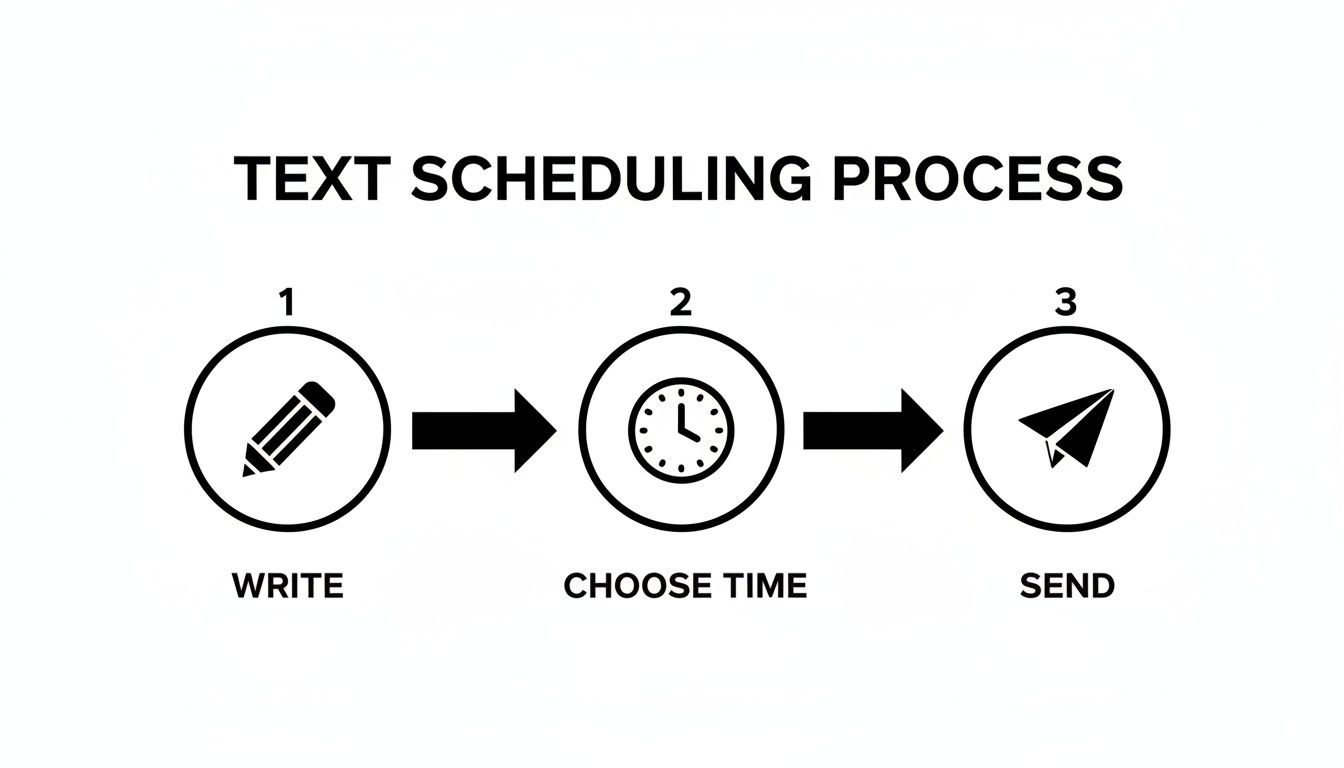
You craft the message, pick the exact time, and set it to send. This simple flow is the bedrock of any advanced outreach strategy.
The real magic happens when you move from single scheduled messages to building out entire automated drip sequences. These are pre-written series of messages—texts, ringless voicemails, and even voice broadcasts—that go out to contacts based on specific triggers or timers you set up.
Think about what happens when a new lead fills out a form on your website. A drip campaign could take over from there:
This whole sequence runs on its own, ensuring every single lead gets consistent, timely follow-up without you lifting a finger. If you want to see exactly how these work, our guide on how to send automated texts breaks it down.
Blasting a generic message to your entire list is a rookie move that gets ignored. Advanced scheduling tools let you get granular with personalization using audience segmentation and custom fields. In plain English, you can tailor your message based on someone's interests, location, or past actions.
For instance, a marketing agency could create a segment of "webinar attendees" and schedule a follow-up text just for them. By using a custom field like [FirstName], the message "Hi [FirstName], thanks for attending!" feels personal and direct, which makes a huge difference in response rates.
When you combine segmentation with scheduled sends, you make sure the right message gets to the right person at exactly the right moment. Your outreach feels thoughtful and relevant, not like spam.
There's a reason the SMS marketing space is exploding. The US market alone is projected to hit $12.6 billion by 2025, fueled by an almost unbelievable return on investment that can climb as high as 7100%. With 45% average response rates, it’s no wonder 54% of organizations view SMS as a top channel for engagement. For sales teams and event organizers, scheduling a ringless voicemail or SMS drip is a straight line to higher conversions.
An effective outreach strategy shouldn't rely on just one channel. The best platforms let you schedule not just texts but also voice broadcasts and ringless voicemail drops, creating a much more cohesive communication experience.
Understanding the nuances of automation is what separates the pros, as seen in the potential of things like Tesla's texting automation capabilities. Each channel has its own strengths.
By scheduling these different message types within a single campaign, you create a layered follow-up that grabs attention far more effectively than a lone text ever could. This multi-channel approach keeps your brand top-of-mind and gives people more ways to engage with you.
Getting the timing right is a huge first step, but a smart strategy is what really separates a winning campaign from one that falls flat. To make sure your scheduled messages actually connect with people, you need to think beyond just picking a time and hitting "send."
Following a few key practices will ensure your efforts to send text later build real relationships instead of just creating annoyance.
First things first: master the time zones. Nothing kills the mood faster than a marketing text buzzing on someone's nightstand at 3 AM. Any professional platform worth its salt will handle time zone detection automatically. This ensures your 10 AM message actually arrives at 10 AM, whether your contact is in Miami or Seattle. It's a simple sign of respect.
Just as critical is staying on the right side of the law. Always, always get explicit consent before you text someone. Make the opt-out process dead simple—a quick "Reply STOP" is the gold standard. Maintaining a Do-Not-Call (DNC) list isn't just a nice-to-have; it's a legal must that protects your business and shows you respect people's choices.
Even when you're sending messages in bulk, they should never feel like it. Building a library of go-to templates is a great way to save time, but it's personalization that truly drives engagement.
Use merge tags like [FirstName] to address subscribers by name. It's a small touch that makes each text feel like a one-on-one conversation instead of a blast to the masses.
Remember, the goal is for your scheduled message to feel timely and relevant, not just automated. A little personalization goes a long way in making your outreach feel human and valuable.
This is especially true when you start mixing channels. You might schedule a warm, conversational ringless voicemail drop for Monday and follow up with a quick, actionable SMS on Wednesday. Each message should have its own clear purpose but maintain a consistent, friendly tone.
Scheduling isn't a "set it and forget it" game. Once your messages go out, the real work begins. Now it's time to dig into your delivery reports and analytics to see what's working—and what's not.
Keep a close eye on a few key metrics:
Before launching your next campaign, a quick review can save you a lot of headaches. Here’s a simple checklist to run through.
Analyzing this data helps you understand what your audience responds to, allowing you to tweak your scheduling, copy, and overall strategy for better results next time. For a deeper dive, checking out these 10 SMS marketing best practices can give you even more foundational strategies for success. Continuous improvement is how you turn a good campaign into a great one.
It’s one thing to talk about theory, but seeing this strategy in action is where it all clicks. The ability to send a text later isn't just a neat feature; it's a powerful tool that solves real-world problems and opens up new opportunities for pretty much any business you can think of. From boosting sales to making sure patients show up, scheduled messaging gets tangible results.
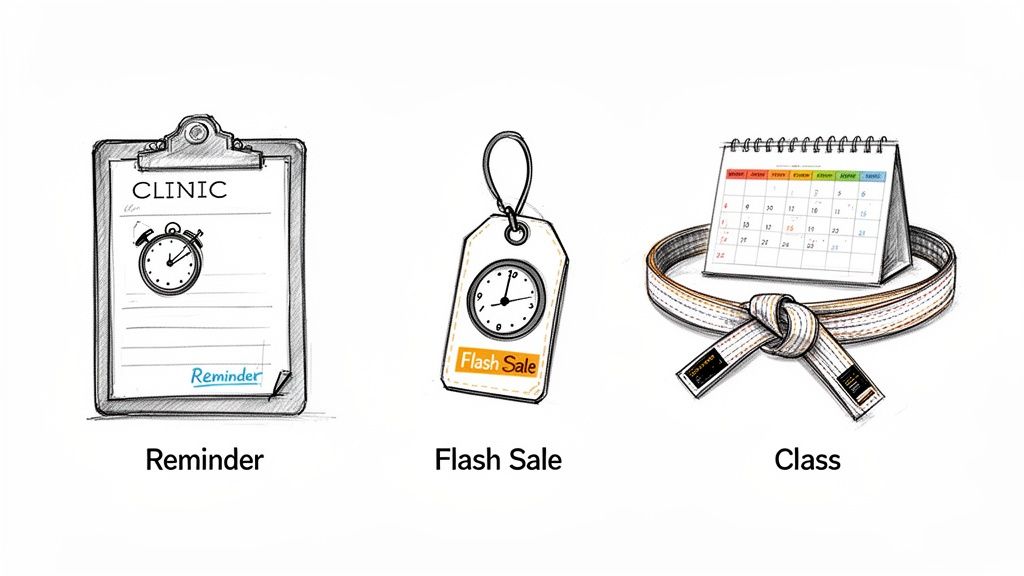
Picture a busy healthcare clinic. They can schedule a HIPAA-compliant appointment reminder to go out 48 hours before a visit, then a follow-up text 24 hours out. This simple, automated sequence can drastically cut down on costly no-shows and, just as importantly, saves the front desk staff from making hundreds of manual confirmation calls every single week.
For e-commerce, timing is everything. A flash sale announcement scheduled for 7 PM local time, right when people are unwinding at home and scrolling on their phones, is going to hit way harder than a generic blast sent at noon that ignores where your customers actually live.
A marketing agency handling a big product launch can get even more granular. They might schedule a ringless voicemail drop for the morning of the launch, followed by a text with a direct purchase link queued up for noon. This layered approach creates a coordinated punch, ensuring the message lands with maximum impact across the entire country at the same time.
These strategies work because they tap into how dominant SMS is. By 2025, it’s predicted that 5.9 billion people will be texting every day. With a 98% open rate—and 82% of people reading texts within five minutes—it's an incredibly direct channel to your audience.
The applications go way beyond sales and marketing. Think about a webinar host who can schedule a series of follow-up messages for attendees. They can drip out links to the recording, bonus materials, and related resources over several days to keep the conversation going and the engagement high.
Even a local karate studio can get in on the action. Automating class reminders, belt-testing notifications, and sending scheduled alerts about unexpected closures means parents and students are always in the loop. It’s a simple way to look professional and organized without adding a ton of work for the owner.
These examples show that scheduled messaging is more than a convenience. It's a strategic system for delivering the right information at the perfect moment, building reliability and driving desired actions, whether that's showing up for an appointment or making a purchase.
Even with a solid plan, a few questions always seem to pop up right when you're ready to send a text later. Let's clear up some of the most common ones so you can schedule your messages with confidence.
Yes, it is, but you absolutely have to play by the rules. The biggest rule of them all is getting express written consent from someone before you send them any promotional texts. This isn't just a suggestion; it's a non-negotiable first step.
You also have to give people a clear and simple way to opt out, like including "Reply STOP to unsubscribe" in your messages. This is where using a professional platform really helps. They have built-in tools to manage consent and keep you compliant with regulations like the TCPA, saving you a massive headache.
There's no single "magic" time that works for every business, but a solid rule of thumb is to send messages during normal business hours. Think somewhere between 10 AM and 6 PM in the recipient's local time zone. The last thing you want to do is wake someone up with a marketing text.
For promotional messages, I've found that mid-week afternoons tend to perform really well for a lot of companies.
The only way to know for sure is to test, test, test. Send your campaigns at different times and watch your data. See which time slots get you the most clicks and engagement, and then lean into what works for your audience.
Absolutely. This is where a more advanced platform really starts to pay for itself. You can and should schedule more than just texts to build a much more dynamic and effective outreach campaign.
This lets you build out some pretty sophisticated, multi-channel sequences. For instance, you could:
This kind of approach makes sure every touchpoint is timed perfectly for maximum impact without feeling intrusive. When you start mixing different message types, you create a far more engaging and memorable experience. It’s a powerful way to make your automated outreach feel more human.
Ready to create powerful, multi-channel campaigns with perfectly timed texts, voice broadcasts, and ringless voicemails? See how Call Loop can automate your outreach and drive real results. Start your free trial today
Chris Brisson
Chris is the co-founder and CEO at Call Loop. He is focused on marketing automation, growth hacker strategies, and creating duplicatable systems for growing a remote and bootstrapped company. Chat with him on X at @chrisbrisson


Trusted by over 45,000 people, organizations, and businesses like


