
See a Demo
You're just one step away from seeing Call Loop in action.
Enter your information below to watch a demo right now.

You're just one step away from seeing Call Loop in action.
Enter your information below to watch a demo right now.

SMS marketing best practices are the operating rules that make text campaigns effective without making them intrusive: get clear permission, send relevant messages, time them well, make action easy, and stop the moment a subscriber opts out. That matters because SMS is still one of the fastest attention channels available, with industry roundups consistently putting open rates in the 90% to 98% range and reporting much faster response than email in many campaigns, as summarized in these SMS marketing statistics. The upside is obvious. The mistakes are too: vague consent language, over-messaging, fake personalization, and texting at the wrong moment.
This guide focuses on the practices that move results in 2026: compliance, concise copy, segmentation, timing, conversion paths, value, opt-outs, brand voice, measurement, automation, and channel integration. The biggest performance gains usually come from fixing the fundamentals before layering on clever tactics. A brand with strong consent records and good timing often outperforms a brand with fancier creative and sloppy operations.
Whether you're running ecommerce promotions, appointment reminders, product launches, or retention campaigns, the goal is the same: send fewer, better texts that people are glad they received. See the comprehensive marketer's guide to SMS loyalty for more.
These 10 practices were selected using four filters.
Prioritize what is easiest to operationalize first: tighten consent and opt-out handling, improve segmentation and timing, and then build more advanced automations and cross-channel orchestration.
Quick decision aid: If you're just launching SMS, focus first on compliance and list-building. If you run ecommerce, prioritize timing, clear CTAs, and abandoned-cart follow-up. If you manage multiple locations, location-based segmentation and time-zone sending matter more than broad offers. If retention is the main goal, build automations around reminders, renewals, reactivation, and churn prevention before adding more promotional volume.
Securing explicit, documented consent is the foundation of any legal SMS program. In practice, this means more than adding a phone field to a form. Subscribers must understand that they are agreeing to receive text messages from your business, what kind of messages they will receive, how often they should expect them, and how to stop them. The FCC's TCPA guidance makes clear that consumers control who can text them, and the CTIA messaging principles are the operational standard many carriers and platforms expect marketers to follow.
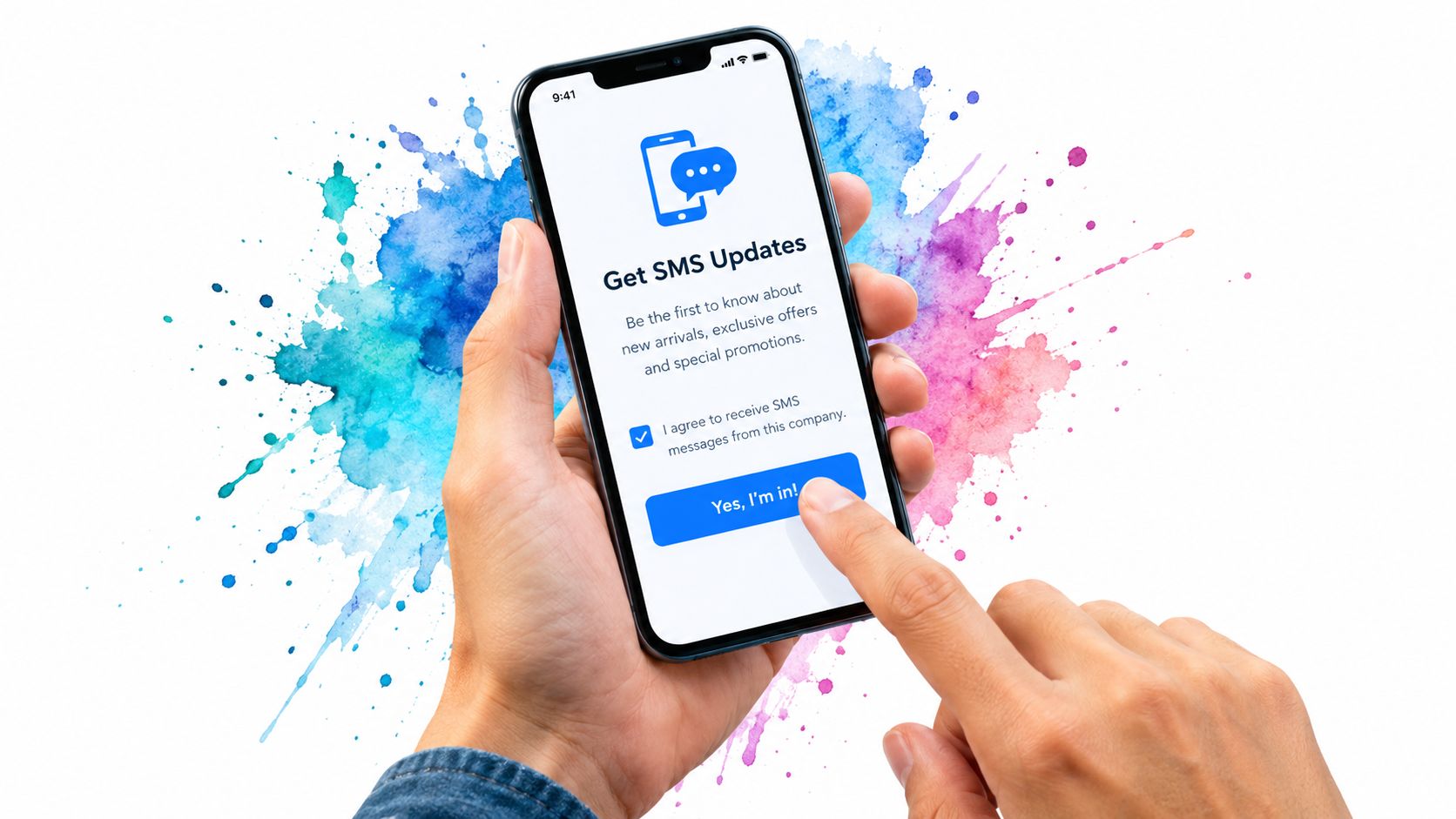
A compliant program starts at the opt-in point, continues in the confirmation message, and depends on clean records behind the scenes. The FTC's guidance on truth in advertising and disclosures is also a useful reference: important terms cannot be hidden or implied.
At the point of opt-in, your language should clearly state:
A strong example looks like this: "By entering your number, you agree to receive recurring marketing texts from Brand X. Up to 4 msgs/month. Msg&data rates may apply. Reply STOP to cancel, HELP for help. Consent is not a condition of purchase."
That last sentence matters in many marketing contexts. Consent tied too closely to a purchase, giveaway, or pre-checked box is where risk starts.
After a user opts in, send a confirmation text that repeats the essentials:
Example: "Call Loop Alerts: You're subscribed to receive product updates and offers, up to 4 msgs/month. Msg&data rates may apply. Reply HELP for help, STOP to cancel."
In our review, teams often treat the confirmation text like a formality. It is not. It is one of your best chances to remove ambiguity before the first campaign send.
If a complaint ever arises, your defense is your audit trail. Keep records of:
The Mobile Marketing Association consumer best practices and carrier-facing rules both reinforce the value of documentation. If your form text changes, archive the old version too. Without the exact wording a user saw, compliance gets harder to prove.
Consumers expect standard behavior, and carriers do too. Your program should automatically recognize common opt-out commands like STOP, END, CANCEL, UNSUBSCRIBE, and QUIT, then immediately suppress that number from future sends. HELP responses should return a useful support message that identifies your brand and provides a contact method.
Operationally, this means:
The Twilio compliance overview is a practical reference here because it reflects how large messaging providers implement these standards at the platform level.
The most common problems are not obscure legal edge cases. They are preventable launch mistakes:
From the Call Loop perspective, the most common mistake teams make is assuming that because a customer bought from them, they can text promotions later. Purchase history is useful for segmentation. It is not the same thing as consent.
If you want extra reading on digital compliance workflows beyond telecom-specific rules, SiteSelf's site has practical articles on maintaining clear website experiences and disclosures.
By prioritizing this first step, you create a sustainable and effective SMS program that respects subscribers and drives results. For a deeper dive into the specific requirements, you can learn more about our commitment to an anti-spam policy and compliant messaging practices on CallLoop.com.
The 160-character limit of a standard text message isn't a limitation; it's a strategic advantage. This constraint forces you to distill your offer down to its most compelling core, ensuring that every word serves a purpose. Effective SMS marketing delivers immediate value and a clear path to action within this compact format, resulting in exceptionally high engagement rates compared to other channels.
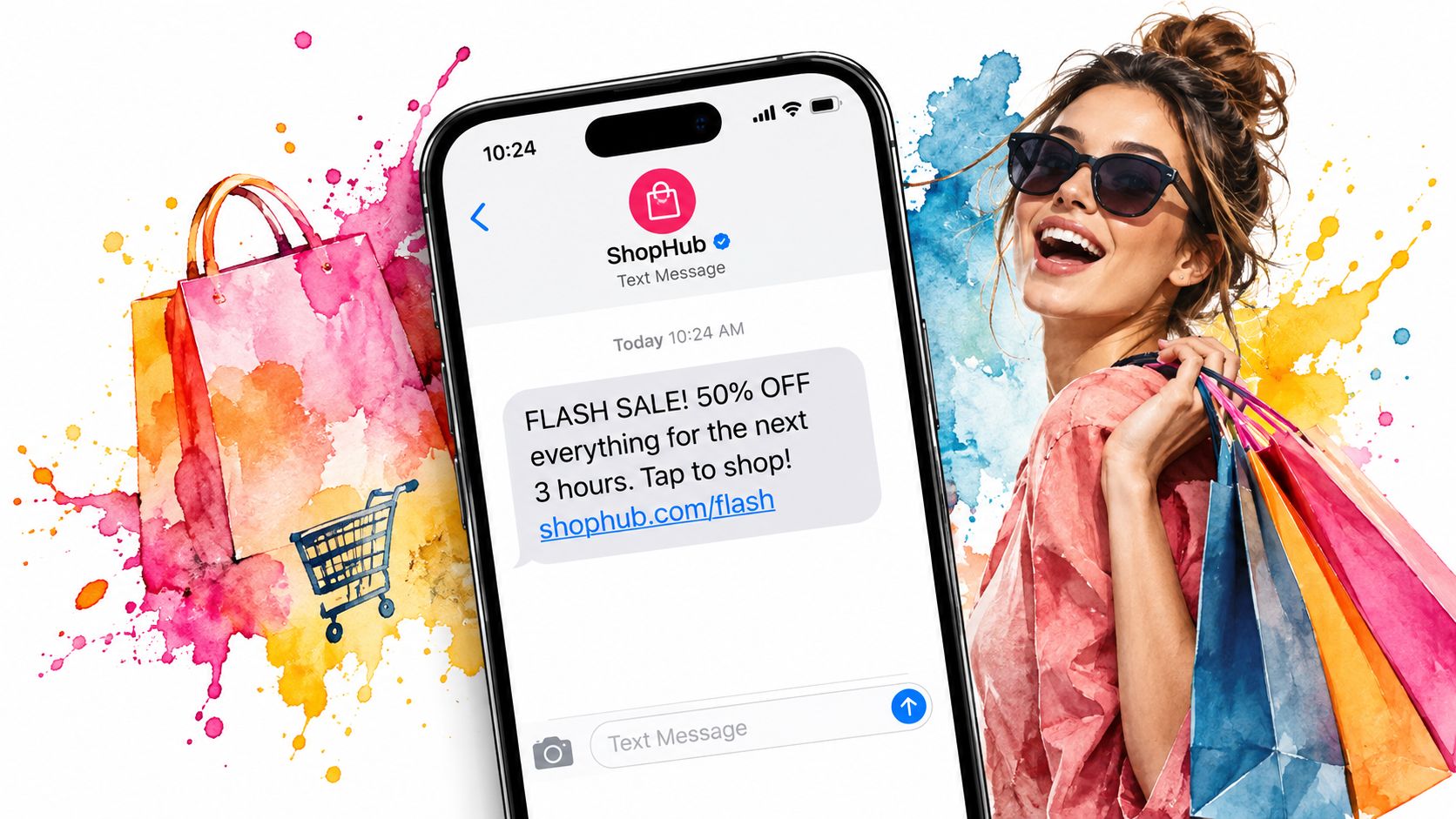
This practice of brevity respects the recipient's time and aligns with the fast-paced nature of mobile communication. By combining a powerful, concise message with a clear call-to-action (CTA), you make it easy for subscribers to understand the value and act on it instantly.
A concise, action-oriented message cuts through the noise and grabs attention immediately. It improves readability and comprehension, leading to higher click-through and conversion rates. This approach makes your campaigns more effective and ensures your messages feel like helpful alerts rather than intrusive advertising, which is a key component of the best SMS marketing practices.
Follow these actionable steps to craft messages that are short, powerful, and drive results:
Key Insight: Treat every character as a valuable asset. The goal isn't just to fit within the limit but to create a message so clear and compelling that the user can understand it and act on it in under three seconds.
By mastering the art of the concise message, you can effectively send a mass text that resonates with your entire audience. You can explore more strategies for impactful messaging on the Call Loop blog.
Sending the same promotion to everyone on your list usually wastes reach. Segmentation works because SMS is immediate and interruptive; if the message is not relevant, the recipient feels that mismatch instantly. The stronger approach is to organize your audience around what changes buying behavior: who they are, what they have done, where they are in the customer lifecycle, and whether location changes the offer.
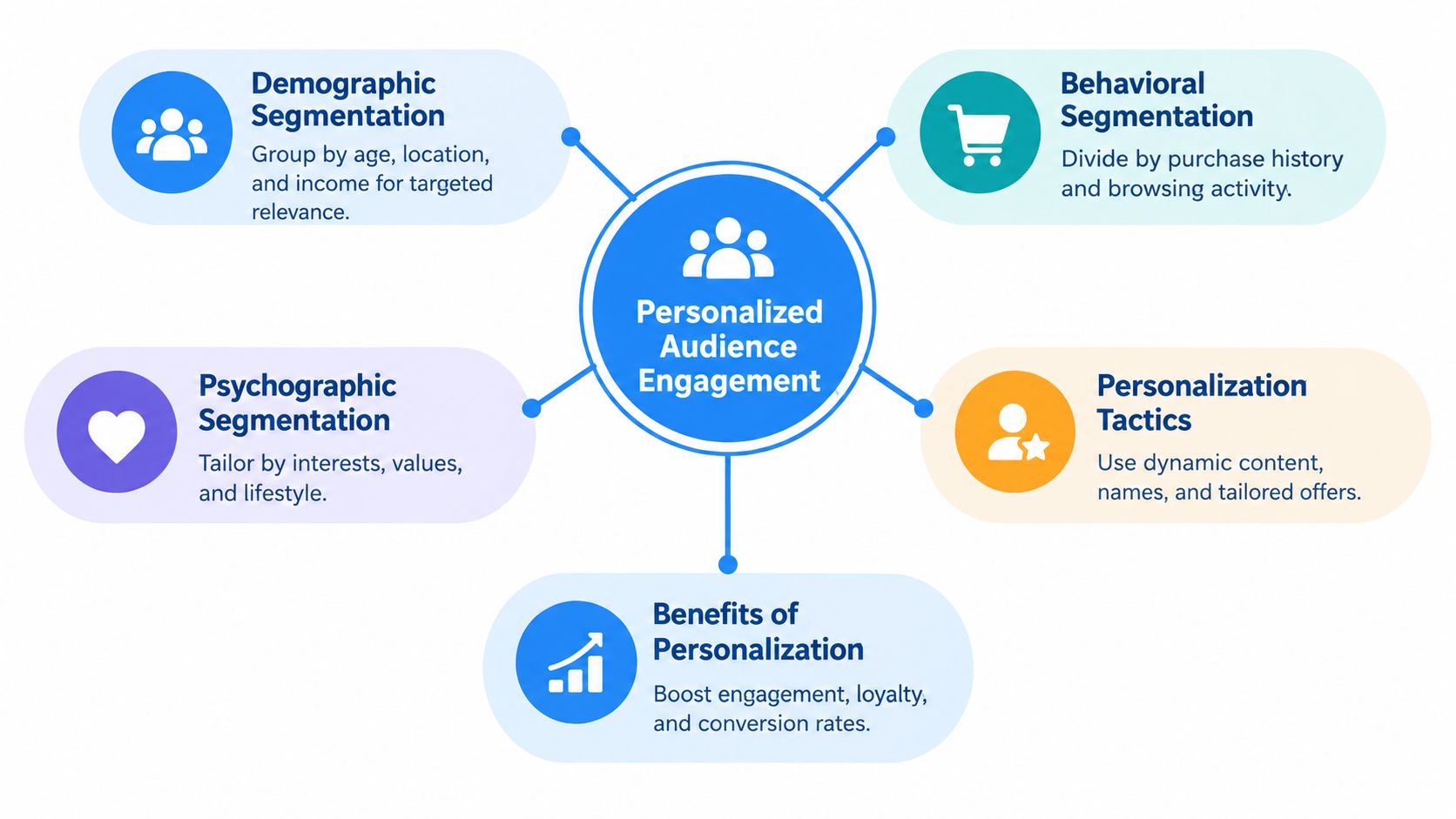
This is not just a personalization trend. It is one of the easiest ways to make SMS feel useful instead of generic. Industry guidance from Klaviyo on segmentation and Braze on personalization both point to the same pattern: campaigns perform better when the message reflects customer behavior and context, not just a static list.
A practical personalization framework for SMS includes four layers:
If you only build one layer first, make it lifecycle. In practice, lifecycle segments often outperform demographic slices because they map directly to intent.
Good SMS personalization uses data the customer would reasonably expect you to use:
What to avoid: sensitive personal data, assumptions about health or finances unless your use case and disclosures clearly support it, and details that make the customer wonder how much you know. The rule is simple: if the message would feel creepy when read aloud, you have overdone it.
A broad version might say:
A segmented version changes by audience:
Same promotion, different reason to care.
The strongest SMS personalization usually combines three elements: relevance, timing, and simplicity. For example:
According to Salesforce's State of the Connected Customer, customers continue to expect companies to understand their needs and preferences across interactions. SMS should reflect that expectation in a restrained way, not as a novelty.
Using a first name alone is not a strategy. If the rest of the message is generic, subscribers notice. The opposite problem is over-personalization: inserting too many details, guessing intent incorrectly, or referencing behavior so specifically that it feels surveillance-heavy.
A good test is whether the message still reads naturally if the merge fields fail. We would rather send a clean, relevant segment message than a clumsy "Hi {FirstName}" text with the wrong product suggestion.
Key Insight: True personalization is not decoration. It is choosing the right offer, for the right person, at the right stage, using data they would expect you to use.
By implementing these strategies, you can transform your SMS program from a simple broadcast tool into a more capable communication channel. You can learn more about how Call Loop makes it easy to send personalized SMS campaigns and build dynamic subscriber segments.
Sending time has a bigger effect on SMS than many teams expect because the channel is consumed so quickly. Recent benchmark roundups note that open rates remain extremely high and that a large share of texts are read within minutes, which is why timing and follow-up matter so much in practice, as outlined in these SMS statistics for 2026. The right window depends less on a universal "best time" and more on message type, customer location, and urgency.

The goal is not just to avoid sending too early or too late. It is to align the message with the moment the customer can act on it.
Use case should determine your send window.
| Campaign type | Recommended window | Why it works | Watch-outs |
|---|---|---|---|
| Promotions and flash sales | Late morning to early evening local time | Customers can browse and buy without being interrupted too early | Avoid stacking multiple promos in the same week |
| Appointment reminders | 24 hours before, plus same-day follow-up if appropriate | Gives enough time to confirm, reschedule, or prepare | In healthcare and service businesses, keep wording compliant and functional |
| Product launches | Teaser the day before, launch at start of shopping window, final reminder near close | Builds anticipation and captures urgency | Do not repeat the same creative three times |
| Abandoned cart | Within 1-4 hours if consent and workflow allow | Intent is still fresh | Keep cadence tight; one reminder may outperform three |
| Local offers | Around decision windows, such as lunch, after work, or before weekend foot traffic | Location relevance is strongest when the store is topically useful now | Use local time, not headquarters time |
For industry context, restaurants and same-day service businesses often do better near decision moments, while ecommerce campaigns often perform better when subscribers have time to browse and complete checkout.
A fixed monthly rule is too blunt. Frequency should track value and intent.
The Attentive SMS marketing compliance and strategy resources repeatedly emphasize expectation-setting and subscriber choice. If your opt-in promises weekly texts, a sudden burst of daily promotions will feel like a broken agreement even if every message is technically compliant.
Time-zone-aware sending is basic hygiene now. Every campaign should respect the recipient's local time, not your team's office clock. Beyond time zones, location can shape the message itself:
A noon lunch promo in New York should not arrive at noon in Los Angeles if inventory or staffing is local. It should arrive when the local customer can use it.
The safest testing approach is to change one thing at a time:
In our review, timing tests usually outperform assumptions. Teams often believe evening is best because it "feels less intrusive," but the data frequently favors the time when acting is easiest, not when the marketer imagines attention is highest.
If you need a starting point:
Key Insight: Frequency problems are often value problems in disguise. If unsubscribes jump, the issue may not be the number of texts alone; it may be that the message arrived at the wrong time with the wrong reason.
By thoughtfully planning when and how often you text, you transform your SMS channel from a simple broadcast tool into a highly effective, context-aware communication strategy. This approach is fundamental to building a sustainable and profitable SMS marketing program.
A text message without a clear purpose is a missed opportunity. Every SMS you send should have a single, obvious call-to-action (CTA) that guides recipients toward a specific, desired behavior. An effective CTA removes ambiguity, uses action-oriented language, and makes the next step intuitive. Shortening the path between the message and the conversion, ideally to a single click, is one of the most powerful sms marketing best practices for boosting response rates.
This directness is the superpower of SMS marketing. Unlike email, where users might browse, texts demand immediate attention and action. A powerful CTA harnesses this attention and converts it into tangible results, whether that's a purchase, a booking, or a simple confirmation.
A clear CTA is the bridge between your message and your business goals. Without it, subscribers are left wondering what to do next, leading to confusion and inaction. A strong CTA increases engagement, drives traffic to your key landing pages, and provides a clear way to measure the success of each campaign. It transforms a simple notification into a direct revenue or lead-generation tool.
Follow these actionable steps to create CTAs that convert:
Key Insight: Your CTA should be the most straightforward part of your message. If a user has to think about what you want them to do, your conversion rate will suffer. The goal is an immediate, instinctual "tap" that moves them seamlessly toward the next step.
By focusing on clear directives and effortless conversion paths, you ensure every text message you send has a purpose and a high potential for success. You can explore how Call Loop's link-shortening and tracking features help optimize these paths for maximum impact.
When a customer subscribes to your SMS list, they are giving you privileged access to their most personal communication channel. Abusing this trust with a constant barrage of sales pitches is the fastest way to alienate your audience, leading to high opt-out rates and damaging your brand's reputation. The most effective SMS marketing best practices prioritize delivering real, tangible value that goes beyond the next promotion.
This approach involves strategically balancing promotional content with helpful information. Think of it as a conversation where you give more than you take. By providing exclusive deals, helpful tips, personalized updates, or early access, you transform your SMS channel from a simple advertising tool into a valuable resource for your subscribers.
Providing genuine value ensures your messages are welcomed rather than tolerated. Subscribers who perceive value are significantly more likely to remain subscribed, engage with your content, and develop a stronger sense of brand loyalty. This strategy shifts the dynamic from a one-way sales broadcast to a two-way relationship, dramatically increasing the long-term ROI of your SMS program and protecting your sender reputation.
Follow these actionable steps to create a value-driven SMS strategy that resonates with your audience:
Key Insight: Treat your SMS list like a VIP club, not a billboard. The goal is to make subscribers feel smart, special, and appreciated for being a part of your community. Value is the price of admission to their inbox.
By focusing on delivering consistent value, you create a sustainable SMS marketing strategy that not only drives sales but also builds a loyal community of brand advocates.
Just as securing consent is the mandatory entry point for SMS marketing, providing a simple, instant opt-out is the mandatory exit. Respecting a subscriber's decision to leave is a legal requirement and a critical component of maintaining a healthy, high-performing text program. Every message you send must contain clear instructions on how to unsubscribe, typically by replying with a keyword like "STOP."
Failing to honor these requests immediately not only violates regulations like the TCPA but also damages your sender reputation with mobile carriers, leading to message filtering or blacklisting. A straightforward opt-out process demonstrates respect for customer choice, prevents frustration, and ultimately protects your brand’s integrity.
An easy opt-out process is a cornerstone of compliant SMS marketing best practices. It prevents carrier-level spam complaints, which can jeopardize your ability to send messages altogether. It also ensures your contact list remains clean and engaged, filled only with subscribers who want to hear from you, which improves campaign metrics and ROI.
Follow these essential steps to manage your opt-out process flawlessly:
Key Insight: Treat the opt-out process not as losing a subscriber, but as a mechanism for maintaining a high-quality, engaged audience. A clean list of willing recipients is far more valuable than a large list of annoyed or inactive contacts.
By making unsubscription effortless and immediate, you build trust and ensure the long-term health and deliverability of your SMS marketing channel.
Successful SMS marketing goes beyond broadcasting deals; it treats the inbox as a space for personal conversation. Using your brand's authentic voice, whether it's witty, professional, or warmly conversational, creates a powerful connection that differentiates you from the noise. This human-centric approach transforms a simple text into a meaningful touchpoint, building genuine customer relationships.
Brands that master this see far more than just open rates. By acknowledging customers by name, referencing their history, and anticipating their needs, you make them feel seen and valued. This level of personalization and authenticity can increase engagement by up to 30% compared to generic corporate messages and significantly boosts customer lifetime value.
An authentic brand voice builds trust and familiarity, making subscribers more receptive to your messages. It turns your SMS channel from a one-way street of promotions into a two-way dialogue, fostering loyalty and advocacy. When customers feel a genuine connection, they are more likely to purchase, remain subscribed, and recommend your brand to others. This is an essential part of effective SMS marketing best practices.
Follow these actionable steps to develop a brand voice that resonates and builds relationships:
Key Insight: Treat every text message as an opportunity to strengthen a one-to-one relationship. Your goal isn't just to inform or sell; it's to make the customer feel like they are interacting with a person, not a marketing bot.
By focusing on an authentic voice, you transform your SMS list into a community of loyal fans. In Call Loop, you can easily create message templates and use custom fields to scale this personalized, relationship-building approach.
Launching an SMS campaign without tracking its performance is like navigating without a map. Data-driven SMS marketing requires the consistent measurement of key performance indicators (KPIs) to understand what resonates with your audience, identify what needs improvement, and systematically optimize for better results. This continuous loop of tracking, measuring, and optimizing turns your SMS channel from a simple broadcast tool into a powerful revenue driver.
By analyzing metrics like click-through rates, conversion rates, and subscriber growth, you gain direct insight into your audience's behavior and preferences. This allows you to refine your messaging, offers, and timing to maximize engagement and return on investment, making it one of the most effective sms marketing best practices for long-term success.
Systematic tracking is the only way to prove the value of your SMS efforts and secure budget for future campaigns. It moves you from guesswork to informed decision-making, enabling you to replicate successes and avoid repeating failures. Brands that consistently track and optimize their campaigns often see performance improvements of 30-50% over 6-12 months, directly impacting their bottom line.
Follow these actionable steps to build a data-centric SMS strategy:
Key Insight: Your data tells a story about your customers. A high unsubscribe rate after a certain type of message isn't a failure; it's direct feedback telling you to adjust your content strategy. Listen to what the numbers are saying.
By embedding measurement and optimization into your workflow, you create a constantly evolving program that delivers increasing value. Call Loop's detailed reporting makes it easy to track these essential metrics and make data-backed decisions to enhance your campaign performance.
SMS works best when it has a clear job inside a broader marketing system. It should not repeat the email subject line or echo every social post. The smarter approach is orchestration: decide when SMS should lead because speed matters, when email should lead because detail matters, and when social should support because reach and visibility matter.
Customer journeys are already cross-channel. The Google Analytics cross-channel attribution overview is a useful reminder that conversions often result from multiple touchpoints, not one isolated click. Lifecycle marketing guidance from HubSpot's automation resources points the same way: channels perform better when the sequence is intentional.
Use SMS as the lead channel when the message is urgent, time-sensitive, or simple to act on:
Use email as the lead channel when the message needs explanation, visuals, or multiple products:
Use social as the support channel when you need awareness, social proof, or retargeting support around the same campaign.
We'd prioritize role clarity before building fancy automations. Most channel fatigue comes from duplication, not volume alone.
Here is a practical before-during-after launch playbook for a product drop or promotion.
72 to 48 hours before launch
Launch day
24 hours after launch
Final 6 to 12 hours
The key is that each touch says something different. Do not send the exact same copy three times in three places.
A service business or telecom-style brand can use SMS for churn prevention without turning every message into a discount.
Example workflow:
For a local service business, the same logic works around appointment churn: missed booking -> email recap -> SMS reschedule link -> follow-up only if there is no action.
In practice, SMS becomes most valuable when it closes the gap between interest and action. Email can educate. Social can create momentum. SMS should move people at the exact moment a decision is likely.
By weaving SMS into your broader marketing fabric, you create a more powerful and resonant customer experience. To ensure your SMS strategy is future-proof, understanding broader digital marketing trends is essential; for instance, explore the 12 Best AI Tools for Digital Marketing in 2025 to see how technology is shaping multi-channel engagement.
| Item | Implementation complexity | Resource requirements | Expected outcomes | Ideal use cases | Key advantages |
|---|---|---|---|---|---|
| Obtain Explicit Consent and Maintain Compliance | Low–Medium — set up opt-in flows and legal checks | Legal review, consent logging, CRM integration | Regulatory compliance, lower legal risk, higher trust | Launching SMS lists, regulated markets, large-scale sends | Legal protection, higher list quality |
| Keep Messages Concise and Action-Oriented | Low — copy discipline and length testing | Skilled copywriters, A/B testing tools | Higher open/CTR, faster comprehension, better conversion | Promotions, alerts, transactional updates | Clear CTAs, efficient communication |
| Segment Your Audience and Personalize Messages | High — data modeling and dynamic rules | Customer data platform, analytics, tagging | Higher conversion, reduced unsubscribes, better ROI | Personalized offers, lifecycle and VIP campaigns | Increased relevance and customer value |
| Optimize Send Times and Frequency | Medium–High — testing and scheduling logic | Analytics, scheduling/timezone tools, testing cadence | Improved engagement, lower fatigue, predictable ROI | Time-sensitive promotions, recurring campaigns | Higher open/response rates, better customer experience |
| Include Clear CTAs and Easy Conversion Paths | Low–Medium — link and landing setup | Mobile-optimized landing pages, tracking, short URLs | Higher conversion rates, clear attribution | Direct-response campaigns, limited-time offers | Reduced friction, measurable actions |
| Provide Genuine Value and Avoid Pure Promotion | Medium — content strategy and planning | Content creators, editorial calendar, segmentation | Higher retention, stronger loyalty, long-term CLV | Loyalty programs, educational sequences, VIP comms | Better retention, lower churn |
| Make Opt-Out Simple and Honor Requests Immediately | Low–Medium — automate opt-outs and suppression | SMS platform with opt-out automation, compliance monitoring | Legal compliance, preserved sender reputation | All SMS sends, compliance-sensitive programs | Avoids fines/carrier blocks, builds trust |
| Use Authentic Brand Voice and Build Relationships | Medium — tone guidelines and training | Brand guidelines, copywriters, response handling | Higher engagement and affinity, reduced churn | Onboarding, relationship-building, retention flows | Differentiation, stronger customer bonds |
| Track, Measure, and Optimize Performance Metrics | High — analytics and attribution systems | Analytics platform, CRM integration, data expertise | Continuous improvement, measurable ROI gains | Scaling programs, performance-driven campaigns | Data-driven decisions, measurable optimization |
| Integrate SMS with Overall Marketing Strategy | High — cross-channel orchestration | Unified customer data, cross-team coordination, tech stack | Consistent messaging, higher CLV, efficient spend | Omnichannel launches, lifecycle orchestration | Channel synergy, improved attribution and impact |
At a minimum, you need clear consent before sending marketing texts, transparent opt-in language, a confirmation message that identifies your brand and explains the program, and a simple way to opt out with keywords like STOP. You should also keep detailed consent records and suppress opted-out numbers immediately. If you operate across regions, review the laws and carrier requirements that apply where your subscribers live.
Yes, especially for timely offers, reminders, confirmations, and lifecycle messages. SMS remains effective because people read texts quickly and the path from message to action can be extremely short. It performs best when the messages are relevant, well-timed, and restrained.
A basic program usually follows this sequence: collect consent, send a confirmation text, segment the audience, create short messages with one clear CTA, schedule sends by local time and use case, automate key journeys like welcome or reminder flows, and track clicks, conversions, and opt-outs. Using an SMS platform ensures opt-ins, automations, suppression lists, and reporting are handled consistently.
Yes. A simple ecommerce example: "Thanks for joining Brand X texts. Here's 15% off your first order: WELCOME15. Shop now: [link]. Reply STOP to cancel." A service example: "Reminder: your appointment is tomorrow at 2 PM. Reply C to confirm or R to reschedule." Both work because the value and next step are obvious.
The highest-performing SMS programs are usually not the loudest. They are the most disciplined. They get consent cleanly, segment aggressively, text at useful moments, and make it easy for people to act or opt out. That is what turns texting from a broadcast tool into a dependable revenue and retention channel.
If you are improving an existing program, start with the parts that remove risk and enable compounding gains:
The long-term advantage is trust. When subscribers learn that your texts are timely, relevant, and easy to control, they keep paying attention. That is the core asset.
Ready to implement these best practices with a platform built for success? Call Loop provides the powerful segmentation, automation, and analytics tools you need to build compliant, high-converting SMS campaigns effortlessly. Start your free trial of Call Loop today and see how simple it is to turn your text message marketing into your most valuable channel.
Chris Brisson
Chris is the co-founder and CEO at Call Loop. He is focused on marketing automation, growth hacker strategies, and creating duplicatable systems for growing a remote and bootstrapped company. Chat with him on X at @chrisbrisson


Trusted by over 45,000 people, organizations, and businesses like


