
See a Demo
You're just one step away from seeing Call Loop in action.
Enter your information below to watch a demo right now.

You're just one step away from seeing Call Loop in action.
Enter your information below to watch a demo right now.

In a world saturated with digital noise, text message marketing offers a direct, personal, and highly effective channel to connect with your audience. With open rates soaring above 98%, SMS isn't just another marketing tool; it's a critical component for building relationships, driving sales, and delivering exceptional customer experiences. However, navigating this powerful medium requires a strategic approach grounded in respect for the consumer's inbox.
This guide dives straight into the top 10 text message marketing best practices that separate high-performing campaigns from those that fall flat. We move beyond generic advice to provide a comprehensive, actionable playbook designed for immediate implementation. You will learn precisely how to secure compliant consent, segment audiences for maximum impact, and craft messages that command attention and drive action.
We'll cover everything from the foundational principles of personalization and timing to integrating advanced channels like ringless voicemail, ensuring your strategy is not only effective but also sustainable for long-term growth. This is not a theoretical overview; it is a practical roadmap. Whether you're a small business owner, a healthcare provider needing HIPAA-compliant solutions, or an e-commerce giant, these actionable insights will help you master the art of mobile messaging and unlock its full potential. Let's get started.
Before a single promotional text reaches a customer's phone, you must secure their explicit, unambiguous permission. This isn't just a courtesy; it's the foundational legal and ethical pillar of any successful text message marketing strategy. Obtaining express written consent means a user has taken a clear, affirmative action to receive marketing messages from you, which is a core requirement of the Telephone Consumer Protection Act (TCPA) in the United States and similar regulations globally. This step protects your business from significant legal penalties and, more importantly, builds a foundation of trust with your audience from the very first interaction.
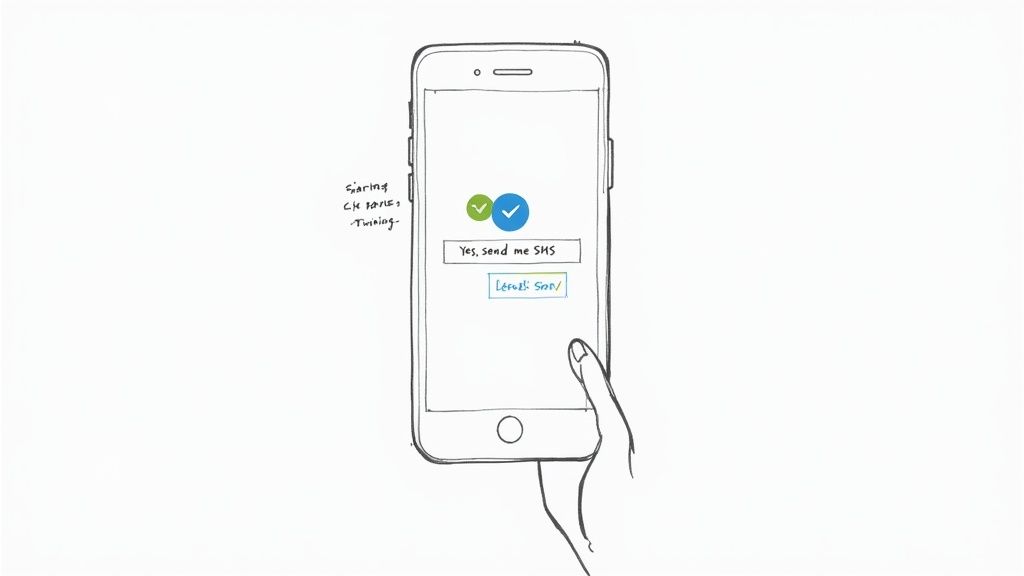
An effective opt-in process is seamless for the user and legally sound for your business. It involves clearly disclosing what the user is signing up for. For example, a retail store like Target might use a clear, unchecked checkbox during online checkout that reads, “Sign me up for exclusive deals and order updates via text.” This method ensures the customer is making a conscious choice.
Another powerful method is using a keyword opt-in. A local karate studio could display a sign at their front desk saying, “Text ‘JOIN’ to 555-555 to get class reminders and special event news.” When a user texts the keyword, they initiate the consent process, which must be followed by a confirmation message detailing the program and opt-out instructions.
To maximize opt-ins while maintaining compliance, consider these text message marketing best practices:
Broadcasting the same message to every subscriber is a missed opportunity. One of the most critical text message marketing best practices is to segment your audience, which involves dividing your subscriber list into smaller, distinct groups based on shared characteristics. By grouping customers based on demographics, purchase history, engagement level, or expressed preferences, you can send highly relevant, personalized content that resonates far more effectively than a generic blast. This tailored approach not only boosts engagement and conversion rates but also strengthens customer loyalty by showing you understand their individual needs.

Effective segmentation transforms your marketing from a one-way broadcast into a two-way conversation. For example, an e-commerce store like Nike could create segments for customers who previously bought running shoes versus those who purchased basketball gear, sending each group a different alert about new arrivals in their preferred category. This ensures the message is immediately relevant.
Similarly, a service-based business like Uber can segment users into frequent riders and occasional users. Frequent riders might receive loyalty rewards, while occasional users could get a special discount to encourage their next trip. The key is using data to deliver value specific to each group’s relationship with your brand. For a deeper dive into effectively categorizing your customer base, you can also learn more about audience segments.
To get started with dividing your audience for maximum impact, apply these proven strategies:
Sending a generic, one-size-fits-all text to your entire contact list is a missed opportunity. Personalization transforms a standard broadcast into a meaningful, one-to-one conversation by leveraging customer data. This practice involves using names, purchase history, and behavioral triggers to craft messages that feel relevant and exclusive to each recipient. By moving beyond basic merge tags, you can create dynamic content that directly addresses an individual’s needs and interests, significantly boosting engagement, conversion rates, and overall brand loyalty.
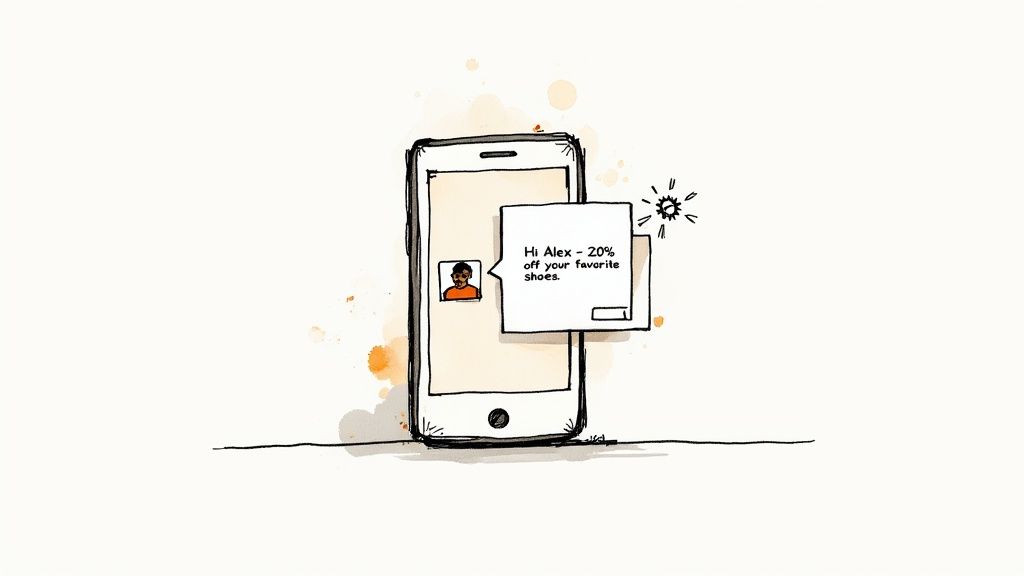
Effective personalization starts with the data you collect during the opt-in process and subsequent interactions. An e-commerce brand like Sephora can use a customer's past purchases to recommend a new foundation that matches their previously bought shade. This shows you understand their preferences and are providing genuine value, not just another advertisement.
Similarly, a service-based business can leverage personalization for better customer experiences. For example, Delta Airlines can send a flight reminder that includes the passenger's name, gate number, and a direct link to their boarding pass. This targeted, helpful information feels less like marketing and more like a premium concierge service, which strengthens the customer relationship and ensures they pay attention to future communications. The capabilities for personalized SMS are vast and can be tailored to any industry.
To make your SMS campaigns more effective and build a stronger connection with your audience, implement these text message marketing best practices:
Finding the right balance between staying top-of-mind and becoming a nuisance is one of the most critical aspects of text message marketing. Message frequency directly impacts subscriber engagement, opt-out rates, and overall campaign ROI. Sending too many texts overwhelms your audience and leads to unsubscribes, while sending too few means you’re missing valuable opportunities to connect and drive action. The goal is to establish a predictable, valuable rhythm that your subscribers appreciate and anticipate.
A sustainable messaging cadence is built on audience expectations and engagement data, not guesswork. For most retail and e-commerce businesses, a frequency of one to three promotional messages per week is a common starting point. A major brand like Target, for example, might send one or two weekly deals to its SMS subscribers. In contrast, a service-based business like a local karate studio may only send a few texts per month for class reminders or special event news, focusing on utility over promotion.
The key is to align your frequency with the value you provide. Transactional messages, like order confirmations from Amazon, are always welcome. Promotional messages, however, must be more carefully paced. An effective strategy involves setting clear expectations during the opt-in process and then using data to refine your approach over time.
To perfect your sending schedule and maintain a healthy subscriber list, incorporate these text message marketing best practices:
With only a few seconds to capture attention, the call-to-action (CTA) is the most critical component of any marketing text. It's the engine that drives engagement, turning a passive reader into an active participant. A powerful CTA doesn't just suggest a next step; it compels the user to take a specific, desired action immediately. Forgetting or weakening the CTA is like building a car without a steering wheel: the message may be delivered, but it won't lead anywhere. This is a fundamental aspect of text message marketing best practices, ensuring every send has a clear purpose and a measurable outcome.
An effective CTA is direct, concise, and leaves no room for confusion. It should be the focal point of your message. For instance, an e-commerce brand like Sephora might send, “Your beauty exclusive is here! ✨ Tap to reveal your secret offer before it’s gone.” The CTA “Tap to reveal” is intriguing and clearly guides the user. The goal is to make the next step feel both obvious and irresistible, minimizing friction between the message and the conversion.
Another powerful approach is using simple keywords. Domino's famously allows customers to simply reply with "PIZZA" to place their favorite order. This reduces the action to a single word, making it incredibly easy for a customer to convert. Similarly, a local service provider could use, “Need a quote? Reply YES and we’ll call you back within 10 minutes.” This makes the desired action simple and sets a clear expectation for the follow-up.
To create CTAs that consistently drive results and adhere to text message marketing best practices, consider these strategies:
The effectiveness of a text message is not just about what you say, but when you say it. Sending messages at optimal times when customers are most likely to engage can dramatically improve open, click-through, and conversion rates. This requires analyzing user behavior and strategically deploying your campaigns during peak engagement windows, while also respecting the local time of your geographically dispersed audience. It’s a critical component of text message marketing best practices that separates a welcomed message from an unwelcome interruption.
Effective timing is about aligning your message delivery with your audience's daily routine. For example, a restaurant like Domino's can achieve higher engagement by sending lunch or dinner offers between 11 AM and 12 PM, or 5 PM and 7 PM, in the recipient’s local timezone. Similarly, an e-commerce brand like Amazon sends package delivery notifications at times when customers are likely to be home or checking their phones, maximizing relevance and convenience.
This requires segmenting your audience by timezone and using a platform that supports scheduled sends based on local time. This ensures a customer in New York doesn't receive a "Good Morning" coffee promo at 6 AM Pacific Time. Automating this process prevents manual errors and ensures your messages land with perfect timing, every time.
To fine-tune your messaging schedule and maximize impact, implement these text message marketing best practices:
Text message marketing operates within a unique and powerful constraint: the standard 160-character limit. While modern phones can stitch longer messages together, the most effective SMS campaigns embrace brevity. This limitation forces marketers to distill their offer to its most compelling essence, which respects the recipient's time and improves engagement. A concise, mobile-optimized message is scannable, immediately understood, and easy to act on, making it a cornerstone of effective text message marketing best practices.
Crafting impactful short-form content involves a "less is more" approach. The goal is to convey value and a clear call-to-action (CTA) in just a few seconds of reading time. For example, a restaurant should avoid a long-winded description and get straight to the point. Instead of “Good afternoon! We wanted to let you know that tonight at our restaurant we are featuring a special on our delicious pasta dishes,” they should use, “Tonight only! 50% off all pasta dishes at [Restaurant Name]. Show this text to redeem. Book now: [link].”
This principle applies across all industries. A healthcare clinic confirming an appointment can simply say, “Your appt with Dr. Smith is tomorrow, Oct 26 at 10 AM. Reply C to confirm or R to reschedule.” The message is direct, actionable, and perfectly formatted for a small screen, eliminating any potential for confusion and reducing no-show rates.
To master the art of the 160-character message and maximize its impact, follow these guidelines:
While promotional campaigns are powerful, some of the most effective messages you can send are automated ones triggered by a specific customer action. These trigger-based and transactional messages provide immediate, contextually relevant value that customers expect. Because they directly address a recent interaction like a purchase or an inquiry, they boast exceptionally high open rates and reinforce a positive customer experience, making them a cornerstone of effective text message marketing best practices. This automated approach ensures timely communication without manual effort, directly strengthening customer trust and satisfaction.
Effective implementation hinges on connecting customer actions to your SMS platform. For instance, when a customer completes a purchase on an e-commerce site like Sephora, the platform's API can instantly trigger a text message: “Your Sephora order ships today! Track it here: [link].” This provides instant gratification and utility.
Another critical use case is appointment reminders. A healthcare clinic can set up an automation to send a message 24 hours before a scheduled visit: “Hi [Patient Name], this is a reminder of your appointment tomorrow at 10:00 AM with Dr. Smith.” This simple, automated text dramatically reduces no-shows and improves operational efficiency. To learn more about setting up these automated workflows, you can explore the functionality of your SMS platform.
To get the most out of your automated messaging, focus on relevance and clarity:
Launching a text message marketing campaign without tracking its performance is like navigating without a map. To ensure your efforts generate a real return on investment, you must analyze performance data, such as open rates, click-through rates (CTR), conversion rates, and unsubscribe rates. This continuous feedback loop is the engine of long-term SMS success, allowing you to refine your approach based on real user behavior, not assumptions. This data-driven strategy transforms your campaigns from one-off blasts into a compounding asset that gets more effective over time.
An effective optimization cycle begins before you even send a message. You must first define what success looks like for a specific campaign. For an e-commerce brand like Sephora, a key metric might be the conversion rate on a new product launch, while a healthcare provider using text for appointment reminders would focus on reducing the no-show rate.
By establishing these Key Performance Indicators (KPIs) upfront, you can build campaigns designed to achieve them. For example, Domino's can track which time of day generates the highest conversion rates for a "dinner special" text, then adjust future send times accordingly. Similarly, analyzing CTR by customer segment allows Target to send more relevant, personalized offers, increasing engagement and sales.
To build a robust measurement framework into your text message marketing best practices, consider the following:
While obtaining consent is the first step, providing an easy and compliant way for subscribers to opt out is just as critical. Legal frameworks like the TCPA mandate clear unsubscribe options, but a best-in-class strategy goes beyond the bare minimum. Offering a preference center where users can manage message frequency and content types demonstrates respect for their inbox and significantly reduces full unsubscribes. This approach preserves your list and fosters a stronger, more positive brand relationship by giving customers control.
The most basic and essential opt-out method is the universal "STOP" keyword. Every promotional campaign must include clear instructions, such as “Reply STOP to unsubscribe,” to remain compliant. However, a more advanced approach involves directing users to a web-based preference center. For example, after a customer replies "STOP," an automated response could say, "You've been unsubscribed. Want fewer messages instead? Manage your preferences here: [link]."
This empowers the user with more choices. A retailer like Sephora might allow customers to select preferences for certain product categories, such as "Skincare" or "Makeup," ensuring they only receive the most relevant offers. This strategy turns a potential list churn event into an opportunity to fine-tune your communication and deliver more value.
To build a flexible and compliant system that respects subscriber choice, integrate these text message marketing best practices into your workflow:
Navigating the landscape of text message marketing can feel like learning a new language. You have learned the grammar of compliance, the vocabulary of personalization, and the syntax of effective calls-to-action. We have journeyed through the ten foundational pillars of a successful SMS strategy, from the non-negotiable first step of securing explicit opt-in consent to the ongoing cycle of tracking metrics and optimizing your campaigns. Each practice builds upon the last, forming a comprehensive blueprint for transforming your mobile communication from a simple broadcast tool into a powerful engine for engagement and growth.
The power of this channel lies in its immediacy and personal nature. Unlike a crowded email inbox, an SMS notification commands attention. This privilege, however, comes with responsibility. Mastering text message marketing best practices is not just about avoiding legal pitfalls; it's about respecting your audience's time and trust. By diligently segmenting your contacts, you ensure every message sent is relevant. By personalizing content, you make each recipient feel seen and valued. By optimizing send times and frequency, you become a welcome presence rather than an unwelcome interruption.
Moving from understanding these concepts to implementing them is the critical next step. The journey to SMS mastery is iterative. You don't need to overhaul your entire strategy overnight. Instead, focus on incremental improvements that build momentum.
Ultimately, adhering to these text message marketing best practices does more than just improve campaign metrics. It builds a stronger, more resilient brand. When customers trust you with their phone number and consistently receive value from your communications, you foster a level of loyalty that is difficult for competitors to replicate. This direct line of communication becomes an invaluable asset for gathering feedback, driving repeat business, and turning satisfied customers into vocal advocates.
To maximize the impact of your SMS strategy and integrate it with other channels, applying general marketing automation principles is crucial. Seamlessly connecting your text message efforts with your email, social media, and CRM platforms creates a unified customer experience that feels cohesive and intelligent. Learn more about general marketing automation best practices to see how these concepts can amplify your results across the board.
The principles outlined in this guide are your roadmap. They provide the structure and strategy needed to build a program that not only converts but also connects. Embrace the process of testing, learning, and optimizing. The result will be a thriving communication channel that drives tangible business results and forges lasting customer relationships.
Ready to put these best practices into action with a platform built for success? Call Loop provides the powerful, compliant, and easy-to-use tools you need to master SMS, voice broadcasting, and ringless voicemail. Start building more meaningful connections with your audience today by exploring Call Loop.
Chris Brisson
Chris is the co-founder and CEO at Call Loop. He is focused on marketing automation, growth hacker strategies, and creating duplicatable systems for growing a remote and bootstrapped company. Chat with him on X at @chrisbrisson


Trusted by over 45,000 people, organizations, and businesses like


