
See a Demo
You're just one step away from seeing Call Loop in action.
Enter your information below to watch a demo right now.

You're just one step away from seeing Call Loop in action.
Enter your information below to watch a demo right now.

Think of a text message signature as your digital handshake. It’s that little closing part of your text that tells people exactly who you are, turning an anonymous number into a trusted contact. In a world full of spam and mystery texts, a clear signature is your best tool for building immediate trust.
A text message signature is simply the short, branded sign-off you tack onto the end of your SMS messages. It's not like an email signature with logos and a bunch of contact info—it has to be pure text and super concise to fit within character limits.
Its main job? To kill the anonymity problem.
When someone gets a text from a number they don't recognize, their first instinct is usually skepticism, or they just ignore it. A signature wipes that doubt away instantly by clearly stating who’s sending the message. It’s a simple move that transforms a potentially sketchy text into a professional and welcome communication.
The real magic of a text message signature is its power to build credibility in a split second. With any kind of communication, knowing who you’re talking to is step one. This is doubly true for any kind of marketing or customer outreach, where trust is the currency of engagement.
This isn’t just an SMS thing, either. Think about a tool like ringless voicemail, where a message just appears in someone's voicemail box without their phone ringing. A clear, professional introduction serves the exact same purpose as a text signature—it establishes who you are and gives the person a reason to listen instead of just hitting delete.
A well-crafted signature does more than just identify your brand; it signals professionalism and respect for the recipient. It shows you value clear communication and are not just another faceless number, which is critical for standing out in a crowded inbox.
Signatures don't just build trust; they have a direct impact on whether customers actually do anything with your messages. The data backs this up over and over again. Consumers are far more likely to engage with texts when they know who they're from.
Case in point: a recent survey found that a whopping 91% of consumers are interested in getting texts that have clear sender identification. That’s a massive tell. Transparent branding isn't a "nice-to-have" anymore; it's what people expect.
For businesses using our platform, getting a handle on the power of SMS & text messaging is the first step toward building winning campaigns. Adding a signature is one of the simplest, yet most effective, tactics you can use to boost your results. At the end of the day, a signature makes sure your message isn't just delivered—it's recognized, respected, and acted upon.
Texting your customers isn't the same as texting a friend. When you're running a business, you're playing in a different league with a clear set of rules designed to protect people and keep things trustworthy.
Think of it like this: a casual chat is one thing, but a professional announcement is another. For your messages to actually do their job, they have to get delivered first. And that means you have to play by the rules.
These regulations, put in place by groups like the Telephone Consumer Protection Act (TCPA) and the Cellular Telecommunications Industry Association (CTIA), aren't just annoying legal hoops to jump through. They're the very foundation of a solid, trustworthy messaging strategy. Sticking to them helps you dodge carrier spam filters so your texts land where they're supposed to, building your brand's credibility with every single message you send.
The phone number you text from is a huge part of your identity and has a direct impact on whether your messages get through. Not all numbers are created equal, and each type has a specific job in the world of business texting.
A signed message immediately tells the recipient you're legitimate, which is the first step in making a real connection. This simple decision tree below shows just how critical a signature is for building that initial trust.
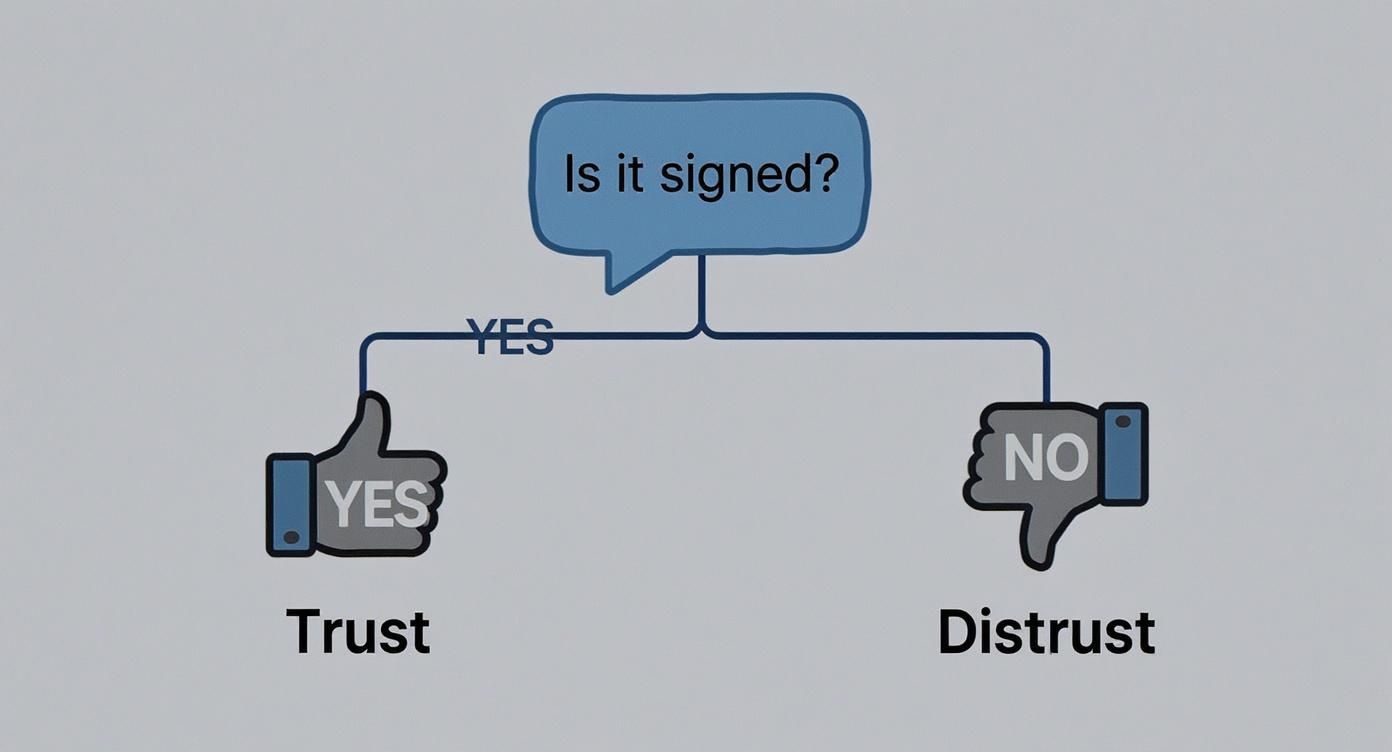
It's pretty clear from the visual, isn't it? A signature is what separates a trusted message from one that gets instantly flagged as spam.
Beyond the number you use, the content of your messages—especially your text message signatures—has to hit certain compliance marks. The absolute most critical piece is the opt-out language. Every single promotional campaign has to give people a clear, easy way to unsubscribe. Usually, that's something like "Reply STOP to cancel."
Including clear opt-out instructions isn't just a legal requirement; it's a sign of respect for your audience's inbox. This transparency builds long-term trust and is a non-negotiable part of good sender hygiene.
This whole system has been shaped by the massive growth of Application-to-Person (A2P) messaging. In 2023, the global A2P SMS market was valued at a whopping $64.24 billion, and a big driver of that is the move toward verified senders and compliant signatures.
While the specific rules for SMS can vary, the big-picture principles of responsible messaging are pretty universal. For example, understanding anti-spam regulations gives you a great foundation for keeping a strong sender reputation across all your channels. Getting your messages compliant is step one, but you also have to focus on improving your SMS deliverability to make sure they consistently get to where they need to go.
A great signature is more than just tacking your company name on the end of a text; it’s a strategic move that drives home your brand and keeps you compliant with every single message you send. Nailing the perfect sign-off is a balancing act—you need clarity, brevity, and the right information.
Think of it as the professional handshake that wraps up every text conversation.
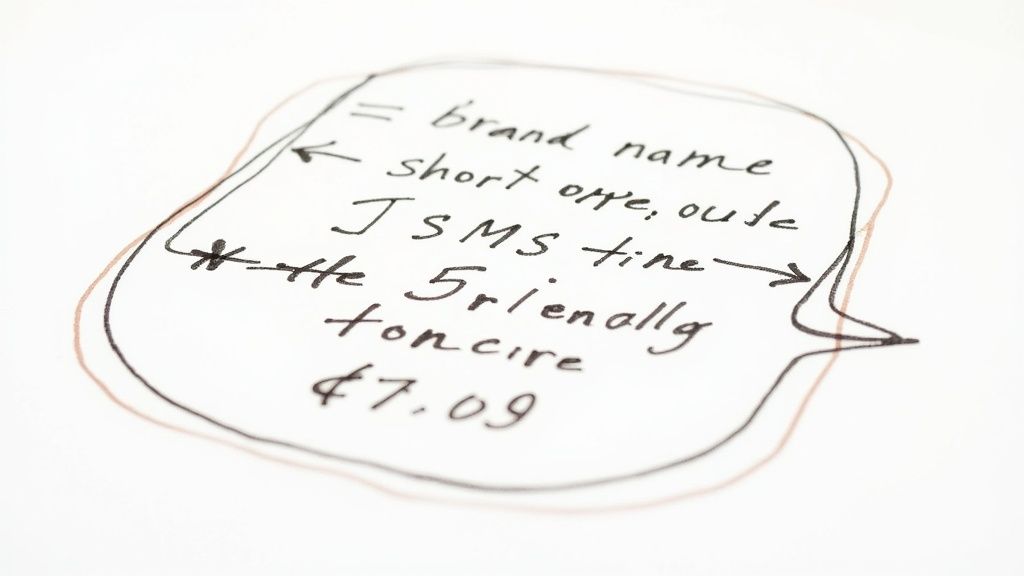
Rule number one? Keep it short. Every SMS has a character limit, and your signature eats into that prime real estate. A long, clunky sign-off can easily push your message into a second text, which not only costs more but also bugs your audience. The goal is to be instantly recognizable without overshadowing your actual message.
This idea of clear identification isn’t just a nice-to-have anymore. As people demand more transparency, branded sender IDs and clear text message signatures have become non-negotiable in SMS marketing. By 2023, over 60% of businesses globally were using branded sender IDs or registered short codes, a massive jump from just 35% in 2018. You can check out more stats on the growth of branded SMS communications.
Your signature needs to sound like you. Is your brand playful and fun? Professional and buttoned-up? Strictly informational? Whatever your tone is, it has to extend all the way to the end of the text. This consistency is what builds brand recall and makes customers feel like they know you.
For instance, a trendy clothing boutique might go with something casual like, "-The Style Team." A financial institution, on the other hand, would lean toward a more formal "-First National Bank." It's a small detail, but it subtly reinforces who you are.
Every single character in your signature needs to earn its spot. Cut the clutter. A truly effective signature boils down to two key things: who you are and how to opt out. Anything else is probably just noise.
Here are the absolute must-haves for a signature that works:
A well-designed signature respects both the customer's time and their inbox. By providing only the most crucial information, you demonstrate efficiency and professionalism, making your messages more likely to be read and acted upon.
Resist the urge to add phone numbers, email addresses, or company slogans unless they are absolutely vital to that specific campaign's goal. Remember, the signature's job is identification and compliance, not to act as a full-blown digital business card. This focused approach keeps your messages clear, compliant, and powerful every single time.
Theory is great, but seeing something in action is where the rubber really meets the road. The best text message signatures are short, punchy, and play by the rules. They manage to cram your brand identity and need-to-know info into a tiny space, all while keeping an eye on those precious character limits.
To help you skip the trial-and-error, I've put together a few copy-and-paste-ready templates for different situations. Each one shows you not just what to write, but why it works.
For your everyday texts—like a welcome message or a general update—all you really need is a simple sign-off that identifies your brand. Think of it as your go-to signature.
- [Your Company Name]- The Corner Bookstore- Apex Fitness TeamWhy It Works: It's clean, direct, and answers the first question on anyone's mind: "Who's texting me?" That simplicity builds instant trust without eating up character space you might need for the actual message.
When you're pushing a sale or a special offer, you absolutely must include opt-out language. This isn't just a good idea; it's a non-negotiable for compliance.
- [Your Company Name]. Reply STOP to end.- StyleHub Deals. Reply STOP to end.- PetPantry. Reply STOP to end.Why It Works: This format nails two things at once: it clearly identifies you and gives the customer the legally required way to opt out. It’s professional, builds trust by putting the user in control, and keeps your promos on the right side of the law.
With reminders, the goal is to be helpful, not noisy. The signature should be minimal to keep the focus squarely on the date, time, and location. No extra fluff needed.
- [Your Company/Event Name] Team- Dr. Smith's Office Team- Your friends at ConnectConWhy It Works: The tone is friendly yet professional, reinforcing who you are in a way that feels supportive. It keeps the message laser-focused on the reminder itself, which is exactly what the recipient wants.
In a support chat, a little personal touch goes a long, long way. Simply adding the agent's name makes the whole interaction feel more human and gives the customer a direct point of contact.
- [Agent Name] @ [Company Name]- Sarah @ TechFix Support- Mike @ The Bloom Co.Why It Works: This simple tweak transforms the conversation from an automated, robotic exchange into a one-on-one chat. It shows the customer they're talking to a real person, which can calm frustration and seriously improve their experience.
Now that we've seen individual examples, let's pull it all together. The right signature really depends on what you're trying to accomplish with your message. A promotional blast has different needs than a simple appointment reminder.
The table below breaks down these different scenarios, offering a quick-glance guide to help you pick the perfect template for any situation.
As you can see, the core components change based on the goal. For sales, compliance is king. For support, it's about the human touch. Always match your signature to your message's intent.
Let's be real: manually typing a signature on every single text is a massive pain. It's not just tedious; it's an open invitation for mistakes. Forgetting that crucial opt-out language or bungling your company name can chip away at your brand's credibility and land you in hot water with compliance.
This is where automation becomes your best friend. Instead of relying on memory, you can use a platform like Call Loop to set up signature templates that automatically tack onto the end of your messages. It’s a classic set-it-and-forget-it solution that saves you a ton of time and keeps your business protected.
Think about it—just like a ringless voicemail needs a clear brand identifier to feel professional, your text messages need that same consistent sign-off to build recognition and trust. Other automated voice solutions, like voicemail drops, also benefit from this principle; a clear, consistent closing reinforces your brand identity and makes your message more effective.
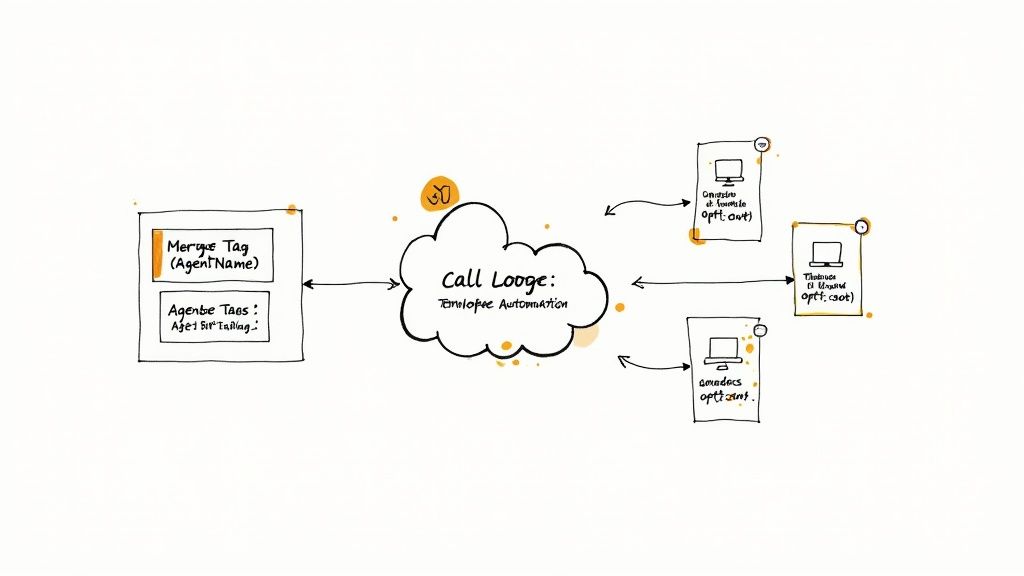
Automated doesn't have to mean boring or generic. One of the slickest features inside Call Loop is using merge tags to create signatures that change dynamically. This lets you personalize the sign-off based on who you're talking to or what campaign you're running.
For instance, if you're sending a support message, you could automatically pop in the agent's name. That small detail adds a human touch that makes the whole interaction feel less like a robot and more like a one-on-one conversation.
Here are a few quick ideas for using merge tags:
-[[agent_name]] @ YourCompany automatically becomes "-Sarah @ YourCompany".-The [[department]] Team turns into "-The Support Team".This kind of detail is what separates decent outreach from great outreach. When you learn how to create personalized SMS campaigns, you ensure every automated message lands with a personal feel.
Maybe the most important job for an automated signature is handling compliance. Let's face it, remembering to type "Reply STOP to end" on every single promotional text is a gamble. It's just too easy for it to slip through the cracks.
By automating your opt-out language, you’re turning a daily chore into a foolproof safety net. It guarantees you’re following TCPA and CTIA rules with every send, which protects your brand’s reputation and keeps your messages from getting blocked.
Inside Call Loop, you can set up a default signature that always includes the necessary opt-out instructions. You can then apply this template to all your marketing campaigns, so you never send a text without giving subscribers a clear way out.
This one simple step is crucial for keeping a healthy sender reputation with mobile carriers. For a bigger-picture view on this, checking out these marketing automation best practices can show you how these core ideas apply across all your marketing channels.
At the end of the day, automating your text message signatures in Call Loop is a no-brainer. It cleans up your workflow, makes your brand look sharper, and locks down your compliance so you can focus on what really matters: writing a killer message.
Even with a great plan, a few questions always pop up when it's time to actually start using text message signatures. Let's run through the most common ones so you can get started smoothly and effectively.
Think of this as your quick-reference guide for the little details that make a big difference.
Not necessarily, but it’s all about context. The very first outbound message you send in any new campaign absolutely needs a full signature. It’s your handshake—it tells people who you are and gives them the required opt-out info, setting the tone for everything that follows.
What about ongoing conversations, like a back-and-forth support chat? The first message in that thread still sets the stage. While you probably don't need to tack on a full signature to every single reply, it’s a smart move to periodically remind them how to opt out. This keeps you compliant and looks professional.
This is a big one, especially for your budget. Your signature counts toward the 160-character limit of a standard SMS message. A simple signature with your company name and the classic "Reply STOP to end" can easily eat up 25-40 characters.
If your message, signature included, goes over that 160-character mark, it gets split into multiple texts. That means you get billed for two (or more) messages instead of one. The key is to be concise and always account for your signature’s length when you’re writing your message to keep costs in check.
Be very careful here. Using public URL shorteners like bit.ly is a huge red flag for mobile carriers. They often see these generic, unbranded links as suspicious and might automatically filter your messages as spam. That will kill your deliverability.
If you absolutely need to include a link, the best way to do it is with a custom-branded short domain. A link that clearly belongs to your company is seen as far more trustworthy by the carriers. Plus, it’s a great way to reinforce your brand every time someone sees it.
The core difference between a signature and a Sender ID is how your brand is identified. In North America, the signature inside the message is the standard for brand identification and compliance, while a Sender ID, which replaces the number, isn't used for A2P 10DLC messaging.
So, what's a Sender ID? It's a custom name (like 'MYBRAND') that can show up instead of the phone number. While it's used in many countries, it is not supported for A2P 10DLC business messaging in the U.S. and Canada.
A text message signature, on the other hand, is the text at the end of your message (e.g., "- The MyBrand Team"). In North America, this is the main, required way to identify your brand and stay compliant.
Ready to automate your professional, compliant text message signatures and scale your outreach? Call Loop provides all the tools you need, from dynamic merge tags to automated opt-out language, ensuring every message you send builds trust and gets delivered. Explore our powerful messaging platform at https://www.callloop.com.
Chris Brisson
Chris is the co-founder and CEO at Call Loop. He is focused on marketing automation, growth hacker strategies, and creating duplicatable systems for growing a remote and bootstrapped company. Chat with him on X at @chrisbrisson


Trusted by over 45,000 people, organizations, and businesses like


