
See a Demo
You're just one step away from seeing Call Loop in action.
Enter your information below to watch a demo right now.

You're just one step away from seeing Call Loop in action.
Enter your information below to watch a demo right now.


Think of a voice broadcasting service as your own automated call center, capable of dialing thousands of phone numbers at once to deliver a pre-recorded audio message. It's the technology that turns a massive, time-consuming task into a simple point-and-click operation.
Let’s say you need to get an urgent message out to hundreds of clients, remind thousands of attendees about an event, or just follow up with a long list of leads. Dialing every single one of those numbers by hand? That's days, maybe even weeks of work. A voice broadcasting service shrinks that entire process down to just a few minutes.
At its heart, the system uses cloud platforms and Voice over Internet Protocol (VoIP) to place a huge volume of calls simultaneously. All you have to do is record your message, upload your list of contacts, and hit "send." The platform takes over from there, dialing each number and playing your message as soon as the call connects.
But modern voice broadcasting is smarter than just blasting out calls. The technology has branched out to include more subtle, less intrusive ways to get your message across. The biggest game-changer here is the ringless voicemail drop.
A ringless voicemail drop is a technique that places an audio message directly into someone's voicemail box without ever making their phone ring. It’s a powerful way to deliver information without interrupting their day, making it a favorite for marketing messages and non-urgent notifications.
This difference is huge. A standard broadcast is an active phone call that demands immediate attention. A ringless voicemail, on the other hand, works quietly in the background by communicating directly with the phone carrier's voicemail server. It respects the recipient's time and creates a much better experience.
The demand for this kind of efficient, respectful communication is only growing. The global voice broadcasting market is projected to expand at a compound annual growth rate of about 6.6% between 2025 and 2035, all thanks to its incredible usefulness in marketing, customer outreach, and alerts. You can dig into the numbers and explore the market growth projections to see where things are headed.
Understanding this core distinction helps you pick the right tool for the job. Need an immediate, can't-miss alert? A standard broadcast is your go-to. Need a gentle, passive reminder? Ringless voicemail is the perfect fit. A modern voice broadcasting service gives you the flexibility to communicate exactly how you want, at a scale that was once unimaginable.
Beyond just blasting out a recorded message, a modern voice broadcasting service is loaded with smart features that make your calls way more effective. These aren't just bells and whistles; they're tools that turn a simple automated call into a real conversation, tailored to whoever picks up the phone. The basic idea is simple, but the tech working behind the scenes is what really gets you results.
At its core, getting a campaign out the door is a simple three-step dance: record, upload, and send.

This workflow shows just how easy it is to go from an idea to a full-blown campaign. But the real magic happens when you dive into the features that power this process. Let’s pull back the curtain.
One of the most valuable tools in the box is Answering Machine Detection (AMD). Think of it like a smart receptionist for your automated calls. It listens to the first few seconds to figure out if it's talking to a real person or a voicemail greeting. This is a game-changer.
Why? Because you can tell the system what to do in each scenario:
This simple bit of intelligence stops you from playing an awkward "Hello, is anyone there?" recording into someone's voicemail. It keeps things professional and makes sure the right message lands in the right context.
This is where things get really interesting. A voice broadcasting service can use Interactive Voice Response (IVR)—you've probably heard it called a "Press-1" campaign—to turn a one-way message into a two-way street.
Instead of just having someone listen, you can prompt them to take action. A classic example is, "To speak with one of our specialists right now, press 1." When they hit that key, the system can instantly connect them to a live agent. This closes the gap between interest and action, catching leads the second they're hot.
Press-1 campaigns can skyrocket your conversions. You're not asking someone to hang up and call you back later; you're connecting them immediately, removing all the friction while they're most interested.
Don't have a professional microphone or the time to record audio? No sweat. Text-to-Speech (TTS) technology has you covered. You just type out your script, and the system generates a natural-sounding audio file for you.
Today's TTS engines are surprisingly human-like, with different voices, accents, and languages to choose from. This is perfect for creating campaigns on the fly or A/B testing different message scripts without having to re-record everything.
Finally, one of the slickest features available is the ringless voicemail drop. This technology lets you slide a pre-recorded message directly into someone's voicemail inbox without their phone ever ringing.
It's a much less intrusive way to deliver a message, especially for marketing or follow-ups. People can listen to your voicemail whenever it's convenient for them, which means they're often more receptive to what you have to say. For any non-urgent communication, ringless voicemail is a fantastic way to stay top-of-mind without being disruptive.
A voice broadcasting service isn't just one thing; it's a chameleon, adapting to the communication needs of just about any industry you can think of. From high-energy sales floors to calm healthcare clinics, automated voice messages are out there generating leads, confirming appointments, and getting critical information out in an instant.
But it’s not just about blasting out marketing messages. This is a practical tool for solving everyday operational headaches. It's about connecting with a huge audience at once, saving a ton of time, and pushing people toward specific, measurable actions.
For sales and marketing folks, voice broadcasting is a lead-gen machine. Forget spending all day making manual cold calls. Sales reps can now launch automated campaigns that hit thousands of prospects with the same, perfectly polished message.
A popular play is the "Press-1" campaign. The pre-recorded message lays out a killer offer or an invite to learn more. Anyone interested just presses a key and gets zipped right over to a live agent. This means your sales team spends their day talking to genuinely interested people, not dodging gatekeepers or leaving voicemails.
Ringless voicemail is another game-changer here. Sales teams can drop a message about a new product or a quick follow-up right into a prospect's inbox without their phone ever ringing. It feels way less intrusive and lets the person listen and get back to you on their own time. You can see how this works in the real world with things like AI-powered outbound calls for real estate lead generation, which are opening up new doors in a crazy competitive market.
When an election is heating up, speed and reach are everything. Political campaigns lean heavily on voice broadcasting to get supporters fired up and out to the polls.
It’s not just for politics, either. Non-profits and community groups use the same tech to announce events, run fundraising drives, and recruit volunteers, making sure their message lands across the whole community fast.
In healthcare, a missed appointment isn't just an empty time slot—it's lost revenue and a scheduling nightmare. A voice broadcasting service helps clinics and hospitals put their confirmation process on autopilot, which slashes no-show rates.
Automated appointment reminders are a simple but incredibly powerful tool. One study found that automated reminders can cut patient no-show rates by as much as 36%. That's a huge win for a clinic's efficiency and the patient's continuity of care.
You can set up the system to send a confirmation call a day or two before the appointment. The patient can usually confirm, cancel, or reschedule just by pressing a key on their phone, no staff time required. Good providers also offer HIPAA-compliant solutions, so you know all patient data is locked down and secure.
When an emergency hits, seconds matter. Schools and local governments use voice broadcasting as a vital part of their emergency alert systems.
With just one click, a school can blast an urgent message to thousands of parents and staff about a campus closure, a weather delay, or a security lockdown. This guarantees everyone gets the same, accurate information at the exact same time. Local governments do the same thing for public safety alerts, evacuation notices, or updates during a community crisis, giving them a rock-solid way to keep people safe and in the loop.
Launching a voice broadcasting campaign is incredibly powerful, but with that power comes a ton of responsibility. Sending out mass automated calls isn't the wild west; it's a field governed by strict legal rules and technical hurdles that can either make or break your entire effort. Getting it right means focusing on two things at once: staying on the right side of the law and making sure your calls actually get where they're going.
This is more important than ever as voice tech becomes a standard part of doing business. Voice broadcasting is a big piece of the Voice over Internet Protocol (VoIP) market, which has blown up globally. The worldwide VoIP services market was valued at around USD 178.89 billion in 2025 and is projected to hit USD 413.36 billion by 2032, growing at a healthy clip of 12.7% each year. You can read the full VoIP market research to see just how massive this trend is.
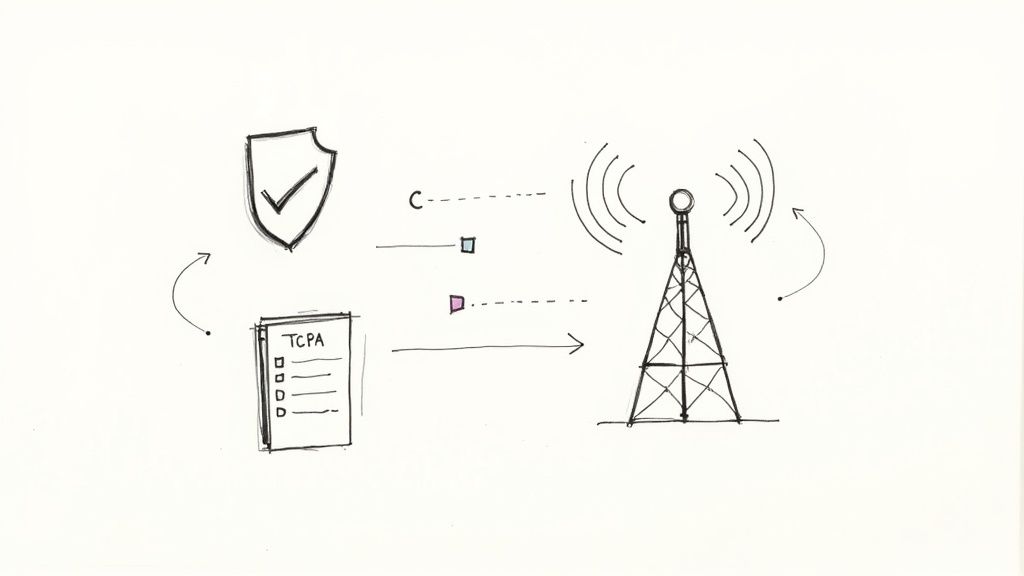
The absolute most important rulebook you need to know in the U.S. is the Telephone Consumer Protection Act (TCPA). This federal law puts some serious guardrails on automated calls, especially when they're for marketing. Messing up here isn't a small oops—fines can be brutal, ranging from $500 to $1,500 per call.
For any marketing-related voice broadcasts, the TCPA demands that you have prior express written consent from the person you're calling. This isn't some vague "I agree to the terms" checkbox hidden in tiny print. It has to be a crystal-clear, unambiguous agreement from the consumer that they're okay with getting automated marketing calls from your business specifically.
Simply having a customer's phone number is not enough to send them marketing broadcasts. You need explicit, documented permission that stands up to legal scrutiny. Without it, you are exposing your business to significant financial risk.
On top of that, you have to respect the National Do Not Call (DNC) Registry. Before you even think about launching a campaign, you're required to "scrub" your contact list, which just means removing any numbers on that registry. Good service providers will have tools built-in to handle this for you, saving you from a costly mistake.
Beyond the legal stuff, you’ve got a technical fight on your hands: call deliverability. Phone carriers are always on the lookout for spam and robocalls to protect their customers. If your calling activity looks fishy, they can flag your number, and that’s when the real headaches start.
Here’s what can happen if the carriers flag you:
To dodge this, you need to be smart about managing your caller ID reputation. This means "warming up" new phone numbers by starting with a small number of calls and slowly ramping up. You also have to keep a close eye on your campaign stats, like answer rates and how long people stay on the line. If those numbers suddenly drop, it’s a big red flag that your calls are probably being flagged.
Picking the right voice broadcasting service is a bigger deal than you might think. It’s not just about buying software; it’s about choosing a partner to carry your voice to thousands of customers. The right one can supercharge your outreach, while the wrong one can burn through your budget, wreck your deliverability, and even land you in legal hot water.
To make a smart call, you need to look past the flashy features. You have to get into the nuts and bolts of how they charge, how their platform plays with your other tools (like your CRM), and whether they take compliance seriously. A service might promise the world, but if the price is wrong or it puts your business at risk, it's a non-starter.
Voice broadcasting providers have a few different ways they bill you, and the best one for you really depends on how often you plan to run campaigns. Getting your head around these models is the first step to finding a good deal.
Whatever you do, look for a provider with crystal-clear pricing. No hidden setup fees, no sneaky long-term contracts. You want a plan that can grow with you, not lock you down.
A voice broadcasting platform that can't talk to your other software is like a ship in a bottle—it looks nice, but it isn’t going anywhere. The real magic happens when it connects seamlessly with the tools you already rely on, especially your CRM.
Powerful integrations are what turn manual tasks into automated workflows. When your broadcast service and CRM are linked up, you can trigger calls or voicemails automatically based on what a customer does. This saves countless hours and makes sure your follow-up is always on time.
Imagine this: a new lead fills out a form on your website and instantly gets a welcome call. Or a new customer signs up and receives a helpful ringless voicemail with setup tips. That's the kind of hands-off engagement that builds real relationships.
If you can't measure it, you can't improve it. Any decent provider will give you detailed analytics that go way beyond a simple "sent" report. You need to see the real story. Look for platforms that track crucial metrics like answer rates, how many calls hit a live person versus an answering machine, and "Press-1" transfer rates. This is the data that tells you what’s working and what’s not.
This field is getting smarter all the time. In fact, the related voice analyzer market, valued at USD 7.3 billion in 2025, is projected to hit a massive USD 41.6 billion by 2035, all thanks to the demand for this kind of automated monitoring. You can discover more insights about voice analyser market trends from Future Market Insights.
Just as critical are the built-in compliance tools. The best platforms actively help you stay on the right side of the law. A non-negotiable feature is automated DNC list scrubbing, which automatically removes numbers on the National Do Not Call Registry from your campaigns. If you're doing any kind of marketing, this isn't a "nice to have"—it's a must-have.
With all these factors in mind, it helps to have a simple framework for comparing your options side-by-side.
Here’s a checklist you can use to vet potential providers and make sure you’re covering all your bases.
Choosing a provider isn't a decision to be rushed. Use this checklist to ask the tough questions, run a few small test campaigns, and find a partner who truly understands your goals and helps you achieve them safely and effectively.
Having the right voice broadcasting service is only half the battle. How you actually use it is what separates a successful campaign from one that just adds to the noise.
Think about it: a well-executed campaign feels personal and genuinely helpful. A poorly planned one? It gets ignored. The good news is that a few core practices can dramatically lift your results, turning a simple broadcast into a powerful way to connect with people. It all starts by moving beyond a one-size-fits-all message and focusing on smart scripting, precise targeting, and constant testing.
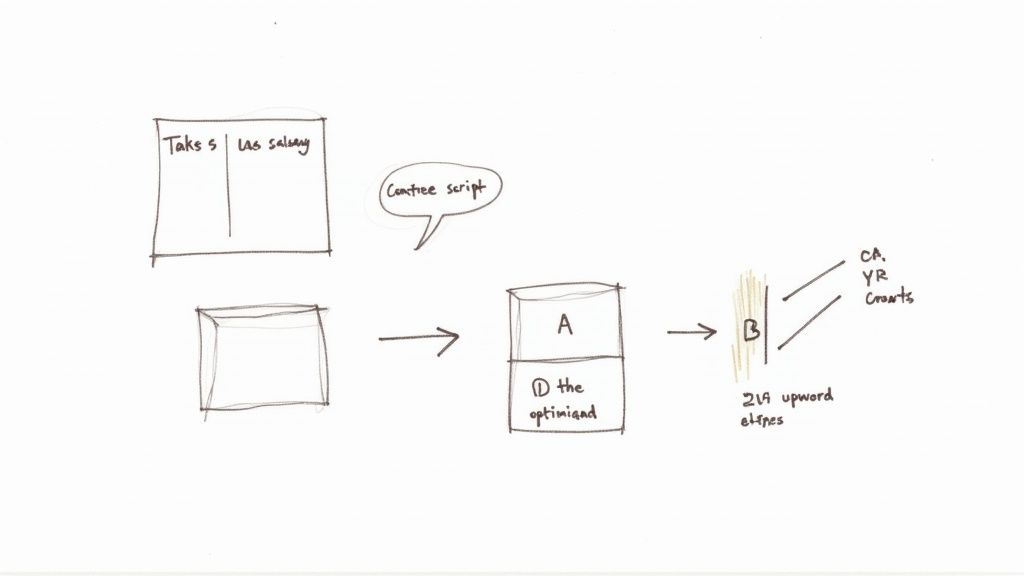
Your script is the heart of your campaign. Clarity is king.
You’ve got just a few seconds to grab someone's attention, so your message needs to be clear, concise, and have one single, obvious call to action (CTA). Get straight to the point. State who you are and why you're calling right away.
End with a clear next step. Whether that’s "press 1 to talk to our team," "visit our website for details," or "keep an eye out for a follow-up email," make it impossible to misunderstand. A focused message prevents confusion and actually drives people to do something.
Sending the exact same message to your entire list is a surefire way to get low engagement. This is where segmentation comes in. It’s just a fancy word for dividing your audience into smaller, more relevant groups.
You could segment your lists based on things like:
Personalization can be as simple as using a merge tag to include someone's first name. A message that starts with "Hi, Sarah" will always feel more personal and engaging than a generic "Hello."
A personalized experience is no longer a luxury; it’s an expectation. Campaigns that segment and tailor their message consistently see higher response rates because the content resonates on a personal level.
This targeted approach makes your messages feel valuable instead of spammy, which is especially important for less intrusive methods like a ringless voicemail drop.
When you send your broadcast matters just as much as what you say. It’s common sense, but you’d be surprised how many people get this wrong. Avoid calling super early in the morning, late at night, or on weekends.
The sweet spot is usually mid-morning (10 AM - 12 PM) and mid-afternoon (2 PM - 4 PM) during the workweek. That’s when people are generally most available to pick up the phone.
But here’s the thing: no two audiences are the same. This is where A/B testing becomes your best friend. Don't just guess what works—prove it with data. Test different elements to see what actually moves the needle:
By testing just one variable at a time, you can systematically figure out what resonates with your audience. And finally, live in your analytics. Track your answer rates, transfer rates, and conversion metrics. This data is the hard proof you need to show your campaign's value and make smarter decisions for the next broadcast.
Jumping into the world of automated calling can bring up a few questions. Let's clear up some of the most common ones so you can get started on the right foot.
Yes, but you have to be careful. The law is very clear on this.
For any marketing calls sent to cell phones, the Telephone Consumer Protection Act (TCPA) demands you get "prior express written consent" from the person you're calling. That means you need a clear, documented opt-in before you can legally send them automated promotional messages.
It's a different story for non-marketing messages like appointment reminders or emergency alerts, where the rules can be a bit more relaxed. No matter what, it's always a smart move to check your lists against the National Do Not Call (DNC) Registry to stay compliant.
We always recommend chatting with a lawyer to make sure your specific campaigns are fully compliant with TCPA guidelines. The penalties for getting it wrong can be steep.
A standard voice broadcast is a regular phone call. If someone picks up, they hear your message right away. If they don't, it goes to their voicemail just like any other missed call.
Ringless voicemail, on the other hand, is a totally different animal. It uses special technology to slide your pre-recorded message directly into their voicemail box without ever making their phone ring. This makes it a much less intrusive way to send marketing follow-ups or gentle reminders.
Getting more people to pick up your calls usually boils down to a few simple tweaks.
First, always use a local caller ID. People are way more likely to answer a call from an area code they recognize than one from a toll-free number or an area code they've never seen.
Second, timing is everything. Send your broadcasts when people are actually free to answer, like mid-morning or mid-afternoon during the week. Avoid calling super early, late at night, or right in the middle of rush hour.
Finally, keep your lists tidy. Regularly cleaning out bad or disconnected numbers makes your campaigns more efficient and helps protect your caller ID from getting flagged as spam by phone carriers.
Ready to put automated outreach to work with a compliant and effective voice broadcasting service? Call Loop gives you all the tools you need—from ringless voicemail drops to Press-1 campaigns—on a secure, HIPAA-compliant platform. Start your free trial today and see the difference.
Chris Brisson
Chris is the co-founder and CEO at Call Loop. He is focused on marketing automation, growth hacker strategies, and creating duplicatable systems for growing a remote and bootstrapped company. Chat with him on X at @chrisbrisson


Trusted by over 45,000 people, organizations, and businesses like


