
See a Demo
You're just one step away from seeing Call Loop in action.
Enter your information below to watch a demo right now.

You're just one step away from seeing Call Loop in action.
Enter your information below to watch a demo right now.


In the healthcare sector, quick and efficient communication is no longer a luxury; it's a core component of patient care and operational success. Standard SMS messaging, however, presents a significant compliance risk, exposing practices to potential breaches of Protected Health Information (PHI) and severe HIPAA penalties. This guide is designed to navigate that challenge by providing a comprehensive, head-to-head comparison of the industry's leading HIPAA compliant texting platforms.
This resource cuts directly to the chase. We provide a detailed analysis of vetted solutions, helping you find the right fit for your specific needs, whether you're a small private practice, a multi-location clinic, or a large hospital system. We move beyond marketing claims to examine the critical features that ensure compliance and security. This includes verifying the availability of a Business Associate Agreement (BAA), confirming end-to-end encryption, and assessing the robustness of audit logs and access controls. To grasp the full scope of security, it's essential to understand the underlying principles of HIPAA compliant data transfer protocols.
Throughout this listicle, you will find:
Our goal is to equip you with the information needed to select a platform that not only secures patient data but also enhances your communication workflows, reduces administrative burden, and improves patient engagement. Let's dive into the platforms that can help you achieve this.
Call Loop distinguishes itself as a premier choice for healthcare organizations seeking more than just basic SMS. It's a comprehensive, multi-channel communication platform designed for sophisticated patient outreach, making it one of the most versatile HIPAA compliant texting platforms available. While many services focus solely on text, Call Loop integrates SMS, MMS, voice broadcasting, and its innovative ringless voicemail feature into a single, automated system. This unified approach allows clinics and practices to orchestrate complex, timed campaigns for appointment reminders, follow-up care instructions, and public health announcements, all from one dashboard.
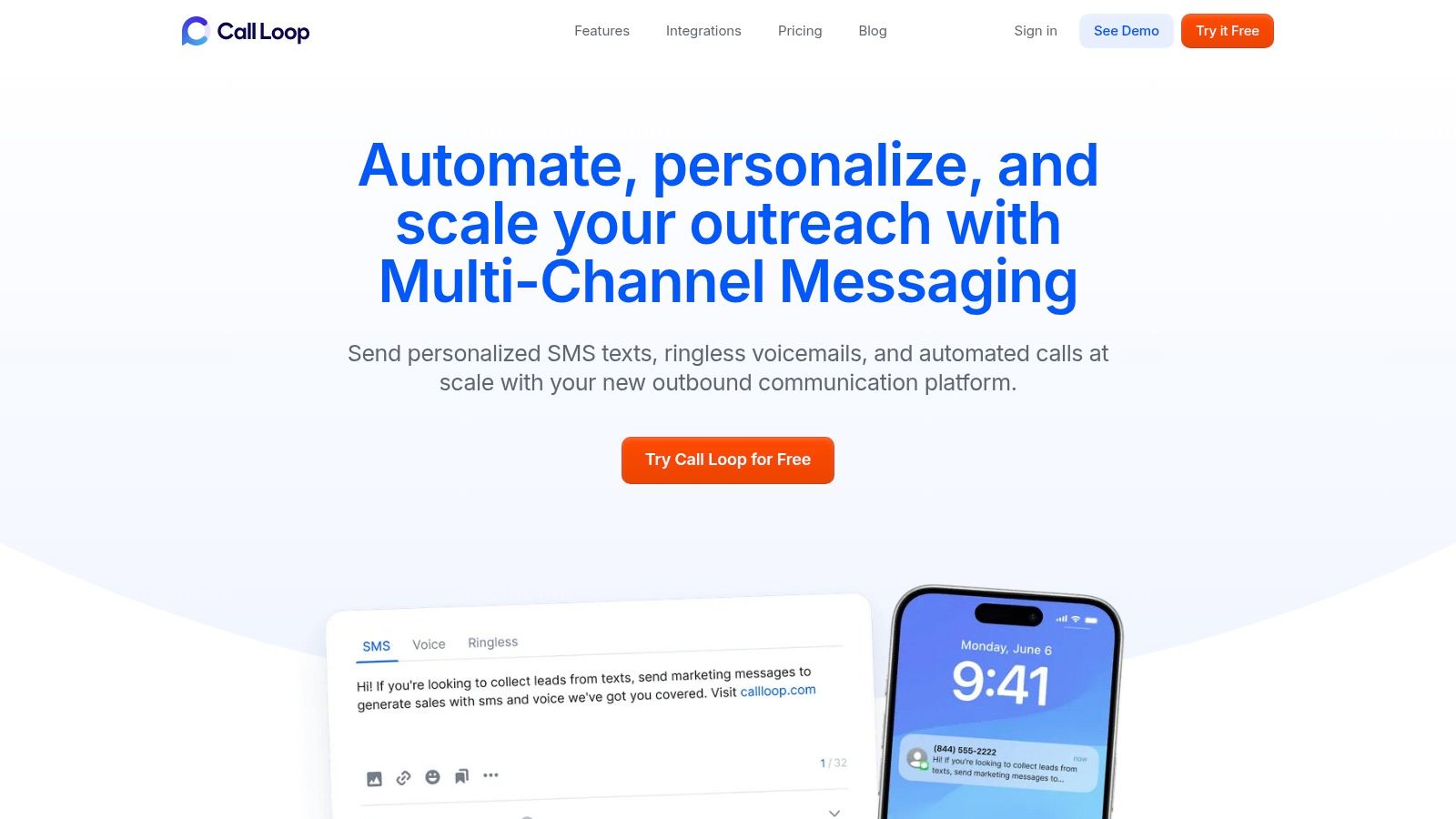
The platform is built on a foundation of security and compliance, readily providing a Business Associate Agreement (BAA) to ensure all communications containing Protected Health Information (PHI) meet HIPAA standards. Its strength lies in its automation and personalization capabilities. Healthcare providers can use text-to-join keywords for health education subscriptions, segment patient lists for targeted messaging, and leverage custom fields to personalize communications at scale. For instance, a dental office could create a drip campaign that sends an SMS appointment reminder, followed by a ringless voicemail drop with pre-operative instructions delivered directly to the patient's voicemail inbox without the phone ever ringing.
Website: https://www.callloop.com
Spruce Health distinguishes itself by bundling a comprehensive suite of communication tools into a single, unified platform, making it one of the more versatile HIPAA compliant texting platforms available. It’s designed as an all-in-one hub for patient interaction, combining secure in-app messaging, a full-featured VoIP business phone system with IVR, native telehealth video conferencing, and even electronic faxing. This integrated approach is ideal for practices looking to consolidate their technology stack and streamline workflows without juggling multiple vendors.
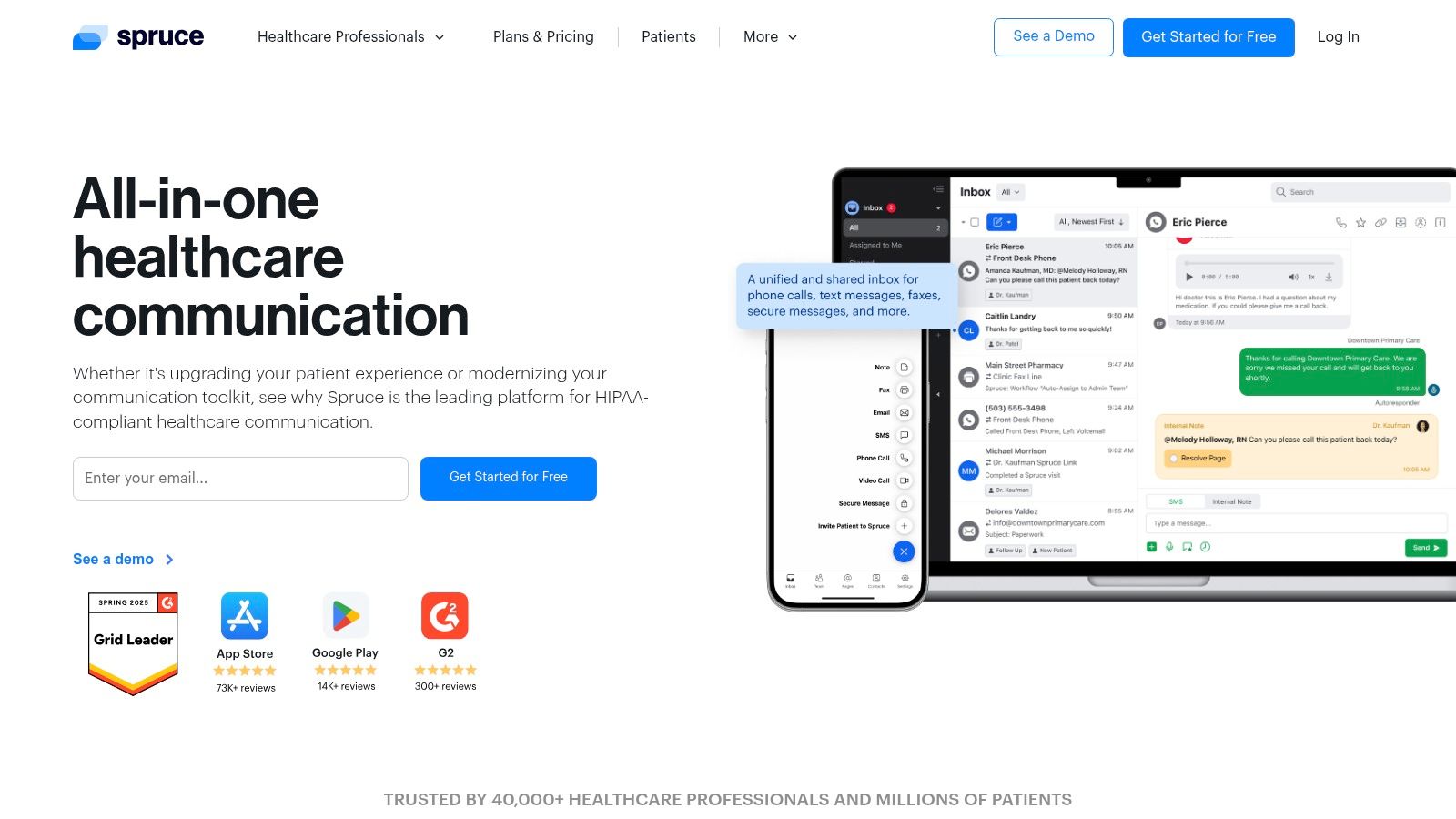
The platform shines for small to mid-sized clinics due to its predictable, per-seat pricing model. This structure includes unlimited texting, voice, and video, which helps practices avoid the surprise overage fees common with per-message plans. Spruce also provides robust patient consent and preference workflows for SMS communication, ensuring compliance with both HIPAA and TCPA regulations.
Pros:
Cons:
Website: https://sprucehealth.com
OhMD carves out a niche as a patient engagement suite that masterfully consolidates multiple communication channels into a single, intuitive inbox. It stands out among HIPAA compliant texting platforms by enabling practices to text-enable their existing landline phone numbers, allowing patients to initiate conversations through a familiar medium. The platform excels at capturing patient inquiries from various entry points, including call-to-text handoffs, website chat, and direct SMS, ensuring no message gets lost in the shuffle.
With a strong focus on workflow automation and EMR/EHR integration, OhMD helps practices reduce administrative burdens. Features like broadcast messaging for group announcements, voicemail transcription, and automated intake forms streamline daily operations. For organizations with custom software needs, OhMD offers a developer API, providing the flexibility to embed secure texting functionalities directly into proprietary applications, a significant advantage for tech-forward healthcare providers. Learn more about OhMD's secure SMS features and how they compare to others.
Pros:
Cons:
Website: https://www.ohmd.com
TigerConnect positions itself as an enterprise-grade clinical collaboration platform designed for large health systems and organizations with stringent security needs. It goes beyond simple messaging, offering a comprehensive suite of tools for both internal team communication and external patient engagement. As one of the more established HIPAA compliant texting platforms, its strength lies in providing robust governance, advanced security protocols, and deep integration capabilities suitable for complex healthcare environments.
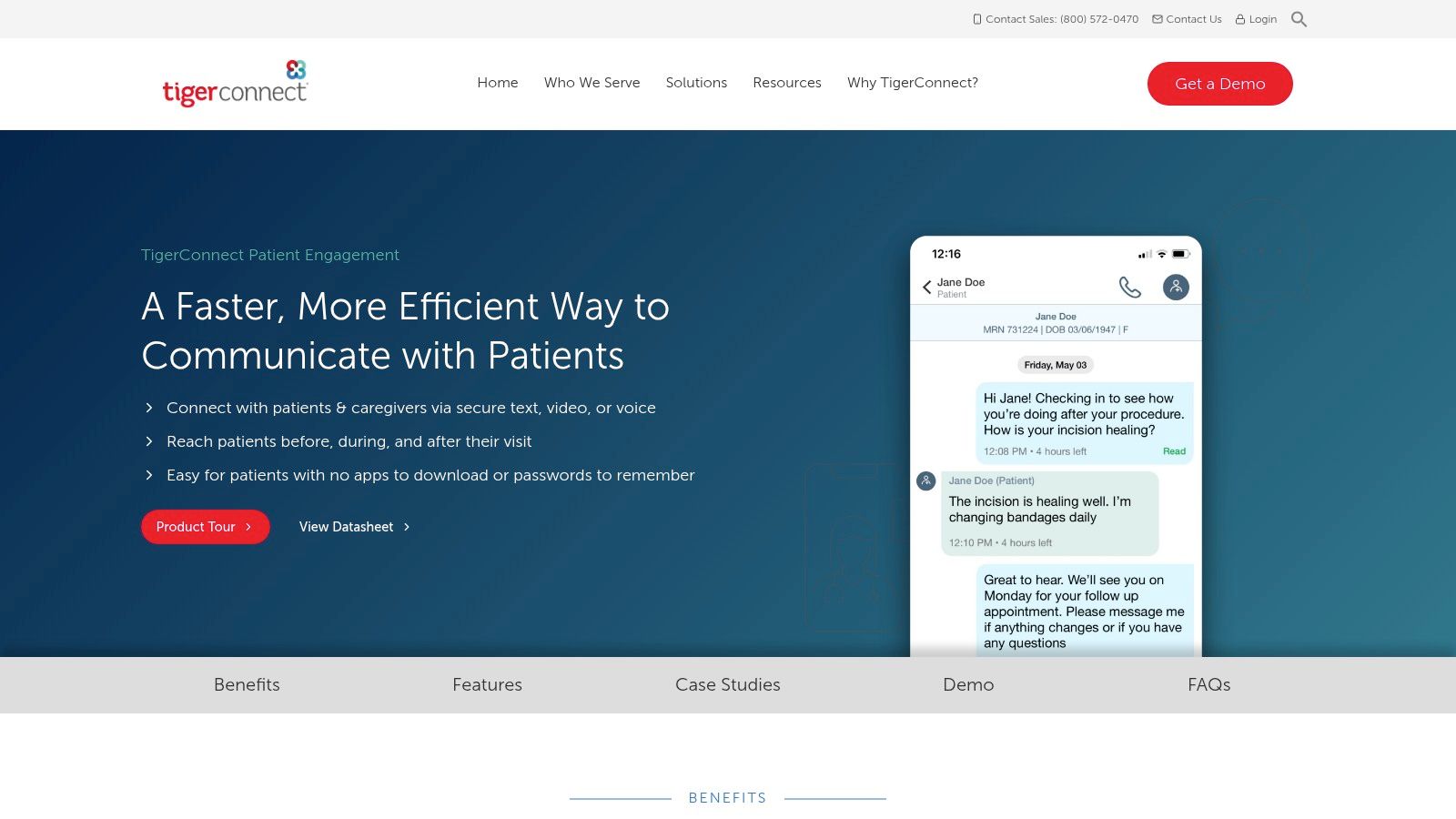
The platform facilitates encrypted patient communication through secure web or app-based flows, ensuring Protected Health Information (PHI) remains secure. It complements this with powerful tools for physician scheduling, team collaboration, and telehealth. TigerConnect is HITRUST-aligned and provides extensive policy controls over message lifespans, archiving, and auditing, making it a preferred choice for organizations that require rigorous, verifiable compliance and user management across multiple departments. This focus on enterprise-level control and security sets it apart from solutions geared toward smaller practices.
Pros:
Cons:
Website: https://tigerconnect.com/products/patient-engagement/
Klara, now part of ModMed, positions itself as a patient engagement platform built to reduce administrative overhead and streamline clinic communication. Its core strength lies in its ability to centralize patient interactions, moving conversations away from the phone and into a secure, text-based environment. By offering tools like call-to-text, web chat, and voicemail transcription, Klara empowers practices to triage patient needs more efficiently and reduce the burden of constant phone calls. This focus makes it a standout among HIPAA compliant texting platforms for clinics aiming to transform their operational workflows.
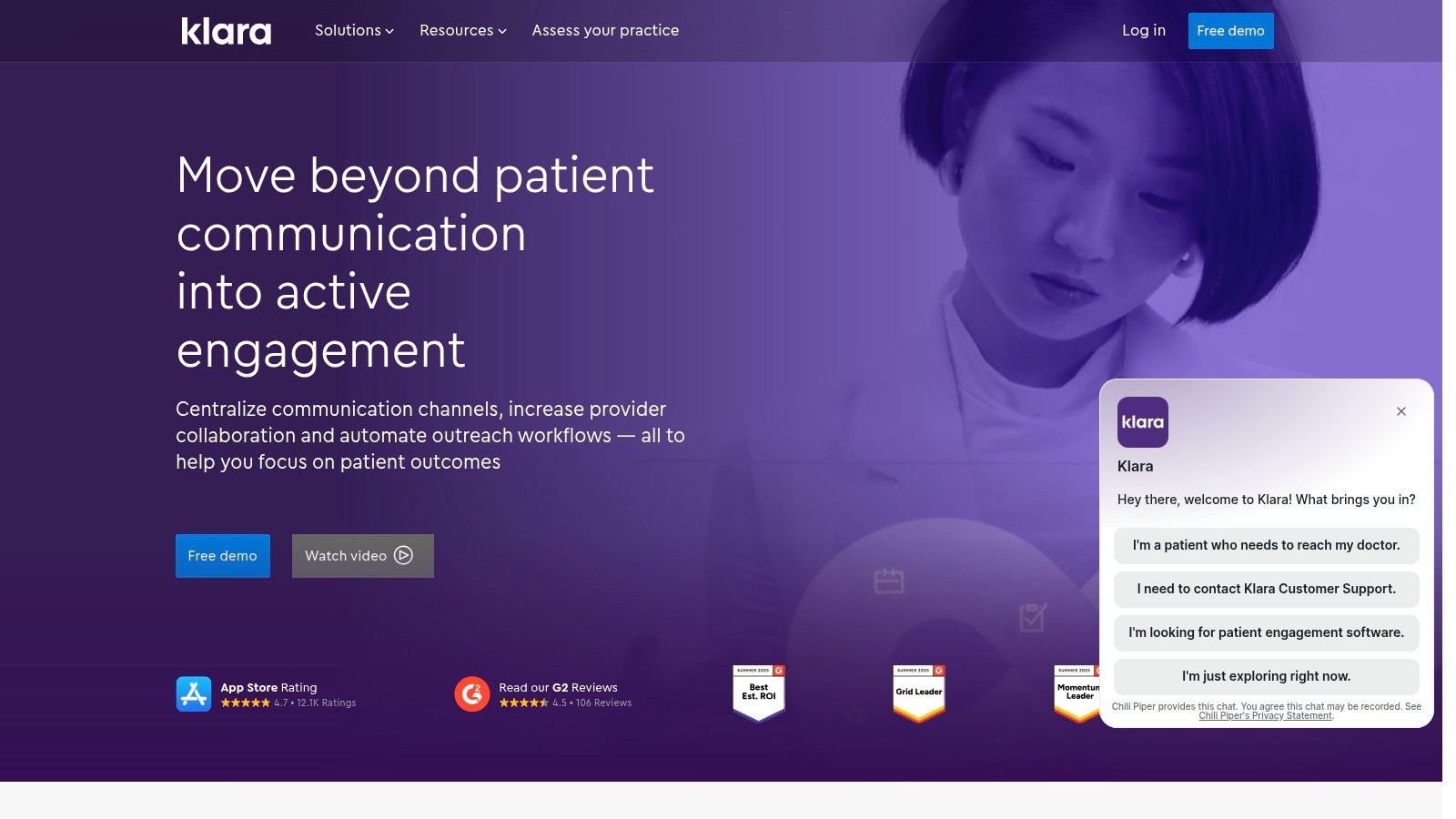
The platform is designed for practices that need more than just messaging; it integrates digital forms, self-scheduling, and appointment reminders without requiring patients to log into a separate portal. This seamless experience, combined with deep integrations into leading EHRs, makes it particularly valuable for specialty clinics looking to automate routine tasks. Klara ensures security by providing a Business Associate Agreement (BAA) and using two-factor authentication for both patients and staff.
Pros:
Cons:
Website: https://www.klara.com
QliqSOFT offers a secure messaging solution built from the ground up specifically for the healthcare industry, serving over 1,000 organizations. It stands out among HIPAA compliant texting platforms by providing powerful administrative controls, comprehensive audit trails, and flexible deployment options, including on-premise archiving. The platform is designed for organizations that require stringent compliance oversight for both internal team collaboration and external patient communication, ensuring every interaction is logged and secure.

A key differentiator for QliqSOFT is its focus on enterprise-level security features like Active Directory/SSO integration and the optional QliqSTOR for on-premise data archiving, which gives IT departments greater control over data retention policies. Furthermore, its ability to initiate no-app video visits directly from a text link simplifies telehealth adoption for patients who may not be tech-savvy. This combination of robust security and user-friendly patient engagement tools makes it a strong contender for hospitals and larger clinical networks.
Pros:
Cons:
Website: https://www.qliqsoft.com
Curogram positions itself as a patient engagement powerhouse, focusing on streamlining front-desk operations and reducing administrative burdens through a robust communication suite. It enables practices to use their existing main office phone number for two-way, HIPAA compliant texting, which fosters familiarity and trust with patients. The platform integrates essential workflows like automated appointment reminders, digital patient intake forms, and text-to-pay functionalities, directly addressing common practice inefficiencies like no-shows and time-consuming paperwork.
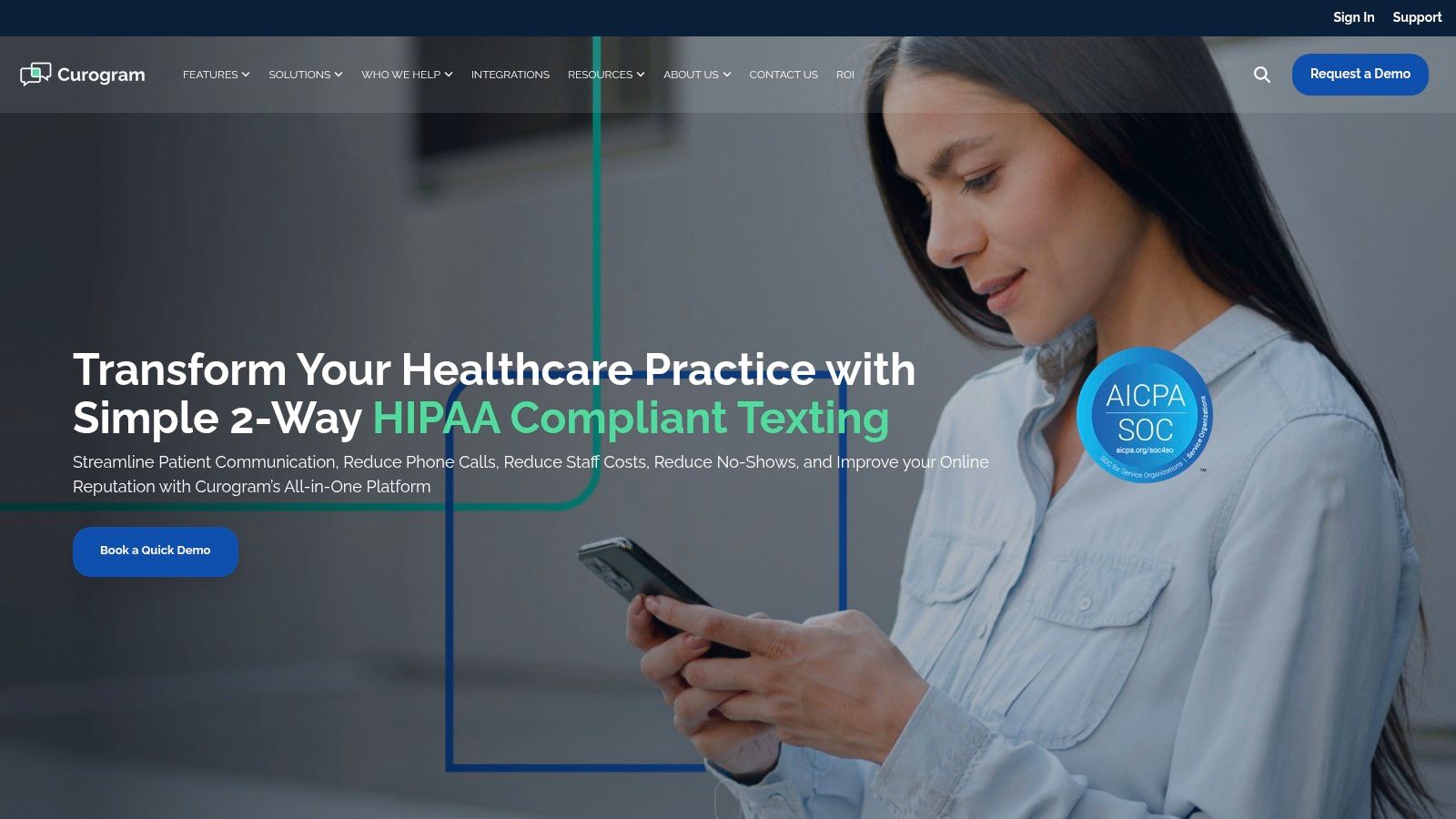
This focus on operational efficiency makes Curogram a strong choice for small to mid-sized practices aiming for a rapid return on investment. The platform promises a significant reduction in phone call volume and appointment no-shows, backed by its all-in-one approach to patient interaction. With SOC 2 compliance, a permanent audit trail, and EHR integration capabilities, it provides the necessary security and accountability for healthcare communications.
Pros:
Cons:
Website: https://curogram.com
Updox positions itself as a comprehensive practice communications platform, specifically designed for ambulatory care settings. It offers a modular suite of tools that go beyond basic messaging, integrating secure patient texting, telehealth, appointment reminders, and electronic faxing. This approach makes it one of the more flexible HIPAA compliant texting platforms for clinics that want to consolidate key administrative and patient-facing communication tools under a single vendor, adding capabilities as their needs evolve.
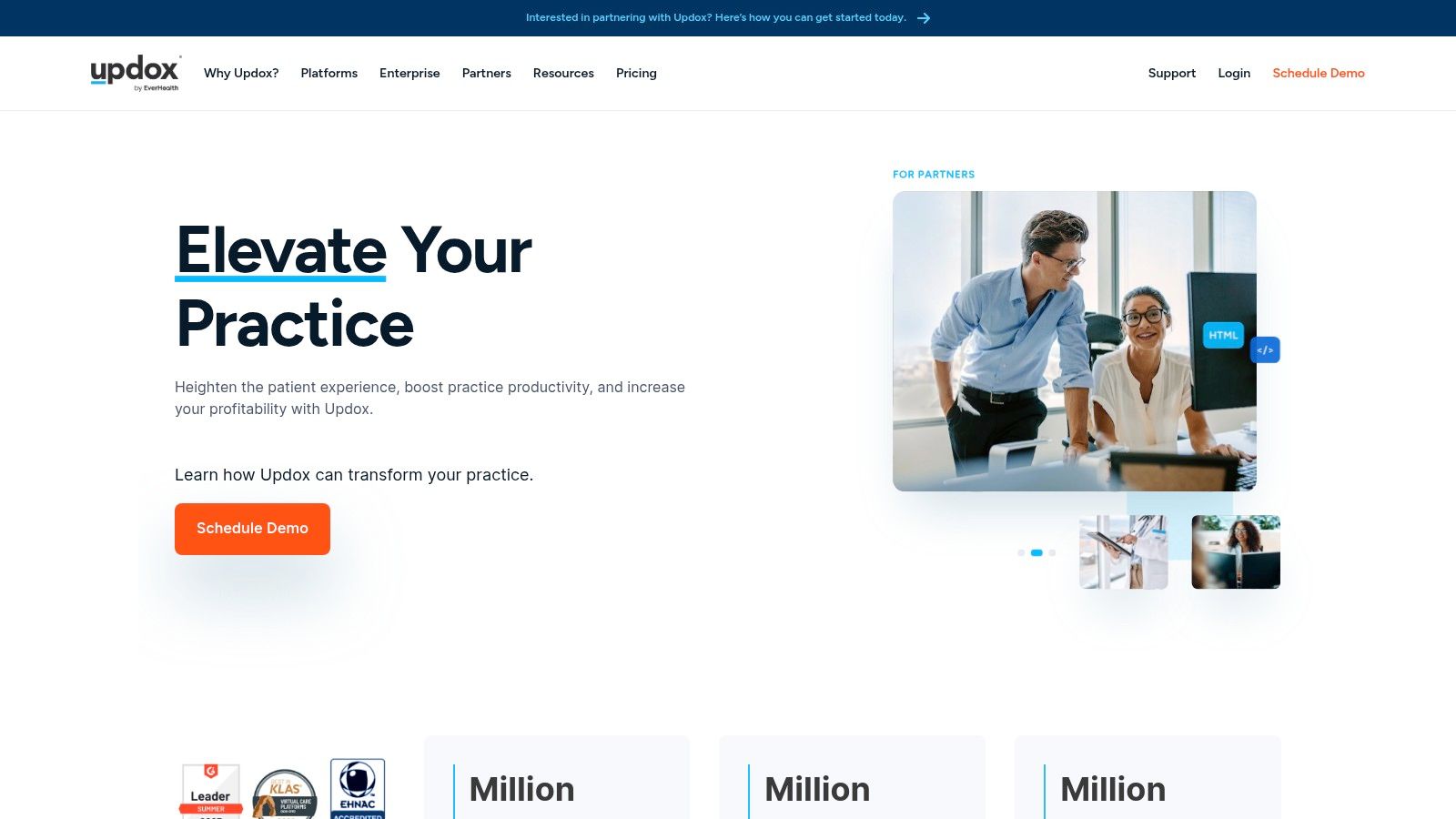
The platform’s strength lies in its scalability, offering tiered usage bundles that allow practices to manage costs effectively. Clinics can start with a standard package covering core needs like two-way texting and broadcast campaigns, then layer on add-ons for services like electronic forms or internal team messaging. This structure is ideal for growing practices that need a solution that can adapt to increasing patient volume and communication demands without a complete system overhaul.
Pros:
Cons:
Website: https://www.updox.com
Solutionreach, now part of SR Health, is a long-standing leader in patient engagement, providing a robust suite of tools that extends far beyond basic communication. As one of the more established HIPAA compliant texting platforms, it focuses on automating and optimizing the entire patient journey, from appointment reminders and recalls to digital intake and reputation management. The platform is engineered to improve operational efficiency and drive practice growth by reducing no-shows and simplifying administrative tasks.
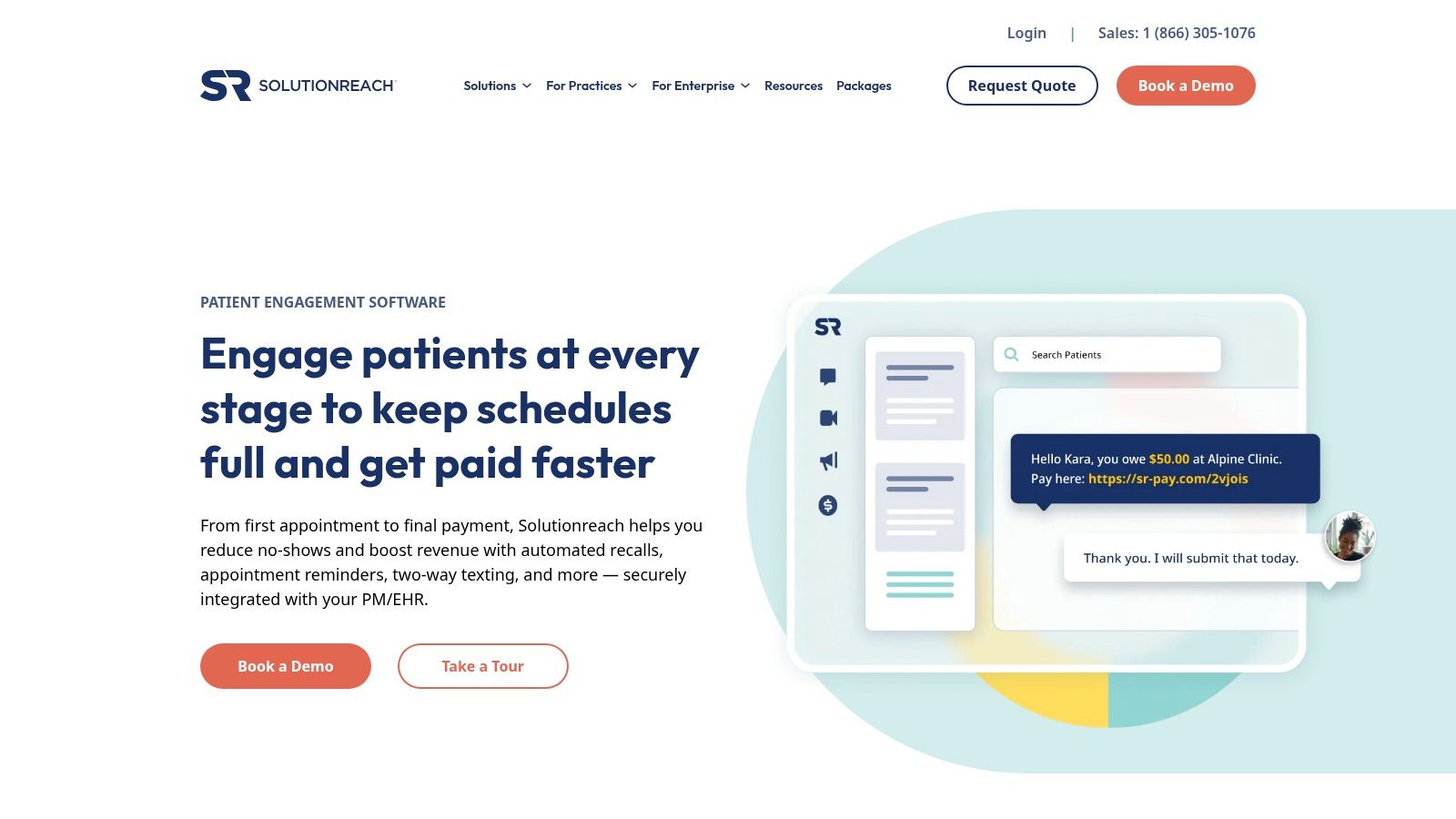
This solution is particularly well-suited for both single and multi-location medical and dental practices seeking a proven system for operational ROI. Its strength lies in its comprehensive feature set, which includes two-way texting, batch messaging for announcements, and online scheduling. Add-on modules for revenue cycle management, like text-to-pay and eligibility checks, allow practices to scale their capabilities as they grow.
Pros:
Cons:
Website: https://www.solutionreach.com
Artera, formerly known as WELL Health, positions itself as an enterprise-grade patient communication platform designed for large, complex health systems. It moves beyond simple messaging to provide a complete patient engagement engine, orchestrating conversations across SMS, email, IVR, and webchat. Its core strength lies in deep, bidirectional EHR integrations that allow for automated workflows and data writebacks, making it one of the most powerful HIPAA compliant texting platforms for organizations managing high patient volumes.
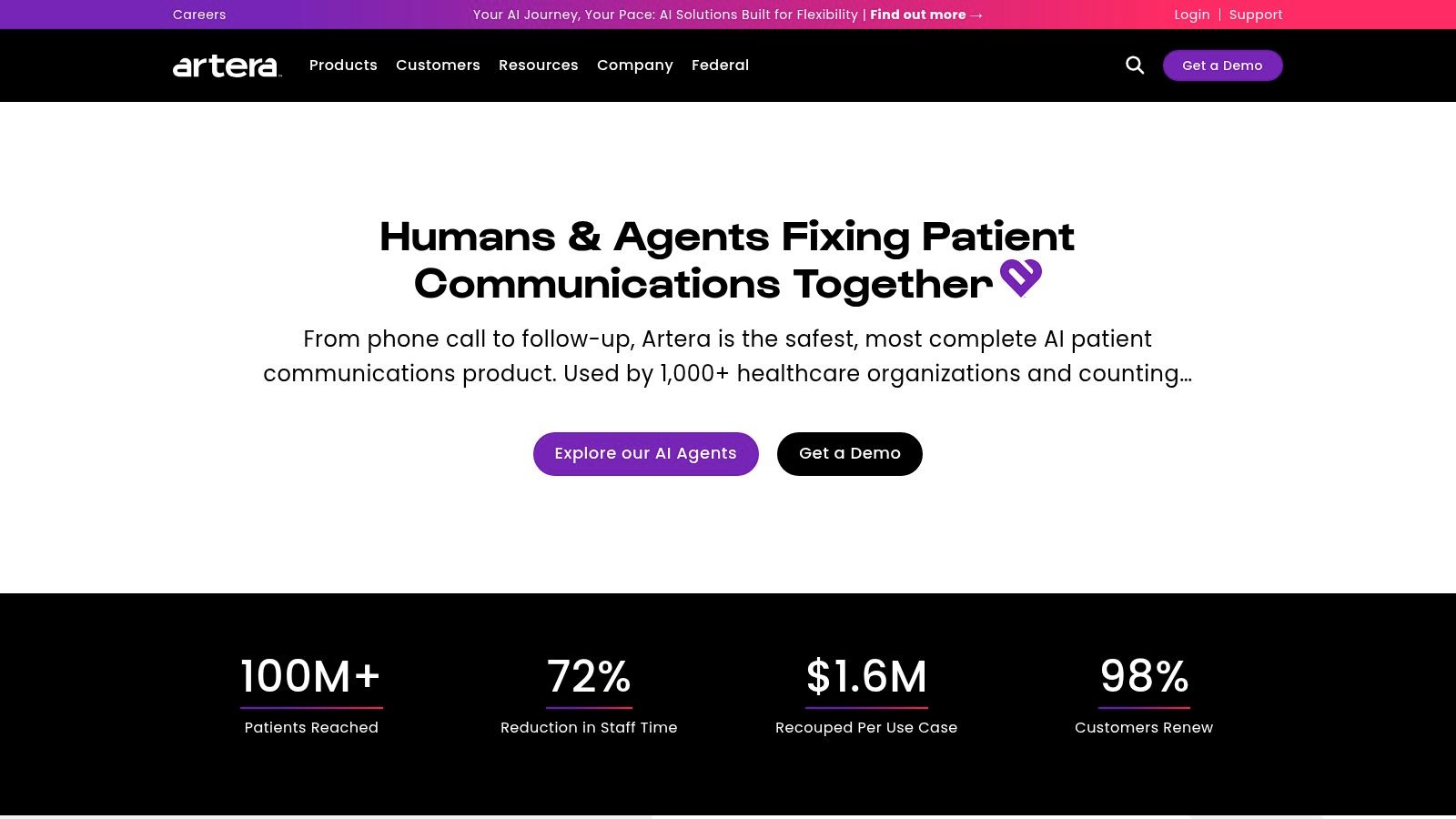
The platform is engineered for scalability, supporting multilingual communication and leveraging AI to help staff manage conversations more efficiently. Instead of just sending messages, Artera automates entire communication sequences, from appointment reminders to pre-visit instructions and post-discharge follow-ups, all while ensuring data flows seamlessly back into the patient's record. This level of integration and automation is critical for large hospitals and health networks aiming to standardize patient experience and reduce administrative burden at scale.
Pros:
Cons:
Website: https://artera.io
Luma Health operates as a total patient engagement platform, setting it apart from simpler messaging apps by offering a wide array of automated and interactive communication tools. As one of the more robust HIPAA compliant texting platforms, it excels at integrating directly with existing EHR and Practice Management systems, boasting compatibility with over 70 different vendors. This deep integration allows for sophisticated, automated campaigns and ensures that patient communications are seamlessly logged back into the system of record.
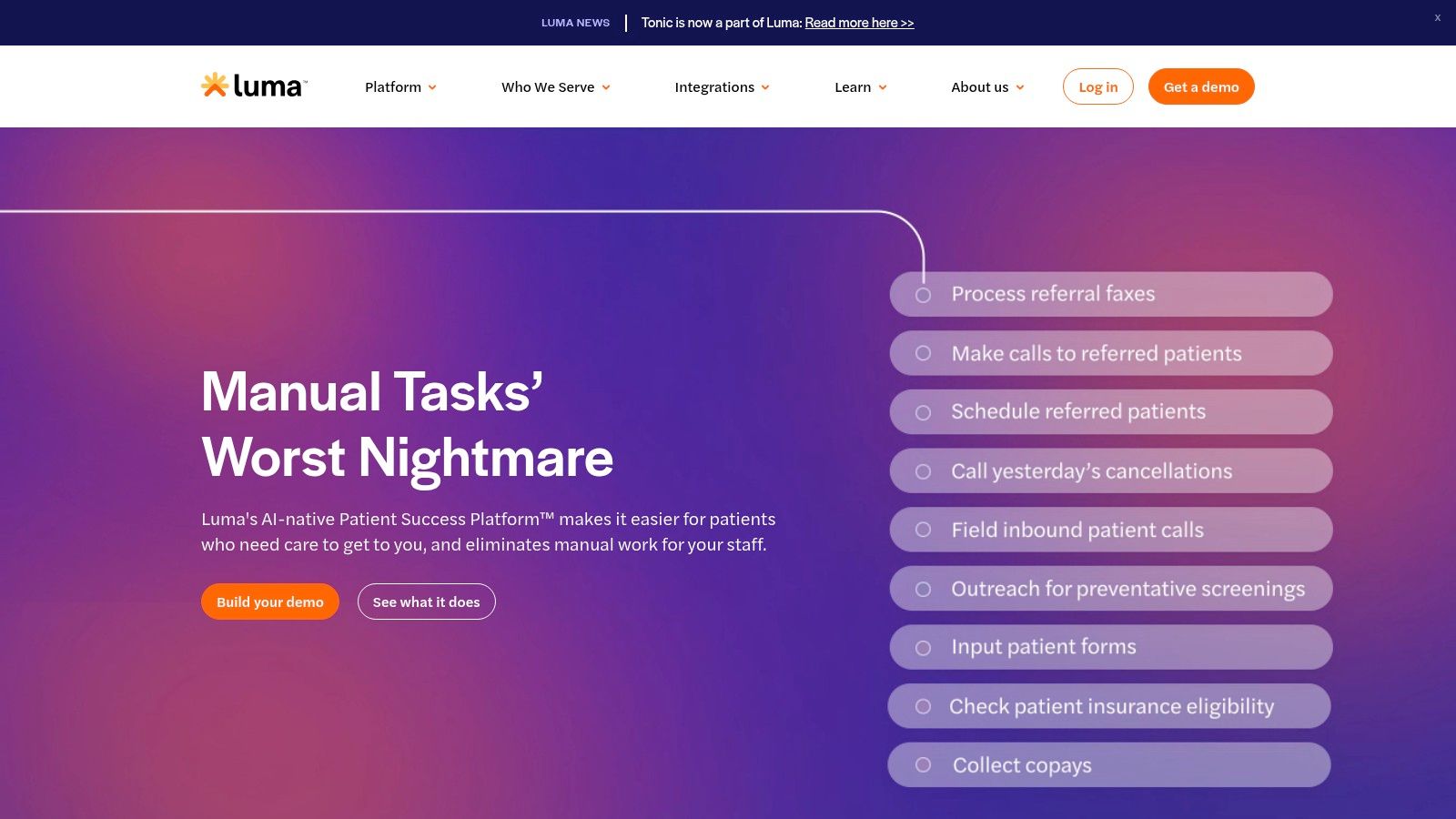
The platform's key distinction is its intelligent delivery system, which can switch between standard SMS for non-sensitive information (like basic appointment reminders) and a fully secure, HIPAA-compliant chat for conversations involving Protected Health Information (PHI). This flexibility helps organizations optimize for both patient convenience and strict compliance. Luma also supports patient-initiated texting and broadcast messaging, enabling practices to manage everything from individual queries to large-scale public health announcements. Explore how to best leverage automated text message reminders to improve patient engagement.
Pros:
Cons:
Website: https://www.lumahealth.io
Textline specializes in business SMS and offers dedicated HIPAA-enabled plans, positioning itself as one of the more focused HIPAA compliant texting platforms for organizations prioritizing a conventional SMS experience. Unlike solutions that require patients to download an app or log into a portal, Textline allows communication to occur over standard text messaging. This approach significantly lowers the barrier to entry for patients, making it ideal for straightforward, high-volume communications like appointment reminders or follow-up instructions.
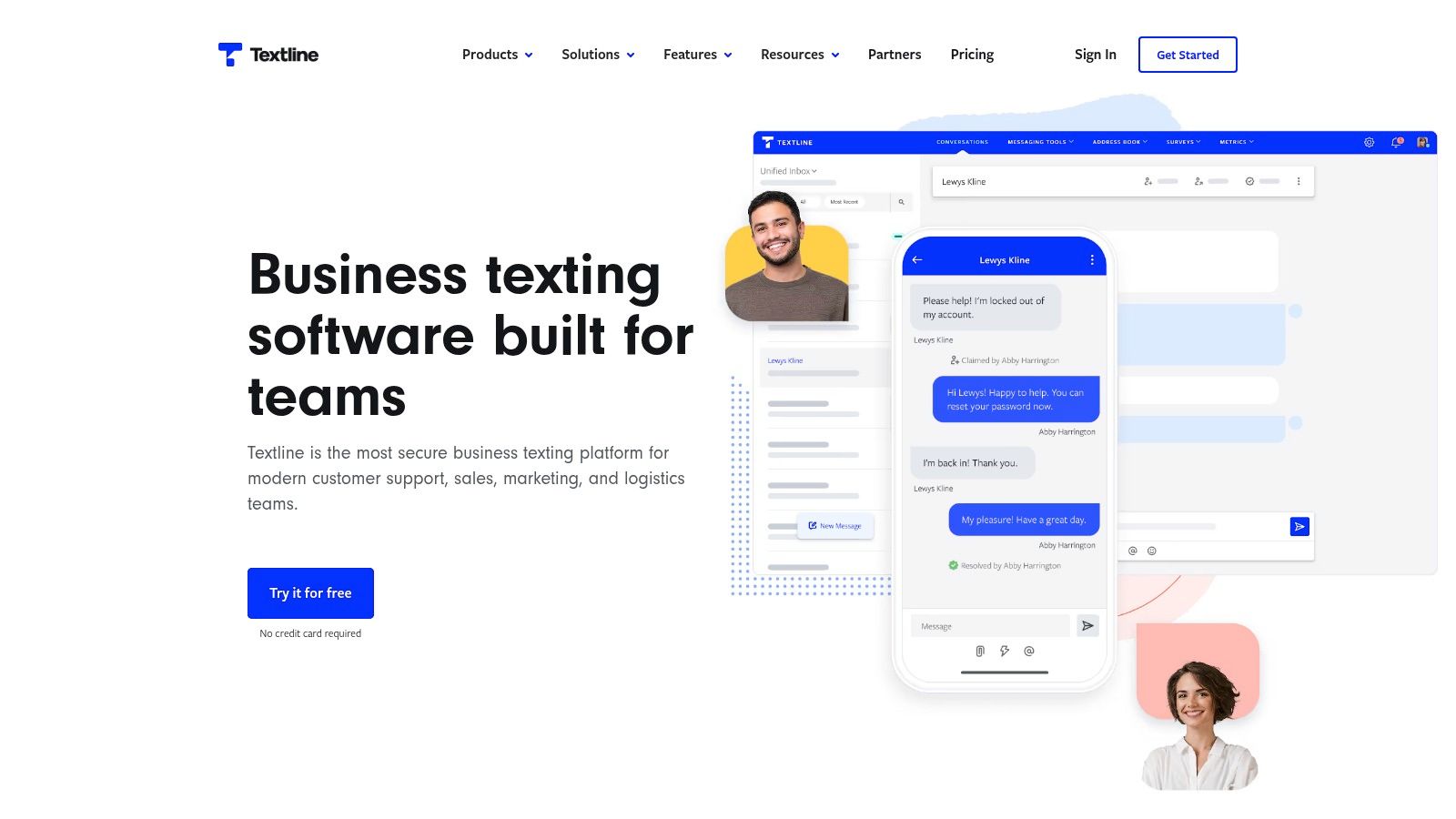
The platform ensures compliance on the provider's end through robust administrative controls. HIPAA plans include a signed Business Associate Agreement (BAA), multi-factor authentication for staff, detailed audit logs to track all message activity, and tools for managing patient consent. This model places the security burden on internal protocols and platform safeguards rather than on end-to-end encryption, which standard SMS does not support. It's a pragmatic solution for clinics that value patient convenience and have workflows that don't require sharing highly sensitive PHI via text.
Pros:
Cons:
Website: https://www.textline.com
Navigating the landscape of HIPAA compliant texting platforms can feel overwhelming. After reviewing a dozen leading solutions, from comprehensive patient engagement suites like Luma Health and Artera to focused clinical communication tools like TigerConnect and Spruce Health, one core principle is clear: the “best” platform is the one that aligns perfectly with your unique operational needs, patient demographics, and strategic goals. The right choice extends far beyond a simple feature-for-feature comparison; it’s about finding a true partner in patient communication.
Your selection process should be a deliberate, multi-step evaluation. It’s not just about secure messaging, but about how that messaging integrates into your existing workflows. A platform that requires constant context switching or manual data entry can create more administrative friction than it solves, undermining the very efficiency you seek.
Moving beyond the initial compliance checklist is critical. While a signed Business Associate Agreement (BAA), end-to-end encryption, and robust audit logs are non-negotiable table stakes, the real value lies in the details of implementation and daily use. Consider the total cost of ownership, which includes not only subscription fees but also the staff time required for training, setup, and ongoing management.
The ideal solution should feel like a natural extension of your practice. For a small, independent clinic, a simple, intuitive platform like OhMD or Textline's HIPAA-tier plan might offer the perfect balance of functionality and affordability. Conversely, a large, multi-location hospital system will need the deep EHR integration, advanced analytics, and enterprise-grade scalability offered by vendors like Solutionreach or Klara.
As you narrow down your options, revisit these crucial considerations to ensure you're making a future-proof investment:
Ultimately, choosing from the best HIPAA compliant texting platforms is a strategic decision that will directly impact your administrative efficiency, patient satisfaction, and even clinical outcomes. The right tool will do more than just secure your communications; it will empower your practice to build stronger patient relationships, reduce staff burnout, and deliver a higher standard of care in an increasingly connected world.
Ready to enhance your patient outreach with a platform that combines secure SMS with powerful voice and ringless voicemail automation? Discover how Call Loop can transform your communication strategy, ensuring compliance while maximizing engagement. Explore our HIPAA-compliant solutions and see how automated, multi-channel messaging can streamline your practice's workflow today.
Chris Brisson
Chris is the co-founder and CEO at Call Loop. He is focused on marketing automation, growth hacker strategies, and creating duplicatable systems for growing a remote and bootstrapped company. Chat with him on X at @chrisbrisson


Trusted by over 45,000 people, organizations, and businesses like


