
See a Demo
You're just one step away from seeing Call Loop in action.
Enter your information below to watch a demo right now.

You're just one step away from seeing Call Loop in action.
Enter your information below to watch a demo right now.

If you want to actually engage your customers, you have to stop blasting generic messages into the void. It’s time to start delivering timely, personal messages on the channels people actually use. The secret sauce is a multi-channel strategy that weaves together SMS, voice, and ringless voicemail to create conversations that feel one-on-one, not like they came from a robot.
At its heart, customer engagement is just about building a real relationship between your brand and your customers. It’s every single touchpoint, from the moment they first hear about you to their tenth purchase and beyond. When you get it right, you're not just making a sale; you're building loyalty, encouraging repeat business, and turning happy customers into your best marketers.
For a deeper dive into building these kinds of connections, check out these proven customer engagement best practices.
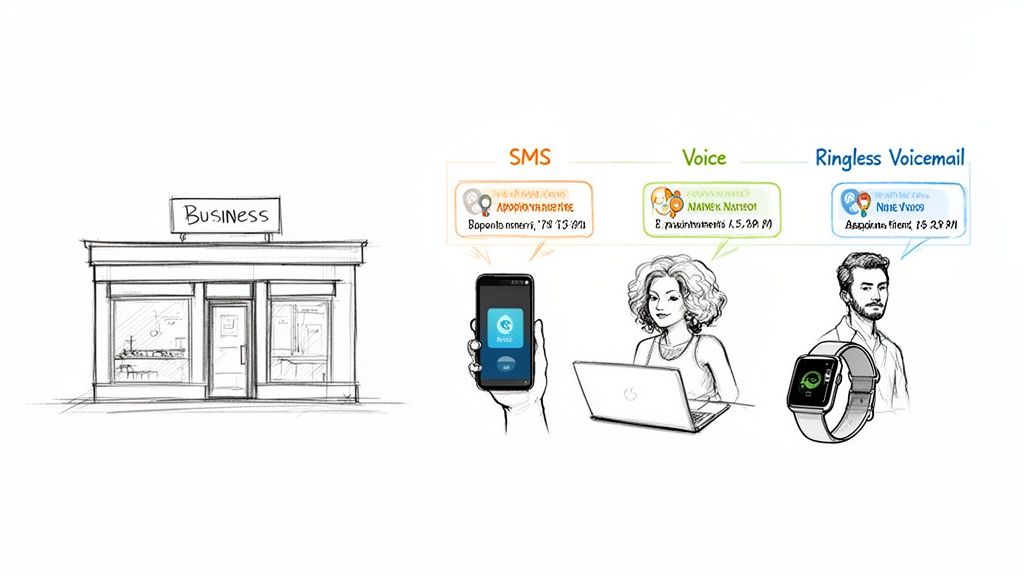
The old "spray and pray" approach is dead. Sending the same message to your entire list and hoping for the best just doesn't work. People today expect you to know who they are and what they want.
A one-size-fits-all email gets deleted without a second thought, and an unexpected cold call during a busy workday is more likely to annoy than to convert. These tactics fail because they're disrespectful of a customer's time and context. This guide is all about building a modern communication playbook that fits how people actually live. The goal isn't just to be heard—it's to be welcomed.
An effective strategy doesn't just use different channels; it integrates them so they work in harmony. Think of it less like shouting from different rooftops and more like a single, coordinated conversation that flows naturally from one platform to another. Each message should build on the last.
Here's how the pieces fit together:
Before we dive into the nuts and bolts, it's helpful to see how these elements come together at a high level.
This table breaks down the core components you'll need to build a successful multi-channel customer engagement strategy from the ground up.
Think of these pillars as the foundation. Get them right, and you're well on your way to building a program that not only works but also scales.
By meeting customers on their preferred channel with the right message at the right time, you transform communication from a business necessity into a powerful tool for building lasting loyalty. It's how businesses—from local gyms to healthcare clinics—create interactions that feel personal and drive real results.
A winning customer engagement plan never starts with a message. It starts with a clear, intentional strategy. Before you even dream up what to say, you have to get crystal clear on what you want to achieve. Building this foundation first ensures every single communication—whether it's an SMS, a voice broadcast, or a ringless voicemail drop—serves a real purpose and inches you closer to your business goals.
This initial planning phase is all about asking the right questions. What does success actually look like for you? Is it getting fewer no-shows for appointments, driving a stampede of traffic to a flash sale, or just making a new customer feel genuinely welcomed? Vague goals like "improve engagement" just won't cut it.
You need specific, measurable targets. For instance, a dental clinic might aim to reduce no-show appointments by 25% using automated SMS and ringless voicemail reminders. An e-commerce store could set a concrete goal to increase repeat purchases by 10% through a targeted follow-up campaign. These hard numbers give you a benchmark for success and bring your whole approach into focus.
Once your goals are locked in, the next move is figuring out who you're talking to. Blasting the same message to everyone is a surefire recipe for low engagement and a quick trip to the "unsubscribe" button.
This is where audience segmentation becomes your superpower. It’s simply the practice of slicing your contact list into smaller, more focused groups based on things they have in common.
Effective segmentation lets you send hyper-relevant messages that actually connect on a personal level. You can group your audience in countless ways:
By segmenting your audience, you stop shouting into the void and start having meaningful conversations. It's a critical step toward making your customers feel seen and understood.
With clear goals and segmented audiences, you can now start assigning roles to each communication channel. Let's be real: not all channels are created equal. Using the right tool for the job is absolutely essential for boosting engagement. The trick is to match the message's urgency and tone with the channel's inherent strengths.
Here’s how I think about it strategically:
Understanding which channel to use when is everything. Research consistently shows that a seamless experience across all channels is key, and with more and more consumers preferring conversational channels, blending SMS, voice, and ringless voicemail isn't just a good idea—it's essential for closing engagement loops and driving revenue. If you're looking for the right tools to pull all this off, checking out the 12 best customer engagement platforms is a great place to start.
Key Takeaway: A well-designed multi-channel strategy isn't about using every channel all the time. It's about deploying the right channel, for the right audience segment, with the right message to achieve a specific, measurable goal. This thoughtful approach is the backbone of any successful effort to increase customer engagement.
Let's be honest, true personalization is the secret handshake between you and your customer. It’s that moment when a message stops feeling like it came from a robot and starts feeling like it was written just for them.
Getting beyond just plugging a [First Name] into a mass text is where you really start to see engagement climb. It’s all about using the data you already have to craft messages that aren't just personal, but genuinely relevant and perfectly timed.
This means tapping into your custom fields to pull in specific, meaningful details. Think about information like appointment times, unique order numbers, membership renewal dates, or even the last product someone looked at on your site. When you weave these details into your SMS and voice scripts, the communication instantly becomes more valuable.
Let's see how this plays out in the real world.
Imagine a local karate studio wants to re-engage a student who missed their last class. Instead of a generic "We miss you!" text, they can send a highly personalized, non-intrusive ringless voicemail.
The message could be something like: "Hi Alex, this is Sensei John from Cobra Kai Karate. We missed you at your advanced sparring class on Tuesday night. Hope everything is okay! We’ve got a make-up session this Saturday at 10 AM if you can make it. Hope to see you on the mat soon!"
This voicemail drop feels incredibly personal. It mentions the student by name, the exact class they missed, and offers a real solution. It shows you’re paying attention, which turns a simple follow-up into a powerful gesture that actually motivates someone to come back.
There's often a huge disconnect between how well businesses think they're personalizing and what customers actually feel. One report found that while 84% of businesses claim to deliver 'good' or 'excellent' personalized experiences, only 54% of consumers agree. This gap is a massive opportunity, especially when you see that fully engaged hotel guests spend 46% more each year. Learn more about these customer engagement findings.
This power of dynamic content isn't limited to one industry; it works everywhere. By connecting your messaging platform to your CRM or e-commerce system, you can automate these kinds of hyper-relevant interactions at scale.
Here are a few more examples of smart personalization in action:
E-commerce Abandoned Cart: An online store can send an SMS that reads, "Hey Sarah, still thinking about the Classic Leather Tote? It's still in your cart! Here's a direct link to finish your order before it sells out: [short link]." This message works because it names the specific product, creating instant recognition and a little urgency.
Healthcare Appointment Reminders: A clinic can text: "Hi David, just a reminder about your appointment with Dr. Smith tomorrow, Oct 26th, at 2:30 PM. Please reply YES to confirm or call us to reschedule." Including the doctor's name, date, and time makes the message impossible to ignore and is a proven way to slash no-shows.
Membership Renewals: A fitness club could use a ringless voicemail a week before a membership expires: "Hi Jessica, this is Mike from Ascend Fitness. Just a friendly heads-up that your annual membership is up for renewal next Friday. We've loved having you as part of our community this year! Give us a call if you have any questions." This adds a welcome human touch to what is usually a cold, transactional process.
These examples show how you can use data to build real trust and connection. The goal is to make every single customer feel like they're your only customer.
For more ideas on how to group your audience for these kinds of targeted messages, check out these actionable customer segmentation examples to get started.
Okay, you've got your strategy down and your messages personalized. Now it's time to put the whole system on autopilot. This is where the magic really happens—turning your engagement plan into automated, multi-channel drip campaigns that work for you around the clock.
These are pre-built sequences that fire off based on specific customer actions, so you never miss a chance to connect. Think of a trigger as the starting pistol. When a customer does something specific, it kicks off a perfectly timed workflow. This shifts your engagement from being reactive and manual to a proactive system that nurtures relationships at scale, without you lifting a finger.
The real power of automation is how it responds instantly to what your customers are doing. You can set up triggers for just about any action, making every interaction feel incredibly relevant and timely.
Here are a few common triggers that are perfect for starting powerful drip campaigns:
When your campaigns are tied to these real-world actions, every single message lands with perfect context. That’s how you dramatically increase its impact.
The most effective drip campaigns don't just lean on one channel. They orchestrate a symphony of SMS, ringless voicemail, and voice calls to create a seamless journey. Each channel has its own role, building on the previous message to guide the customer toward a goal.
Let's map out a multi-step event reminder campaign for a webinar:
This multi-channel flow is so effective because it plays to each channel's strengths. The SMS is perfect for quick confirmation, the voicemail drop adds a human element without being intrusive, and the final text is a timely, actionable reminder.
The whole process boils down to understanding your data, segmenting your audience, and then crafting the right message for the right channel.
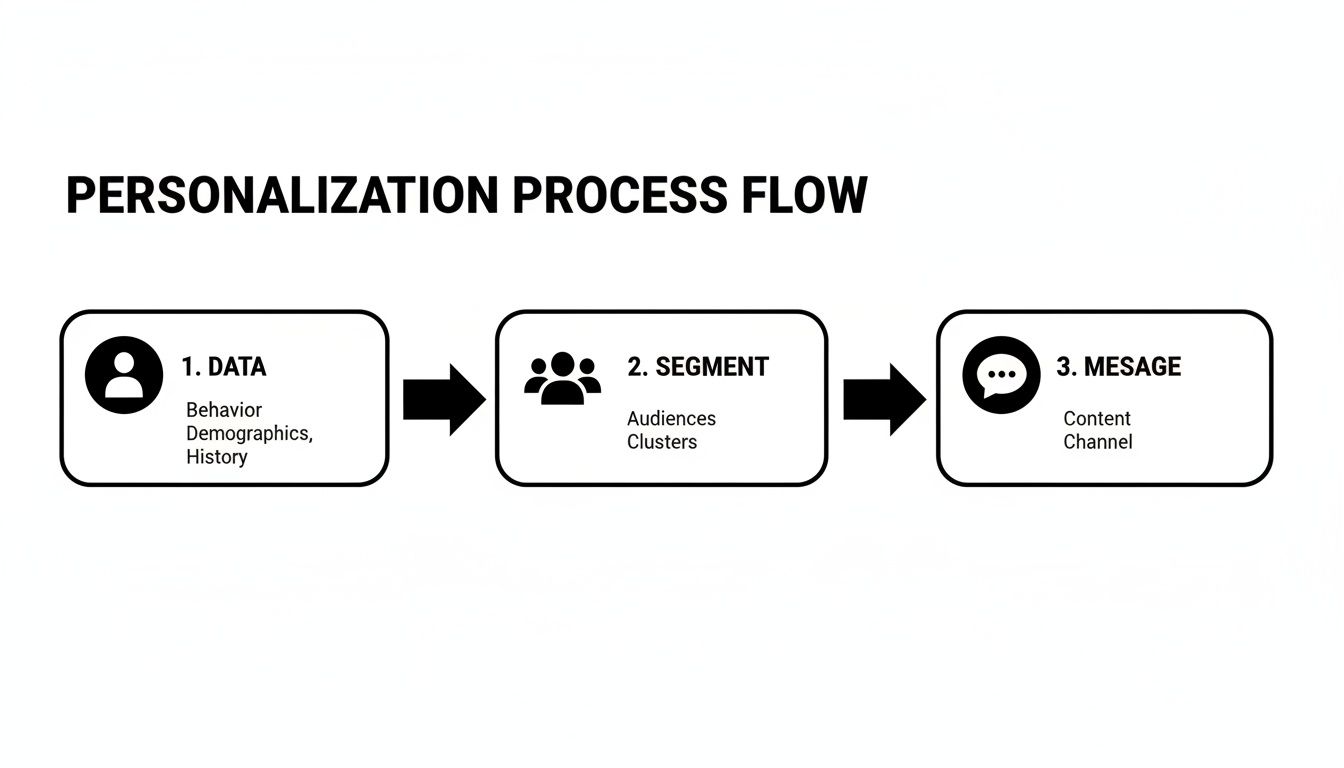
This simple flow—data to segments to delivery—is the engine behind every successful automated campaign you'll ever build.
One of the biggest questions I get is, "how much is too much?" You want to stay top-of-mind without becoming that annoying brand that won't stop texting. It's all about finding the right balance between how often you message and how much value you provide.
A great rule of thumb is to make sure every message in your sequence provides new value or serves a clear purpose. If a message is just a repeat of the last one, it's probably not necessary.
Here are a few best practices I've learned for getting timing and frequency right:
When you thoughtfully design your drip campaigns, you can turn a single interaction into a long-lasting customer relationship. If you're ready to put these strategies into action, check out some of the best drip campaign software to find the tools you need to build, manage, and optimize these automated workflows.
Crafting the perfect message is only half the battle. Getting it into your customer's hands—legally and reliably—is where the real work begins. A brilliant campaign that gets blocked by carriers or, worse, breaks the rules, can seriously damage your brand's reputation.
Let's dive into the non-negotiable side of outreach so you can run effective campaigns without crossing any lines. Think of this less as a rulebook and more as building a foundation of trust. When customers hand over their contact info, they expect you to be responsible with it. Sticking to these guidelines isn't just about avoiding fines; it's a core part of a healthy, long-term customer relationship.
The rules around messaging can feel like a tangled mess, but they boil down to a few core principles. The big one in the U.S. is the Telephone Consumer Protection Act (TCPA). It governs telemarketing, auto-dialed calls, and text messages with a very clear mandate: you must have express written consent before sending any marketing messages.
And that consent has to be crystal clear. Just because a customer gave you their number for shipping updates doesn't mean you can start blasting them with promo texts. That's a quick way to lose trust and get hit with complaints.
To stay compliant and build a killer list of engaged subscribers, make these practices your standard operating procedure:
If you're in healthcare, compliance gets an extra layer of seriousness thanks to the Health Insurance Portability and Accountability Act (HIPAA). Protecting patient health information (PHI) isn't just a best practice; it's the law.
When you're texting or calling patients, you absolutely must use a HIPAA-compliant platform with features like end-to-end encryption. Sending a simple appointment reminder ("Your appointment is tomorrow at 2 PM") is usually fine, but any message that touches on sensitive PHI demands Fort Knox-level security.
The goal of compliance isn't to find loopholes—it's to respect customer boundaries. A compliant strategy is, by its very nature, a customer-centric one. It protects your business while building the trust you need for genuine engagement.
Getting past the legal hurdles is step one. Step two is getting past the mobile carriers' technical filters. They use sophisticated systems to block what they think is spam, so you need to play by their rules, too.
First off, use toll-free numbers for your bulk SMS campaigns. These numbers are specifically designed for high-volume application-to-person (A2P) messaging and are far less likely to get filtered than texts from a standard local number.
Next, you have to keep your contact list clean. Regularly validate your numbers to scrub out any that are invalid or inactive. Every time you send a message to a bad number, your bounce rate goes up, which is a massive red flag for carriers. A little list hygiene goes a long way—it boosts your deliverability, protects your sender reputation, and even saves you money on messages that were never going to arrive anyway.
Launching a multi-channel campaign is just the beginning. The real magic—and the real growth—happens when you start digging into the data and turning those numbers into smarter decisions.
This is all about creating a feedback loop. You stop guessing what works and start knowing. It's the engine that powers continuous improvement, making every single message you send out more effective than the last one.
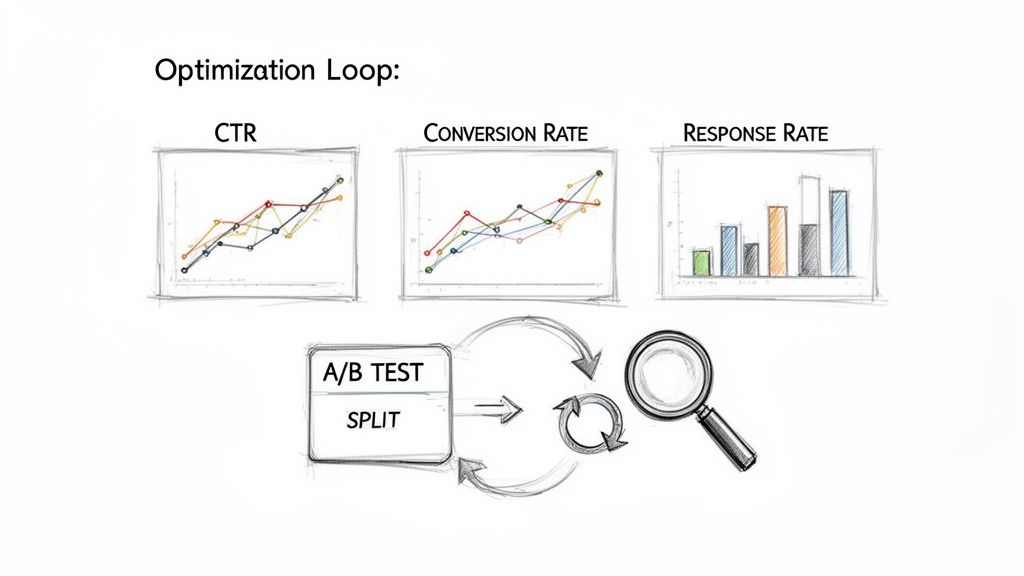
This means you have to move beyond vanity metrics. Sure, SMS open rates look amazing on a report, but they don't really tell you what's happening. To really understand your impact, you need to track the metrics that reflect actual customer action and intent.
To get a true pulse on your campaign's health, you need to be tracking the right Key Performance Indicators (KPIs). These numbers show you what your audience is actually doing after they get your message, giving you a solid foundation to build on.
Here are the essential KPIs I always keep an eye on:
If you really want to go deep, this is a great breakdown of customer engagement metrics that drive growth and how to apply them.
Data is completely useless until you do something with it. The next step is using those KPIs to run simple, smart tests that systematically improve your results. This is where A/B testing becomes your best friend.
A/B testing is just a fancy term for comparing two versions of one thing—like two different SMS headlines or two ringless voicemail scripts—to see which one performs better.
Let's say your CTR is lower than you’d like. You could A/B test your call to action. Send Version A with "Shop Now" to half of your list, and Version B with "Sale Ends Tonight!" to the other half. The one with the higher CTR is your winner. Simple as that.
The same idea works perfectly for your voicemail drops and voice broadcasts. Test different send times. Test shorter versus longer messages. You can even test the tone of voice in your audio recordings.
It’s this constant cycle of measuring, testing, and refining that transforms your outreach from a shot in the dark into a predictable system for growth.
Jumping into multi-channel communication can feel like a lot at first. You've got questions, and we've got answers based on years of helping businesses just like yours. Let's tackle some of the most common ones we hear about using SMS, voice, and ringless voicemail.
Think of ringless voicemail as a secret agent for your messages. It’s a slick piece of tech that drops a pre-recorded audio message straight into someone’s voicemail box—without their phone ever ringing. It's the ultimate non-intrusive tool for messages that are important but don't require an immediate, drop-everything response.
So, when is it the right move? It's perfect for things like:
Because you’re not interrupting someone’s dinner or their kid's soccer game, it’s a much more respectful way to communicate. We've seen that this leads to crazy high listening rates, making voicemail drops a super effective (and compliant) way to get your message heard.
This is the big one, and it's non-negotiable. Compliance isn't just about avoiding fines; it’s about building trust. The absolute foundation is getting express written consent before you send a single marketing message. A double opt-in process, where a user confirms their subscription, is the gold standard here.
Every message has to clearly state who you are and give people an easy way out (like the classic "Reply STOP"). For voice messages, you have to honor Do Not Call (DNC) lists and stick to legal calling hours. And if you're in healthcare, using a HIPAA-compliant platform is mandatory—no exceptions. A good provider will have all of these safeguards baked right into their system.
Never forget that compliance is about respecting your customers' privacy and choices. That respect is the bedrock of any real, long-term customer engagement.
Yes, and you'd be crazy not to! This is where the real magic happens. Integrating your communication platform with your CRM is what turns a manual process into a slick, automated machine.
Modern platforms are built to play nice with popular CRMs like HubSpot, ActiveCampaign, or Keap.
Once connected, you can set up triggers for just about anything. A new lead comes in through your CRM? Bam, an automated welcome text goes out. Someone makes a purchase? A personalized ringless voicemail thank-you gets delivered. This sync keeps all your contact data in one place, lets you segment your audience on the fly, and creates one smooth workflow across your entire business.
Ready to build a powerful, multi-channel engagement strategy? Call Loop provides all the tools you need—from SMS and voice broadcasting to compliant ringless voicemail—to automate your outreach and create lasting customer connections. Start your free trial today!
Chris Brisson
Chris is the co-founder and CEO at Call Loop. He is focused on marketing automation, growth hacker strategies, and creating duplicatable systems for growing a remote and bootstrapped company. Chat with him on X at @chrisbrisson


Trusted by over 45,000 people, organizations, and businesses like


