You're just one step away from seeing Call Loop in action. Enter your information below to watch a demo right now.
10 Powerful Customer Segmentation Examples for 2025
Chris Brisson
on
December 3, 2025
Stop broadcasting to everyone and start connecting with someone. Effective customer segmentation is the secret behind personalized marketing that converts, retains, and creates loyal fans. It’s about understanding not just who your customers are, but what they need, when they need it, and how they prefer to communicate. Generic, one-size-fits-all messages get ignored; targeted, relevant communication gets results.
This guide moves beyond theory to provide 10 actionable customer segmentation examples you can implement today. We break down how real businesses in healthcare, ecommerce, event management, coaching, and sales are using these strategies to create highly targeted campaigns that drive measurable growth. You will learn not just the what but the how behind each segmentation model, including specific criteria for grouping your audience and practical ways to engage them.
We'll cover everything from classic demographic and behavioral segments to more advanced models like RFM (Recency, Frequency, Monetary) and Value-Based segmentation. Each example is designed to be a blueprint, showing you precisely how to tailor your outreach using SMS messages, automated voice calls, and even non-intrusive ringless voicemail drops. Get ready to transform your communication strategy from a generic megaphone into a precise, profitable conversation. This is your playbook for building smarter segments that boost engagement, increase loyalty, and deliver a clear return on investment.
1. Demographic Segmentation
Demographic segmentation is one of the most straightforward and widely used methods for dividing a market. It involves grouping customers based on observable, people-based characteristics like age, gender, income, education level, occupation, and marital status. This approach is foundational because the data is relatively easy to collect and provides a clear, quantifiable snapshot of who your customers are.
This method helps you answer the basic "who" in your customer base, allowing for broad yet effective targeting. For example, a healthcare clinic might use demographic segmentation to send appointment reminders via SMS to patients aged 65 and older about annual flu shots, or a karate studio could target families with children aged 7-12 for a new after-school program.
Strategic Application
The real power of demographic segmentation comes from its ability to guide messaging and product offerings. A brand's tone, imagery, and even the communication channel can be tailored to resonate with a specific demographic group.
Example 1: Ecommerce: An online clothing store can create separate SMS campaigns for men and women, promoting different product lines. A message to a female segment aged 25-34 might highlight a new summer dress collection, while a male segment of the same age might receive a message about new athletic wear.
Example 2: Coaching: A financial coach can segment their audience by income level. High-income earners might receive ringless voicemail drops about advanced investment strategies, while middle-income segments receive SMS alerts for webinars on budgeting and debt management. A well-placed ringless voicemail can deliver a high-value message without being intrusive.
Actionable Takeaways for Implementation
To make demographic segmentation work for you, combine it with other data points for a more nuanced view.
Combine and Conquer: Layer demographic data with psychographic or behavioral segments. Knowing a customer is a high-income earner is good, but knowing they also value sustainability and purchase eco-friendly products is even better.
Create Personas: Develop detailed buyer personas for your key demographic segments. Give them names, jobs, and goals to make them more relatable for your marketing team.
Test Your Messaging: Don't assume a message will land perfectly. A/B test your SMS and voice broadcast campaigns across different age or gender groups to see what resonates most. Adhering to communication guidelines is crucial; explore these SMS marketing best practices for more insights.
2. Psychographic Segmentation
Psychographic segmentation goes beyond "who" your customers are and focuses on "why" they make purchases. This method divides your audience based on psychological traits such as values, beliefs, interests, lifestyle, personality, and attitudes. It helps you understand the deeper motivations driving customer behavior, recognizing that people with identical demographics can have vastly different reasons for buying.
This approach is powerful for building brand loyalty and emotional connections. For instance, an event organizer might segment attendees based on their primary motivation for attending, such as "networking-focused professionals" versus "knowledge-seeking learners." Similarly, a health food store can target "ethically-minded shoppers" who prioritize sustainability over price.
Strategic Application
The core value of psychographic segmentation lies in creating highly resonant and persuasive messaging that speaks directly to a customer's internal worldview. It allows you to align your brand's voice with your audience's values, making your communications feel more authentic and less transactional.
Example 1: Health & Wellness: A yoga studio could segment clients into "stress-relief seekers" and "fitness enthusiasts." The first group might receive a ringless voicemail drop with a calming message about a new restorative yoga class, while the second gets an energetic SMS about a challenging power flow workshop.
Example 2: Ecommerce: An outdoor gear retailer can segment its audience into "weekend adventurers" and "hardcore survivalists." A text message to adventurers might promote lightweight camping gear for a quick getaway, while survivalists receive information on durable, all-weather equipment.
Actionable Takeaways for Implementation
To implement psychographic segmentation effectively, you need to gather qualitative insights and translate them into your communication strategy.
Gather Deeper Data: Use customer surveys, interviews, and social media listening to uncover your audience's values, interests, and pain points. Ask questions about their hobbies, aspirations, and what they care about most.
Align Messaging with Values: Craft your SMS and voice broadcast scripts to mirror the language and values of each segment. If you're targeting eco-conscious customers, highlight your brand's sustainable practices. Using keywords like ringless voicemail marketing in your strategy allows for personal, non-intrusive touchpoints that align with specific values.
Develop Psychographic Personas: Go beyond basic demographics and build personas that include personality traits, motivations, and lifestyle details. This helps your team create marketing that truly connects on a human level.
3. Behavioral Segmentation
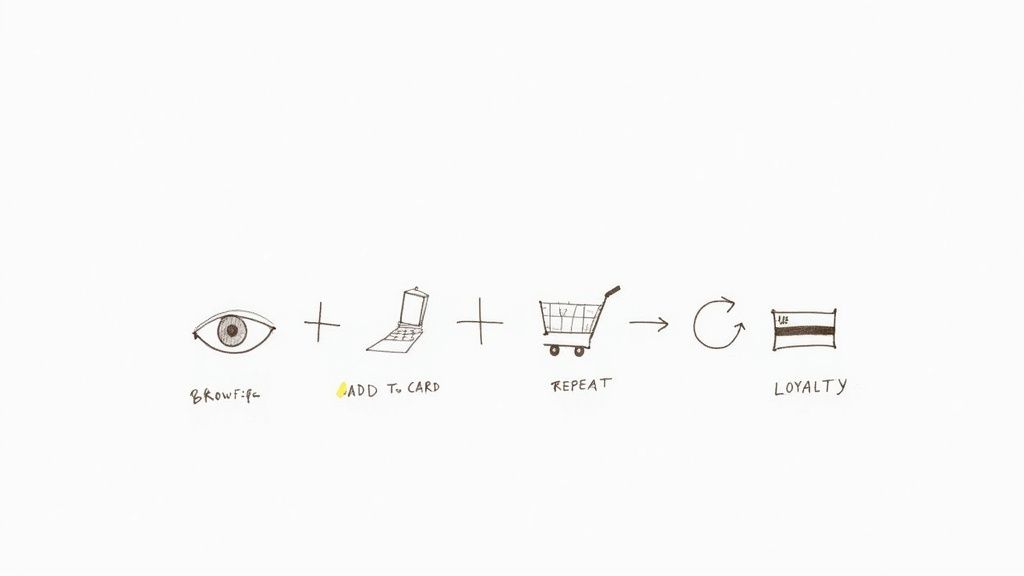
Behavioral segmentation groups customers based on their direct actions and interactions with a brand. This includes purchasing patterns, website activity, product usage, and engagement levels. Instead of focusing on who customers are, this powerful method focuses on what they do, making it highly predictive of future actions.
This approach helps you answer the crucial "how" and "why" behind customer engagement. For instance, an ecommerce store can identify customers who frequently add items to their cart but don't complete the purchase. Similarly, a software company can segment users based on feature adoption, identifying power users versus those who need more guidance.
Strategic Application
The real advantage of behavioral segmentation is its ability to trigger timely, relevant, and automated communication. By responding to specific customer actions, you can create highly personalized experiences that guide them through the customer journey and build loyalty.
Example 1: Ecommerce: A customer who hasn't purchased in 90 days can be automatically entered into a re-engagement sequence. A ringless voicemail could be sent with a friendly "We miss you!" message and a special offer, followed by an SMS with a direct link to a personalized product recommendation.
Example 2: Events & Webinars: Segment registrants who attended a previous webinar versus those who registered but didn't show up. The "attendee" segment can receive SMS messages about advanced content, while the "no-show" segment gets a link to the recording and an invite to the next introductory session.
Actionable Takeaways for Implementation
To effectively use behavioral segmentation, focus on tracking key actions and automating your responses.
Track Key Actions: Identify the most important user behaviors for your business, such as login frequency, pages visited, purchase history, and email opens. Use these to create meaningful segments.
Automate Triggers: Implement workflows that automatically send messages based on behavioral triggers. For an in-depth guide, explore these marketing automation workflows for inspiration.
Segment by Lifecycle Stage: Create distinct communication strategies for new users, active customers, at-risk customers, and loyal brand advocates. A new user might get an educational SMS series, while a loyal advocate receives exclusive offers.
4. Geographic Segmentation
Geographic segmentation divides customers based on their physical location, including country, state, city, climate, or even neighborhood. This method acknowledges that consumer needs, preferences, and cultural norms can vary significantly from one place to another. It's particularly powerful for businesses with a physical presence or those whose products are influenced by local conditions.
This approach helps you answer the "where" in your customer base, allowing you to tailor offers, messaging, and products to the specific context of a location. For example, a national retail chain might use geographic segmentation to send SMS alerts about a snow shovel sale to customers in colder, northern states, while simultaneously promoting patio furniture to those in warmer, southern regions.
Strategic Application
The strategic value of geographic segmentation lies in its ability to make marketing feel local and relevant. By understanding regional differences, you can customize everything from product availability to promotional language, creating a stronger connection with customers in different areas.
Example 1: Events: An event promoter can use geographic segmentation to send targeted text reminders for a concert tour. A fan in Denver receives a message about the upcoming show at Red Rocks Amphitheatre, while a fan in Chicago gets details for the show at the United Center, ensuring maximum relevance and reducing confusion.
Example 2: Healthcare: A network of dental clinics can segment its patient list by zip code. This allows them to send SMS messages or ringless voicemail drops announcing a new dentist joining a specific local branch, making the information highly relevant to patients who live or work nearby.
Actionable Takeaways for Implementation
To get the most out of geographic segmentation, you need to think beyond just a pin on a map.
Go Hyperlocal: Don't just segment by state or city; drill down to zip codes or neighborhoods. A real estate agent can send SMS alerts about an open house to contacts within a five-mile radius, targeting the most likely buyers.
Layer with Other Data: Combine geographic information with behavioral or demographic data. Knowing you have customers in a coastal city is good, but knowing which ones have previously purchased beachwear allows for highly specific and effective campaign targeting.
Localize Your Language: Tailor your SMS and voice broadcast scripts to reflect local culture, slang, or landmarks. Mentioning a well-known local event or sports team can make your brand feel more authentic and connected to the community.
5. RFM Analysis (Recency, Frequency, Monetary)
RFM analysis is a quantitative, behavior-based method that segments customers based on their transaction history. It evaluates three key dimensions: Recency (how recently they purchased), Frequency (how often they purchase), and Monetary value (how much they spend). This powerful model helps businesses identify their most valuable customers and predict future purchasing behavior, making it a favorite for e-commerce and retail.
This segmentation answers the critical "who are my best customers" question by scoring each customer on these three metrics. For example, a subscription box service can use RFM to identify its "champions" (high R, F, and M scores) and reward them with exclusive early access, while targeting "at-risk" customers (low Recency score) with a compelling win-back campaign.
Strategic Application
The strategic value of RFM analysis lies in its ability to create highly specific and profitable marketing actions for each segment. Instead of a one-size-fits-all approach, you can tailor your communication to match a customer's value and engagement level.
Example 1: Ecommerce: An online retailer can segment its "high-spending but infrequent" customers (high M, low F) and send them a ringless voicemail drop announcing a limited-time bundle offer, encouraging them to purchase more often. Conversely, "frequent but low-spending" customers could receive an SMS with a "spend more, save more" tier-based discount.
Example 2: Coaching: A business coach can identify clients who recently purchased a high-ticket program but haven't engaged since. This segment could receive a personalized SMS asking for feedback or offering a complimentary 15-minute strategy call to boost engagement and set the stage for future upsells.
Actionable Takeaways for Implementation
To implement RFM analysis effectively, you need a system for scoring and acting on the data.
Score and Segment: Assign a score (e.g., 1 to 5) for each RFM component. Combine these scores to create distinct segments like "VIPs," "Loyal Customers," "Potential Churn," and "Lost Customers."
Automate Your Actions: Create automated workflows for each segment. For instance, a customer moving into the "At-Risk" segment could automatically trigger a re-engagement SMS with a special offer.
Monitor and Refine: RFM segments are not static; customers will move between them. Regularly update scores (monthly or quarterly) and analyze campaign performance to refine your strategies. Tracking these results is simple when you have access to detailed analytics, which you can explore further with Call Loop's advanced reporting features.
6. Firmographic Segmentation
Firmographic segmentation is the business-to-business (B2B) equivalent of demographic segmentation. Instead of focusing on individual consumer traits, this method categorizes organizations based on company-specific attributes like industry, company size, annual revenue, number of employees, and geographic location. This approach is fundamental for B2B companies, as it provides a structured way to understand and target potential business customers.
This method helps you answer the crucial "which companies" to target in your B2B marketing and sales efforts. For example, a cybersecurity firm might use firmographic data to target financial institutions with over 500 employees, while a commercial cleaning service could focus on small to medium-sized businesses (SMBs) within a 50-mile radius. It allows for precise and relevant outreach to organizations most likely to need your product or service.
Strategic Application
The true value of firmographic segmentation lies in its ability to tailor account-based marketing (ABM) strategies and sales pitches. The messaging, value proposition, and even the communication channel can be customized to address the specific pain points and operational realities of different business segments.
Example 1: SaaS Company: An enterprise resource planning (ERP) software provider can segment its outreach by industry. Manufacturing companies might receive SMS messages about inventory management features, while healthcare organizations get ringless voicemail drops detailing patient data compliance and scheduling modules.
Example 2: Marketing Agency: A digital marketing agency can segment potential clients by company size. Startups and small businesses might receive SMS invites to a webinar on "Budget-Friendly Growth Hacking," whereas enterprise-level companies are targeted with personalized voice broadcasts about scaling global campaigns and advanced analytics.
Actionable Takeaways for Implementation
To maximize the impact of firmographic segmentation, you must enrich it with other data layers to create a multi-dimensional view of your target accounts.
Combine with Technographics: Layer firmographic data with technographic information (the technologies a company uses). Knowing a company is in the right industry is good, but knowing they use a competitor's software or a complementary technology is a powerful entry point.
Map Decision-Making Units: Use firmographic data like company size to predict the complexity of the buying committee. Smaller companies might have one key decision-maker, while larger enterprises require a multi-pronged approach targeting different stakeholders.
Leverage Data Providers: Partner with data enrichment services to keep your firmographic data accurate and up-to-date. This ensures you're not wasting resources on companies that have changed size, industry, or location.
7. Needs-Based Segmentation
Needs-based segmentation groups customers according to the specific problems they are trying to solve or the distinct outcomes they desire. This outcome-focused approach categorizes audiences by their core functional or emotional needs, moving beyond simple demographics or behaviors. It's a powerful method for aligning your product directly with what a customer is trying to accomplish.
This strategy helps you answer the fundamental "why" behind a customer's purchase decision. For instance, a fitness app might identify separate segments: one needing structured weight loss plans, another seeking high-intensity muscle-building routines, and a third looking for stress-reducing yoga sessions. Each segment uses the same app but for entirely different reasons.
Strategic Application
The strategic advantage of needs-based segmentation is its direct link to product development, messaging, and value proposition. By understanding the "job" a customer hires your product to do, you can tailor solutions and communications that speak directly to their desired end state.
Example 1: Healthcare: A medical software company can segment healthcare practices by their primary needs. A large hospital might need a complex system for interoperability and compliance, while a small private practice needs a simple, affordable solution for appointment scheduling and billing. A ringless voicemail drop could then target small practice managers with a message about a new, streamlined scheduling feature.
Example 2: Coaching: A business coach might segment clients based on their goals. One segment needs help with lead generation, another needs to improve team management, and a third wants to scale operations. The coach can send targeted SMS messages with links to free resources or webinar invites specific to each need, like a "5 Ways to Boost Leads" guide for the first group.
Actionable Takeaways for Implementation
To implement this model effectively, you must get closer to your customer's motivations and challenges.
Conduct Customer Interviews: Go beyond surveys. Use interviews and the "Jobs to be Done" framework to uncover the deep-seated needs and desired outcomes of your customers. Ask them about their struggles and what a perfect solution would look like.
Map Features to Needs: For each needs-based segment you identify, map your specific product features or service offerings that directly address their primary problems. This creates a clear value proposition for each group.
Validate with Messaging: Use targeted communication channels to test your assumptions. Send a focused SMS campaign to one segment about a specific benefit and measure the response rate. If a message about "saving time on paperwork" resonates with one group but not another, you've validated a key need.
Value-based segmentation categorizes customers based on the total profit they are expected to generate for your business over their entire relationship, known as Customer Lifetime Value (CLV). This powerful approach recognizes that not all customers contribute equally to your bottom line, allowing you to allocate marketing resources more effectively. It shifts the focus from simple acquisition to long-term profitability and retention, which is essential for sustainable growth.
This method helps you answer the crucial question of "who are my most profitable customers?" By identifying these high-value segments, you can create exclusive experiences, targeted retention campaigns, and personalized offers that foster loyalty. For instance, a subscription box service can use CLV to identify its most loyal subscribers and offer them early access to new products or a special anniversary gift.
Strategic Application
The strategic power of value-based segmentation lies in its ability to optimize your marketing spend and boost ROI. Instead of a one-size-fits-all approach, you can invest more heavily in nurturing relationships with customers who have the highest potential value, ensuring they remain loyal advocates for your brand.
Example 1: Ecommerce: An online retailer can segment its customer base into tiers like Platinum, Gold, and Silver based on their CLV. The Platinum group might receive exclusive SMS offers and personal shopping assistance, while the Gold segment gets early access to sales. This tiered approach makes top customers feel valued and encourages others to spend more to reach the next level.
Example 2: Healthcare: A dental clinic can identify patients with a high CLV (those who consistently book cleanings, whitening, and other cosmetic procedures). This segment could receive personalized ringless voicemail reminders about upcoming appointments or exclusive offers on new treatments, ensuring they remain engaged and loyal.
Actionable Takeaways for Implementation
To implement this segmentation model effectively, you must first have a clear grasp of your customer data and a strategy for engagement.
Calculate and Refine: Start by calculating CLV for your customer base. Understanding the methodology behind how to calculate Customer LTV is crucial for accurately implementing this segmentation model. Continuously update your calculations with new data to keep your segments relevant.
Create Tiered Campaigns: Develop distinct communication strategies for each value tier. Send your highest-value segment exclusive SMS promotions or personalized voice broadcasts. For lower-CLV customers, focus on automated campaigns designed to nurture and increase their future purchase frequency.
Focus on Retention: Use CLV segments to prioritize retention efforts. If a high-value customer shows signs of churning, trigger a proactive retention campaign, such as a personal follow-up call or a special "we miss you" offer sent via SMS to win them back.
9. Technographic Segmentation
Technographic segmentation groups customers based on the technology they use, such as specific software, hardware, or digital tools. This method is especially powerful in B2B marketing, as a company's technology stack often dictates its needs, challenges, and purchasing behavior. Understanding a prospect's tech infrastructure allows you to tailor solutions that integrate seamlessly with their existing systems.
This approach helps you answer the "how" and "with what" of your customer's operations. For instance, a cybersecurity firm can use technographic data to identify businesses using vulnerable legacy software and offer a targeted upgrade solution. Similarly, a marketing automation platform can target companies already using a specific CRM, highlighting native integration capabilities as a key benefit.
Strategic Application
The strategic value of technographic segmentation lies in its precision. It enables you to craft highly relevant, solution-oriented messaging that speaks directly to a prospect's technical environment and pain points. Your product is no longer just a tool; it's the missing piece in their existing technology puzzle.
Example 1: B2B SaaS: A company offering an advanced analytics plugin for Salesforce can segment its market to find businesses actively using Salesforce's enterprise-level plan. It could then send a ringless voicemail drop to IT directors in this segment, explaining how the plugin can unlock deeper insights from their existing CRM data.
Example 2: Healthcare Tech: A provider of HIPAA-compliant communication platforms can identify healthcare clinics still using outdated, non-secure messaging systems. They could then launch an SMS campaign directed at clinic administrators, emphasizing the risks of non-compliance and the ease of switching to a secure, integrated solution.
Actionable Takeaways for Implementation
To implement technographic segmentation effectively, focus on identifying and leveraging technology-driven opportunities.
Use Tech-Sniffing Tools: Employ platforms like BuiltWith or Datanyze to analyze the technology stacks of your website visitors and target accounts. This data provides the foundation for your segments.
Segment by Adoption Level: Differentiate between early adopters who crave cutting-edge features and late adopters who prioritize stability and ease of use. Your messaging, feature highlights, and onboarding processes should be tailored to each group.
Highlight Integration and Compatibility: Frame your product as a solution that enhances their current technology, not one that replaces it. Create targeted campaigns with messages like, "Seamlessly connect [Your Product] with [Their Software] in minutes." A/B test these messages to see which integrations generate the most interest.
10. Attitudinal Segmentation
Attitudinal segmentation moves beyond what customers do to understand why they do it. This method groups customers based on their attitudes, opinions, beliefs, and emotions toward your brand, products, or industry. It uncovers crucial information about brand perception, satisfaction levels, and emotional connections, helping you distinguish brand advocates from at-risk customers.
This approach answers the "why" behind customer behavior, providing a deeper understanding of loyalty and motivation. For instance, a bank could track customer satisfaction levels to identify clients who are happy with their service versus those who are frustrated. Similarly, a software company might use Net Promoter Score (NPS) surveys to segment users into promoters, passives, and detractors, each requiring a different engagement strategy.
Strategic Application
The power of attitudinal segmentation lies in its ability to shape personalized communication that addresses customer sentiment directly. You can nurture positive feelings, mitigate negative ones, and guide neutral customers toward becoming advocates.
Example 1: Coaching & Consulting: A business coach can send an NPS survey to past clients. Promoters (score 9-10) could receive a ringless voicemail drop inviting them to an exclusive referral program. Detractors (score 0-6) could receive a personalized SMS asking for a brief call to discuss their experience, showing you value their feedback and want to make things right.
Example 2: Healthcare: A dental clinic can segment patients based on their post-appointment satisfaction surveys. Highly satisfied patients might receive an automated SMS asking for a public review, while those who reported a mediocre experience could get a follow-up call from the office manager to address their concerns privately.
Actionable Takeaways for Implementation
To implement attitudinal segmentation effectively, you must systematically collect and act on customer feedback.
Implement Feedback Loops: Regularly use tools like NPS surveys, customer satisfaction (CSAT) scores, and post-purchase questionnaires to gather attitudinal data.
Create Tailored Journeys: Develop distinct communication plans for each segment. Send promoters requests for testimonials, offer passives a special discount to encourage loyalty, and engage detractors with proactive customer service to resolve their issues.
Monitor Social Sentiment: Keep an eye on social media and review sites to understand public attitudes toward your brand. This provides real-time, unfiltered feedback that can complement your survey data.
10 Customer Segmentation Methods Compared
Segment Type
Implementation Complexity
Resource Requirements
Expected Outcomes
Ideal Use Cases
Key Advantages
Demographic Segmentation
Low — straightforward to collect and apply
Low — census, surveys, CRM fields
Broad audience slices for basic targeting and personalization
Mass marketing, initial audience segmentation, broad campaigns
Simple, low-cost data; easy to integrate
Psychographic Segmentation
High — needs qualitative research and modeling
High — surveys, interviews, social listening, analytics
Deep motivational insights and emotionally resonant messaging
Brand positioning, lifestyle marketing, loyalty building
Reveals motivations; improves message relevance
Behavioral Segmentation
Medium–High — tracking and integration required
High — analytics platforms, event tracking, CDP
Predictive targeting enabling personalization and conversion lift
Activating Your Segments: The Path to Personalized Outreach
Throughout this guide, we've explored a comprehensive collection of customer segmentation examples, moving beyond theory to provide actionable templates and strategic frameworks. We dissected everything from demographic and behavioral data to advanced models like RFM analysis and value-based segmentation. The core lesson is clear: generic, one-size-fits-all messaging is no longer effective. Your customers expect and deserve communication that recognizes their unique needs, history, and preferences.
The power of segmentation isn't just in creating lists; it's in activating them. As demonstrated, a healthcare clinic can use behavioral segmentation to send automated SMS appointment reminders to reduce no-shows, while an ecommerce brand can leverage RFM analysis to reward its most loyal customers with exclusive offers. A real estate agent can use geographic and psychographic data to deliver a timely ringless voicemail about a new local listing to highly-qualified leads. Each example showcases a fundamental shift from broadcasting to connecting.
Synthesizing Your Segmentation Strategy
The most sophisticated marketing strategies don't rely on a single segmentation model. Instead, they layer different approaches to build a multi-dimensional view of the customer. True personalization is found at the intersection of these models.
Strategic Takeaway: Combine who your customers are (demographics, firmographics) with what they do (behavioral, RFM) and why they do it (psychographic, attitudinal). This synthesis transforms a flat customer profile into a dynamic, predictive tool for engagement.
For instance, an online coaching business might identify a segment of "High-Value, Goal-Oriented Millennials." This profile combines:
Demographic: Age (Millennial)
Value-Based: High Customer Lifetime Value (CLV)
Attitudinal: Expressed interest in "personal growth" and "career advancement"
This hyper-specific segment can then be targeted with a multi-step campaign that starts with an inspiring SMS, followed by a ringless voicemail from the founder, and concludes with an exclusive invitation to a new masterclass. This is a level of personalization that a broad, unsegmented list could never achieve.
Your Actionable Roadmap to Implementation
Feeling overwhelmed by the possibilities is normal. The key is to start small, prove the concept, and scale your efforts. Don't try to implement all ten models at once. Instead, follow a focused, iterative process to build momentum.
Here are your immediate next steps:
Identify Your Quickest Win: Start with the most accessible and impactful model for your business. For most, this is RFM analysis (Recency, Frequency, Monetary). It uses existing sales data to quickly identify your champions, at-risk customers, and lost customers.
Define One High-Impact Segment: Choose one group from your RFM analysis, such as your "Champions" (high R, F, and M scores). This is your low-hanging fruit, a group of customers who are already engaged and likely to respond positively.
Craft a Simple, Targeted Campaign: Design a communication specific to this "Champions" segment. It doesn't need to be complex. A simple SMS message like, "Hi [FirstName], as one of our most valued customers, we're giving you early access to our new collection. Here's your private link: [URL]. Thanks for your loyalty!" is a powerful starting point.
Choose the Right Channel: While SMS is excellent for immediate, high-visibility messages, consider other channels. A ringless voicemail can deliver a more personal, pre-recorded message without interrupting your customer's day, making it perfect for special thank-you notes or important announcements.
Measure, Learn, and Repeat: Track the results. Did this segmented campaign outperform your last generic blast? Use this data to justify expanding your efforts to other segments, like re-engaging your "At-Risk" customers with a special offer.
By embracing the customer segmentation examples we've covered, you are building a more resilient, efficient, and profitable communication strategy. You are moving from guesswork to data-driven precision, ensuring every message you send has a purpose and a high probability of resonating. This proactive, personalized approach is the definitive path to stronger customer relationships and sustainable growth.
Ready to turn these customer segmentation examples from theory into reality? Call Loop provides the tools you need to easily segment your audience and send targeted SMS, voice, and ringless voicemail campaigns automatically. Start building smarter, more personal connections with your customers today by exploring Call Loop.
Chris Brisson
Chris is the co-founder and CEO at Call Loop. He is focused on marketing automation, growth hacker strategies, and creating duplicatable systems for growing a remote and bootstrapped company. Chat with him on X at @chrisbrisson
On this page
Share this article
Trusted by over 45,000 people, organizations, and businesses like