
See a Demo
You're just one step away from seeing Call Loop in action.
Enter your information below to watch a demo right now.

You're just one step away from seeing Call Loop in action.
Enter your information below to watch a demo right now.

Scheduling a text message is more than just a neat trick. It's how you send perfectly timed appointment reminders, launch flash sales, and make sure your message lands exactly when it will have the most impact. This turns a simple text into a well-oiled plan, letting you connect with people without being glued to your phone.
Imagine being able to connect with every single customer at the perfect moment. That's the real power here. Scheduling isn't just about saving time; it's a strategic move that can seriously grow your business. When you deliver your texts with precision, SMS stops being a simple notification tool and becomes a powerhouse for driving engagement and revenue. It’s all about making every message count by sending it when it actually matters.
Think about a local gym that zaps out a motivational text an hour before a member's class. Or an e-commerce store dropping a flash sale right when they know their audience is scrolling on their phones. These aren't just random pings. They're calculated touchpoints designed to get people to act. Automating these little interactions creates personal, timely connections that you just can't manage at scale otherwise.
Let's be real: sending messages one by one is a huge time sink and severely limits how many people you can reach. Scheduling automates the whole thing, freeing you and your team up to focus on the bigger picture. Moving from manual busywork to automated impact brings some huge wins:
By scheduling your texts, you’re shifting from reactive, one-off messages to proactive relationship-building. You’re ensuring your outreach is thoughtful, consistent, and perfectly timed—and that’s the foundation for real, sustainable growth.
Ultimately, figuring out how to schedule text messages is about getting smart with automation. It lets you be there for your customers at all the moments that matter, making sure no opportunity slips through the cracks. This approach turns your messaging platform into a reliable growth machine, helping you connect more effectively and build a stronger, more engaged audience.
Alright, let's move from theory to action and get your first scheduled SMS campaign off the ground. This is where the rubber meets the road—turning your strategy into real results with a platform that handles all the heavy lifting for you. And it all starts with your most valuable asset: your contact list.
A clean, well-organized list is the bedrock of any solid campaign. Before you even think about scheduling a text, you need to get your contacts imported and, more importantly, segmented into smart groups. This is how you send messages people actually want to read, instead of just blasting the same generic text to everyone.
First things first, let's get your contacts uploaded. Most platforms make this easy with a simple CSV file import, which you can typically export from your CRM or email marketing tool. Once they're in, the real magic happens: segmentation.
This is your chance to slice and dice your list based on what you know about your customers. For instance, you could create groups based on:
With your audience segmented, it’s time to write the message. This is where personalization shines. Using merge tags (like [FirstName]) lets you pop customer-specific details right into the text. It’s a small touch that makes a bulk message feel like a 1-on-1 chat and can seriously boost your response rates.
This is exactly how scheduling becomes a growth accelerator—it boosts engagement, slashes no-shows, and builds real customer loyalty.
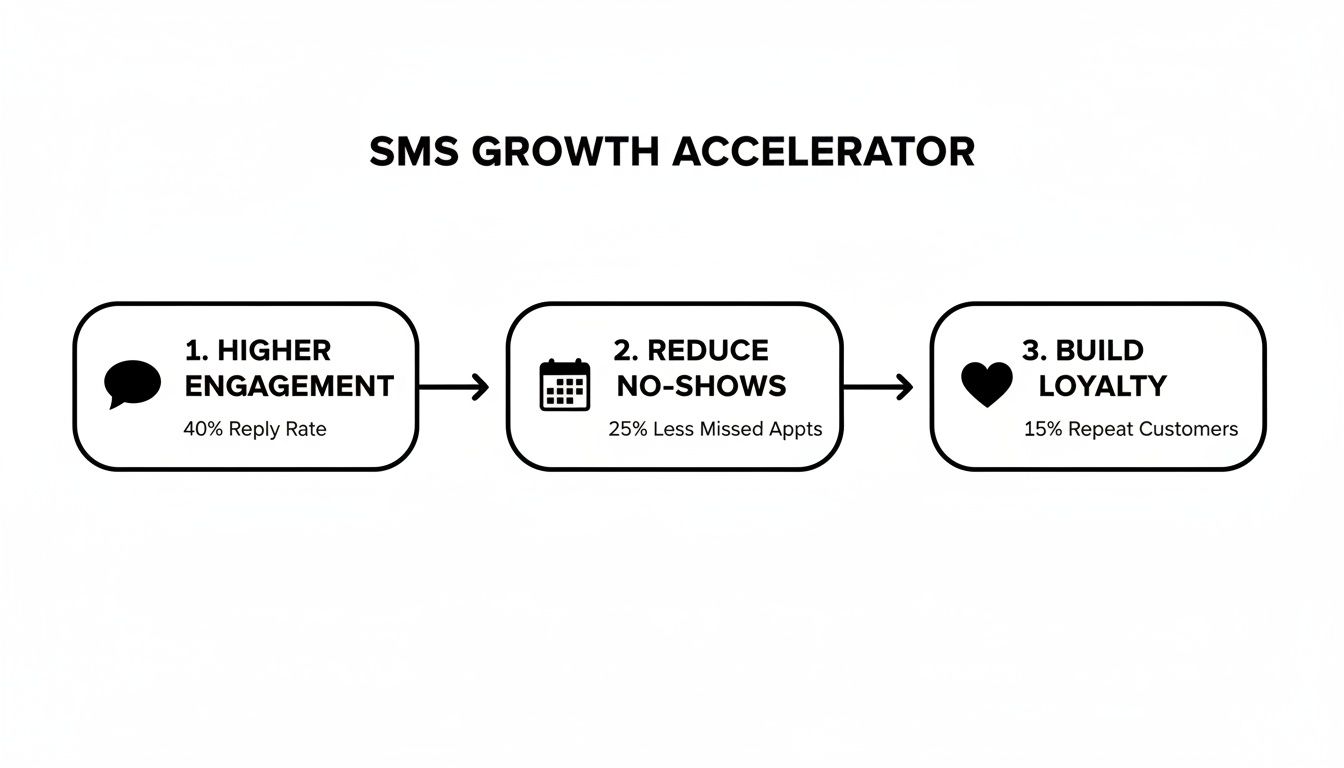
The graphic makes it clear: this isn't just about sending texts later. It's a strategic process designed to hit specific business goals at every step of the customer journey.
Okay, your audience is ready and your message is crafted. The last piece of the puzzle is the schedule. This is about more than just picking a random date and time; it’s about being smart and sending your text when people will actually see it and act on it.
Pro Tip: Never, ever schedule a nationwide campaign for a single time slot. A 9 AM message for your New York customers is a rude 6 AM wakeup call for your subscribers in California. Always use a platform's timezone-aware sending.
This feature is a lifesaver. It automatically delivers your message at the local time you specified for each and every recipient, no matter where they are. It’s a non-negotiable detail for looking professional and respecting your audience. If you want to see how this works in practice, you can explore all the options to schedule SMS campaigns with Call Loop.
You can see how simple the interface is—you can send immediately, schedule for later, or even set up recurring messages for those weekly deals or monthly reminders. This flexibility means you can build out both one-off announcements and long-term engagement sequences with ease.
For a broader look at how to fit scheduling into a complete SMS strategy, especially for things like lead follow-up, this ultimate guide to automated SMS marketing is a great resource. With these steps locked in, you’re ready to launch campaigns that are timely, personal, and incredibly effective.
Once you’ve got the hang of sending a single scheduled message, the next level is building smart, automated workflows that do the heavy lifting for you 24/7. This is where you graduate from simple reminders to crafting sophisticated drip campaigns that engage customers over time.
Using triggers, you can set up a perfectly timed sequence of messages across different channels—think SMS, voice calls, and even ringless voicemail. The concept of a ringless voicemail drop is simple but powerful: it delivers a pre-recorded audio message directly to a person's voicemail inbox without ever making their phone ring.
Instead of just scheduling one text, imagine mapping out an entire conversation in advance. This is the perfect approach for nurturing new leads, onboarding customers, or winning back people who've shown interest. You can design a flow that sends a welcome text, followed by a helpful tip a day later, and then a special offer a week after that—all on autopilot.
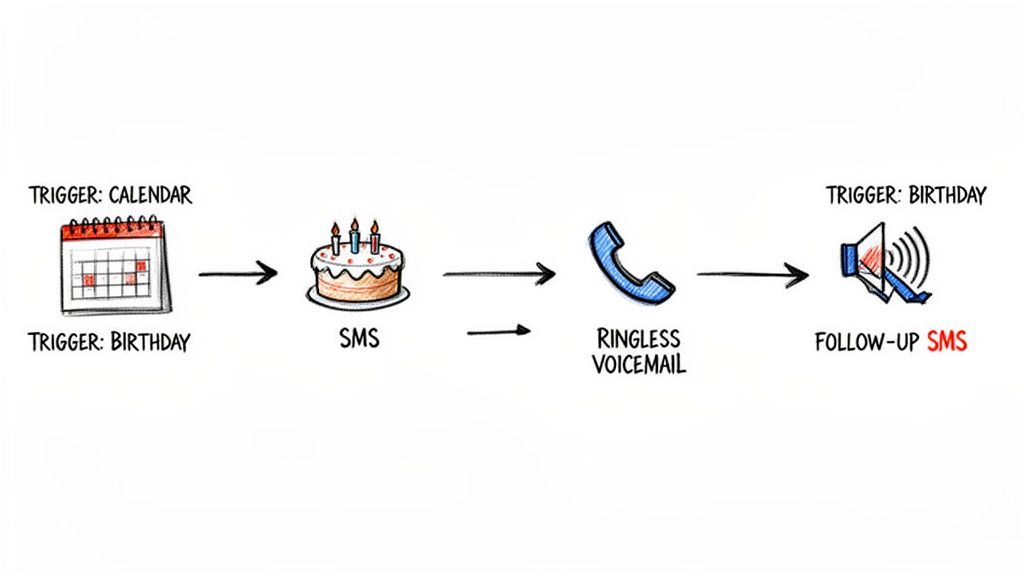
The real power behind this kind of automation comes from triggers—specific events that kick off a pre-built messaging sequence. Two of the most effective types I've seen are calendar-based and custom date triggers.
Imagine a healthcare provider using Call Loop to schedule patient reminders—HIPAA-compliant, of course. For 2025, an estimated 70% of businesses are already using texting for appointment scheduling, saving massive time. The stats confirm it: SMS reminders can slash cancellations to under 5% and reduce no-shows to just 19%, far outperforming email. Learn more about the current state of business texting in this 2025 report.
Why stop at just one channel? A truly effective drip campaign often mixes different communication methods to reinforce your message without being annoying. The goal is to create a seamless customer experience that feels personal and attentive. To really get the most out of your efforts, it helps to understand some general marketing automation best practices that apply across the board.
Here’s a practical example of a multi-channel sequence for a new lead:
This layered approach makes sure your message gets heard, nurturing leads from their first flicker of interest all the way to conversion. Learning how to send automated texts is the key to building these powerful, hands-off sequences that drive growth while you focus on other parts of your business.
Sending a text is simple. But sending it at the right time and in the right way? That’s what makes all the difference. Knowing how to schedule text messages is just the first step. To really get results, you need to master the art of timing and get a handle on the legal rules that build trust (and keep you out of hot water).
This isn't just about avoiding hefty fines—it’s about making sure your messages actually get welcomed, opened, and acted upon.
Think about it: A perfectly timed text can be a game-changer. Imagine it’s Tuesday afternoon, maybe 2 PM, and you fire off a scheduled SMS campaign reminding people about a webinar. Minutes later, the sign-ups start rolling in. That’s because a staggering 98% of SMS messages get opened, blowing email’s 15-20% open rates out of the water.
This isn't just hype. Data shows that 82% of people read texts within five minutes, with almost a third opening them in under 60 seconds. For businesses like karate studios or event promoters using a platform like Call Loop, getting that timing right is what turns a good campaign into a great one. You can find more powerful insights in these 2025 SMS marketing statistics.
To give you a head start, here’s a quick-reference guide on the best times to schedule your messages based on what we've seen work across different industries.
While these times are a solid starting point, the golden rule is this: always send messages during reasonable hours in your recipient's local time zone. A 10 AM message on the East Coast is an unwelcome 7 AM buzz on the West Coast. A reliable platform handles this automatically, making sure you respect your audience's time.
Compliance isn't optional—it's a strict requirement. In the United States, the main law is the Telephone Consumer Protection Act (TCPA), and getting it wrong can lead to fines of up to $1,500 per message. Ouch.
The good news is, staying compliant is pretty straightforward if you stick to a few core principles.
Following these rules is about more than just dodging legal trouble. It’s about building a foundation of trust. When people know you respect their inbox and their privacy, they're far more likely to stick around as loyal subscribers.
For industries like healthcare, things get even more serious. The Health Insurance Portability and Accountability Act (HIPAA) adds another layer of security to protect sensitive patient information.
If you're scheduling appointment reminders or sharing any health-related info, using a HIPAA-compliant platform like Call Loop isn't just a good idea—it's non-negotiable. It ensures every single message is secure and private. At the end of the day, smart compliance keeps your deliverability high and makes sure your scheduled texts are a welcome part of your customer's day.
Scheduling text messages is a powerful tool on its own. But when you want to create a customer experience that truly stands out, you need to think beyond a single channel.
One of the most effective partners for SMS is ringless voicemail. This is the secret sauce for adding a human touch to your automated outreach without ever being intrusive. It’s how you take a good follow-up strategy and make it great. Keywords related to this technology include "ringless voicemail drop," "direct-to-voicemail," and "voicemail marketing," all describing the same core function.
The tech itself is pretty slick: it delivers a pre-recorded audio message straight to someone's voicemail inbox without their phone ever ringing. It's the perfect way to layer in a personal, audible message that complements the speed and efficiency of a scheduled text. This multi-channel punch helps your message cut through the noise.
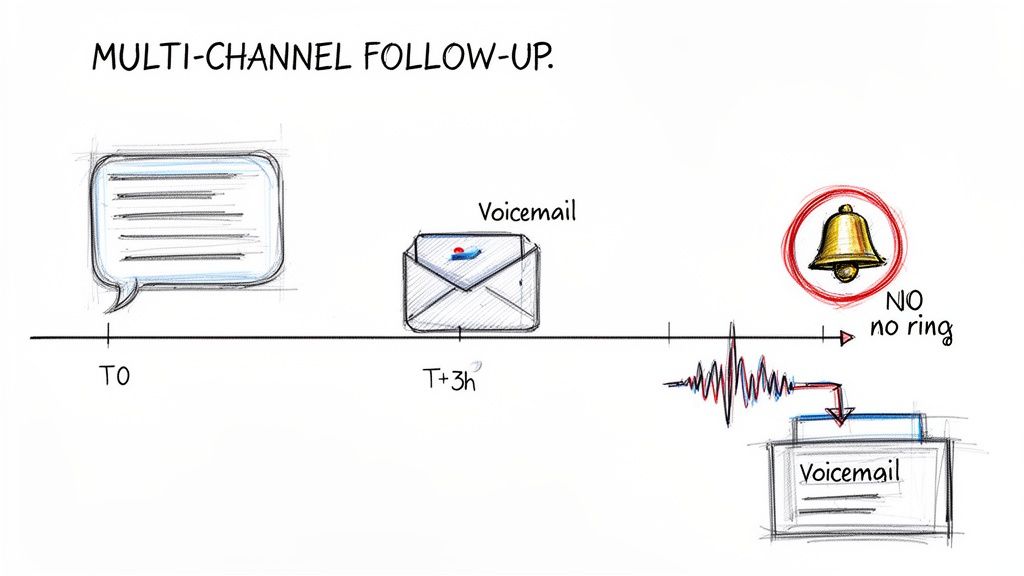
The strategy behind combining these tools is simple but incredibly effective. You lean on the immediacy of SMS for the core information and use the warmth of a voice message to drive it home. This creates a layered communication sequence that feels both professional and surprisingly personal.
Let's walk through a real-world scenario:
This one-two punch of a scheduled text followed by a ringless voicemail adds a completely new dimension to your campaigns. It shows you’re willing to go the extra mile to connect, which is something customers definitely notice and appreciate.
This technique is super versatile. It works just as well for appointment reminders, event follow-ups, or nurturing new leads. By scheduling both a text and a voice message, you’re building a cohesive outreach sequence that gets results.
If you want to dive deeper into the nuts and bolts, check out our complete getting started guide for using ringless voicemail for business. Ultimately, combining these technologies helps you build stronger relationships and get way more out of your automated campaigns.
When you're diving into scheduling text messages, a few questions always pop up. Let's tackle the big ones I hear all the time so you can get started with total confidence.
Yes, and you absolutely should. Any serious messaging platform is built with timezone-aware scheduling because it's a must-have for anyone with a national audience.
It's simple: you schedule a message for 10 AM, and the system is smart enough to deliver it at 10 AM local time for every single person on your list, whether they're in New York or California. This little feature is a game-changer. It means you're never waking someone up at 5 AM with a promo text, which instantly boosts how well your campaigns perform.
Think of it this way: a scheduled bulk SMS is a one-and-done blast. It’s perfect for a single message sent to a huge group at a specific time. Use it for things like a flash sale announcement, a holiday greeting, or a last-minute event reminder.
A drip campaign, on the other hand, is a whole conversation. It's a pre-built sequence of messages that go out automatically over time. These sequences can even mix in other formats like ringless voicemail drops and are usually kicked off by a customer's action, like signing up on your website. Drips are your go-to for nurturing new leads, onboarding customers step-by-step, or delivering an educational mini-course.
This is the big one. Compliance is non-negotiable, and getting it right from the start is crucial. It all boils down to three simple pillars:
Following these rules isn't just about dodging massive fines—it's about building trust. A good platform will have compliance tools baked right in to help you manage this automatically. It’s the foundation of any messaging strategy that's built to last.
Ready to take control of your outreach with powerful, compliant, and easy-to-use scheduling tools? Call Loop gives you everything you need to automate SMS, ringless voicemail, and voice broadcasts. Start your free trial today!
Chris Brisson
Chris is the co-founder and CEO at Call Loop. He is focused on marketing automation, growth hacker strategies, and creating duplicatable systems for growing a remote and bootstrapped company. Chat with him on X at @chrisbrisson


Trusted by over 45,000 people, organizations, and businesses like


