
See a Demo
You're just one step away from seeing Call Loop in action.
Enter your information below to watch a demo right now.

You're just one step away from seeing Call Loop in action.
Enter your information below to watch a demo right now.

To send a timed text, you're essentially using a scheduling feature, either in your phone’s native messaging app or, more powerfully, through a third-party platform. For businesses, a tool like Call Loop lets you schedule SMS messages well in advance, making sure they land in your audience's hands at the exact moment they'll have the most impact. The basic idea is simple: pick your contacts, write the message, and set the delivery date and time.
In a world overflowing with notifications, timing isn't just a small detail—it's everything. A perfectly timed text can be the difference between a message that gets swiped away and one that drives someone to take immediate action. This isn't just about making things convenient; it's about connecting with people when they are actually ready to listen.
Just think about some real-world examples where timing is make-or-break. A flash sale alert sent right at noon catches people on their lunch break. An appointment reminder sent 24 hours ahead of time drastically cuts down on no-shows. These messages work because they fit into the recipient's daily rhythm, making them feel helpful instead of intrusive.
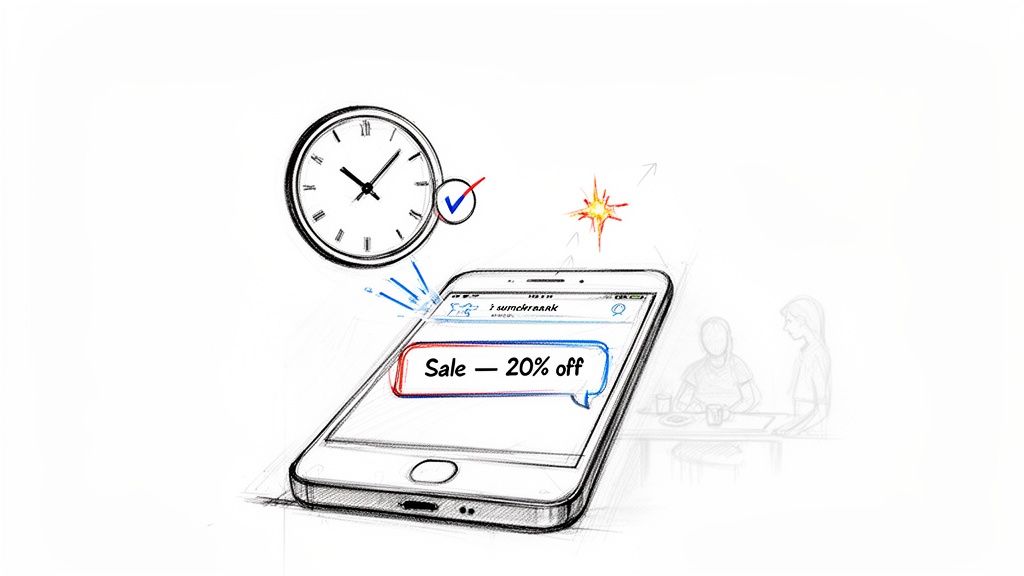
The real power of SMS comes from its immediacy. People open texts. Fast. And when you nail the timing, that advantage gets amplified. Just look at the numbers: SMS has a mind-blowing 98% open rate, which completely dwarfs email's 20-30% average.
It’s not just about getting seen, either. For businesses, the key is hitting the right person at the right time. In fact, a significant number of SMS marketers report that perfectly timed, personalized follow-ups are a direct driver of more revenue. You can discover more insights about A2P SMS market trends to see just how big this is.
This strategic edge comes from a simple psychological trigger: a message that arrives at the right moment feels relevant and urgent. It’s a feeling that other marketing channels really struggle to create. A quick look at how SMS stacks up against other channels really drives home the importance of timing.
As you can see, when you need to get a message seen now, nothing beats SMS.
But to really make this work for you, a simple scheduler won't cut it. You need a platform that gives you more control. Think about being able to:
By mastering how to send a timed text, you shift from just broadcasting information to orchestrating meaningful, timely conversations. It's a strategic advantage that turns a simple message into a powerful tool for growth and engagement.
Before we even get into the nuts and bolts of scheduling a text, let’s talk about the most important piece of the puzzle: your audience.
A perfectly timed message sent to the wrong person is just spam. The real goal is to build a list of people who actually want to hear from you. When you do that, your timed texts become welcome nudges, not annoying interruptions.
The entire foundation of a solid messaging strategy is built on explicit consent. You absolutely have to get permission before you start hitting send. This isn't just a friendly suggestion; it's a legal requirement that builds the trust you need to succeed. When someone gives you their number, they're letting you into their personal inbox—don't take that lightly.
Getting a clear opt-in is the single most important step. It makes sure your messages are wanted and kicks off the relationship on the right foot.
Once you have that thumbs-up, you can start to figure out who you're really talking to. This is where you move from a basic contact list to something much more powerful.
Blasting the same generic message to your entire list is a huge missed opportunity. The magic happens when you start segmenting—splitting your contacts into smaller, more focused groups based on things like their behavior, interests, or demographics. This is how you make your messages feel personal and crazy relevant.
Think about it in the real world:
This kind of targeting makes your communication way more effective. It shows you’re paying attention, and that builds serious loyalty. For more ideas on this, check out our guide on 5 ways to grow your SMS marketing list starting today.
Once you have your segments, you can really dial in the personalization. Using custom fields lets you turn a mass text into something that feels like a one-on-one conversation.
Using merge tags like [FirstName] or [AppointmentDate] is a simple but incredibly effective trick. It instantly makes your message feel less like it came from a robot.
For example, which of these feels better?
"Reminder: Your appointment is scheduled."
vs.
"Hi [FirstName], just a friendly reminder about your appointment on [AppointmentDate] at 10 AM. We look forward to seeing you!"
That small touch makes all the difference. Building your list this way—with permission, smart segments, and a personal touch—ensures that when you finally schedule that timed text, it lands with maximum impact. It’s the right message, for the right person, at exactly the right time.
Alright, you've got your audience. Now for the fun part: writing the actual message. Getting this right is a mix of science and art, but the mission is always the same—get a response. With only 160 characters in a standard SMS, every single word has to pull its weight to catch their eye and get them to act.
Think of your message in three parts: the hook, the offer, and the call-to-action (CTA). The hook grabs them, the offer gives them a reason to care, and the CTA tells them exactly what to do next. Simple as that.
Clarity is king. Don't get fancy with jargon or complicated language. Your message needs to be crystal clear at a quick glance. The most important piece of the puzzle, though, is a powerful CTA. It’s what turns a passive notification into an active opportunity.
Be direct. Be specific. Instead of a weak "Check out our sale," hit them with something that creates urgency and value, like, "Flash Sale Alert: Click here for 20% off all items until midnight!" See the difference? No guesswork, just a clear path to take action.
A great timed text feels like a helpful nudge, not a sales pitch. It provides the right information at the right moment, making it easy for the recipient to say "yes."
Let's say a sales team is following up after a demo. A generic text is super easy to ignore, but a targeted one can get the conversation going again.
The second one works because it delivers immediate value (the case study) and proposes a clear, low-effort next step. It's helpful, not pushy.
Sometimes, 160 characters of plain text just won't cut it. That's where MMS (Multimedia Messaging Service) comes in. Throwing in an image, a GIF, or even a quick video can make your message pop and stick in someone's memory. Visuals are perfect for showing off a new product, illustrating an offer, or just adding a personal touch.
Imagine a fitness studio sending a class reminder. An SMS is fine. But an MMS with a link to a 2-minute warm-up video? That's next level. It adds real value beyond a simple reminder, improving their experience and building some serious brand loyalty.
You can also mix and match channels. For certain follow-ups, a ringless voicemail can be a great companion to your text. You could send a timed text with a key update, then schedule a ringless voicemail drop 24 hours later with a more personal, in-depth message that doesn't interrupt their day. This kind of multi-touch approach makes sure you stand out from the noise.
Going beyond a simple "pick a date and time" function is where you truly unlock the power of timed text messages. It’s about creating intelligent, automated conversations that feel personal and arrive at the perfect moment, every single time. This is where you move from sending basic messages to orchestrating powerful communication workflows.
You can approach scheduling a few different ways. Setting up a one-time broadcast is perfect for a specific event, like a Black Friday sale or a holiday greeting. Or, you can build an automated drip campaign that nurtures a new lead over several days or weeks, delivering value at a steady, welcome pace.
Before you schedule anything, you need a message that converts. This simple breakdown shows the core pieces.
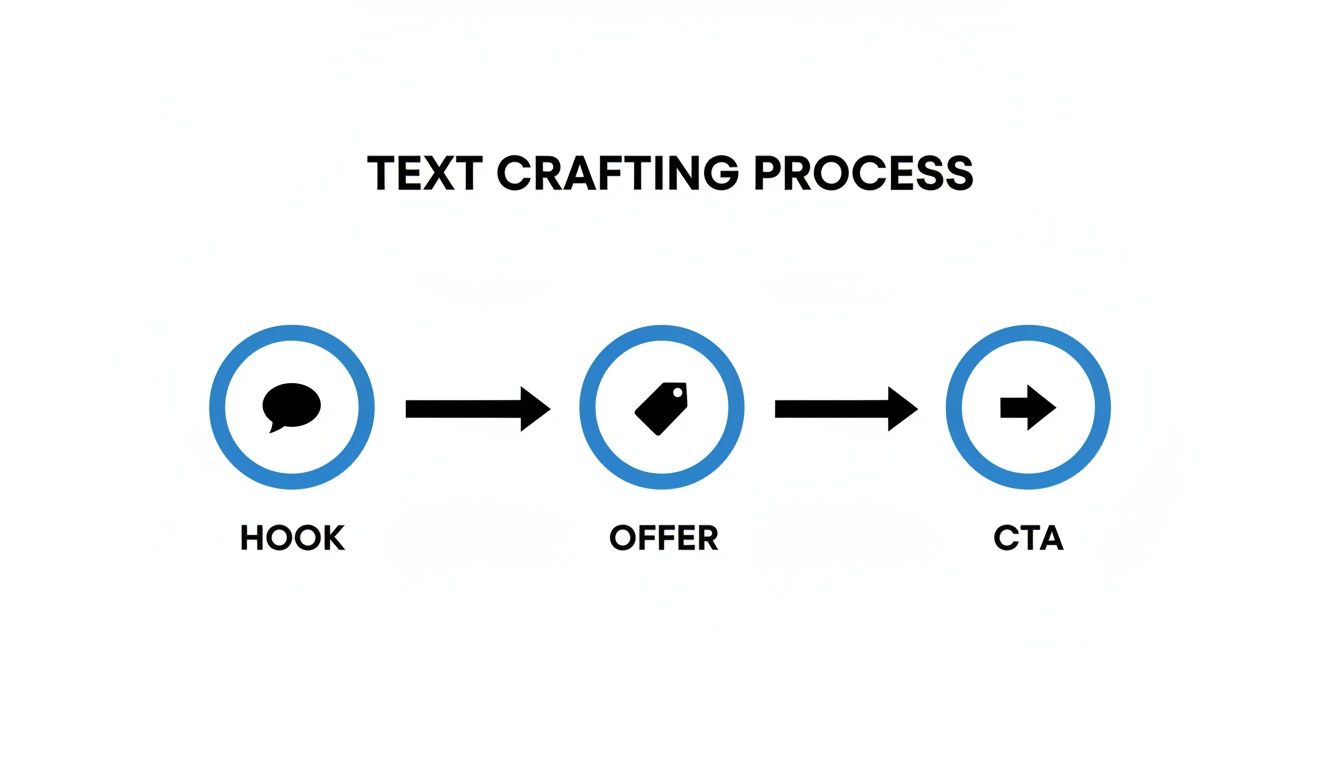
The flow from a compelling hook to a clear call-to-action is the foundation of any successful automated message. No matter how perfectly timed your text is, the content has to be strong enough to get someone to act.
The real magic happens with trigger-based messages. These are automated texts sent instantly in response to something a customer does. This immediate feedback makes your communication feel responsive and dynamic, not like a pre-canned blast.
Common examples include:
You can also set up messages based on custom dates unique to each contact, like wishing them a happy birthday with a special offer or reminding them of an upcoming membership renewal. This level of personalization shows you're paying attention and makes your customers feel valued. Learning how to send automated texts is a crucial skill for this process.
Your timed text message strategy shouldn't exist in a vacuum. The most effective campaigns coordinate SMS with other channels to create a comprehensive follow-up sequence that gets results.
For example, you can schedule a ringless voicemail to drop 24 hours after a prospect gets a text. The text delivers a quick, scannable piece of info, while the voicemail offers a more personal, detailed follow-up without interrupting their day. This multi-touch approach ensures your message gets through to even the busiest audiences.
Timing is everything in marketing. SMS automation has surged by 30-40% across industries, powering sophisticated drip campaigns and behavior-triggered sends. When used in a multi-channel strategy, sending a follow-up SMS after an email can jump ROI significantly, making it a go-to tactic for sales teams.
The goal of automation isn't just to save time; it's to create a more relevant and timely customer experience. A well-timed, triggered message feels like helpful service, not marketing.
Finally, a critical detail often overlooked is time zone management. Sending a promotional text at 9 AM Eastern Time means it will arrive at an unwelcome 6 AM for your customers on the West Coast. That’s a fast way to get an opt-out.
A professional platform like Call Loop automatically handles this for you. It intelligently sends messages based on the recipient's local time zone, ensuring your 9 AM message lands at 9 AM for everyone, everywhere. This simple feature prevents accidental late-night disturbances and significantly improves the reception of your campaigns.
Sending a timed text message is a powerful tool, no doubt. But with great power comes great responsibility. You have to navigate the rules of SMS communication—not just to cover yourself legally, but to maintain the trust you've built with your audience.
Think of compliance as the foundation for every successful campaign you'll ever run.
At the core of these rules is the Telephone Consumer Protection Act (TCPA). This is the big federal law that sets the guidelines for any kind of telemarketing, and yes, that includes text messages. The most critical piece to remember from the TCPA is the need for express written consent before you send any marketing text.
This isn't a "nice-to-have." It means someone has to knowingly and clearly agree to get promotional messages from you. Just having their phone number isn't enough.
Every single promotional text you send has a few non-negotiable elements. These pieces ensure you're being transparent and giving your contacts control over the conversation, which is exactly what you want for a healthy, long-term relationship.
Without them, your perfectly timed text can feel like an unwelcome intrusion pretty fast.
Your messages must always:
Building a compliant SMS strategy isn't about jumping through legal hoops. It's about respecting your audience's inbox and creating a communication channel built on trust and explicit permission.
Once you've got the legal side down, you need to think about the best practices that separate effective campaigns from the ones that just annoy people. A huge part of this is message frequency.
Sending too many texts is the fastest way to get an opt-out. On the flip side, sending too few can make your audience forget they even signed up.
Striking the right balance here is crucial. For most businesses, one to two messages per week is a solid starting point for general promotions. But you can—and should—adjust this based on context. For a huge Black Friday sale, you might send an announcement and then a "last chance" reminder.
Also, remember to look at the bigger picture. Are you coordinating your texts with other outreach? A timed text followed by a ringless voicemail drop a day later can be a powerful one-two punch, but it still adds to the total number of times you're contacting someone.
Ultimately, the goal is to be a welcome guest in their inbox, not a persistent pest.
Your work doesn’t stop the moment you hit “schedule.” If you want to turn timed texts into a powerful, data-driven strategy, you need to track what happens next. This creates a feedback loop, letting you learn exactly what your audience responds to so every future campaign gets even better.
Simply sending messages into the void won’t get you very far. The real magic happens when you analyze the results to understand what’s working, what isn’t, and why. By digging into the right numbers, you get a clear picture of your campaign's health and find huge opportunities to improve.
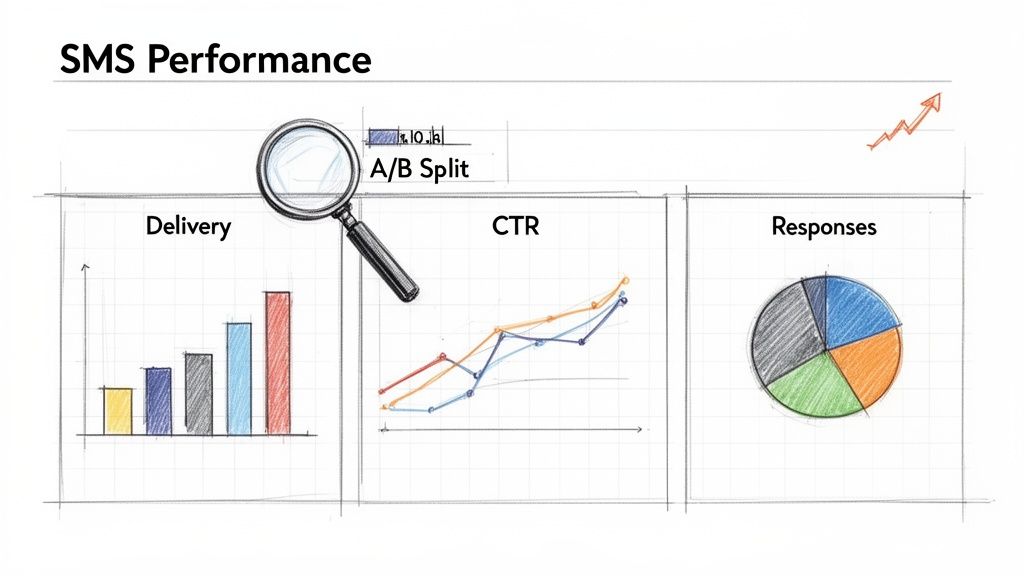
Don't get overwhelmed by all the data. To start, just focus on a few core metrics that tell the most important parts of the story.
These numbers all work together. For instance, a high delivery rate but a low CTR might mean your message is reaching people just fine, but the call-to-action isn't strong enough to make them click. Measuring marketing campaign effectiveness is all about spotting these connections and adjusting your approach.
Think of your analytics dashboard as a roadmap, not just a report card. Use it to A/B test different send times, message copy, and offers to discover what truly resonates with your audience.
Even with all the new messaging apps out there, the reliability of SMS is undeniable. It's a channel that just plain works. Research shows that two-thirds of the global population still uses SMS regularly, and it's projected to hold 32% of mobile messaging revenue through 2029.
The performance metrics prove its resilience, with jaw-dropping click-through rates of 19-36% and response rates of 45%—numbers that leave email in the dust. This data confirms that learning how to send a timed text is a high-value skill that pays dividends.
Ready to turn your insights into action? Call Loop provides the powerful scheduling, automation, and analytics tools you need to send perfectly timed texts that get results. Start your free trial and see the difference today at https://www.callloop.com.
Chris Brisson
Chris is the co-founder and CEO at Call Loop. He is focused on marketing automation, growth hacker strategies, and creating duplicatable systems for growing a remote and bootstrapped company. Chat with him on X at @chrisbrisson


Trusted by over 45,000 people, organizations, and businesses like


