
See a Demo
You're just one step away from seeing Call Loop in action.
Enter your information below to watch a demo right now.

You're just one step away from seeing Call Loop in action.
Enter your information below to watch a demo right now.

When you text a 5-digit number, you're usually sending a specific keyword directly from your phone's messaging app. You just pop the 5-digit number into the recipient field like you would any other phone number, type your keyword, and hit send.
This simple action, often called "text-to-join," is transformative for businesses. It's how they capture leads, send out promotions, and build subscriber lists with people who want to hear from them. It’s a powerful, direct line of communication between brands and the customers who trust them.
To tighten this guide, we focused on the practical questions readers usually have the moment they see a call-to-action like “Text JOIN to 12345.” We reviewed the actual user flow, carrier and compliance requirements, the setup path for shared versus dedicated short codes, and the common failure points that make a short code appear broken even when the business thinks its campaign is live.
Our main criteria were simple. First, the instructions had to help a normal phone user complete the action without guesswork. Second, the business setup advice had to reflect how short codes are actually obtained today: through approved messaging providers and carrier registration, not by casually “buying” a 5-digit number off the shelf. Third, any compliance guidance had to match established U.S. rules around consent and disclosure, including the TCPA and CTIA messaging expectations. The FCC’s TCPA guidance and the CTIA messaging principles overview are useful baselines here.
I also treated any advice as weak if it blurred the line between short codes, toll-free texting, and 10DLC, because that confusion is one of the biggest reasons businesses choose the wrong messaging option. In practice, the best guidance is the guidance that tells you when a short code is the right tool—and when it is unnecessary overhead.
If you need the fast answer, here’s the process: open your phone’s Messages app, enter the 5-digit short code in the recipient field, type the keyword exactly as shown in the business’s call-to-action, and send it. Then watch for the automatic reply. A working program will usually send a confirmation, coupon, link, help prompt, or opt-in message within seconds. If you get an error or no response, the issue is usually the keyword, carrier support, or the business’s program status—not the basic texting process itself.
A 5-digit text number used by a business is usually called a short code. It is different from a normal 10-digit phone number because it is designed for application-to-person messaging at scale, not ordinary person-to-person texting. Short codes are typically 5 or 6 digits long, not always 5, and they are commonly used for promotions, alerts, appointment reminders, and verification flows. Industry guidance also notes that businesses generally access them through carrier-approved registration and leasing rather than direct ownership; Call Loop explains that model in its own short code overview.
That distinction matters because short codes are built for volume, automation, and easy recall. Marketer-focused resources such as TrueDialog’s explanation of SMS short codes describe them as especially useful for mass texting, list growth, and keyword-triggered workflows. I think that “keyword plus short code” structure is the part many businesses underestimate: one word can route a subscriber into the correct list, auto-reply, disclosure flow, and follow-up sequence without asking staff to manage replies manually.
Unlike a standard 10-digit phone number, a short code is reviewed for messaging use through carrier and industry registration processes. The U.S. Short Code Registry exists because these numbers are not regular telephone inventory; they are controlled messaging assets with approval requirements. That structure is one reason businesses use short codes for high-visibility campaigns where they want a memorable number and predictable program behavior.
Mathematically, a five-digit number can be any number from 10,000 to 99,999, which means there are 90,000 possible combinations in that range, as explained in Cuemath’s five-digit number reference. In telecom, though, only a much smaller approved subset can function as texting short codes. So while people often say “5-digit phone number,” the business reality is narrower: not every five-digit number can send or receive SMS.
It also helps to separate marketing short codes from verification codes. A business may ask you to text JOIN to 12345, while a bank or app may send you a one-time 5-digit or 6-digit verification code for login. Both involve short numeric formats, but they serve different jobs. One is a customer messaging channel; the other is usually an authentication or security code.
The main advantage is not novelty. It is speed, memorability, and throughput. A short code on a sign, checkout page, event banner, or receipt is easier to remember than a full 10-digit number, which is why the format has remained common in opt-in campaigns and alerts. The CTIA Short Code Monitoring Handbook also reflects how tightly these programs are monitored for compliance, which is one reason brands continue to use them for structured, repeatable messaging.
I’d also point readers to a useful companion resource on DialNexa Labs Private Limited's site if you want a broader comparison between business messaging number types before deciding on short code infrastructure.
Getting started with 5-digit numbers means learning a few new terms. This quick guide will get you up to speed on the essentials.
| Term | What It Means for Your Business |
|---|---|
| Short Code | This is your 5 or 6-digit number. It's the memorable "address" customers text to join your list or get information. |
| Keyword | The specific word or phrase a customer texts to your short code (e.g., "DEALS," "JOIN," "INFO"). Each keyword can trigger a different automated response or add contacts to a specific list. |
| Opt-In | The act of a customer giving you explicit permission to text them. This is a non-negotiable step for compliance. |
| SMS/MMS | SMS (Short Message Service) is your standard, 160-character text message. MMS (Multimedia Messaging Service) lets you send images, GIFs, and videos. |
| Call-to-Action (CTA) | The instruction you give your audience, like "Text DEALS to 12345 to get 20% off your next order!" |
Think of these terms as the building blocks of your SMS strategy. Once you're comfortable with them, you can start building powerful, automated campaigns.
A 5-digit number is useful when you need a memorable, high-volume entry point into a broader communication system. A local restaurant can use a keyword to build a VIP list for weekly offers. A salon can use one for appointment reminders and rebooking nudges. An event organizer can use it for last-minute updates and post-event follow-up.
You can also integrate other channels after the first opt-in. Imagine a new subscriber gets a welcome text, then later receives a ringless voicemail or a segmented follow-up based on the keyword they used. That kind of workflow matters because the first text is usually just the trigger, not the full campaign. In my experience, the businesses that do best here are the ones that define one concrete next step—coupon delivery, appointment confirmation, tour request, or support routing—instead of treating the short code as a generic broadcast tool.
Ultimately, the goal of these campaigns is to build lasting relationships and maximize the lifetime value of each customer. This fits perfectly with broader strategies for improving customer lifetime value. By using a platform like Call Loop, you can automate these complex sequences and make sure every new subscriber gets a consistent and engaging welcome from the moment they join.
The practical question is not just “how do I get a 5-digit number?” but “what kind of business messaging number do I need?” Many businesses do not buy a 5-digit number outright. They usually lease access through an SMS platform that already has the provider relationships, provisioning process, and compliance workflow in place. If you are picturing a retail checkout where you purchase 12345 and start sending messages that afternoon, that is not how short codes generally work.
In the U.S., short codes are part of a managed ecosystem. The U.S. Short Code Registry handles discovery and administration, while providers and carriers manage provisioning and campaign approval. The Twilio short code guide is also useful for understanding the current approval path: brands submit campaign details, sample messages, opt-in language, and compliance information before launch.
In practice, established businesses, nonprofits, healthcare groups, franchises, agencies, and larger senders can all use short codes, but they usually do it through a messaging platform or provider. Carriers and providers want to know who is sending, what the use case is, how people opt in, what the sample messages look like, and how opt-out requests will be honored.
That means a business should expect to provide details such as:
I see this misunderstood all the time: the number itself is only a small part of approval. The review is about the program around the number.
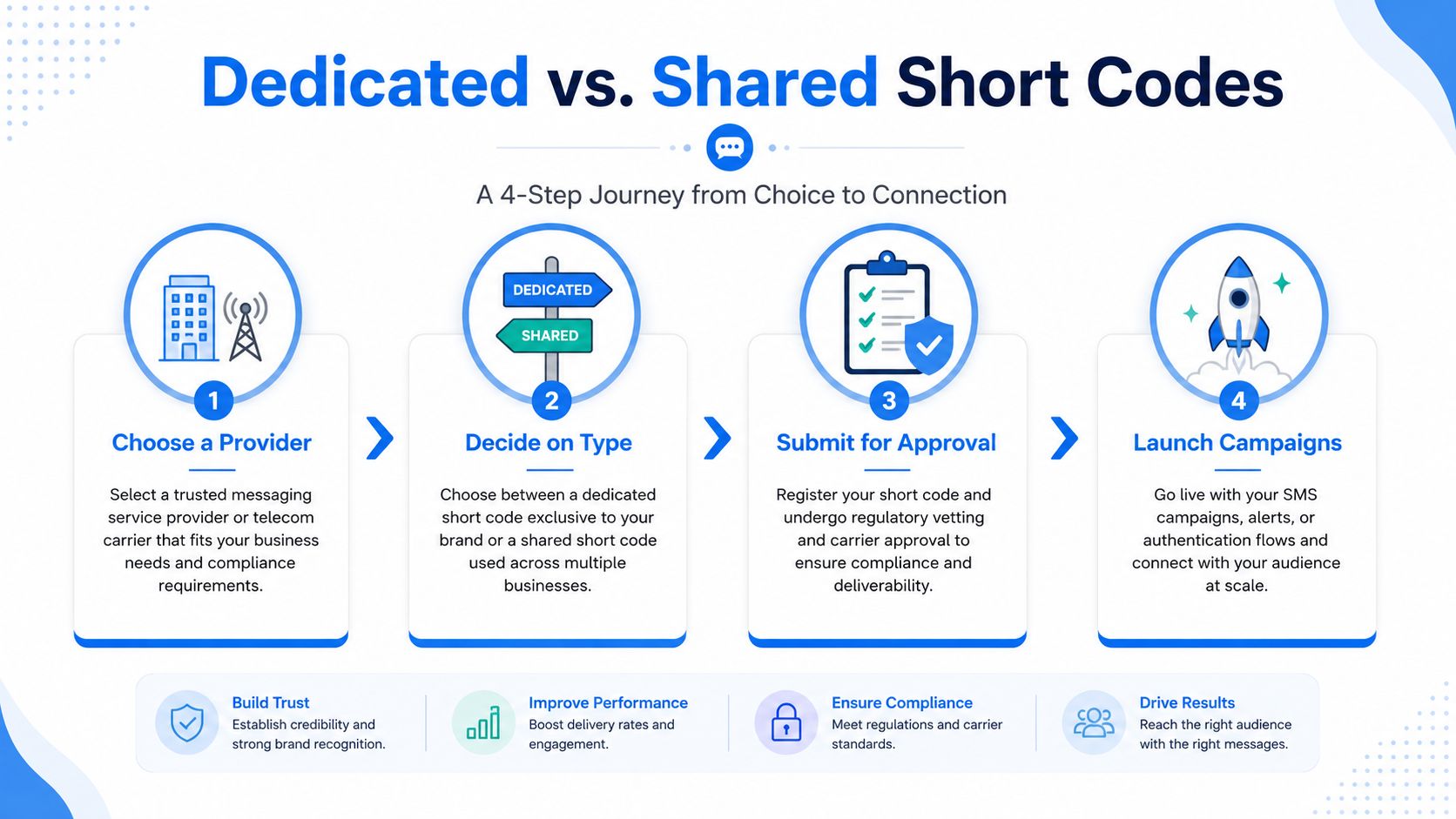
Most businesses choose between shared access through a platform and a dedicated short code reserved for a single brand. A dedicated code gives you exclusive use of the number and is best suited to high-volume senders, recognizable national brands, or organizations that want a vanity code and total control over the program. Shared access is faster and less expensive because the platform has already done much of the infrastructure work.
The trade-off is straightforward. Dedicated short codes offer stronger standalone branding and cleaner number ownership logic. Shared options offer speed, lower cost, and less administrative friction. For many small and midsize teams, shared access is the practical starting point, especially if the immediate goal is collecting opt-ins with a keyword rather than building a major national program.
Here is the decision point in plain language.
| Feature | Dedicated Short Code | Shared Short Code |
|---|---|---|
| Branding | Your own exclusive number, completely branded to you. | You use a shared number, so branding is tied to your keyword. |
| Cost | Higher monthly lease plus setup and program review costs. | Lower cost through a platform subscription or managed plan. |
| Setup Time | Longer because the campaign and number require approval and provisioning. | Faster because the provider already has the infrastructure in place. |
| Best For | Large senders, national brands, heavy volume, vanity-code use cases. | SMBs, franchises, local businesses, agencies, and pilot campaigns. |
The exact cost and launch timing vary by provider and campaign type, but the broad pattern has not changed: dedicated is slower and more expensive; shared is faster and simpler. Provider documentation from Sinch on short code messaging and Twilio’s short code process makes that distinction clear.
A live short code program usually goes through four stages:
That last step is where I see the most preventable mistakes. Teams often focus on getting the keyword live, then forget to test edge cases like a typo, a HELP request, or what happens when someone tries to join from an unsupported country.
A short code is not automatically the best choice. If you mostly need two-way sales conversations, account-specific support, or modest outbound volume, a 10DLC number may feel more natural and cost less. If you want broad reach with a familiar business identity and support for registration-based messaging, toll-free SMS may be enough. The A2P 10DLC overview from Twilio and toll-free messaging guidance help explain that decision.
A simple rule: use short code when memorability, speed of opt-in, and high-volume program messaging are central to the strategy. Use toll-free or 10DLC when the business needs conversation more than mass-entry response.
For the vast majority of businesses that want a simpler launch path, Call Loop offers an easy-to-use SMS short code service without asking you to manage the full carrier process yourself.
Once you've picked your short code, the single most critical step is getting compliance right. This isn't just about ticking boxes and following rules; it’s the bedrock of a healthy SMS strategy. Nail it, and you build incredible customer trust. Get it wrong, and you're looking at painful fines and a brand reputation that's hard to repair.
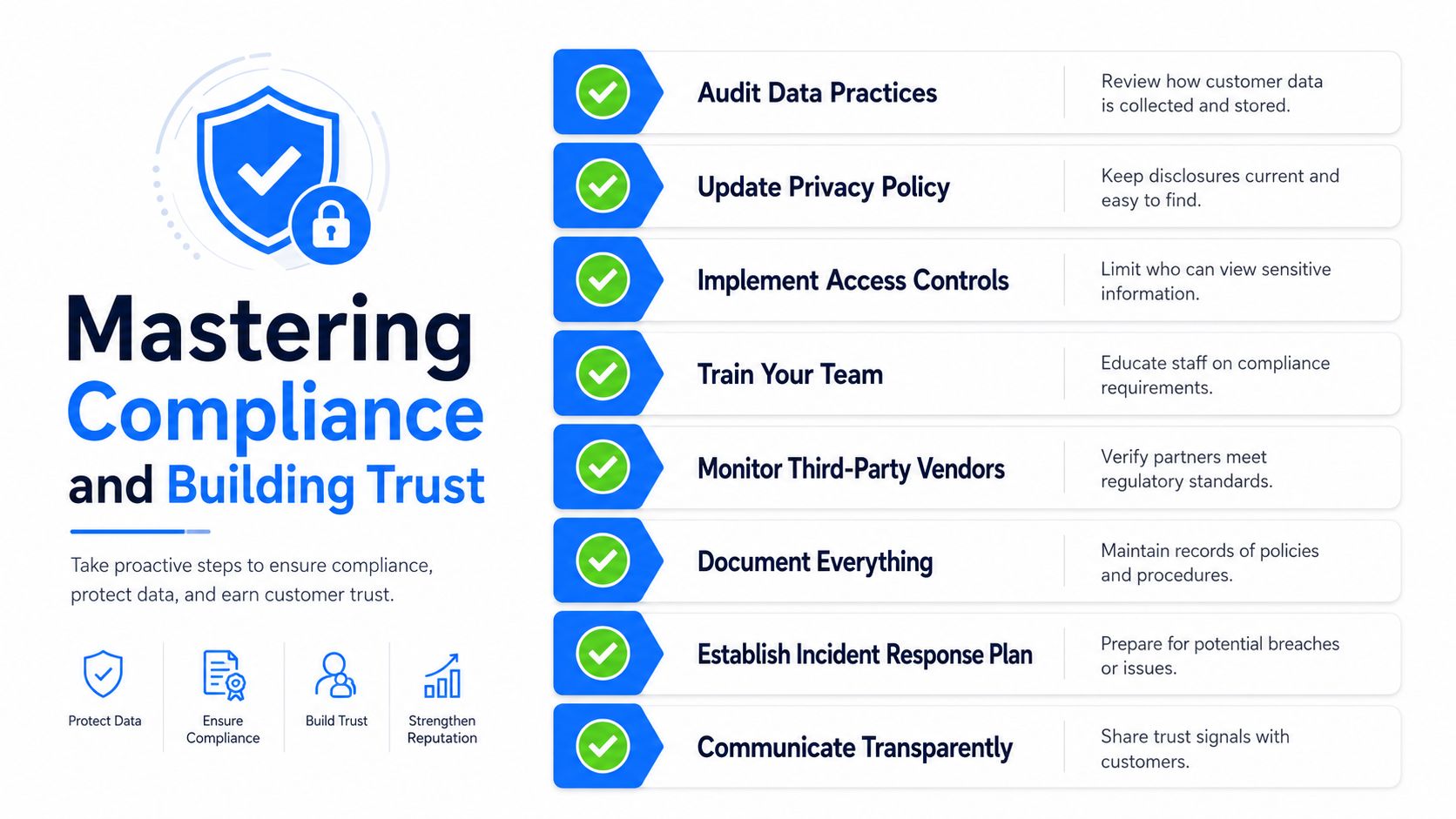
The entire world of texting to a 5-digit number boils down to one simple idea: consent. You absolutely cannot send a promotional text to anyone without their clear, documented permission. Regulations such as the Telephone Consumer Protection Act (TCPA) require this.
What you need is something called "express written consent" before that first message ever hits their phone. The good news? A customer texting your keyword to your short code counts as giving this consent, but only if your call-to-action is completely transparent.
Your call-to-action (CTA) is the invitation. It’s where you ask people to join your list, and it has to spell out exactly what they're signing up for. There's no room for vague language here.
A compliant CTA needs to include a few key pieces of information. Miss just one, and you could be putting your campaign at risk.
Essential Elements of a Compliant CTA:
Here’s a real-world example you could slap on a flyer or a website banner:
"Text DEALS to 12345 to join our Weekly Specials club. Get exclusive offers sent right to your phone! Up to 4 msgs/month. Msg&data rates may apply. Reply HELP for help, STOP to cancel."
That small block of text checks every box. It's transparent, it sets clear expectations, and it gives the user total control. This is how you build trust from the very first interaction.
While a single opt-in (just texting the keyword) meets the minimum requirement, a double opt-in is the gold standard for building a high-quality, engaged list. It adds one quick confirmation step that makes a world of difference.
Here’s the simple flow:
That extra step is huge. It confirms the person who texted is the phone's owner and wants your messages. This process weeds out typos, accidental sign-ups, and spam complaints, which in turn protects your reputation with the mobile carriers. A double opt-in ultimately creates a list of people who want to hear from you. For more, see how to create a text message opt-in.
As you build out your communication strategy, remember that compliance applies to other channels, too. Take ringless voicemail, for example—a great tool for dropping an audio message directly into someone's voicemail without their phone ever ringing.
The rules for ringless voicemail can be a bit different from SMS, but the core principle of consent is still king. You should only send these voicemails to contacts who have given you the green light to reach out. Weaving them into a compliant, opt-in campaign ensures you’re talking to your customers respectfully, no matter the channel.
Okay, you've got your 5-digit number sorted out and you know the compliance rules. Now for the fun part: launching a campaign that turns curiosity into a real connection with your audience. That's when your call-to-action meets an automated system that rolls out the welcome mat and starts building a relationship the second someone opts in.
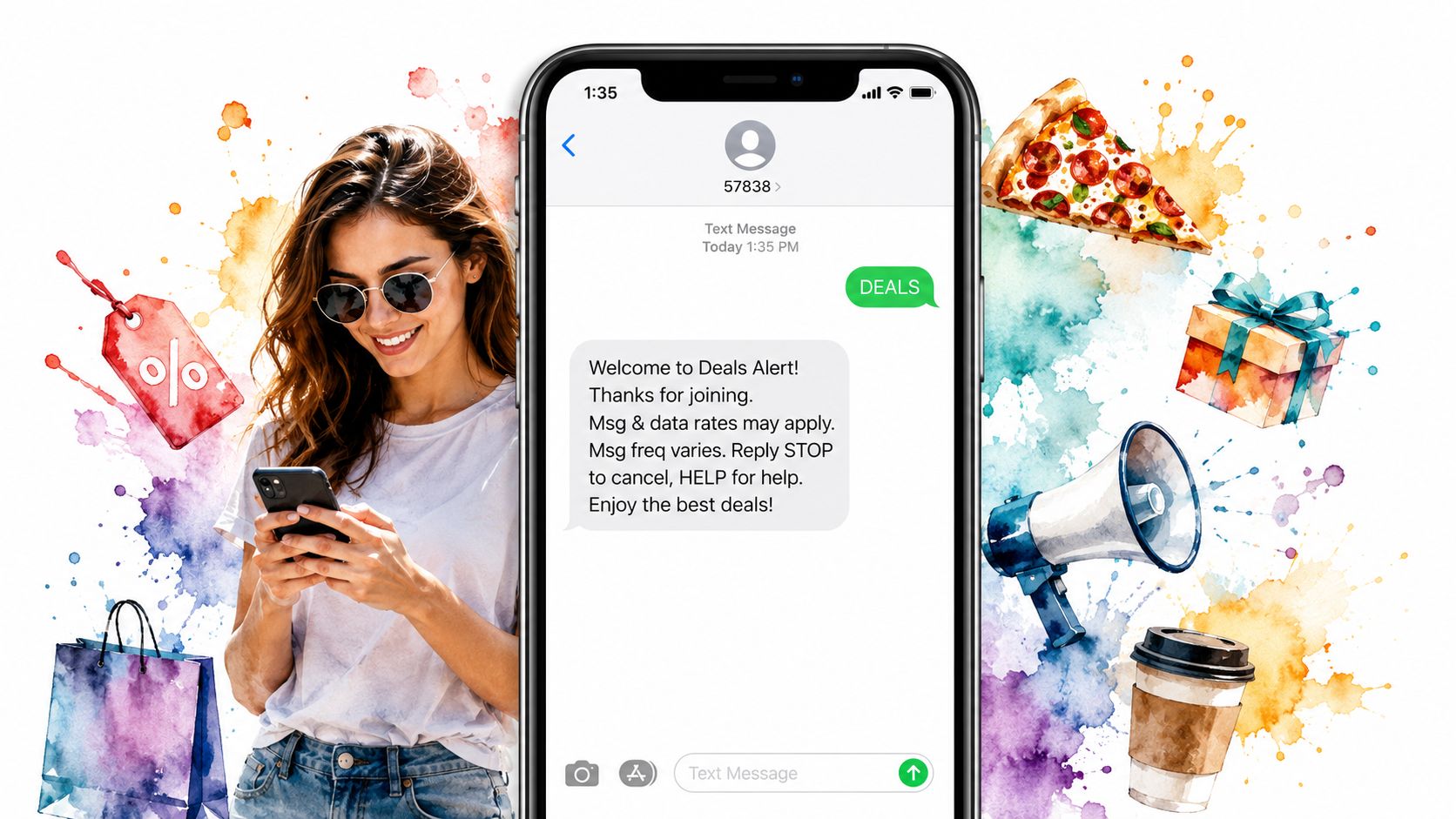
First thing's first: you need a keyword. This is the word or short phrase people will text to your 5-digit number. Keep it simple and memorable, and make sure it ties directly to what you're offering. Think "PIZZA" for a local slice shop, "SAVE" for an ecommerce discount club, or "TOUR" for a real estate listing.
Once a customer texts that keyword, what happens next is essential. You need to have your initial automated response locked and loaded. This message has to confirm their subscription, deliver whatever you promised (like a coupon), and briefly restate the compliance stuff.
A solid auto-reply does more than just say "thanks." It makes a fantastic first impression and sets the stage for every message that follows. A platform like Call Loop makes this super easy, letting you build custom auto-replies for every keyword you set up.
Here’s a simple but effective template I've seen work countless times:
"Welcome to the VIP Club! Thanks for signing up. Show this text for 20% off your next purchase. We'll send you deals weekly. Msg&data rates may apply. Reply STOP to cancel."
See how it immediately hands over the goods and reminds them how to opt out? You can level this up by personalizing it with merge tags. If you happen to collect names elsewhere, you could start with, "Hi [FirstName], welcome to the VIP Club!" That small detail makes it feel less like a robot and more like a real conversation.
Your goal with this first text is to create an instant win. The subscriber did something—they texted your keyword—and your response should immediately make them feel smart for doing it. Give them a reason to stick around.
The beauty of text-to-join is how flexible it is. It doesn't matter what industry you're in; you can make this strategy work. It's all about crafting an offer that’s compelling enough to make someone pull out their phone right then and there.
Here are a few ideas to get the wheels turning:
If you want to dive deeper into structuring these campaigns, check out our guide on text-to-join keywords and automation. It breaks down the whole setup process.
While a text-to-join campaign is a powerhouse on its own, you can really amplify its impact by mixing in other channels. That first SMS can be the kickoff for a multi-step automated sequence, often called a drip campaign.
For instance, a day after someone subscribes, you could automatically deliver a ringless voicemail. Hearing a personal welcome from the business owner adds a human touch that a simple text just can't match.
This multi-channel approach helps you cut through the noise. The power of texting to a 5-digit number is its incredible speed and open rate. The exact performance numbers vary by study and audience, so I prefer not to lean on uncited benchmark claims here; what matters operationally is that SMS gets seen quickly, which is why short-code opt-in flows work so well for immediate offers, reminders, and alerts.
If a text to a short code fails, the cause is usually much more ordinary than people expect. In most cases, the phone can send texts just fine, but the message is blocked, unsupported, mistyped, or aimed at a campaign that is no longer active. Replacing guesswork with a quick checklist saves time.
The first possibility is simple human error: the keyword does not match the call-to-action exactly. Many campaigns require an exact word such as JOIN, SAVE, or YES. If the business asked for DEALS and you sent DEAL instead, the system may not know what to do. Good platforms send a fallback reply, but not every program is configured well.
Another common issue is that the business program is inactive. Short code campaigns can expire, pause, or be limited to a specific event, store, or time period. I have seen businesses leave old in-store signage up long after a campaign ended, which makes customers think the number is broken when the problem is stale promotion.
Carrier restrictions are also common. Some mobile plans block premium or short-code messaging by default, especially on child accounts, business-managed devices, or lines with stricter fraud controls. CTIA and provider guidance both reflect that carriers and messaging apps can filter or restrict traffic when they think a campaign, keyword, or destination is suspicious; the Twilio error and deliverability documentation is useful for understanding how these blocks surface in practice.
Regional support matters too. Short codes are often country-specific. A U.S. short code generally will not work for a subscriber outside the U.S., and a Canadian or UK short code operates inside a different national setup. If the promotion was intended for one market, users in another may see the message fail outright or never receive a reply.
Not really. On an iPhone, you text a short code the same way you text any other number: open Messages, start a new message, type the short code in the “To” field, enter the keyword, and send. Android is the same basic flow. There is no special short-code app required.
Where things differ is in filtering and account settings. iPhone users may have carrier-level restrictions or family controls that affect premium or short-code messaging. Android devices may have spam filtering, RCS defaults, or manufacturer-specific messaging settings that change how an error appears. In both cases, the underlying send process is normal texting; the failure point is usually network policy or campaign status, not the handset itself.
Modern phones and carriers do more filtering than they used to. That is usually good for users, but it can create confusion when a legitimate short code message is delayed, hidden, or blocked. Some messaging apps move suspected spam into separate folders. Some carriers block categories of short-code traffic until the account holder removes the restriction. If you are troubleshooting for customers, it is worth checking whether the device has message filtering enabled or whether the line owner has blocked premium messaging.
In my view, the cleanest test is to have the user copy the CTA exactly as printed, retry from a supported carrier line, and then check whether HELP or STOP gets a response. If those commands do not work either, the issue is likely outside the user’s typing.
Before assuming the number is fake, run through these checks:
If you are the business owner, test from multiple carriers before launching publicly. That one step catches more problems than most dashboard checks.
Even with a solid plan, questions always pop up when you're getting started with text-to-join campaigns. Let's tackle the most common ones directly.
Usually because one of five things is happening: the keyword is wrong, the campaign is inactive, the short code is not supported in your region, your carrier has short-code or premium messaging blocked, or your messaging app is filtering the interaction. The send process itself is the same as any normal text. If the number is valid, you should see a confirmation or error response quickly. If you get silence, check the CTA, try HELP, and ask your carrier whether short-code messaging is enabled on your line.
Open your phone’s messaging app, enter the short code in the recipient field, type the keyword exactly as instructed by the business, and send it. For example, if a poster says “Text JOIN to 12345,” then 12345 goes in the “To” line and JOIN is the message body. The business’s system should reply automatically with a confirmation, offer, disclosure, or next step.
No. On iPhone, the process is the same as texting any other number. Open Messages, create a new text, enter the short code, type the keyword, and send. If it does not work, the likely causes are carrier restrictions, parental controls, spam filtering, or a problem with the business’s campaign rather than anything unique to iOS.
A marketing short code is a business messaging number that customers text to join a list, request information, enter a promotion, or receive alerts. A 5-digit or 6-digit SMS code in a login flow is usually a one-time verification code used for security or authentication. Both use short numeric formats, but one is a communication channel and the other is typically a temporary access credential.
The price tag really depends on one big choice: shared vs. dedicated short code. For most businesses, using a shared short code through a platform like Call Loop is by far the most affordable way to go. The cost is baked into your monthly plan, which covers the platform, your keywords, and all the compliance legwork.
A dedicated short code, on the other hand, is a serious investment. You’re often looking at recurring lease costs plus setup and review work, so it is generally reserved for bigger brands with higher messaging volume and stronger branding needs. For most smaller teams, the shared model gives them the functionality they need without the operational drag.
Getting up and running with a shared short code is often very fast because the provider already has the infrastructure in place. A dedicated short code usually takes much longer because the use case, messaging flow, and campaign need review and provisioning before launch. That is why businesses with urgent timelines often start with a managed shared setup and only move to dedicated later if volume and branding justify it.
Any professional SMS platform should let you create a fallback reply for unrecognized messages. That response can tell the user the valid keyword, offer help instructions, or route them to support. This is one of those small setup details that has a big user-experience impact; if you skip it, a typo can feel like a broken campaign.
Typically, no. Short codes are usually country-specific. A U.S. short code generally works within U.S. carrier ecosystems, while other countries have their own registration and delivery rules. If your audience is international, you may need separate local messaging setups or a different number type entirely.
When you start thinking about the bigger picture of business messaging, it's smart to look into how costs change across borders. For a deeper dive, check out this guide to understanding international text message costs. It will help you build a complete picture of what a global messaging strategy really entails beyond just the number itself.
Ready to launch your own powerful text-to-join campaigns? With Call Loop, you can get started in minutes with reliable shared short codes, automate your follow-up with SMS and ringless voicemail, and build a loyal subscriber list. Start your free trial today and see how easy it is to grow your business with multi-channel messaging.
Chris Brisson
Chris is the co-founder and CEO at Call Loop. He is focused on marketing automation, growth hacker strategies, and creating duplicatable systems for growing a remote and bootstrapped company. Chat with him on X at @chrisbrisson


Trusted by over 45,000 people, organizations, and businesses like


