
See a Demo
You're just one step away from seeing Call Loop in action.
Enter your information below to watch a demo right now.

You're just one step away from seeing Call Loop in action.
Enter your information below to watch a demo right now.

Just over 3.8 billion robocalls reached U.S. consumers in February 2026, and about 2.16 billion were telemarketing or scam calls, roughly 58% of the total, according to YouMail's February 2026 robocall index. The most common trigger for a legitimate business is implausible per-hour calling velocity combined with low answer rates, not the organization's identity, so fix pacing, consent, number hygiene, and recipient expectation before rotating numbers or buying premium branding.
The number usually didn't become suspicious by accident. A team can trigger a scam likely label through an aggressive hourly burst, repeated attempts to the same person, poor answer rates, or a number that inherited a damaged reputation before the business ever used it.
The labels also have specific decision-makers. T-Mobile uses First Orion for Scam Likely, Verizon uses TNS for Potential Spam, and AT&T uses Hiya for Spam Risk. Those names matter because the vendor behind the label is usually the right place to appeal.
The operating checklist below covers voice, SMS, ringless voicemail, TCPA, CAN-SPAM, Do Not Call controls, HIPAA-sensitive communications, caller ID, STIR/SHAKEN, vendor management, and audit evidence. The central distinction is simple: STIR/SHAKEN helps prove who is calling, but it doesn't prove that recipients want the call.
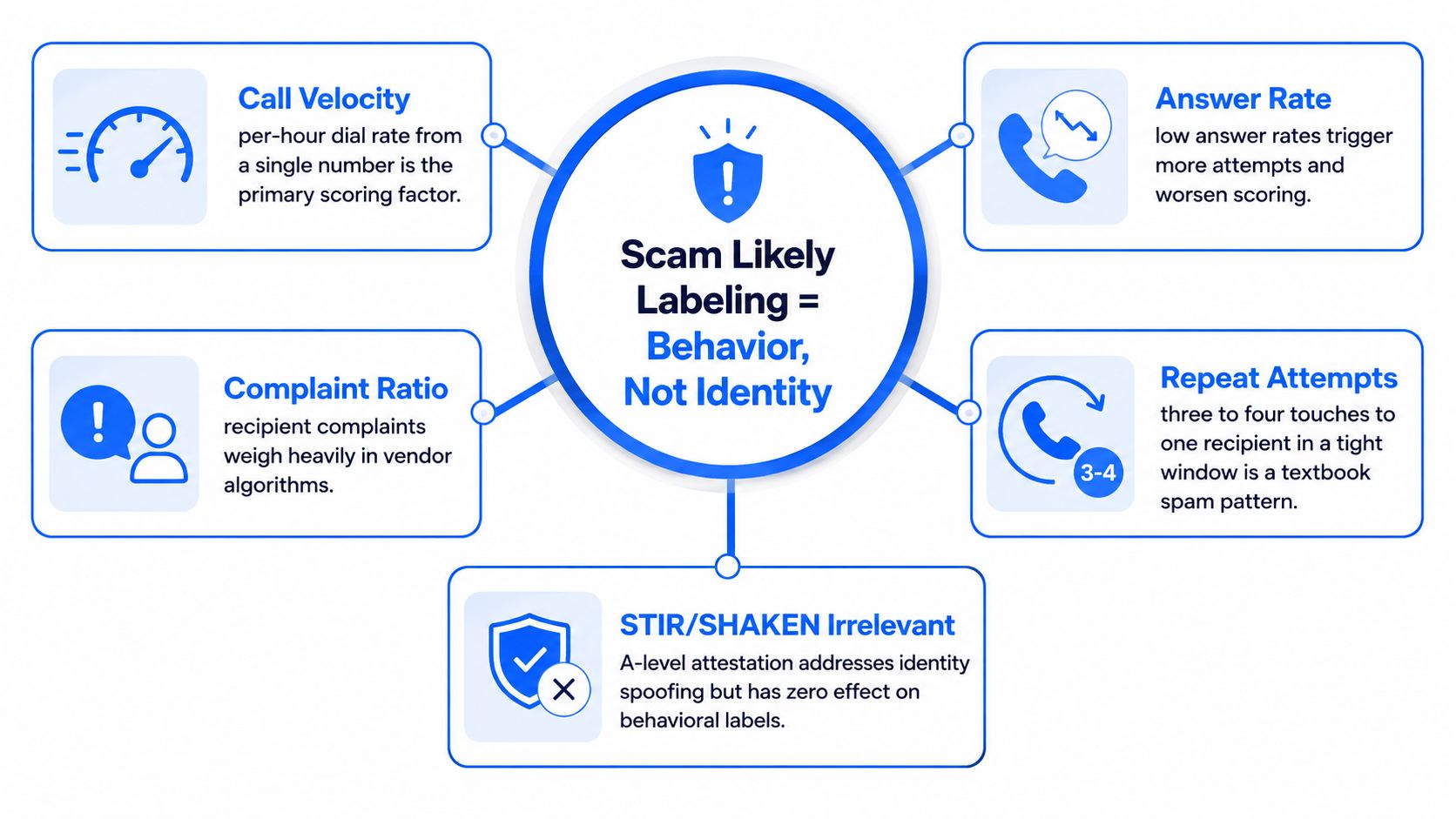
A Scam Likely label usually reflects calling behavior and reputation, not a mistaken judgment about your company's identity. Carrier analytics examine signals such as per-hour volume from one number, short-call patterns, complaint history, answer rates, and repeated attempts, as described by ESET's analysis of the spam-call crisis.
Daily volume alone is a weak diagnostic. A single number dialing faster than a person plausibly could can resemble automated or abusive traffic. Low answer rates may intensify the pattern. Teams often respond to missed connections with more attempts, creating more unanswered calls and complaints.
Practical rule: Treat each phone number as an operational identity with its own hourly capacity, answer-rate history, and complaint record.
A sales team that relies on one or two numbers while scaling outreach can enter a reputation spiral. Answer rates decline, representatives increase attempts to recover conversations, and analytics systems see stronger evidence of high-velocity, low-engagement calling. The company's identity may be unchanged, while its traffic now resembles the behavior those systems are designed to detect.
Track each caller ID separately, rather than reviewing only campaign or account totals. Your dashboard should show:
Call Loop can support the operating process, but software does not erase a poor reputation. Set number-level limits, review engagement daily, suppress opt-outs immediately, and document consent before increasing volume. Recycled numbers also require a history check before launch because a previous user's traffic may affect the number's reputation.
The label is a reputation outcome, not a verdict on your company. Avast explains that warnings do not prove fraud, legitimate calls can be mislabeled, and some scam calls arrive without warnings. Respond with controlled pacing, clear recipient expectation, consent and compliance checks, and a direct appeal process instead of assuming a clean label proves safety.
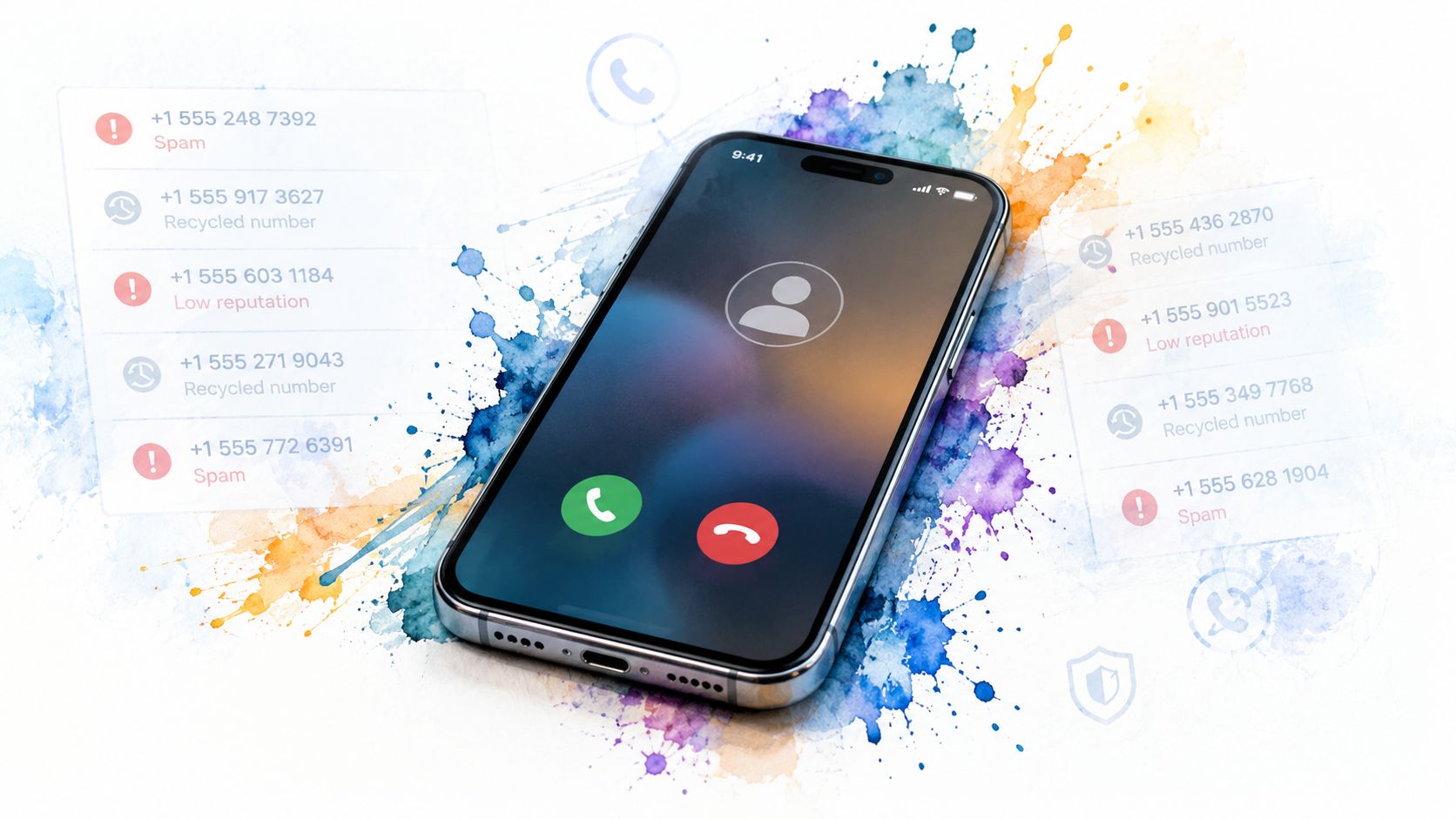
A carrier warning identifies the symptom, not necessarily the company that evaluated the call. T-Mobile's Scam Likely label is associated with First Orion, Verizon's Potential Spam with Transaction Network Services, and AT&T's Spam Risk with Hiya, according to Enzo Dialer's carrier and vendor breakdown.
That ownership determines where an appeal should go. A ticket to general carrier support may confirm that a warning exists without reaching the analytics vendor that scored the number. Test the same caller ID on lines connected to the relevant networks, capture the exact screen wording, and match each result to the appropriate vendor before submitting anything.
Build the appeal around recipient expectation and observable controls. Include the following:
Use examples that explain the call without exposing unnecessary data. A healthcare provider can describe appointment reminders while excluding protected health information. A sales team can separate requested quote follow-up from unsolicited prospecting. An event organizer can connect reminder calls to registration records. Clear evidence of why the recipient expected the call is stronger than a general statement that the business is legitimate.
Send the appeal to First Orion for T-Mobile, TNS for Verizon, or Hiya for AT&T. Keep a record of the submission, the tested lines, the label shown, and any resulting change so later traffic can be compared against the same baseline.
A warning may disappear and return. Continue checking the label after an appeal, because a new burst of unwanted behavior or complaints can recreate the same reputation outcome. The appeal addresses vendor evaluation, not the operating conditions that produced it.
A number can carry a reputation before your team places its first call. “New to us” does not mean new to carriers or analytics vendors. They may evaluate the number's earlier users, its surrounding block, routing provider, and prior calling behavior.
Phone numbers are recycled when previous users stop using them. They also belong to blocks associated with an Operating Company Number, or OCN, in the industry routing system. Other callers in that inventory may have generated short calls, complaints, dialer traffic, or robocall activity. A wholesale VoIP number can therefore trigger filtering before your campaign has established its own pattern.
Treat number selection as an operating control, not a purchasing detail. Ask the provider how it sources inventory, whether it can identify the relevant OCN, and how it replaces numbers that arrive pre-labeled. A low-cost number becomes expensive when it produces missed calls, filtering, and repeated appeals.
Use a staged check before committing campaign volume:
A “new” number is new to you, not necessarily new to the network.
Number rotation requires a clear boundary. Adding capacity so each number handles a plausible workload is sound operations. Cycling through burned numbers to outrun analytics vendors is evasion, and it leaves a weak audit trail. Use verified inventory, proportional capacity, and documented ownership instead of disposable caller IDs.
Before assigning a number, inspect its available details with this phone number checker from Call Loop. That check cannot reveal every reputation signal, but it can support vendor review before launch.
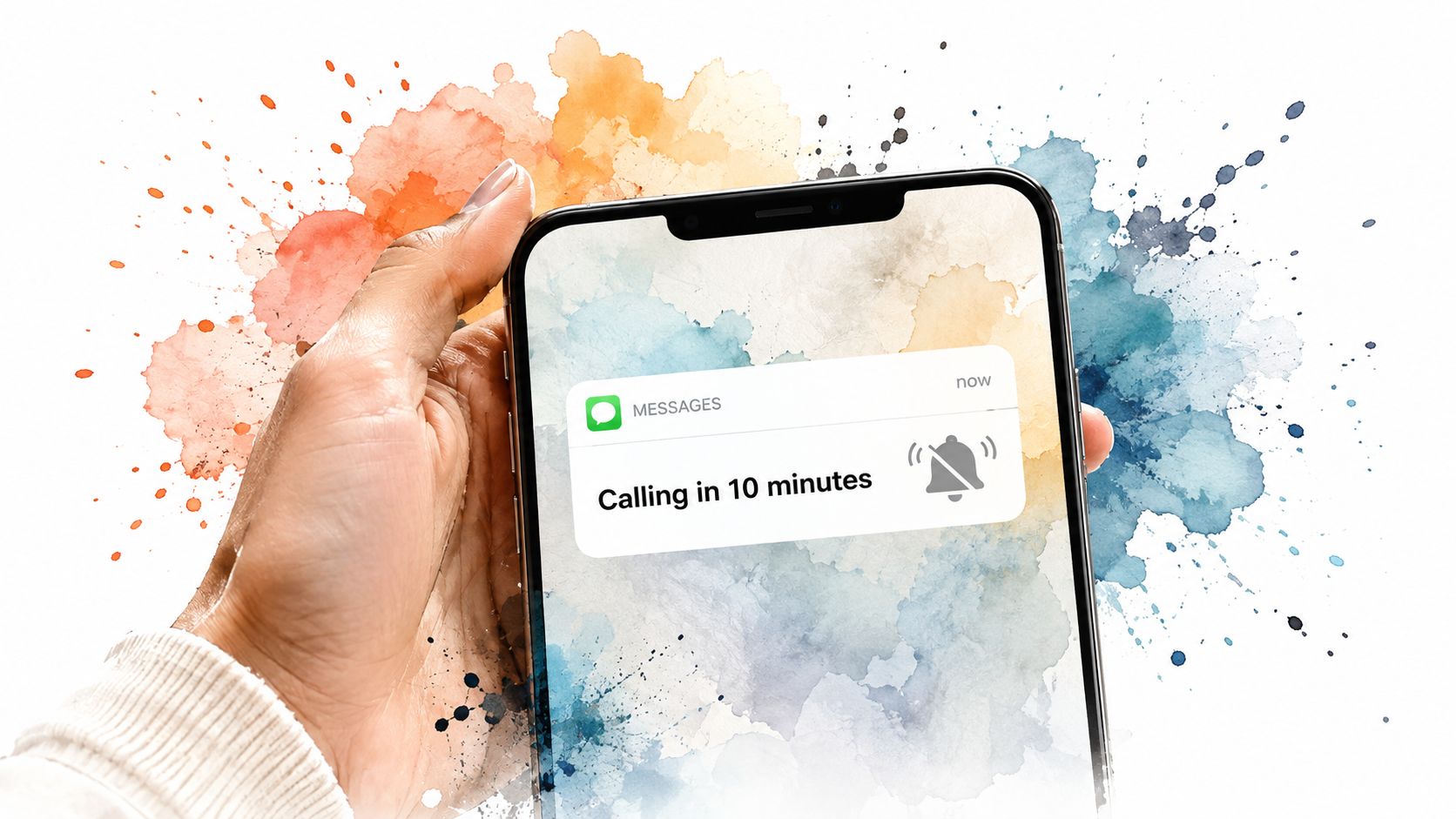
A pre-call text can make an expected conversation look expected to the recipient. It does not repair a poor calling history or turn an unauthorized campaign into a compliant one. Its value is narrower: it gives the recipient context before the phone rings and may reduce surprise-driven complaints.
For an existing relationship or clearly authorized follow-up, send a message such as “Following up on your quote request, calling from this number in ten minutes”. Identify the reason for contact, use the same number for the text and call, and schedule both close together so the context remains fresh.
Keep the wording accurate. A marketing call should not be presented as a service notice, and a text should not imply consent that was never provided.
Set the workflow around these controls:
Call Loop users can set up this sequence with an automated text messaging workflow, followed by a timed voice or ringless voicemail step. Its drip-campaign structure coordinates SMS and voice touches without requiring someone to launch each one manually. The workflow improves timing and documentation, but it does not replace consent records or suppression checks.
Use this approach when the recipient requested information, booked an appointment, registered for an event, opened a service conversation, or otherwise expects relevant contact. It can improve recognition and reduce surprise, while the business remains responsible for consent, message content, timing, and opt-out handling. A pre-call message supports good calling behavior. It does not create permission after the fact.
Register each business number before scaling outreach. The Free Caller Registry website provides one submission point for First Orion, Hiya, and Transaction Network Services, giving these analytics vendors information about the organization using the number.
Treat the registry as an ownership and context record, not a reputation repair tool. A registered number can still receive a warning when its calling pattern produces low answer rates, repeated complaints, or an implausible volume of attempts. Registration cannot make unwanted outreach appear expected.
Submit the number after assignment and before the campaign expands. Save the submitted business name, website, phone number, caller ID configuration, and campaign purpose in the same operational record. Review that record when ownership, calling purpose, or business classification changes.
The registry supports two practical workflows. It gives vendors context for a number that might otherwise look anonymous, and it gives your team documentation when an appeal requires proof of legitimate use. It does not confirm recipient consent, validate every campaign, or replace pacing and suppression controls.
Keep these items together:
Use the registry alongside, rather than in place of, caller identity controls. It differs from branded calling and STIR/SHAKEN because it records organizational ownership and registration context. A clean submission cannot repair repeated calls to people who did not request contact, and it cannot make an aggressive campaign look reasonable. Call Loop can use the record as part of a launch checklist, while consent, suppression, and calling behavior remain the team's responsibility.
STIR/SHAKEN verifies caller authorization. It does not decide whether the recipient expected the call or whether the campaign's behavior resembles abuse. Treating it as a complete answer to Scam Likely labels leads teams toward the wrong fix.
An A-level attestation indicates that the originating provider can authenticate the caller's authority to use the presented number. A strongly attested number can still receive a negative label after implausible dialing rates, repeated short calls, low answer rates, or complaints. LineShield's explanation of Scam Likely labeling draws the boundary clearly: attestation identifies the caller, while analytics assess whether the call appears wanted.
Separate the operating questions:
These controls work together, but none replaces the others. Authentication can reduce spoofing concerns and support a carrier's identity decision. It cannot make a sudden burst of unanswered calls look like normal customer communication.
The FCC's open proposal to tighten the requirements for A-level attestation could make pool-based dialing more difficult. The originating carrier would need to demonstrate that its customer is authorized to use each specific number. That direction supports a practical control: number pools should not hide poor calling behavior or provide a way to cycle through identities.
A VoIP number may be legitimate, authenticated, and poorly operated at the same time. Review what a VoIP number means for business calling, then assess number history, business identity, pacing, consent, and recipient response as separate checks. Call Loop can support the calling workflow, but attestation remains an identity control. It does not prevent every Scam Likely label because it cannot answer the wantedness question.
A premium caller identity product can improve presentation without changing the behavior that caused a Scam Likely label. The companies that provide carrier analytics also sell related services: First Orion offers ENGAGE, Hiya offers Connect, and TNS offers Enterprise Authentication. These relationships appear in FCC robocall dockets, so treat the products as commercial tools, not impartial verdicts.
The arrangement creates a real trade-off. A vendor may identify a risk signal and sell a service designed to improve the identity or label associated with that signal. That does not make branded calling invalid. It can clarify who is calling and may give a business a direct route for registration or remediation. It does mean the product should follow operational fixes, not replace them.
Use premium branding when the business identity is missing or unclear and the calling program already has reasonable controls. Delay the purchase when the campaign still shows excessive velocity, repeated attempts, weak consent records, or a damaged number block.
Before signing up, document five answers:
Local-presence dialing needs the same scrutiny. A 415 number calling people across distant states in a compressed window can resemble a spray pattern rather than a local conversation. Matching a real business identity helps only when the traffic supports that identity. Artificial geographic signals can reduce trust when recipients do not recognize the business or did not expect the call.
The operating sequence is simple: fix consent and call behavior, verify number ownership and history, then evaluate vendor products. If branded display improves, continue tracking answer rates, complaints, repeat attempts, and labels across relevant carriers. Better presentation is not permission to increase volume.

| Item | Implementation Complexity | Resource Requirements | Expected Outcomes | Ideal Use Cases | Key Advantages |
|---|---|---|---|---|---|
| Behavior-based labeling (call velocity, answer rates) | Moderate, requires operational changes and monitoring | Team discipline, analytics to track per-number rates, more phone numbers as volume grows | Reduced labels over time if pacing and distribution improved; not instantaneous | Any high-volume outbound program scaling from a small number pool | Identifies root cause; guides effective operational fixes rather than workarounds |
| Identify vendor & appeal directly (First Orion, TNS, Hiya) | Low, investigative plus formal appeals | Time to identify carrier/vendor, documentation (answer rates, compliance proofs) | Faster, targeted delisting on vendor-controlled carrier(s); typical appeals latency | When a number shows a specific carrier label | Directs remediation to decision-maker; reduces wasted carrier support cycles |
| Check number/OCN history (block reputation) | Moderate, requires vetting providers and sourcing clean blocks | Due diligence with VoIP/wholesale providers; potentially higher-cost inventory | Avoid day-one labeling; more reliable deliverability when sourcing clean blocks | Procuring new or rotated numbers at scale | Preventative measure addressing inherited reputation rather than symptoms |
| Pre-call SMS notification (5–15 minutes before call) | Low, simple integration into SMS/voice workflow | SMS costs (fraction of a cent), automation or drip-campaign setup | Significant uplift in answer rates and lower complaint ratios; immediate effect | Warm outreach, appointment reminders, follow-ups to known contacts | Cheap, measurable improvement to both answer rates and complaint metrics |
| Free Caller Registry (single submission to all three vendors) | Very low, single short registration process | ~10 minutes; basic business information | Establishes ownership and eligibility for appeals; reduces "anonymous" classification but won't stop behavioral labels | Setting up any new business number before dialing | Free baseline legitimacy; speeds human review and appeals |
| STIR/SHAKEN attestation | Moderate–High, carrier coordination and verification | Carrier process/time; possible fees; attestation documentation | Improves caller authentication and anti-spoofing; does NOT prevent behavior-based labeling | Fraud prevention, regulatory compliance, authenticated caller ID needs | Provides verified identity and fraud protection; supports trust in caller ID |
| Vendor branded products vs. labels (conflict of interest) | Low to Moderate to adopt product; awareness is low-effort | Budget for premium products ($200–$5,000+/yr), integration, ongoing fees | Can expedite label removal or branded display on vendor-covered carriers; recurring cost and may not fix behavior | Businesses needing quick label removal or branded caller ID | Rapid whitelist/branded display and improved recipient trust, but costly and not a substitute for operational fixes |
A durable fix starts before the first dial. Validate consent and Do Not Call status, then document the controls that apply to the campaign. For voice, that means addressing TCPA obligations and internal suppression procedures. For promotional email or related follow-up, document CAN-SPAM controls. For healthcare communications, separate useful patient reminders from promotional content and apply HIPAA safeguards where the communication involves protected information.
Use this order:
The SMS twin deserves the same discipline. A text from an unfamiliar number can create the same surprise as a voice call, and a message that hides its purpose or makes opting out difficult can damage the business relationship. Use text-to-join keywords, double opt-in, number validation, clear content, and suppression management for SMS. Don't assume that moving from voice to SMS, or from live calls to ringless voicemail, removes consent obligations.
Call Loop can support this workflow through double opt-in, text-to-join keywords, number validation, Do Not Call management, scheduling, click tracking, drip campaigns, analytics, and HIPAA-compliant communications. Its voice tools include caller ID controls, live and machine answer detection, press-1 transfers, recorded or text-to-speech audio, and suppression features. Teams can coordinate SMS, voice, and ringless voicemail with timed sequences, calendar triggers, appointment reminders, and campaign reporting.
Ringless voicemail changes the recipient experience because the message reaches the voicemail inbox without interrupting the recipient with a conventional ring. It doesn't erase originating-number scoring. Short setup patterns, low answer activity, recipient complaints, consent, scheduling, message content, and audit evidence still matter, so ringless voicemail should follow the same governance as every other outbound channel.
A scam likely label is easier to prevent when the campaign looks expected from end to end. The number is owned, the identity is consistent, the recipient has a reason to expect contact, the pace resembles plausible human operations, and the organization can prove what happened after every message or call.
Call Loop gives you SMS, voice broadcasting, and ringless voicemail workflows with opt-in, validation, scheduling, Do Not Call controls, analytics, and coordinated drip campaigns. Visit Call Loop to build outbound campaigns that improve recipient expectation while keeping consent, pacing, caller identity, and audit records in the same operating workflow.
Chris Brisson
Chris is the co-founder and CEO at Call Loop. He is focused on marketing automation, growth hacker strategies, and creating duplicatable systems for growing a remote and bootstrapped company. Chat with him on X at @chrisbrisson


Trusted by over 45,000 people, organizations, and businesses like


