
See a Demo
You're just one step away from seeing Call Loop in action.
Enter your information below to watch a demo right now.

You're just one step away from seeing Call Loop in action.
Enter your information below to watch a demo right now.

Your phone lights up during a busy afternoon. The number looks unfamiliar, and the screen says “Scam Likely.” You may ignore it, let it go to voicemail, or block it immediately. If you're the person placing the call, though, the same label can mean a customer never sees your offer, appointment reminder, delivery update, or support call in the first place.
The scam likely meaning is simple but easy to misread: the phrase is usually a carrier-generated warning, not the caller's verified name and not a legal finding that the caller is committing fraud. A mobile network has assessed the call as probably unwanted or deceptive based on available signals. Those signals can relate to calling behavior, consumer reports, reputation records, or identity information.
For consumers, the label is a useful warning. For legitimate organizations, it's a reputation problem that can affect voice calls, SMS, voice broadcasts, and ringless voicemail. Understanding that distinction helps you respond safely without assuming every flagged caller is automatically a criminal, and it gives outbound teams practical ways to reduce misclassification.
You're waiting for a contractor, clinic, school, or delivery company to call. The phone rings, but instead of a person or business name, the display shows “Scam Likely.” That wording comes from the carrier or a call-screening service. It isn't the caller's real identity.
The carrier has recognized patterns associated with unwanted or fraudulent traffic and has added a warning before you answer. The FCC's guidance on spoofing and caller ID labels explains that displays may show labels such as “spam” or “scam likely” when a network or app identifies a call as likely fraudulent based on patterns, complaints, or related signals.
The label expresses probability, not certainty. A real business can receive it if its number has a poor reputation, its calling pattern resembles robocall traffic, or someone has reported the number. The warning may lead the recipient to ignore the call, send it to voicemail, silence it, or block it.
Different labels can indicate different levels or categories of concern, although carriers and apps don't use them as one universal scale.
The underlying word “scam” has a general language meaning connected with a trick, ruse, swindle, or fraud. Lexicographic history traces the English slang use to 1963, while telecom providers use the phrase as a technical warning label, as described by the etymology of “scam”. Those are two different layers of meaning.
The practical interpretation: “Scam Likely” means your carrier wants you to pause before answering. It doesn't prove who the caller is or what the caller intends.
For a business, the operational result is still serious. A recipient doesn't need to investigate the label before deciding not to answer. The number's reputation has already influenced the decision, which is why the issue is better understood as reputation and behavior management, not a single identity verdict.
Carriers don't rely on one magic switch. They combine several signals into a risk assessment, much like a bank reviews multiple signs before deciding that a transaction deserves extra scrutiny.
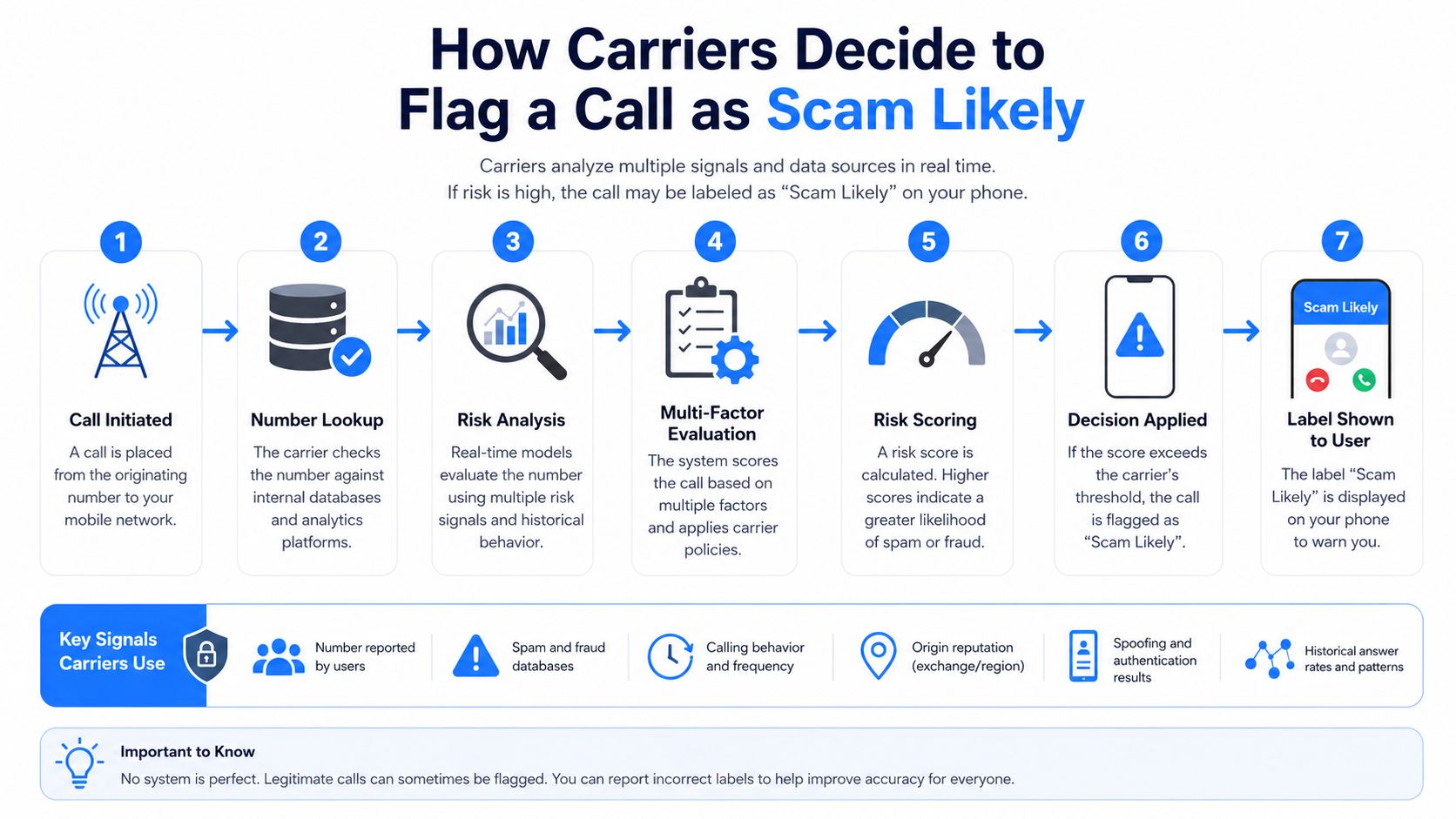
A carrier can observe how a number behaves across calls. High call volume, repeated short conversations, large bursts of simultaneous dialing, frequent unanswered attempts, and complaint activity may resemble unwanted outreach. Calls from non-geographic or VoIP origins can receive additional scrutiny when their other signals look unusual.
The point isn't that any single behavior proves fraud. A call center might create many short calls while reaching customers, and a service business might make a sudden burst of appointment calls. The concern arises when several patterns appear together, especially if recipients report the traffic.
STIR/SHAKEN helps the terminating network assess whether the originating provider authenticated the caller ID information. Attestation levels commonly described as A, B, and C indicate how confidently the originating provider can verify the calling party and its relationship with the number.
A high attestation level can support trust, but it doesn't guarantee a clean caller-ID display. Authentication answers an identity question, while scam detection asks a broader behavior and reputation question. For a plain-language explanation of what STIR SHAKEN means for calls, it helps to keep those separate systems in mind.
Carriers may use reputation databases, third-party analytics, consumer complaints, and reports from call-screening applications. Teams that want to verify contact records before launching outreach can also use number validation tools to identify invalid or risky numbers, although validation alone doesn't control a carrier's labeling decision.
The final result is a weighted classification, not a binary test. A number may appear clean during a normal calling period and become flagged after a sudden change in volume, duration, complaint activity, or routing. The carrier is evaluating the number's current risk signals, not issuing a permanent judgment about the organization that owns it.
A recipient on one network may see “Scam Likely,” while another sees “Spam Risk,” “Potential Fraud,” “Nuisance,” or just “Spam.” That variation doesn't necessarily mean the calls reached different origins. It usually reflects different carrier databases, analytics providers, app settings, and update schedules.
Carrier-native tools create some of the most visible differences. AT&T may use “Scam Likely,” T-Mobile can display “Scam Likely” or “Nuisance,” Verizon commonly uses “Spam,” and Comcast or Xfinity services may apply their own wording. Apple's caller-ID and screening features can present a different experience from Google Pixel or Samsung dialers, while third-party services such as Truecaller, Hiya, and RoboKiller add their own databases and user reports.
| Carrier or App | Typical Label | Data Source |
|---|---|---|
| AT&T | Scam Likely | Carrier analytics and reputation signals |
| T-Mobile | Scam Likely or Nuisance | Carrier analytics, reports, and screening tools |
| Verizon | Spam | Carrier filtering and reputation data |
| Comcast or Xfinity | Spam or related warning | Provider-level call analytics |
| Apple iPhone features | Varies by screening setting | Carrier data and device screening |
| Google Pixel dialer | Spam or suspected warning | Google and carrier call-screening data |
| Samsung dialer | Spam or suspected warning | Device, carrier, and partner analytics |
| Truecaller | Community or fraud warning | User reports and reputation database |
| Hiya | Spam or fraud warning | Analytics and reported call intelligence |
| RoboKiller | Blocking or risk warning | App-level detection and user feedback |
Each service may refresh its data at a different pace. A carrier can update its risk assessment while a third-party application retains an older classification, or an app can add a warning that the carrier itself didn't display.
User settings add another layer. A recipient may silence unknown callers, send suspected spam directly to voicemail, or allow a screening app to override the carrier's presentation. Businesses therefore face a fragmented labeling environment, not one universal caller-ID authority.
That fragmentation explains why a legitimate organization should test deliverability across the networks and devices its customers use. A clean display on one phone doesn't guarantee the same experience elsewhere.
The label changes behavior before the conversation starts. A recipient who normally answers an unfamiliar business number may hesitate when the screen warns of probable fraud. Some people reject the call, let it ring out, or block the number without checking the voicemail.
That decision affects more than a voice campaign. If the same number is used for SMS, voice broadcasts, and ringless voicemail, a damaged reputation can make every message feel less trustworthy. The recipient may ignore a text from the number, distrust a link, or treat a voicemail notification as another unwanted contact.
Independent industry reporting cited in congressional testimony described answer-rate declines of 40% to 60% when numbers were labeled “Spam Likely” or “Scam Risk,” with some contexts reporting that up to 95% of recipients didn't answer. Those figures appear in First Orion's testimony submitted to Congress, and they show why a label can become an operational problem for legitimate callers.
| Channel | Typical Impact When Labeled | Metric Affected Most |
|---|---|---|
| Voice calls | Recipients ignore, reject, or block the call | Answer rate |
| Voice broadcasts | Fewer people listen or complete the requested action | Completion rate |
| SMS | Recipients distrust the sender or avoid the message link | Click and response activity |
| Ringless voicemail | Messages may be filtered, skipped, or treated as unwanted | Message reach and callback activity |
Lower pickup rates can force a team to make more attempts to reach the same audience. That can increase agent time spent on repeated dialing, while the people who do answer may begin the conversation with less trust.
A ringless voicemail campaign has its own delivery risk. A message can reach an inbox without a live call, but the recipient may still see a warning, ignore the notification, or use a carrier or app filter that treats the drop as unwanted. The technology changes how the message arrives, not how the recipient evaluates the sending number.
A missed call is only the first loss. The larger cost is the trust discount applied to every later message from the same number.
For that reason, teams should treat caller reputation as a cross-channel asset. Voice, SMS, and ringless voicemail may use different delivery mechanisms, but recipients still judge the sender through recognizable numbers and familiar warning systems.
A “Scam Likely” warning deserves caution, but it doesn't require panic. Don't provide passwords, payment details, security codes, or sensitive personal information to an unexpected caller. If the call might be legitimate, find the organization's number independently through a statement, official website, or existing account, then call back using that verified route.
Start with the protection supplied by your carrier. AT&T Call Protect, Verizon Call Filter, and T-Mobile Scam Shield can identify, warn about, or block suspicious calls according to each service's settings. Third-party tools such as Hiya and Truecaller can add another view, especially when you want caller reputation information that isn't limited to one mobile network.
Your phone also includes controls that change what reaches you:
If your own number has been mislabeled, document the date, carrier, wording, and circumstances. A phone number checker can help you review number details before you contact the carrier, but only the relevant carrier or reputation provider can change its internal classification.
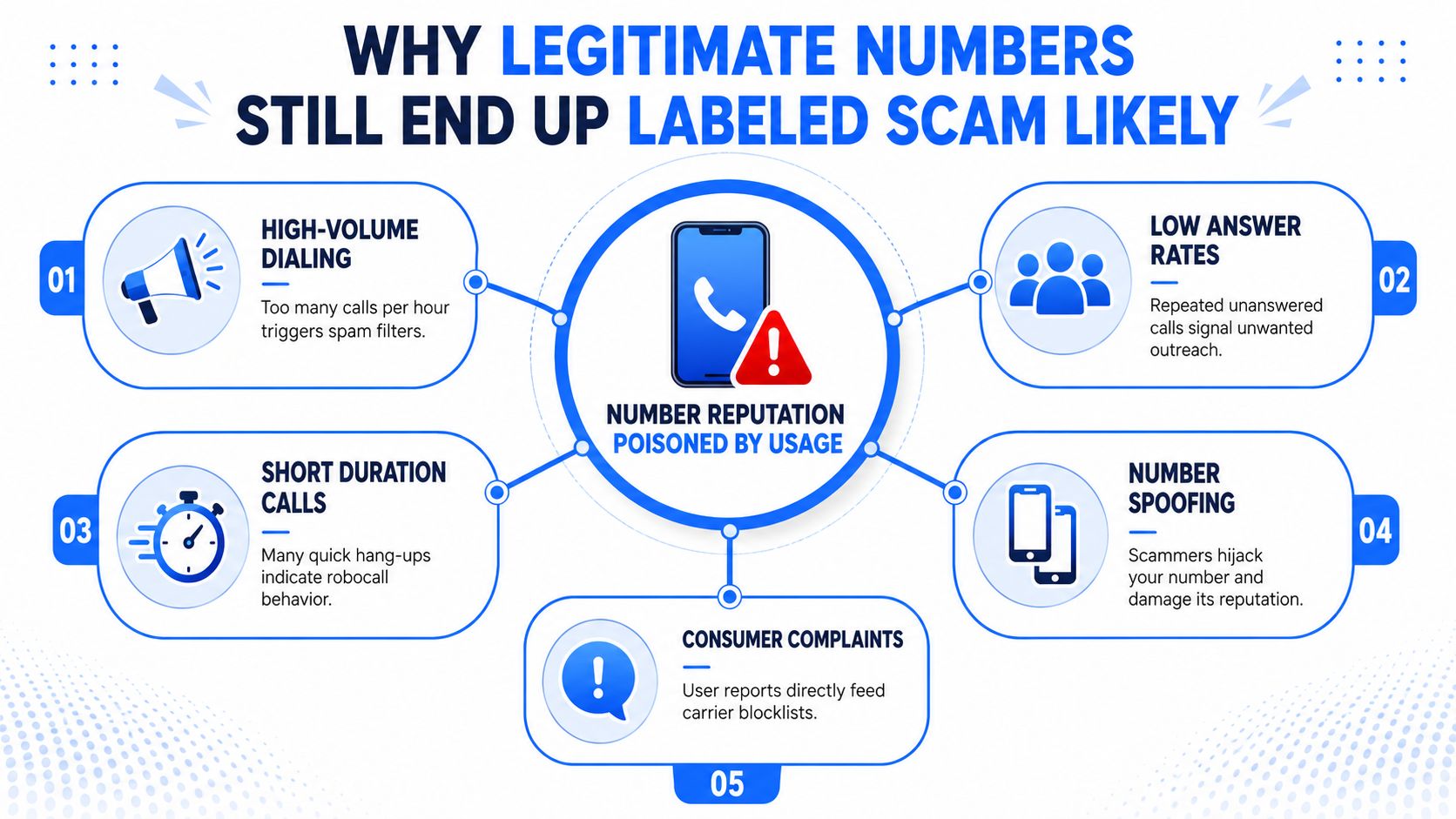
A legitimate company can earn a poor call reputation without intending to deceive anyone. Carriers score how a number is used, not the legal identity of the organization behind it. That distinction explains why a real clinic, retailer, lender, school, or service provider may receive the same warning as an abusive caller.
The most common triggers are operational:
Carriers don't need to prove that your business is fraudulent before they warn recipients. They only need enough risk signals to protect the person receiving the call.
STIR/SHAKEN can help verify that a provider signed caller-ID information, but it doesn't certify the purpose of the call or the quality of the outreach. A fully authenticated number can still generate complaints, short calls, or high-frequency patterns that trigger other analytics.
The same principle applies when a third party reports a number. A complaint may reflect a mistaken call, a customer who forgot giving consent, or a campaign that reached people at an unsuitable time. Regardless of the cause, repeated reports can influence the number's reputation.
The strongest response is behavioral correction. Reduce unnecessary attempts, improve list quality, make the caller identity clear, and give recipients a reason to answer. Don't respond to a warning by increasing volume. That can reinforce the very pattern that caused the label.
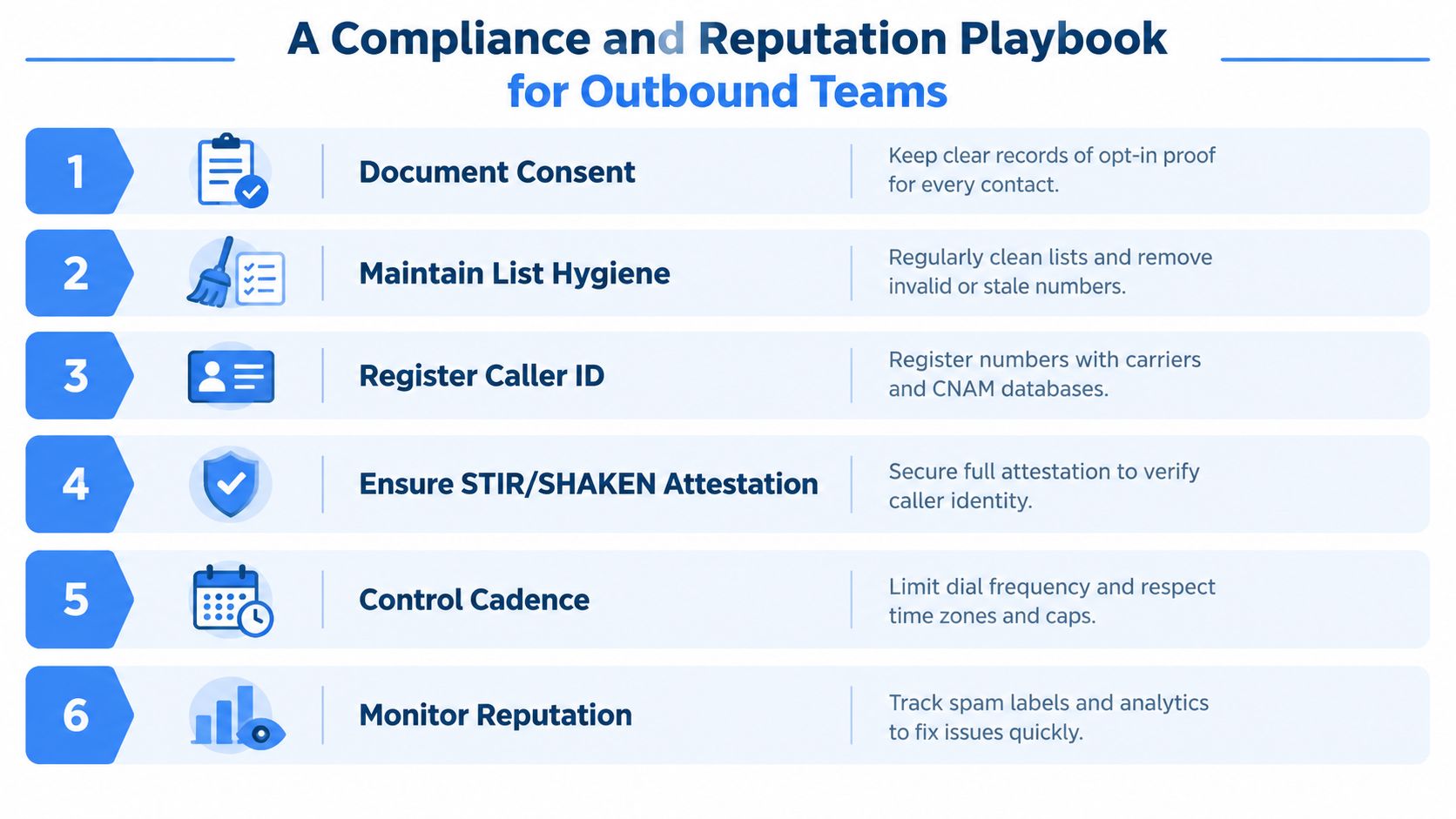
Treat a calling number like a credit profile. A history of relevant, expected interactions supports trust, while complaints and erratic behavior make future delivery harder. The following playbook gives a small team a practical operating model without assuming that authentication alone will solve the problem.
Keep records showing why each person can be contacted and what channel the permission covers. Clean old, invalid, duplicated, and stale records before a campaign begins. Consent for SMS doesn't automatically answer every question about voice broadcasts or ringless voicemail, so document the intended channel and respect opt-outs.
Use DNC management resources to support suppression workflows and keep internal do-not-contact requests out of future campaigns. Good list hygiene reduces wasted attempts and helps prevent repeated calls to people who no longer want contact.
Register business caller ID information where appropriate, keep the displayed identity consistent, and avoid confusing customers by switching among unrelated numbers. Separate transactional communication from sales outreach when your infrastructure allows it, so an appointment reminder doesn't share the same reputation profile as a high-frequency prospecting campaign.
A reputable number reputation management process should also include monitoring, documentation, and remediation. This number reputation management guide provides additional background for teams building that process.
Set practical limits on how often a person can be contacted. Respect local calling windows, avoid repeated attempts after a clear refusal, and review whether short calls result from poor list quality, agent behavior, or an automated workflow.
Ask your voice provider about STIR/SHAKEN attestation and caller-ID registration. Authentication supports identity verification, but the team still needs to manage volume, duration, complaint signals, and campaign design.
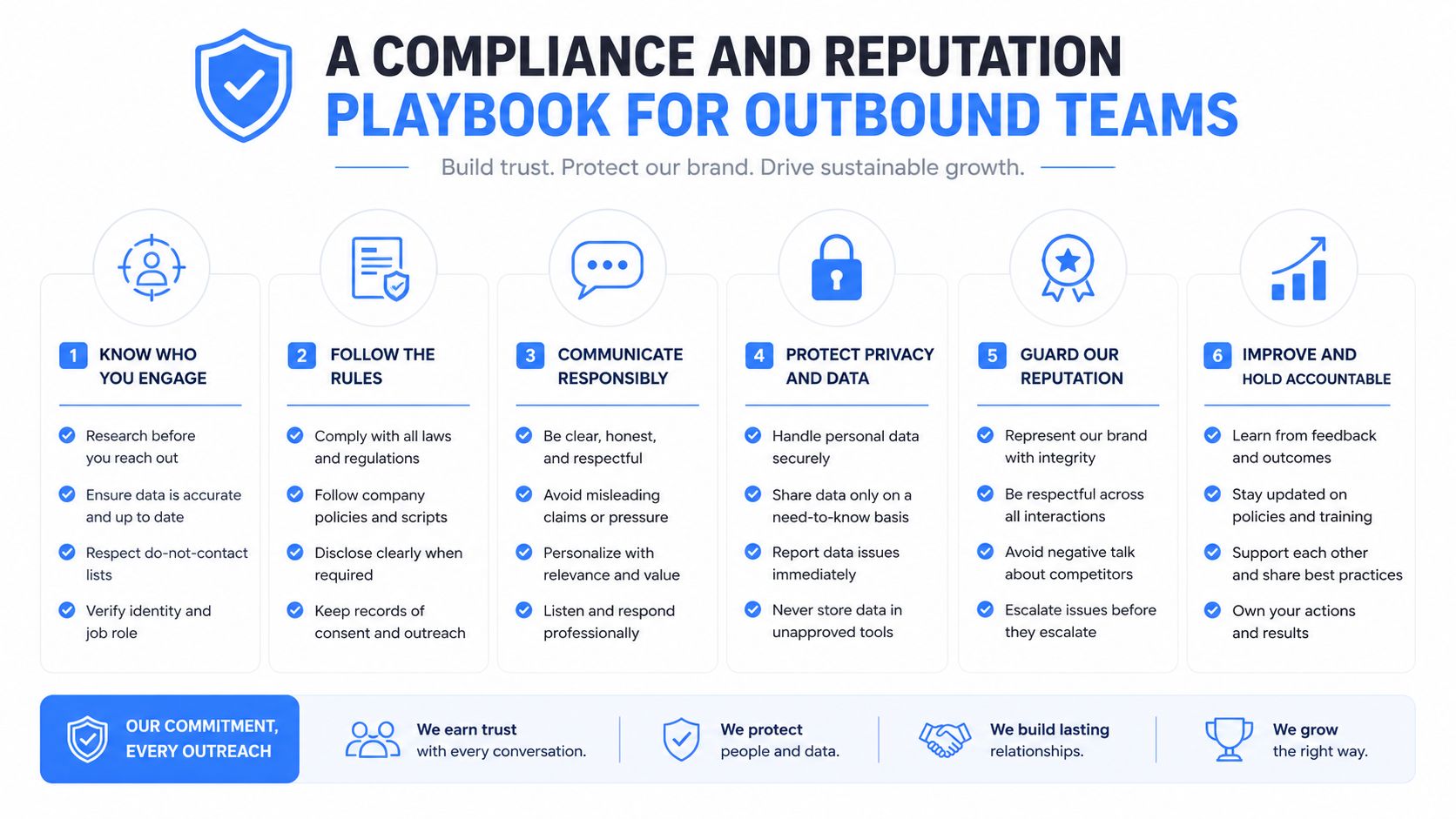
Review answer rates, complaint activity, call duration patterns, and label changes in your reporting. If one number becomes flagged, reduce its activity while you investigate rather than moving the same campaign immediately to another unprepared number.
Check the script, confirm the audience, and remove contacts who shouldn't receive further outreach. Submit delisting or correction requests through the relevant carrier portal or reputation vendor when those channels are available, and preserve evidence that your organization uses consent-based, identifiable communication.
Call Loop is one example of a platform that combines SMS, voice broadcasting, and ringless voicemail workflows with tools such as number validation, DNC management, opt-in controls, and reporting. Whatever platform you choose, assign someone responsibility for reviewing reputation signals instead of treating deliverability as an automatic byproduct of sending.
Myth one, the government issued the label. “Scam Likely” is generally a carrier or call-blocking service classification. The FCC discusses caller-ID warnings such as “spam” and “scam likely,” but the label itself isn't a government declaration that a particular caller has broken the law.
Myth two, paying for a number guarantees protection. A paid number can still develop a poor reputation if the organization uses it for aggressive, confusing, or unwanted outreach. Identity registration and authentication help, but carriers also evaluate behavior and reports.
Myth three, answering one flagged call infects your phone. Answering doesn't automatically compromise the device. The risk comes from what you disclose, click, install, or authorize during the interaction. Hang up if the caller pressures you, then verify the organization independently.
A warning label should prompt verification and better operating discipline, not an assumption that every caller is guilty or every business is helpless.
If your outbound campaigns need coordinated SMS, voice broadcasting, or ringless voicemail with consent records, number validation, DNC controls, and delivery reporting, explore how Call Loop can fit those workflows. Review your current numbers and campaign cadence first, then use the platform's compliance and reputation features to make your next outreach more recognizable and deliverable.
Chris Brisson
Chris is the co-founder and CEO at Call Loop. He is focused on marketing automation, growth hacker strategies, and creating duplicatable systems for growing a remote and bootstrapped company. Chat with him on X at @chrisbrisson


Trusted by over 45,000 people, organizations, and businesses like


