
See a Demo
You're just one step away from seeing Call Loop in action.
Enter your information below to watch a demo right now.

You're just one step away from seeing Call Loop in action.
Enter your information below to watch a demo right now.

Ever feel like you need a personal assistant just to keep up with sending texts? Appointment reminders, sales follow-ups, special offers—it's a constant juggle. You're stuck stopping what you’re doing, typing out a message, and hitting send at just the right moment.
A scheduled text message app is that assistant. It’s a game-changer that lets you write messages now and have them automatically sent later—tomorrow, next week, or even months from now.
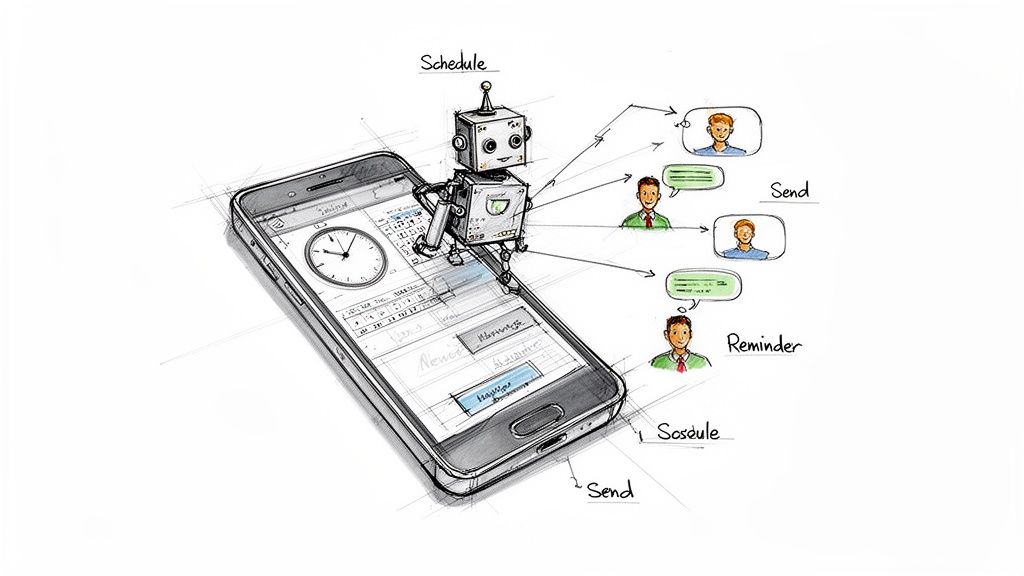
Think of it this way: instead of reacting to your calendar all day, you get to be proactive. You set up your communications in batches, freeing you up to focus on other parts of your business. This simple shift from manual, real-time texting to automated, scheduled messaging is how you get your time back.
Sure, scheduling is about timing at its core, but the real magic is in the impact. It’s about making sure your message lands exactly when it will be most effective.
An appointment reminder sent 24 hours in advance? Super helpful. One sent a week before? Easily forgotten. Five minutes after the appointment? Completely useless. Scheduling lets you build a reliable communication system that works for you 24/7.
It helps you:
The data doesn't lie. With text open rates hovering around 98%, you can't deny the power of SMS. Scheduled texts are a powerhouse for businesses looking to tap into that engagement.
But why stop at just text? Modern platforms don't. Many now integrate other powerful tools like ringless voicemail, which lets you drop a pre-recorded audio message straight into someone's voicemail box without making their phone ring.
A ringless voicemail drop is a non-intrusive way to deliver a personal touch at scale. Imagine a sales lead getting a friendly, no-pressure voice message from you—it feels personal and stands out from the noise of typical marketing.
When you combine scheduled texts with a ringless voicemail drop, you create a much more complete outreach strategy. You could send a text reminder for an upcoming webinar, then follow up with a ringless voicemail a day later to add that personal touch.
This multi-channel approach helps you connect with your audience on their terms, which is always a win. As you can see, the ability to send a scheduled text is really just the beginning.
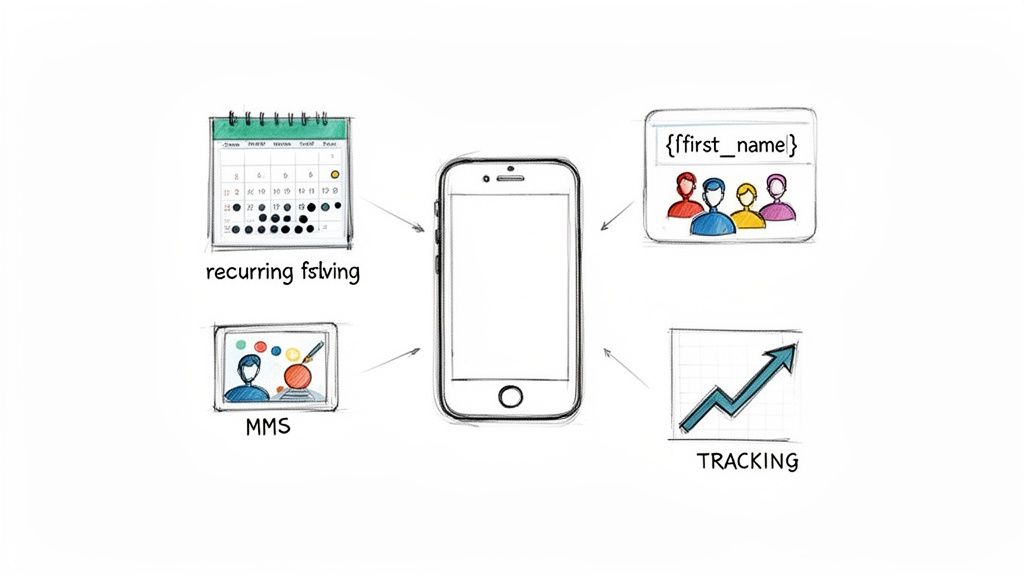
A good scheduled text message app does more than just send texts later. Think of it less like a calendar and more like a smart assistant that helps you grow your business.
Sure, basic scheduling is table stakes. But the real magic happens when you use the advanced features. They all work together to turn a simple message into a perfectly timed, personal, and effective conversation.
This is how you move from just sending texts to delivering a relevant experience that gets people to act—confirming an appointment, making a purchase, or just feeling good about your brand.
The heart of any platform is scheduling messages with precision. This is way more than just picking a date and time. Real power comes from having different scheduling options for any situation you can think of.
If you’ve ever learned how to schedule emails, the concept is pretty similar. You set it up once and trust the tech to handle the delivery.
Sending the same generic blast to your whole list is a fast track to getting ignored. The best apps let you personalize your messages, making each person feel like you’re talking just to them.
Merge tags (sometimes called custom fields) are your best friend here. They automatically pull contact info—like a first name, appointment time, or last purchase—and pop it right into your message. "Hey, Jessica" will always beat "Hello, valued customer."
Personalization at scale means sending a hundred texts that each feel like a one-on-one conversation. This simple adjustment can dramatically increase response rates and customer loyalty.
Segmentation takes it a step further. This feature lets you slice your contact list into smaller groups based on things they have in common, like their location, what they’ve bought, or how often they engage.
For example, a gym could create a segment of members who haven't scanned their key fob in 30 days and send them a "We miss you!" offer. That's a lot smarter than sending it to the guy who was there yesterday.
Sometimes, 160 characters just doesn't cut it. That's where MMS (Multimedia Messaging Service) comes in. It lets you send pictures, GIFs, and short videos. A real estate agent can schedule a text with a jaw-dropping photo of a new listing. A boutique can show off its new arrivals with an eye-catching image.
Even better, you can layer in ringless voicemail for a more human touch. You might schedule a text reminder for an event and then, the next day, drop a non-intrusive voicemail to follow up. It's a powerful one-two punch that makes your message impossible to miss. If you want to see how this all clicks together, you can check out all the features of our SMS scheduler.
Let's move past the theory. How does a scheduled text message app actually perform out in the wild? From service businesses to online stores, automation is solving real-world problems and bringing in serious revenue.
These aren't just hypotheticals. Think of them as blueprints you can use for your own success.
Take a busy hair salon, for example. Every missed appointment is an empty chair and lost income. By setting up automated reminders 24 hours before each booking, the salon can kill its no-show rate. A simple, friendly text like, "Hi [FirstName], just a reminder about your appointment with Sarah tomorrow at 2 PM. Please reply YES to confirm," does the trick.
This one small automation keeps the calendar packed and the revenue flowing. All without a single staff member having to pick up the phone. It's a tiny change that makes a huge difference to the bottom line.
If you run a service-based business, your calendar is your lifeline. Whether you're a healthcare provider, a personal trainer, or a home repair pro, an empty appointment slot is money down the drain. Scheduled reminders are your best defense.
The impact is massive. In healthcare, SMS reminders have been shown to boost appointment attendance significantly. Studies have found that patients who get text reminders are much more likely to show up. With a majority of consumers saying they value SMS reminders, it's clear this is what people want.
Example: A dental office schedules a quick, three-part text sequence for every patient:
- An instant confirmation text right when the appointment is made.
- A detailed reminder sent 48 hours before the appointment.
- A final, quick "See you soon!" message on the morning of the visit.
This simple, hands-off sequence keeps patients in the loop and dramatically reduces no-shows. The clinic gets to serve more people and run a much smoother operation.
In sales, timing is everything. A lead is never hotter than in the moments after they first reach out. But trying to manually follow up with every single person just doesn't scale. A scheduled text app makes sure no lead ever slips through the cracks.
Imagine someone fills out a contact form on your site. An automated text can go out instantly: "Thanks for your interest, [FirstName]! A member of our team will call you shortly. In the meantime, here’s a link to our case studies." That immediate touchpoint keeps them engaged while your team gets ready to call.
From there, you can schedule a series of follow-up texts over the next few days. Share helpful info, answer common questions, or even offer a special deal. This persistent, automated nurturing keeps your brand top-of-mind and seriously boosts your chances of closing the deal.
For e-commerce brands, scheduled texts are a direct line to your cash register. You can create a sense of urgency and excitement that's tough to replicate with email.
Picture a flash sale kicking off at noon on a Friday. You can schedule a text to hit your VIP list at exactly 12:00 PM: "FLASH SALE NOW ON! Get 30% off everything for the next 3 hours only. Shop now: [link]". The immediacy of SMS drives instant traffic and sales.
It’s not just about promotions, either. Businesses are seeing huge wins by using scheduled texts for things like abandoned carts. Sending a text 60 minutes after someone leaves items in their cart is one of the most effective strategies to reduce cart abandonment and can claw back revenue that would have otherwise been lost for good.
For truly powerful outreach, don't limit yourself to just one channel. A killer strategy we've seen work incredibly well is combining a scheduled text with a ringless voicemail drop. This one-two punch creates a follow-up sequence that feels personal and is hard to ignore.
Here’s how it works: A marketing agency could send a ringless voicemail to a new lead introducing their services. If the lead hasn't responded 24 hours later, an automated text follows up: "Hi [FirstName], hope you got my voicemail. I'd love to chat for 15 minutes about your marketing goals. When works for you?"
This multi-touch approach makes your outreach far more effective and feel much more human.
Picking the right scheduled text message app can feel overwhelming. With so many options out there, how do you cut through the noise? The truth is, not all platforms are built the same, and the best one for you comes down to what your business actually needs.
Think of this as more than just buying software. You're investing in a core part of how you talk to your customers. So let's walk through the right questions to ask to find a tool that won't just send texts, but will help you grow.
Before you get distracted by flashy features, your number one priority has to be compliance. The Telephone Consumer Protection Act (TCPA) has very strict rules for business texting, and getting it wrong is expensive. A solid platform will have compliance baked right in.
This is non-negotiable. Look for:
Without these basics, even the best-written message can get you into hot water. A platform that takes compliance seriously is one that's built to protect your business.
A texting app that doesn't talk to your other tools is just creating more work and data headaches for you. For this to be truly powerful, it needs to connect smoothly with the software you already use, especially your Customer Relationship Management (CRM) system.
Think of integrations as bridges that stop your data from being trapped on separate islands. When your texting app and CRM are connected, your contacts stay synced, and you can trigger texts based on actions a customer takes in another system.
Look for a platform with strong integration options, particularly through a service like Zapier. A good Zapier connection is like a master key, letting you link your app to thousands of other tools. This is how you automate a workflow where a new lead in your CRM gets a welcome text a minute later, all without you writing a line of code.
Your customers are everywhere, and they don't just communicate through standard texts. A platform that's truly built for growth will give you options to layer different types of messages for a much more effective campaign.
Your checklist should include:
The real magic happens when you can combine these into one automated sequence. Imagine sending a ringless voicemail, then automatically following up with a scheduled text message a day later. This layered approach is what gets responses.
Finally, if you can't measure your results, you can't improve them. The app you choose must give you clear, actionable analytics—not just vanity metrics. You need data that tells you what’s working.
With texting, reliable tracking is critical because the engagement is off the charts. The stats are stunning: SMS messages often have open rates as high as 98%, a world away from email's typical 20% open rate. This makes it crucial to know what's happening with every message. You can get even more details on the compelling statistics behind text messaging.
Look for essentials like link tracking to see who clicked your offers, delivery reports to make sure your messages are getting through, and response rates to see how engaged your audience is.
Having a great scheduled text message app is one thing, but how you use it is what really counts. Success boils down to two things: a smart messaging strategy and airtight compliance. Nail this balance, and your texts will not only get opened but will keep your business on the right side of the law.
Let's start with the most important part: compliance. Business texting is heavily regulated, and the fines for getting it wrong are no joke. Before you even think about hitting "send," you need to know the rules of the road.
This begins with getting express written consent. It's non-negotiable. You must have clear, documented permission from every single person before you text them. This is your most critical line of defense.
Getting your compliance strategy right isn't rocket science, but it demands attention to detail. It breaks down into three simple actions: get permission, verify your contacts, and respect their choices. If you skip any of these, you're putting your deliverability—and your business—on the line.
This simple flow shows you the must-do steps for every text you send.
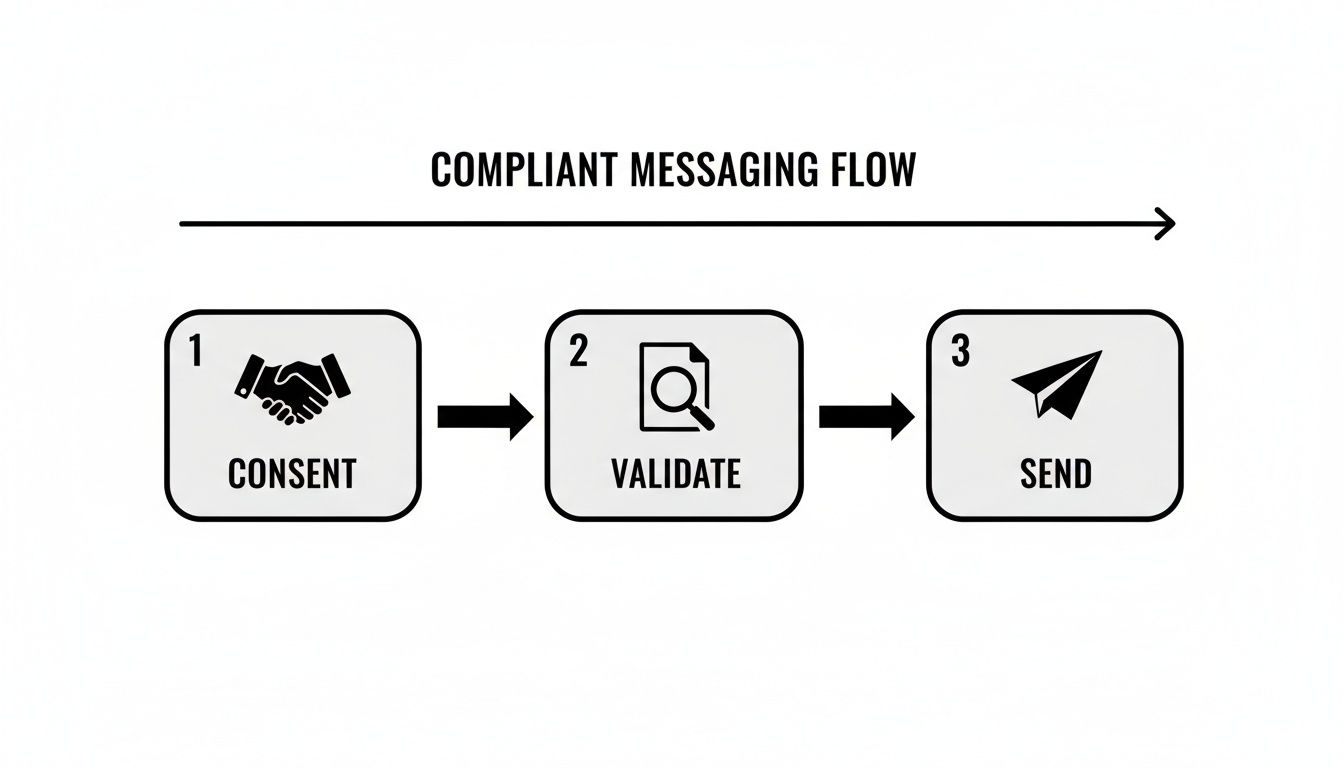
Think of it as the required path from the initial handshake of consent to the final click of "send." Each stage is vital for building trust and making sure your messages actually arrive.
Here’s what that looks like in practice:
Once your compliance is squared away, you can get to the fun part: writing messages that people want to read. The goal is to make every scheduled text feel personal and valuable, not like another piece of spam. It all comes down to timing, tone, and a clear call-to-action (CTA).
Who are you texting? Sending a promo at 3 AM is a fantastic way to get blocked. For B2B contacts, stick to business hours. For consumers, evenings or weekends often work much better.
The best scheduled message doesn’t just show up at the right time—it delivers the right content. Keep it short, use their first name, and always tell them what to do next.
A great message has three simple parts:
It’s simple, direct, and it just works.
So, how do you know if any of this is actually working? You measure it. Any good texting platform will give you analytics that show you what’s happening with your campaigns. Don't just set it and forget it—use the data to get better.
A/B testing is your best friend here. Send two different versions of a message to small chunks of your audience and see which one wins. Test everything: send times, message copy, even your CTA.
For example, does "Click here" get more engagement than "Shop now"? Does a 10 AM text outperform one sent at 4 PM? The data will give you the answer. By tracking delivery rates, click-throughs, and responses, you can turn your texting program into a well-oiled machine that gets results every time.
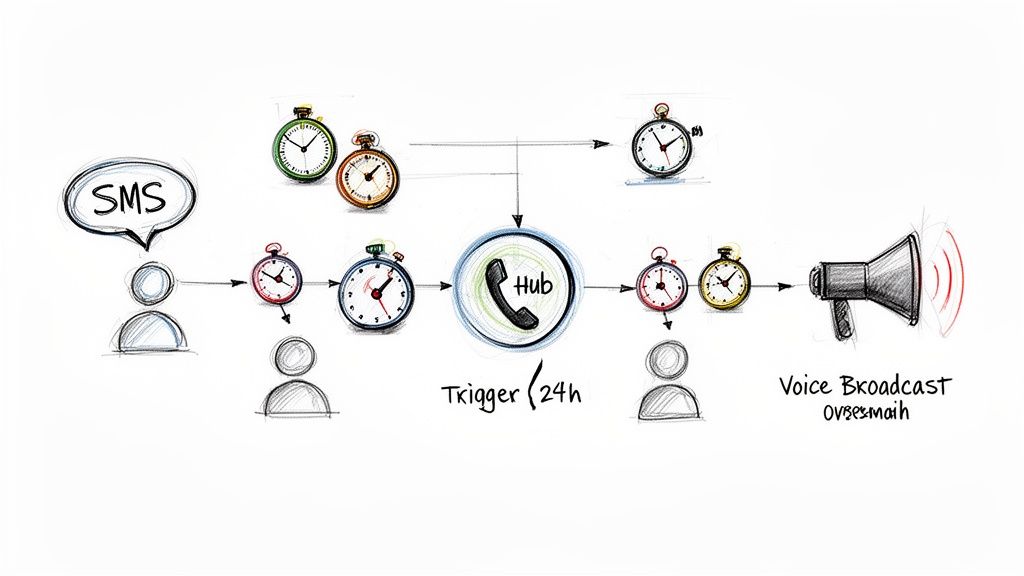
It's time to think bigger than just one scheduled text. Sending a single message is a good start, but the real power comes when you build a complete, automated system that works across multiple channels. This is where you go from simply scheduling messages to creating smart communication flows that do the heavy lifting for you.
Think about it. A lead fills out a form on your website. Instead of just sending one follow-up text and hoping for the best, you can set up a whole sequence. This isn't just about texts; you can mix in ringless voicemail and even voice broadcasts to create a follow-up plan that runs entirely on its own.
The main idea here is to create a follow-up process that never sleeps. It's working for you 24/7. With the right platform, you can set up these complex workflows using timers and triggers, so it's not just about sending messages—it's about reacting to what your audience does, automatically.
Here’s what a simple, but crazy effective, workflow could look like:
This kind of setup means no lead ever falls through the cracks. Every single person gets the attention they need without you having to manually keep track of every conversation.
When you layer different channels like SMS and ringless voicemail, you're creating a much more personal and human experience. This multi-touch approach seriously boosts your chances of getting a response compared to just sending a single text.
This is how you scale your outreach, big time, without having to scale your team. A single person can run a system that nurtures thousands of leads, onboards new customers, and keeps existing ones happy with incredible efficiency. Your scheduled text message app becomes the brain of the whole operation.
Take a real estate agent, for example. They could build a workflow that sends new property listings via SMS, follows up with a ringless voicemail to see if they have questions, and then uses a voice broadcast for an urgent reminder about an open house. Every step is triggered by a timer or a specific action, creating a hands-off system that consistently pushes prospects down the funnel.
These automated sequences help you nurture leads, onboard clients, and boost customer retention better than you ever could manually. You’re not just saving a ton of time; you’re building a reliable engine for growth that never calls in sick. This is how a scheduled text message app goes from being a simple tool to your most valuable team member.
When you start diving into text message scheduling, a few questions always pop up. Let's get you some clear, straightforward answers so you can master your outreach.
Ringless voicemail is a slick piece of tech that drops a pre-recorded audio message right into someone's voicemail without ever making their phone ring. Think of it as a non-intrusive, almost stealthy way to leave a personal message.
It’s an absolute powerhouse when you pair it with a scheduled text message app. Imagine sending a ringless voicemail and then following it up with a scheduled text. It's a one-two punch that feels personal and makes sure you get noticed.
Nope, not really. To the person on the receiving end, a scheduled text looks exactly like one you typed out and sent right at that moment. There's no special tag or notification on their phone. All the scheduling magic happens on your end.
Sure, you can. Newer iPhones (iOS 18 and up) and Android phones have ways to schedule a text. But here's the deal: those are for personal chats, not for business.
Using a dedicated scheduled text message app is mission-critical for any business. It gives you a professional business number, keeps you compliant with rules like the TCPA, and offers killer tools for segmentation and analytics that your personal phone just can't touch.
Absolutely. In fact, you should. SMS on its own is incredibly powerful, but when you combine it with something like a ringless voicemail drop, your strategy becomes so much more effective.
A layered approach hits your contacts on multiple fronts, making your message harder to ignore and cranking up your response rates. A voicemail can add that human, personal touch that a text message then perfectly reinforces.
Ready to automate your outreach and scale your communications? Call Loop provides the powerful SMS, ringless voicemail, and voice broadcasting tools you need to connect with your audience effectively and compliantly. Start your free trial today.
Chris Brisson
Chris is the co-founder and CEO at Call Loop. He is focused on marketing automation, growth hacker strategies, and creating duplicatable systems for growing a remote and bootstrapped company. Chat with him on X at @chrisbrisson


Trusted by over 45,000 people, organizations, and businesses like


