
See a Demo
You're just one step away from seeing Call Loop in action.
Enter your information below to watch a demo right now.

You're just one step away from seeing Call Loop in action.
Enter your information below to watch a demo right now.

Your team may want more than SimpleTexting's core SMS workflow, but “more” means different things in practice. A local business may need simple broadcasts and two-way replies. A sales team may need CRM-led conversations, while an ecommerce brand may prioritize abandoned-cart and winback automation. Healthcare providers, agencies, and event organizers may also need coordinated SMS, voice, and ringless voicemail, with consent records and suppression controls that stand up to scrutiny.
This roundup compares each SimpleTexting alternative by operating model, not by counting feature boxes. The useful question is whether a platform fits your campaign automation, conversational workflow, developer requirements, ecommerce data, compliance process, and sending pattern. Pricing should be validated against actual message volume, message segments, carrier fees, number type, seats, and any registration charges.
SMS is now a mainstream business channel. The U.S. SMS marketing market reached $12.6 billion in 2026, with a projected 20.3% compound annual growth rate, while estimates for the global industry range from $16 billion to $18 billion, according to recent SMS marketing market data. That makes platform selection an operating decision, not just a software preference. If you're specifically looking for triggered SMS workflows, start with the workflow your team must run reliably, then choose the tool that supports it without creating unnecessary compliance or cost risk.
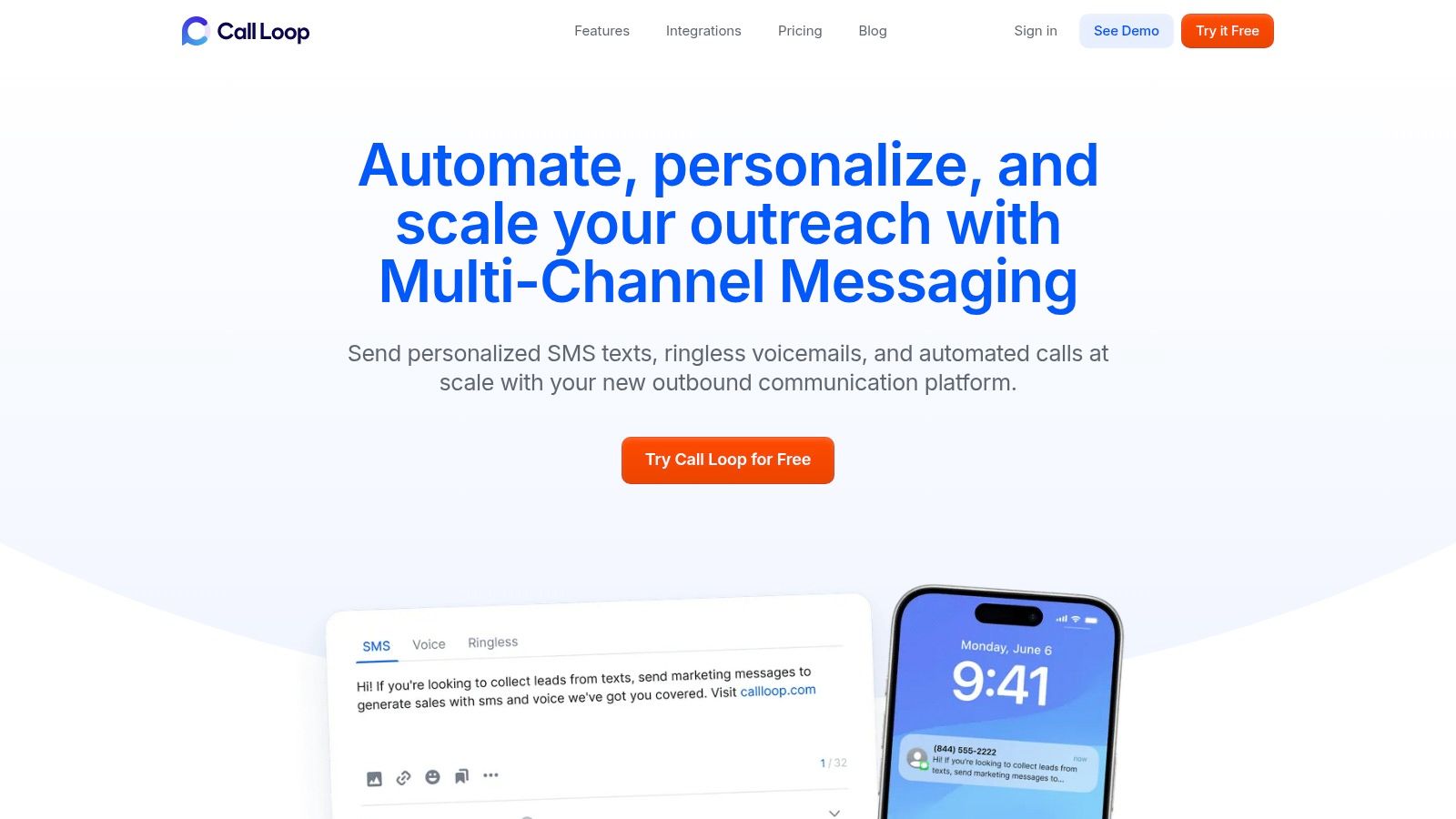
Call Loop fits teams that treat SMS as one part of a broader outreach process. It combines bulk SMS and MMS with voice broadcasting and ringless voicemail, allowing a campaign to move across channels instead of forcing every workflow into text alone.
The SMS tools cover text-to-join keywords, webforms, custom fields, merge tags, segmentation, scheduling, calendar triggers, custom-date triggers, and delay timers. These functions support event reminders, webinar follow-up, appointment sequences, lead nurturing, promotions, and customer notifications. Link shortening and click tracking connect message delivery with recipient behavior.
Call Loop's voice features include live-answer and machine-answer detection, press-1 transfers, custom caller ID, uploaded or recorded audio, and AI text-to-speech. Ringless voicemail places a message in the voicemail inbox without ringing the phone. Delivery can target mobile and landline numbers, with scheduling options for planned sequences. Billing for ringless voicemail is based on successful drops, creating a different cost structure from charging for every attempted delivery.
Practical rule: Treat ringless voicemail as a regulated outbound channel, not as a loophole around calling rules.
Compliance and administration tools include number validation, double opt-in, toll-free compliance, DNC management, reporting, and integrations with ActiveCampaign, HubSpot, and Keap. Zapier extends these workflows across 4,000+ apps, according to the publisher's product information. Healthcare organizations can assess its HIPAA-compliant setup, then verify their security configuration, contracts, data handling, and internal policies before sending protected information.
Pricing requires closer review. The site offers a free trial or demo, but it does not present one public flat rate covering every channel. Ringless voicemail charges vary with successful drops and volume, so request an estimate based on the actual mix of SMS, voice, and voicemail campaigns.
Best for: SMBs, agencies, healthcare providers, event teams, and organizations that need coordinated SMS, voice, and ringless voicemail sequences.
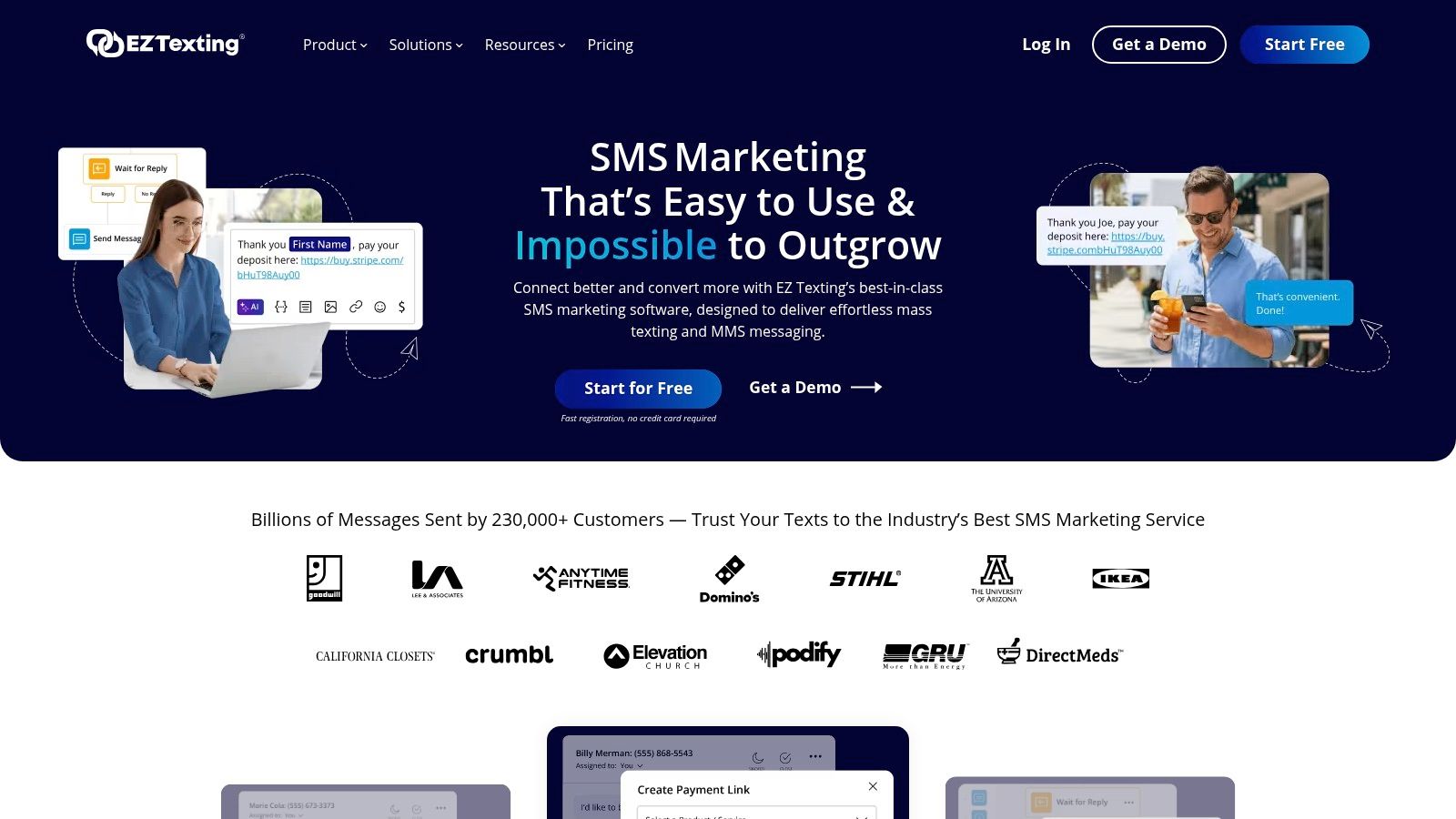
EZ Texting makes sense for an SMB team that wants a familiar, guided SMS and MMS environment without assigning the project to developers. Its operating model is campaign-led. You build subscriber lists, collect contacts with keywords, send scheduled messages, and manage replies through a two-way inbox.
The credits-based approach can suit organizations with seasonal demand. Rollover credits reduce the pressure to use an exact monthly allocation, which is useful for event organizers, schools, studios, and businesses whose promotional calendar changes throughout the year. The platform also supports MMS and landline text-enablement, giving teams more ways to reach existing customers.
The onboarding experience and documentation are useful for teams that are still learning SMS marketing fundamentals. Compliance prompts and educational resources can help users think about consent, opt-outs, and U.S. carrier requirements, including 10DLC and TCPA considerations.
The main limitation is fit for regulated healthcare communication. Standard SMS isn't HIPAA secure, and the platform isn't positioned as a HIPAA solution. A healthcare provider should avoid treating a beginner-friendly interface as evidence that the underlying workflow meets its obligations.
Credits also require attention. An SMS longer than one segment, or an MMS, can consume credits differently from a short text, so compare expected message length and media usage rather than evaluating only the plan headline. If your team sends high, steady volume, a usage-based API or a platform with a different billing structure may be easier to forecast.
Best for: Non-technical SMBs, seasonal senders, local service businesses, and teams that value guided setup over developer flexibility.
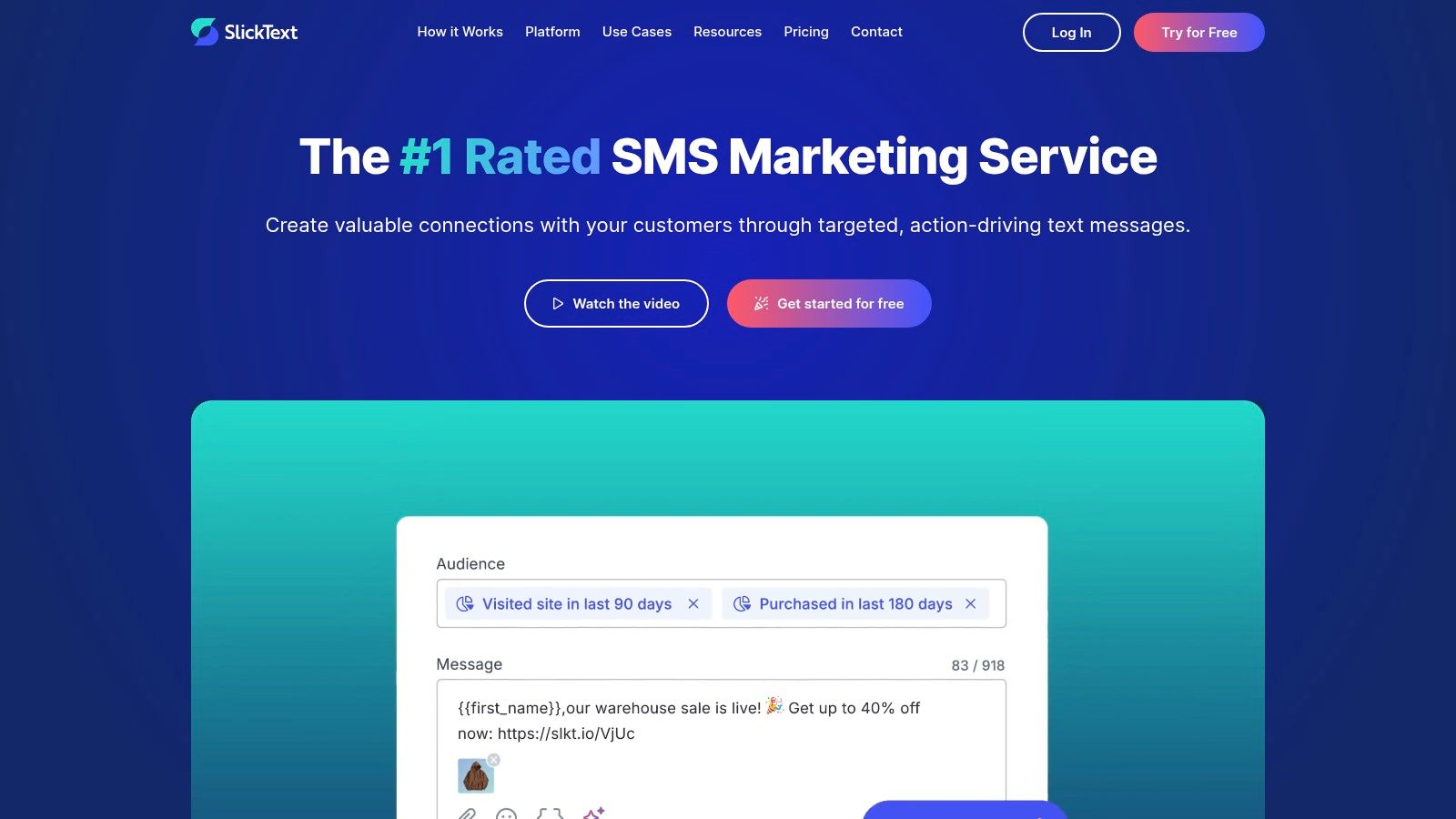
SlickText is built around list growth and automated marketing journeys. It's a better SimpleTexting alternative for a team that sees subscriber acquisition as a core operating process, not an occasional campaign task.
Its list-building tools include QR codes, tap-to-join methods, web forms, and keywords. Once contacts enter a list, welcome series, drip workflows, segmentation, and scheduled campaigns can move them through a defined sequence. That structure is more useful than a broadcast-only approach when a business wants different follow-up for a new subscriber, an engaged customer, and a contact who hasn't responded.
SlickText offers self-serve access to its main features, with integrations including Shopify, Zapier, Mailchimp, and ActiveCampaign. It supports 10DLC, toll-free numbers, and short codes, and an RCS add-on is available for teams that want to assess richer messaging options.
Start with the smallest engaged audience that can prove the workflow, then expand the sending pattern gradually.
The trade-off is the credits model. Message length, MMS content, and richer formats can change consumption, so marketing teams need a simple internal process for monitoring credits before a major promotion. SlickText also focuses on the U.S. and Canada, which limits its appeal for teams that need one global messaging operation.
For a mid-sized marketing team, its strength is the combination of acquisition tools and automation. For a developer-led product team, it may not offer the same low-level control as a communications API. For a business that only sends occasional alerts, its broader marketing workflow may be more than necessary.
Best for: Growing businesses that need list growth, drips, segmentation, and a self-serve marketing workflow in the U.S. or Canada.
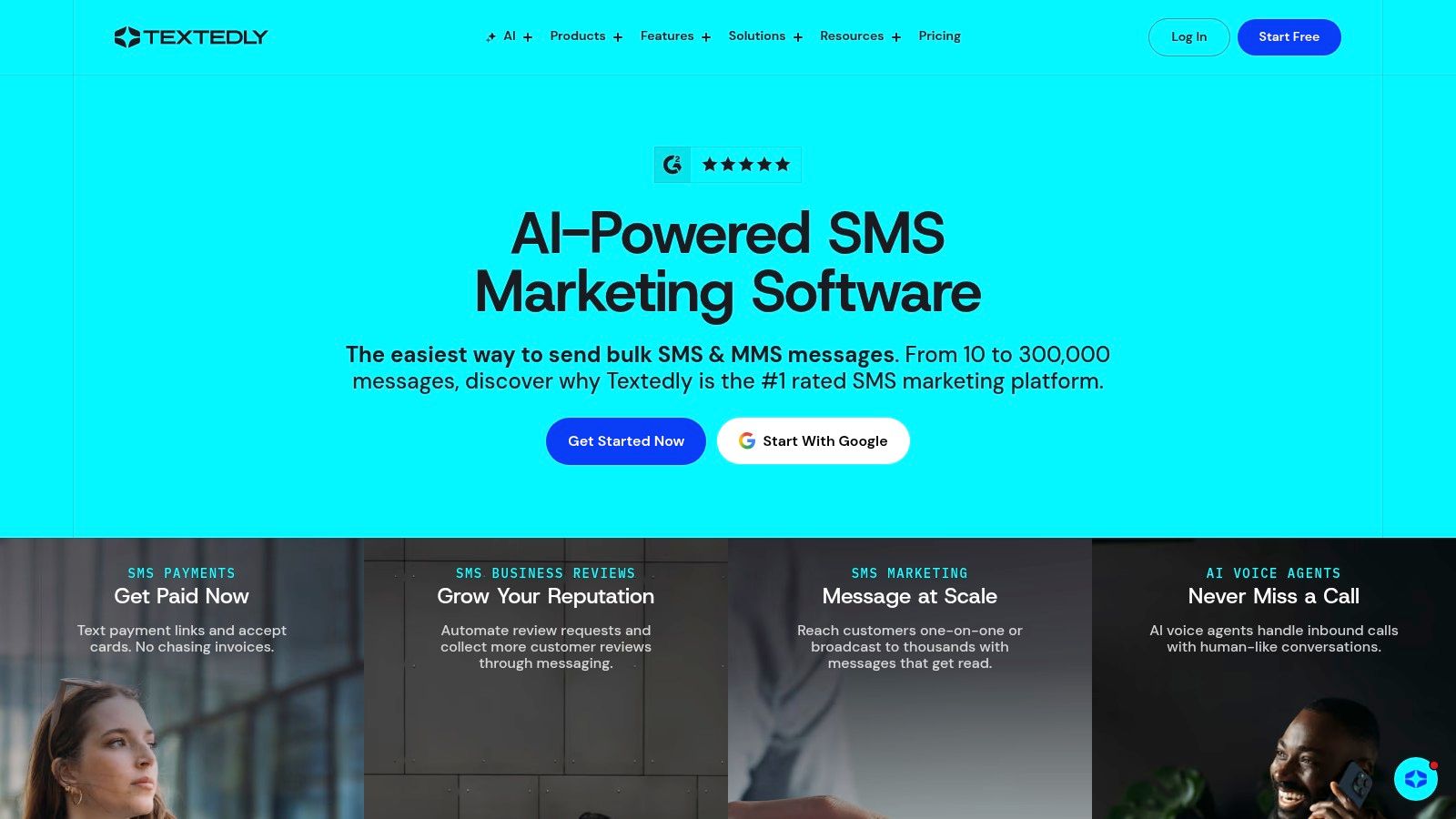
Textedly focuses on fast deployment for SMBs. The platform includes a 10DLC number and a toll-free number per account, with registration guidance intended to reduce the friction between account creation and a compliant campaign launch.
Its feature set reaches beyond basic bulk messaging. Text-to-pay can support payment collection, review-generation tools can support reputation workflows, Instagram messaging adds another customer touchpoint, and optional voice capabilities can keep communication closer to the existing business number. Those features matter for service businesses that want one operational tool for promotions, payments, reminders, and reviews.
Textedly is attractive when the team wants to go live quickly and doesn't need an enterprise-grade marketing architecture. Campaign registration support and opt-in management can make setup easier, but they don't transfer legal responsibility away from the sender. You still need to document how each contact consented, what they agreed to receive, and how opt-outs are handled.
Pricing and plan contents have changed over time, so verify the current inclusions before comparing it with SimpleTexting. A low advertised plan may not tell you how number types, carrier costs, additional users, or advanced features affect the final bill.
Textedly's breadth is useful, but feature breadth isn't the same as depth. A team that needs advanced ecommerce events, custom application logic, or detailed cross-channel orchestration may outgrow it. A local business that wants text-to-pay and review requests without a long implementation project may find the balance more practical.
Best for: SMBs that prioritize fast go-live, text-to-pay, review generation, mobile access, and straightforward campaign registration.
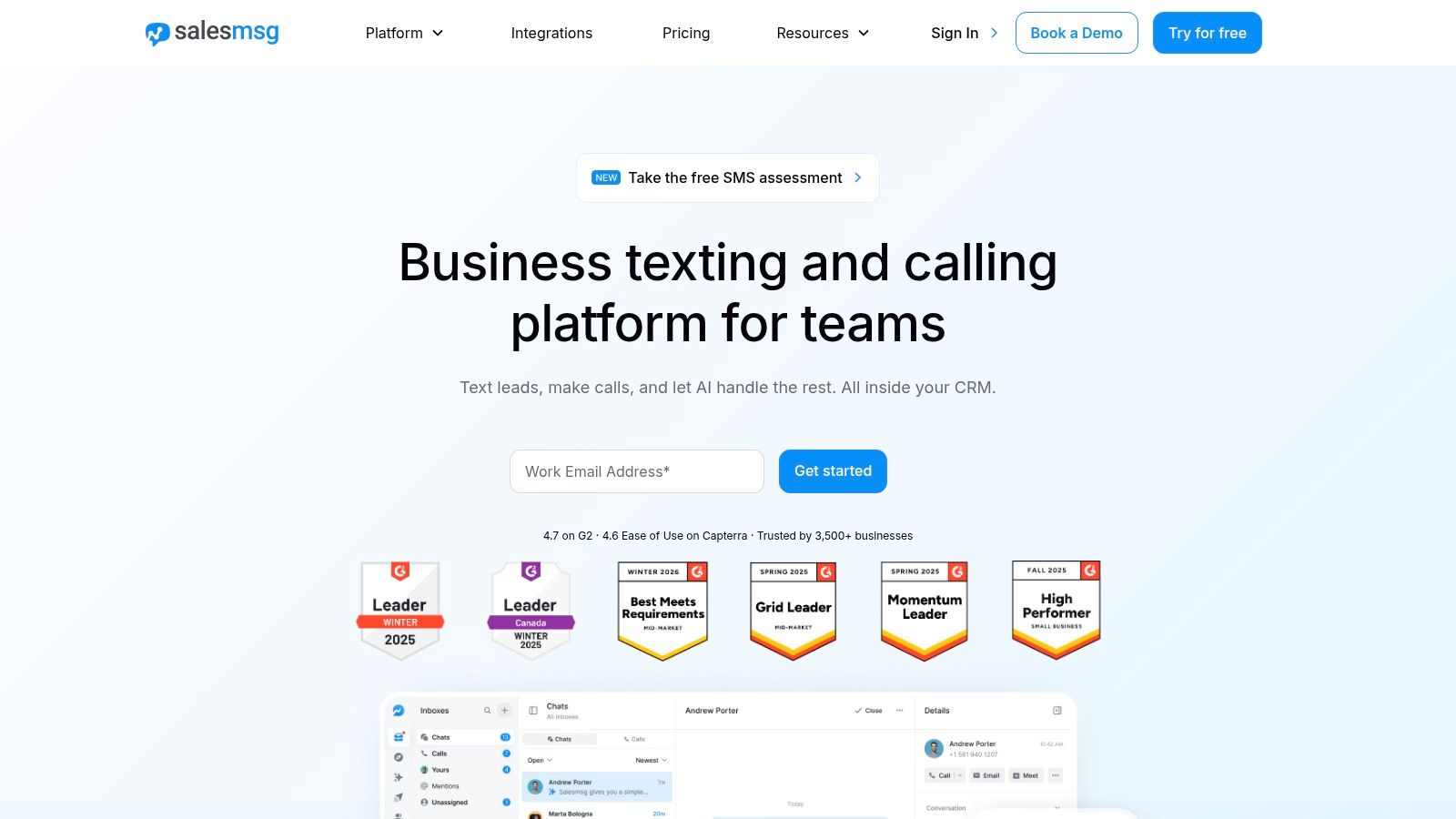
Salesmsg takes a conversation-first approach. It's designed for sales, customer success, support, and appointment workflows where a reply matters more than a one-way promotional blast.
Teams can send and receive SMS and calls through web and mobile apps, use shared inboxes, and text-enable existing numbers. The HubSpot integration is especially relevant for revenue teams that want messages, workflow actions, and contact history tied to CRM records rather than stored in a separate marketing list.
A real example is an appointment or lead-response process. A contact submits a form, the sales team sends a personalized text, a rep answers questions in the shared inbox, and the resulting conversation is logged against the CRM record. That workflow is materially different from sending the same offer to an entire subscriber list.
Salesmsg can also support reminders and one-to-one follow-ups without forcing every team member to use a personal phone. Deployment tends to be faster when the CRM already contains the relevant contacts and pipeline stages.
The trade-off appears when sending volume becomes the priority. Pricing scales by users and usage, and high-volume marketing blasts may be less economical than a credits-based marketing platform. Ecommerce brands that need deep Shopify events, product-triggered flows, and revenue attribution should compare it with ecommerce-first tools instead.
For a practical framework focused on operational fit rather than generic feature counts, use this comparison of SMS marketing platforms alongside your own CRM workflow map. The right choice depends on whether your team measures success through replies and booked conversations or through broadcast reach and campaign revenue.
Best for: HubSpot-led sales teams, customer success groups, appointment-based businesses, and organizations that need shared conversational inboxes.
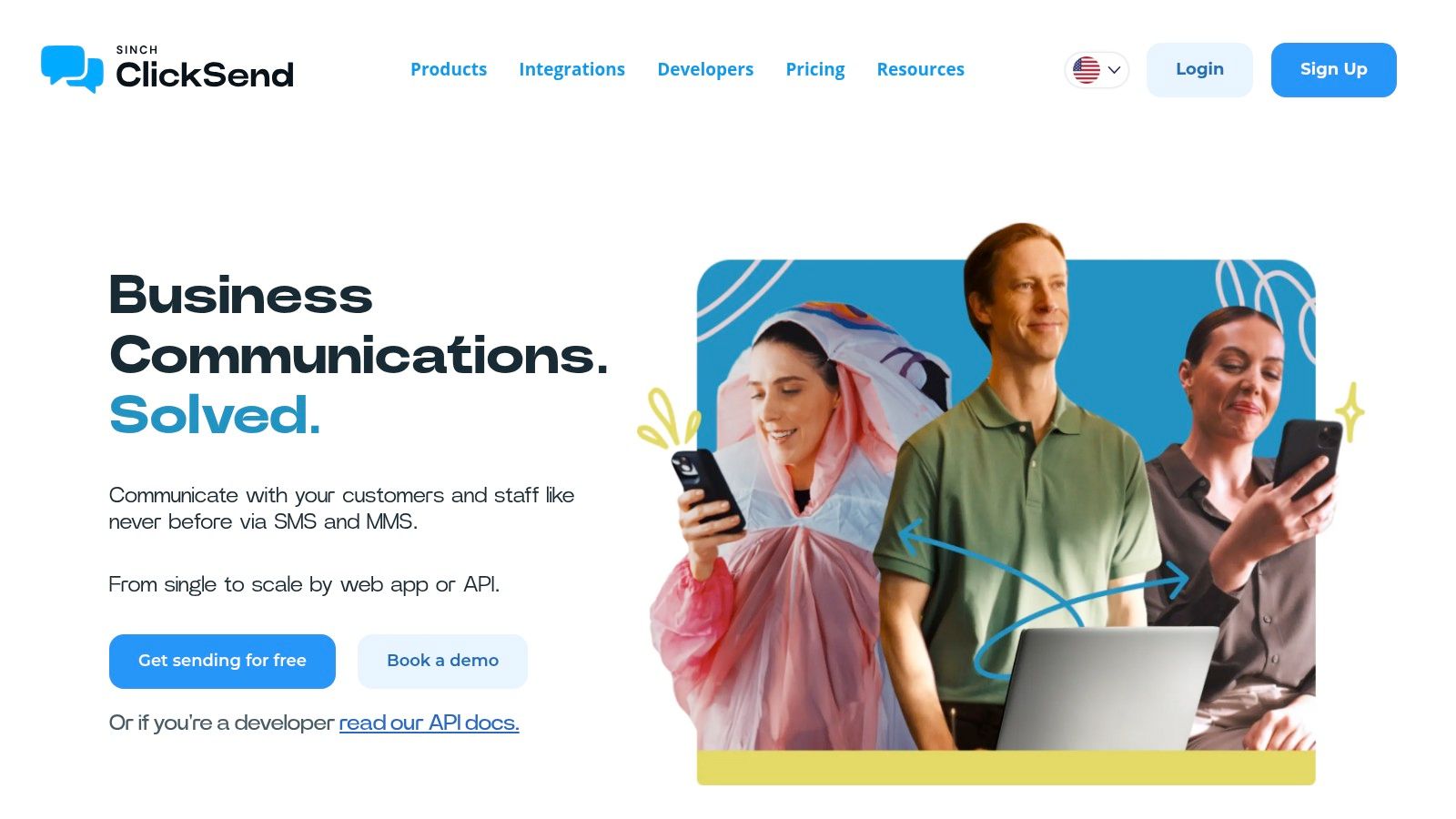
ClickSend is a practical choice when you want metered messaging instead of a marketing suite with a fixed monthly structure. Its pay-as-you-go SMS and MMS model suits irregular senders, operational teams, and organizations that send alerts only when a business event occurs.
Email-to-SMS is useful for teams that already generate notifications by email but want recipients to receive urgent information by text. Simple APIs and web tools support transactional messaging, while integrations can connect ClickSend to existing applications without building an entire messaging layer from scratch.
A business with uneven demand can avoid paying for a large marketing plan during quiet periods. The same flexibility can create a different responsibility, because the team must estimate message length, number type, destination, and carrier fees before treating the platform as a predictable budget line.
U.S. pricing varies according to number type and carrier charges, so review the exact quote rather than relying on a general per-message assumption. ClickSend's documentation explains U.S. fees and 10DLC considerations, which helps technical and operations teams model a deployment more accurately.
ClickSend is less marketing-oriented than platforms built around subscriber journeys. You may need additional systems for advanced segmentation, visual drip automation, ecommerce triggers, or campaign optimization. That's not a defect if your primary job is sending a delivery alert, appointment notification, or application-generated message.
Best for: Irregular senders, transactional alerts, email-to-SMS workflows, and teams that prefer usage-based billing with API access.
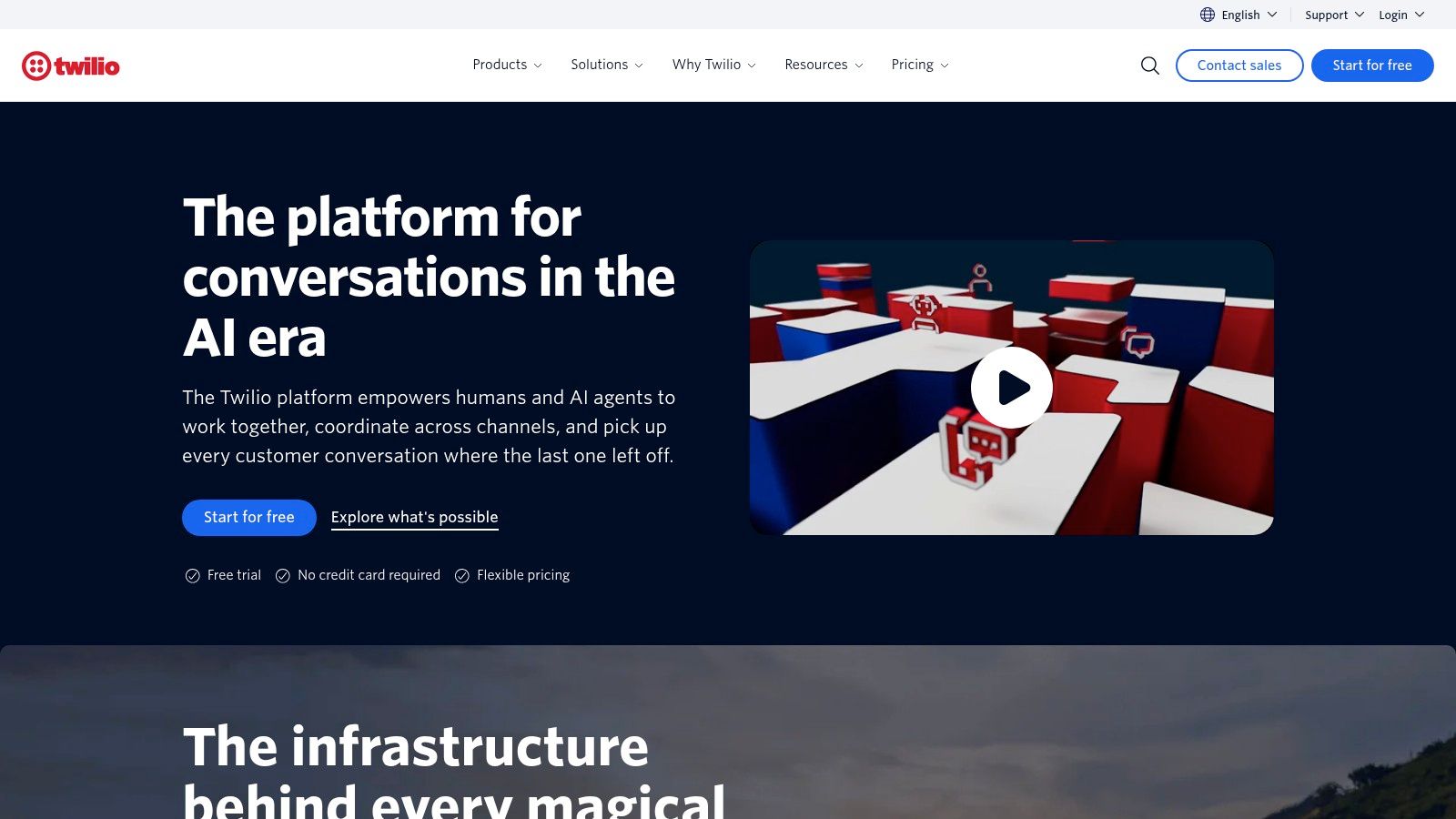
Twilio Programmable Messaging is the developer-first option in this list. It provides APIs, webhooks, number management, delivery reporting, error codes, logs, and support for SMS, MMS, WhatsApp, and RCS. That makes it a platform layer for teams building messaging into an application, CRM, marketplace, or internal system.
Twilio supports 10DLC, toll-free numbers, and short codes, allowing an engineering team to choose a number strategy that matches its use case. Webhooks can feed delivery and response events into custom systems, while detailed logs help developers investigate failed or delayed messages.
Twilio is powerful when the business has developers who can design consent handling, suppression logic, templates, retries, user permissions, analytics, and monitoring. It's less convenient for a small marketing team that wants to create a campaign without opening a development ticket.
Usage-based billing gives technical teams granular control, but the bill can include registration costs, carrier surcharges, number charges, and channel-specific fees. Those details need to appear in the technical and finance scoping process before launch.
Twilio also requires the customer to build much of the operating experience. If you need a polished campaign editor, shared marketing inbox, prebuilt list-growth forms, or a ready-made ringless voicemail workflow, a packaged platform may reach production faster.
Best for: Product teams, software companies, enterprises, and organizations that need custom messaging logic, embedded communications, high throughput, and detailed developer telemetry.
Attentive is an ecommerce-first platform for brands that want SMS and email managed as revenue channels. Its model emphasizes advanced segmentation, AI-driven personalization, conversational commerce, managed onboarding, and optimization rather than a lightweight broadcast tool.
The Shopify ecosystem is central to its appeal. A growth-stage brand can connect customer behavior, purchase history, product interest, and messaging engagement to create more targeted campaigns. The platform also supports one-to-one conversational commerce, which helps brands turn replies into product guidance, support, or sales interactions.
Attentive's white-glove approach can help a team that has budget for strategy, list growth, compliance processes, testing, and ongoing optimization. That support is valuable when SMS revenue is already a material operating priority and the team wants specialists involved in campaign development.
Quote-only pricing creates a scoping requirement. Ask how fees apply to profiles, messages, channels, onboarding, support, and any additional services. A platform built for advanced ecommerce operations can be unnecessary for a local business that sends occasional announcements or appointment reminders.
The compliance experience is another area to examine closely. Advanced flows can make consent and preference management easier to operate, but your legal and marketing teams should still review acquisition sources, disclosures, opt-out behavior, quiet hours, and campaign content.
Best for: Growth-stage and enterprise ecommerce brands that want managed onboarding, advanced targeting, conversational commerce, and coordinated SMS and email.
Postscript is a Shopify-native SMS platform. Its value comes from using Shopify data directly, rather than asking a general-purpose texting tool to reconstruct ecommerce events through multiple integrations.
The platform supports campaigns and flows for cart recovery, winback, back-in-stock alerts, loyalty, and transactional messaging. Checkout opt-ins, hosted policies, and compliance scaffolding help stores build consent into the customer journey, while an AI assistant can help with campaign creation and reply handling.
A Shopify store can use purchase behavior, product availability, and customer status to trigger messages that feel more relevant than a generic promotional broadcast. Revenue attribution and ecommerce-specific reporting also make it easier to evaluate whether SMS contributes to orders, repeat purchases, or retention.
The limitation is equally clear. A non-Shopify business won't receive the same value from a tool designed around Shopify's data model. Agencies managing multiple commerce stacks may prefer a broader platform, and organizations that need voice or ringless voicemail will need a separate channel solution.
Advanced AI bundles may use quote-based pricing, so confirm message metering and add-on costs during scoping. For a broader view of how SMS supports store journeys, this guide to SMS marketing for ecommerce provides a useful comparison point.
Best for: Shopify merchants that need cart, winback, back-in-stock, loyalty, and transactional SMS flows tied closely to store data.
Klaviyo is the strongest fit when a brand wants email and SMS inside one customer data and automation system. Unified profiles, visual flows, granular triggers, ecommerce integrations, and analytics allow a team to coordinate channels around the same customer event.
A typical workflow might send an email first, follow with SMS to an engaged subscriber, and suppress both channels after a purchase. Shopify and BigCommerce integrations provide the behavioral data needed for product, lifecycle, and retention campaigns. A free tier is available for teams that want to begin testing the model before committing to a broader program.
The main benefit is fewer silos. Marketers can manage profile data, channel eligibility, flow logic, templates, and reporting in one environment rather than stitching together an email platform and a separate SMS dashboard.
The billing model requires careful planning. Klaviyo uses profile-based billing, while SMS is billed per message, and rates vary by number type and country. Costs can rise as the profile database grows and as the team adds channels, so remove stale profiles and model actual message paths before moving every campaign.
Klaviyo isn't the natural choice for voice broadcasting or ringless voicemail. It's also more complex than a basic texting tool if your only requirement is sending a weekly announcement. For an integrated channel strategy, compare its data model and automation depth with your current email setup using this overview of email and SMS services.
Best for: Ecommerce and lifecycle marketing teams that want unified customer profiles, email and SMS flows, analytics, and deep commerce integrations.
| Platform | Channels & core features | Compliance & deliverability | Best for (target audience) | Integrations & workflow fit | Pricing model / value |
|---|---|---|---|---|---|
| Call Loop | SMS/MMS, voice broadcasting, ringless voicemail, drips, TTS, number validation | HIPAA‑compliant, double opt‑in, DNC mgmt, toll‑free approval | SMBs, agencies, healthcare, events & e‑commerce | ActiveCampaign, HubSpot, Keap + 4,000+ via Zapier | Free trial/demo; RVM pay‑per‑successful‑drop; contact sales for plans |
| EZ Texting | SMS/MMS, keywords, two‑way inbox, landline text | 10DLC/TCPA guidance, compliance prompts (not HIPAA) | Non‑technical SMBs, seasonal senders | Built‑in tools; basic integrations | Credits‑based plans with rollover credits |
| SlickText | SMS/MMS, drips, QR/tap‑to‑join, optional RCS | 10DLC & toll‑free support; US/Canada focus | Mid‑tier SMBs focused on list growth | Shopify, Zapier, Mailchimp, ActiveCampaign | Transparent self‑serve pricing; credits model |
| Textedly | SMS/MMS, text‑to‑pay, Instagram messaging, optional voice | Free 10DLC & toll‑free per account, compliance tooling | SMBs needing fast go‑live and registration help | Large integration ecosystem (claimed 3,000+) | Plans include numbers; verify current plan details |
| Salesmsg | Two‑way SMS & calling, shared inboxes, text‑enable numbers | Standard SMS compliance (not HIPAA) | Sales, marketing, customer success teams | Native HubSpot + other CRM integrations | User + usage pricing; can scale costly for high‑volume blasts |
| ClickSend | SMS/MMS, email‑to‑SMS, simple APIs for transactional messaging | Documentation on US fees & 10DLC, volume pricing transparency | Low‑volume or irregular senders, transactional alerts | APIs, web tools, integrations for alerts & apps | Pay‑as‑you‑go per‑message with volume discounts |
| Twilio Programmable Messaging | Granular SMS/MMS/RCS APIs, webhooks, delivery logs, number mgmt | Carrier registrations (10DLC/TF/short code), detailed delivery analytics | Developers, enterprises needing custom workflows & scale | Extensive API ecosystem and partner integrations | Usage‑based metered pricing; add‑on fees for registrations |
| Attentive | SMS + email, AI personalization, conversational commerce, managed onboarding | Advanced compliance flows, white‑glove policy support | Growth‑stage & enterprise ecommerce brands | Deep Shopify ecosystem presence | Quote‑only, premium pricing (enterprise focus) |
| Postscript (Shopify SMS) | Shopify‑native SMS, AI assistant, ecommerce flows (cart, winback) | Hosted opt‑in & compliance scaffolding | Shopify merchants focused on revenue attribution | Native Shopify integration and checkout opt‑ins | Quote‑based for advanced bundles; metered messaging costs |
| Klaviyo (Email + SMS) | Unified email + SMS profiles, visual flows, granular triggers | Profile‑based billing, SMS billed per message; strong analytics | Brands wanting unified email+SMS and attribution | Shopify, BigCommerce, many ecommerce integrations | Free tier; profile‑based billing (SMS per message) |
The market is active because businesses are expanding their use of text messaging. One industry summary reports that 75.3% of businesses use SMS marketing, while 65.4% plan to increase texting budgets, according to business texting adoption data. That means replacing SimpleTexting isn't only a feature decision. It's a decision about how your team will acquire consent, route replies, ramp volume, measure outcomes, and control costs as the program grows.
Choose Call Loop when you need coordinated SMS, voice, and ringless voicemail with drip timing, personalization, integrations, and compliance-oriented controls. Choose Salesmsg when the core workflow is CRM-led conversation between reps and customers. Choose ClickSend when metered messaging, email-to-SMS, alerts, and simple APIs matter more than marketing automation. Choose Twilio when developers need to embed messaging inside custom software and control the full event pipeline.
For ecommerce, Postscript is the focused Shopify option, while Attentive suits brands seeking managed, high-touch optimization. Klaviyo is better when email and SMS should share customer profiles, triggers, and analytics. EZ Texting, SlickText, and Textedly are more practical for SMBs that value guided setup, list growth, quick deployment, text-to-pay, or straightforward campaign management.
Deliverability depends on more than the software interface. Explicit consent, double opt-in, 10DLC or toll-free registration, message content, sender behavior, complaint rates, and sending patterns all affect whether messages reach recipients. Start with a small, highly engaged segment and scale gradually instead of moving every contact into a large first send.
Ringless voicemail needs extra care. The FCC ruled that ringless voicemail sent to wireless phones requires consumer consent because it's treated as a call using an artificial or prerecorded voice under the TCPA, as explained in the FCC ringless voicemail ruling. The FTC also warns that sales robocalls require written permission, including calls delivered as ringless voicemail, according to its consumer guidance on ringless robocalls.
The mechanic is simple, but the legal treatment isn't. A ringless voicemail reaches the voicemail inbox without first making the phone ring, which is why the FCC's technical ruling materials treat it as a regulated robocall pathway. The FTC has also pursued operations responsible for delivering tens of millions of unwanted VoIP and ringless voicemail robocalls, showing that enforcement risk is practical rather than theoretical, as described in the FTC case record.
Healthcare teams should validate HIPAA, security, data retention, access controls, and contractual requirements before transferring patient-related communication. Every organization should also review the rules that apply to its audience, geography, message type, and use of SMS, voice, or ringless voicemail. The best SimpleTexting alternative is the one your team can operate responsibly at the volume and complexity it intends to send.
Call Loop combines bulk SMS and MMS, automated drip campaigns, voice broadcasting, and ringless voicemail with personalization, scheduling, integrations, reporting, and compliance-oriented controls. If your SimpleTexting replacement needs coordinated outbound messaging rather than text broadcasts alone, visit Call Loop to evaluate the platform for your workflow.
Chris Brisson
Chris is the co-founder and CEO at Call Loop. He is focused on marketing automation, growth hacker strategies, and creating duplicatable systems for growing a remote and bootstrapped company. Chat with him on X at @chrisbrisson


Trusted by over 45,000 people, organizations, and businesses like


