
See a Demo
You're just one step away from seeing Call Loop in action.
Enter your information below to watch a demo right now.

You're just one step away from seeing Call Loop in action.
Enter your information below to watch a demo right now.

A theory lesson on spam texts is unnecessary; recognizing one quickly enough to avoid clicking is the priority. Focus on the practical task: what fake messages tend to say, the red flags that matter most, and what to do next. That matters because text scams are expensive, not just annoying: consumers reported losing $470 million to scams that started with text messages in 2024, according to FTC-linked reporting.
If a text asks for login details, treat it as phishing. If it says you won something you never entered, treat it as a prize scam. If it demands a small fee to release a package, assume it is fake until you verify it in the carrier app or on the official site. And if a message creates panic first and gives specifics second, that pattern alone should make you stop.
Common message types people run into most often involve impersonation risk and urgency tactics, and they are more likely to lead to financial loss, account takeover, or identity theft; rare edge-case frauds are less relevant.
I also grouped the list around a simple reader question: what would an ordinary person plausibly receive on a normal day? That is why package issues, bank alerts, job offers, and healthcare notices rank highly here. They feel routine, which is exactly why scammers reuse them.
To make the cut, an example had to show a recognizable scam pattern: impersonating a trusted brand or institution, pushing immediate action, using a suspicious link or payment request, or asking for credentials or personal data that a legitimate sender would not request that way. We excluded messages that were merely annoying marketing or poorly written outreach if they did not clearly fit a scam or spam pattern with meaningful consumer risk.
That distinction matters. A text can be unwanted without being fraudulent, and a fraudulent text can look polished enough to fool someone who is in a hurry. Recent reporting on robotext volume helps explain why recognition matters so much: Americans received 78 billion robotexts in the first half of 2023, with delivery lures among the most common themes, according to spam text statistics.
Phishing by text, usually called smishing, is one of the most common and dangerous forms of mobile fraud. The scam works by borrowing trust from a recognizable name—a bank, delivery company, payment app, retailer, or government office—then replacing the next step with a fake one: click this link, sign in here, pay this fee, or confirm this code. The Federal Trade Commission warns that unexpected texts asking you to act urgently are a common fraud pattern, especially when they push you to click a link or reply with personal information in its consumer alert on text scams.
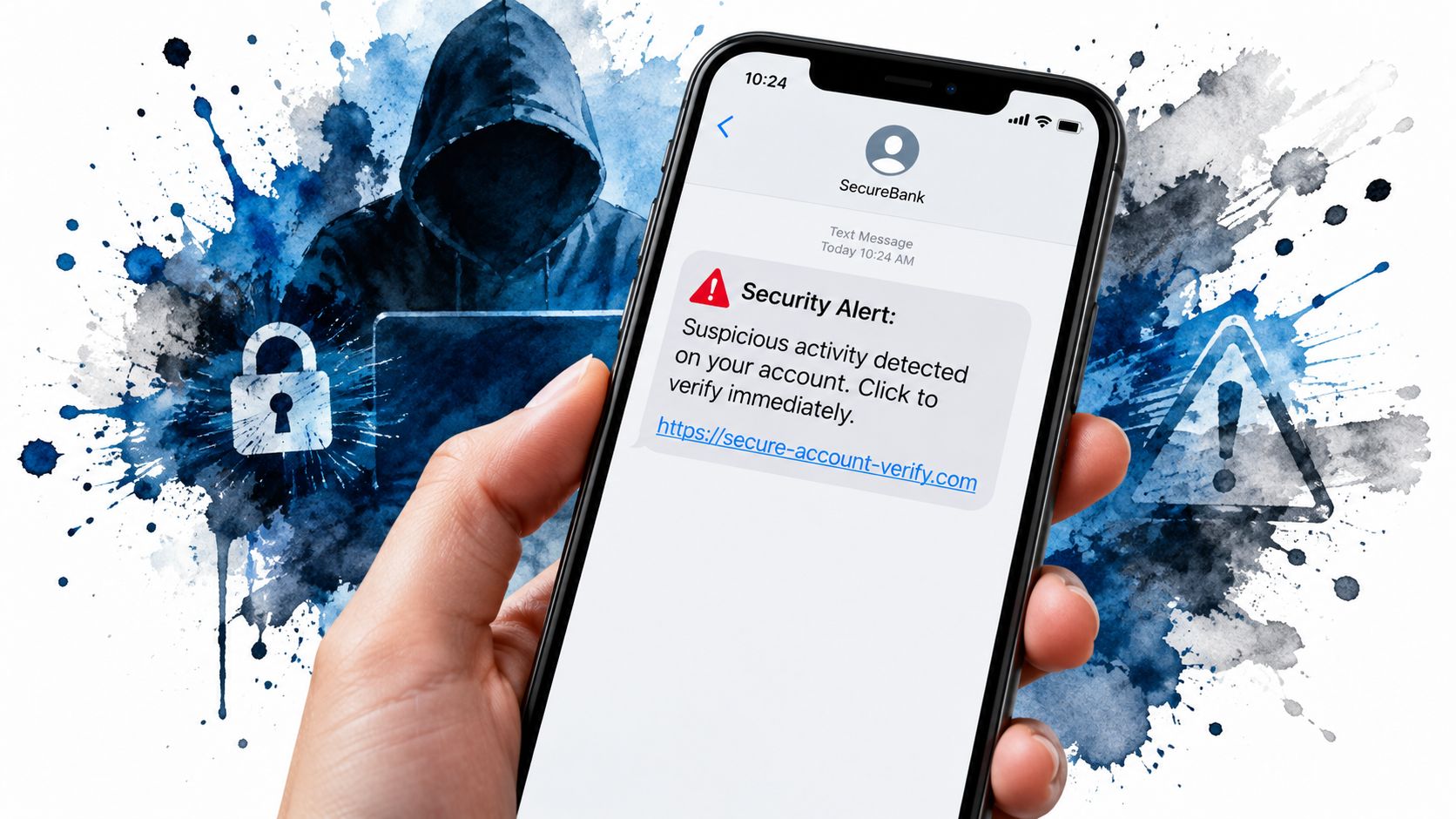
In practice, smishing texts usually try to do one of six things fast: imitate a brand, trigger urgency, move you off-platform, hide the actual destination, collect credentials, or pressure a payment. The wording changes, but the structure repeats. Often the most convincing examples were not the sloppiest ones; they were the texts that sounded boring and administrative.
Chase Fraud Alert: We detected unusual activity on your account ending in 4421. Verify now to avoid suspension: chas3-secure-login.com
Red flags: The sender name may say "Chase," but the domain is not an official Chase domain. The message creates urgency with "avoid suspension," and it pushes you to sign in through a link inside the text rather than through the bank app. A real bank alert may tell you to log in through the official app or call the number on the back of your card, not a random login page.
USPS Notice: Your package is on hold due to an invalid address. Confirm details within 12 hours here: usps-track-help.net/resolve
Red flags: The domain is not an official USPS domain, the deadline is artificial, and the warning is vague. There is no tracking number, no sender-specific order context, and no reason to believe this package is yours. The USPS text scam guidance specifically warns consumers about fake delivery texts that use address problems and tracking issues to drive clicks.
PayPal Security: A new device signed into your account. If this wasn't you, confirm your identity immediately: paypalverify-center.co
Red flags: The domain is wrong, the phrase "confirm your identity" often means credential theft, and the alert is designed to create account panic. Legitimate account warnings usually direct you back to the service's app or verified website, not to a lookalike domain embedded in an SMS.
State Toll Services: Final reminder: unpaid toll balance of $6.42. Pay now to avoid DMV action: toll-balance-fast.com
Red flags: Small balances are a classic trick because they feel easier to pay without checking. The threat escalates quickly from a minor fee to legal or license consequences, and the site is not clearly tied to a real toll authority. The FTC has separately warned about toll-text scams in its scam text advice.
A legitimate bank, delivery service, or payment platform usually looks different in three ways. First, the sender identity is stable and recognizable, not an odd shortcode, email-to-text address, or lookalike label. Second, any link points to the official domain, often showing clear brand ownership, and many legitimate alerts tell you to open the official app instead. Third, the call to action is narrower and more verifiable: check your account, review an activity log, or sign in through your normal channel, not "fix this now" through a mystery URL.
The safest move is simple: do not tap the link, do not reply, and verify the claim directly through the company app, saved website, or phone number you already trust. The FTC and FCC both recommend forwarding unwanted scam texts to 7726 (SPAM), then reporting and deleting them; see the FCC's robotext and spam text guidance for the carrier-reporting workflow. If you are dealing with unwanted messages, learning how to block a text message can provide immediate relief.
Prize and lottery scams are a classic form of spam that preys on the excitement of winning something for free. These messages falsely claim the recipient has won a contest, drawing, or giveaway for cash, electronics, or gift cards. Their goal is to trick you into clicking a malicious link, paying fake "processing fees," or surrendering personal information to "claim" a non-existent prize. This type of spam message example is a direct threat to brand trust, as it uses deceptive promotional language that legitimate businesses must avoid.
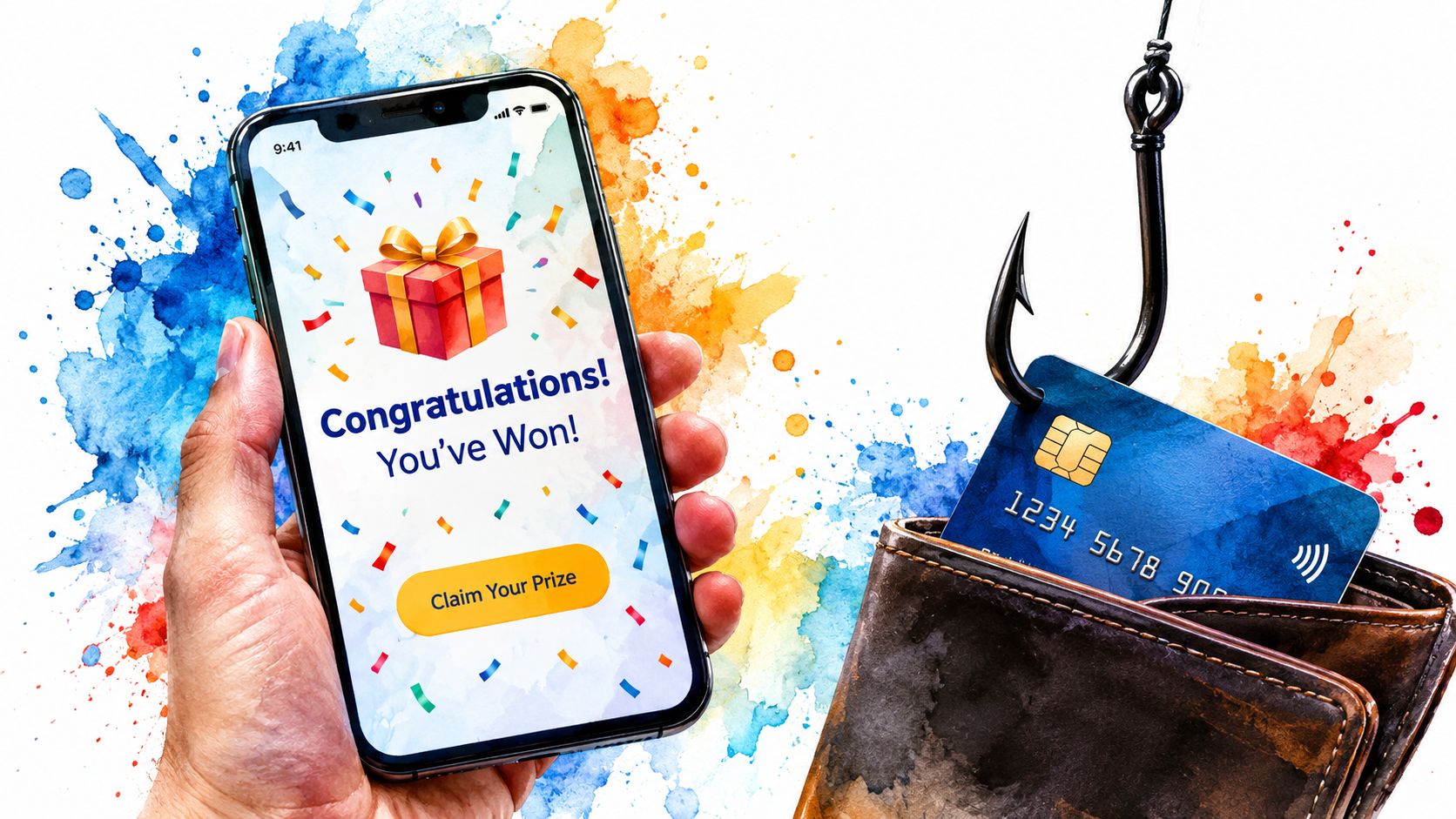
For businesses, it's critical to distinguish your genuine promotions from these scams. If your contest announcements or special offers use vague, overly urgent, or misleading wording, they risk being perceived as spam. This can lead to customers blocking your number, damaging your brand's credibility and hurting the deliverability of all your communications, from marketing texts to appointment reminders.
These scams operate by creating a sense of unearned victory and urgency, pushing recipients to act before they can think critically. Here are some common examples and what makes them spammy:
Key Takeaway: Prize scams thrive on ambiguity and manufactured urgency. To protect your brand, ensure your promotional messages are transparent, targeted, and trustworthy. Only send offers to opted-in subscribers, clearly state the terms, and provide verifiable contact information.
Tech support scams prey on fear by sending messages that falsely claim your device is infected with malware, has a security breach, or is experiencing critical system errors. These fraudulent alerts pressure you to call a fake support number or click a malicious link, where scammers posing as support agents will attempt to steal your money, personal information, or gain remote access to your device. This type of spam message example is effective because it creates immense panic, causing people to act impulsively against their better judgment.
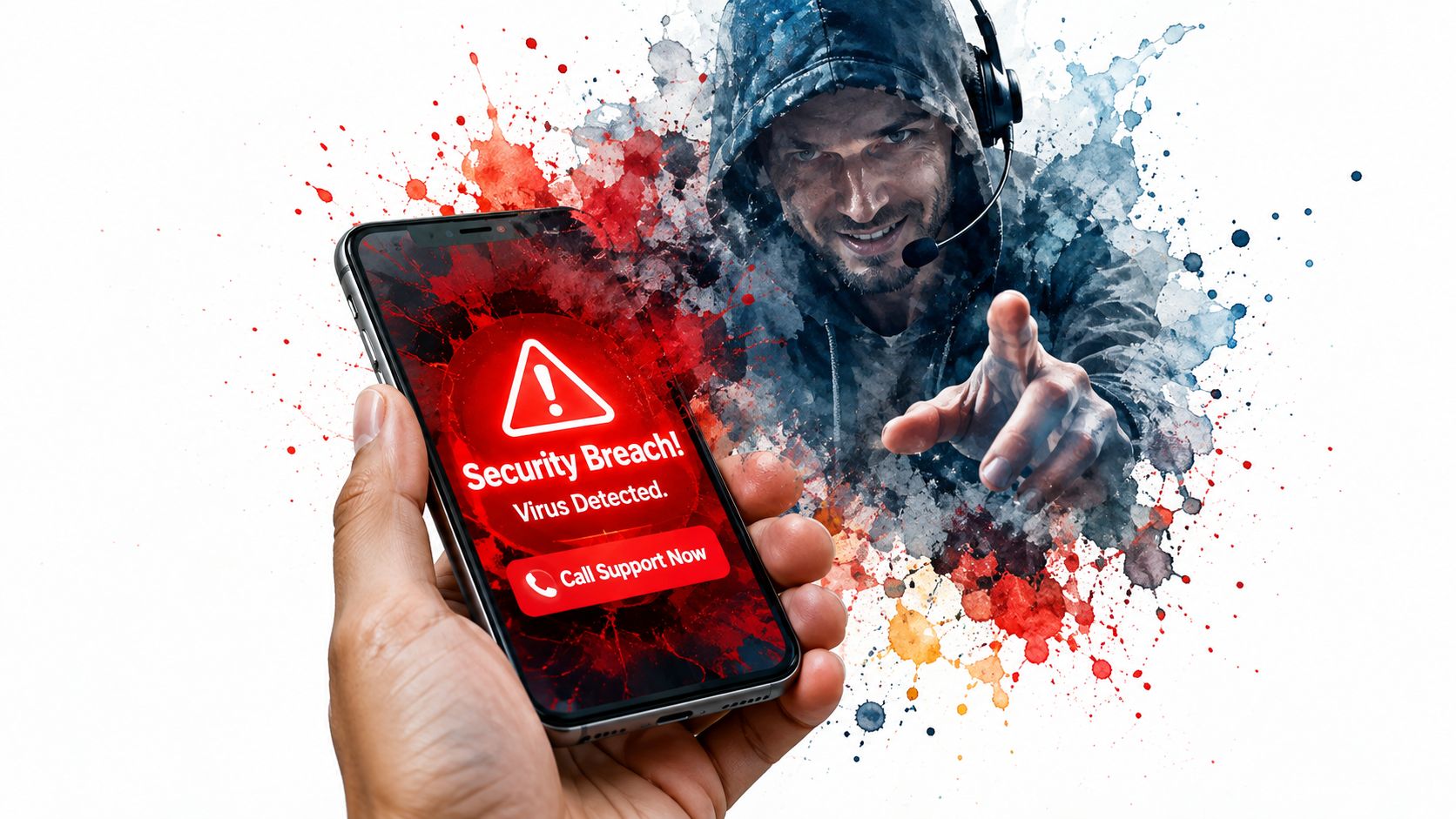
For legitimate IT firms and businesses, it is critical to ensure your support communications are never mistaken for these scams. Messages that use overly aggressive language or demand immediate action without proper context can be flagged by carriers and alarm your customers. This erodes the trust you have worked hard to build and can harm your sender reputation, affecting the deliverability of all your communications.
Tech support scams use a formula of technical-sounding jargon mixed with high-stakes urgency to manipulate victims. Here are a few common examples and what makes them deceptive:
Key Takeaway: Tech support scams succeed by combining fake authority with manufactured panic. Businesses must establish legitimacy in their own communications by providing clear branding, verified contact information, and avoiding panic-driven language. This ensures your legitimate support messages and even ringless voicemail drops are recognized as authentic and helpful.
Delivery scams work because they borrow from a real habit: many people are waiting for something. A fake shipping text does not need to be brilliant to succeed; it only needs to arrive on a day when a package seems plausible. That is why this category deserves extra attention. The U.S. Postal Inspection Service has repeatedly warned consumers that package-tracking smishing texts are designed to steal personal and financial information through fake redelivery, address-correction, and fee-payment pages in its smishing advisory.
For legitimate businesses sending shipping updates, this is the category where small details matter most. Real delivery notifications usually include account-specific context: an order reference, merchant name, real tracking number, or a prompt to open the official carrier app. Fake ones usually substitute pressure for detail.
Here is the pattern library I would use to assess a delivery text quickly.
UPS Alert: We missed you today. Reschedule your delivery now or your parcel will be returned: ups-delivery-help.com
What it usually means: Failed delivery lure.
Red flags: No real tracking number, no delivery window, and no official UPS domain. The threat of return is there to force quick action. A legitimate UPS alert typically points you to your existing UPS account, references a real package, and uses an official UPS-owned domain or app flow.
DHL Customs: Your parcel has arrived at customs. Pay $2.99 clearance fee immediately to prevent delay: dhl-fees-secure.net
What it usually means: Customs fee or release payment scam.
Red flags: Tiny fee, urgent deadline, and a domain that is not clearly DHL. Scammers favor small amounts because people are more likely to pay first and question later. A real customs-related notice is usually tied to a shipment you can verify, often with a shipment number and fuller sender/receiver details.
USPS Delivery: Address incomplete for package 9400****. Confirm destination here: usps-address-fix.com
What it usually means: Address confirmation scam.
Red flags: Even when a text includes a partial number, the destination domain is still the giveaway. The message pushes you to correct an address through a non-USPS website. Legitimate address issues are more likely to be handled in your official USPS account, retailer order history, or a verified carrier page.
FedEx Tracking Update: Your package status changed. View tracking details now: fedex-tracker-status.info
What it usually means: Generic tracking-update lure.
Red flags: Vague status language, no package context, and a lookalike domain. In my review, this is one of the most common fake formats because it works on almost anyone who shops online. Real tracking texts usually identify the shipment more specifically and do not rely on mystery domains.
The fastest way to tell fake from legitimate is to check for three details together, not one in isolation: a real tracking number you recognize, an official domain you can verify, and account-specific context that ties the text to an order you placed. A scam message often imitates one of those well enough to seem plausible, but rarely all three.
The FTC's guide to reporting spam texts and the USPS inspection service's package scam warning are good references if you need the official reporting path.
Fake financial alerts are a particularly harmful form of spam where scammers impersonate legitimate banks, credit unions, or payment apps. They send urgent messages about supposed unauthorized transactions, frozen accounts, or required security verifications. The goal is to trick you into clicking a malicious link to a fake banking portal or calling a fraudulent phone number, where they steal your login credentials, PINs, and other sensitive financial information. This type of spam message example is effective because it creates intense financial panic, short-circuiting rational thought.
For legitimate businesses in finance or healthcare that handle financial data, these scams set a dangerous precedent. If your legitimate alerts about account activity or payments resemble these fraudulent tactics, customers may ignore them or report you as spam. Maintaining clear, authenticated, and professional communication is essential for protecting your brand's integrity and ensuring critical messages are trusted and received. If you have been a victim of financial deception, you might find valuable information in a Zelle scam refund guide.
These fraudulent messages rely on impersonation and fear to prompt immediate, ill-advised action. Here are a few common examples and an analysis of their deceptive methods:
Key Takeaway: Financial fraud alerts exploit the trust customers have in their banks. Legitimate businesses, especially those in finance and healthcare, must use authenticated and secure channels. Features like multi-factor authentication, branded sender IDs, and clear instructions to visit official websites (never links) are critical. When transmitting sensitive financial or patient data via text, understanding if SMS is encrypted helps maintain compliance and build user confidence.
Romance scams, often called catfishing, are a malicious form of fraud where scammers create fake online identities to build emotional relationships with their targets. Over weeks or months, they cultivate trust and affection via SMS, social media, and dating apps, only to eventually exploit that connection for financial gain. They invent elaborate stories about needing money for medical emergencies, travel, or business investments. This type of spam message example is uniquely cruel as it preys on human emotion and the desire for connection, leading to significant financial and emotional devastation for victims.
While most legitimate businesses aren't operating in the dating space, understanding these tactics is critical. The core of this scam is a betrayal of trust built through communication. If your business's messaging, whether through SMS or even personalized ringless voicemail drops, feels disingenuous or manipulative, it erodes customer trust and can harm your brand's integrity, even if your intentions are good.
Catfishing campaigns are a long game, relying on emotional manipulation rather than simple urgency. The messages are designed to build a deep, albeit fake, connection. Here are some common examples and why they work:
Key Takeaway: Romance scams are built on a foundation of false intimacy and emotional manipulation. For legitimate businesses, the lesson is clear: authentic, transparent communication is the only way to build lasting customer relationships. Trust is your most valuable asset, and it must be earned through honesty, not trickery.
Job offer scams are fraudulent messages that prey on the hopes and needs of job seekers. Scammers offer unrealistic positions with high pay, minimal experience requirements, or convenient work-from-home arrangements. Their goal is to trick victims into sending money for fake training, background checks, or equipment, or to steal personal information for identity theft. This type of spam message example is particularly cruel because it targets people in a vulnerable position.
For legitimate recruiters and staffing agencies, the prevalence of these scams poses a significant risk. If your recruitment communications even slightly resemble these fraudulent tactics, they could be blocked by carriers or ignored by candidates who assume you are a scammer. This not only damages your brand's credibility but also undermines your entire talent acquisition funnel.
Job scam messages are crafted to exploit a candidate's excitement and lower their guard. They often contain red flags that are easy to spot if you know what to look for.
Key Takeaway: Job scams thrive on promises of high rewards with low effort and often demand upfront payment. To maintain integrity, legitimate recruiting messages must be professional, transparent, and verifiable. Following a strict anti-spam policy is crucial for building trust with potential candidates and ensuring your messages are delivered and received as authentic communications.
Scammers impersonating healthcare providers, pharmacies, or insurance companies exploit the trust and urgency associated with medical matters. They send messages about prescription refills, insurance verification, or appointment confirmations to trick recipients into revealing sensitive personal health information (PHI), financial details, or login credentials. This type of spam message example is especially insidious because it preys on people's health concerns, making them more likely to act without suspicion.
For legitimate healthcare organizations, understanding these fraudulent tactics is critical. Patient communications must be carefully crafted to avoid any resemblance to scams, which could cause patients to ignore vital messages or report them as spam. Maintaining patient trust requires a secure and authenticated communication strategy, especially for HIPAA-covered entities.
These scams use familiar healthcare scenarios to appear authentic and prompt a quick, emotional response. Here are common examples and their telltale signs:
Key Takeaway: Healthcare scams succeed by creating a false sense of authority and medical urgency. Legitimate providers must prioritize patient verification and avoid requesting sensitive data through insecure channels like SMS. Building patient communications on a secure, HIPAA-compliant platform with clear authentication protocols is essential for protecting patients and maintaining trust.
Use this as a fast decision aid before you interact with any suspicious message:
I keep coming back to one pattern across all eight categories: the scammer wants you to leave your normal verification habit. The moment a message tries to replace your bank app, carrier account, official website, or known phone number with its own shortcut, risk goes up sharply.
| Spam type | What the message usually claims | Strongest red flags | What the scammer wants | Safest next step |
|---|---|---|---|---|
| Phishing SMS (Smishing) | Your account, package, toll, or payment needs urgent action | Lookalike link, vague warning, pressure to click now | Login credentials, personal data, or card details | Open the real app or site directly; do not use the text link |
| Prize/Lottery Scam Messages | You won cash, a phone, gift card, or sweepstakes | You never entered, no specifics, fake claim deadline | Fees, identity details, or click-through traffic | Ignore, report, and verify with the brand only through official channels |
| Tech Support Scam Messages | Your device is infected or your account is compromised | Panic language, fake support number, generic sender | Remote access, payments, or passwords | Contact support through the company's official website or app |
| Fake Delivery/Courier Notifications | Delivery failed, address issue, customs fee, or tracking update | No trusted domain, missing package context, small fee request | Card data, credentials, or personal information | Check tracking in the carrier app or order confirmation instead |
| Banking/Financial Fraud Alerts (Fake) | Suspicious transaction, frozen account, payment failure | Non-bank link, urgent callback request, credential prompt | Banking logins, card info, OTPs, or PINs | Call the number on your card or use the bank app directly |
| Romance/Catfishing Scam Messages | Emotional bond, sudden crisis, travel or medical emergency | Fast intimacy, excuses for not meeting, money request | Wire transfers, gift cards, crypto, or ongoing financial support | Stop sending money, reverse-search details, and report the account |
| Job Offer/Employment Scam Messages | Easy job, high pay, remote role, instant hire | Upfront fee, off-platform interview, unrealistic pay | Money, SSN, bank details, or ID documents | Verify the role on the employer's real careers page |
| Healthcare/Pharmacy Impersonation Scams | Refill issue, insurance verification, appointment problem | PHI request by text, fake portal, fear-based medical urgency | Health data, logins, payment info, or identity details | Contact the provider through the patient portal or listed office number |
| Scam Type | Implementation complexity | Resource requirements | Expected outcomes | Ideal use cases (legitimate) | Key advantages (for Call Loop users) |
|---|---|---|---|---|---|
| Phishing SMS (Smishing) | Low–Moderate | Minimal (spoofed IDs, short links) | Credential theft, account compromise | Authentication messages, verified alerts | Branded sender IDs, double opt-in, compliance markers |
| Prize/Lottery Scam Messages | Low | Minimal (templates, generic links) | Fee scams, PII requests, short-term fraud | Targeted promotions, legitimate contest notifications | Segmentation, clear terms, opt-in verification |
| Tech Support Scam Messages | Moderate | Moderate (fake portals, phone numbers) | Remote access, payment fraud, device compromise | Genuine support alerts, security notifications | Authentication markers, verified support channels, MFA prompts |
| Fake Delivery/Courier Notifications | Low | Minimal (spoofed carrier branding, fake links) | Credential theft, fake fee payments | Order/shipping updates, delivery tracking | Personalization, verified tracking links, order merge tags |
| Banking/Financial Fraud Alerts (Fake) | Moderate | Moderate–High (cloned portals, realistic branding) | Account takeover, financial theft | Fraud alerts, transaction notifications, MFA | Transaction details, secure sender IDs, compliance controls |
| Romance/Catfishing Scam Messages | High | High (time, stolen media, persistent messaging) | Long-term financial loss, emotional harm | Safety alerts, identity verification for social apps | Identity verification, reporting workflows, user education |
| Job Offer/Employment Scam Messages | Low–Moderate | Low (fake postings, payment requests) | Upfront fee loss, PII exposure | Interview reminders, onboarding, legitimate recruiter outreach | Verified domains, transparent job details, official portals |
| Healthcare/Pharmacy Impersonation Scams | Moderate–High | Moderate (targeted patient lists, trusted branding) | Medical/financial identity theft, patient risk | Appointment reminders, prescription notifications, test results | HIPAA-compliant messaging, secure authentication, verified sender IDs |
Start with the sender, the link, and the request. If the text comes from an unknown number, uses a suspicious domain, or asks for passwords, payment, personal data, or immediate action, treat it as suspicious. The safest check is to ignore the link and verify the claim through the company's official app, website, or phone number you already know.
Delete is enough for a one-off nuisance message after you report it, especially if there is no sign of ongoing harassment. Block is better when the sender repeats contact, uses different lures, or makes you worry about future scam attempts. In either case, do not engage with the message first.
Most fake texts imitate routine life: package issues, bank alerts, toll fees, password resets, job offers, and prescription problems. The giveaway is usually the mismatch between the serious claim and the weak proof—a vague warning, a strange link, bad branding, or a demand that a legitimate company would handle through a secure account instead.
Yes: "Your bank account is locked, verify now," "Your package cannot be delivered until you pay a fee," "You won a prize, claim today," and "We are hiring immediately, send your details for payment setup." The category changes, but the pattern is similar: urgency, impersonation, and a request that benefits the sender rather than you.
Only if you are sure it is legitimate marketing from a real company you recognize. With obvious scams, replying can confirm that your number is active, which may attract more spam. The better move is to report, block, and delete.
Forward the message to 7726 so your carrier can review it, then file a report with the FTC through its consumer fraud channels. If the message impersonates mail delivery, the postal service, banking, or another regulated service, reporting through that organization's official fraud page can also help.
The most useful takeaway is not memorizing every script scammers use. It is knowing the response workflow well enough that the exact wording no longer matters.
Deleting a message is fine when it is an obvious one-off and you have not interacted with it. Blocking and reporting are better when the sender repeats contact, impersonates a major institution, asks for money or credentials, or targets something sensitive such as banking, healthcare, or identity data. I would rather over-report a convincing fake than assume a carrier or agency has already seen that exact lure.
For businesses, the lesson is just as important: the clearer and more verifiable your own messaging is, the less likely customers are to mistake it for a scam. Consent, identification, and official link behavior are not just compliance details; they are trust signals.
Ready to ensure your messages build trust instead of triggering spam reports? Call Loop provides the compliant-first platform you need, with built-in features for double opt-ins, DNC scrubbing, and easy opt-out management. See how our tools make it simple to apply the best practices we've discussed and connect with your audience safely and effectively.
Chris Brisson
Chris is the co-founder and CEO at Call Loop. He is focused on marketing automation, growth hacker strategies, and creating duplicatable systems for growing a remote and bootstrapped company. Chat with him on X at @chrisbrisson


Trusted by over 45,000 people, organizations, and businesses like


