
See a Demo
You're just one step away from seeing Call Loop in action.
Enter your information below to watch a demo right now.

You're just one step away from seeing Call Loop in action.
Enter your information below to watch a demo right now.

Ever feel like you need to be a town crier, shouting a message from the rooftops to make sure everyone hears it? What if, instead of shouting, you could deliver a crystal-clear message directly to thousands of people at once?
That’s the big idea behind voice broadcasting software. It’s a tool that automates the whole process of making outbound calls, turning a massive, time-sucking task into a quick campaign you can set up in minutes. You get to send a pre-recorded audio message to a whole list of phone numbers simultaneously, without dialing a single one by hand.
At its core, this software closes the gap between personal, one-on-one calls and mass communication. Think about it: manual calls are personal, but you can't scale them. Voice broadcasting, on the other hand, lets you send a consistent message to a huge audience while keeping that personal touch of a human voice.
It’s an incredibly powerful way for any organization to get information out the door, fast.
Getting started is surprisingly simple, which is a big reason why it's catching on in so many industries. You can break the whole process down into just a few steps.
This technology allows a business to send the same voice message to thousands of customers with zero chances of consistency failure. It helps marketers maintain uniformity and consistency in their campaign message, a crucial factor for brand trust.
The appeal is pretty obvious: it’s a massive time and resource saver. Instead of tying up your team for hours—or even days—with manual dialing, a single person can launch and manage a campaign that reaches thousands.
This kind of efficiency is driving major growth. The global market for voice broadcast services is expected to grow at a pretty impressive 10% to 15% compound annual growth rate (CAGR) through 2033. It’s being picked up by everyone from healthcare providers to event promoters. (Learn more about the market's growth projections).
For businesses, this opens up a more direct and engaging line of communication. Whether you’re sending out emergency alerts, appointment reminders, or special offers, a good voice broadcast ensures your message doesn't just get sent—it gets heard. It cuts through the noise of a crowded email inbox and delivers your information in a way that people actually pay attention to.
Voice broadcasting software is so much more than a simple auto-dialer. Think of it as a complete communication engine. Once you understand the core features, you'll see how it gives you surgical precision over your outreach, turning a basic message into a powerful, personalized experience for everyone you contact. These tools all work in concert to make sure your campaigns hit the mark, stay compliant, and actually get people to listen.
At its heart, the software boils the entire campaign process down into three simple stages. This diagram gives you a birds-eye view of how you can go from a list of contacts to a fully launched broadcast in just a few clicks.
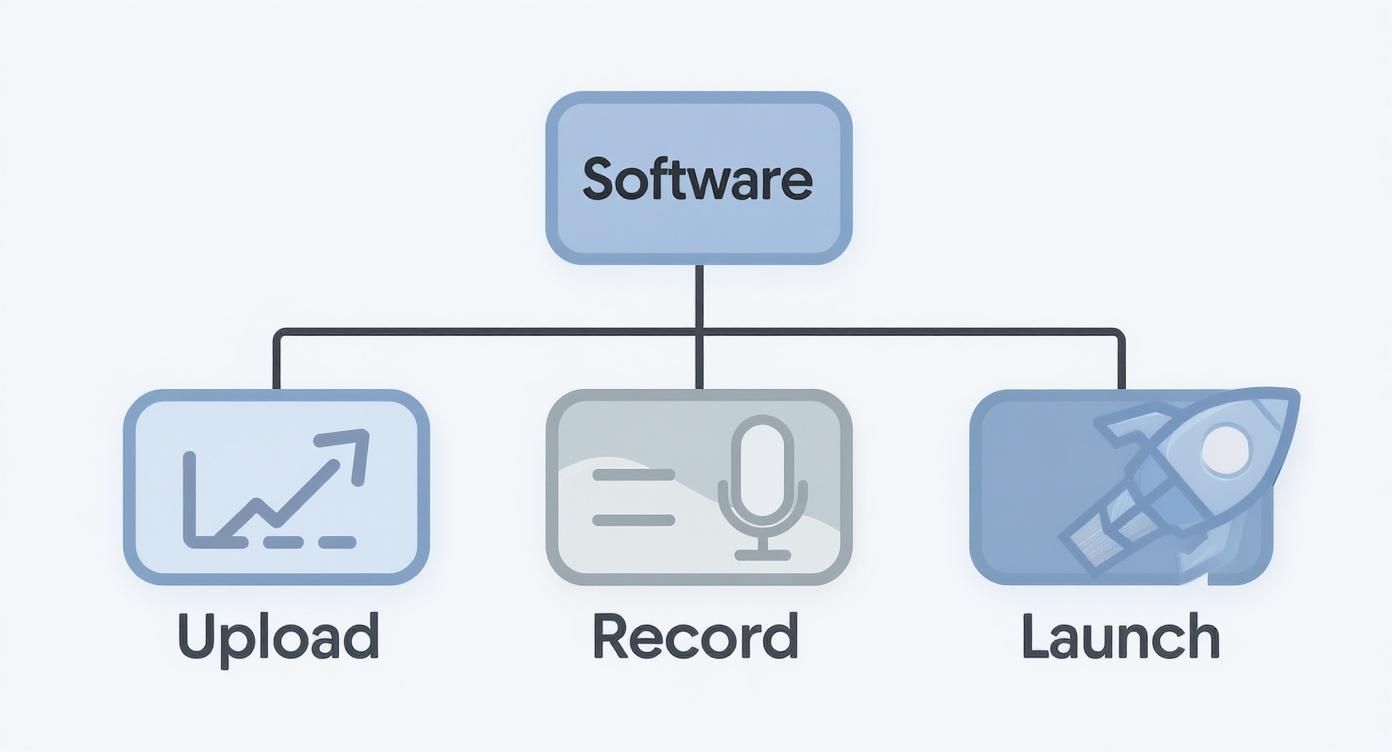
As you can see, the workflow is dead simple: upload your contacts, create your audio message, and launch your campaign. It makes a complex process feel easy.
One of the most powerful tools in the toolkit is ringless voicemail. This technology is pretty clever—it delivers your pre-recorded message straight to someone's voicemail inbox without their phone ever ringing. It’s the digital version of slipping a note under their door instead of banging on it. A ringless voicemail drop is a non-intrusive method perfect for marketing messages, follow-ups, and gentle reminders. Because you aren't interrupting their day with an unexpected call, it feels less like a sales pitch and more like a helpful heads-up they can check out when they have a minute. That level of respect for their time can do wonders for how people see your brand.
Ringless voicemail is all about delivering a message without the disruption. It’s incredibly effective for non-urgent updates where you want to share information without demanding immediate attention, making it a favorite for marketers and sales teams.
Next up is Text-to-Speech (TTS). This feature takes written text and converts it into a natural-sounding audio message on the fly. Its real magic is in creating personalization at a massive scale. By using simple merge tags—think placeholders like {first_name} or {appointment_date}—the software can generate a completely unique audio file for every single person on your list.
So, instead of a generic "This is a reminder about your appointment," you can send a message that says, "Hi Sarah, this is a reminder about your appointment on Tuesday at 2 PM." That personal touch makes the message far more relevant and engaging, which means higher listen-through rates and better results all around.
To really get the most out of your campaigns, the software needs to be smart about how and when it delivers calls. Two features are absolutely critical here: Live Answer Detection and Campaign Scheduling.
Live Answer vs. Answering Machine Detection: This tool figures out if a live person or a voicemail system picked up the phone. Based on what it detects, it can play different messages. For instance, a live person might get your main message, while an answering machine gets a shorter prompt to check their voicemail for more details. This ensures the right message gets delivered in the right context.
Campaign Scheduling: We all know timing is everything. Blasting out a marketing message at 3 AM is a fantastic way to make enemies. Campaign scheduling lets you plan your broadcasts for the perfect time and day, based on where your audience is and when they're most likely to listen. You can set campaigns to run during business hours, on specific dates, or even have them triggered by a user's action.
To help you see how these tools fit together, here’s a quick breakdown of the essentials you should look for in any modern voice broadcasting platform.
Essential Features of Modern Voice Broadcasting Software
These features, plus many others, are what give you total control over your outreach. To get a feel for the full range of capabilities, you can explore the complete feature set of modern voice broadcasting tools.
Finally, a non-negotiable component of any professional voice broadcasting software is its built-in compliance management. This absolutely has to include tools for managing a Do Not Call (DNC) list. When you upload your contacts, the software should automatically scrub them against both the National DNC Registry and your own internal list of opt-outs.
This automated check is your safety net. It removes any numbers that shouldn't be contacted, protecting you from potentially massive TCPA fines. It’s an essential feature that lets you run campaigns with confidence, knowing you’re respecting consumer privacy and following the law. Trying to manage compliance on a large scale without it would be a nightmare.
All the features in the world don't mean much until you see how they solve real, everyday problems for businesses and organizations. The true power of voice broadcasting software isn't just in sending a bunch of calls at once; it's about driving action, saving time, and creating a genuine connection with customers, patients, and supporters.
Let's dig into how different industries are using this technology to get things done. From Main Street shops to major healthcare providers, the applications are as varied as the problems they solve.
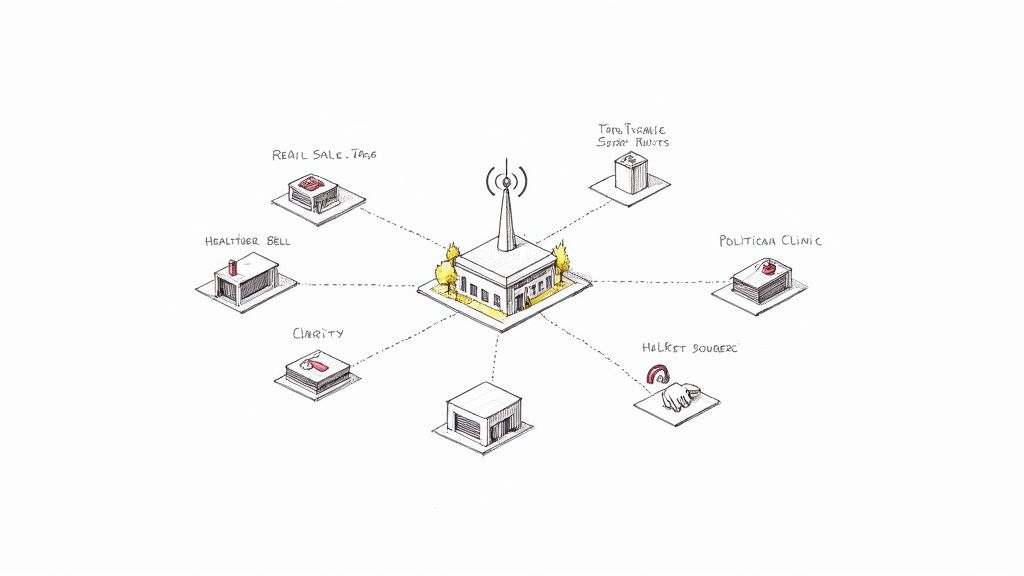
Picture a local boutique stuck with last season's inventory. A rainy Saturday has killed foot traffic, and the owner needs to turn the day around—fast. Calling their list of loyal customers one by one would take hours they just don't have.
This is where a voice broadcast campaign becomes a lifesaver.
This same idea works wonders for restaurants pushing a daily special, spas filling open appointment slots, or gyms trying to pack a new fitness class.
For any clinic, doctor's office, or hospital, patient no-shows are a killer. They drain resources, waste a provider's valuable time, and delay care for others who need it. Manual reminder calls work, but they tie up administrative staff for hours every day.
This is where automated voice reminders completely change the game.
By automating appointment confirmations, clinics can slash their no-show rates—often by 25% or more. This isn't just a small tweak; it directly improves scheduling, helps patients get the care they need, and boosts the bottom line.
A dental office, for instance, can set up a broadcast to automatically call patients two days before their visit. Using text-to-speech, every message is personalized: "Hi David, this is a friendly reminder of your appointment with Dr. Allen on Wednesday at 10 AM." It's a simple, automated touchpoint that keeps the schedule full without burning out the front desk staff.
When it's crunch time for an election or a big fundraising drive, you need to reach a lot of people quickly. Political campaigns and non-profits lean heavily on voice broadcasting to get their message out and rally support when it counts.
Beyond these classic uses, the technology is also being used for more advanced things like AI-enhanced phone surveys, which blend automated reach with intelligent data gathering.
For schools, city governments, and large companies, keeping everyone safe and informed is priority number one. Voice broadcasting is a non-negotiable tool for getting urgent information out to thousands of people instantly.
Think about a school district dealing with a sudden snowstorm.
The same process is critical for utility companies announcing a power outage, community groups sharing a last-minute event change, or property managers sending a building-wide alert. The incredible speed and reach of voice broadcasting software make it a cornerstone of any modern communication strategy.
Using voice broadcasting software isn't just about crafting a great message; it's about delivering it the right way. The power to contact thousands of people at once comes with some serious responsibilities, mainly designed to protect consumers. Getting a handle on these rules is the difference between a successful campaign that builds trust and one that burns bridges.
The big one you need to know is the Telephone Consumer Protection Act (TCPA). This federal law is the rulebook for any kind of automated calling. Ignoring it is a fast track to hefty financial penalties, so think of TCPA compliance as a non-negotiable part of your strategy.

If there's one TCPA concept to burn into your memory, it's express written consent. For most marketing calls, you absolutely must have clear, documented permission from people before you dial their number. They have to actively agree to get automated marketing calls from you.
Think of it like a digital handshake. A person filling out a form on your site and ticking a box that explicitly says, "I agree to receive automated marketing calls" is giving you that consent. Just grabbing a phone number from a business card or a public directory? That won't cut it.
The burden of proof is always on you, the sender. Keeping meticulous records of how and when each contact opted in is crucial for protecting your business and keeping your campaigns on the right side of the law.
The next layer you can't ignore is the National Do Not Call (DNC) Registry. Before you launch any campaign, you are legally required to scrub your contact list against this federal database and pull out any numbers registered on it.
Good voice broadcasting software handles this for you. When you upload a list, the platform should automatically check it against both the DNC registry and your own internal list of people who've opted out. It's a fundamental safeguard that protects you from expensive mistakes.
Beyond staying legal, there's the practical hurdle of deliverability. A perfectly compliant call is worthless if it gets flagged as spam or never even rings. A few key things determine whether your messages actually get through.
The market for these tools is exploding. The broader broadcasting solutions space is projected to jump from USD 10.33 billion in 2025 to about USD 19.69 billion by 2032. As more businesses rely on these tools, getting compliance and deliverability right becomes even more critical. Discover more insights about broadcasting solution market trends.
At the end of the day, mastering compliance and deliverability boils down to a simple principle: respect the person on the other end of the line. Get proper consent, honor opt-outs, and deliver something of value. Do that, and your voice broadcasting software will be a powerful asset, not a legal headache.
Picking the right voice broadcasting software can feel like a huge task, but if you break it down into a few key areas, the whole process gets a lot easier. You're not just buying a tool that sends out calls. You're looking for a platform that slots right into your workflow, grows with you, and has your back when you need support. Think of it like bringing on a new team member—you need the right fit for the job.
Let's start with the basics: user experience. The most feature-packed software in the world is useless if it’s a nightmare to use. A clean, intuitive interface means your team can get campaigns up and running fast without weeks of training, saving you time and a whole lot of headaches.
The campaigns you're running today might look very different a year from now. A platform that handles your list of 500 contacts should work just as smoothly when that list balloons to 50,000. True scalability means the software can take on way more volume without crashing or becoming overly complicated.
Look for a provider that’s built to grow with your business. This way, you won't find yourself in the painful position of having to switch platforms and migrate all your data right when your marketing is starting to hit its stride. The goal is to find a long-term partner, not just a short-term fix.
Voice broadcasting software usually comes in a few different pricing flavors. The best one for you really just depends on how you plan to use it.
When you're shopping around, it's a good idea to see a detailed breakdown of what each plan includes. You can see how different tiers work for different business sizes by checking out Call Loop's clear pricing plans.
Your voice broadcasting software shouldn't be on an island. It absolutely needs to connect with the other tools you rely on every day, especially your Customer Relationship Management (CRM) system. A solid integration lets data flow freely, so you can trigger automated calls based on actions your customers take.
For instance, when a new lead pops into your CRM, an integration could automatically add them to a welcome call sequence. This kind of automation gets rid of tedious manual entry and makes sure your follow-up is always on time. When looking for a solution, it's also smart to see how it works with the best lead scoring software to help you focus your efforts on the most promising contacts.
A platform that integrates smoothly with your existing tech stack transforms from a simple broadcasting tool into a central hub of your automated communication strategy, making every part of your workflow smarter and more connected.
Last but not least are two things that are easy to forget until it's too late: customer support and compliance. When something goes wrong mid-campaign, you need responsive, knowledgeable support that can actually solve your problem. See if providers offer help through live chat, email, and phone.
Just as critical are the platform's built-in compliance features. The software should have automated tools, like DNC list scrubbing, that help you stick to TCPA regulations without even thinking about it. This isn't just a nice-to-have; it's a must-have for protecting your business. And it’s a growing field—the broadcast automation software market was valued at USD 1.2 billion in 2024. Making a smart investment now will set you up for secure and successful campaigns down the road.
When you're diving into any new way of reaching people, you're bound to have questions. That's a good thing. Getting solid answers is the key to using voice broadcasting software the right way—confidently and effectively.
Let's clear up some of the most common questions so you can build a communication strategy that works.
Yes, absolutely—as long as you play by the rules. The big one you need to know is the Telephone Consumer Protection Act (TCPA). The most important thing to understand is what kind of message you're sending and who you're sending it to.
For any marketing-related message, you almost always need prior express written consent before you send an automated call. But for purely informational messages, like appointment reminders or emergency alerts, the rules around consent are often a bit different.
The smartest approach is to always use a platform with compliance tools built right in, like DNC list scrubbing. It's also wise to chat with legal counsel to make sure your specific plan checks all the federal and state boxes. This keeps your business safe and builds trust with your audience.
This one trips people up all the time, but the difference is pretty simple. "Voice broadcasting" is the umbrella term for sending any automated voice call to a list of phone numbers. A "standard broadcast" is what you probably think of first—it actively dials a number and makes the phone ring.
Ringless voicemail, on the other hand, is a specific method of delivery. It uses some clever tech to drop your audio message directly into someone's voicemail box without their phone ever ringing. It's a much less intrusive way to get your message across, making it perfect for marketing follow-ups or non-urgent updates.
Sending the calls is just the first step. To figure out if it's actually working, you need to look at the numbers. The analytics dashboard in your software is your mission control for tracking performance and figuring out your return on investment.
Here are a few key metrics to keep an eye on:
By watching these numbers, you can start testing different messages, call times, and offers to see what gets you the best results.
Not only can you, but you absolutely should. A generic, one-size-fits-all message just doesn't cut it anymore. Good voice broadcasting software uses Text-to-Speech (TTS) technology along with merge tags to create a unique message for every single person on your list.
Think of it like a mail merge for your voice. You upload your contact list with columns for names, appointment times, or any other detail you want to include. The system then dynamically pulls that data to create a personalized audio message, like, "Hi Jessica, this is a reminder of your meeting on Friday at 3 PM."
This one small step makes your outreach feel more human and relevant, which dramatically boosts the chances that your audience will listen and act. It turns a mass broadcast into something that feels like a one-on-one conversation.
Ready to see how simple and effective your outreach can be? Call Loop provides a powerful, multi-channel messaging platform with robust tools for voice broadcasting, ringless voicemail, and SMS campaigns, all built with compliance in mind. Start automating your communication with Call Loop today.
Chris Brisson
Chris is the co-founder and CEO at Call Loop. He is focused on marketing automation, growth hacker strategies, and creating duplicatable systems for growing a remote and bootstrapped company. Chat with him on X at @chrisbrisson


Trusted by over 45,000 people, organizations, and businesses like


