
See a Demo
You're just one step away from seeing Call Loop in action.
Enter your information below to watch a demo right now.

You're just one step away from seeing Call Loop in action.
Enter your information below to watch a demo right now.

You send a customer a quick text: “All set 🙂.”
You mean “no problem.” They might read “fine, whatever.”
That's the main issue behind the question what do the emoji smiley faces mean. In personal chats, a fuzzy interpretation is usually harmless. In business messaging, the same fuzzy interpretation can change how a reminder, promotion, follow-up, or ringless voicemail notification lands.
For SMBs, smileys are useful. They can soften tone, add warmth, and make automated outreach feel more human. They can also make a message feel flippant, too casual, or passive-aggressive if the audience reads them differently than you intended.
Emoji use is no longer fringe behavior. According to Emojipedia's emoji usage stats, the Unicode Standard included 3,790 emojis as of September 2024, and 21.54% of tweets included at least one emoji. That matters because customers don't treat emojis as novelty anymore. They treat them as part of normal digital language.
A lot of businesses still make one basic mistake. They assume a smiley face has a stable meaning across every channel and audience. It doesn't.
A smiley in an appointment reminder can make the message feel warmer. The same smiley in a billing update can feel careless. The same smiley after a customer complaint can look dismissive, even if your team meant to sound friendly.
Outbound communication has less room for ambiguity than casual chat. In SMS marketing, appointment reminders, customer service follow-ups, and ringless voicemail notifications, people often scan fast. They don't pause to interpret your good intentions.
That means the emoji gets read as tone shorthand.
Practical rule: In business messaging, a smiley doesn't just add emotion. It changes how the entire sentence is interpreted.
If you run a local service business, clinic, agency, studio, or ecommerce brand, the goal isn't to use more emojis. The goal is to use the right emoji in the right moment.
Smileys tend to work best when the message already has a clear purpose and the emoji adds warmth.
They backfire when they try to carry the message by themselves.
The business takeaway is simple. Don't ask whether emojis are good or bad. Ask whether a specific smiley helps the reader understand your intent faster and more accurately.
Research on emoji interpretation found that people read emojis in ways tied closely to emotions and affective processing, which is why they function more like nonverbal cues than literal pictures, as explained in this study on emoji interpretation. That's the right lens for business use. A smiley is less like clip art and more like facial expression.
Here's the practical version. Don't memorize every face. Group them by the job they do in a message.
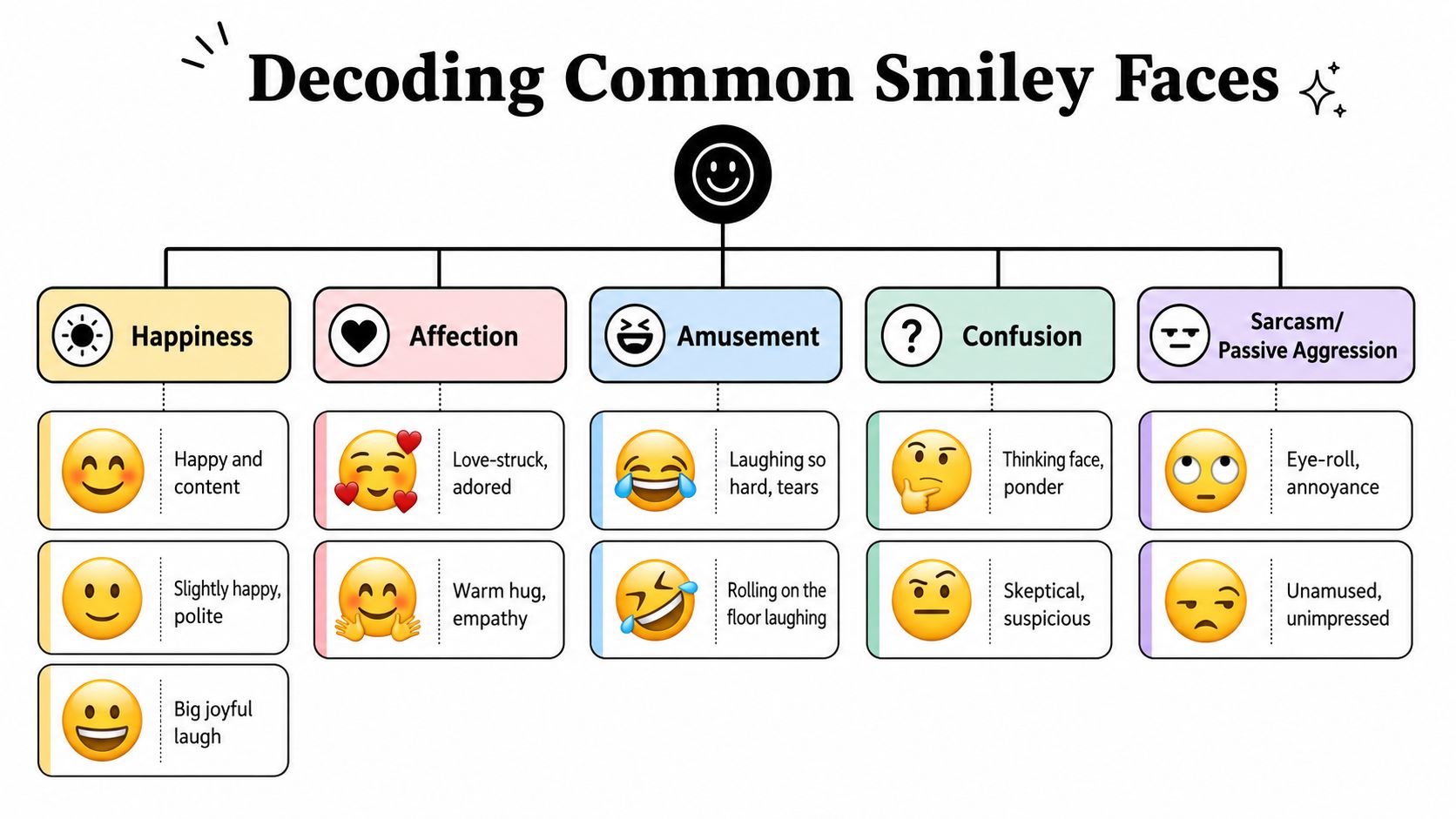
These are the safest smileys for most customer-facing messages.
Businesses get into trouble here.
This is one of the clearest examples of why the question isn't just “what do the emoji smiley faces mean,” but “what do they mean in this sentence, from this sender, to this audience?”
These work best in brands with a clearly casual tone.
These can be effective, but they need audience fit.
These generally belong outside outbound marketing unless your brand voice is intentionally playful and highly familiar.
Here's a quick reference for teams building SMS and follow-up templates.
EmojiCommon Positive MeaningPotential Negative or Ambiguous Meaning😊Warmth, gratitude, friendlinessCan feel overly soft if the message is serious😄Joy, enthusiasm, celebrationCan feel too energetic for routine updates☺️Gentle kindness, pleasantnessMay feel dated or overly delicate🙂Polite, mild positivityCan sound passive-aggressive or dismissive😂Real laughter, humorCan make a business message feel too casual🤣Big amusementCan look exaggerated or try-hard🥰Affection, appreciationCan feel too intimate for some audiences🤗Reassurance, empathyCan seem forced if the text isn't sincere🤔ThoughtfulnessCan imply doubt or challenge🙄Frustration, disbeliefUsually reads as rude in professional use
If you want another example of how context changes interpretation, this roundup of get well soon emoji ideas is useful because it shows how warmth changes based on the situation, not just the symbol.
A lot of teams assume smileys are automatically positive. That assumption causes most of the mistakes.

The emoji itself matters less than the relationship, message type, and reader expectations. A customer who already likes your brand may read 🙂 as friendly. A frustrated customer may read the exact same character as “we're done with this conversation.”
Workplace guidance notes that Gen Z may interpret emojis like 🙂 as sarcastic or passive-aggressive, while Baby Boomers and Gen X are more likely to read them as simple positive affirmation, according to this guide to emoji meanings and etiquette. That gap explains a lot of awkward business messaging.
If your staff writes texts the way they text friends, they may assume the smiley lands cleanly. It may not.
A few context factors usually decide the outcome:
A smiley after bad news rarely softens the blow. It usually makes the sender look less aware of the situation.
Here are common examples of what not to do:
The better move is to make the words carry the clarity, then decide whether the emoji still helps.
Before adding a smiley, ask three questions:
For teams that want to get more systematic about tone, it helps to review examples through expert implementation of sentiment analysis. Not because software can solve emoji nuance on its own, but because structured tone review teaches teams to spot wording that feels warmer, flatter, or more defensive before it reaches customers.
Even when you choose the right emoji, the design may not look the same on every device. That happens because the Unicode standard defines the emoji concept, but companies render their own visual versions.
So the same smiley might look softer on one phone and slightly more awkward on another. In casual chat, people usually adapt. In business communication, that visual shift can alter tone.
Platform differences usually matter most with subtle facial expressions.
This is one reason simple, broadly understood smileys tend to outperform nuanced ones in outbound campaigns.
You don't need to test every emoji under the sun. You do need a sensible default.
If a message still reads correctly when the emoji is removed, you're in a good place. That's the safest standard for cross-platform communication.
The best business use of smileys is modest. They should support the message, not become the message.
A neighborhood dental office might send a reminder that says, “You're scheduled for tomorrow at 2:00 PM. Reply C to confirm 😊.” That works because the operational detail is clear. The smiley just takes the robotic edge off.
A home services company might text after leaving a ringless voicemail: “We just left you a quick voicemail about your estimate. Call or reply when ready 😊.” Again, the emoji isn't doing persuasion. It's reducing friction.

Promotional texts need restraint. One smiley can make a sale alert feel more conversational. Several can make it look noisy.
Example:
“Weekend special is live. Reply YES if you want the details 😊”
That feels human.
“Weekend special is live!!! 😊🎉🔥” often feels pushed.
These are ideal for gentle warmth because the customer usually wants the information quickly.
Examples:
This use case is underrated. If you send a text after a ringless voicemail drop, a smiley can signal that the message is approachable rather than urgent or alarming.
Examples:
That said, don't add a smiley if the voicemail covers something sensitive. Health updates, billing issues, and complaints need straightforward wording.
They tend to weaken messages in three situations:
Field note: If the customer's main question is “What happened?” a smiley usually feels premature. Answer the question first.
A good broader framework for channel mix, sequencing, and follow-up is this guide to customer outreach strategies for 2026. It's useful when you're deciding not just what emoji to send, but whether SMS, voice, or ringless voicemail is the better touchpoint in the first place.
Organizations don't need a giant emoji playbook. They need a clean checklist before hitting send.
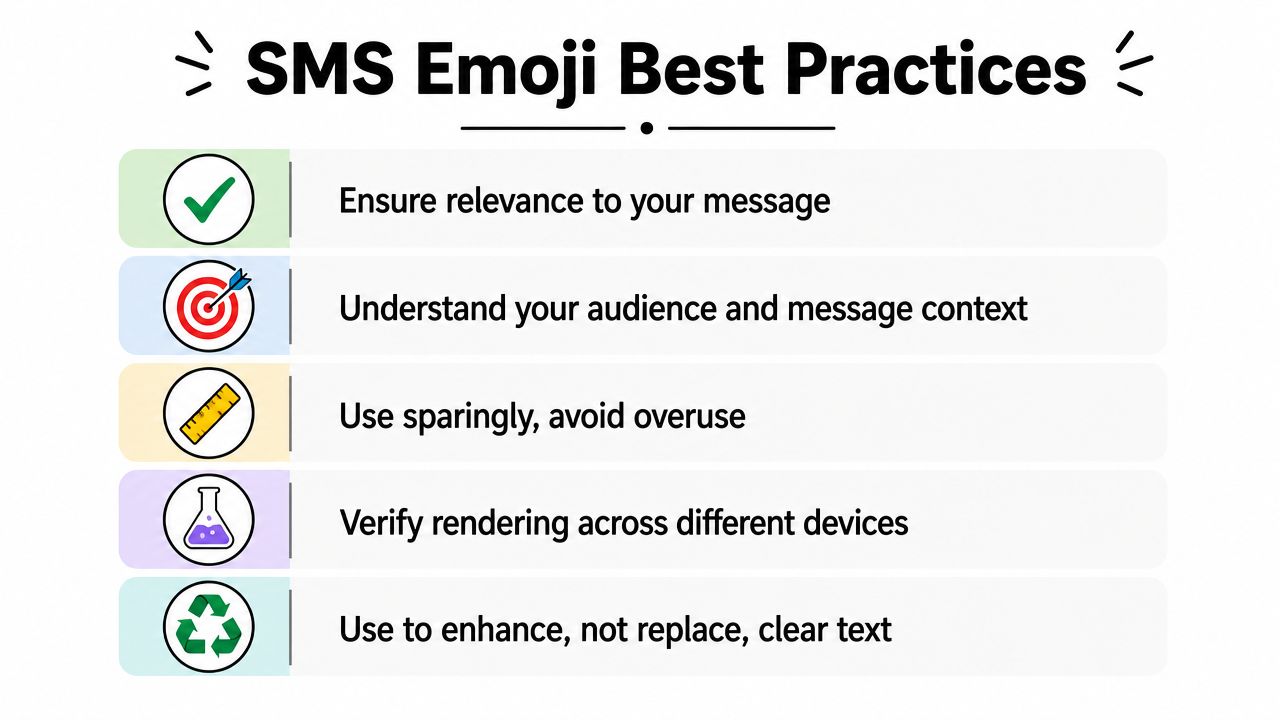
Run this before any campaign, reminder sequence, or ringless voicemail notification text goes live:
If you want a broader reference for message hygiene, compliance, and tone, this expert guide on SMS marketing success is worth reviewing alongside your own internal standards. For a platform-focused operational checklist, Call Loop's guide to SMS marketing best practices is also a useful companion.
The short version is this. Smileys work best when they clarify warmth that already exists in the copy. They work worst when teams use them to patch over blunt writing, vague messaging, or tense conversations.
If your team sends SMS, voice broadcasts, or ringless voicemail at scale, Call Loop gives you a practical way to build clear, personalized outreach without making it feel robotic. You can automate reminders, promotions, and follow-ups across channels, then keep the tone consistent with segmentation, scheduling, merge fields, and campaign controls that help every message land the way you intended.
Chris Brisson
Chris is the co-founder and CEO at Call Loop. He is focused on marketing automation, growth hacker strategies, and creating duplicatable systems for growing a remote and bootstrapped company. Chat with him on X at @chrisbrisson


Trusted by over 45,000 people, organizations, and businesses like


