
See a Demo
You're just one step away from seeing Call Loop in action.
Enter your information below to watch a demo right now.

You're just one step away from seeing Call Loop in action.
Enter your information below to watch a demo right now.

Automated text messaging is pretty simple at its core: it's using software to send and receive SMS messages without you having to manually type out every single one. It lets you schedule campaigns ahead of time, send messages automatically based on what a customer does, and manage tons of conversations at once. Basically, it turns a simple text into a powerhouse for connecting with your customers.
In a world where emails go unopened and social media posts get scrolled past, getting your message directly into your customers' hands is a huge win.
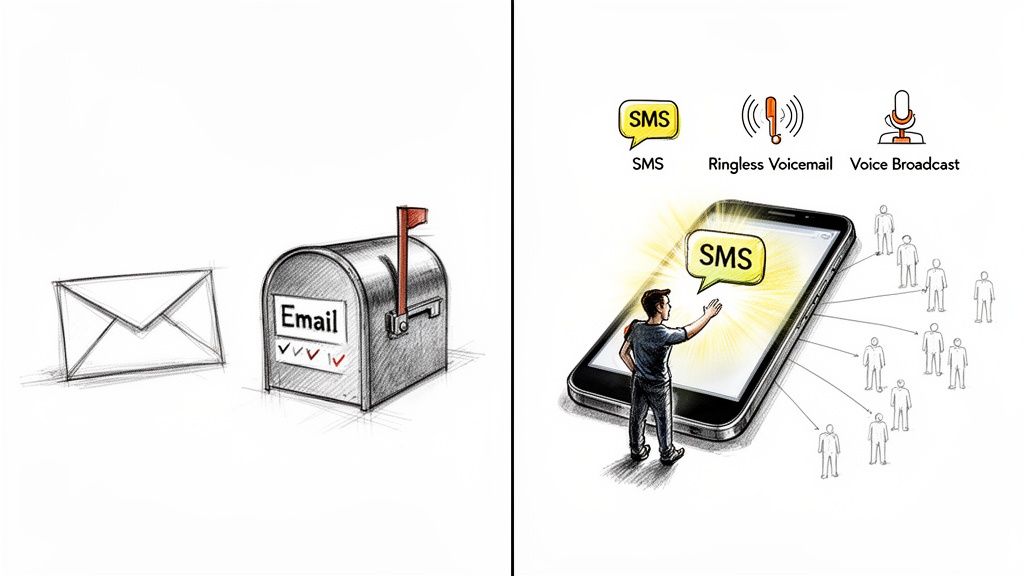
Think of it this way: traditional marketing can feel like sending a letter that might show up days later and get buried in a pile of mail. Automated text messaging, on the other hand, is like tapping someone on the shoulder with a timely, relevant update they’re almost guaranteed to see.
This direct line of communication is what delivers such an immediate impact. If you're familiar with how email marketing automation works, SMS takes that same idea and puts it on steroids with nearly instant engagement. It's a rock-solid channel for building real customer relationships and getting people to take action.
This move toward SMS isn't just a trend; the engagement numbers are staggering. Text messaging has become an absolute powerhouse for small businesses, with 64% of them already using SMS for their marketing.
And it's a smart choice, too. An incredible 90% of text messages are read within just 3 minutes of being delivered. That completely blows typical email open rates out of the water and makes SMS the clear winner for time-sensitive promotions and quick customer nudges.
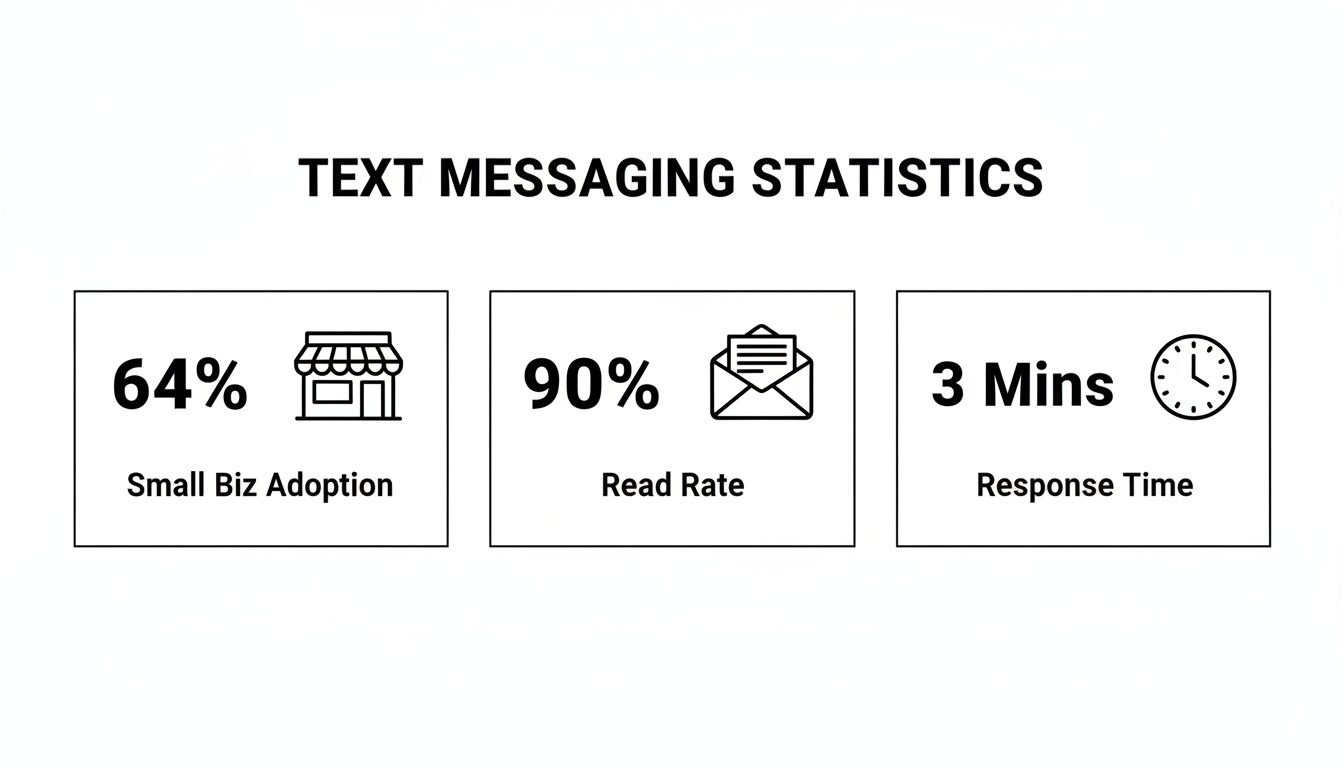
These numbers don't lie. SMS isn't just popular; it's a channel that ensures your message actually gets seen—and fast.
When you stack automated texting against older channels, its advantages for immediate communication become crystal clear. It's not about replacing email or social media entirely, but understanding where SMS truly shines.
This table really highlights why SMS is the go-to for messages that need to be seen now. For building relationships and delivering time-sensitive info, it's in a league of its own.
A truly killer strategy doesn't just stick to one channel. The smartest businesses are mixing automated SMS with other powerful tools to create a complete communication system.
This multi-channel approach might include tools like:
By combining these methods, you create a layered communication plan. An automated text can remind a client of an appointment, a ringless voicemail can add a personal "thank you" after a purchase, and a voice broadcast can announce a major sale to everyone at once.
This integrated approach ensures your message isn't just delivered, but that it's experienced in the most effective way for each scenario. It makes automated messaging a true cornerstone for any business looking to grow.
Look, sending automated texts is one thing. But sending the right texts is a completely different ballgame. The real magic happens when you move beyond generic blasts and start using the specific tools that turn a simple messaging platform into a powerhouse for your business.
Think of it like this: anyone can toss a bunch of ingredients into a pan. A real chef, though, uses specific techniques and tools to turn those same ingredients into an unforgettable meal. It's not just that you're texting; it's how you're doing it. By getting smart with features built for precision, every message lands with impact because it feels timely, relevant, and personal. That’s how you stop being noise and start building real relationships.
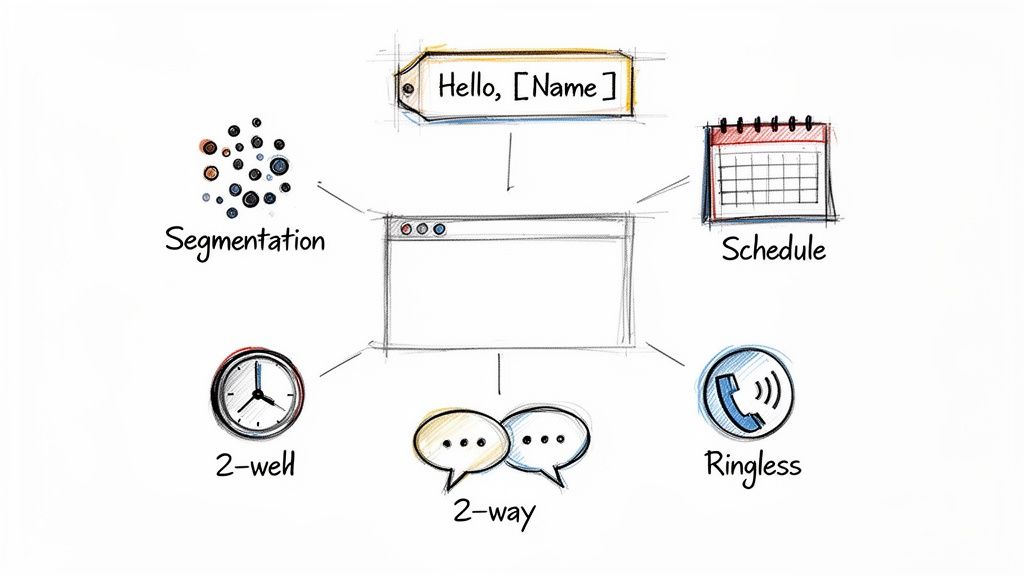
First up is segmentation. This is simply the art of slicing your big contact list into smaller, more focused groups based on things they have in common. Instead of a one-size-fits-all text, you can send super-targeted messages. This isn't just a "nice-to-have," either. Research shows that businesses that get personalization right can boost revenue by up to 40%, and good segmentation is where it all starts.
Let’s say you run a karate studio. You could easily segment your list into groups like:
See? Every person gets information that's actually useful to them. Engagement shoots up, and the chances they'll opt out go way down.
Once your audience is segmented, personalization tags are your next best friend. These are just little placeholders in your message template—like [FirstName]—that automatically pull in specific info for each contact. Think names, appointment times, or even what they last bought.
A generic message like "Your appointment is tomorrow" gets the job done, but it's cold.
Using personalization, it becomes: "Hi [FirstName], just a friendly reminder about your appointment tomorrow at [AppointmentTime]. We look forward to seeing you!"
That tiny change flips a sterile notification into a warm, personal conversation. It tells your customers you see them as people, not just numbers on a spreadsheet. That’s a powerful way to build some serious loyalty.
Sometimes a text message just doesn't cut it. When you need to convey a bit more warmth or personality, ringless voicemail is the perfect tool. This tech drops a pre-recorded audio message straight into someone's voicemail box without their phone ever ringing.
Ringless voicemail is the secret weapon for adding a human touch without being pushy. It feels less like a sales call and more like a thoughtful, personal message they can listen to whenever they have a free moment. Ringless voicemail software makes this process scalable and efficient.
Here’s where it really shines:
Because it doesn't interrupt their day, it’s a killer way to make a memorable impression while staying compliant.
Finally, any platform worth its salt has two-way messaging. This is a must-have feature that lets customers reply directly to your automated texts, opening the door for actual conversations.
It's the difference between shouting from a megaphone and having a real dialogue. Customers can ask questions, you can book appointments, and you can solve problems right then and there. This is how you stop broadcasting and start communicating—and that’s essential for building strong customer relationships that last.
Knowing the features of an automated texting platform is one thing. Seeing how it actually makes a difference in the real world? That's where things get interesting. This is all about moving from theory to practice—applying specific strategies to boost sales, streamline your day-to-day, and build much stronger relationships with your customers.
From quick-fire marketing promos to essential service reminders, the ways you can use automated SMS are as varied as the businesses themselves. Let's dig into how you can turn your messaging from a simple notification tool into a serious engine for growth.
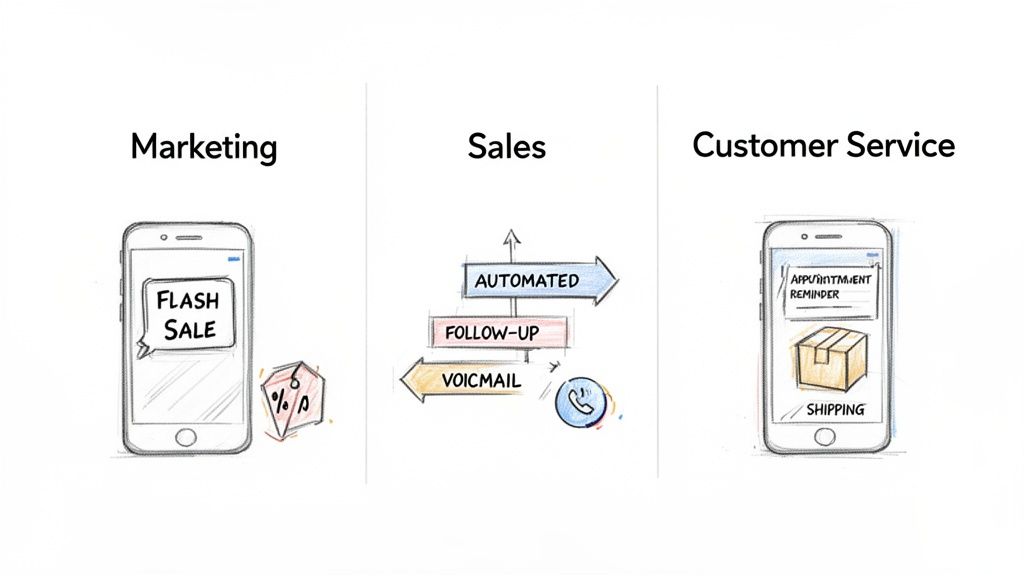
For anyone in marketing, getting seen and getting seen fast is the name of the game. Automated SMS gives you a direct line to your customers for promotions that need immediate attention, cutting right through the clutter of a packed email inbox.
A classic move that works incredibly well is the bulk SMS flash sale. Picture a retail shop having a slow Tuesday afternoon. They can shoot a targeted message to their subscriber list announcing, "25% off everything for the next 3 hours!" The urgent nature of a text means it gets seen in minutes, driving a wave of customers who would have completely missed an email.
Another killer tactic is using text-to-join keywords. You can promote a simple keyword like "DEALS" on your social media, in-store signs, or website. When a customer texts that keyword to your number, they're automatically added to your contact list and can get an instant welcome text with a discount code. It’s a fantastic way to quickly build a list of people who actually want to hear from you.
In sales, timing and persistence are everything. Automated follow-up sequences are your secret weapon, making sure no lead ever slips through the cracks. They nurture prospects from a casual inquiry to a closed deal, all without you lifting a finger.
Think about a real estate agent who just finished showing a house. They can have an automated sequence ready to go:
This mix of automated texts and a personal ringless voicemail creates a follow-up process that feels persistent but not pushy. That ringless voicemail is a great touch—it lets the prospect hear the agent's voice and feel a real connection without the pressure of answering a live call.
Automation is no longer a niche tactic; it’s how modern businesses use SMS. A whopping 80% now use software to power their strategies. The numbers don't lie: SMS open rates can hit an incredible 98%, with response rates often reaching 45% or more, blowing email's 6% out of the water. For retail and e-commerce, this translates directly to sales, with some SMS campaigns boasting conversion rates between 29-45%. You can read the full research about these powerful SMS marketing statistics.
Beyond just marketing and sales, automated messaging is a total game-changer for customer service and just running your business more efficiently. It cuts down on tedious admin work while keeping your customers in the loop and happy.
Appointment reminders are the perfect example. A home service company can automatically text a customer 24 hours before a visit to confirm the time. This simple step has been shown to slash no-shows by over 35% for some businesses, saving a ton of time and money.
Likewise, e-commerce stores use automated shipping notifications to update customers every step of the way—from "order confirmed" to "out for delivery." For service businesses, automated payment reminders can gently nudge clients about an upcoming or overdue invoice, helping cash flow without having to make those awkward phone calls. These small, automated touchpoints add up to a smooth, professional experience that builds major trust and loyalty.
Alright, so you're ready to jump into automated text messaging. It can feel like a big leap, but honestly, getting your first campaign out the door is more straightforward than you might think. With a solid plan, you can start connecting with your customers in a way that feels direct and personal.
Let's walk through the essential steps, from building your audience to hitting "send" with total confidence.
First things first: your contact list is the absolute bedrock of any successful SMS campaign. But you can't just scrape together a bunch of phone numbers and start blasting away. The single most critical step is getting explicit consent, or an "opt-in," from every single person you text. This isn't just a friendly suggestion; it's a legal must-have.
Getting clear permission before you send a single message is non-negotiable. It makes sure you're talking to people who actually want to hear from you, which skyrockets your engagement and keeps your business safe.
Here are a few proven ways to build a list that's both compliant and eager to hear from you:
Always be upfront about what they're signing up for—what kind of texts they'll get and how often. A list built on transparency is a list of people who are already fans of your brand.
Once you've got a plan for building your list, it's time to pick your software. This platform will be your command center for creating, sending, and tracking everything. You'll want to find a tool that packs a punch with its features but is still easy to get the hang of, especially when you're just starting out.
Look for these key features:
Your text is a direct line to your customer's pocket, so make it count. The message has to be clear, concise, and compelling. You don't have a lot of real estate, which is actually a good thing—it forces you to get right to the point.
Here’s a dead-simple formula for a killer text:
For example: "Hey from The Corner Cafe! Show this text for a FREE coffee with any pastry today only. See you soon!"
Message written? Great. Now it's time to automate it. This could be a simple broadcast scheduled for a specific time, or something a bit more advanced, like an automatic welcome message that fires off the moment someone subscribes.
Before you launch your campaign to the whole list, always, always send a test message to yourself and maybe a couple of team members. Check for typos. Make sure your links work. Does the message flow well? This one simple check can save you from a majorly embarrassing mistake. After all, you only get one shot at a first impression.
If you want to go deeper, you can learn more about how to send automated texts in our more detailed guide.
To help you stay on track, we've put together a quick checklist to run through before you hit the launch button.
This simple table will help ensure you've covered all your bases for a successful—and compliant—first automated messaging campaign.
Following these steps isn't just about avoiding mistakes; it's about setting yourself up for a campaign that truly connects with your customers and brings back real results. Good luck
Launching a campaign is just the first step. The real magic happens when you start to measure, understand, and constantly improve your automated texting strategy.
Simply blasting out messages and hoping for the best won't cut it. You have to know what's working, what's falling flat, and why. This is how you turn your data into a powerful feedback loop that makes every single message you send more impactful than the last.
It’s all about focusing on the numbers that actually move the needle for your business, not just vanity metrics.
To get a clear picture of how your campaigns are really doing, you need to keep an eye on a few core metrics. Each one tells you a different part of the story, from whether your texts are even being seen to whether they’re actually getting people to act.
Here are the four big ones you should be watching:
Tracking these numbers gives you a baseline for performance. From there, you can spot trends and pinpoint exactly where you need to make improvements. For a deeper dive, check out our guide on measuring marketing campaign effectiveness.
Data is pretty useless unless you use it to make smarter decisions. If you notice one of your key metrics is underperforming, don't look at it as a failure—see it as a huge opportunity to optimize.
For example, if you're seeing a low Click-Through Rate (CTR), your message probably isn't hitting the mark. Ask yourself: is my call-to-action crystal clear? Is the offer good enough to make someone stop scrolling and tap my link? A simple tweak from "See our deals" to "Tap here for 50% off today only!" can make a world of difference.
On the other hand, a high Opt-Out Rate is a major red flag. It usually means you're either sending the wrong message to the right person or you're just texting them way too often. This is your cue to get serious about list segmentation. Make sure you're only sending promotions to people who asked for deals and appointment reminders only to clients who actually have an appointment.
By continuously analyzing these metrics and tweaking your approach, you create a powerful cycle of improvement. Each campaign becomes a learning experience that refines your strategy, strengthens customer relationships, and ultimately drives a better return on your investment.
Think of it like having a conversation. If people aren't responding (low CTR) or are walking away (high opt-out rate), you need to change what you're saying. The data tells you exactly how to adjust your tone, timing, and content to keep that conversation going and hit your goals.
Automated messaging is useful on its own, but it becomes a real powerhouse when you connect it to the other software you use every day. The goal isn't just to send texts; it's to weave messaging into the very fabric of your business operations.
Think of it this way: when your tools are disconnected, you're the one doing all the manual labor. You have to check your CRM for a lead's status, then log into your e-commerce store to see a new purchase, then finally open your texting app to send a message. It’s clunky, slow, and a recipe for mistakes.
This is where integrations come in. By linking your messaging platform to your other apps, you create a seamless flow of information that saves a ton of time and makes your customer experience feel incredibly professional.
Many platforms offer direct connections, but a service like Zapier acts as a universal bridge, letting thousands of different apps talk to each other. Exploring options for marketing workflow integration can give you a good sense of what's possible. These connections are the secret sauce behind powerful, hands-off communication.
Once your tools are connected, you can set up triggers that automatically kick off messaging sequences based on actions happening elsewhere. This is how you eliminate repetitive tasks and guarantee that every message is timely and relevant.
Here’s what that looks like in the real world:
These aren't just one-off messages; they're parts of a self-running system that frees you up to focus on what really matters—growing your business. For a deeper dive, our guide on workflow marketing automation has even more strategies.
For some businesses, integrations are about more than just efficiency; they’re about compliance. In fields like healthcare, any software that touches patient information absolutely must be HIPAA compliant.
A secure, compliant messaging platform can be safely integrated right into a healthcare workflow. This allows a doctor's office to send automated, HIPAA-compliant appointment reminders or follow-up instructions directly from their patient management system. It's a simple change that drastically reduces no-shows while ensuring every communication meets strict legal standards, protecting both the patient and the provider.
Jumping into any new communication channel is going to bring up a few questions. That’s a good thing. When it comes to automated text messaging, most of the uncertainty I hear about boils down to cost, compliance, and how it all actually works.
Getting clear, direct answers helps you move forward with confidence, knowing you’re making a smart move for your business.
Let's tackle some of the most common questions head-on.
Not at all. While costs can vary, automated text messaging is actually one of the most cost-effective channels out there, mainly because the engagement and conversion rates are just so high. The return you get often blows other methods out of the water.
Think about it this way: preventing just a couple of no-shows for high-value appointments or closing one extra sale a month can easily pay for the entire service. Many platforms have flexible plans based on your usage, and tools like ringless voicemail often only charge you for successfully delivered messages, which really stretches your budget.
This is a big one, so listen up. The golden rule is getting express written consent from your contacts before you send them any marketing texts. This is a non-negotiable requirement under the Telephone Consumer Protection Act (TCPA).
You also have to clearly identify who you are in your messages, give people a simple way to opt out (like replying STOP), and honor those opt-out requests immediately. A double opt-in process is a fantastic best practice we always recommend. The good news is that reputable platforms build these compliance tools right into their service to make managing all this practically effortless.
I’d strongly advise against it. Using a dedicated business number (like a 10DLC or toll-free number you get from a messaging platform) is essential for looking professional, being able to scale, and staying compliant.
A dedicated number is what unlocks all the powerful automation features and lets you send messages to your whole list at once. It also keeps your personal life separate from your business communications. Plus, these platforms handle all the necessary carrier registration for you to ensure your messages actually get delivered—something you simply can’t do with your personal cell.
Ringless voicemail is a slick piece of tech that drops a pre-recorded audio message straight into someone's voicemail inbox without ever making their phone ring.
Unlike a traditional call that can interrupt someone's day, this method is completely non-intrusive. It’s perfect for personal-touch follow-ups or important updates because it lets the person listen to your message whenever it's convenient for them. It feels less like a sales pitch and more like a helpful, respectful check-in.
This unique approach is incredibly effective for connecting with customers in a way that feels personal yet doesn't demand their immediate attention.
Ready to see what automated SMS, voice, and ringless voicemail can do for you? Call Loop gives you all the tools you need to build powerful, compliant, and scalable outreach campaigns that get real results. Start your free trial today and see the difference for yourself.
Chris Brisson
Chris is the co-founder and CEO at Call Loop. He is focused on marketing automation, growth hacker strategies, and creating duplicatable systems for growing a remote and bootstrapped company. Chat with him on X at @chrisbrisson


Trusted by over 45,000 people, organizations, and businesses like


