
See a Demo
You're just one step away from seeing Call Loop in action.
Enter your information below to watch a demo right now.

You're just one step away from seeing Call Loop in action.
Enter your information below to watch a demo right now.

An automatic SMS reply is pretty straightforward: it's a pre-written text message that gets sent instantly when a contact takes a specific action, like texting a keyword to your number or filling out a web form. Think of it as your always-on digital receptionist, ready to acknowledge new leads, confirm appointments, or welcome new subscribers 24/7 without you lifting a finger.
It’s the simplest way to turn a one-way broadcast into a genuine two-way conversation.
In a world of overflowing inboxes and ignored emails, getting a direct and immediate line to your customers is a superpower. An automatic SMS reply isn't just a neat little tool; it’s a core part of a modern communication plan that makes people feel heard, valued, and instantly connected. This simple bit of tech shifts customer interactions from passive to active, building rapport from the very first text.
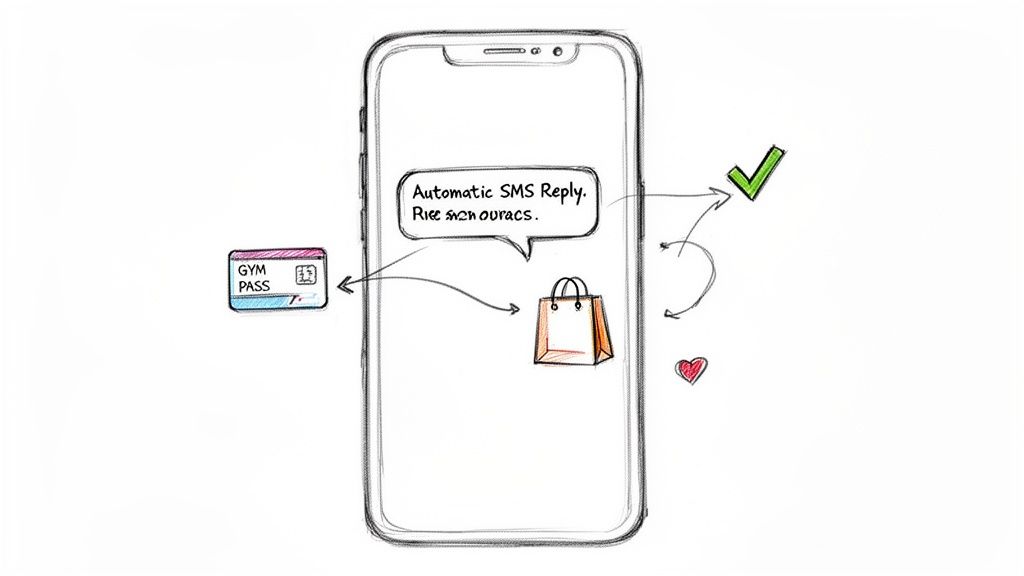
Let’s look at a real-world example. A local gym runs a social media ad promoting a free day pass. When someone texts "PASS" to their number, an automated reply instantly delivers the digital pass and a quick welcome message. Boom. You've captured that person's interest at its absolute peak.
It’s the same for an online store. A customer sends a support query, and an auto-reply immediately lets them know their message was received and is in the queue. That simple acknowledgment can make all the difference.
This kind of responsiveness is incredibly powerful, delivering outsized results for minimal effort. Automated SMS replies can power a significant portion of e-commerce orders, often showing double the conversion rate you might expect from a typical email campaign. Platforms like Call Loop give businesses the power to set up these critical touchpoints so that timely outreach happens automatically.
The real magic of automation isn't just in that first message. A smart setup can trigger entire communication sequences.
Imagine this: a new lead gets an instant SMS, and then a day later, they receive a ringless voicemail. You've just delivered a personal-sounding message right to their voicemail inbox—without their phone ever ringing. It’s a fantastic way to reinforce your text in a non-intrusive, personal way. This strategy, often called a ringless voicemail drop, is perfect for follow-ups that feel more personal than a text but are less disruptive than a live call.
By automating these initial touchpoints, you free up your team to focus on the high-value conversations that really matter. The goal isn't to replace human interaction but to make it more meaningful by handling all the repetitive tasks instantly.
This combination of an immediate text and a thoughtful follow-up creates a persistent but respectful presence. For any business looking to grow, mastering this kind of automation is no longer just a "nice-to-have." It's essential for building a communication engine that can scale.
To get started, check out our guide on SMS marketing best practices to learn how to put these strategies to work.
Putting together a killer automatic SMS reply campaign is about more than just firing off a quick message. The campaigns that truly move the needle are built on a solid strategy, and that always starts with one single, clear goal. Before you even think about writing, nail down exactly what you want this automation to achieve.
Are you trying to scoop up new leads? Maybe you need to confirm appointments and slash your no-show rate. Or perhaps you just want to give customers an instant acknowledgment that their support ticket is in the queue. Each of these goals demands a totally different touch. A fresh lead should get a warm welcome and a question to get the conversation rolling, while an appointment confirmation needs to be straight to the point.
Your goal is the bedrock of your message. Without a sharp objective, your text will land flat—feeling generic and, frankly, pretty useless. Think about the specific action that triggers the reply and what the perfect outcome looks like on the other side.
For instance:
Sorting this out first makes sure every single word you write has a job to do.
With your goal locked in, it's time to write the copy. Here's the secret: the best automated messages don't feel automated at all. They should feel personal, almost like a one-on-one conversation. This is where merge tags are your secret weapon.
Popping in a simple tag like [FirstName] can transform a robotic blast into a personal handshake. Just look at the difference:
See? The second one is instantly more engaging. It builds a connection and tells the recipient you see them as a person, not just another phone number. I always recommend using at least one piece of personal info to make the interaction feel human. If you want to go deeper on this, check out our complete guide on how to send automated texts.
Keywords are basically the magic words that kick off your automated sequences. When someone texts a specific word like "JOIN," "DEALS," or "SUPPORT" to your number, it can trigger a unique, pre-written automatic reply. This simple trick turns a one-way message into a two-way, interactive experience.
A smart keyword is more than just a word; it's a clear call-to-action that funnels people into the exact conversation they want to have. It's the cleanest way to segment your audience and give them what they're asking for, right when they ask for it.
Think about a real estate agent using different keywords for their listings. Texting "123MAIN" could trigger a reply with photos and details for that specific house, while texting "TOUR" sends back a link to their booking calendar. This lets you manage a ton of different campaigns from a single number, delivering a perfectly tailored response every single time.
Going beyond a single, automatic SMS reply is where you unlock some serious growth. It’s time to build out sophisticated workflows that nurture leads and engage customers pretty much on autopilot. This is how you transform a simple text into a multi-step, multi-channel conversation and scale those personal touchpoints without adding more to your plate.
Imagine a new lead fills out a form on your website. Instead of just one confirmation text, you can design a full drip campaign. The lead instantly gets a welcome SMS. But what if they don't reply? After 48 hours, the system can automatically send a ringless voicemail drop—a non-intrusive, personal-sounding message delivered right to their voicemail.
This simple flow is the foundation for creating a powerful SMS campaign.
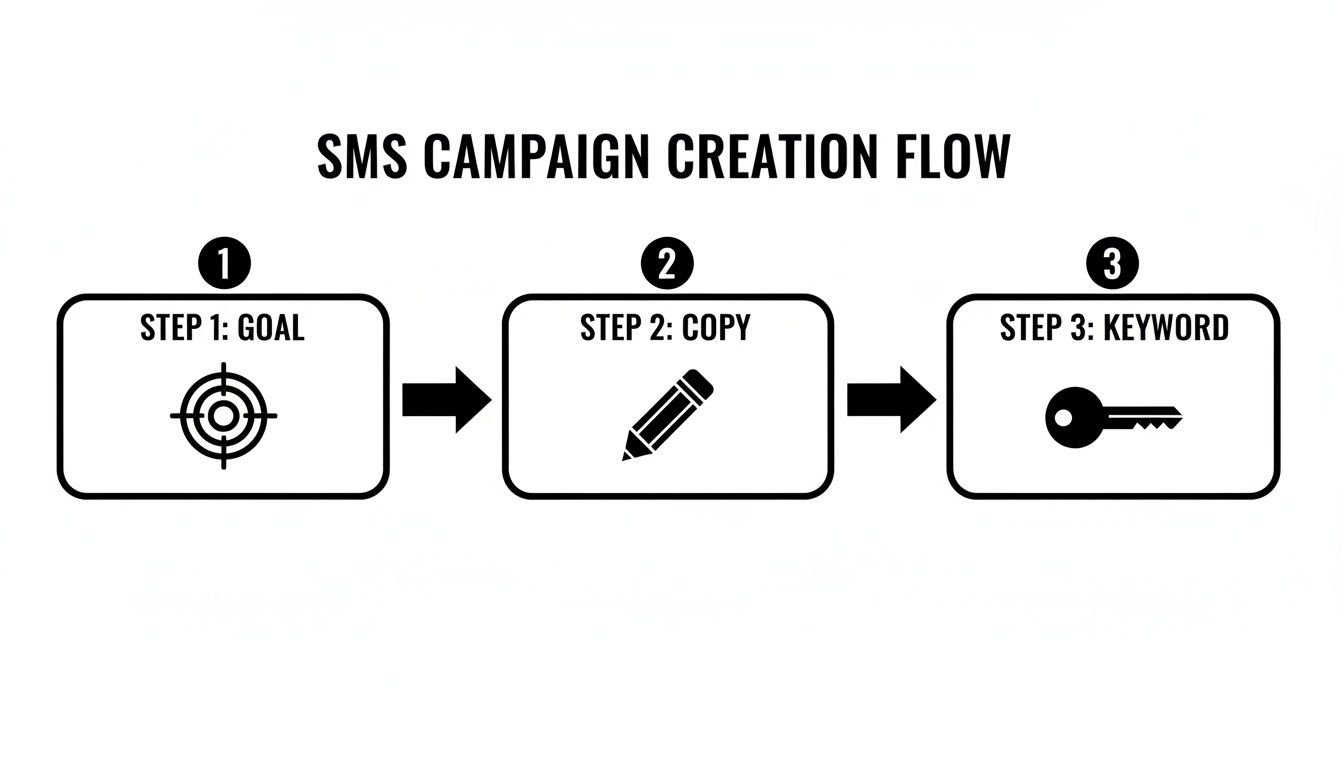
It all comes down to having a clear goal, compelling copy, and a specific trigger to kick things off. These are the essential building blocks for any successful automated workflow.
The most effective workflows I've seen are always tailored to the individual. By segmenting your audience based on their behavior or tags in your CRM, you can send hyper-relevant messages that actually get results. For example, you could create a specific SMS sequence for customers who haven't purchased in 90 days or a completely different one for new webinar registrants.
This level of automation is quickly becoming the standard. The reason is simple: the channel's unmatched 90-98% open rates and 45%+ response rates absolutely blow email out of the water.
Powerful automation also needs some guardrails to make sure you’re creating a positive customer experience, not an annoying one. Two features are absolutely essential for any advanced workflow: quiet hours and "stop on reply" logic.
The goal of a sophisticated workflow isn't to get rid of human interaction. It's to automate the repetitive parts of the journey. It handles the initial outreach and follow-ups so your team can focus on the high-value, personal conversations that build real relationships.
By combining SMS, ringless voicemail, and some intelligent logic, you can build a powerful engine that nurtures leads and engages customers around the clock. If you want to dive deeper into this, check out our guide on creating a marketing automation workflow.
Automation is a game-changer, no doubt. But with great power comes great responsibility. When you're setting up an automatic SMS reply, your number one goal should be building trust. Following the rules isn't just about dodging fines; it’s about showing your customers respect, building a brand people want to hear from, and making sure your texts are a welcome sight, not an intrusion.
The entire foundation of a healthy, ethical SMS strategy boils down to one word: consent. You absolutely must have clear, explicit permission from someone before you start sending them automated messages. This is the golden rule, and it's non-negotiable.
Getting consent simply means someone has knowingly and willingly agreed to get texts from you. This usually happens when they text a keyword to your number or check a clearly marked box on a web form.
Just as critical is giving them an easy, obvious way to change their mind and opt out.
Every single initial automated message needs to include instructions on how to unsubscribe. The standard is pretty simple: reply with a keyword like "STOP." You have to honor these requests instantly—it’s mandatory. To keep your campaigns on the right side of the law and maintain that customer trust, always stick to strict Spam Guidelines.
In the United States, the big piece of legislation you need to know is the Telephone Consumer Protection Act (TCPA). This law lays down some serious guidelines for any kind of automated communication, and the penalties for messing up can be steep.
The legalese can get dense, but the core idea is straightforward: get express written consent before sending promotional texts.
On top of that, different phone number types have their own set of rules. For instance, toll-free numbers now require a verification process. It might sound like a hassle, but it's designed to cut down on spam, which ultimately helps your deliverability and makes your brand look more professional. Using a platform that handles these technical requirements correctly is a must.
Respecting privacy and playing by the rules isn't a roadblock—it's the very foundation of your success. A compliant SMS program is a successful one because it's built on a relationship of trust, ensuring your messages are seen as valuable, not intrusive.
If you're in a field like healthcare, the compliance stakes get even higher. The Health Insurance Portability and Accountability Act (HIPAA) has iron-clad rules about how patient information is handled.
Any automatic SMS reply containing Protected Health Information (PHI) has to go through a HIPAA-compliant platform, period. This is all about ensuring the communication is secure and patient privacy is protected above all else.
Things like secure messaging and having a business associate agreement (BAA) in place aren't just nice-to-haves; they are essential for any healthcare provider using text messaging. Building your automation on a compliant framework is the only way to operate safely and build lasting patient trust.
Launching an automatic SMS reply system is a great start, but the real magic happens when you start listening to what the data tells you. A solid automated campaign is never really "finished." Think of it as a living, breathing part of your marketing that you can constantly fine-tune for better and better results.
To do that, you need to get past just firing off messages and start digging into what actually works.
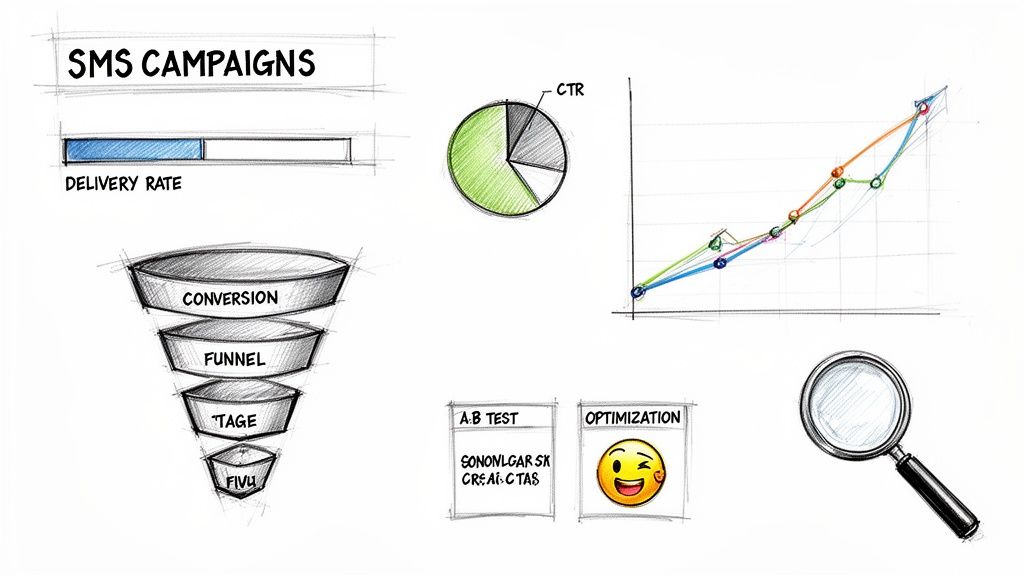
This whole process kicks off by focusing on the right numbers. It's easy to get lost in vanity metrics, so stick to the data that connects directly to what you're trying to achieve.
To get a clear picture of your campaign's health, you only need to keep a close eye on a few core metrics. These numbers will tell you what's hitting the mark and where you have room to improve.
These are the numbers that give you the feedback loop you need to sharpen your approach and squeeze every bit of value out of your efforts.
Once you know your baseline numbers, the fun begins. It's time to experiment. A/B testing is a simple but incredibly powerful way to do this. You just send two slightly different versions of a message to small, separate chunks of your audience to see which one performs better.
The smallest changes can lead to the biggest wins. A different call-to-action, a well-placed emoji, or even a different sending time can dramatically boost your engagement.
For instance, you could test things like:
Let the results from these tests be your guide. This data-driven approach is what separates the good campaigns from the truly great ones. We know that automated SMS flows can generate impressive click-through rates, sometimes reaching 14.6% or higher. By consistently testing and tweaking, you can make sure your campaigns are always hitting their peak potential.
If you want to dive deeper, you can discover more insights about SMS marketing benchmarks and how to beat the averages.
As you dive into setting up your first automatic SMS reply, you're bound to have a few questions pop up. That's completely normal. Getting a handle on the specifics is what turns a good automation strategy into a great one.
Here are some of the most common questions we hear, with answers straight from our experience helping businesses get this stuff right.
This one trips people up all the time, but it's pretty simple when you break it down.
An automatic reply is a one-and-done, instant message. Think of it as the immediate "Got it!" after someone texts your keyword. It's the digital handshake that confirms you received their request and tells them what's next.
A drip campaign, on the other hand, is a series of messages scheduled to go out over a set period. For instance, a new lead might get your instant welcome text (the auto-reply), then a link to a helpful resource two days later, and a special offer a week after that. You can even mix in ringless voicemail drops to create a really powerful nurturing sequence.
An auto-reply is for the immediate acknowledgment. A drip campaign is for the long game—nurturing and engaging over time.
Not only can you, but you absolutely have to. Generic messages get ignored. Personalization is what makes your automated texts feel like they were sent from a real person.
This is where merge tags come in. They're basically little placeholders that automatically pull in your contact's information. So instead of a boring, generic blast, you can send something like this:
"Hey [FirstName], just confirming your order #[OrderNumber] is on its way!"
See the difference? It's a small tweak that makes your message feel relevant and immediately grabs their attention.
This is a fantastic question and a crucial part of a smart SMS strategy. The first message might be automated, but you need a solid plan for when a real person texts you back with a question.
Any good SMS platform should give you a unified inbox where you can see and manage every incoming text conversation in one spot. This is non-negotiable.
You can also set up instant notifications for your team so they can jump in the moment a real conversation starts. The whole point is to let the automation do the heavy lifting upfront, which frees up your team to provide that human touch exactly when it matters most.
Honestly, just about any business can find a clever way to use SMS automation, but a few industries see some seriously impressive results right out of the gate.
Bottom line: If your business relies on timely, critical communication, an automatic SMS reply will make you more efficient and dramatically improve your customer experience. It turns a manual, time-sucking task into a system that just works.
Ready to build powerful automated workflows that engage customers and save you time? With Call Loop, you can easily create and manage automatic SMS replies, multi-step drip campaigns, and even ringless voicemail drops. See how Call Loop can transform your business communication today!
Chris Brisson
Chris is the co-founder and CEO at Call Loop. He is focused on marketing automation, growth hacker strategies, and creating duplicatable systems for growing a remote and bootstrapped company. Chat with him on X at @chrisbrisson


Trusted by over 45,000 people, organizations, and businesses like


