
See a Demo
You're just one step away from seeing Call Loop in action.
Enter your information below to watch a demo right now.

You're just one step away from seeing Call Loop in action.
Enter your information below to watch a demo right now.


So, can you actually text from a landline? The short answer is yes, but not by picking up that old corded phone on your desk. The trick is to text-enable your existing landline number using a modern business communication platform. This lets you send and receive messages using your trusted number, all through a simple computer or mobile app.
In a world where customers expect instant answers, sticking to just phone calls is like showing up to a race in a horse and carriage. It just doesn't keep up.
Traditional landlines were built for a different era—an analog one—and they were never designed to handle text messages. But modern tools have finally bridged that gap. This process, called "text-enabling," breathes new digital life into your business number without messing with your current voice service.
Essentially, you're adding an internet-based layer to your old-school phone number. It's a similar idea to how the best app for WiFi calling uses the internet to make calls instead of a traditional cell network.
The real difference is the addition of a digital messaging layer on top of your existing phone service. This simple change allows your business to keep its main contact number while opening up the incredibly powerful channel of SMS. It also paves the way for other powerful communication features like ringless voicemail drops.
One great alternative for reaching everyone—even contacts with landlines that can't get texts—is ringless voicemail. This tech drops a pre-recorded message straight into someone's voicemail box without their phone ever ringing. It's a non-intrusive way to send out updates or special offers to your entire contact list, no matter what kind of phone they have.
Thinking about making the switch? Here’s a quick rundown of what changes when you text-enable your landline.
As you can see, the core function of voice calls remains, but you gain a whole new world of communication through a simple app-based interface.
So, how does a phone number designed for old-school voice calls suddenly learn to speak the language of text messages? It's not magic. The technology behind it is surprisingly simple once you peek behind the curtain.
Think of it this way: your landline number is like a physical street address for your business. A business texting platform installs a new, high-tech digital mailbox right next to your old one. Your voice calls still go to the main address, just like they always have—nothing changes there.
But now, any text messages sent to that same "address" get rerouted to your new digital mailbox. This mailbox is just an app you can access on your computer or smartphone, keeping your voice and text communications separate but connected to the same number. It's an added layer of functionality, not a replacement for your core phone service.
This whole setup borrows its core ideas from Voice over IP (VoIP) technology. You might already be familiar with VoIP—it's what turns your voice into digital data that can travel over the internet. Landline texting works on a similar principle.
A texting platform "hosts" your landline number on its network, specifically to handle all the incoming and outgoing SMS and MMS messages.
When you fire off a text from the platform's app, it zips through the internet and lands on your customer's phone, showing your trusted landline number as the sender. When they text you back, their reply is routed right back to the platform, which then pushes it to your app in an instant.
This diagram breaks it down visually, showing how the platform acts as a bridge between your classic phone number and the modern texting world.
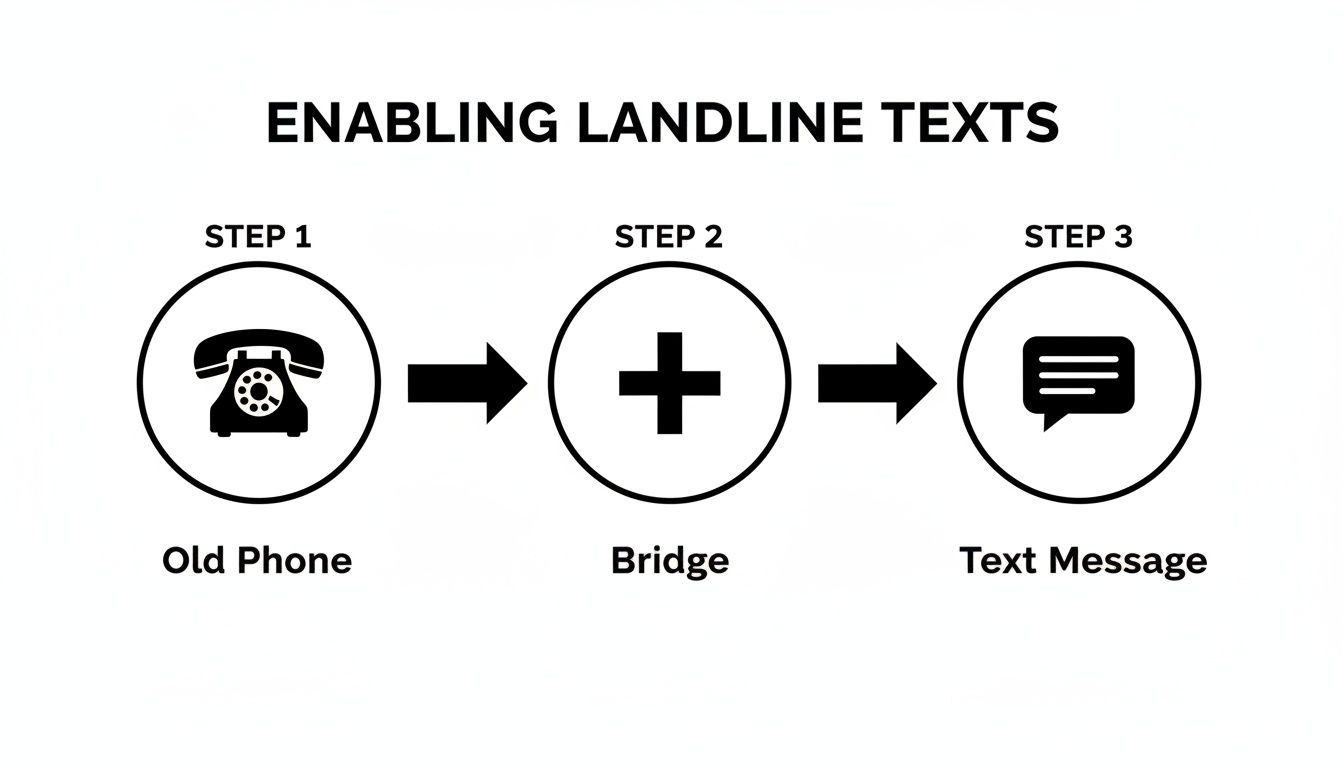
As you can see, the service provider creates a connection between your existing landline and the SMS network. This lets messages flow back and forth without ever messing with your voice calls.
Once you've text-enabled your business number, it opens up a bunch of other powerful ways to communicate beyond just two-way conversations.
One of the smartest moves is to deliver ringless voicemail. This cool piece of tech lets you drop a pre-recorded audio message directly into someone's voicemail box without making their phone ring. It’s the perfect non-intrusive way to send out appointment reminders, special announcements, or quick follow-ups.
Because the system works over the internet, it’s clever enough to know if a number is a mobile phone or a landline and whether a voicemail inbox is active. This smart detection ensures your message gets delivered successfully every time. It’s an incredible tool for making sure you reach every single contact on your list.
To really get into the weeds, you can learn more about what ringless voicemail is and how it works alongside your other outreach. The big takeaway is that your trusted business number can become a multi-tool for all kinds of communication, not just calls or texts.
Now that you know a landline can be text-enabled, let's unpack the powerful messaging options this opens up. It’s not just a simple "yes" to "Can you text from a landline?"—it's about picking the right tool for the job.
The most straightforward approach is True Landline Texting. This lets your business have real-time, two-way SMS and MMS conversations right from your main business number. Using an app on your computer or phone, you can fire off appointment reminders, answer customer questions on the fly, and even share photos. It’s a seamless way to talk to people, and they see messages coming from the same trusted number they already call.
But what about reaching everyone else? Sometimes you need to get a message to your entire list, including folks who still have traditional landlines that can't get a text. This is where a game-changing alternative comes in.
Imagine dropping a perfectly recorded audio message right into someone's voicemail without their phone ever ringing. That’s the magic of ringless voicemail. It's a non-intrusive, surprisingly effective way to send out important updates, marketing announcements, or personalized follow-ups.
Because it sidesteps a live call, it feels far less disruptive. People can listen to your message when it's convenient for them. This is a lifesaver for reaching a broad audience without tying up your staff with hundreds of outbound calls.
What really makes this tech so versatile is its ability to reach both mobile and landline numbers. Smart platforms can actually detect when a landline’s answering machine picks up and successfully "drop" your pre-recorded message into their inbox. This gives you a powerful way to 'message' every single contact, even when a classic text won't work.
For example, a local plumber could send a ringless voicemail to all their clients about a seasonal tune-up special. Mobile users get the drop in their voicemail, and landline users hear it on their answering machine—that’s 100% reach across their entire customer base.
This technology bridges a huge gap. If you've ever wondered why 'texting from a landline' feels like a myth, here's why: SMS exploded from just 35 messages per US user monthly in 2000 to a staggering 2.3 trillion total by 2011, while landlines stayed voice-only. Now, ringless voicemail for landlines provides that missing link. Our platform detects machine answers and drops messages directly, with an 80% delivery success rate on landlines.
The smartest strategy often involves using both landline texting and ringless voicemail in tandem. Think of them as two distinct tools in your communication toolkit.
By combining these methods, you make sure your message always gets through, whether it’s a quick text or a detailed audio update. This multi-channel approach lets you connect with customers in the way that makes the most sense for any given situation. To see how this works in practice, you might want to check out our guide to send SMS online from your business number.
Alright, let's move from the how to the why. What does landline messaging look like in the real world? This isn't just theory; businesses are using their trusted landline numbers for texting every single day to build trust, make communication easier, and get real results.
Think about it: using the same number for calls and texts creates a simple, professional image. There's no confusion for your customers.
Take a busy dental clinic, for example. The front desk used to spend hours every day calling patients to confirm appointments. Now, they just send automated text reminders from their main office number. This one small change drastically cuts down on no-shows and frees up the staff to focus on the patients right in front of them.
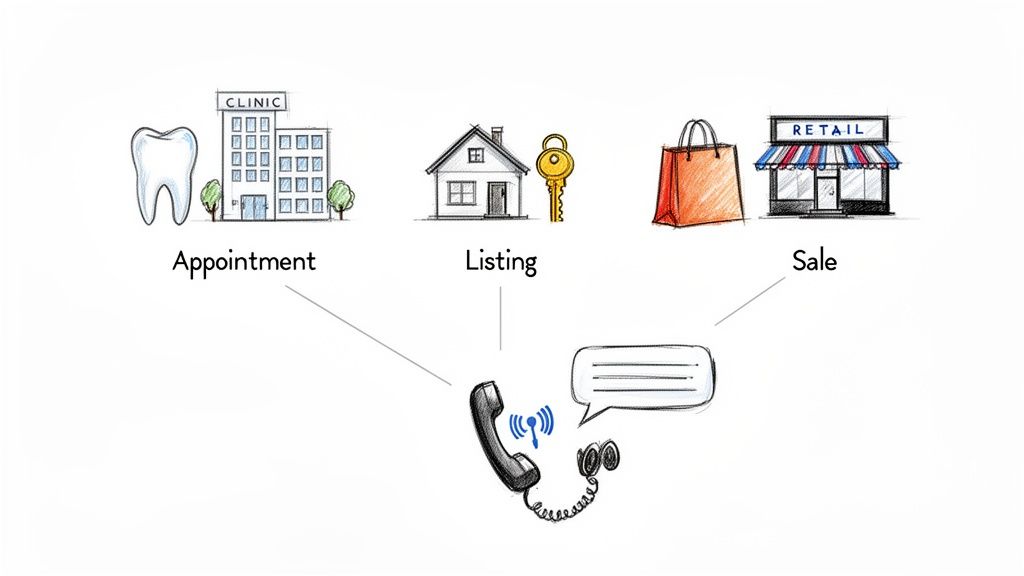
This keeps everything under one roof. When a patient gets a text, they recognize the number and are way more likely to reply. Simple.
Imagine you're a real estate agent with a brand new listing everyone wants to see. Instead of blowing up everyone's phone with calls, you could send a single ringless voicemail drop to your list of hot leads. This drops an exciting, personal update about the property right into their voicemail without ever making their phone ring.
It's a smart way to get the word out without being disruptive, respecting your clients' time while making sure they get the message. It's an incredibly effective way to spark instant interest and get viewings on the calendar.
The real magic here is brand consistency. When a customer gets a text or voicemail from the same number they use to call you, it builds trust. There's no second-guessing who's trying to reach them, and that's huge for getting them to engage.
In the same vein, a local boutique can text a flash sale announcement to its loyalty club members using its main store number. This is so much more direct and immediate than email. It creates a sense of urgency that drives foot traffic and boosts sales, often within hours.
The truth is, landline messaging can be adapted for just about any business. The trick is to match the right tool—whether it's SMS or a ringless voicemail—to what you're trying to accomplish.
Here are a few more quick examples of how different businesses put this to work:
In every one of these cases, the business is using its landline number to create a better, more responsive experience for its customers. When you meet people on the channels they already use and prefer, you end up building stronger relationships and a much more efficient business.
Using your landline to send text messages is a fantastic tool for your business, but with that power comes some serious responsibility. You can't just upload your contact list and start blasting out messages. Playing fast and loose with the rules isn't just bad for business—it can land you in some very expensive hot water and tarnish your brand's reputation for good.
The biggest rulebook you need to know is the Telephone Consumer Protection Act (TCPA). This is a federal law designed to shield people from unwanted marketing calls and texts. And yes, it absolutely applies to messages sent from your landline. Ignoring the TCPA can be a costly mistake, with fines racking up from $500 to $1,500 per message.
The absolute foundation of TCPA compliance is getting permission first. Before you even think about sending a promotional text from your business number, you must have express written consent from the person you're messaging. This isn't just a polite suggestion; it's a hard-and-fast legal requirement.
So, what does that actually mean? It means someone has to take a clear, deliberate action to say "yes, please send me marketing texts." A classic example is having a checkbox on a web form that someone has to tick themselves, with clear language explaining what they're signing up for. To make sure you're getting this right, you can dig deeper into what qualifies as express written consent.
The key takeaway here is simple: you need a clear, undeniable "yes" from your contact before you hit send on any marketing message. Just having their phone number isn't an invitation to text them.
Getting consent is just the first step. Your compliance duties don't end there. You are required to give people a simple and obvious way to opt out of your messages whenever they want. The universal standard for this is recognizing keywords like STOP, END, or UNSUBSCRIBE.
When someone texts one of those keywords back to you, your system has to remove them from your list immediately and automatically. No delays. Failing to honor an opt-out request is a direct violation of the TCPA.
You also need to maintain an internal Do Not Call (DNC) list. This list should include every single person who has ever asked you to stop contacting them. A good business messaging platform will handle all of this for you, automating the opt-out process and managing your DNC list seamlessly. This is a critical piece of the puzzle, whether you're texting for marketing promotions or just sending out service updates.
Ready to start texting from your business number? I get it—diving in can feel like a lot. This simple checklist breaks the whole thing down into a few manageable steps, guiding you from that first "what if?" moment all the way to a successful launch.
Let's walk through it.
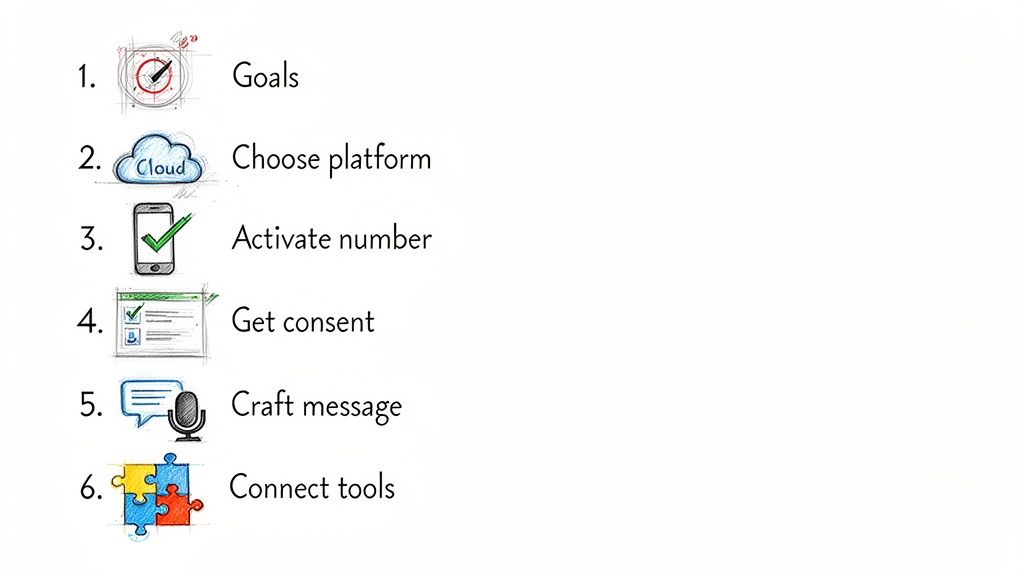
First things first, what are you actually trying to accomplish? Are you hoping to slash your appointment no-show rate? Maybe you want to warm up more sales leads or just give customers faster answers. Nailing down your main goal right now makes every other decision—like picking the right tools—way easier down the road.
With your goal in mind, it's time to shop for a platform. Look for features that will actually help you, like two-way SMS, ringless voicemail capabilities, and the ability to plug into the software you already use.
Once you’ve found a provider you like, activating your number is usually a breeze. It’s a simple verification that text-enables your landline without messing with your voice calls at all.
Choosing a platform isn't just about features; it's about reach. In 2021, people in the U.S. were sending 6 billion texts every single day. But here's the catch: there are still over 50 million business landlines out there that can't receive them. That's where something like ringless voicemail becomes a game-changer. Our platform can deliver a message straight to a landline's voicemail inbox, hitting 75% connect rates and cutting costs by 40% compared to a traditional phone call. For a little more context, check out this brief history of SMS.
Before you even think about hitting "send," you have to build your contact list and get permission. This part is non-negotiable. Make sure every single person on your list has clearly and explicitly opted in to get messages from you.
Alright, now for the fun part. It's time to put it all together.
Follow these steps, and you won't just be able to answer "yes" to "can you text from a landline"—you'll have a powerful new way to connect with your customers.
Diving into landline texting can bring up a few questions. Let's clear the air and tackle some of the most common things businesses wonder about when they're thinking about texting from their main number.
Nope, they won't have a clue. From their end, it's completely seamless.
When you text-enable your number, the message pops up on their phone just like any other text. Your trusted business phone number is the sender, which is great for brand recognition. There’s no special flag or indicator that says "sent from a landline," so the experience feels totally natural.
Great question. They're both powerful tools, but they do very different jobs.
The real difference comes down to interaction. Landline texting is for conversations. Ringless voicemail is for broadcasts. When you use both, you’ve got a powerful one-two punch to connect with everyone on your list, no matter how they like to be reached.
Not at all. You can keep your current phone company right where it is.
Text-enabling platforms are built to work with your existing voice service, not replace it. The setup usually just involves a quick verification to confirm you own the number. Your phone calls will keep coming through your provider like normal, while all the new texting magic happens through the platform's app.
Ready to unlock the power of your business number? With Call Loop, you can easily send SMS messages, voice broadcasts, and ringless voicemails from your existing landline. Start connecting with customers more effectively today.
Chris Brisson
Chris is the co-founder and CEO at Call Loop. He is focused on marketing automation, growth hacker strategies, and creating duplicatable systems for growing a remote and bootstrapped company. Chat with him on X at @chrisbrisson


Trusted by over 45,000 people, organizations, and businesses like


