
See a Demo
You're just one step away from seeing Call Loop in action.
Enter your information below to watch a demo right now.

You're just one step away from seeing Call Loop in action.
Enter your information below to watch a demo right now.

In a marketplace flooded with messages, generic communication no longer works. Successful customer outreach is about precision: sending the right message through the right channel at the exact right moment. The line between business growth and stagnation is now defined by a modern toolkit of customer outreach strategies that forge genuine connections, respect people's time, and provide tangible value. Simply broadcasting messages is an outdated approach; the goal now is to start strategic, two-way conversations that drive action.
This article delivers a direct, actionable guide to ten powerful, field-tested strategies you can implement immediately. We’ll move beyond theory and give you the specific tactics needed to build a more effective communication engine for your business. You will learn how to:
For each of these ten strategies, we will provide a clear blueprint covering exactly when to use it, what to say with sample scripts, which KPIs to track for measuring success, and the critical compliance rules (like opt-in consent) you must follow to protect your business. Let's move past the noise and build an outreach plan that delivers measurable results.
Moving beyond single-channel communication is a critical first step in building effective customer outreach strategies. Multi-channel messaging integration is a unified approach that coordinates SMS, voice broadcasts, ringless voicemail, and email into a single, cohesive campaign. Instead of sending isolated messages, this strategy orchestrates touchpoints across different platforms to meet customers where they are most responsive.
The core principle is to use each channel for what it does best. For instance, an e-commerce business might send an SMS alert for an abandoned cart, followed by an email with detailed product suggestions. A karate studio could text members about an upcoming belt test and then send a ringless voicemail reminder the day before to build excitement and ensure attendance. This layered approach creates a persistent, yet respectful, presence that increases engagement and action.
This strategy is ideal for campaigns where timely and repeated communication is key to success. It works exceptionally well for appointment reminders, event promotions, lead nurturing, and customer onboarding sequences. By combining channels, you reinforce your message without overwhelming the customer on a single platform. The result is higher visibility, improved response rates, and a more polished customer experience.
Successfully implementing a multi-channel plan requires careful sequencing and automation.
Key Takeaway: A multi-channel approach isn't about bombarding customers; it's about creating a seamless conversation that flows naturally from one platform to another, increasing the likelihood of a response.
By thoughtfully combining your communication tools, you can build a robust outreach system that captures attention and drives action. For a deeper dive into structuring these campaigns, you can learn more about creating a multi-channel communication strategy.
Generic, one-size-fits-all messages no longer capture customer attention. Segmentation and personalization are powerful customer outreach strategies that involve dividing your contact list into smaller, specific groups and then customizing your messages for each. Instead of broadcasting the same message to everyone, you use data like demographics, purchase history, and engagement level to create communication that feels personal and relevant.
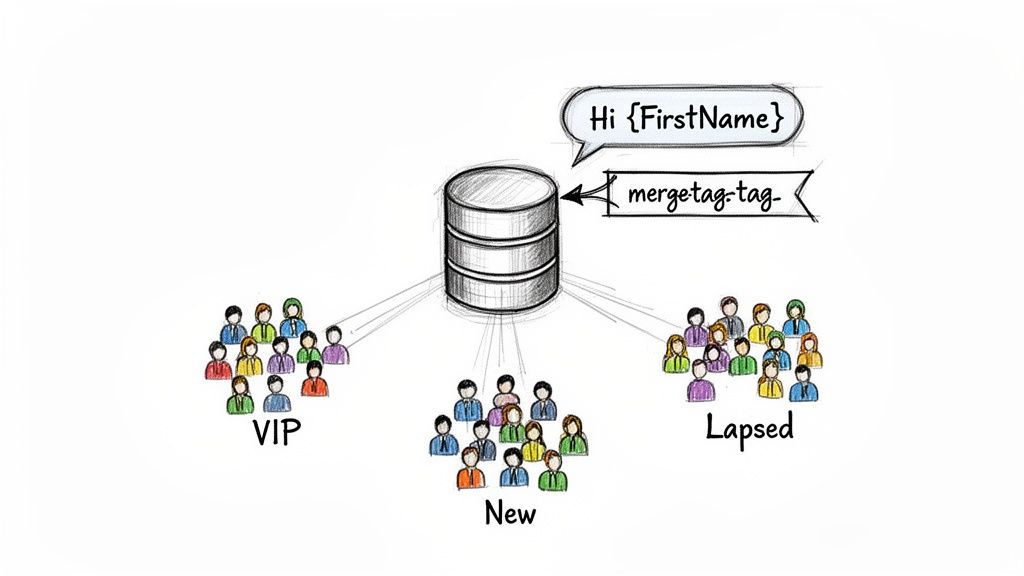
The practice relies on using custom fields and merge tags to insert individual details like a customer's name, their last purchase, or their appointment time directly into an SMS, email, or voice script. For example, a sales team can target decision-makers with a personalized follow-up mentioning their specific company, or a healthcare clinic can send appointment reminders that name the patient's doctor and clinic location. This precision makes the recipient feel seen and valued, not just like another number on a list.
This strategy is essential when you have a diverse customer base with different needs, interests, or lifecycle stages. It's particularly effective for e-commerce promotions, targeted lead nurturing, and re-engaging lapsed customers. A karate studio, for instance, would send different messages to trial members versus active black belt candidates. The goal is to deliver the right message to the right person at the right time, which dramatically improves conversion rates and strengthens customer loyalty.
Effective personalization requires a systematic approach to data management and messaging.
[FirstName] or [AppointmentDate] to automatically insert this information into your SMS, voice, and email templates for a personal touch.Key Takeaway: Personalization is more than just using a customer's first name. It's about using data to prove you understand their needs and can provide relevant, timely value in your customer outreach strategies.
By segmenting your audience, you can turn mass communication into a series of meaningful, one-on-one conversations. To see how you can set up these dynamic groups, you can learn more about creating segments and groups in Call Loop.
Automated drip campaigns are a cornerstone of modern customer outreach strategies, allowing businesses to send a pre-planned sequence of messages to contacts over a set period. These campaigns are triggered by specific actions or timelines, such as a new subscription, a purchase, or even a period of inactivity. The goal is to nurture contacts through a predetermined path, with each message building on the last to guide them toward a desired action.
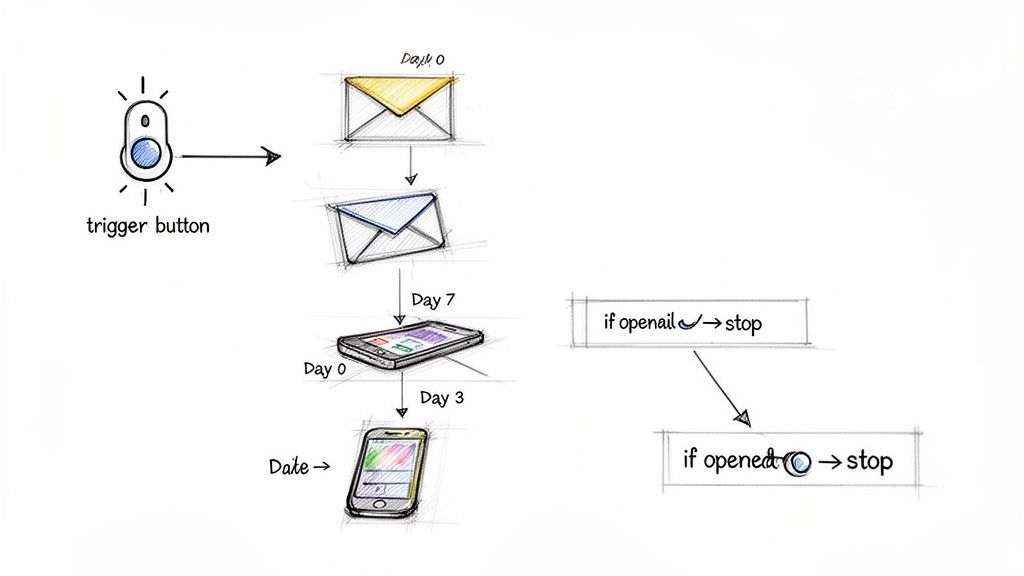
This method moves beyond one-off broadcasts to create a sustained conversation. For example, a marketing agency could send a welcome email after a client signs up, followed by a series of educational SMS messages over two weeks, and culminating in a ringless voicemail that personally invites them to a kickoff call. The sequence works automatically, ensuring consistent and timely follow-up without manual effort.
This strategy is exceptionally effective for lead nurturing, customer onboarding, and re-engagement campaigns. It's perfect for situations where you need to build trust and provide value over time before asking for a sale or commitment. B2B sales teams can use drips to educate leads, while healthcare providers can automate appointment reminders and post-visit follow-ups. The purpose is to maintain momentum and keep your brand top-of-mind.
Building a successful drip campaign requires a clear understanding of your customer's journey and the right automation tools.
Key Takeaway: Effective drip campaigns are not "set it and forget it." They are dynamic systems that guide customers with relevant, timely information, stopping automatically once the desired action is taken.
By mapping out these automated conversations, you can nurture relationships at scale and guide contacts toward conversion. For more guidance on building effective sequences, you can explore these drip campaign best practices.
One of the most effective customer outreach strategies for building a compliant and engaged contact list is using SMS text-to-join keywords. This method allows customers to opt into your communications by texting a simple, memorable word to your designated phone number or short code. In return, they receive an automated response, such as a confirmation, a special offer, or a link to a resource.
The power of this strategy lies in its simplicity and the explicit consent it generates. For instance, a retail store might advertise "Text DEALS to 12345 to get 20% off your next purchase." When a customer does this, they are not only receiving an immediate reward but also giving you clear permission to contact them again. This creates a high-quality list of contacts who are genuinely interested in your brand, making future outreach far more effective.
This strategy is perfect for businesses looking to rapidly grow their marketing lists with engaged subscribers. It excels in converting foot traffic, social media followers, and event attendees into long-term contacts. Use it for lead generation, running contests, distributing coupons, or building a subscriber base for a newsletter. Because the customer initiates the contact, it is a friction-free way to secure a TCPA-compliant opt-in, which is essential for any SMS or automated voice campaign.
Building a successful text-to-join campaign requires a clear plan and consistent promotion.
Key Takeaway: SMS keywords turn passive interest into active engagement by giving customers a simple, direct way to say "yes" to your marketing. This consent-based approach is foundational to building trust and long-term customer relationships.
Voice broadcasting moves beyond simple text by delivering automated, pre-recorded, or AI-generated voice messages directly to a large customer list. The true power of this customer outreach strategy lies in its interactive capabilities. By incorporating an interactive voice response (IVR) system, you allow customers to take immediate action within the call by pressing a key, such as confirming an appointment or requesting to speak with an agent.
This method combines the personal touch of a human voice with the efficiency of automation. For example, a healthcare provider can send an automated appointment reminder where patients press 1 to confirm or 2 to reschedule, reducing no-shows. Similarly, event organizers can send a day-before reminder where attendees press 1 to confirm their registration, providing an accurate headcount. The system can even detect whether it reached a live person or an answering machine, ensuring the right message is delivered every time.
This strategy is exceptionally effective for time-sensitive communications that require a direct response or confirmation. It is perfect for appointment-based businesses, schools sending parent notifications, B2B sales teams qualifying leads, and organizations needing to share urgent information like event changes or public service announcements. The interactive element transforms a passive message into an engaging, two-way conversation, improving response rates and operational efficiency without manual effort.
Proper implementation of voice broadcasting and IVR focuses on clarity, timing, and compliance.
Key Takeaway: Voice broadcasting with IVR is a powerful tool for driving immediate action and confirming information at scale. It provides the directness of a phone call combined with the efficiency of automation, making it a standout customer outreach strategy.
By using automated, interactive calls, you can streamline confirmations, gather feedback, and connect customers with the right resources instantly.
Ringless voicemail is a non-intrusive outreach method that delivers a pre-recorded audio message directly to a person's voicemail inbox without their phone ever ringing. The message appears just like a standard voicemail, combining the personal feel of a voice message with the efficiency of automation. This technique is a powerful part of modern customer outreach strategies because it respects the customer's time while still ensuring your message is heard.
The core advantage is its subtlety. A law firm can send case status updates that clients can review at their convenience, or a real estate agent might notify interested buyers about a new listing. This method allows you to deliver important information in a personal format, but on the recipient's terms, making it a highly effective and respectful way to communicate at scale.
This strategy excels when you need to deliver a personal, yet automated, message that doesn't require an immediate live conversation. It is ideal for appointment reminders, membership renewal notices, sales prospecting, and client follow-ups. Since the phone doesn't ring, it avoids interrupting the recipient's day, making it less intrusive than a traditional call but more personal than a text or email. The result is high listen-through rates and a positive customer perception.
Delivering ringless voicemail campaigns effectively depends on message quality and proper scheduling.
Key Takeaway: Ringless voicemail bridges the gap between automation and personalization, allowing you to "speak" directly to your customers in a way that feels one-on-one without requiring manual dialing.
An automated notification system for appointments is one of the most effective customer outreach strategies for service-based businesses. This system sends timely reminders via SMS, voice calls, or ringless voicemail before a scheduled appointment, prompting customers to confirm, reschedule, or simply show up. By preventing easily forgotten appointments, this strategy directly combats no-shows, protects revenue, and improves the overall customer experience.
The power of this approach lies in its proactive nature. A dental office can significantly reduce empty chairs by sending an SMS reminder 48 hours in advance. Likewise, a home services company can confirm its arrival window with an automated voice call, ensuring the customer is home. This simple act of communication shows respect for the customer's time and solidifies the appointment in their schedule, leading to drastically improved attendance rates.
This strategy is essential for any business that operates on a schedule. It is particularly effective for healthcare providers (doctors, dentists, therapists), beauty and wellness services (salons, spas), home services (HVAC, plumbing), and professional consultations (legal, financial). The primary goal is to minimize no-shows, which directly translates to recovered revenue and optimized staff scheduling. It also creates a more professional and organized impression, building customer trust and loyalty.
Effective implementation relies on automation and thoughtful timing to deliver information without being intrusive.
Key Takeaway: Automated appointment reminders are not just a courtesy; they are a powerful tool for revenue protection and operational efficiency, turning potential no-shows into fulfilled appointments.
Successful events, whether virtual or in-person, depend on getting people to show up and participate. Event attendance and engagement campaigns are integrated outreach sequences designed to maximize attendance and drive meaningful interactions from initial promotion to post-event follow-up. This strategy coordinates multiple channels to guide attendees through the entire event lifecycle, ensuring no one slips through the cracks.
The process involves a carefully timed series of messages that build anticipation and provide crucial information. For a webinar, this might start with an email confirmation, followed by SMS reminders, a day-of text with the access link, and a post-event email with the recording. A fitness studio could promote a trial class with texts, send a confirmation email, and use a ringless voicemail drop the day before to generate excitement, followed by an SMS with a special membership offer after the class. This methodical approach is a key part of modern customer outreach strategies.
This strategy is essential for any business or organization hosting events like webinars, conferences, training programs, or even community gatherings. It directly addresses the common challenge of low attendance rates by keeping the event top-of-mind and making it easy for registrants to join. By automating reminders and follow-ups, you ensure consistent communication, increase perceived value, and create a professional experience that encourages future participation and conversions.
Effective event campaigns require segmentation and automation to deliver the right message at the right time.
Key Takeaway: The goal of an event campaign is not just to remind, but to build a communication journey that makes attendees feel prepared, valued, and excited to participate, ultimately maximizing your event's ROI.
Reconnecting with lapsed or inactive customers is one of the most cost-effective customer outreach strategies available. A win-back campaign is a targeted effort to revive relationships with customers who haven't purchased or engaged in a defined period. This approach uses data-driven segmentation to identify churn risks and deliver compelling reasons for customers to return.
The strategy reminds customers of the value they once received and introduces new benefits or incentives to prompt action. For example, a SaaS company might message lapsed subscribers about a major product update, while a fitness studio could text inactive members about a new trainer and a free trial class. By personalizing the outreach, you show customers you remember them and value their business, making them far more likely to re-engage.
This strategy is essential for any business with a recurring revenue model or repeat purchase cycle, such as e-commerce, subscription services, and membership-based organizations. Use it when you notice a segment of your customer base has gone quiet, typically after 30, 60, or 90 days of inactivity. Instead of letting these valuable contacts go cold, a proactive win-back campaign can reactivate a significant portion of them, boosting revenue and improving customer lifetime value.
A successful win-back campaign relies on smart segmentation, compelling offers, and a multi-channel sequence.
Key Takeaway: Winning back a customer is often easier and cheaper than acquiring a new one. A thoughtful, automated re-engagement campaign can turn inactive contacts back into loyal, paying customers.
Effective customer outreach strategies are built on a foundation of solid data. CRM integration connects your communication platform directly with your Customer Relationship Management system, creating a bidirectional flow of information that automates outreach. Instead of manually exporting lists or logging interactions, this connection allows actions within your CRM, like a new lead being added or a deal stage changing, to automatically trigger personalized messages without any manual effort.
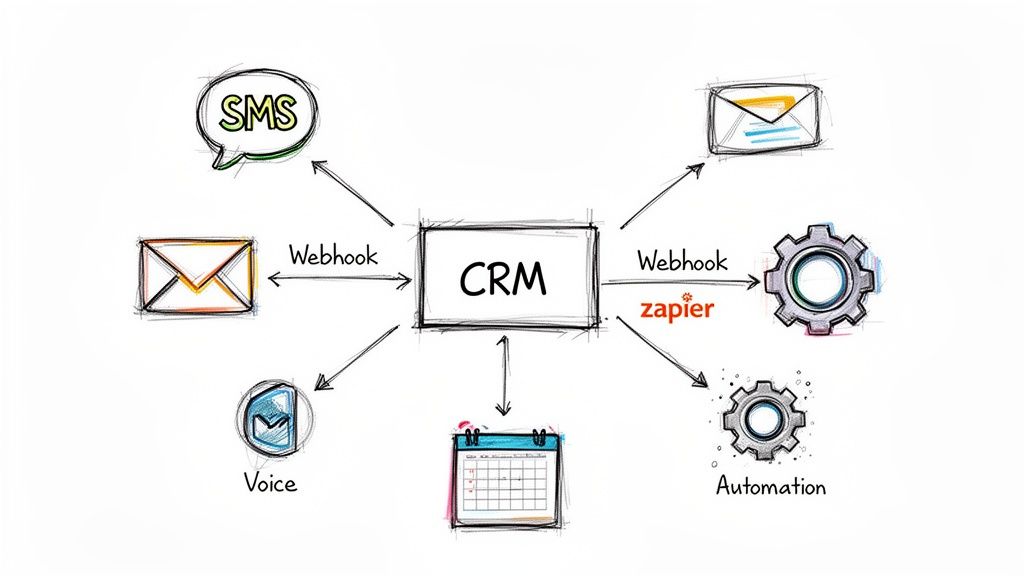
The primary goal is to close the loop between sales, marketing, and support. For example, when a new contact is created in HubSpot, a welcome SMS can be sent instantly. If a customer in your ActiveCampaign workflow requests a demo, an email confirmation, an SMS reminder, and a follow-up ringless voicemail can be scheduled automatically. This eliminates data silos and ensures that your outreach is always timely and relevant to the customer's current status.
This strategy is essential for any business looking to scale its operations while maintaining a personal touch. It is particularly powerful for lead nurturing, sales follow-up, customer onboarding, and re-engagement campaigns. By automating the mundane tasks of sending standard communications, your team is freed up to focus on higher-value conversations and closing deals. It ensures no lead falls through the cracks and every customer receives consistent communication at critical moments in their journey.
Automating workflows between your CRM and outreach tools requires a structured approach.
Key Takeaway: Integrating your CRM with your communication tools turns your customer data into an active asset, powering automated, personalized outreach that drives engagement and saves significant time.
By connecting your systems, you build a smarter, more responsive outreach engine. To get started with building these automated sequences, you can learn more about creating a marketing automation workflow.
After exploring ten powerful customer outreach strategies, it's clear that the path to meaningful connection isn't forged with a single tool. Instead, success lies in building an integrated, responsive system that meets customers where they are. We've moved from broad concepts to specific, actionable blueprints for everything from SMS text-to-join keywords to sophisticated ringless voicemail campaigns. The true takeaway is that these strategies aren't isolated tactics; they are interconnected components of a larger communication engine.
Your organization's journey doesn't require deploying all ten strategies at once. The most effective approach is incremental. Start by identifying your most pressing communication bottleneck. Are you struggling with high no-show rates for appointments? Then the appointment reminders and confirmations strategy is your ideal starting point. Are you looking to revive relationships with past customers? The win-back and re-engagement campaigns offer a direct solution. Focus your initial efforts on solving one specific, high-impact problem.
As you master one tactic, you'll naturally discover opportunities to layer in others. This is where the magic happens.
This layered approach transforms a series of individual messages into a cohesive, automated, and personalized customer journey. What begins as a simple appointment reminder can evolve into a fully automated system that nurtures leads, supports customers, and drives revenue.
Mastering these customer outreach strategies does more than just improve your key metrics. It fundamentally changes the relationship you have with your audience. When communication is timely, relevant, and respects their preferences, you build trust and loyalty. A patient who receives a helpful SMS reminder feels cared for. A customer who gets a personalized offer based on their past purchases feels understood. An event attendee who receives a ringless voicemail with a "thank you" message feels valued.
This is the core benefit: moving from transactional messaging to relational communication. By combining the immediacy of SMS, the personal touch of voice, and the efficiency of automation, you create a system that scales personal connection. You are no longer just broadcasting information; you are engaging in a dynamic, two-way conversation that benefits both your business and your customers. The future of effective customer communication is built on this foundation of thoughtful, integrated, and respectful engagement. It’s time to start building yours.
Ready to turn these strategies into reality? With Call Loop, you can implement every tactic discussed, from SMS and voice broadcasting to ringless voicemail and automated campaigns, all from a single platform. Stop juggling multiple tools and start building a cohesive communication system today with Call Loop.
Chris Brisson
Chris is the co-founder and CEO at Call Loop. He is focused on marketing automation, growth hacker strategies, and creating duplicatable systems for growing a remote and bootstrapped company. Chat with him on X at @chrisbrisson


Trusted by over 45,000 people, organizations, and businesses like


