
See a Demo
You're just one step away from seeing Call Loop in action.
Enter your information below to watch a demo right now.

You're just one step away from seeing Call Loop in action.
Enter your information below to watch a demo right now.

A multi-channel communication strategy is really just about meeting your customers where they already are. It means engaging with them across several different platforms—like SMS, voice calls, and email—to deliver a consistent message from your brand. The whole point is to connect on their preferred channels, which in turn boosts interaction, loyalty, and their lifetime value.
Relying on a single communication channel today is like trying to run a marathon with one shoe. Sure, you might inch forward, but you’re losing ground fast.
Customers expect to switch between texting, calling, and emailing a business without hitting a wall. If you can't offer that flexibility, you're not just creating friction; you're actively pushing people toward competitors who will. A solid multi-channel communication strategy is the bedrock of any modern, resilient business.
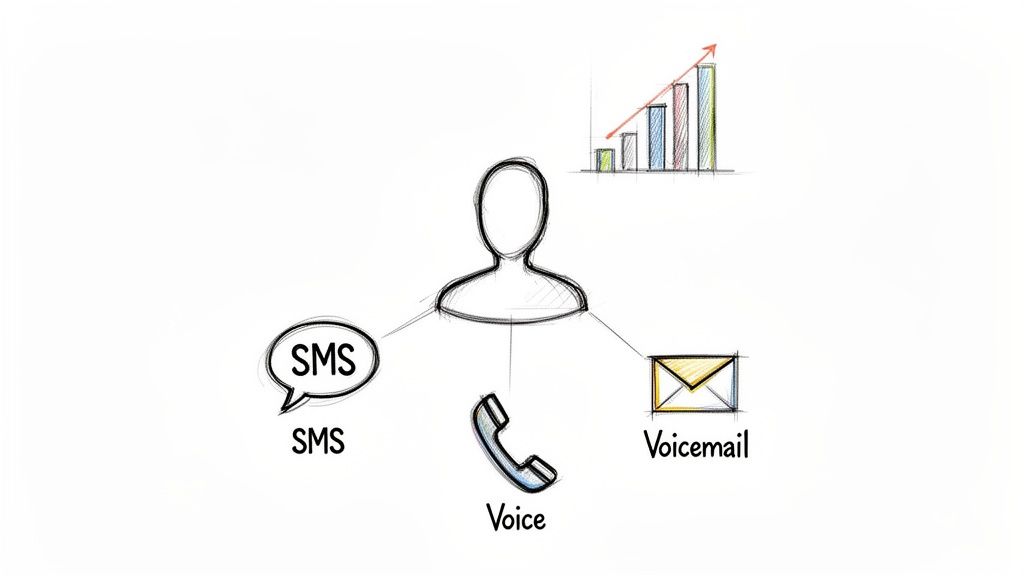
This isn't just about being available everywhere. It's about creating a unified journey where each channel supports the others. Think about it: a customer gets an SMS about a special offer, follows up with a quick phone call for more details, and then receives a confirmation email. When these touchpoints flow together, the experience feels personal and seamless. For SMBs, healthcare providers, and e-commerce stores, that feeling is what drives sustainable growth.
The numbers don't lie. When you integrate channels like SMS, voice, and ringless voicemail, you're not just improving customer service—you're building a powerful revenue engine.
Buyers who engage across multiple channels deliver up to 30% higher lifetime value. They also drive revenue growth 3.5 times faster than customers who stick to just one channel. On top of that, companies with strong multi-channel strategies retain an impressive 89% of their customers, a massive leg up on those with a fragmented approach.
This financial upside comes from building deeper relationships. When customers feel heard and valued on every platform, they stick around and become your biggest fans. A well-executed strategy turns communication from a line item expense into a direct contributor to your bottom line.
A single-channel mindset leaves money on the table. A multi-channel strategy picks it up by creating more opportunities to connect, engage, and convert. It’s about ensuring no customer feels ignored, regardless of how they choose to reach out.
Better engagement is the fuel for customer retention. A multi-channel communication strategy lets you be persistent without being annoying.
For instance, if an SMS about an upcoming event goes unanswered, you can follow up with a non-intrusive ringless voicemail drop. It's a personal message delivered right to their inbox without their phone ever ringing.
This layering of communication ensures your message gets through while respecting your customer's preferences. It's a simple acknowledgment that people have different habits. By making it easy for them to engage, you make it much harder for them to leave. Exploring different ways for how to increase customer engagement can spark even more ideas for building these lasting connections.
Ultimately, you're creating a communication ecosystem that feels natural to the customer. When you nail that, loyalty and lifetime value follow, giving your business a solid foundation for the long haul.
Still on the fence? Let's break down the real-world difference between sticking to one channel versus embracing a multi-channel strategy. The numbers paint a very clear picture of where the opportunity lies.
As you can see, the contrast is stark. A multi-channel strategy doesn't just offer incremental improvements; it fundamentally changes how you acquire, engage, and retain customers, directly impacting your bottom line.
A powerful multi-channel communication strategy isn't built on guesswork; it's engineered with a solid framework. Before you send a single message, you have to know who you’re talking to and, just as importantly, how they prefer to listen. Getting this foundation right is what turns random outreach into a real conversation that builds relationships and drives action.
It all starts with getting to know your audience on a deeper level. Without that clarity, even the most advanced tools will fall flat.
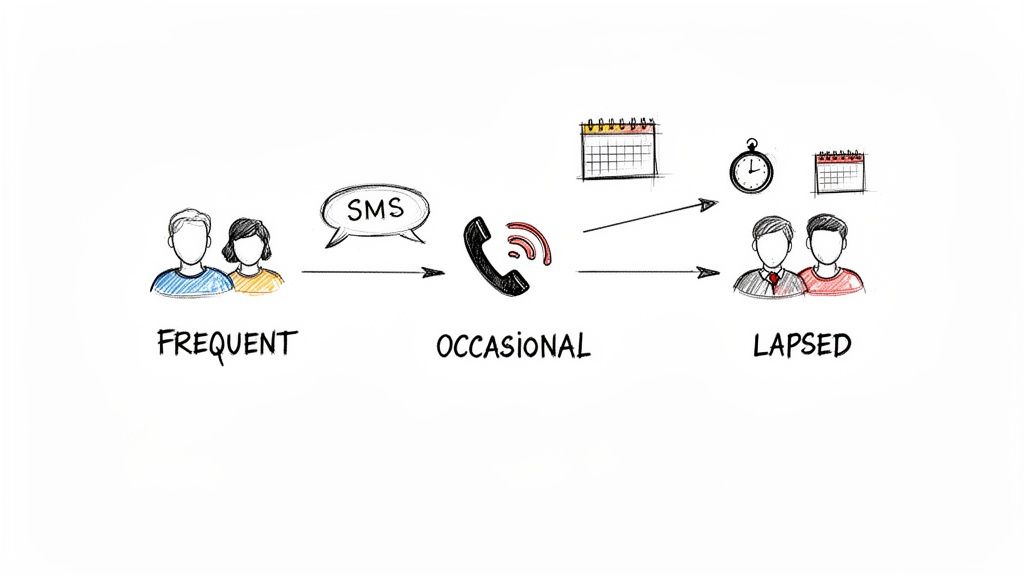
Let’s be honest: effective communication is never one-size-fits-all. The first real step in building your framework is smart audience segmentation—carving up your contacts into groups based on their behaviors, preferences, or history with your business. This is how you make your messaging hyper-relevant.
Instead of blasting the same message to everyone, segmentation ensures that each person gets communication that actually makes sense for their specific situation. The goal is to make every interaction feel personal and timely.
Here are a few practical ways this plays out:
Okay, so you know who you're talking to. Now you need to figure out when to talk to them. This is where mapping the customer journey comes in. It’s all about identifying the key touchpoints where communication can make the biggest impact. Think of this map as your guide to delivering the right message at the perfect moment.
It’s basically a timeline of your customer's relationship with you, from their very first contact all the way to becoming a loyal advocate. Every stage is a new opportunity to connect.
A well-mapped customer journey turns your communication from an interruption into a welcome guide. It anticipates needs and provides value at every step, making your brand an indispensable partner rather than just another voice.
By visualizing this path, you can pinpoint those critical moments. For instance, the moment a customer abandons their online cart is a crucial intervention point. The day after a successful appointment? That's the perfect time for a follow-up. Mapping these moments lets you build automated workflows that engage customers proactively.
With your audience segmented and their journey mapped out, the final foundational piece is choosing the right channel for each interaction. A multi-channel strategy isn't about using every channel all the time. It’s about being smart and using the right one for the specific context. Each channel has its own strengths.
SMS Text Messaging: For anything time-sensitive, this channel is unbeatable. With open rates often clearing 98%, texts are perfect for flash sale announcements, appointment reminders, and urgent alerts. They demand immediate attention.
Voice Broadcasts: When a message is critical and you need to be sure it's heard, a pre-recorded voice broadcast is incredibly powerful. Think event cancellations, emergency notifications from a clinic, or important community updates. It carries a sense of urgency that text alone can't quite match.
Ringless Voicemail: Looking for a more personal touch without being intrusive? A ringless voicemail is perfect. You can drop a warm, pre-recorded message directly into someone's voicemail box without their phone ever ringing. This is great for a personal thank you, a special offer for a VIP customer, or a gentle follow-up on a sales inquiry. You get the personality of a voice call with the convenience of a text.
Your strategy should layer these channels intelligently. For that at-risk gym member, you might start with an encouraging SMS. If you don't hear back, a friendly ringless voicemail drop from a trainer a few days later could provide the personal touch that brings them back. It's this thoughtful combination of channels that makes a multi-channel strategy so effective.
Alright, let's get from planning to practice. Now that you have a solid framework, it's time to pick your tools. Choosing the right channels isn't about using every option available; it's about using the right tool for the right job.
A killer multi channel communication strategy is all about precision. You want to use SMS, voice, and ringless voicemail strategically to create a conversation that feels natural, not just a bunch of noise.
The secret is to think about the intent behind every single message. Is it urgent? Does it need a personal touch? Is it just a gentle nudge? Your answer will point you straight to the channel that will make the biggest impact without burning out your audience.
When you absolutely need to get someone's attention right now, nothing beats a text message. With its sky-high open rates, SMS is your go-to for anything time-sensitive where you need a quick reply or immediate awareness. It’s direct, it's short, and it lands exactly where people are already looking—their phone.
Let's look at a couple of real-world examples:
But remember, with great power comes great responsibility. Compliance is absolutely non-negotiable with SMS. You have to get explicit consent—ideally through a double opt-in process—and always give people a dead-simple way to opt out.
Some messages are just too important to risk being missed. For those critical updates where you need a higher level of certainty, automated voice broadcasts are incredibly effective. There's something about hearing a voice, even a pre-recorded one, that conveys urgency in a way text sometimes can't.
This channel is perfect for when you need to deliver information clearly and directly.
For example, a doctor's office could use a voice broadcast to let patients know about a sudden closure due to a snowstorm. Or, an event manager could use a press-1 voice broadcast to get instant RSVP confirmations, asking attendees to simply press "1" to confirm or "2" to cancel.
Just like with texting, compliance is key. Always scrub your calling lists against the National Do Not Call (DNC) Registry. You only want to contact people who have given you the green light.
What if you want the personal feel of a phone call without actually interrupting someone's day? That’s where the magic of ringless voicemail comes in. This tech drops a pre-recorded audio message straight into someone's voicemail box without their phone ever ringing. It's the perfect middle ground between an impersonal text and a disruptive live call.
A ringless voicemail drop is fantastic for follow-ups and high-value communications.
Think about a salesperson trying to re-engage a big lead who's gone quiet. A personal, non-intrusive voicemail can get that conversation going again without putting them on the spot. It feels thoughtful and gives the lead the freedom to respond when they're ready.
A well-crafted ringless voicemail feels less like marketing and more like a personal message left just for them. It’s a powerful way to add a human element to your automated outreach, building rapport at scale.
This is where the real art of a multi-channel strategy comes into play: layering these tools. You could kick off a sequence with an SMS campaign. For anyone who doesn't click or reply after 24 hours, an automated ringless voicemail can follow up, creating a persistent but respectful system. To learn more about selecting the right channels, check out these modern guest messaging strategies that focus on platforms your audience uses daily.
This multi-step approach gives your message the best possible chance of being seen and heard. The customer journey isn't a straight line anymore; it's a fluid conversation. Today's approach has evolved into what some call 'Omnichannel 2.0,' which is all about seamless continuity. For example, a patient might get an SMS appointment reminder, then later receive a secure portal update or voice confirmation without ever having to repeat information. This kind of coherence boosts customer satisfaction to 67% compared to just 28% in fragmented systems.
With over 50% of customers ready to jump ship after just one bad experience, getting this right isn't just nice—it's essential. You can find more insights about this evolution in communication in recent industry analyses.
Once you've got your framework nailed down, it's time to put your multi-channel communication strategy on autopilot. This is where you really start to scale your efforts. Automation turns all that manual, time-sucking follow-up into a smooth, 'set it and forget it' system that nurtures leads and keeps customers engaged around the clock. The secret sauce? Automated drip campaigns.
Think of a drip campaign as a sequence of messages sent automatically to a specific group of people, triggered by their actions or a set schedule. Instead of just blasting out one-off messages, you're building a thoughtful conversation that unfolds over time, guiding people along their journey with your brand.
This graphic shows a simple but incredibly powerful automated flow. It starts with a text, moves to a voice call, and finishes with a ringless voicemail to make sure the message gets through.
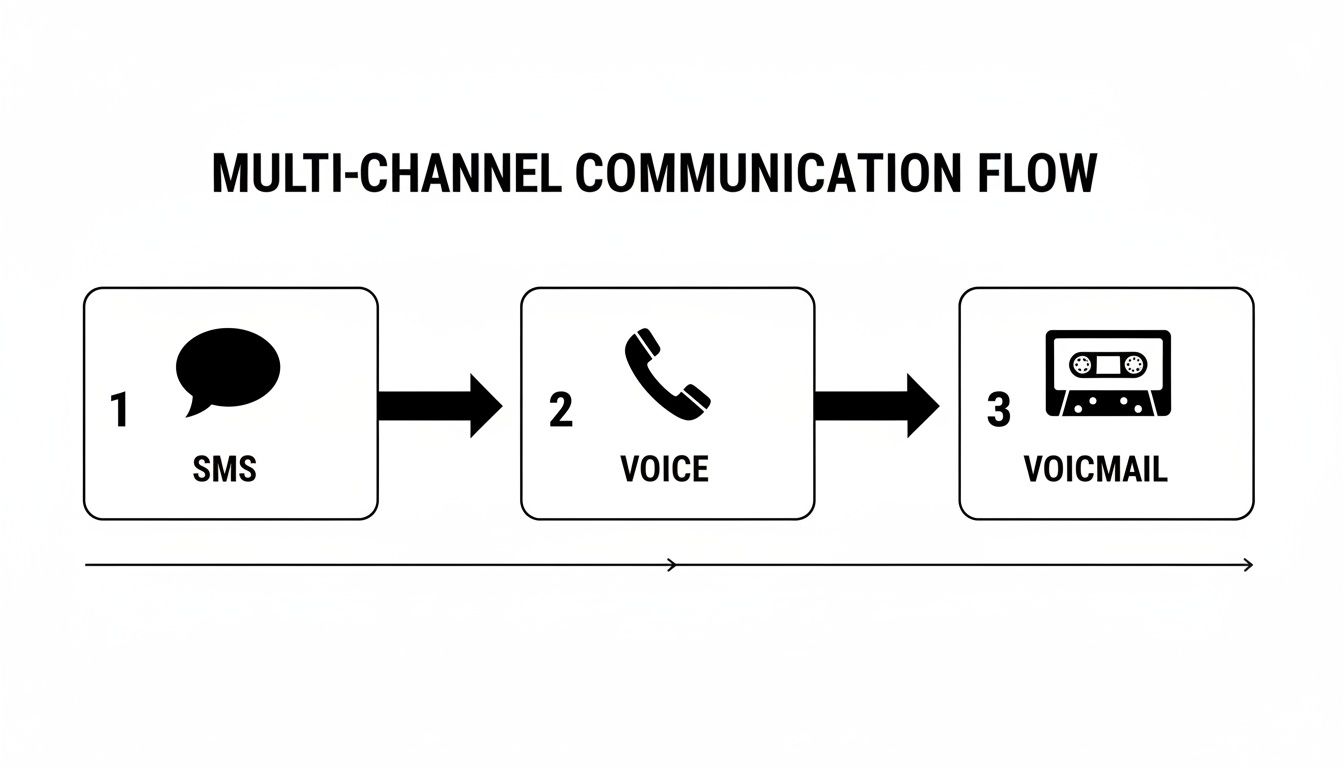
The real takeaway here is the smart progression between channels. You're not just hammering one channel; you're adapting your outreach based on how (or if) the person engages, which massively boosts your chances of making a connection.
Don't let the word "workflow" intimidate you. Building a drip campaign is all about mapping out a logical sequence of touchpoints. You can start with a simple goal and expand from there. The beauty of automation is that it just runs in the background, kicked off by specific customer behaviors or key dates.
Here are a couple of real-world scenarios to get you thinking:
These workflows are effective because they're timely and hyper-relevant. They react directly to a customer's action (or inaction), making the communication feel helpful, not pushy.
Just because a message is automated doesn't mean it has to sound like a robot sent it. Using merge tags (also called custom fields) is your key to personalizing drip campaigns at scale. These little snippets pull information straight from your contact list—like a first name, appointment time, or last purchase—and pop it right into your messages.
A text that says, "Hey John, just a reminder about your appointment tomorrow at 2 PM," hits completely differently than a generic alert. This kind of personal touch makes customers feel seen and valued, strengthening that connection to your brand.
The goal of automation isn't to get rid of the human touch. It's to deliver that human touch more consistently and efficiently than any person or team ever could manually. Personalization is what bridges the gap between an automated system and a genuine customer relationship.
By layering segmentation with merge tags, you can create hyper-targeted campaigns that speak directly to an individual's unique situation. Finding the best drip campaign software will give you the tools to set up these personalized sequences in minutes.
This is where your multi-channel drip campaign goes from smart to genius. When you connect your communication platform to your Customer Relationship Management (CRM) system, you unlock a whole new world of automation possibilities. Now, your messages can be triggered by a massive range of customer data and behaviors that your CRM is already tracking.
Imagine a new lead fills out a form on your website. That simple action can instantly kick off a welcome sequence: an immediate confirmation SMS, followed by a ringless voicemail from a sales rep two days later, and then another follow-up text a week after that if they haven't responded.
You're no longer just sending messages; you're building an intelligent communication ecosystem. It responds in real-time to your customer's journey, making sure no lead ever falls through the cracks.
A one-size-fits-all communication strategy just doesn’t cut it. To actually connect with people and get them to act, you have to speak their language and play by their rules. The way a healthcare provider communicates is worlds apart from how an event marketer needs to operate.
Let's break down some real-world playbooks for two very different sectors—healthcare and events—to show you just how critical a tailored approach is. Think of these as templates you can grab and adapt for your own business.
In healthcare, communication is built on a foundation of trust, privacy, and iron-clad compliance. You absolutely need a HIPAA-compliant multi-channel strategy to keep your practice running smoothly while safeguarding sensitive patient information. The main goals here are pretty straightforward: slash no-shows, improve patient outcomes, and make post-visit care a breeze.
For any modern clinic or hospital, this isn't just a "nice-to-have"; it's core infrastructure. A smart, automated system can make a massive dent in missed appointments—a huge revenue killer—by sending timely reminders. Even better, you can speed up payments with sequenced SMS and voice messages for billing and use features like press-1 transfers to make your internal workflows more efficient. Done right, your communication system can become a profit center.
Here’s a look at what a solid healthcare communication flow feels like from the patient's perspective:
This multi-step sequence makes patients feel genuinely cared for every step of the way. For a deeper dive into these tactics, check out our guide on SMS for healthcare.
For anyone in the events space, it's all about building hype and getting people to actually show up. A multi-channel strategy is your best friend for creating urgency and making sure your event doesn't get lost in the digital noise.
Let's say you're promoting a virtual summit. Your entire focus is on turning registrations into attendees who stick around.
In event marketing, silence is your enemy. A strategic cadence of messages across different channels builds momentum and keeps your event top-of-mind, transforming a simple registration into genuine anticipation.
Here’s how you could map out a campaign flow:
Of course, these communication strategies work best when you have a solid handle on the logistics of event planning. For instance, knowing how to organize a golf tournament gives you the kind of operational insight that a strong communication plan can amplify.
Even with a solid plan, it's natural to have some questions before you dive headfirst into a multi-channel strategy. Honestly, it's smart to get these sorted out now rather than later.
Let's walk through some of the most common ones I hear. Getting these cleared up will make sure you’re building your campaigns on a rock-solid foundation.
This one trips people up all the time, but the distinction is actually pretty important. The easiest way to think about it is that multi-channel is the starting line, and omnichannel is the much more advanced, integrated finish line.
With a multi-channel approach, you're using a few different platforms to get your message out. You might send an SMS blast and, separately, a voice broadcast. They both exist, but they're running in their own lanes and don't really know about each other.
Omnichannel is the next evolution where all those channels are woven together. An action in one channel triggers a reaction in another. For example, a customer clicks a link in your text message, and that automatically pulls them out of the follow-up ringless voicemail sequence you had planned. You really can't get to omnichannel without mastering a multi-channel approach first.
This isn't just a "nice-to-have"—it's a legal must-do that protects both you and your customers. Getting compliance wrong can lead to massive fines, so it’s something to take seriously from day one. Each channel has its own rulebook.
Frankly, the only sane way to manage all this is to use a platform that has compliance built right into its DNA. It takes a ton of the manual work and guesswork off your plate.
When you're just getting your feet wet, trying to do everything at once is a recipe for disaster. My advice? Pick one or two high-impact channels and absolutely nail them before you think about adding more.
For almost everyone, SMS is the place to start. You just can't argue with open rates that hover around 99%. It’s the most direct and immediate way to send out promotions, reminders, or quick updates.
Once you have that humming, a fantastic second channel to layer in is ringless voicemail. It lets you drop a personal, pre-recorded message right into someone's voicemail box without their phone ever ringing. It feels personal but isn't intrusive, making it perfect for follow-ups. A simple combo of an SMS blast followed by a ringless voicemail drop to people who didn't click can be incredibly powerful.
Measuring success isn't just about hitting "send." It's about obsessively tracking what happens next. The right numbers will tell you exactly which parts of your strategy are crushing it and which ones need a tune-up.
You need to know what's working so you can do more of it. That means tracking the right key performance indicators (KPIs) for every channel you use.
For your SMS campaigns, keep a close eye on click-through rates (CTR) on any links you send, conversion rates (which you can track with unique promo codes), and of course, your opt-out rate.
When it comes to voice broadcasts, you'll want to watch your answer rates and how many people engage with interactive options, like a "press-1 to connect" prompt. For ringless voicemail, the big metrics are your successful drop rate and, more importantly, how many people call you back or take the action you suggested.
The final step is connecting all that data back to your sales or CRM software. That's how you'll see the full picture and know for sure which channels are actually making you money.
Ready to build a multi-channel communication strategy that actually gets results? With Call Loop, you can automate SMS, voice broadcasts, and ringless voicemail campaigns from one easy-to-use platform. Start your free trial today and see how easy it is to connect with your customers on the channels they prefer.
Chris Brisson
Chris is the co-founder and CEO at Call Loop. He is focused on marketing automation, growth hacker strategies, and creating duplicatable systems for growing a remote and bootstrapped company. Chat with him on X at @chrisbrisson


Trusted by over 45,000 people, organizations, and businesses like


