
See a Demo
You're just one step away from seeing Call Loop in action.
Enter your information below to watch a demo right now.

You're just one step away from seeing Call Loop in action.
Enter your information below to watch a demo right now.


Let's get right to it. A VoIP number is basically a phone number that works over the internet instead of old-school phone lines. Think of it less like a physical line plugged into a wall and more like a flexible, professional email address for your voice calls—it’s tied to you, not a specific place.
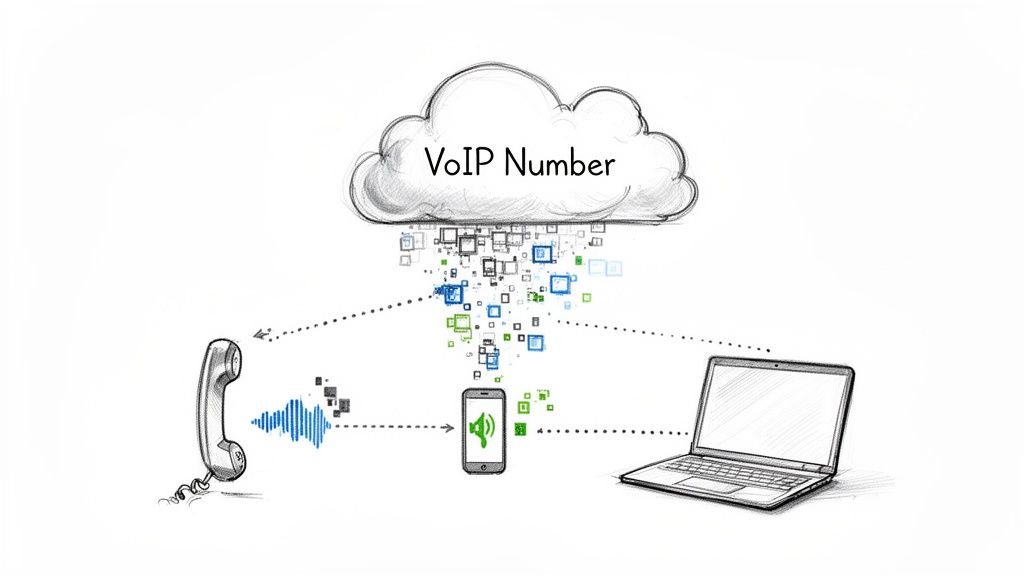
A Voice over Internet Protocol (VoIP) number completely ditches the copper wires of a traditional landline. Instead, it uses your internet connection to handle all your calls. This means your phone number isn't stuck at one physical address; it’s virtual. You can use it on any device that gets online, whether that’s a smartphone, your laptop, or a special VoIP desk phone.
Here’s the simple version of how it works: when you make a call, the system instantly converts your voice into tiny digital packets of data. Those packets zip across the internet to the person you're calling. If you want to get into the nitty-gritty, you can read more about exactly how VoIP phone work. This digital method is the secret sauce that gives modern businesses so much freedom.
This switch from hardware to software is a game-changer. It means your business phone number is no longer chained to a single desk. Your team can make and take calls using your main company number from just about anywhere—at home, on the road, or even from different offices across the country.
This technology also powers some seriously effective outreach tools, like:
This digital-first approach is why the global VoIP market is expected to rocket to $306.24 billion by 2030. For small and medium-sized businesses, making the switch can slash communication costs by as much as 60% compared to traditional landlines. This is why so many businesses are making the switch.
This flexibility turns a simple phone number into a real strategic tool. For instance, a special type of VoIP number called a Direct Inward Dial (DID) number lets you give unique phone numbers to specific employees or departments, but they all route through your one central system. You might be interested in learning more about what is a DID number and how it can help organize your call flow.
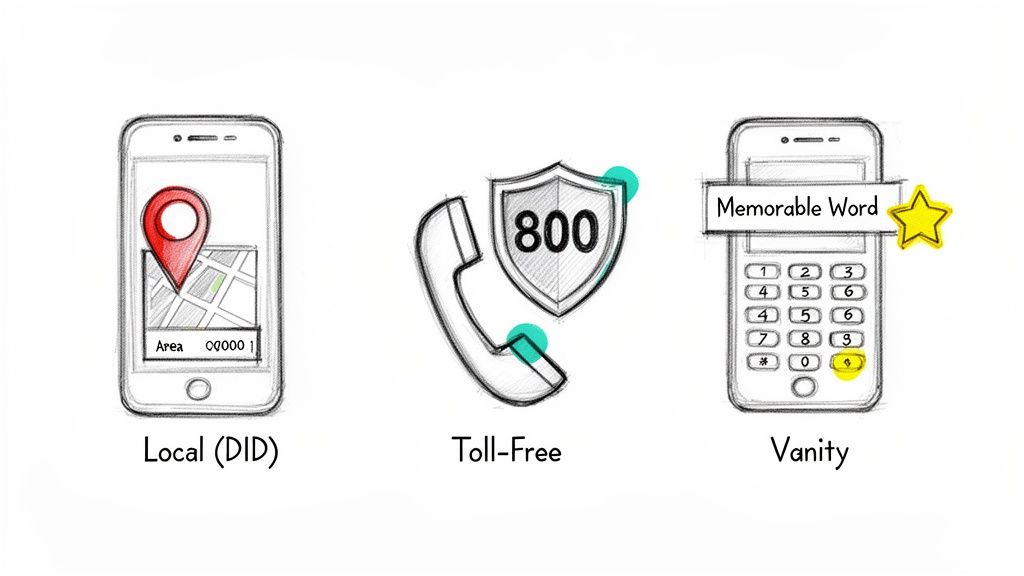
So, you get what a VoIP number is. The next logical step is figuring out which kind is the right fit for your business. This isn't a one-size-fits-all decision; the number you pick sends a direct message about your brand and can make or break a customer's first impression.
Think of it like picking a physical address for a storefront. A local number makes you feel like the shop down the street, while a toll-free one gives off a big, national-brand vibe. If you're weighing your options, digging into specific small business VoIP solutions can help you match the right technology to your business goals.
The sheer flexibility in number types is a huge reason the VoIP market is exploding—it’s projected to hit $179.6 billion by 2026. This growth is all about giving businesses the power to choose how they connect with customers.
Let's break down the main options you'll come across:
When you choose the right number, it stops being just a string of digits and becomes a real strategic asset. A local number can boost your answer rates. A toll-free number can build trust. A vanity number can become the memorable hook for your next big campaign. On that note, knowing whether you're calling a VoIP number or a landline can be important for your outreach, too. You can check out our guide on how a phone lookup service works to learn more about that.
Once you’ve got your VoIP number, the real fun begins. It’s easy to think of it as just a replacement for your old office phone, but that’s selling it short. This is where you can start using your phone number as a serious engine for business growth.
Instead of just sitting back and waiting for calls, VoIP lets you launch large-scale outreach campaigns. Because it’s all digital, you can connect with thousands of people at once, sending timely messages straight from your business number.
One of the most powerful tools in the VoIP toolbox is Ringless Voicemail. Just like it sounds, this tech drops an audio message directly into someone's voicemail box—all without their phone ever making a peep. It’s a game-changer for anyone who wants to follow up without being disruptive.
Think about how you could use this:
Ringless voicemail is the perfect way to define a VoIP number by what it actually does. It's a compliant, non-intrusive way to make sure your message gets heard, with successful delivery rates often hitting over 96%. That makes it an incredibly efficient tool for any outreach campaign.
Beyond ringless delivery, you also have voice broadcasting. This lets you send one pre-recorded message to a huge contact list all at once—perfect for things like emergency alerts or event announcements.
When you add in bulk SMS capabilities, your VoIP number becomes the command center for a full multi-channel strategy. You can connect with your audience through voice, text, and direct-to-voicemail messages. To get a better handle on this, you can learn more about how voice broadcast software works.
Behind every VoIP call, a few key pieces of technology are working together to make it all happen. Getting a handle on these basics helps you see a VoIP number for what it really is: a powerful tool for your business.
The main player here is SIP (Session Initiation Protocol). Think of SIP as the digital traffic cop for your calls. When you dial out, SIP establishes the connection, keeps it running smoothly, and then ends the call when you hang up. It's the engine that powers the whole system.
One of the first questions people ask is, "Can I keep my current business number?" The answer is a definite yes, and it’s all thanks to a process called Number Porting.
This is simply the standard procedure for moving your existing number from your old-school phone company to a new VoIP provider. Your new provider takes care of all the technical heavy lifting, so you get to keep the number your customers already know and trust.
This isn't some niche technology, either. There are over 1.8 billion VoIP subscribers worldwide, and that's expected to hit 3.6 billion for mobile users by late 2026. With VoIP now handling over 40% of the world's voice traffic, its reliability is a proven fact. You can discover more insights about the rapid growth of VoIP technology and how it's replacing traditional phone lines.
It's also critical that this tech meets safety and compliance rules. E911 services are a non-negotiable part of any professional VoIP setup. This ensures that if you dial 911 from a VoIP device, dispatchers can see your registered physical address and send help to the right place.
This is how a single VoIP number can become the hub for all kinds of outreach campaigns.
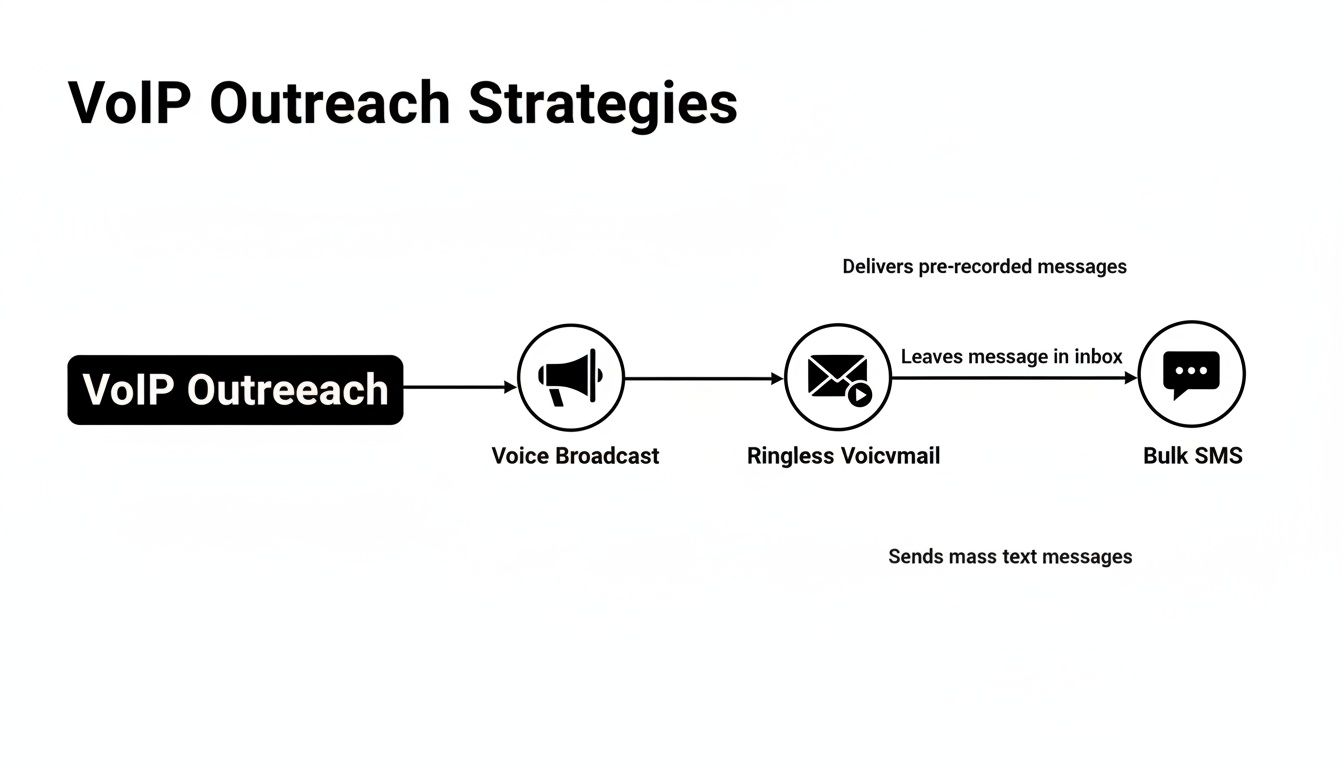
The flowchart shows how one number can drive voice broadcasts, ringless voicemail drops, and bulk SMS messages. This is how platforms like Call Loop can integrate different channels, including SMS and MMS, to create powerful campaigns from one consistent business number.
So, why bother switching from a phone system that already works? The simple answer is that a VoIP number unlocks some serious business advantages that your old landline just can't match. The most obvious win is on your wallet—most businesses see a huge drop in their monthly phone bill right away.
But the savings are just the start. A VoIP number gives you something even more valuable: freedom. Your business number is no longer chained to a desk in a specific building. Your team can make and take calls from literally anywhere with an internet connection—at home, on the road, or even in a different city. For today's remote and hybrid teams, that's not just a perk; it's essential.
One of the biggest headaches with old-school phones is how clunky they are to manage. Need a new line for a new hire? You'd have to call the phone company and wait. With VoIP, you can add or remove phone lines instantly yourself, right from a simple dashboard. No waiting for a technician, no fuss.
Think of a VoIP number as upgrading your phone from a basic utility, like a landline, into a smart, strategic tool for your business. It opens up a world of advanced features that were either impossible or ridiculously expensive with the old way of doing things.
These features are what really set a VoIP number apart and turn it into a powerhouse for your business:
When you put all these pieces together, your VoIP number becomes the command center for all your communications. It helps you work smarter, connect with customers more effectively, and grow your business without being held back by outdated tech.
As you get ready to make the switch, a few last-minute questions usually pop up. It's totally normal. Most businesses want to get a final gut check on things like reliability, features, and what the transition actually looks like. Let's tackle those common concerns head-on so you can feel good about moving forward.
Absolutely. You don't have to give up the number your customers already know and trust. The process is called number porting, and it's a standard practice that lets you move your existing number over to a new VoIP service.
Your new provider handles all the tricky parts behind the scenes. They work with your old carrier to make the switch seamless, so you don't have to worry about dropped calls or confusing your customers. You get to keep all that brand recognition you've built and plug it right into a more modern system.
Yes, as long as you have a solid internet connection—which most businesses already rely on for everything else—VoIP is just as dependable. In fact, the call quality is often even better, delivering crisp, high-definition (HD) voice that landlines just can't match.
It's not a niche technology anymore. VoIP now handles over 40% of the world's voice traffic, which tells you everything you need to know about its reliability. The platforms that businesses use are built on powerful networks designed for maximum uptime, so you can trust them with your most important calls and campaigns.
This is one of those clever features that VoIP makes possible. Ringless voicemail doesn't make a traditional call at all. Instead, it uses your internet connection to deliver an audio file directly to a person's voicemail inbox on the carrier's server.
That’s exactly why their phone never rings—you’re bypassing the live calling network entirely. It's a game-changer for things like sales follow-ups, appointment reminders, or quick updates because you can deliver your message without interrupting someone's day. It's a non-intrusive way to make sure you're heard.
Yes, and this is where a VoIP number really shines for a modern business. A business-grade VoIP number isn't just for calls; it's fully enabled for both SMS and MMS messaging. This lets you run all your outreach—voice and text—from one single, recognizable number.
With a platform built for it, you can use that same number to:
Your phone number stops being just a way for people to call you and becomes the command center for all your customer communication.
Ready to see how a VoIP number can transform your outreach? Call Loop provides a powerful platform for SMS, voice broadcasting, and ringless voicemail to help you connect with your audience at scale. Get started with Call Loop today!
Chris Brisson
Chris is the co-founder and CEO at Call Loop. He is focused on marketing automation, growth hacker strategies, and creating duplicatable systems for growing a remote and bootstrapped company. Chat with him on X at @chrisbrisson


Trusted by over 45,000 people, organizations, and businesses like


