
See a Demo
You're just one step away from seeing Call Loop in action.
Enter your information below to watch a demo right now.

You're just one step away from seeing Call Loop in action.
Enter your information below to watch a demo right now.


You hear “texting” and “messaging” thrown around all the time. For most people, they mean the same thing. But for your business, the difference is huge—it’s the choice between reaching everyone, everywhere, or creating a rich, app-like experience for your customers.
Getting this right is the first step to building a communication strategy that actually works.
When you need to contact your customers, it’s easy to mix these terms up. They sound similar, but they run on totally different technologies with their own unique strengths.
Texting almost always means SMS (Short Message Service) and MMS (Multimedia Messaging Service). These are the classic messages sent straight from one phone to another using the cellular network. Their superpower is universal reach. Every mobile phone on the planet, from a basic flip phone to the latest smartphone, can get a text without needing an internet connection. It just works.
Messaging, on the other hand, is the bigger picture. It includes traditional texting but also covers all the Over-The-Top (OTT) apps like WhatsApp, iMessage, and Facebook Messenger. These services run over the internet (Wi-Fi or mobile data), which unlocks more advanced features like read receipts, typing indicators, and high-quality media sharing.

To pick the right tool for the job, it helps to see a direct comparison. Are you sending an urgent alert that absolutely has to get through, or are you trying to build an interactive brand experience? The answer will guide your choice.
This table breaks down the core differences at a glance.
As you can see, the trade-off is clear. One isn’t flat-out better than the other; their value completely depends on what you're trying to accomplish with your communication.
The key takeaway is that texting prioritizes reach and reliability, while messaging prioritizes a rich, interactive user experience.
This distinction is also critical when it comes to security. If you want to dive deeper into the security protocols involved, you can read our guide on whether SMS is encrypted.
Ultimately, knowing when to use each channel is how you maximize engagement and hit your business goals.
To build a winning communication strategy, you have to know your tools inside and out. It’s not just about what message you send, but how you send it. The real difference between "texting" and "messaging" boils down to the technology running behind the scenes.
Let's break down the four key players you'll be working with in your business.
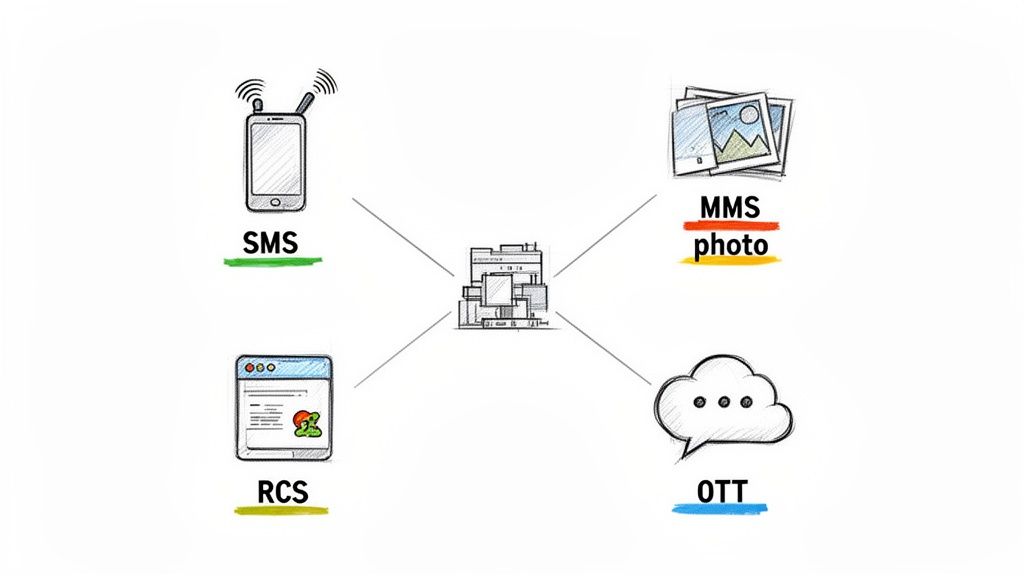
Think of SMS as the universal workhorse of mobile. These are your classic, text-only messages sent over cellular networks, which means they don't need an internet connection to land in someone's inbox. Their power is in their simplicity and incredible reach.
Because it works on every single mobile phone out there, from the most basic flip phone to the latest flagship, SMS is your go-to for anything critical and time-sensitive.
MMS is the visual upgrade to SMS. It runs on the same cellular network but lets you add pictures, GIFs, and short videos, breaking you out of the text-only box.
That simple change can turn a plain notification into something that genuinely grabs attention. You can send images of a new product, a quick video tutorial, or a branded GIF that shows off your company's personality. When you need to add some visual flair, MMS is your tool.
RCS is the next evolution of text messaging, built to bring the slick, app-like features you see in WhatsApp or iMessage right into the phone's native texting app, primarily on Android. It aims to give you the massive reach of SMS with the rich, interactive experience of a modern messaging app.
Some of the key features include:
While more and more carriers and devices are supporting it, RCS hasn't completely taken over from SMS just yet. For now, think of it as a powerful upgrade for a large chunk of your audience.
For businesses, the distinction is crucial. SMS provides a reliable foundation, while channels like RCS and OTT offer advanced tools for deeper engagement. A well-rounded strategy often involves using multiple channels in concert.
OTT messaging apps are the ones that run "over the top" of the internet, completely bypassing the cellular carriers. This is where you'll find the global giants like WhatsApp, Facebook Messenger, and Telegram.
These platforms are loaded with features—read receipts, typing indicators, group chats, and robust media sharing. The catch? Both you and your customer have to be on the same app. This makes OTT perfect for talking to an already-engaged community but not so great for reaching a broad, new audience.
Learning how to mix and match these channels is where the magic happens. A multi-channel messaging platform allows you to put it all together. Combining SMS with other methods, like a personalized ringless voicemail drop, can create a powerful sequence that gets people to act.
Alright, let's get practical. Knowing the difference between "texting" and "messaging" is one thing, but the real question is: which one will actually make you money and connect with your customers?
The answer really boils down to what you’re trying to accomplish. Are you sending a critical alert that has to be seen, or are you trying to create a rich, interactive shopping experience? Each channel has its own strengths.
This is where the rubber meets the road. We’ll look at the things that truly matter for your business: getting your message delivered, keeping customers engaged, measuring what works, and staying compliant.
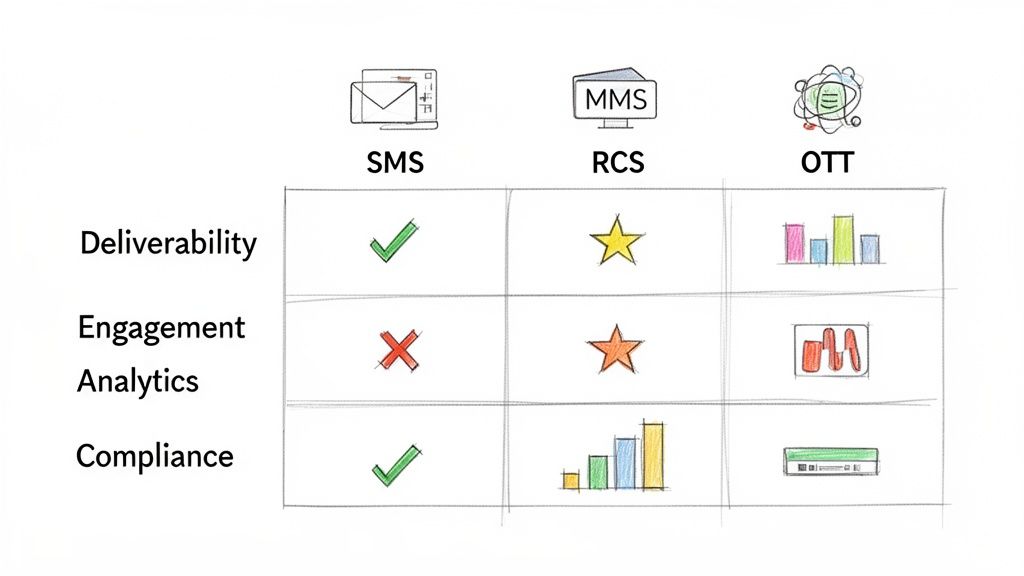
When your message absolutely, positively has to get through, nothing beats old-school SMS. Why? It runs on cellular networks, not the internet. This makes it the undisputed champ for reliability, reaching virtually any mobile phone, anywhere.
On the flip side, RCS and OTT apps like WhatsApp need a data connection, either mobile or Wi-Fi. This can create a blind spot if your customers have spotty internet or have their data turned off. RCS tries to solve this by falling back to SMS if needed, but it's still not as bulletproof as a pure text.
Think about it: a service company sending appointment reminders needs the near-guaranteed delivery of SMS. But an e-commerce brand announcing a flash sale might trade a little bit of reach for the slick, visual features of RCS or an OTT app.
This is where the broader world of "messaging" really pulls ahead. SMS is your workhorse for simple text, and MMS adds a picture. But RCS and OTT apps turn a simple message into a full-blown interactive experience.
A retail brand could use MMS to send a single product shot. That's good. But with RCS, they could send an entire carousel of products, each with its own "Buy Now" button. You’re basically creating a tiny storefront in the message thread.
The trade-off is simple: SMS gives you unmatched reach with basic engagement. RCS and OTT sacrifice a bit of that universal reach for a deeply interactive, app-like experience that can seriously drive conversions.
You can't improve what you don't measure. Each channel gives you a different level of insight into your campaign’s performance. With SMS, analytics are pretty straightforward. You’re mainly tracking delivery rates, click-throughs on your links, and open rates—which are consistently around a massive 98%.
RCS and OTT messaging, however, open up a whole new world of data. You can track things like:
This kind of granular data lets you fine-tune your campaigns with a level of precision that you just can't get with traditional texting.
And don't forget, communication isn't just about what you can type. Sometimes, a different approach is what you need to cut through the noise. Take a ringless voicemail, for instance. It lets you drop a pre-recorded audio message straight into someone’s voicemail box without their phone ever ringing.
It's a surprisingly personal and non-intrusive way to follow up. Imagine sending an SMS promo and then, a day later, your customers get a friendly voicemail from your company's founder. It stands out.
This is where a multi-channel strategy really shines. By using a platform like Call Loop, you can combine powerful tools like SMS and MMS messaging with voice drops, all from one place.
Ultimately, the best choice depends entirely on your campaign goal. For urgent, can't-miss alerts, SMS is king. For building a rich, branded, and interactive experience, RCS and OTT messaging lead the way. A smart strategy often involves using a combination of these tools to maximize both reach and engagement.
Knowing the difference between texting and messaging is one thing. But turning that knowledge into campaigns that actually get results? That’s the real goal.
The secret is matching the right channel to your business goal. Let's dig into some powerful ways to use each one.
When a message absolutely, positively has to be seen, SMS is king. Nothing else comes close.
With a staggering 98% open rate and the ability to reach nearly any mobile phone on the planet, it’s the clear choice for time-sensitive messages that you can't afford to have missed.
You've probably seen these in action:
Because SMS works without an internet connection, you can be confident your message will land, even if your customer is in a dead zone or has their mobile data turned off.
Sometimes, text just isn't enough. When you need to grab someone's attention with a splash of color and personality, MMS is your best friend.
Adding an image, GIF, or a quick video can completely transform a message from a simple alert into an engaging experience. Think about it: a real estate agent could send a stunning photo from a new listing, or a restaurant could text a mouth-watering picture of their daily special.
A few strong MMS ideas:
That little bit of media makes your message more memorable and can do wonders for click-through rates.
The most effective strategies don't just pick one channel; they combine them. Imagine sending an SMS about a special offer and then, a day later, using a ringless voicemail to add a personal, human touch that encourages action.
If you want to move beyond simple alerts and create branded, app-like conversations, then you should be looking at RCS and OTT messaging. These channels open the door for true, two-way dialogue.
With RCS, you can use branded sender profiles, scrollable media carousels, and suggested reply buttons like "Track Shipment" or "View Catalog." It transforms a one-way blast into an interactive experience, perfect for guiding customers through a purchase or handling support questions.
The real magic happens when you start layering these channels together. One of the most powerful combos we’ve seen is pairing a text campaign with a ringless voicemail drop.
A ringless voicemail delivers a pre-recorded audio message straight to someone’s voicemail inbox—their phone never even rings. It’s non-intrusive but feels incredibly personal.
For example, a marketing agency could send an SMS about a new webinar, then follow up the next day with a personal voicemail from the host inviting them to register. This multi-channel approach hits your customer on different fronts and can dramatically increase response rates. It’s a perfect example of a true messaging strategy in action.
Okay, you know the difference between all these channels now. So, which one should you actually use?
The secret isn’t just knowing what SMS or RCS is—it’s about picking the right tool for the job. The best way to do this is to think about your audience, what you’re trying to say, and what you want people to do next.
This simple flowchart breaks down the decision process.
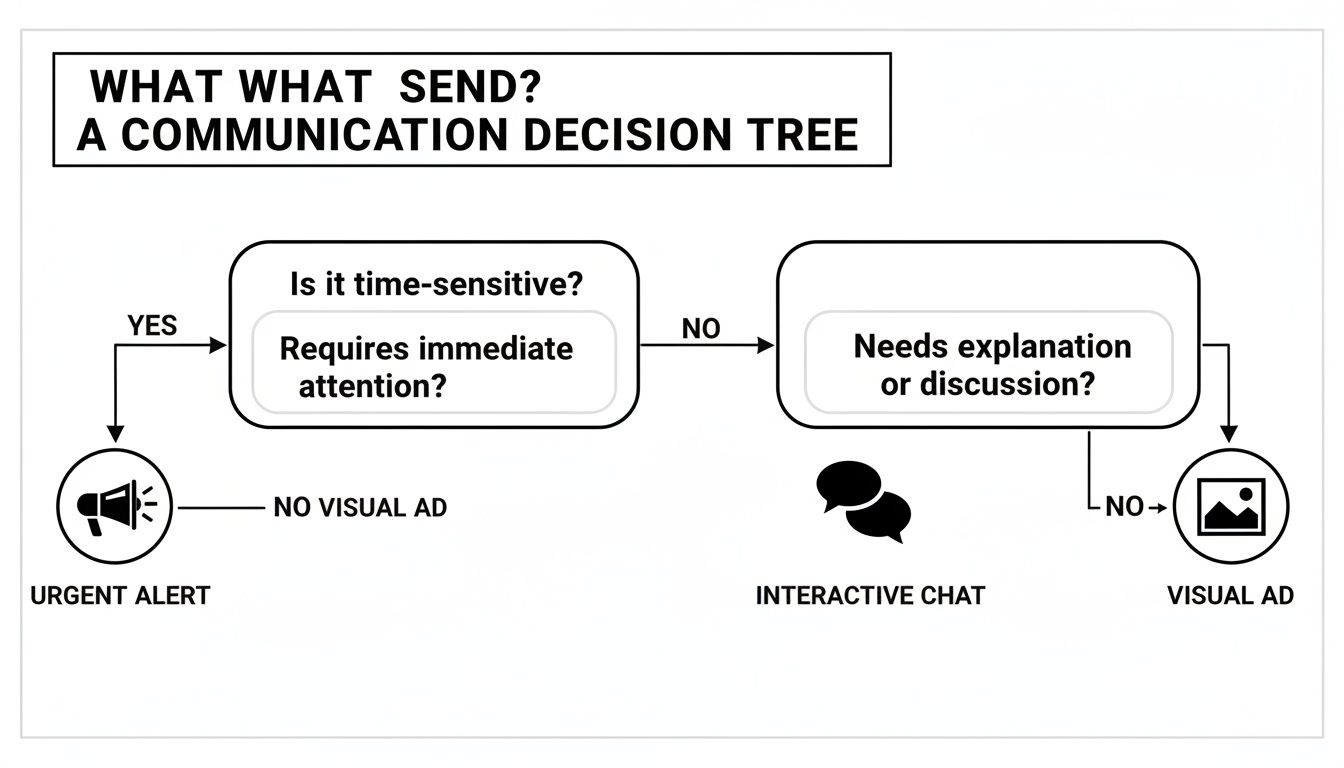
As you can see, the "why" behind your message points you directly to the right channel, whether you need an urgent alert, a visual ad, or a back-and-forth chat.
The most successful campaigns don't just stick to one channel. They mix and match, using the best tool for each specific task. This creates a much more powerful and effective plan.
Think about these common campaign goals:
This is where having an all-in-one platform is a game-changer. Instead of trying to patch together separate services, you can manage everything from one place.
Text is powerful, but don't forget about the impact of a human voice. A tool like ringless voicemail lets you connect with your audience in a unique way that doesn’t feel intrusive at all.
A ringless voicemail drops an audio message directly into someone's voicemail box, but their phone never actually rings. It’s the perfect way to follow up on a text, add a personal touch, or leave more detailed info that really stands out.
Imagine you send an SMS about an upcoming webinar. A day later, you follow up with a personal voicemail from the host. This combination grabs attention on multiple fronts and dramatically boosts response rates.
By layering SMS, MMS, and even ringless voicemail drops, you create a communication strategy that people can't ignore.
Using a unified platform like Call Loop makes this whole process easy. You can send out SMS, MMS, and voice messages from one central dashboard. This gives you organized workflows, unified analytics, and built-in compliance without the technical headaches.
Alright, let's tackle some of the most common questions that pop up when you're figuring out the best way to reach your audience. Getting these answers straight will help you build a communication strategy that actually works.
You bet it is. With all the new messaging apps out there, it's easy to wonder if old-school texting still has a place. The answer is a resounding yes. Its strength is in its raw simplicity and the fact that nearly everyone can receive a text.
The open rates are still insane—up to 98%. Because SMS runs on cellular networks, you don't need to worry about your customer having an internet connection. This makes it the king of reliability for anything urgent, like flash sale alerts, appointment reminders, or last-minute updates. For immediacy, nothing else comes close.
Think of ringless voicemail as the perfect wingman for your text messages. It's a simple, powerful tool that drops a pre-recorded audio message straight into someone’s voicemail without their phone ever ringing. It’s a non-intrusive way to follow up that adds a human touch, which really cuts through the noise.
For instance, you might send an SMS about a new promotion. A little while later, you can follow up with a ringless voicemail to add more detail, give a friendly reminder, or just connect on a more personal level. This one-two punch often gets much better response rates because you're engaging people in two different ways.
When you pair an immediate text with a personal audio message, you’re creating a powerful combo. The text gives them the core info, and the voicemail adds personality and drives the call to action home, making your campaign impossible to ignore.
Getting the rules right is a non-negotiable part of business texting. The absolute cornerstone of compliance is express written consent. You have to get clear, documented permission from a contact before you send them any marketing messages.
You also need to give people a dead-simple way to opt out, like the classic "Reply STOP to unsubscribe." It’s also just good business to respect people's time by setting quiet hours—no one wants marketing texts late at night or first thing in the morning. Using a platform designed for compliance, like Call Loop, is a huge help because it automates and manages these rules for you.
Ready to combine the power of SMS, MMS, and ringless voicemail? Call Loop gives you an all-in-one platform to automate, personalize, and scale your outreach. Start connecting with your audience today.
Chris Brisson
Chris is the co-founder and CEO at Call Loop. He is focused on marketing automation, growth hacker strategies, and creating duplicatable systems for growing a remote and bootstrapped company. Chat with him on X at @chrisbrisson


Trusted by over 45,000 people, organizations, and businesses like


