
See a Demo
You're just one step away from seeing Call Loop in action.
Enter your information below to watch a demo right now.

You're just one step away from seeing Call Loop in action.
Enter your information below to watch a demo right now.

Want to know the secret to packing your next webinar? It's not just about blasting emails to your list. The real key is creating an event people genuinely want to clear their calendars for and then promoting it everywhere they hang out.
It all starts with a killer topic and credible speakers. Get those right, and the rest is easy.
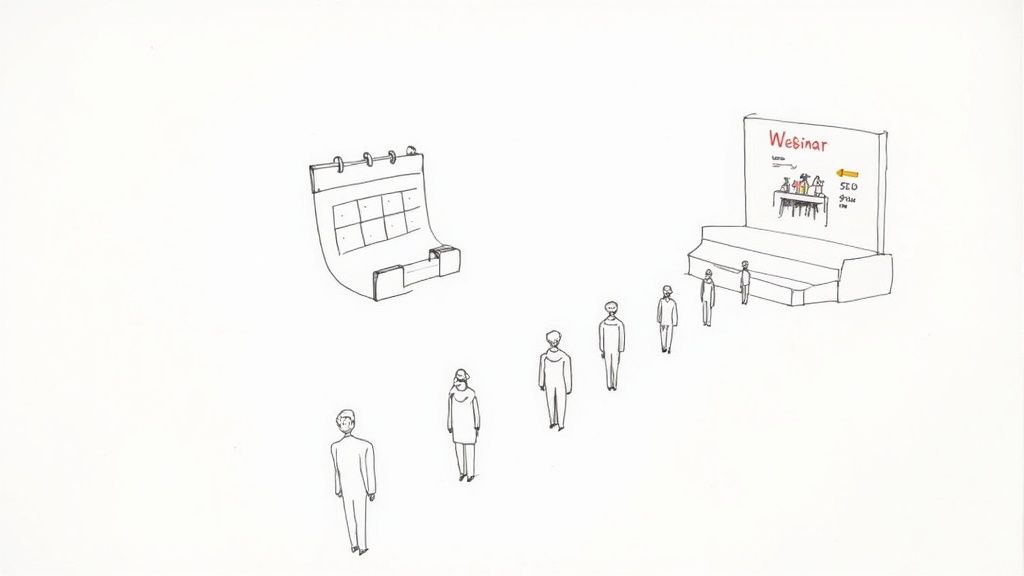
Before you even think about writing a promotional email or scheduling a reminder, you need to nail the core idea of your webinar. I've seen it a hundred times: low attendance isn't a promotion problem; it's a value problem.
If your event just looks like another entry on a crowded calendar, people will hit the mental snooze button. Your job is to make it feel absolutely essential.
This means getting specific. Move past the generic subjects and zero in on a topic that solves a real, nagging pain point for your ideal audience. Think less about your product pitch and more about what tangible problem you can help them solve in just one hour.
A truly valuable webinar topic makes the decision to attend easy. It should promise a clear, tangible outcome, like learning a new skill, solving a common frustration, or gaining access to exclusive industry insights.
This value has to come across instantly in your title and description. You need a title that sparks curiosity while clearly stating the benefit—that’s how you attract the right people from the get-go.
The best way to guarantee a full house is to pick a topic your audience is already desperate for solutions to. Don't guess. Use data to find out what they really need.
For example, a software company might notice from support tickets that users are struggling with a specific advanced feature. A webinar titled "Mastering [Feature Name]: 5 Time-Saving Workflows" will always crush a generic one like "Introduction to Our Platform."
The credibility of your speaker can be just as big of a draw as the topic itself. A recognized industry expert or a well-known influencer can seriously boost your registration numbers. Their name alone is powerful social proof that your event is worth attending.
If you don't have a big name on your team, no worries. Consider co-hosting with a complementary business or inviting a respected client to walk through a compelling case study. This not only adds credibility but also doubles your promotional reach by tapping into your partner's audience. For more ideas on getting people in the door, check out these proven tactics to increase event attendance.
The numbers back this up. An incredible 73% of B2B marketers say webinars are their top source for high-quality leads, which tells you that audiences are hungry for events that deliver real, actionable insights. In fact, events that feature industry leaders often see attendance rates as high as 57% of registrants—way above the typical average.
To help you prioritize, here’s a quick rundown of some of the most effective tactics we've discussed and will cover in this guide.
A snapshot of the most effective tactics to boost your webinar attendance, from initial planning to post-registration engagement.
Focusing on these key areas, especially getting the foundational elements right, will give you the best shot at seeing a significant lift in your attendance numbers.
Your webinar's success can live or die on one single page: your registration page. Think of it as your digital front door. If it’s confusing, cluttered, or just plain unconvincing, even the most interested people will bounce.
The goal is simple. Make signing up an immediate, enthusiastic "yes." This isn't just about slapping a form on a page; it's a careful mix of punchy copy, trust signals, and a dead-simple user experience. You've got about a minute to pitch them on why your webinar is the best thing they could do with their time.
The headline is the first thing people see, and often, it's the only thing they'll read before making a snap judgment. It has one job: to instantly answer the question, "What's in it for me?"
A vague headline is a guaranteed way to lose a potential attendee. Don't just describe your webinar; sell the outcome.
See the difference? The second one hits home because it quantifies the value and speaks directly to a universal pain point—not enough time. It makes the benefit real and the decision to register a no-brainer.
Okay, you've hooked them with a great headline. Now you have to prove you're worth their time. People are protective of their contact info and their calendars, so you need to build trust, and fast.
One of the best ways to do this is by showcasing your speakers. Pop in some professional headshots and short, punchy bios that scream expertise. Don't just list their job titles. Mention a key accomplishment or what makes them the person to listen to on this topic.
The most effective registration pages quickly establish authority. By featuring credible speaker bios and well-known company logos, you signal to visitors that this is a high-value, professional event they won't want to miss.
Social proof is another absolute must-have. Slap on the logos of impressive companies you've worked with. Got a killer testimonial from a past attendee? Use it. These little trust badges act as a third-party endorsement, telling visitors they're in good hands.
I’ve seen it a thousand times: a long, complicated form that kills conversion rates stone-dead. Every single field you add creates friction and gives someone another reason to click away. For the initial signup, all you really need is a name and an email.
The Golden Rule of Forms: Ask for the absolute bare minimum.
Seriously, resist the urge to ask for their company size, job title, phone number, and budget. Sure, that data is valuable for your sales team, but your number one goal right now is to get them registered. You can always gather more info later. If you want to build out your contact list, there are better ways for email and contact information capture that don't scare people off.
Here’s what that looks like in practice:
By slashing the form down to just two fields, you'll see a dramatic lift in signups. The easier you make it for people to say yes, the more people will. It’s a simple change, but it’s a critical piece of the puzzle for anyone trying to figure out how to increase webinar attendance. This shows you respect their time and gets them one step closer to your event.
So you’ve got a killer webinar topic and a slick registration page. That's a great start, but it won't fill the virtual seats by itself. To really boost attendance, you need to go where your audience actually hangs out, and that means promoting your event across every channel you can, not just your email list.
Relying on a single promotional channel is like fishing with only one line in the water—sure, you'll catch a few, but you're missing out on a huge opportunity. To get in front of a diverse audience and really maximize sign-ups, you have to build a comprehensive modern multi-channel marketing strategy. This is how your message cuts through the noise and connects with potential attendees on the platforms they use day in and day out.
Great promotion isn't about random social media blasts; it’s a calculated rhythm that builds excitement and keeps your webinar top-of-mind without annoying your audience. A structured timeline is your best friend here.
Here’s a simple timeline I've used that you can adapt:
Once you get people from these channels to your landing page, the conversion process is what matters. This quick visual breaks down the essential flow.
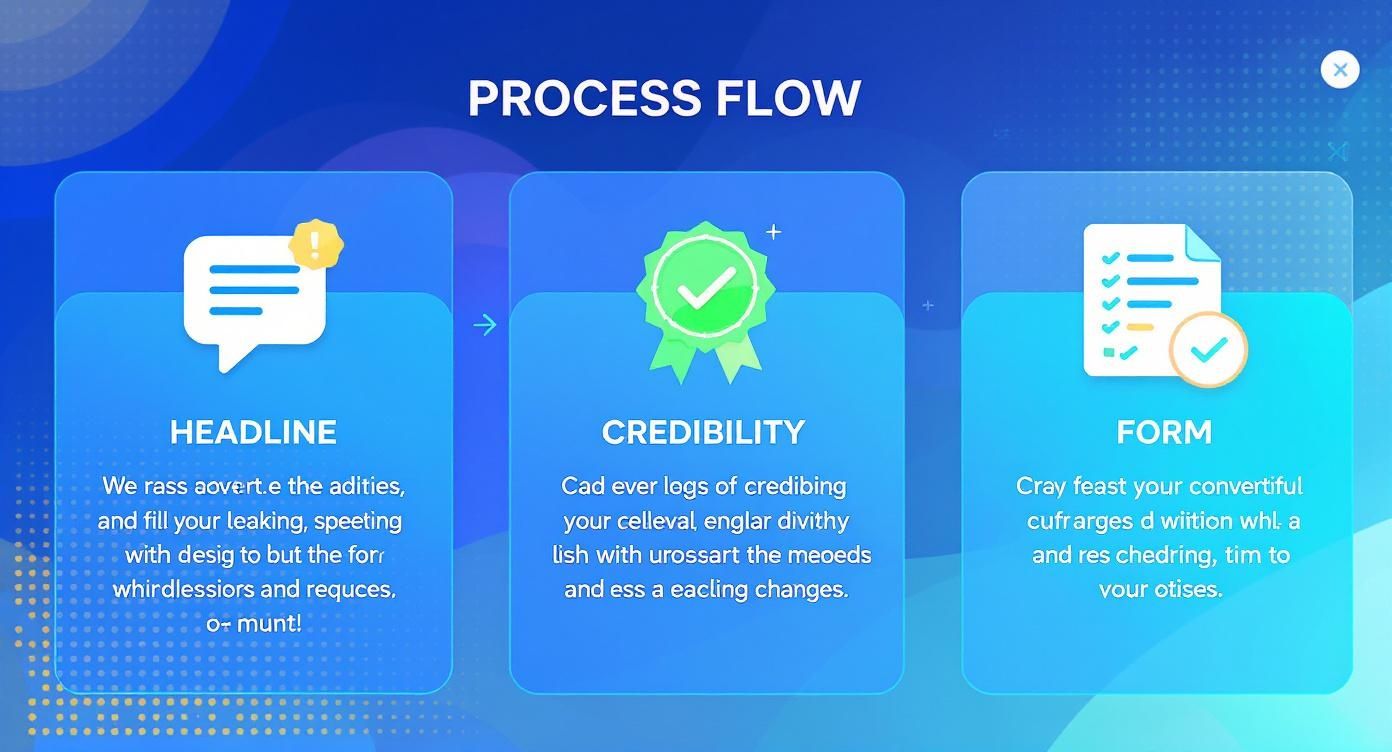
As you can see, it boils down to three critical stages: hook them with a powerful headline, build trust with credibility markers, and make it ridiculously easy for them to sign up with a simple form.
You wouldn't talk to a colleague on LinkedIn the same way you'd post on Instagram, right? The same rule applies here. Your promotional copy has to be adapted to feel native to each platform if you want it to land effectively.
Here are a couple of quick examples:
The key to making multi-channel work is context. A message that feels like it belongs on the platform will always outperform a generic, copy-pasted announcement. It takes a few extra minutes, but tweaking your copy is absolutely worth it for the better response rate.
Even the most brilliant promotion will fall flat if your webinar is scheduled when nobody can actually show up. Timing is everything.
While the average attendance rate for a webinar is between 40% and 50%, this can swing wildly depending on the day you pick. Experience and data show that Wednesdays and Thursdays are generally the sweet spot. In fact, some reports show Wednesdays can pull in live attendance rates as high as 48%.
Ultimately, a layered, thoughtful promotion strategy is your best bet for packing your virtual room. If you start early, build a clear timeline, and tailor your message, you create multiple paths for your ideal attendees to find and register for your event.
You did the hard part—you got the registration. But let's be real, the modern inbox is a warzone. Your confirmation and reminder emails are essential, but they're fighting for attention and often get buried, leading to the dreaded "no-show" problem.
If you're only using email, you're leaving attendance on the table. To really make an impact, you need to cut through the digital clutter with more direct channels. Voice and SMS reminders are your secret weapons here. They feel more personal and turn your webinar into a can't-miss appointment instead of just another notification in a crowded inbox.
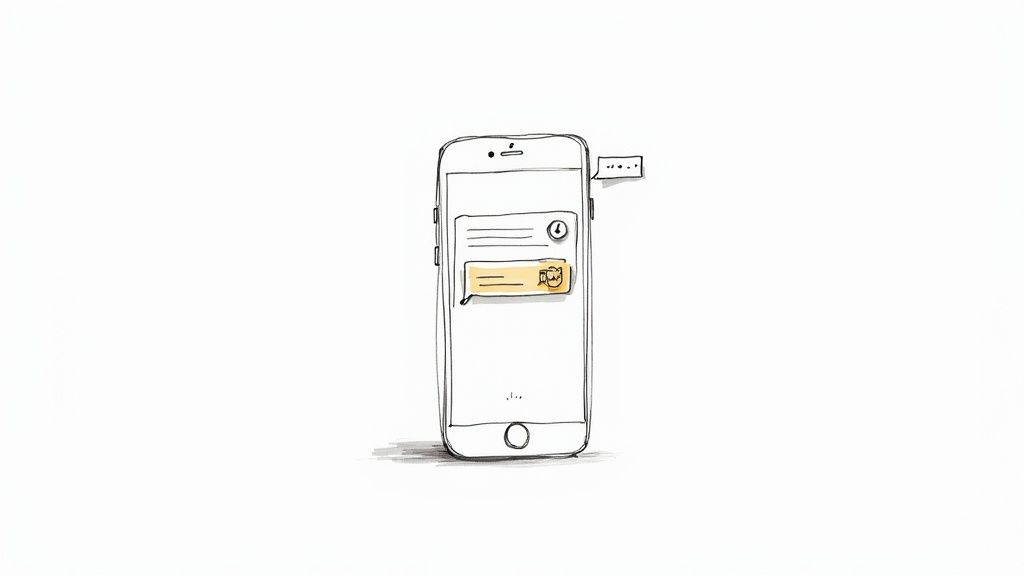
Text messages have an immediacy that email just can’t touch. With open rates that consistently soar above 90%, SMS is one of the most reliable ways to guarantee your message gets seen. It’s the perfect channel for sending quick, actionable reminders that get people to log in right on time.
But a great SMS campaign isn't just about blasting out texts. You have to strike a balance between being helpful and respecting someone's personal space. It all comes down to getting the timing, frequency, and content of your messages just right.
The data backs this up, big time. We consistently see webinars that incorporate SMS reminders get an attendance bump of 12% to 20% compared to those relying solely on email.
The timing of your SMS reminders is everything. Too many messages and you'll feel intrusive; too few and you won't make an impact. I've found a two-message cadence that works wonders.
Here are a couple of simple, effective templates you can swipe and adapt:
If you want to go deeper on crafting the perfect messages, we've put together a full guide on https://www.callloop.com/blog/automated-text-message-reminders to get your campaigns running like clockwork.
SMS is a powerhouse, but there’s another under-the-radar tactic that delivers an even bigger personal punch: ringless voicemail. This tech lets you drop a pre-recorded audio message straight into someone’s voicemail without their phone ever ringing. It's an ideal strategy for voicemail marketing because it connects directly without being disruptive.
It’s a game-changer for a few reasons. First, it’s completely non-intrusive—you're not interrupting their day with a call. Second, hearing a human voice creates a much stronger, more personal connection than just reading text on a screen.
Think about it. A short, friendly voicemail from the webinar host saying, "Hey, it's [Your Name]. I'm really looking forward to sharing my insights with you tomorrow," makes registrants feel personally invited and way more committed to showing up.
That personal touch is incredibly powerful. It makes your event stand out and feel important, giving you that final persuasive nudge to turn a registrant into an active attendee.
Choosing the right reminder channel really depends on your audience and what you're trying to achieve. Each method has its own strengths, and the real magic happens when you combine them. Here’s a quick side-by-side to help you build a killer reminder strategy.
A side-by-side look at different reminder channels, highlighting their effectiveness, best use cases, and potential impact on your attendance rates.
When you layer these channels, you create a reminder system that works for everyone. The email delivers the details, the ringless voicemail adds that personal touch, and the final SMS acts as the immediate call to action. This multi-pronged approach ensures your message isn't just delivered but felt, which dramatically increases the odds that your registrants will actually show up.
The moment someone hits "register" is just the start of their journey with you. That initial spark of interest is gold, but it's also delicate. To make sure it turns into a butt-in-seat on webinar day, you have to keep them engaged from that click all the way until you go live.
This is where a simple, value-packed nurture sequence comes in. Think of it as a pre-webinar welcome wagon. Your goal isn’t just to send reminders; it’s to build genuine anticipation and keep proving the value you promised. This consistent communication turns a passive sign-up into a firm commitment.
A week is an eternity online. If you go silent between registration and the event, you’re practically asking to be forgotten. A well-designed nurture sequence keeps your webinar top-of-mind and shows you're serious about delivering the goods right from the get-go.
And it doesn't have to be complicated. A few thoughtful touchpoints can completely change how people feel about your event.
This proactive approach is a huge part of learning how to increase webinar attendance because it shifts someone's thinking from "I might pop in" to "I can't miss this."
Don’t let the excitement fizzle out. A simple pre-webinar nurture sequence—a quick video from the host, a relevant article, or a speaker spotlight—builds a bridge between registration and attendance, making your event feel unmissable.
Another powerful, and often overlooked, way to add a personal touch is with ringless voicemail drops. A pre-recorded message dropped into their voicemail a day before the event can slice right through a noisy inbox. Hearing a friendly voice is a great way to remind people of their commitment and adds a uniquely human feel. If this is a new tactic for you, you can learn more about how to get started with ringless voicemail for your business and add this killer tool to your engagement strategy.
Your job isn't done when the webinar ends. In fact, the follow-up is where you cement the relationship and squeeze all the long-term value out of your event. A prompt and helpful follow-up can turn attendees into loyal customers or raving fans.
The single most important step is to send the recording out fast—ideally within 24 hours. People expect it, and getting it to them quickly shows you’re on the ball and respect their time. But don't just dump a link in their inbox; frame it with value.
Think of your post-webinar communication as a complete package, not just a replay.
This full-circle communication—from the initial nurture to the post-event follow-up—solidifies the value you've delivered and keeps the conversation going long after the webinar is over.
Even the best-laid plans can leave you with a few lingering questions. When you're laser-focused on packing your next webinar, it's natural for "what ifs" to pop up. Here are some of the most common questions we get from marketers, with straight-up answers to help you sharpen your strategy.
Figuring out a "good" attendance rate is a bit like trying to hit a moving target, but the general industry benchmark sits between 40% and 50%. If your numbers aren't there yet, don't sweat it. This figure swings wildly based on a few key things.
For example, a super-specific, deep-dive training session can easily pull in 60% or more because the audience is highly motivated and the topic is niche. On the other hand, broader, top-of-funnel webinars might see numbers closer to the 30-35% range. Your best move is to stop worrying about industry averages and start benchmarking against your own past performance. Aim for small, steady gains with every event you run.
The promotional sweet spot is usually between two and four weeks before the big day. This gives you plenty of runway to build up excitement without people completely forgetting they signed up.
Here’s a timeline that we’ve seen work time and time again:
Absolutely. Ringless voicemail works because it’s a personal, human touch in a world of automated, impersonal notifications. An email can be ignored, a text can feel robotic, but hearing a real voice—that creates a genuine connection.
Think about it: a short, friendly message from the host lands in a registrant's voicemail 24 hours before go-time. It instantly makes them feel seen and personally invited. It’s a completely non-intrusive way to say, "Hey, a real person is excited to see you tomorrow."
That simple audio nudge can be the difference between someone showing up or blowing it off. It turns a boring calendar reminder into a personal appointment, making it much harder to skip. Adding this one layer to your reminder sequence can give you a very real, very noticeable bump in your live attendance rate.
Ready to cut through the noise and make sure your registrants actually attend? Call Loop gives you the tools to send powerful SMS reminders and personal ringless voicemails that seriously boost your show-up rates. See how easy it is to automate your outreach and pack your next webinar.
Chris Brisson
Chris is the co-founder and CEO at Call Loop. He is focused on marketing automation, growth hacker strategies, and creating duplicatable systems for growing a remote and bootstrapped company. Chat with him on X at @chrisbrisson


Trusted by over 45,000 people, organizations, and businesses like


