
See a Demo
You're just one step away from seeing Call Loop in action.
Enter your information below to watch a demo right now.

You're just one step away from seeing Call Loop in action.
Enter your information below to watch a demo right now.

Think about the last time you got an important email. How long did it sit in your inbox before you saw it? Hours? Days? Now, think about the last text message you received. You probably read it almost instantly.
That immediate, personal connection is exactly what a mass texting service taps into. It’s a platform that lets a business send a single text message to hundreds, or even thousands, of contacts at once. Forget the chaos of trying to do that from your personal phone—that’s a one-way ticket to getting your number flagged as spam.
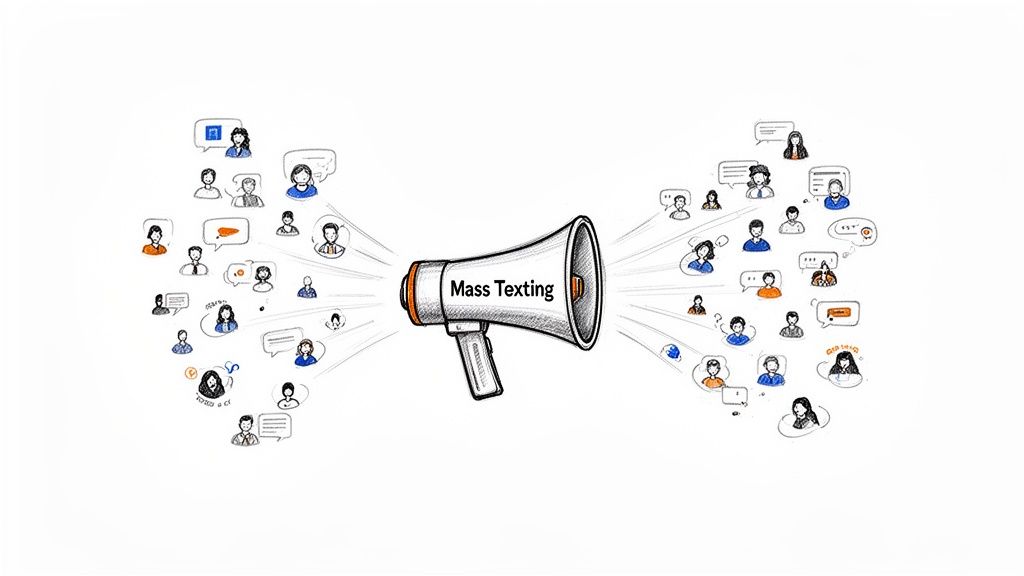
A proper mass texting service gives you the software, infrastructure, and compliance tools to manage all that communication legally and without a headache. The magic isn't just in sending a blast; it's about making each person feel like you're talking directly to them.
When a local boutique texts its entire customer list about a flash sale happening right now, it creates an urgency that email just can't match. That’s why texts boast 99% open rates, with most being read within just three minutes.
The best platforms have moved far beyond just firing off simple SMS messages. They’ve evolved into complete communication hubs, letting you layer your outreach for a much bigger impact.
You'll often find these tools built right in:
A ringless voicemail drop is fantastic for follow-ups. It feels more personal than a text but isn't as disruptive as a live call. You can leave a detailed message without interrupting someone's day.
Imagine putting these together. An e-commerce store could send out a text with a slick product photo (MMS), then follow up a couple of days later with a friendly, personal-sounding offer delivered straight to voicemail. It’s a powerful one-two punch, all managed from a single dashboard. Your message doesn't just get delivered; it gets noticed.
A powerful mass texting service is much more than a simple "send" button. Think of it as a complete communication engine designed to make every single interaction count. The best platforms bundle a whole suite of tools into one dashboard, letting you build out sophisticated, multi-layered outreach campaigns that actually grab attention and get people to act.
These core features are what separate a basic tool from a true growth machine.
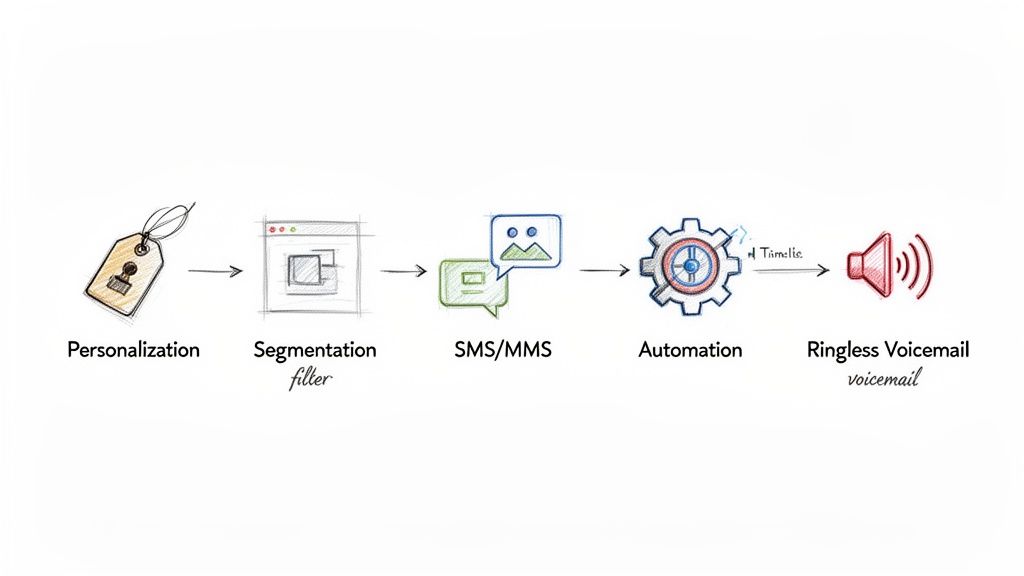
The foundation of any great service is its ability to make mass communication feel intensely personal. This all starts with personalization and segmentation. Instead of blasting out a generic message, you can use merge tags to automatically pop in a recipient's name or other details, making each text feel like it was written just for them.
Segmentation takes this a huge step further. It’s all about dividing your audience into smaller, more focused groups based on things like their interests, purchase history, or location. For instance, you could send a special offer only to your VIP customers, or fire off an event reminder just to people in a specific city. This kind of precision ensures your message is always relevant, which dramatically boosts its impact.
While a plain text message (SMS) is great for quick alerts, modern platforms give you much richer options to make your messages impossible to ignore. The ability to send media and automate your follow-ups is a total game-changer for engagement.
The real power kicks in when you combine these features. Imagine a new lead signs up. They instantly get a personalized welcome text. A few days later, an MMS with a product demo lands in their inbox. Finally, an automated follow-up ensures no one ever slips through the cracks.
The most capable platforms don't stop at texting; they integrate voice features directly alongside it, creating a truly multi-channel approach. This lets you reach people in different ways, depending on what your message calls for. You can easily send bulk SMS campaigns effectively to run alongside these voice strategies.
These tools often include ringless voicemail and voice broadcasting. A ringless voicemail drops a pre-recorded audio message straight into someone's voicemail box without their phone ever ringing. It’s perfect for a more personal-sounding follow-up or a detailed update that’s just too long for a text. Voice broadcasting, on the other hand, actually calls your list and plays a recording, which is ideal for urgent alerts or can't-miss reminders.
This strategic expansion is why the SMS marketing industry is projected to hit $16-18 billion globally by 2026. It's all fueled by an average 98% open rate—a number that email marketers can only dream of. Businesses are using these integrated platforms to automate their outreach with smart segmentation, rich media, and analytics to ensure their messages always get delivered.
Alright, let's move past the theory and look at where the rubber meets the road. A mass texting service isn't just a cool piece of tech; it's a serious tool for growth that businesses in just about every industry are using to get real results. The secret sauce is pretty simple: it puts the right message, in front of the right person, at the exact moment it matters most.
Let’s talk e-commerce. One of their biggest headaches is the abandoned cart. A shopper gets distracted, has second thoughts, and poof—a potential sale vanishes. But with a well-timed text, that brand can send a friendly reminder or even a small discount code to gently nudge the shopper back to finish their purchase. It’s a simple, automated move that claws back revenue that would have otherwise been lost forever.
Nonprofits see the same kind of immediate impact, especially with fundraising. Emails can get buried or ignored, but a text message with a direct link to a donation page? That gets seen. We're talking nearly 100% of recipients seeing the appeal, often within minutes. When every dollar counts, that kind of direct line is a game-changer.
It's not just about selling products or raising money, either. Service-based businesses are completely transforming their day-to-day operations. Take a busy dental office. No-shows are a killer, costing them thousands. By sending out simple, HIPAA-compliant SMS reminders a day or two before an appointment, they can slash their no-show rate.
A single automated text can confirm an appointment, provide a map to the office, and give the patient an easy way to reschedule. This is more than just convenience—it saves the practice a ton of money and makes the whole experience better for the patient.
Sales teams have also found a powerful one-two punch by combining texting with voice features. Following up after a sales call is a delicate dance; you want to stay on their radar without being annoying. This is where ringless voicemail comes in.
A salesperson can drop a pre-recorded, personal-sounding message straight into a prospect's voicemail box without their phone ever ringing. It’s a brilliant way to leave a thoughtful follow-up that feels direct and respects the prospect's time. You keep the conversation warm and move the deal forward without being disruptive.
The beauty of mass texting is how adaptable it is. You can get pretty creative with it no matter what field you're in.
In every one of these cases, the game plan is the same: leverage the direct, can't-ignore-it nature of a text message to deliver real value. Whether you’re trying to boost sales, cut down on no-shows, or just build stronger relationships, the return is clear and easy to measure. By meeting people on the device they’re glued to all day, businesses can make sure their message isn't just sent, but actually seen.
It's one thing to send a mass text. It's another thing entirely to send it correctly.
Getting this right isn't just about following the rules to avoid getting into hot water—it’s the cornerstone of building trust with your audience. Without a solid compliance strategy, your messages won't even make it to their phones, and the best campaign in the world will fall flat.
There's no doubt that business texting is exploding. The global bulk SMS market, which powers every mass texting service, is currently valued around USD 53.97 billion and is on track to hit USD 79.74 billion by 2033. But there’s a flip side to that growth. Americans were slammed with a mind-boggling 225 billion spam texts in 2023, a 157% jump from the year before.
This tidal wave of junk has forced mobile carriers to crack down hard, beefing up their spam filters and making it tougher than ever for messages to get through.
At the center of it all is the Telephone Consumer Protection Act (TCPA). This federal law lays out the ground rules for how any business can contact people via text or voice call. Blowing off these rules can lead to some seriously steep fines, but maybe even worse, it can completely shatter the trust you've built with your customers.
The single most important rule? You have to get permission. And not just a casual nod—you need express written consent before you fire off a single promotional message. This means your contacts have to knowingly and clearly agree to hear from you via text.
Think of express written consent as an official invitation. When someone gives it to you, they're welcoming you into their most personal digital space—their phone's inbox. Betray that trust with spammy messages, and you'll get blocked and reported faster than you can hit "send."
Getting that initial "yes" is just the start. Staying compliant is an ongoing job. Every single message you send has to reinforce the trust you’ve earned.
This boils down to a couple of non-negotiable practices that any professional mass texting service should handle for you automatically.
Your two most important responsibilities are:
These aren't just legal boxes to check; they are fundamental to keeping your contact list healthy and engaged. People who don't want your messages are only going to drag down your delivery rates and raise red flags with the carriers. A compliant service manages this entire process for you, protecting your reputation and making sure your texts actually land with the people who want them.
Picking the right mass texting service isn't about finding the cheapest option. It’s about finding a true partner for your growth. The best platform will feel like a natural extension of your team, armed with the tools you need to not just send messages, but to actually drive real engagement and see the results.
Not all services are created equal, so knowing what to look for is half the battle.
Your first gut check should be on its core features. Does the platform give you a single, unified dashboard for SMS, MMS, ringless voicemail, and voice broadcasts? Juggling a bunch of different systems is a nightmare for efficiency and your budget. A single hub keeps your campaigns cohesive, letting you move from a text blast to a ringless voicemail drop without skipping a beat.
As you start comparing your options, you've got to look beyond the flashy sales pitch. A huge factor is whether the platform can grow with you. Can it handle your contact list when it jumps from a few hundred to tens of thousands? Scalability is crucial—the last thing you want is to be forced to switch providers right when your marketing is finally hitting its stride.
Another deal-breaker is integration. The right service has to play nice with the tools you already use every day, like your CRM or email marketing software. This connection creates a seamless workflow, letting you do cool things like trigger automated texts based on actions a customer takes in another system.
A platform that works in isolation creates data silos and missed opportunities. Look for services that offer robust integrations, as this is a clear sign of a well-designed, professional tool built for serious marketers.
To help you sort through the options, we've put together a quick checklist. Use this to compare platforms side-by-side and make sure you’re not missing any critical features.
This checklist should give you a solid framework for making an informed decision, one that sets you up for long-term success.
Finally, dig into the analytics and pricing. Vague reporting is a massive red flag. You need clear, actionable data on delivery rates, click-throughs, and opt-outs to understand what’s actually working. This data is the only way you’re going to prove the ROI of your efforts and make your strategy smarter over time.
Pricing models are all over the map, so find one that fits how you'll use it. Whether it's a pay-as-you-go plan or a monthly subscription, the cost should make sense for the value you're getting.
To help you navigate the hundreds of options out there, you might want to review a comparison of the best SMS marketing platforms. Choosing wisely means you're not just buying a tool; you're investing in a solution that will deliver real, measurable results.
Alright, you've picked your platform. Now for the fun part: moving from planning to actually doing. Launching your first campaign is where the rubber meets the road, turning that list of phone numbers into a real, engaged audience. The first few steps are pretty straightforward, but they set the stage for everything that comes after.
First up, you need to import your contacts. Any decent mass texting service will make this a breeze, but the real work is on your end—making sure your list is clean and compliant. To get the most bang for your buck, you need to start with a list of people who actually want to hear from you. You might even use a specialized tool like a Lead Mobile Finder to build a solid, relevant contact list from scratch.
Once your audience is loaded and segmented, it's time to write a message that gets a response. Keep it short, sweet, and to the point. Most importantly, stick to a single, clear call to action (CTA). Don't forget to sprinkle in some personalization to make each person on your list feel like you're talking directly to them.
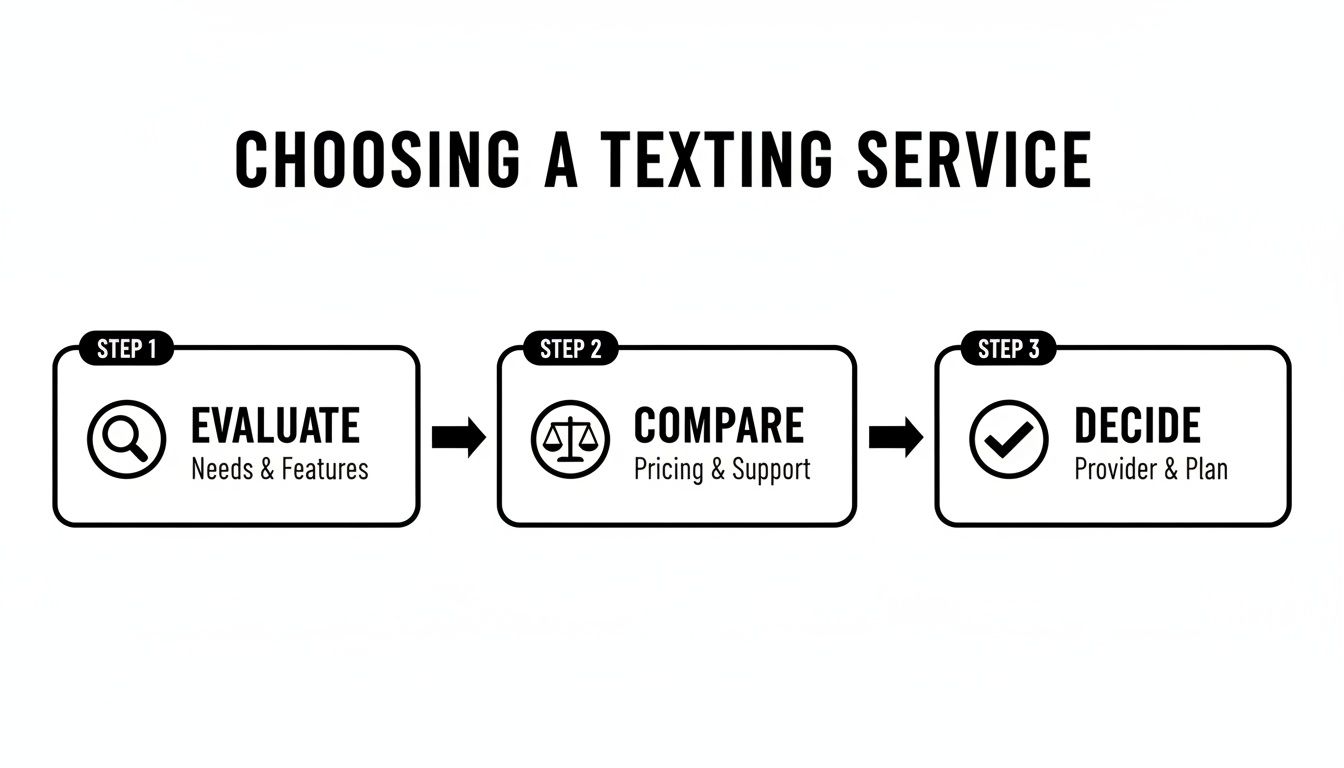
This just shows that a winning campaign doesn't start the moment you hit "send." It really begins way back when you're carefully figuring out which service is the right fit.
Once your campaign is live, the real learning begins. Forget about vanity metrics like "opens." You need to focus on the numbers that tie directly back to business growth.
Look, the goal isn't just to send a bunch of texts. It's to get results. By keeping a close eye on these key performance indicators (KPIs), you can prove the ROI of your mass texting efforts and figure out exactly how to make your next campaign even better.
The scale of this communication channel is just massive. Global business messaging is on track to hit nearly 3 trillion messages by 2030. For sales teams, the payoff is immediate, with response rates north of 45% leading to huge bumps in productivity.
Jumping into any new way of communicating with your customers is bound to bring up a few questions. That's a good thing. Getting clear, no-nonsense answers is the first step to making sure you're set up for success from day one.
Let's tackle some of the most common things people ask when they're getting started with a mass texting service.
Yes, it’s 100% legal, but you have to play by the rules. The big one is the Telephone Consumer Protection Act (TCPA), and it's not something to take lightly.
The golden rule is you must have express written consent before you send anyone a marketing text. You also need to give them a dead-simple way to opt out (like replying "STOP") and honor that request instantly. A good, compliant platform handles all of this for you, keeping you on the right side of the law.
Please don't. Using your personal number for business texting is a recipe for disaster. Mobile carriers are quick to flag numbers that send out a lot of identical messages, and you'll get shut down before you even get started.
A real mass texting service sets you up with a dedicated, compliant number (like a toll-free number) built for high deliverability. Plus, you get all the tools you can't live without—automation, analytics, and opt-out management—that are simply impossible to manage from your own phone.
Think of it as two different tools for two different jobs. Mass texting drops a written message (an SMS or MMS) right into someone's texting app. It’s perfect for quick updates, links, and deals that need immediate attention.
A ringless voicemail, on the other hand, slips a pre-recorded audio message directly into their voicemail box without their phone ever ringing. It's a fantastic way to leave a more personal, detailed message—like a follow-up or a warm thank you—without interrupting their day. They really work great together.
Ready to see how a unified messaging platform can transform your outreach? Call Loop combines SMS, MMS, ringless voicemail, and voice broadcasting into one powerful dashboard. Start your free trial today and connect with your audience more effectively.
Chris Brisson
Chris is the co-founder and CEO at Call Loop. He is focused on marketing automation, growth hacker strategies, and creating duplicatable systems for growing a remote and bootstrapped company. Chat with him on X at @chrisbrisson


Trusted by over 45,000 people, organizations, and businesses like


