
See a Demo
You're just one step away from seeing Call Loop in action.
Enter your information below to watch a demo right now.

You're just one step away from seeing Call Loop in action.
Enter your information below to watch a demo right now.

Text messaging already has one of the strongest response profiles in outbound marketing. SMS has a baseline 45% response rate, while email sits at 3.26% and Google Ads at 3.17% according to Captivated Works. That gap should change how small businesses think about attention.
Many teams stop at plain text. That's where they leave money on the table.
MMS in marketing takes the reach and immediacy of text messaging and adds the part that usually does the heavy lifting in persuasion: visuals. A product photo, an event flyer, a branded reminder graphic, a short clip, even a simple before-and-after image can communicate faster than a paragraph. In practice, that matters most when you're asking someone to decide quickly. Buy now. Confirm this appointment. Show up tonight. Reply before seats are gone.
This isn't only for retail brands with creative departments. Local service businesses, healthcare practices, event organizers, agencies, coaches, and membership businesses can all use MMS to turn plain reminders into messages people notice. A karate studio can send a belt test reminder with a branded image. A dental office can send a visual appointment confirmation. A webinar host can send a countdown graphic instead of another forgettable text.
The useful question isn't whether MMS is flashy. It's whether it helps the recipient understand and act faster.
Used well, it does. Used poorly, it becomes expensive clutter.
The difference comes down to message choice, list quality, compliance, and how MMS fits into the rest of your outreach. The strongest results usually come from pairing media with sequencing, segmentation, and follow-up across channels like SMS, voice broadcasts, and ringless voicemail. That's where the ROI shows up for smaller teams that need every send to work.
MMS earns attention because it solves a common problem in outbound messaging. Plain text is fast, but it often forces the reader to imagine the offer. Rich media shows it immediately.
That matters when you're promoting anything visual, time-sensitive, or slightly complex. A haircut special, a patient prep reminder, a class schedule change, a product launch, a house tour, a fundraising event. If the message benefits from seeing, not just reading, MMS gives you a cleaner path from inbox to action.
A lot of small businesses assume MMS is only for national brands or ecommerce stores. That assumption is wrong. The businesses that benefit most are often the ones with limited attention windows and a local audience that already knows the brand.
MMS also fits the way people already use their phones. They scan. They tap. They respond to visual cues faster than long explanations.
Practical rule: If your customer would understand the offer faster with an image, GIF, short clip, or branded graphic, MMS deserves a test.
MMS usually works best in a few specific situations:
The main reason to care about mms in marketing isn't novelty. It's that mobile attention is already scarce, and a richer message often communicates the point before the recipient has time to ignore it.
SMS is the telegram. MMS is the postcard.
Both arrive in the same basic place, but they don't create the same experience. SMS gives you speed and simplicity. MMS gives you room to show, explain, and persuade.
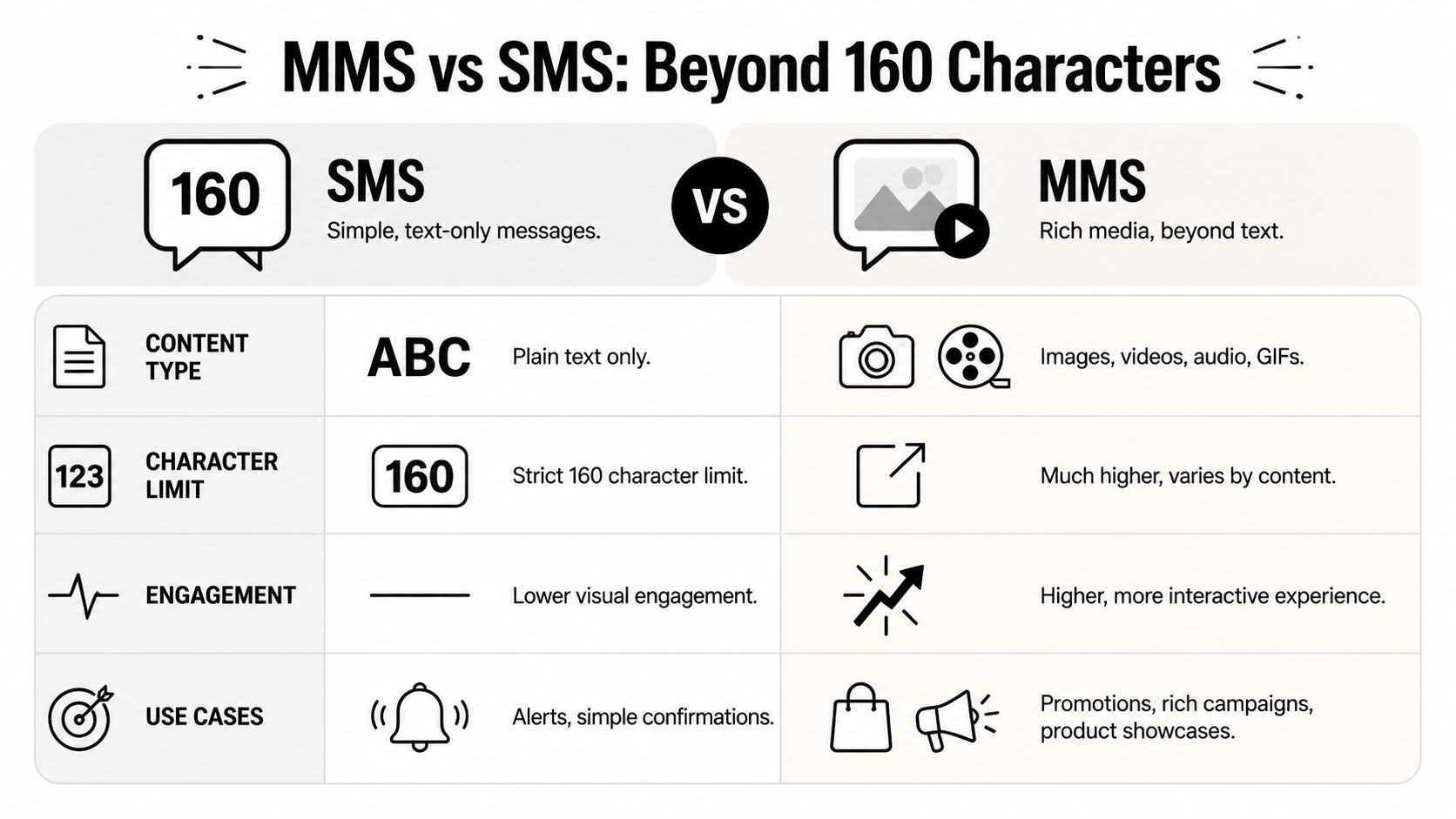
According to Falkon SMS, MMS supports rich media and character limits of 1,600 to 5,000, while SMS is limited to 160 characters and text only. Falkon also notes that MMS is transmitted over mobile data networks, while SMS uses cellular signaling channels.
That technical difference leads to a practical one. SMS is built for short alerts, codes, and quick prompts. MMS is built for communication that needs context.
A simple way to consider it:
FormatBest useLimitationSMSFast alerts, confirmations, short remindersLittle room to explain or sellMMSPromotions, event invites, product showcases, branded remindersHigher cost and more creative decisions
If you want a more platform-specific breakdown of message types, this guide on the difference between SMS and MMS messages is a useful reference.
Recipients treat MMS differently because the message feels more complete. A plain text promo asks the customer to do extra work. They have to picture the product, infer the mood, and guess whether it's worth the tap.
An MMS can remove that friction.
A restaurant doesn't have to say "new lunch special available." It can show the plate. An events business doesn't have to describe the vibe. It can send the flyer. A clinic doesn't have to rely on walls of text for a reminder. It can send a clean branded image with the key details.
A good SMS tells. A good MMS shows, tells, and directs.
MMS isn't the right answer for every send. It's usually more expensive, and that changes how disciplined you need to be.
Use SMS when the message is operational and doesn't need visual support:
Use MMS when the visual directly improves understanding or intent:
The mistake isn't choosing SMS or MMS. The mistake is using MMS for routine notifications that don't need it, or using SMS for offers that live or die by presentation.
The strongest argument for MMS isn't that it looks better. It's that it performs better when the offer benefits from visual context.
According to Notifyre's MMS messaging statistics, MMS campaigns achieve 52% higher click-through rates and 300% more engagement than SMS. The same source reports that brands using MMS see 8 times more social shares and a 74% uplift in purchases compared to text-only messages.
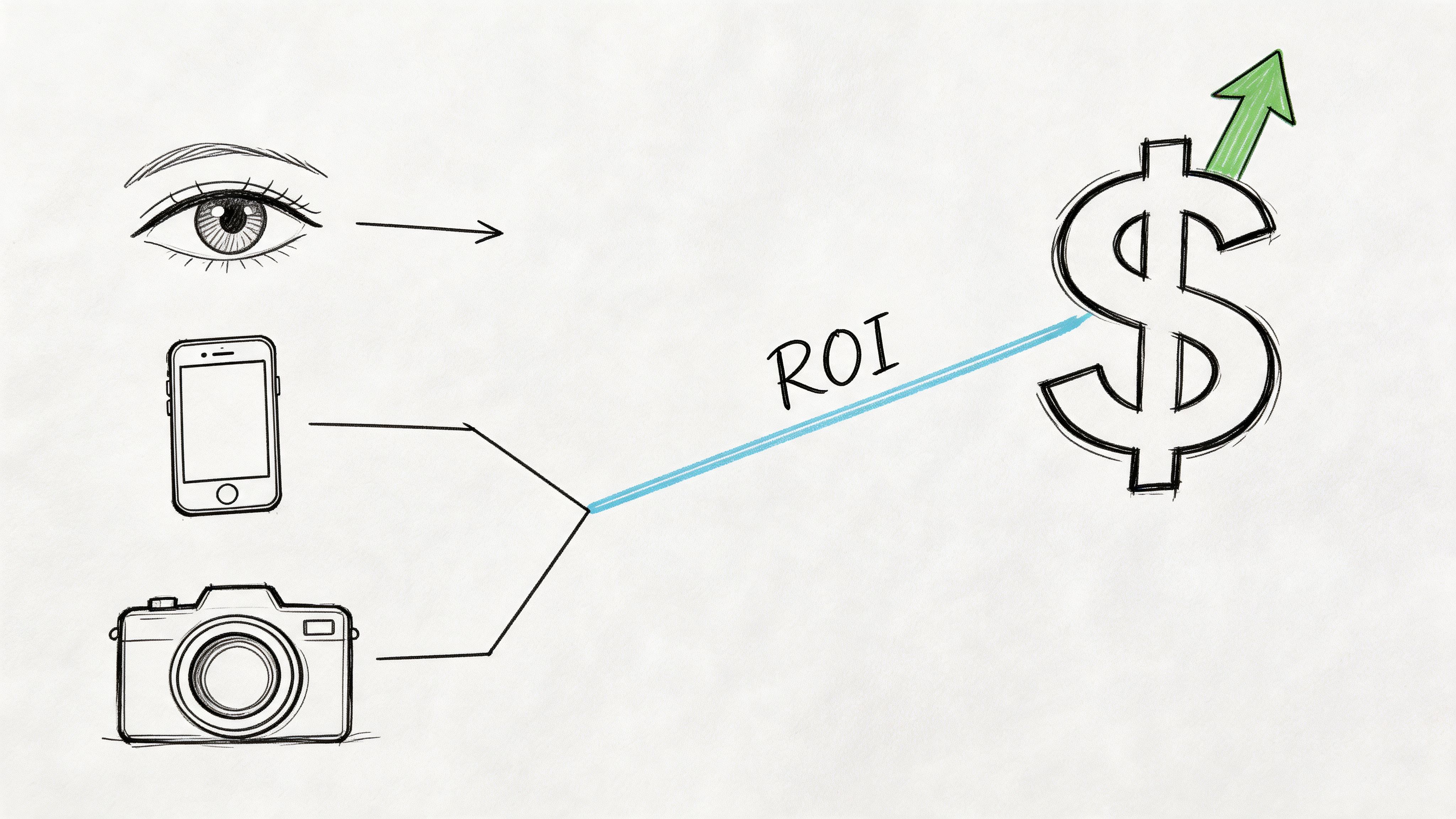
Those aren't vanity metrics. They point to a simple reality. When buyers can see the offer, fewer of them stall.
In mobile messaging, speed of comprehension matters. The recipient is often standing in line, switching apps, juggling work, or half-distracted. You don't have much time.
A well-built MMS compresses the sales job into one glance:
That structure is especially useful for products, services, appointments, and events where the visual reduces uncertainty. The message doesn't need to fight for interpretation.
Small businesses often hesitate because MMS costs more per message than SMS. That's fair. But the right question isn't cost per send. It's cost per meaningful action.
If a richer message drives more clicks, more purchases, more shares, and more opt-ins, the economics can work in your favor fast, especially on segmented lists and high-intent audiences. That's why I usually recommend saving MMS for moments with significant impact: launches, reminders tied to revenue, promotions with strong imagery, and follow-up campaigns where text alone has already gone stale.
A practical creative shortcut is to improve the quality of your visual assets before you ever send them. If your business doesn't have original photo content ready, tools like a realistic ai photo generator can help create cleaner campaign visuals for offers, mockups, and branded scenes without turning the message into a stock-photo cliché.
Better media doesn't rescue a weak offer. It does make a strong offer easier to notice and trust.
Visual messaging loses money when businesses do one of three things:
MMS works when you match richer content to moments where richer communication helps the buyer decide.
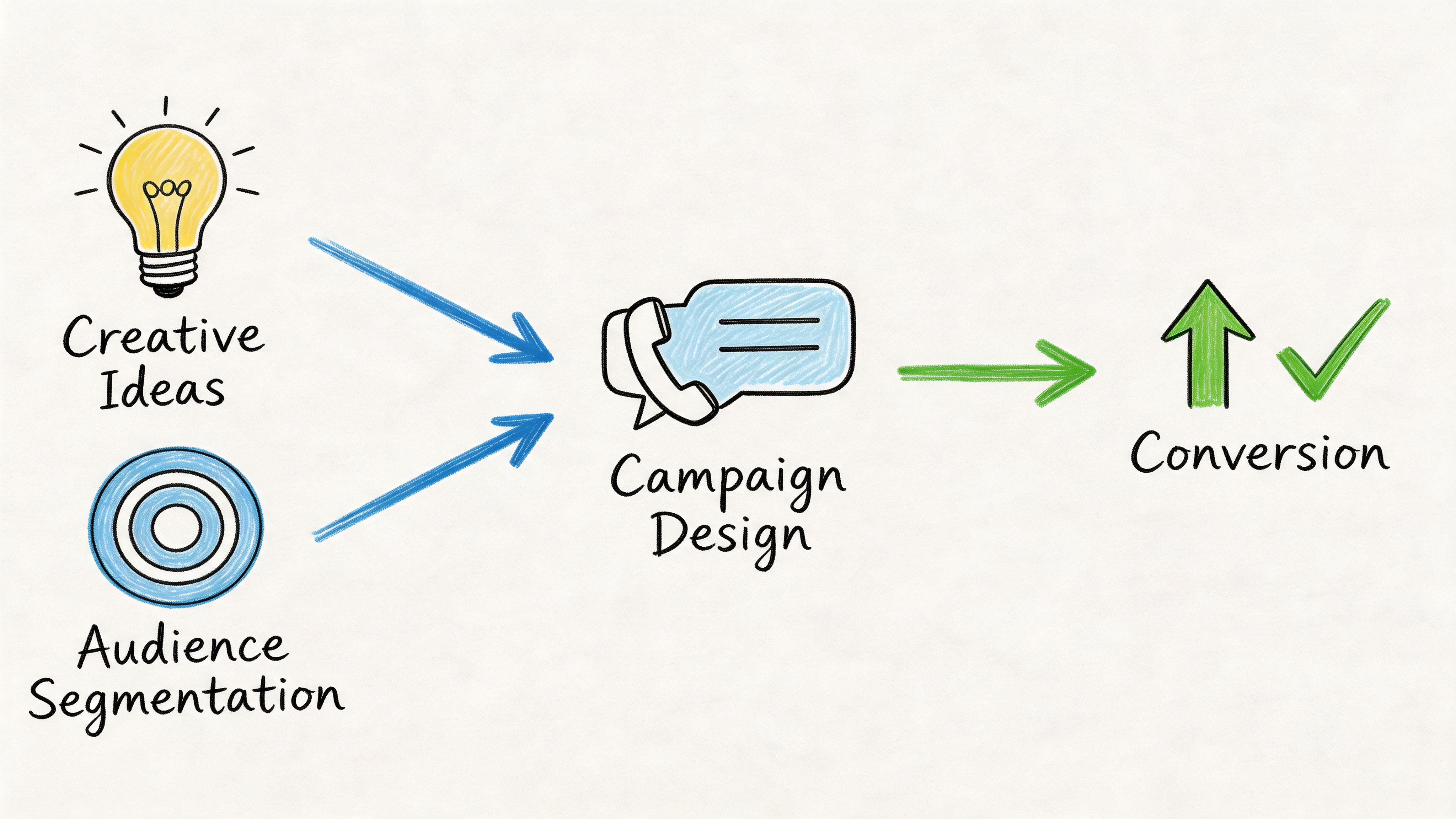
Most weak MMS campaigns fail before they send. The problem usually isn't the platform. It's the asset, the audience, or the ask.
An effective MMS has one job. It should help the recipient take one clear next step.
Businesses often treat MMS like a flyer stuffed into a text. That's a mistake. The small screen punishes clutter.
Keep the structure tight:
A restaurant can send a lunch special photo with two lines and a link. An event organizer can send a countdown image with a registration CTA. A clinic can send a simple reminder graphic with a call-back number or confirmation prompt.
Different media types do different work.
Media typeBest forRiskStatic imageOffers, reminders, menus, product highlightsCan feel generic if overdesignedGIFEnergy, urgency, quick visual movementCan distract if the motion adds nothingShort videoDemonstrations, event hype, testimonialsToo much file weight or weak opening frame hurts performance
If you're selling something visual, use a static image first. It's easier to produce well, easier to understand instantly, and less likely to fail from poor editing.
If you're promoting attendance, GIFs can work nicely for local businesses, studios, and events because they add movement without asking the recipient to commit to a full video. If you're explaining a service or showcasing an experience, a short video can earn attention, but only if the first frame tells the story quickly.
You can send a decent creative to the right segment and still win. Send a great creative to the wrong segment and you'll waste budget.
Start with audience intent:
Social proof can strengthen the copy around your media. If you're refining how to present credibility inside short campaigns, Sup Growth's social proof article offers useful thinking on how buyers react to visible trust signals.
Send fewer messages with sharper relevance. That's usually where MMS beats brute force.
Before you send, review the campaign against this list:
In practice, the highest-performing MMS campaigns tend to share a few traits. They are visually simple. They are time-bound when appropriate. They don't hide the point. They connect the media to a clear action.
What doesn't work is overproduced content, generic stock imagery, or trying to say everything in one send. MMS is richer than SMS, but it still rewards restraint.
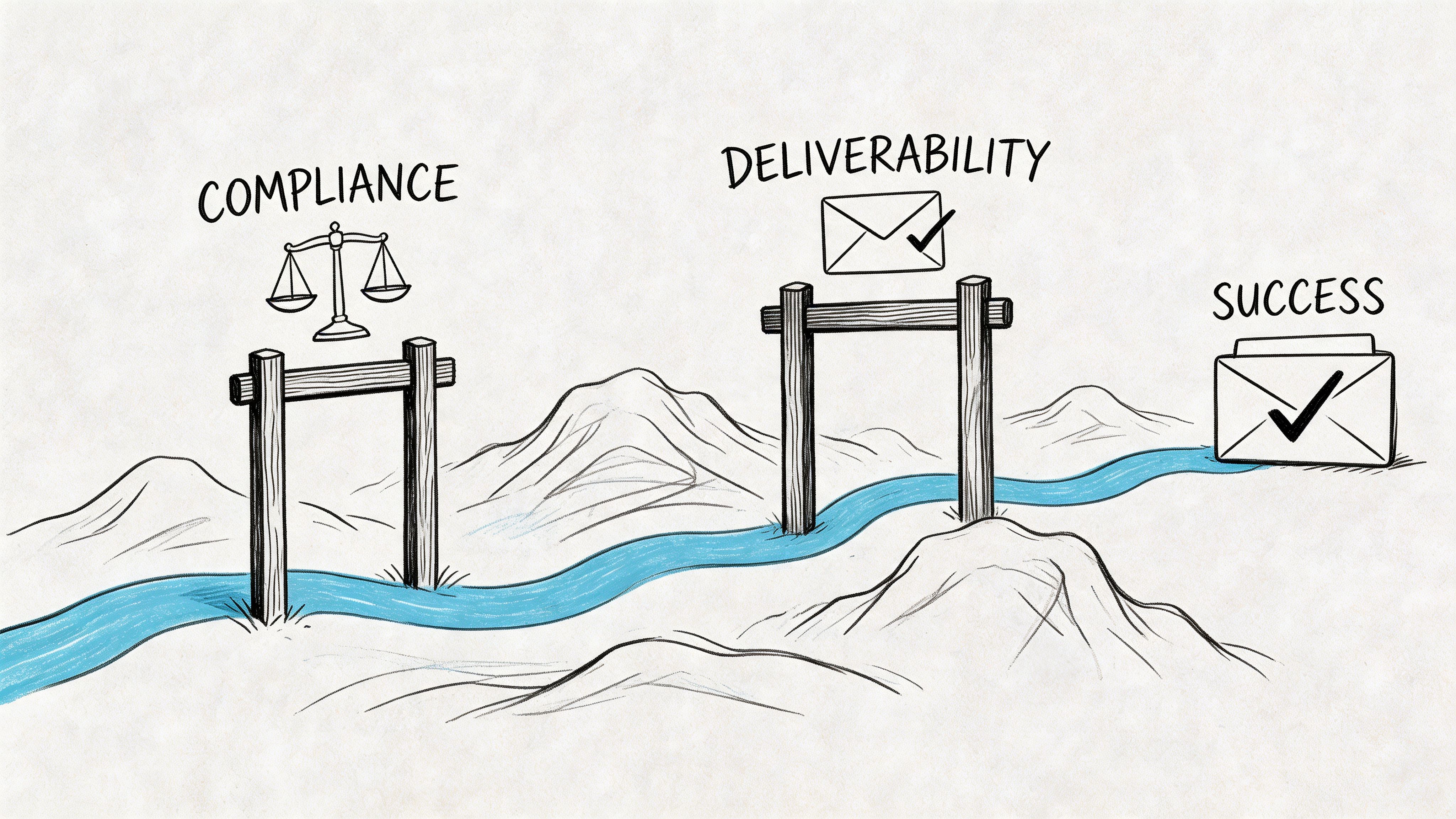
MMS is powerful, but it isn't a free-for-all. The businesses that get steady results from mobile messaging treat compliance and deliverability as operating discipline, not legal fine print.
That matters even more in regulated industries, especially healthcare.
If you're texting customers for marketing, you need clear permission. That includes how you collect opt-ins, how you disclose message expectations, and how you handle opt-outs quickly and consistently.
The details matter. So does the recordkeeping.
For a plain-English look at this requirement, express written consent is the standard to understand before you build any MMS list. If a business gets this wrong, even a strong campaign can become a liability.
A few practical habits reduce risk:
Healthcare teams often want to use MMS because visual reminders can improve patient response and reduce confusion. The challenge is that healthcare doesn't just face marketing rules. It also has privacy obligations.
According to Bain-linked research provided in the verified data, healthcare MMS sees 92% open rates, but carrier registration delays for this vertical can cause 25% to 30% deliverability drops if not managed by a compliant platform. That combination explains why healthcare is both a strong use case and a common failure point.
The operational issues tend to be predictable:
IssueWhat happensWeak consent processComplaints, opt-out problems, compliance exposurePoor registration planningDelays and reduced deliverabilityMedia with sensitive informationPrivacy risk in healthcare workflowsNo suppression disciplineMessages keep going to people who shouldn't get them
Compliance is part of campaign performance. If your message doesn't arrive, or arrives in the wrong way, the creative doesn't matter.
Many businesses think deliverability is only about the carrier. It isn't. It's also shaped by the choices you control.
Keep media files practical. Avoid sending unnecessary heavy assets. Use clean lists. Remove invalid numbers. Keep frequency reasonable. Make sure your campaign content aligns with what the subscriber agreed to receive.
For healthcare teams, this gets stricter. Any patient outreach workflow using MMS should account for privacy controls, consent tracking, and the boundaries around what content belongs in a multimedia message. A reminder graphic with generic details may be fine. Sensitive information usually needs more caution.
There's also a commercial reason to take this seriously. Clear opt-ins and disciplined sending make the message feel legitimate. Customers know why they're receiving it. They know how to stop it. They don't feel ambushed.
That trust shows up in lower friction. It also helps keep your list healthier over time.
For mms in marketing, compliance isn't the boring part you endure before launching campaigns. It's one of the reasons the channel can keep producing returns instead of burning out fast.
The easiest way to understand MMS is to look at where it fits naturally. Not every business needs product-launch theatrics. Many just need better attendance, faster follow-up, and clearer reminders.
One of the most overlooked examples is the local studio.
According to the verified data tied to Flevy's underserved segment discussion, small businesses like karate studios have seen a 28% revenue lift from using MMS for class reminders and promotions, but results depend on personalization and segmentation rather than generic blasting.
Karate schools often deal with no-shows, late payments, missed belt testing dates, and underfilled special events. Plain text reminders work, but visual reminders usually do more because they feel tied to the class experience.
Audience: active students or parents
Media: branded belt-test graphic or class image
Message angle: reminder plus urgency
Goal: attendance or registration
Example structure:
This works because the message doesn't feel like a sterile reminder. It feels connected to the student's progress.
Healthcare is an underserved but practical use case for MMS when handled carefully. A dental office, physical therapy clinic, or specialist practice can use clean, branded reminder media to reduce confusion around appointments.
Audience: confirmed patients with consent on file
Media: branded reminder image with date prompt or prep cue
Message angle: clarity and reassurance
Goal: confirmation or reduced no-shows
Keep the visual simple. The recipient should understand the reminder instantly. Avoid adding unnecessary detail that creates privacy risk.
The best reminder messages don't look like promotions. They look organized, useful, and easy to act on.
Event businesses often need repeated touches without sounding repetitive. MMS helps because each send can carry a different kind of cue: the speaker image, the venue visual, the countdown card, the seat reminder.
Audience: registrants, warm prospects, recent clickers
Media: event flyer, short teaser clip, speaker image
Message angle: momentum and commitment
Goal: registration completion or attendance
A basic sequence can look like this:
Home services, salons, auto shops, and fitness businesses can all use MMS for offer presentation. This is especially useful when before-and-after visuals or branded appointment cards do more work than text.
Audience: repeat customers or recent inquiries
Media: service image, promo card, technician intro graphic
Message angle: trust plus convenience
Goal: booking or rebooking
These campaigns often perform best when tied to a real operational trigger. A customer who hasn't booked in a while. A seasonal service window. An estimate that needs follow-up. A missed appointment that needs rescheduling.
They all rely on the same discipline:
That's the practical core of mms in marketing. It's not about sending prettier texts. It's about making the next decision easier for the recipient.
The most effective MMS programs don't run as isolated sends. They sit inside a sequence.
A customer sees a visual message, gets a follow-up text, hears a voicemail reminder, and clicks a tracked link when timing lines up. That kind of orchestration matters because people don't all respond on the same touchpoint.
For many SMB campaigns, a practical flow looks like this:
Behavioral targeting is where these campaigns become more efficient. According to Nextiva's MMS marketing guidance, advanced MMS optimization uses CRM integration to send behaviorally personalized multimedia, causing 20% to 50% conversion uplifts. The same source notes that businesses can orchestrate SMS, MMS, and ringless voicemail in multi-channel drips while measuring ROI with granular click tracking.
That means you don't have to send the same message to every contact. You can trigger different media based on actions like registration started, appointment approaching, or prior purchase interest.
If you're planning that kind of setup, this guide to a multi-channel messaging platform outlines the mechanics behind running coordinated outreach instead of one-off sends.
A platform like Call Loop can support this with MMS, SMS, voice broadcasting, ringless voicemail, segmentation, scheduling, merge fields, link shortening, click tracking, and integrations through tools like HubSpot or Zapier. For a small team, the advantage isn't complexity. It's having the sequence logic, compliance tools, and reporting in one workflow.
A straightforward build might look like this:
A multi-channel drip shouldn't feel louder. It should feel better timed.
What works:
What doesn't:
MMS does more when it's part of a system. That's where richer messaging turns into repeatable revenue activity instead of occasional campaign spikes.
MMS has moved well past novelty. For small and mid-sized businesses, it's a practical way to make mobile outreach clearer, more persuasive, and easier to act on.
The advantage isn't just media support. It's the combination of relevance, timing, segmentation, compliance, and follow-up. When those pieces line up, mms in marketing becomes a revenue tool for local promotions, appointments, events, and customer re-engagement.
Start small. Pick one campaign where visuals can remove friction. Build one sequence. Measure clicks, replies, attendance, or purchases. Then expand what works.
If you want to put MMS, SMS, voice broadcasting, and ringless voicemail into one outbound workflow, Call Loop gives teams a way to build segmented campaigns, automate follow-ups, track engagement, and manage compliant outreach without stitching together multiple tools.
Chris Brisson
Chris is the co-founder and CEO at Call Loop. He is focused on marketing automation, growth hacker strategies, and creating duplicatable systems for growing a remote and bootstrapped company. Chat with him on X at @chrisbrisson


Trusted by over 45,000 people, organizations, and businesses like


