
See a Demo
You're just one step away from seeing Call Loop in action.
Enter your information below to watch a demo right now.

You're just one step away from seeing Call Loop in action.
Enter your information below to watch a demo right now.

When we talk about using SMS for healthcare, we're really talking about something simple: using text messages to connect with patients. Think appointment reminders, health alerts, and follow-ups, all delivered directly to the one device people carry everywhere.
It’s a straightforward way for providers to cut through the noise of overflowing email inboxes and endless phone tag, boosting both patient engagement and their own efficiency.
Imagine being able to instantly connect with your patients in the way they actually prefer. No more voicemails that go unheard for days or emails buried under a mountain of spam. That’s the reality with SMS in healthcare.
This isn't some complex new technology; it's the simple, direct power of text messaging, and it's fundamentally changing how healthcare practices interact with their patients for the better.
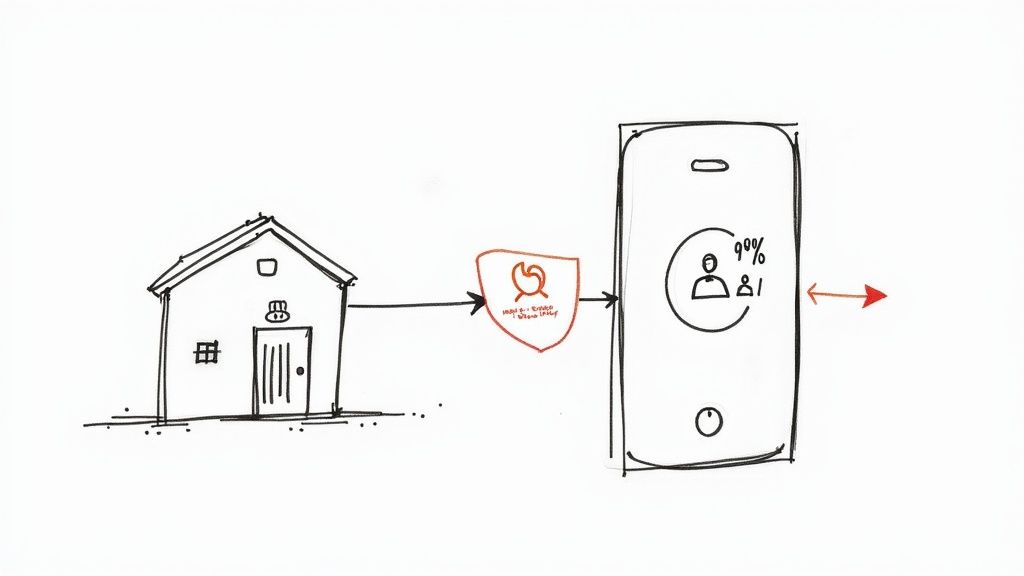
The real magic of SMS is its incredible knack for getting messages seen. With a nearly perfect 98% open rate, texting is an invaluable tool for everything from routine appointment confirmations to urgent health updates. That immediacy is a world away from the delays and low engagement that plague traditional emails and phone calls.
The power of SMS is rooted in its pure convenience. Patients already have their phones glued to their hands, making it the most direct line of communication a provider can have. This simple fact has huge implications for a practice's bottom line and the quality of its patient relationships.
Here’s where it really makes a difference:
By simply meeting patients on the channel they already use all day, every day, healthcare providers can build stronger relationships, streamline their operations, and deliver a higher standard of care. It's a small change in technology that creates a massive improvement in the patient experience.
This isn't just a local trend; the impact of SMS is global. Roughly 5 billion people around the world send and receive texts, making it one of the most dependable communication channels ever created.
Here in the US, over 83% of healthcare providers have already woven SMS into their communication strategies. That's not just a fad—it’s a clear signal of a fundamental shift in how modern healthcare gets delivered.
Using text messages in healthcare is a game-changer for connecting with patients, but it’s not as simple as just hitting "send." With that convenience comes a massive responsibility to protect sensitive information and, just as importantly, maintain the trust you've built with your patients. Every single text has to be secure, legal, and sent with a crystal-clear understanding of the rules.
First things first: the Health Insurance Portability and Accountability Act (HIPAA). Think of HIPAA as the rulebook for protecting sensitive patient data, which is officially called Protected Health Information (PHI). This isn't just medical diagnoses; PHI is anything that can identify a patient—their name, appointment details, treatment notes, you name it.
Here’s the catch: sending PHI through a standard, unencrypted text message is a huge no-go and a major compliance risk.
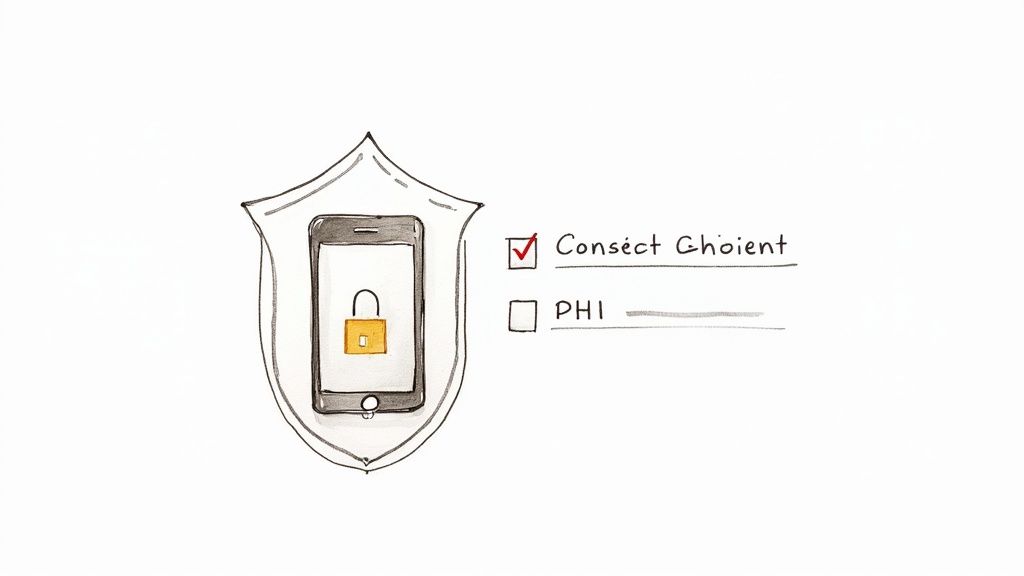
The core idea is simple: PHI has to be locked down, whether it's sitting on a server or flying through the airwaves. Standard SMS isn't secure by nature, meaning those messages could be intercepted. That's why you can't text specific health details directly.
So, instead of a message like, "Hi Jane, your test results for your diabetes check-up are ready," you pivot.
You send a notification that guides the patient to a secure place. For example: "Hi Jane, your recent lab results are now available. Please log in to our secure patient portal to view them: [Secure Link]."
This approach gets the patient the information they need without putting their PHI at risk. To do this right, you need a platform built for secure SMS. You can learn more about how to protect patient data with secure messaging solutions designed from the ground up for healthcare.
Before a single text goes out, you absolutely must have the patient's permission. This is non-negotiable. For healthcare SMS, there are two main types of consent, and knowing the difference is key to staying compliant.
Getting clear consent isn't just about checking a legal box. It's the very foundation of a trusted relationship. Patients must know exactly what you'll be texting them and always have an easy way out, like replying "STOP."
Even with the best intentions, it's easy to stumble. One of the biggest mistakes is failing to get a Business Associate Agreement (BAA) from your messaging provider. A BAA is a legally binding contract that confirms your vendor will protect PHI with the same rigor you do.
Another tool that complements a secure SMS strategy is ringless voicemail. This tech lets you drop a pre-recorded message straight into a patient's voicemail without making their phone ring. It’s a fantastic, non-intrusive way to share one-way information like office hour changes or public health updates, which sidesteps the risk of broadcasting sensitive info.
Whether you're using text messages or a ringless voicemail drop, security and consent are always job number one.
Okay, let's move past the theory and get into the real-world impact. How does SMS for healthcare actually solve the day-to-day headaches in a medical practice? Think of this as your playbook for turning simple text messages into powerful tools that can transform everything from your daily schedule to long-term patient care.
These quick, direct messages are your secret weapon for boosting efficiency and building much stronger relationships with your patients.
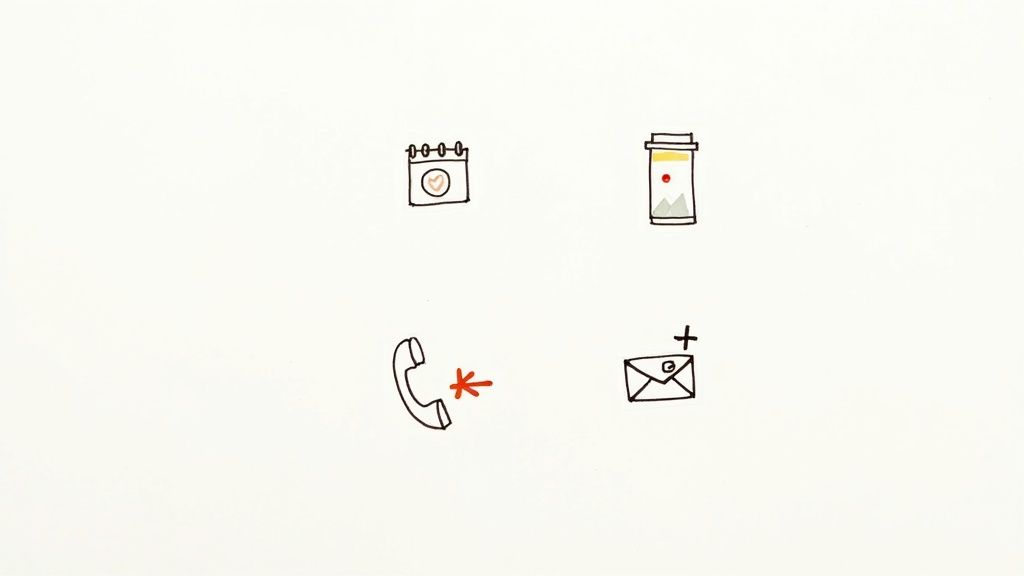
Let's be honest: missed appointments are a massive drain on your practice's resources and revenue. Automated SMS reminders are, without a doubt, the single most effective way to tackle this problem head-on.
A simple text sent 24-48 hours before an appointment can dramatically increase confirmation rates and put a serious dent in your no-show numbers. This proactive touch keeps your schedule full and, more importantly, ensures patients get the timely care they need.
Getting patients to stick to their treatment plans is absolutely crucial for seeing positive health outcomes. SMS acts as a gentle but incredibly effective nudge to keep them on the right path.
You can set up automated reminders for daily medications, prescription refills, or even post-op care instructions. This kind of continuous, low-touch support helps patients feel empowered to manage their health between visits.
SMS is also a fantastic channel for patient education. For instance, you can provide clear, digestible information on topics like understanding new prescriptions or identifying potential side effects, such as with Bisoprolol side effects. This level of detail can significantly boost patient understanding and safety.
Beyond the clinical side of things, SMS is an absolute workhorse for the administrative tasks that eat up so much of your staff's valuable time. Texting simplifies everything from billing to gathering feedback, and the response rates are fantastic.
Check out these common uses:
These simple messages take a huge administrative load off your team, freeing them up to focus on what they do best: direct patient care.
To give you a better idea of what these messages look like in practice, here are a few templates you can adapt for your own clinic.
These templates are just a starting point, but they show how clear and effective these communications can be.
While SMS is perfect for back-and-forth reminders, some messages are better suited for a one-way, non-intrusive delivery. This is where ringless voicemail really shines. This technology lets you drop a pre-recorded audio message directly into a patient's voicemail box without their phone ever ringing.
It's the ideal tool for sharing important but non-urgent information that doesn't need an immediate reply.
Ringless voicemail gives you the personal touch of a voice message combined with the convenience of a text. Your message gets delivered and can be listened to whenever the patient has a moment, all without interrupting their day.
This approach is perfect for a bunch of scenarios:
By combining the strengths of SMS and voicemail, you build a more complete and patient-friendly communication system. If you're curious about adding this to your toolkit, we have an in-depth guide on getting started with ringless voicemail for business.
Alright, so you see the potential of texting your patients. But moving from idea to reality can feel like a huge jump. The good news? Building a great healthcare SMS program isn't some technical puzzle—it's a process. With the right roadmap, you can put a system in place that saves your staff time, makes patients happier, and plugs right into your daily operations.
Think of it like building a high-performance engine for your practice. You can't just throw parts together. Each piece needs to be chosen carefully and fitted perfectly to make sure the whole thing runs smoothly from day one. Let's walk through the exact technical and operational steps to get you there.
This is your first, most critical decision. Not all messaging platforms are built for healthcare. Your number one priority is finding a partner that is fully HIPAA-compliant and will sign a Business Associate Agreement (BAA).
This isn't just a checkbox feature; it's the entire foundation. A BAA is a legal contract that guarantees your vendor will protect patient data with the same care you do. Once that's settled, look for features that actually help in a healthcare setting, like secure messaging, automation tools, and the ability to connect with your other systems.
For your SMS program to really work its magic, it can't be an island. It has to talk directly to your Electronic Health Record (EHR) or Practice Management (PM) system. This connection is what unlocks true automation, letting you send messages triggered by real-time patient events.
A seamless integration lets you:
This turns your SMS tool from a simple blaster into an intelligent communication hub that's perfectly in sync with your practice.
Once your tech is connected, it’s time to map out your communication strategy. A workflow is just a sequence of messages kicked off by a specific trigger—like a patient booking an appointment or a prescription needing a refill.
Start by thinking about the most common journeys your patients take. Then, design automated message sequences for each one.
The goal here is to get ahead of patient needs and deliver the right info at the right time, without your staff lifting a finger. A well-designed workflow means every single patient gets consistent, timely communication.
For example, a new appointment workflow could look like this: an instant confirmation text, a detailed reminder 48 hours before, and one last nudge the day of the appointment. It’s a simple sequence that's far more effective than a single, last-minute text.
Technology is only half the battle. Your team is the other half. You absolutely have to create clear, written rules for how your staff will use the SMS system. This means training on HIPAA best practices, guidelines for answering patient questions, and a clear process for handling urgent requests that come in via text.
This structure makes sure everyone on your team knows their role and talks to patients in a way that is consistent, compliant, and professional. The healthcare Application-to-Person (A2P) SMS market is booming, driven by this exact need for secure, instant communication. With healthcare going digital and smartphone use being universal, the market is projected to grow massively by 2025, fueled by big investments in secure messaging platforms. You can read more about the healthcare A2P SMS market trends and see why getting your internal processes nailed down now is so critical.
Anyone can send a text, but getting it right—crafting a message that actually helps your patients and builds trust—is another story entirely. It’s a bit of an art, blending clarity and compassion with some technical smarts. When you nail these core principles, SMS stops being just a notification system and becomes a powerful way to improve patient outcomes.
The whole process boils down to a few key stages: picking the right platform, connecting it to your existing systems, and then automating your workflows so every message is consistent and valuable.
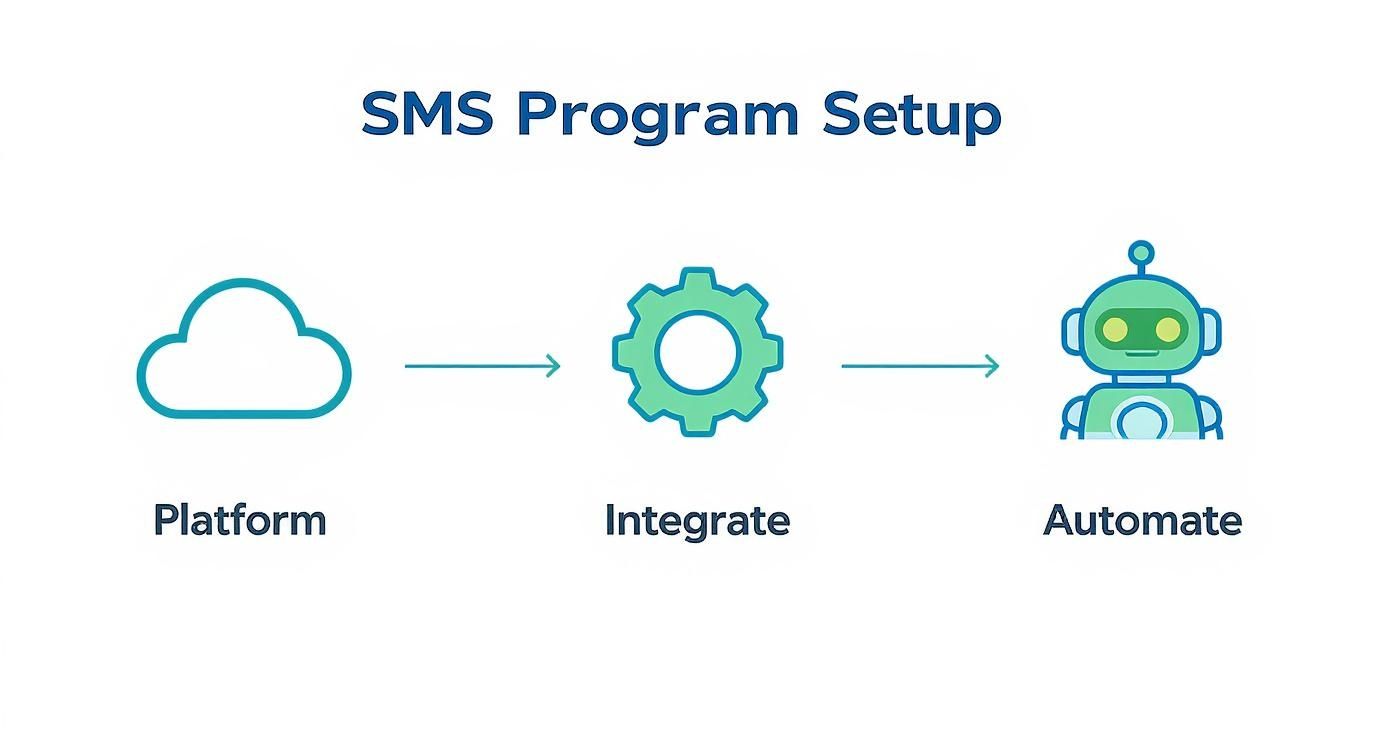
This workflow shows how to build a solid foundation. Each step supports the next, leading to a smooth, professional experience for your patients.
The best messages are always clear, concise, and human. Remember, your patients are probably busy, maybe a little stressed, and the last thing they need is a confusing text full of clinical jargon.
Keep it simple. Aim for a warm yet professional tone that feels like an extension of the care you provide in person.
Personalization is huge, too, and it’s more than just dropping in a [First Name]. Real connection comes from context. Mentioning their specific appointment type ("Your cleaning with Dr. Evans is confirmed...") or the prescription they need to refill shows you’re paying attention. It tells them they’re an individual, not just a number in your EHR.
When you send a message is just as important as what it says. Flood a patient’s inbox with texts, and you’re begging for an opt-out. But send a reminder just an hour before their appointment? That’s not much help either.
A few simple rules make all the difference here:
Finally, none of this matters if your texts get lost in cyberspace. Mobile carriers have spam filters that can be aggressive, so you have to play by the rules.
Always identify your practice clearly in every single message. And make opting out easy—a simple "Reply STOP to unsubscribe" is non-negotiable.
To really make an impact, think beyond just SMS. Sometimes you need to convey more complex information, like post-op instructions or a personal check-in. A ringless voicemail drop is a fantastic way to do this without being intrusive.
With a ringless voicemail, you can deliver a personal, detailed message straight to their voicemail box without their phone ever ringing. It adds a human touch and another layer to your communication strategy, making sure your most important messages are always heard.
To pull all this together, here’s a quick checklist you can use to make sure your SMS program is on the right track.
This table summarizes the essential practices for running an SMS program that's effective, compliant, and genuinely helpful for your patients.
Following these best practices isn't just about avoiding problems; it's about actively creating a better, more connected experience for every patient you serve.
So, you've started texting your patients. How do you know if it's actually working?
It’s one thing to see patients replying to your texts, but to really justify the investment, you need to connect those messages to real-world results. A smart SMS strategy should deliver a clear, measurable return on investment (ROI) that you can confidently show to anyone who asks.
The secret is to look past simple open rates. Instead, focus on the key performance indicators (KPIs) that directly impact your practice's bottom line and clinical effectiveness. These aren't just fluffy numbers; they're hard data showing the true power of direct patient communication.
To prove your SMS strategy is a winner, you need to track the right data. Your analytics should zero in on metrics that prove you're running a more efficient practice and helping patients get better outcomes.
Here are the core areas to start monitoring:
Proving ROI isn't just about covering the cost of a messaging tool. It's about showing how a small investment in something as simple as a text message can lead to huge wins in operational efficiency, protecting your revenue, and improving patient health.
Think of your analytics dashboard as more than just a reporting tool—it's your playbook for continuous improvement. Use the data you’re gathering to A/B test different message styles.
For example, you could test sending reminders at different times of the day, using a slightly different tone, or changing up your call-to-action to see what gets the best response.
This constant process of testing and tweaking allows you to fine-tune your strategy, making your messages more and more effective over time. By keeping a close eye on these KPIs, you can build an undeniable case that SMS for healthcare isn't just another line item on the budget—it's a critical engine for both the clinical and financial success of your practice.
When you're thinking about bringing SMS into your practice, a few questions are bound to pop up. That's a good thing—it means you're thinking through the details before diving in.
Let's walk through some of the most common concerns we hear from providers, almost like a quick consultation to iron out the last few details.
They absolutely will. In fact, most patients have come to expect digital communication from their doctors. Just think about it—nearly everyone has a smartphone in their pocket, making a quick text the easiest way to get an appointment reminder or a notification that their prescription is ready.
The trick is to always keep the patient in the driver's seat. When you give them a simple way to opt-in and manage what kinds of messages they get, the communication feels helpful, not intrusive. It ends up building a stronger relationship, not a strained one.
This is a big one for a lot of practices, but it's much simpler to manage than you'd think, especially with the right platform. A smart SMS system lets you set up automatic replies for common questions. For example, if a patient texts back "reschedule," they can get an instant link to your scheduling page.
More complex questions can be automatically routed to the right person on your team through a shared inbox. This way, the simple stuff is handled instantly, and your staff only steps in when a real conversation is needed. It’s a huge time-saver.
A common misconception is that all patient communication needs to happen in real-time. In reality, much of it—like confirming an appointment or asking a quick billing question—is perfectly suited for the back-and-forth nature of text messaging.
Yes, when used correctly, ringless voicemail is an excellent and compliant tool to have in your toolbox. Because it drops a voicemail directly into the patient's inbox without making their phone ring, it's considered less intrusive and is governed by different rules than live calls or texts.
It’s perfect for one-way, non-urgent updates. Think about sharing a change in office hours or letting patients know their lab results are available in the secure portal. A ringless voicemail drop adds a personal, human touch without interrupting someone's day, making it a powerful partner to your SMS strategy.
Ready to see how a multi-channel messaging platform can transform your patient communication? Call Loop offers secure, HIPAA-compliant SMS, ringless voicemail, and voice broadcasting to help you automate outreach, reduce no-shows, and improve patient care. Start your free trial today and build a better communication system.
Chris Brisson
Chris is the co-founder and CEO at Call Loop. He is focused on marketing automation, growth hacker strategies, and creating duplicatable systems for growing a remote and bootstrapped company. Chat with him on X at @chrisbrisson


Trusted by over 45,000 people, organizations, and businesses like


