
See a Demo
You're just one step away from seeing Call Loop in action.
Enter your information below to watch a demo right now.

You're just one step away from seeing Call Loop in action.
Enter your information below to watch a demo right now.

You're chasing sample reviews for services, but the core issue is usually upstream. If the reminders are sloppy, the follow-up is generic, and the handoff feels automated in the wrong way, even happy customers stay quiet. The strongest reviews start with a better customer experience, and that experience is built through timely communication, not luck.
That's why the fastest path to better sample reviews for services is to systemize the messages that happen before and after the service itself. A clean SMS, a well-timed ringless voicemail, and a clear follow-up sequence can make the experience feel organized, personal, and worth recommending. Review guidance consistently says the best feedback includes factual detail, the service used, the outcome, and the reason someone would recommend the business, not just a star rating. The same guidance also points to specific detail around pricing, quality, and customer service as markers of credibility, and review-request timing is strongest when it happens within 24 to 48 hours of the service interaction, while the experience is still fresh in the customer's mind. That's why communication drives review quality as much as review text does. Webflow homepage
Healthcare is where communication quality shows up immediately. If a patient misses an appointment because the reminder was vague, or arrives unprepared because the instructions were buried in a long email, the experience suffers before care even starts. A better approach is to use ringless voicemail for detailed, non-urgent instructions and SMS for confirmation and time-sensitive reminders, while keeping the workflow aligned with HIPAA-compliant operations. For healthcare teams, the value is in reducing confusion without interrupting the patient's day.
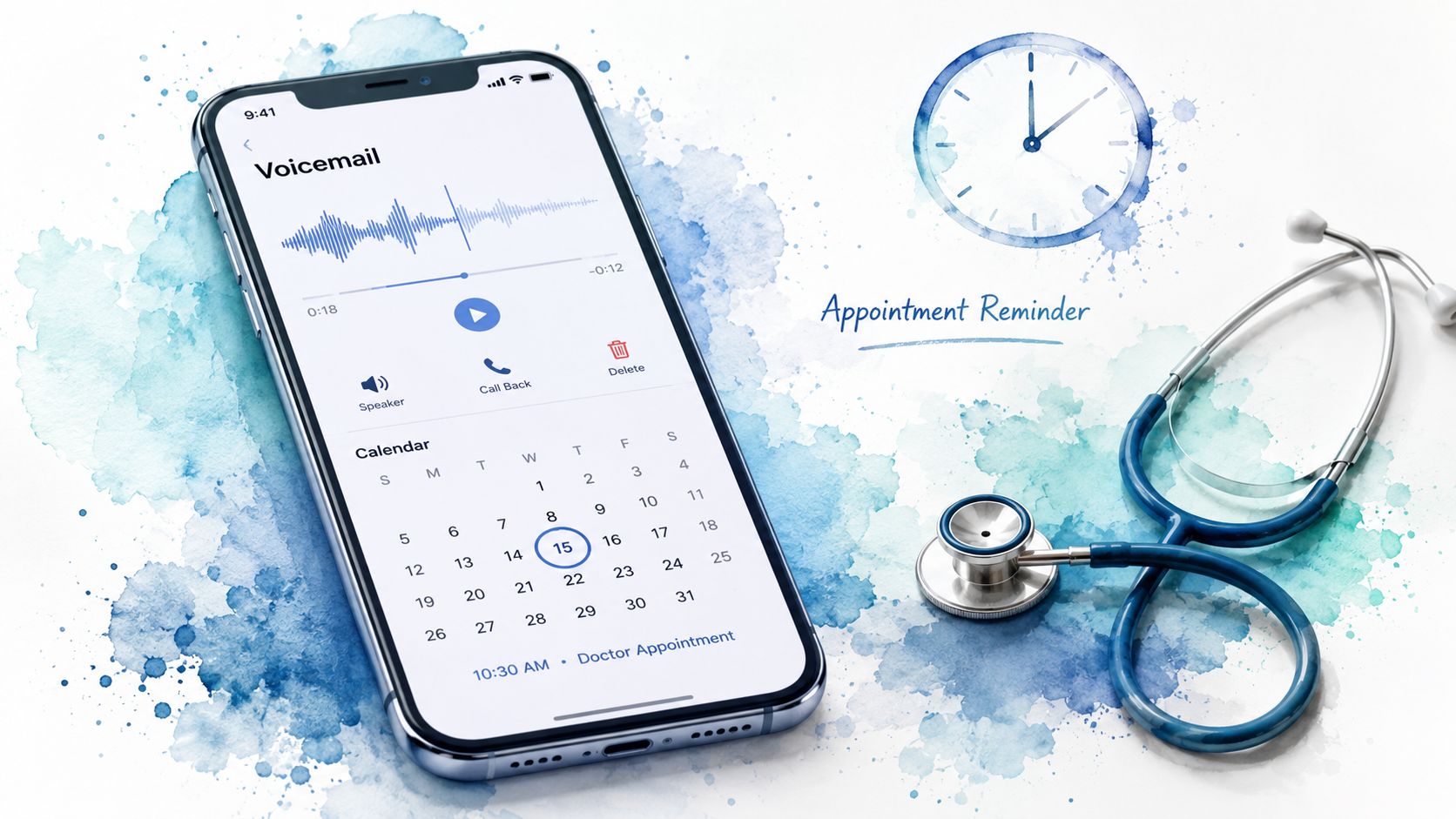
A practical sequence starts with an appointment confirmation, then a preparation message, then a day-of reminder. Dental practices can send pre-cleaning instructions by ringless voicemail 24 hours before a visit, physical therapy clinics can send exercise follow-up links through SMS, and mental health providers can pair session reminders with resource information. Orthopedic surgeons can use a drip sequence for pre-operative prep, which works especially well when different appointment types need different instructions.
Use the reminder to answer the question patients are already asking, “What do I need to do before I show up?” That means the message should name the visit type, mention the date and time, and give one or two clear next steps. For critical care reminders, include an emergency contact, and always maintain detailed audit logs for documentation.
Practical rule: split reminders by appointment type, because a routine cleaning, a surgery prep call, and a therapy follow-up should never sound the same.
If you manage reminders at scale, the workflow gets easier when you segment by service and trigger messages from calendar dates instead of manual sends. The internal playbook on HIPAA-compliant appointment reminders is worth using as a compliance reference point, especially if your team is handling multiple providers or locations. The better the message, the more likely the patient shows up informed, respected, and willing to leave a positive review about the experience.
Ecommerce messages have a different job. They need to create urgency without sounding spammy, and they need to move people from curiosity to click without making the offer feel recycled. SMS is ideal for fast-moving promotions, while ringless voicemail can add a personal touch for VIP offers or customer retention campaigns that deserve more than a generic blast. The best campaigns make the offer clear, the timing obvious, and the next action easy.

Fashion retailers can send 24-hour flash-sale alerts to past customers with product images, while electronics brands can use text-to-join keywords for exclusive early access. Online marketplaces often get better traction when they segment by category interest, because a buyer who only shops home goods does not need the same offer as a buyer who browses accessories. Subscription boxes can also use ringless voicemail for high-value retention offers when email has gone stale.
A promotion sequence works best when it respects how often the customer buys and what they buy. Segment by purchase history, then set separate keyword campaigns for product categories so your audience doesn't get one-size-fits-all offers. UTM-tagged links and link shortening help you connect the campaign back to conversion tracking, which matters when you want to know whether the message drove revenue.
The internal guide on SMS marketing for ecommerce fits naturally here because ecommerce teams need a repeatable process, not just an exciting one-off sale. Use a follow-up SMS about 12 hours before the sale ends, and watch unsubscribes closely so frequency stays under control. If the message is relevant, brief, and timed well, customers are more likely to buy first and review later, especially when the buying experience feels smooth from first alert to checkout.
Event communication fails when people have to hunt for basic details. If your attendees need to scroll through a past email thread to find the Zoom link, venue address, or class start time, you've already created friction. A stronger system uses ringless voicemail for the fuller explanation, then SMS for confirmation, reminders, and last-minute updates. That combination works well because people check texts quickly and voicemail gives you more room for context.
A webinar host can send a ringless voicemail with Zoom login instructions one hour before start time, while a conference organizer can move people through a registration-to-attendance sequence that includes parking, schedule updates, and a post-event survey. Karate studios can send class reminders to parents the day before a lesson, and educators can use voicemail for exam instructions or building access codes before online testing. Workshop leaders can also use text-to-join keywords for same-day registration when seats are still open.
The first voicemail can go out 48 hours before the event with the big picture, including access details and cancellation policy. A second SMS can follow 12 to 24 hours before with a quick confirmation request, then a final reminder can land an hour before start time with any last-minute changes. If you have VIP attendees, give them an extra reminder or a more personalized note so the experience feels organized rather than mass-produced.
The event reminder that gets ignored is usually the one that assumes the attendee already knows the basics.
That's also why calendar triggers matter. If you test the timing before launch, you avoid sending a parking message after the event already started or pushing a survey before the audience has even left. The internal article on how to RSVP by text message is useful if you want to turn registration into a cleaner workflow. When attendees know what to expect, they show up with less friction, pay more attention, and leave feedback that sounds informed instead of random.
Sales follow-up works best when it responds to what the prospect already did. If someone opened a proposal, took a call, or clicked a product page, the next message should match that action instead of repeating a generic pitch. Ringless voicemail works well after a missed call because it gives you a human-sounding touchpoint without forcing a live interruption, and SMS keeps the conversation active while the voicemail is still fresh. The right sequence matters more than sending more messages.
B2B SaaS teams can use ringless voicemail after failed call attempts to leave a short message that sparks a reply, while insurance agents might run a multi-step sequence over several days that combines voicemail and SMS. Real estate brokers can send property details and open house information by voicemail, consulting firms can trigger follow-up when a prospect opens a proposal PDF, and finance professionals can use a next-step calendar link to keep qualified leads moving. If your CRM is HubSpot, Keap, or ActiveCampaign, behavior-triggered automation makes that workflow easier to manage without losing the personal tone.
Start with the issue the prospect already showed interest in. If they downloaded a proposal, reference the proposal. If they took a discovery call, reference the part of the conversation that mattered most. Then keep the follow-up short enough that the next step is obvious, whether that means booking a call, replying by text, or opening a calendar link.
Useful rule: use ringless voicemail first when you need attention, then follow with SMS about two hours later while the message is still top of mind.
That rhythm works better than repeating the same request across every channel. Separate cold outreach from warm leads, and segment by industry, company size, and buying stage so your follow-up sounds like it belongs to the buyer's situation. Use sales follow-up by text and voicemail as a reference point for building a sequence that feels timely, direct, and easy to answer. The goal is to move prospects forward without making the sequence feel like a chase.
Win-back campaigns are where many businesses default to “We miss you” and stop there. That's too soft on context and too weak on value. If someone stopped buying, canceled, or went quiet, your message should acknowledge the gap, explain what's changed, and make returning feel easy. Ringless voicemail is especially useful here because it stands out more than another email in an overcrowded inbox.
Subscription services can reach churned subscribers with a discount offer, retail brands can reintroduce a new collection, karate studios can mention new classes or schedule improvements, and SaaS companies can offer a feature upgrade to customers who paused or downgraded. The best version of the message starts with the improvement, not the coupon. A discount can close the loop later, but it shouldn't be the first thing you lead with.
Customers often re-engage when they believe the experience will be meaningfully different this time. That means you should mention the new classes, faster response time, expanded selection, updated features, or any service change that addresses why they disengaged in the first place. If the contact doesn't respond, a follow-up survey can help you understand churn reasons without forcing a hard sell.
The right win-back message can revive a relationship and create a better experience than the first one, which is often what leads to a stronger review the second time around. If a customer returns and feels the service has improved, they're far more likely to say so publicly.
Lead magnets work when the promise is simple and the delivery feels immediate. A text-to-join keyword is a fast way to capture intent, but the primary value comes from what happens after opt-in. That's where SMS and ringless voicemail can deliver educational content, product information, or access offers in a sequence that feels useful instead of promotional. The strongest campaigns start with the most valuable piece first.
Financial advisors can use a WEALTH keyword to deliver retirement planning guidance, fitness coaches can use FITPLAN to send a training sequence, real estate agents can use HOMEBUYER for a buyer's guide, insurance brokers can use QUOTE for coverage recommendations, and SaaS vendors can use DEMO for a walkthrough video. Short keywords matter because they're easier to remember and easier to advertise across social media, ads, websites, and print.
Send the welcome ringless voicemail immediately after double opt-in, then follow with the most useful content right away. If the first touch feels generic, the subscriber loses interest fast. If the first touch solves a real problem, the subscriber is much more likely to keep engaging with the series.
A strong content sequence usually moves from value to education to deeper value to a soft ask. That can mean a guide, then a short explanation, then a more specific use case, then an invitation to book or reply. Keep the call to action clear after each step so the subscriber always knows what to do next.
People don't join lead magnets for more noise. They join because the first message feels worth their attention.
The practical trade-off here is simple. You can gather more leads by offering something broad, or you can gather better leads by offering something specific. Specific usually wins, because it attracts people who already care about the topic and are more likely to respond when the sales ask arrives. That's the kind of subscriber who can later become a happy customer and, if the experience is strong, a useful reviewer.
Service businesses lose revenue when reminders stop at the calendar date. A haircut, consultation, tutoring session, or spa appointment usually needs more than “see you then.” Customers need preparation steps, arrival details, and a frictionless way to reschedule if something changes. Ringless voicemail is ideal for longer prep instructions, while SMS works better for confirmations, check-ins, and quick reminders.
Hair salons can send styling instructions and product recommendations 48 hours before an appointment, medical offices can send fasting or paperwork instructions, tutoring services can send pre-session materials by text, consulting firms can request client questionnaires before the first meeting, and karate studios can include belt test details and class schedules. If the service includes multiple steps or special preparation, voicemail can carry the heavier lift without making the reminder feel cluttered.
The reminder should not punish someone for needing to move the booking. If the reschedule button is easy to find, you reduce no-shows and keep the relationship intact. You can also collect practical pre-service information through SMS, such as allergies, preferences, or intake details, which saves time at the appointment itself.
Track no-show rates by message frequency so you can find the best reminder timing for your audience. Send the first voicemail 2 to 3 days before, the SMS reminder 24 hours before, and a final SMS 2 hours before with parking or arrival details. Early reminders should also include cancellation policy and deadline so there's no confusion.
A good reminder does two jobs at once. It protects the schedule, and it makes the customer feel taken care of before the visit starts. That feeling often becomes the foundation for a strong review, because people remember being prepared as much as they remember the service itself.
Cold prospecting is usually where people assume voicemail has lost its edge. It hasn't, if the message is short, relevant, and delivered with a clear next step. Ringless voicemail can drop a brand introduction straight into a prospect's voicemail inbox without making the interaction feel intrusive, and that matters when you're reaching busy decision-makers. The best scripts create curiosity first, then explain the value proposition quickly.
B2B lead generation firms can use voicemail to introduce services to C-suite executives, insurance brokers can deliver personalized coverage recommendations, office equipment vendors can approach CFOs with a cost-saving angle, business consultants can target accounts with a concise intro, real estate investors can contact property owners about acquisition opportunities, and staffing agencies can reach hiring managers with a simple offer. Custom caller ID helps the message look more familiar, and a 30 to 45 second voicemail length keeps the listener from tuning out.
Don't start by talking about your company history. Start by opening a door the prospect wants to walk through. If the message is personalized and tight, the callback becomes more likely because the listener understands why the message exists in the first place.
A few practical habits make a difference here:
A cold voicemail works best when it sounds like the beginning of a relevant conversation, not a recycled pitch.
Test recorded voice against AI text-to-speech to find the best match for your audience, and segment by industry so every message sounds specific. Track callback rates by variation instead of assuming one script will work everywhere. If you're doing outbound at scale, this is one of the easiest places to improve response quality without adding more manual calling.
| Template | Implementation complexity | Resource requirements | Expected outcomes | Ideal use cases | Key advantages |
|---|---|---|---|---|---|
| Healthcare Patient Appointment Reminder Template | Medium–High (HIPAA controls, EMR integration) | Practice-management integration, consent records, carrier delivery testing | Reduce no-shows 25–40%; better prep & follow-up adherence | Medical, dental, telemedicine appointments and pre/post‑op workflows | HIPAA-compliant, dual-channel (voicemail+SMS), detailed prep and follow-up |
| Ecommerce Flash Sale and Promotion Campaign | Medium (segmentation, tracking, MMS support) | Creative assets, link tracking, keyword opt‑ins, segmentation tools | Immediate sales lift, higher CTR; measurable ROI via tracking | Flash sales, limited-time promotions, seasonal retail campaigns | Urgency messaging, conversion tracking, list growth via text-to-join |
| Event Registration and Attendance Confirmation Template | Medium (multi-step drips, calendar triggers) | Accurate event data, scheduling automation, support transfer setup | Increase attendance 20–35%; fewer day-of inquiries, smoother logistics | Webinars, conferences, workshops, classes | Multi-touch timing, venue/instruction delivery, automated drip sequences |
| Sales Follow-Up and Prospect Nurture Sequence | High (CRM integrations, behavior triggers) | Clean CRM data, recordings/AI TTS, caller ID setup, analytics | Higher response & conversion rates; scalable personalized outreach | B2B SaaS, real estate, insurance, high-touch sales pipelines | Deep personalization, behavior-triggered timing, CRM sync for consistency |
| Customer Re-engagement and Win-Back Campaign | Medium (behavioral segmentation, escalating offers) | Historical purchase/engagement data, incentive creation, MMS assets | Recover lapsed customers cost-effectively; variable win-back rates by cohort | Subscription churn recovery, retail win-back, membership reactivation | Cost-efficient reacquisition, personalized incentives, drip escalation |
| SMS Lead Magnet and Content Delivery Template | Low–Medium (keyword enrollment, double opt-in) | Compelling content, keyword promotion, list validation, delivery series | High-quality, engaged leads and owned subscriber lists | Lead gen for advisors, coaches, real estate, B2B content offers | High-intent capture via text-to-join, content-driven nurture, double opt-in compliance |
| Appointment Reminder and Pre-Service Preparation Template | Medium (scheduling and questionnaire integration) | Scheduling software integration, pre-service content, rescheduling links | Reduce no-shows 25–40%; better-prepared clients and fewer last-minute cancellations | Salons, spas, tutoring, consulting, service appointments | Detailed prep via voicemail, easy rescheduling, pre-service data collection |
| Ringless Voicemail Prospecting and Brand Introduction Template | Medium–High (compliance, script quality, targeting) | Professional scripts/recordings or AI TTS, DNC management, delivery platform | Higher callback rates vs cold calls; intrigue-driven lead generation | Cold B2B prospecting, outreach to decision-makers, brand introductions | Non-intrusive voicemail delivery, strong callback potential, per-drop pricing for efficiency |
The common thread across these templates is simple. Outstanding reviews are usually the result of outstanding communication, and communication works best when it's timely, specific, and easy to act on. That lines up with what strong review guidance already makes clear, detailed feedback is more credible than generic praise, and the best review requests happen close to the service experience, when the interaction is still fresh. If you want better reviews, you don't start by writing the review text. You start by improving the messages that shape the experience before the customer ever types a word.
For service businesses, that means treating reminders, follow-ups, promotions, and re-engagement as part of the customer journey, not as isolated campaigns. A patient reminder, a flash-sale alert, an event confirmation, a sales follow-up, or a win-back message can all shape how someone remembers your business. When those messages feel organized and personal, customers are more likely to describe the service with the kind of detail that helps the next buyer make a decision.
The advantage of a platform like Call Loop is that it lets you connect those moments in one system. You can automate SMS, voice broadcasting, and ringless voicemail, use drip campaigns with timing triggers, and keep communication consistent across healthcare, ecommerce, events, sales, and service businesses. That consistency is what turns a one-time interaction into repeat business, and repeat business into reviews that say something useful.
If you're ready to build a stronger review engine, start with the messages that happen before the review request. Tighten your reminders, make your follow-ups more specific, and use channel choice intentionally instead of randomly. The result is a better customer experience and a review profile that sounds real, detailed, and trustworthy.
If you want to automate the communication that leads to better reviews, Call Loop gives you the SMS, ringless voicemail, and drip campaign tools to do it in one place. Use it to send better reminders, smarter follow-ups, and timely re-engagement messages that make your customer experience feel organized from start to finish. Visit Call Loop and put this review-building system to work in your business.
Chris Brisson
Chris is the co-founder and CEO at Call Loop. He is focused on marketing automation, growth hacker strategies, and creating duplicatable systems for growing a remote and bootstrapped company. Chat with him on X at @chrisbrisson


Trusted by over 45,000 people, organizations, and businesses like


