
See a Demo
You're just one step away from seeing Call Loop in action.
Enter your information below to watch a demo right now.

You're just one step away from seeing Call Loop in action.
Enter your information below to watch a demo right now.

Secure messaging in healthcare is a way for medical professionals to communicate using encrypted channels. This protects sensitive patient information and makes sure every conversation meets the strict standards set by HIPAA. It's a purpose-built replacement for insecure tools like regular texting and personal email, giving clinical teams a secure, auditable platform to work from.
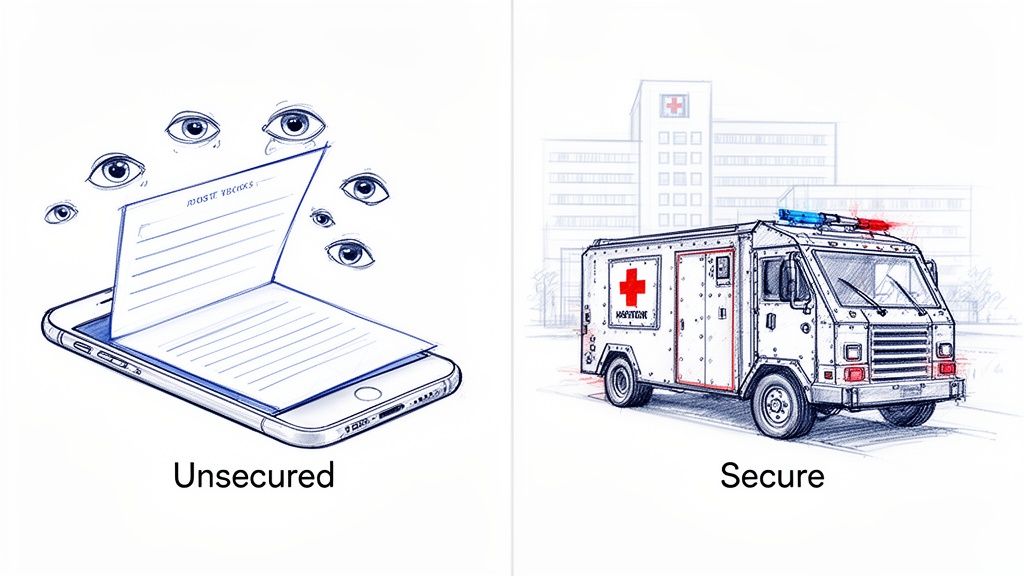
Think about sending patient details on a postcard. Anyone who touches it can read everything. Using standard SMS or personal email for healthcare isn't much different. Those messages fly across networks unencrypted, leaving a trail of Protected Health Information (PHI) wide open for anyone to intercept.
This creates a massive security hole. A single text with a patient's name and a diagnosis could lead to a devastating HIPAA violation, with fines that can run into the millions of dollars. But the risk isn't just about money—it's about trust. A data breach can instantly shatter the confidence patients have in their providers.
This is exactly where secure messaging for healthcare becomes non-negotiable. It’s the difference between that open postcard and a sealed, armored van. Every message, image, and file is locked down with end-to-end encryption, meaning only the people who are supposed to see it can.
Secure messaging platforms aren’t just about plugging compliance holes. They're built to actively speed up care coordination, providing the essential infrastructure for modern, efficient, and protected clinical communication.
These platforms are designed to do a lot more than just send texts. They build a complete communication ecosystem that supports the entire care journey. Here's what that looks like in practice:
Modern secure messaging solutions offer more than just one way to connect. They bring multiple channels together into one compliant platform, letting you automate and personalize how you reach patients without ever risking their privacy.
For instance, a practice can send automated appointment reminders via SMS to cut down on no-shows. But for something more sensitive, like post-op instructions, they might use ringless voicemail. This technology drops a detailed audio message right into a patient's voicemail without making their phone ring—a perfect, non-intrusive way to deliver important information. The right ringless voicemail software can significantly improve patient outreach by delivering key messages discreetly.
By combining secure SMS, voice broadcasts, and ringless voicemail drops, healthcare organizations can create a communication strategy that not only engages patients but also proves their commitment to keeping data safe.
Before you can protect patient data, you have to know the rules of the road. In healthcare, that means getting intimately familiar with the Health Insurance Portability and Accountability Act (HIPAA) and the Health Information Technology for Economic and Clinical Health (HITECH) Act.
These aren't just suggestions; they're the legal bedrock for handling Protected Health Information (PHI) in the United States. Think of HIPAA as the original law that laid out the "what" and "why" of patient privacy. HITECH came along later to give those rules some serious teeth, adding tougher enforcement and much bigger penalties for screw-ups in our digital world.
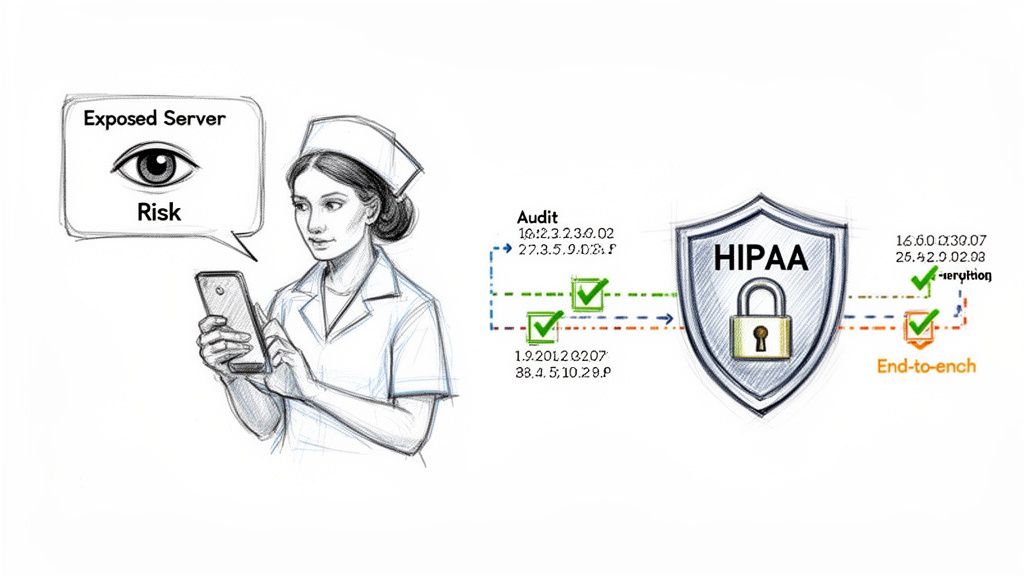
A common—and costly—mistake is thinking standard communication tools are good enough. Picture a nurse sending a quick text to a doctor about a patient's medication change. It's fast, it's easy, and it’s a HIPAA violation waiting to happen. That one simple message on an unsecure channel can open up a world of legal and financial pain for the practice. Standard SMS messages are not encrypted by default, leaving sensitive information exposed as it travels across carrier networks.
The fallout from a data breach is way more than just a slap on the wrist. Fines for HIPAA violations can be jaw-dropping, climbing as high as $1.5 million per violation category per year. But the hit to your reputation often hurts even more, destroying the patient trust you worked so hard to build.
These aren't just IT problems; they're business-critical risks. The average cost of a healthcare data breach has now shot past $10 million. That number makes investing in real security feel less like an expense and more like an insurance policy. In fact, avoiding a single major HIPAA fine for unauthorized PHI disclosure could easily pay for a secure messaging platform for a decade.
To stay compliant, any platform you use for secure messaging for healthcare has to have a few non-negotiable technical and administrative controls baked in. These aren't just nice-to-have features; they're the absolute foundation of a compliant system.
Compliance isn't about shutting down communication. It's about making it happen inside a secure, auditable, and trustworthy framework. A purpose-built platform is the only realistic way to strike that balance.
Here are the must-have safeguards that HIPAA and HITECH demand:
Let's break down the difference between what standard tools offer and what's required for healthcare.
It's easy to see why everyday tools like SMS and email fall short. They were never built for the high-stakes world of healthcare communication. This table lays out the crucial differences between them and a true, HIPAA-compliant messaging platform.
The bottom line is clear: while standard messaging is convenient for casual chats, it's a compliance minefield for healthcare. Only a dedicated secure messaging solution provides the layers of protection needed to keep PHI safe and your organization out of hot water.
And remember, a complete compliance strategy goes beyond just messaging. It also has to cover the lifecycle of your hardware. When it's time to retire old computers or medical devices, you'll need to use secure medical equipment disposal services to ensure no lingering patient data falls into the wrong hands. It’s all part of protecting patient information, from the first message to the final hard drive wipe.
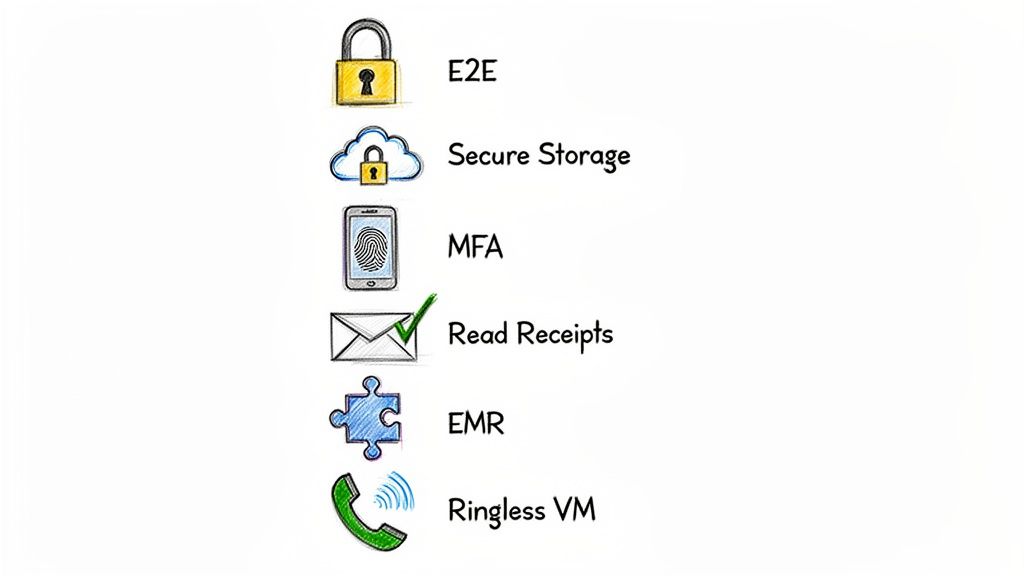
Knowing the rules of HIPAA and HITECH is one thing, but actually putting them into practice is a whole different ballgame. A truly compliant platform isn't just about checking a few boxes; it's built from the ground up with specific features that protect patient data and make your team's life easier.
These aren't just fancy add-ons. They're the absolute must-haves for any secure messaging for healthcare system worth its salt.
The heart of any secure platform is its ability to keep information locked down. This means building on modern security concepts like Zero Trust security principles, which basically means "never trust, always verify." This approach ditches the old idea that anything inside the network is safe and instead requires strict verification for every single access attempt.
Think of these features as the digital Fort Knox for your patient data. They are the technical backbone that makes secure communication even possible. Without them, you're just waiting for a compliance breach.
Security is crucial, but a platform that slows your team down is a non-starter. The best tools blend airtight security with features that actually improve how your team works.
A secure messaging platform shouldn't just be a locked box for data. It should be a dynamic tool that streamlines communication, eliminates guesswork, and gives care teams their valuable time back.
These features bridge the gap between being compliant and being productive.
Today's best platforms are more than just one-to-one messengers. They're full-blown communication hubs that let you reach patients at scale without ever compromising on compliance.
A perfect example is ringless voicemail. This technology lets you drop a pre-recorded message directly into a patient's voicemail without their phone ever ringing. It’s a fantastic, non-intrusive way to deliver post-op instructions, public health updates, or other detailed follow-up info. A high-quality ringless voicemail service ensures reliable delivery and clear audio for these important messages.
Beyond that, other powerful features can completely change how you engage with patients:
Bringing a secure messaging platform into your practice isn't just about checking a HIPAA compliance box. It's about fundamentally changing how you deliver care for the better. When you get it right, communication stops being a liability and becomes one of your most powerful assets, leading to real, measurable wins in both patient engagement and team efficiency.
Think about how you connect with patients now. Old-school methods like phone calls and snail mail are slow, clunky, and honestly, pretty hit-or-miss. Text-based communication, on the other hand, just works.
Let’s talk numbers. Text messages in a healthcare setting have a staggering 98% open rate. Compare that to email billing reminders, which barely crack 24%. It's not even close. Even better, simply adding two-way messaging can increase patient satisfaction by 40%. The writing's on the wall: 73% of patients between 17 and 54 would actually switch doctors over a bad communication experience. These trends show a massive shift in patient expectations.
Beyond making patients happier, secure messaging is a massive force multiplier for your internal teams. It's designed to break down the communication logjams that have frustrated healthcare professionals for decades, swapping out painful delays for real-time teamwork.
The endless game of phone tag between nurses, specialists, and the front desk? Gone. Instead of leaving a voicemail and hoping for a call back, a nurse can fire off a secure, time-stamped message with a patient question and get a direct answer. This one change alone saves an incredible amount of time and gets clinical decisions made faster, letting your team focus on caring for patients instead of chasing down information.
By creating one secure channel for all clinical conversations, you tear down the silos. Everyone on the care team is on the same page, working from the same real-time information. That's a huge deal for cutting down on medical errors and keeping patients safe.
This streamlined flow sends positive ripples throughout your entire organization. Lab techs can securely ping a doctor the second critical results are ready, allowing for immediate treatment changes. Discharge planners can coordinate with home health agencies without a dozen phone calls, making the transition out of the hospital smoother and safer for the patient.
With the right tools, you can guide patients through every single step of their care journey. This isn't just about nagging them; it's about making them feel supported and valued, which does wonders for adherence. By using a mix of channels like SMS, voice calls, and even ringless voicemail, you can get the right message to the right person, in the right way, at exactly the right time.
Here’s what that looks like in the real world:
These automated, yet personal, interactions are the heart of modern secure messaging for healthcare. They cut down the administrative burden on your staff while making a huge impact on patient compliance and outcomes. To see how to build these kinds of workflows, check out our guide on using SMS for healthcare. Ultimately, this approach builds stronger, more trusting relationships and a more efficient, collaborative care environment for everyone.
Switching over to a new communication system can feel like a monster of a project, but breaking it down into a clear, structured plan makes all the difference. Think of this as your roadmap—a guide to take you through the key phases of rolling out a secure messaging for healthcare platform. Get this right, and you'll see a smooth transition that gets your team on board and delivers value from day one.
The real work starts long before you ever sign a contract with a vendor. First things first: you need to assemble your implementation team. This isn't just an IT project. Pull in people from every corner of your organization—clinical staff, IT specialists, and administrative leaders—to make sure every voice is heard and every potential hiccup is thought through ahead of time.
Once your team is ready, it's time to take a hard look at how you communicate right now. Where are the biggest logjams? Are your nurses burning hours playing phone tag? Are no-show rates sky-high because your reminder system is all over the place? Nailing down these specific pain points gives you a crystal-clear checklist of problems your new system absolutely must solve.
With a solid understanding of your needs, you can finally start looking at vendors. But don't just shop for a product; look for a partner. The right vendor will get the unique pressures of healthcare, offer rock-solid HIPAA-compliant features, and provide real support both during and after the rollout.
Beyond the feature list, you need to grill them on integration. A platform that can't talk to your existing Electronic Medical Record (EMR) system is a non-starter. Seamless integration is what prevents the soul-crushing task of manual data entry, cuts down on errors, and lets you send smarter, more personalized messages to patients. For instance, an integrated system can automatically pull appointment details to power your outreach. You can dive deeper into how this works in our guide to automated appointment reminders.
This is how a well-integrated system directly elevates the patient journey. It's a simple, powerful progression.
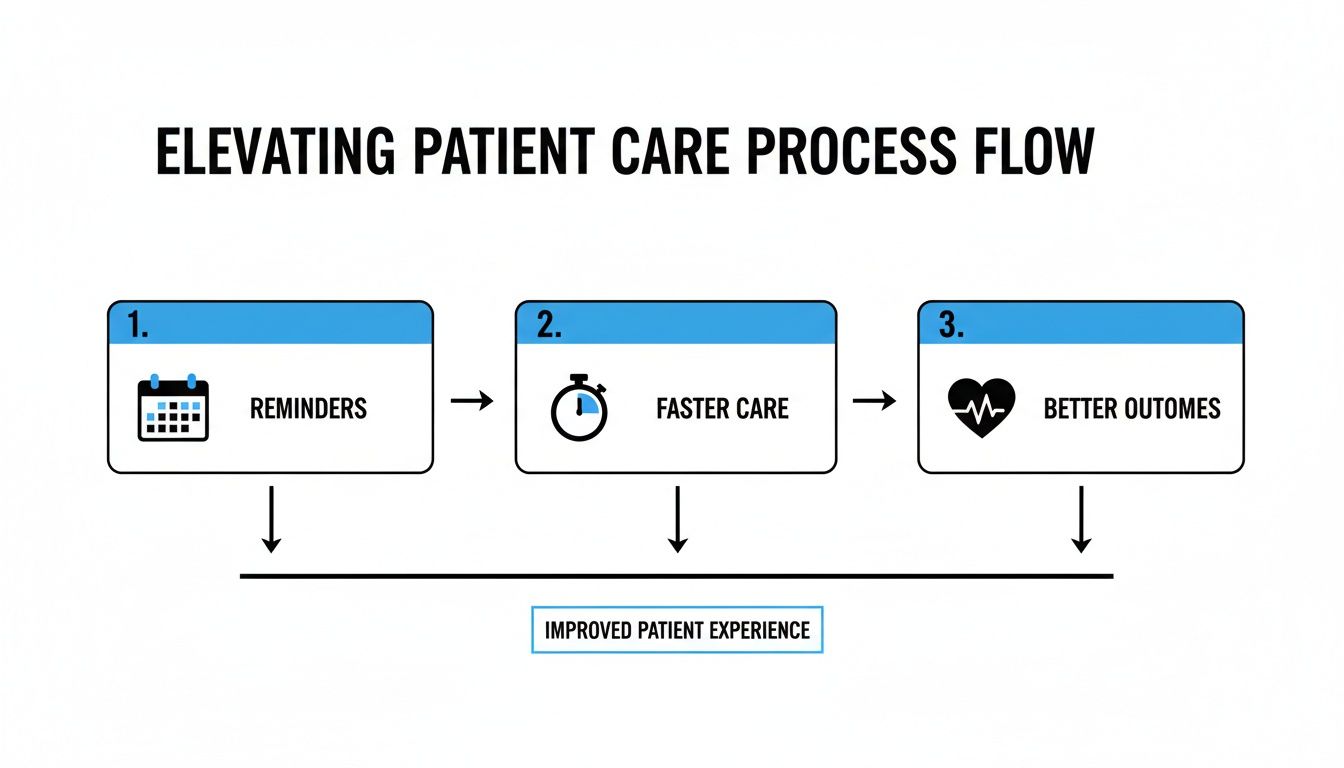
As you can see, it all flows together: smart reminders lead to faster, more coordinated care, which ultimately drives better health outcomes for your patients.
A successful implementation all comes down to getting your people to actually use the new system. This is where great training and clear policies are make-or-break. Don't just show your team how to use the tool; show them why it makes their lives easier. Frame the training around solving the daily frustrations you identified earlier.
The goal of implementation isn't just to install software. It's to fundamentally improve how your team communicates. A system that people understand and trust is a system that gets used.
Create a simple, easy-to-digest policy document that spells out the rules of the road. Specify what kind of information is okay to share on the platform and what the protocol is for urgent messages. This clarity takes the guesswork out of it and gives your staff the confidence to use the system correctly and compliantly.
A great way to ensure a smooth transition is to start with a pilot program.
Let's be clear: secure messaging isn't just a nice-to-have feature anymore. It's the new baseline for any modern healthcare practice. This is where the non-negotiable demands of HIPAA compliance meet the very real need for efficiency in today's packed clinics.
As we've walked through in this guide, it’s the tool that actively shields patient data, gives clinical teams a faster, more reliable way to connect, and helps build that all-important trust with patients. It's about moving on from risky, old-school methods and stepping into a protected, auditable communication system.
Patient expectations are climbing. They want the same seamless digital experience from their doctor that they get everywhere else. This is where integrated platforms really start to shine. The future isn't just about one channel; it's a smart mix of secure SMS for quick appointment reminders, direct voice calls when something is urgent, and even ringless voicemail for detailed follow-ups that don't interrupt a patient's day.
This kind of multi-channel approach means every message is not just compliant, but also fits the context and the patient's preference. When you have these tools working together in one secure system, you create a practice that feels more responsive and truly patient-first.
If you take one thing away from this guide, let it be this: investing in a secure messaging for healthcare solution is a direct investment in your patients' safety, your staff's sanity, and the long-term health of your practice.
At the end of the day, adopting a solid communication platform is about much more than just checking a compliance box. It’s about laying the groundwork for real, sustainable growth and better patient outcomes.
When communication flows without friction and fear, teams can coordinate care like a well-oiled machine. They cut down on administrative headaches and can pour that saved time back into what actually matters—caring for patients. Making this shift is how you future-proof your practice, ensuring you can handle both the regulatory hurdles and the evolving expectations of the world around you.
Switching to a new communication tool always comes with a few questions. It’s a natural part of the process. So, let's tackle some of the most common things healthcare professionals ask when they're thinking about secure messaging.
This is a classic "it seems harmless, but..." scenario. You might think sending a quick text like, "Please call our office," is fine since it contains no Protected Health Information (PHI). And you'd be right, for a moment.
The problem is what happens next. The patient texts back, "Is this about my lab results from Tuesday?" Boom. Just like that, PHI is now sitting in an unsecure channel, and you've got a compliance headache on your hands.
A proper secure messaging platform sidesteps this landmine completely. Every single conversation, no matter who starts it, lives inside a fully encrypted and compliant environment from the get-go. No exceptions, no accidental breaches.
Let's use an analogy. Think of your data as a priceless diamond.
"Encryption in transit" is the armored truck. It protects the diamond while it's moving from the vault to the showroom. As the data zips across the internet, it's locked down tight, and no one can intercept it and see what's inside.
"Encryption at rest" is the high-security vault at the destination. Once the armored truck arrives, the diamond isn't just left on a table; it's stored in a guarded, locked-down safe. This is what protects your data when it's just sitting on a server or a device. A truly HIPAA-compliant system needs both—the armored truck and the vault—to protect sensitive health information at all times.
Ringless voicemail is a pretty clever piece of tech. It lets you drop an audio message directly into a patient's voicemail inbox without ever making their phone ring. It’s the perfect tool for when you need to share detailed information that isn't urgent enough to interrupt their day.
For example, a clinic could send out a ringless voicemail with detailed post-op care instructions. Or a public health office could send a reminder about an upcoming flu shot clinic. It feels personal, like a real phone call, but has the convenience of a text message.
This way, you respect the patient's time while still making sure they get important information directly from you, in your own voice. Using a ringless voicemail service is a powerful strategy for proactive, non-intrusive patient communication.
Great question. The best technology in the world is useless if no one uses it. Success boils down to two things: making it easy and showing them what's in it for them.
For your team, run hands-on training that focuses on their real-world pain points. Don't just show them features; show them how this new tool eliminates the soul-crushing game of phone tag they play all day.
For your patients, you have to get the word out. Announce the new secure messaging option everywhere—on your website, in your office, in your email signatures. More importantly, tell them why it's better for them. Frame it as a way to get faster answers from their care team and a way to keep their private health information locked down and secure. And of course, choose a platform that’s dead simple to use. The fewer logins and hoops to jump through, the better.
Ready to elevate your patient communication while ensuring HIPAA compliance? Call Loop provides a powerful, multi-channel messaging platform with secure SMS, voice broadcasting, and ringless voicemail designed for healthcare. Discover how our tools can automate your outreach and streamline your workflows at https://www.callloop.com.
Chris Brisson
Chris is the co-founder and CEO at Call Loop. He is focused on marketing automation, growth hacker strategies, and creating duplicatable systems for growing a remote and bootstrapped company. Chat with him on X at @chrisbrisson


Trusted by over 45,000 people, organizations, and businesses like


