
See a Demo
You're just one step away from seeing Call Loop in action.
Enter your information below to watch a demo right now.

You're just one step away from seeing Call Loop in action.
Enter your information below to watch a demo right now.

You send a text campaign. The offer is solid. The timing is right. Then the message lands on a customer's phone from a random number they don't recognize, and it gets ignored with every other unknown text.
That's the problem most businesses are trying to fix when they search for how to send SMS online with company name. They don't just want to send a message. They want the message to look legitimate the second it appears on the lock screen.
Using your business name as the sender can do that. But its practical application is more complicated than most guides admit. Carrier rules vary by country. Some markets require registration. Some don't support alphanumeric sender IDs the way people expect. And if your campaign needs replies, a branded sender name can create as many workflow issues as it solves unless you plan the fallback path up front.
A recognizable sender name changes the first impression of your text before the customer reads a single word. Instead of seeing an unfamiliar number, they see your brand. That matters because trust in SMS is decided fast.
Industry statistics compiled by Emarsys show that SMS messages have a 98% open rate, 90% are read within three minutes, 77% receive a response within 10 minutes, and SMS campaigns achieve a 45% response rate versus 6% for email, with an average click-through rate of 18% for SMS compared with 2.5% for email. The same source also notes that 68% of consumers have spent over $50 on a single item through text messaging (Emarsys SMS marketing statistics).
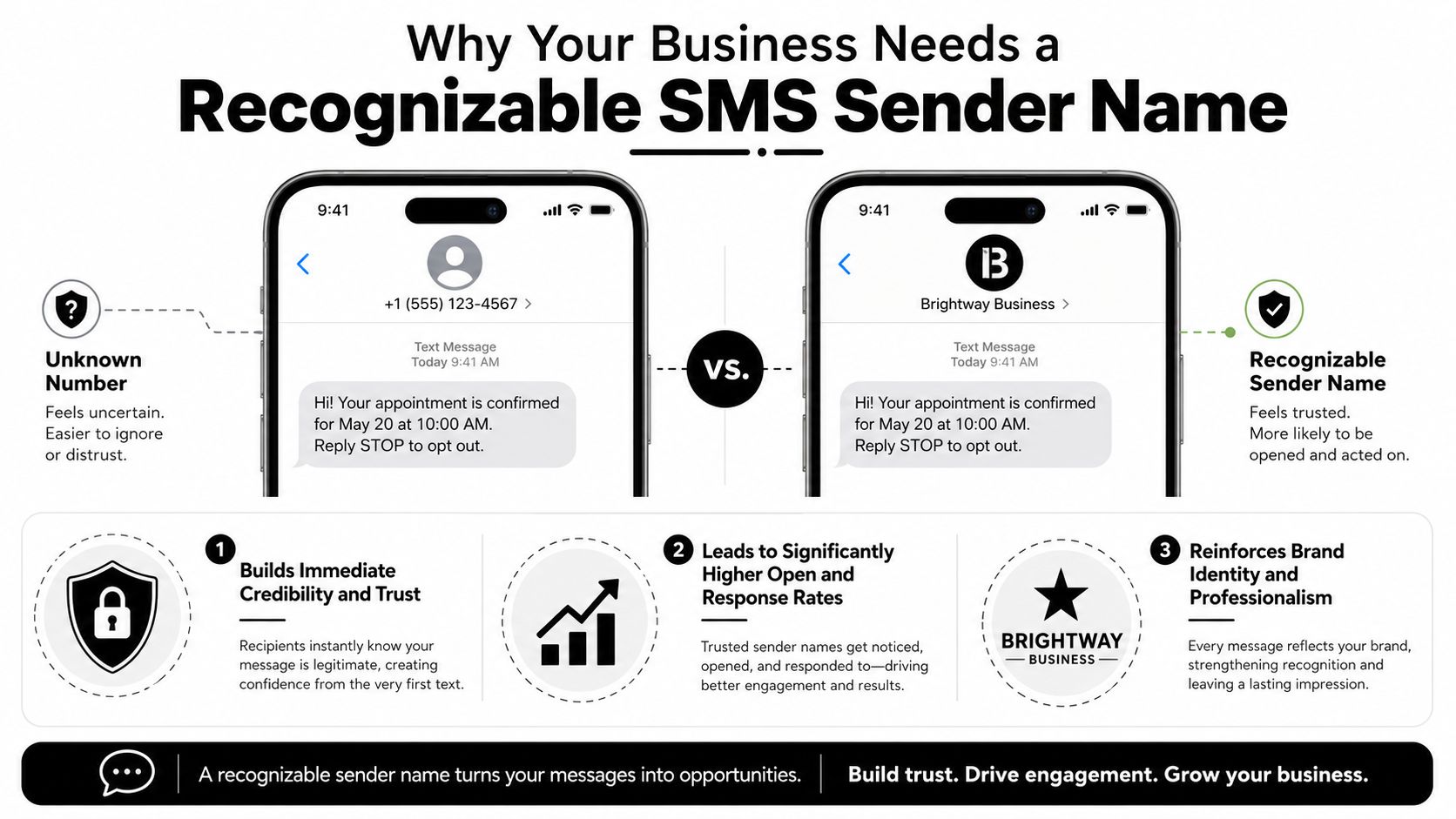
When businesses send SMS online with company name, they reduce the friction that comes from “Who is this?” That's especially important for reminders, promotions, order updates, event alerts, and customer follow-up where recognition drives action.
A branded sender name also gives your outbound SMS a cleaner, more professional look. For many organizations, that's the difference between appearing established and appearing risky.
Practical rule: If the customer has to think about who sent the message, you've already lost momentum.
A sender name isn't a substitute for good messaging. It's the top layer of trust. The underlying campaign still needs a relevant offer, a clean audience, and a clear next step.
That's why smart teams treat branded SMS as one part of a larger outreach mix alongside email, voice, and follow-up workflows. If you're evaluating channel mix, this guide on effective customer communication strategies gives useful context on when SMS fits better than email and when the two should work together.
A common failure point shows up before the first message goes out. A team picks a branded sender name because it looks cleaner, then expects customers to reply, confirm appointments, ask questions, or text STOP. The sender choice was wrong for the job.
Choose the sender identity based on the response path you need.
An alphanumeric sender ID displays a brand name instead of a phone number. In many markets, that sender name has a short character limit and functions as a one-way identity. Twilio's Sender ID documentation notes that alphanumeric sender IDs can be up to 11 characters and are not supported for inbound messaging in many countries (Twilio Sender ID overview).
A long code or business number fits campaigns where replies matter. Use it for support, confirmations, lead qualification, reschedules, and any workflow where the customer might answer with more than a click.
A toll-free number usually makes sense when volume is higher but you still want a reply channel. A short code is a better fit for mature programs with consistent throughput, a clear compliance process, and budget for setup.
If your team is sorting out number options, this guide to what a DID number is explains how direct inward dialing fits into a business texting setup.
| Feature | Alphanumeric ID | 10DLC / Long Code | Toll-Free Number | Short Code |
|---|---|---|---|---|
| Brand visibility | Strong brand display | Moderate | Moderate | Moderate to strong |
| Replies | Usually no direct replies | Yes | Yes | Yes |
| Best use case | Alerts, promos, reminders, outbound notifications | Two-way texting, follow-up, support | Higher-volume two-way outreach | Large-scale messaging programs |
| Setup complexity | Simple in some markets, registration required in others | Registration and use-case compliance matter | Verification matters | Higher setup effort |
| International consistency | Varies by country and carrier | Depends on country support | Depends on country support | Limited by program structure |
| Voice capability | No | Often yes | Yes | No |
Alphanumeric IDs are strong for recognition and weak for conversation. Number-based senders give you a reply path, better opt-out handling, and fewer surprises when a customer tries to engage.
That distinction affects more than SMS formatting. It changes how you build the whole outreach sequence. If the text is meant to drive a quick action, a branded sender can work well. If the text is part of a multi-step follow-up with inbound questions, missed-call callbacks, or ringless voicemail support, use a number so every response has somewhere to go.
I've seen this mistake repeatedly in reminder and promo campaigns. The message copy invites a reply, but the sender cannot receive one. Customers text back anyway. The business never sees the response, misses sales or service issues, and creates avoidable compliance risk if opt-out requests are not captured inside the right workflow.
Build the reply experience first. Then choose the sender identity that can actually support it.
That approach saves rework later. It also keeps your SMS channel aligned with the rest of your communication stack instead of treating branded texting like a cosmetic add-on.
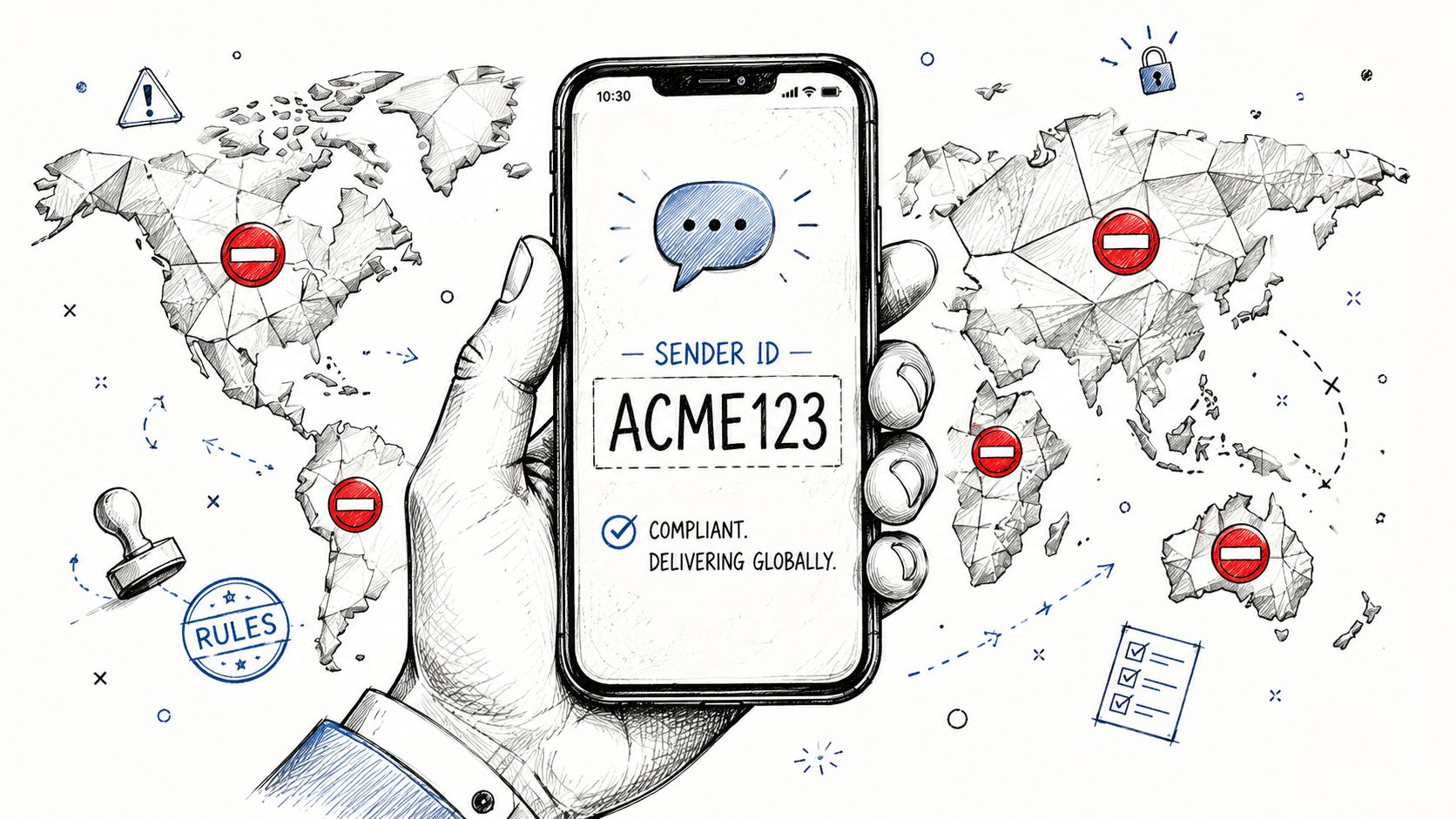
A campaign can look perfect in your dashboard and still fail the moment it crosses a border. The sender name shows in one country, gets replaced in another, and gets blocked entirely on a different route. That is the main problem behind branded SMS.
“Send SMS online with company name” sounds like a display setting. In practice, it is a routing, registration, and compliance decision that affects delivery, reply handling, and customer trust.
Branded sender IDs are now tied to anti-fraud controls in several markets. Australia is a clear example. ACMA says businesses and organisations using branded sender IDs need to work with their telco or messaging provider to register them before 1 July 2026, or messages may appear as “Unverified” and be grouped with other unverified traffic on mobile devices (ACMA sender ID registration requirements).
That changes how teams should plan campaigns. Sender identity is no longer just a branding choice. It affects how carriers classify your traffic and how recipients judge the message before they even read it.
The hard part is inconsistency across countries and carriers. Some markets support alphanumeric sender IDs with few barriers. Others require pre-approval, local templates, or a registered brand. Some routes strip the sender name and replace it with a shared code or generic number. IP1's overview of company-name sender limitations gives a useful reminder that support depends on destination market rules, not on what your platform lets you type into the sender field.
The operational mistakes are also predictable:
I see this most often with reminder programs. A clinic, dealership, or service business sets up branded texts for automatic text reminders, then expands into new countries and discovers the sender identity no longer supports the same workflow. The message still leaves the platform. The customer experience changes, and usually not in a good way.
The practical fix is simple. Configure the campaign with a branded sender where the route supports it, and pair it with a number-based fallback for markets that require replies, local registration, or stricter carrier controls.
That fallback also matters if SMS is only one part of the outreach sequence. In real programs, text often works alongside email, calls, and ringless voicemail. If the branded sender fails or cannot accept replies, the rest of the sequence needs a working number so inbound questions, opt-outs, and callbacks do not disappear.
A sender strategy that only works under ideal carrier conditions is incomplete. International messaging punishes assumptions fast.
Most platforms make sender ID setup look like a simple field in a form. The field is easy. However, the key task is choosing the right sender, matching it to the destination market, and making sure the campaign still functions when the sender name isn't available.
Before you build the message, confirm three things:
If your platform supports branded SMS sending, you'll usually add the sender name in account settings or at the campaign level, then submit it for approval if the destination requires registration. After that, choose the sender when you launch the campaign.
If you need a sending interface that supports outbound texting from a browser, send SMS online tools usually let you manage lists, schedule campaigns, personalize content, and track clicks from one place. The platform matters less than whether it supports sender options by market and gives you a fallback number setup.
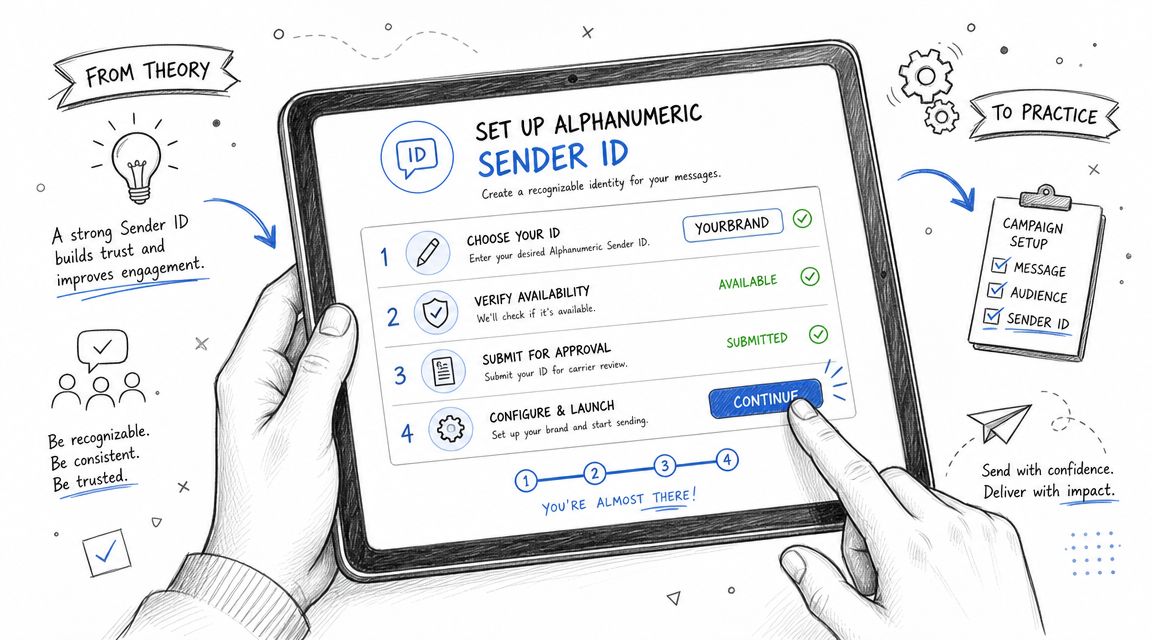
A branded sender ID is usually strongest in outbound campaigns that don't depend on free-form replies.
Use these tactics:
This is the part many teams skip. If the sender name doesn't render in a destination country, what should appear instead? If the customer replies, where should that response go? If the campaign is part of a reminder flow, does the next touch happen by text, voice, or both?
For operational campaigns such as appointments and no-show reduction, examples from automatic text reminders are useful because they show how reminder messaging works best when the contact path is simple and the next action is obvious.
A practical setup often looks like this:
| Campaign type | Primary sender | Fallback | Reply expectation |
|---|---|---|---|
| Promotion | Company-name sender ID | Business number | Low |
| Appointment reminder | Company-name sender ID or business number | Business number | Medium |
| Support update | Business number | Business number | High |
| Event reminder | Company-name sender ID | Business number | Medium |
Call Loop is one example of a multi-channel platform that supports SMS outreach with merge tags, segmentation, scheduling, link tracking, validation, and opt-in tools, which is useful when you need branded outbound messaging plus a backup path through voice or ringless voicemail.
That broader workflow matters more than the sender field itself.
The sender name gets the message noticed. The message itself determines whether the campaign works or creates complaints.
Sender-name branding is only one layer of performance. A business guide from SMSAPI recommends collecting customer numbers legally, obtaining GDPR-compliant permission via opt-in, using scheduling, personalization, analytics, and keeping messages relevant and compliant. It also notes a common pitfall: text sender IDs generally do not support replies, which must be planned for (SMSAPI business SMS guidance).
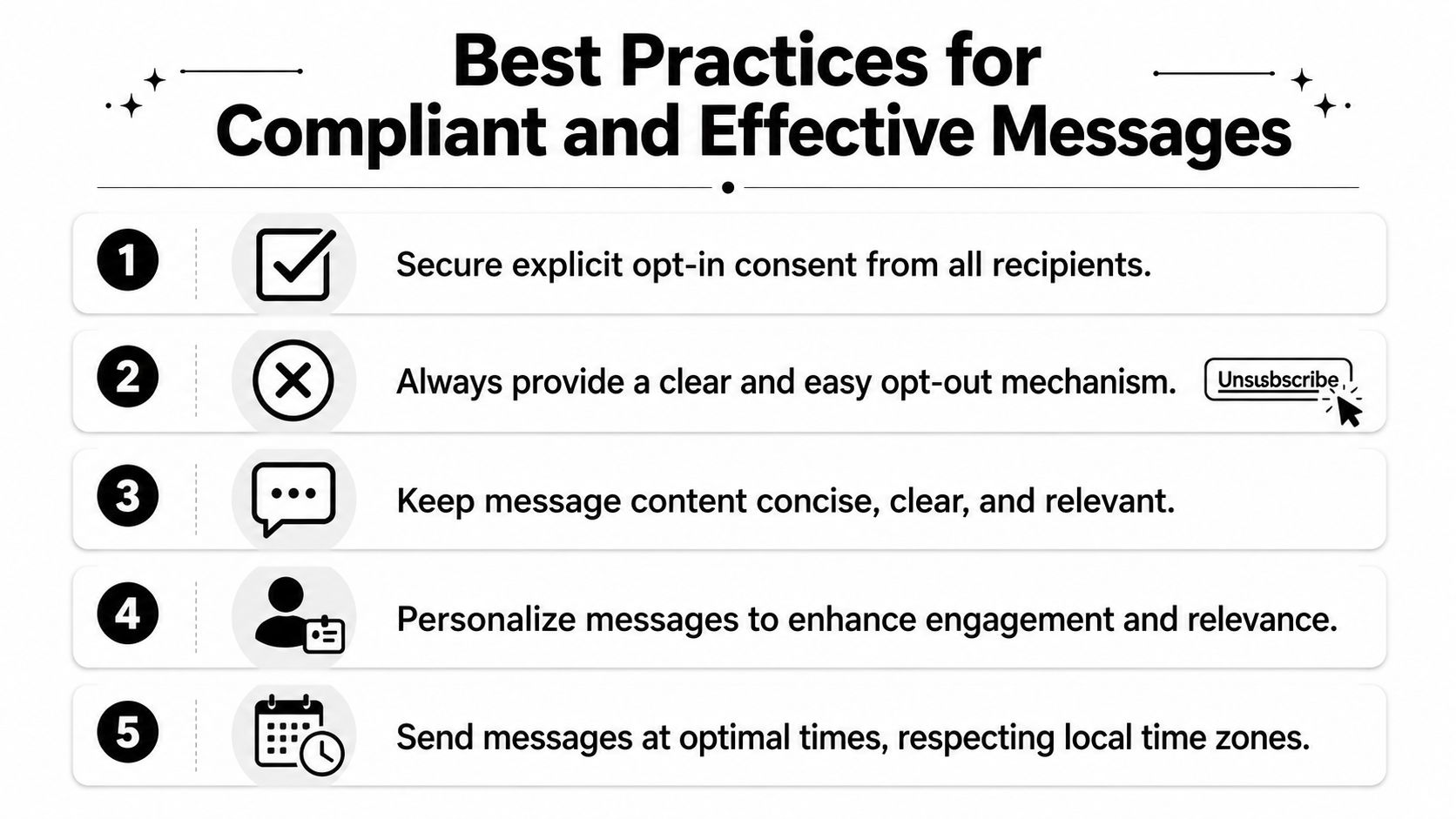
The campaigns that hold up over time usually follow a few simple rules:
A recognizable sender name won't rescue a confusing message, weak consent, or a bad send time.
Some practical message patterns work better than others.
For promotions: Lead with the offer and put the link near the end.
For reminders: Lead with the event, date, or appointment context.
For service updates: Lead with what changed, not a generic greeting.
Short examples in plain language:
Branded SMS is excellent for visibility. Ringless voicemail is useful when you need a more personal explanation without asking the customer to answer a live call.
That combination works well in scenarios like:
The best multi-channel sequences don't repeat the exact same message across channels. SMS should handle recognition and action. Ringless voicemail should handle nuance, reassurance, or context.
A campaign can look perfect in the dashboard and still fail in the field. The sender name may show on one carrier, fall back to a number on another, and break the reply path in a market where your team expected two-way messaging.
That is why launch day is too late to test branded SMS.
Preview screens help with copy review. They do not tell you how carriers and handsets will present the message. Before you send at volume, run live tests across the countries, carriers, and device types that matter to your audience.
Use a short checklist your team can repeat every time:
This work catches the problems that previews miss. It also prevents a common operational mistake. Teams approve creative, then discover after launch that the route they chose cannot support replies or uses a sender format that is blocked in part of the campaign.
Branded SMS issues usually come from setup, routing, or market-specific restrictions. In practice, these are the failures we see most often:
| Problem | Likely cause | Practical fix |
|---|---|---|
| Sender name replaced by a number | The destination market or carrier does not support your chosen sender format | Use an approved local sender or switch that segment to a number |
| Sender shows as unverified | Sender registration is incomplete or rejected | Finish the required registration and confirm approval before launch |
| Customers cannot reply | Alphanumeric sender IDs are one-way in many routes | Send reply-driven campaigns from a number instead |
| Delivery varies by country | Carrier rules and pre-approval requirements differ by destination | Split campaigns by country and assign the right sender type to each |
Test the route, not just the message. Routing decisions determine sender display, reply behavior, and whether the campaign is even allowed to pass in some markets.
Branded SMS works best as one step in a larger outreach flow. It gets immediate attention, but it should not carry every job on its own.
A practical sequence looks like this:
That structure works well for appointment reminders, reactivation campaigns, overdue follow-up, event attendance, and sales outreach. SMS handles recognition and action. Ringless voicemail adds context without asking the recipient to answer a live call.
At Call Loop, we see the same pattern repeatedly. Teams get better results when they stop treating branded SMS as a standalone channel and start building around constraints: country rules, sender registration, one-way versus two-way routing, and follow-up logic. If you need a practical way to combine branded SMS, business texting, voice broadcasting, and ringless voicemail in one workflow, Call Loop gives teams a way to manage segmentation, scheduling, personalization, opt-in handling, and follow-up paths without treating SMS as an isolated channel.
Chris Brisson
Chris is the co-founder and CEO at Call Loop. He is focused on marketing automation, growth hacker strategies, and creating duplicatable systems for growing a remote and bootstrapped company. Chat with him on X at @chrisbrisson


Trusted by over 45,000 people, organizations, and businesses like


