
See a Demo
You're just one step away from seeing Call Loop in action.
Enter your information below to watch a demo right now.

You're just one step away from seeing Call Loop in action.
Enter your information below to watch a demo right now.

You’ve probably seen them before: those short, easy-to-remember 5 or 6-digit numbers that brands use for promotions or alerts. A short code text message is simply an SMS sent from one of these numbers.
Think of it as a dedicated, high-speed lane on the messaging highway, built specifically for businesses to reach thousands of people all at once. It’s the go-to tool for everything from flash sale announcements to appointment reminders.

At its heart, short code texting is the engine behind Application-to-Person (A2P) messaging. That might sound technical, but it just means the message comes from a software application—like a marketing platform—and goes to a person's phone. This is a whole different ballgame from the day-to-day person-to-person texting you do with friends from your regular 10-digit number.
The real power of short codes comes down to scale and speed. They have to go through a tough vetting process with mobile carriers, which means any messages sent from them are pre-approved and trusted. This gives them a "fast pass" that guarantees lightning-fast delivery speeds, letting businesses send thousands of texts per second without getting blocked.
One of the biggest wins with a short code is instant brand recognition. When a customer gets a text from a 5-digit number they’ve seen on a website or in an ad, it immediately feels more professional and legitimate than a message from a random, unknown number.
This sense of trust is a huge deal for engagement. When people know who the message is from, they’re way more likely to open it, click a link, or use that discount code. It just feels safer.
While short codes are a beast for SMS, they work best as part of a bigger communication plan. Smart businesses often pair their text campaigns with other direct-to-consumer tools to cover all their bases.
For example, ringless voicemail is a great partner for SMS. It drops a pre-recorded audio message straight into someone’s voicemail box without their phone ever ringing. It’s a subtle way to share more complex information that just won’t fit into a 160-character text.
You can layer these technologies for maximum impact: send an SMS for the urgent announcement, then follow up with a ringless voicemail for the finer details. Digging into the wider world of messaging tech can get complicated, which is where specialized VoIP SMS consulting services can really help map things out.
Picking the right kind of short code is one of the first big decisions you'll make for your text message strategy. Think of it like deciding between buying a private house or renting an apartment in a huge building. Both get you a place to live, but the experience, control, and cost are worlds apart.
Your choice really boils down to your budget, your brand, and what you're trying to accomplish in the long run.
A dedicated short code is your own private property in the texting world. It’s a 5 or 6-digit number that belongs exclusively to your business. This gives you total control over branding and messaging—no one else can use your number, ensuring every text is clearly from you.
This is exactly why big, established brands almost always go for dedicated codes. It builds immediate trust and recognition with customers. It's the premium path for any business serious about brand consistency and sending a high volume of messages.
Once you decide to lease a dedicated short code, you have two flavors to choose from. This choice directly impacts how easily customers can remember you, so it's a key part of your marketing plan.
For example, a national pizza chain might snag a vanity code like 74992 ("PIZZA"). This makes their "text-to-order" campaigns dead simple for customers to remember and use.
On the flip side, a shared short code is the apartment rental of SMS. It’s a single number that multiple businesses use at the same time. It's an affordable way to get into high-volume texting, but it definitely comes with some trade-offs.
Because several companies are all using the same number, everything is managed by unique keywords. A local gym might tell customers to text "FIT" to 77222, while a coffee shop using that same number has people text "BEAN." The keyword is what tells the system where to route the message.
While shared codes were once a popular, low-cost entry point, they are becoming a thing of the past. Carriers are pushing hard for better accountability to cut down on spam, which means they heavily favor dedicated numbers and newer options like 10DLC.
So, how do you make the right strategic call? It’s all about weighing control, branding, and budget. This table breaks down the core differences to make your decision a little easier.
At the end of the day, a dedicated short code provides a much more professional and scalable foundation for any serious short code text message program. It solidifies your brand’s spot in a customer's inbox and gives you the freedom to create complex campaigns without bumping into another company's keywords.
The magic of a short code isn't just the snappy 5 or 6-digit number. It's the powerhouse engine humming away behind the scenes, built for one purpose: delivering a massive number of texts with incredible speed and reliability.
At the heart of it all is a concept called throughput. Think of it like lanes on a highway. A normal phone number is a one-lane country road; it can only handle a few messages at a time before things get backed up. A short code, on the other hand, is a superhighway with hundreds of lanes, designed to handle a flood of traffic all at once.
This is why a short code can blast out thousands of messages per second—something no other number type can even dream of. That kind of speed is crucial for time-sensitive campaigns like flash sales, emergency alerts, or two-factor authentication codes where every second counts.
So, how does a short code get exclusive access to this superhighway? It earns it through a tough carrier vetting process. Before a short code can send a single text, it has to get the green light from every major mobile carrier. It's like getting a full background check and a special license to drive on their networks.
You have to lay it all out: who your business is, why you're messaging people, and exactly how you'll get their permission. This strict approval system basically gives you a "fast pass," telling carriers that your messages are legit and pre-approved. Because they trust you, your texts get priority, ensuring they land in inboxes almost instantly instead of getting stuck in a spam filter.
This process is a big reason why the SMS market in the United States, largely powered by short codes, was valued at $16.5 billion in 2022 and is still growing strong. Vetting keeps the channel clean and trusted.
This flowchart breaks down the first big decision you'll make when getting a short code.
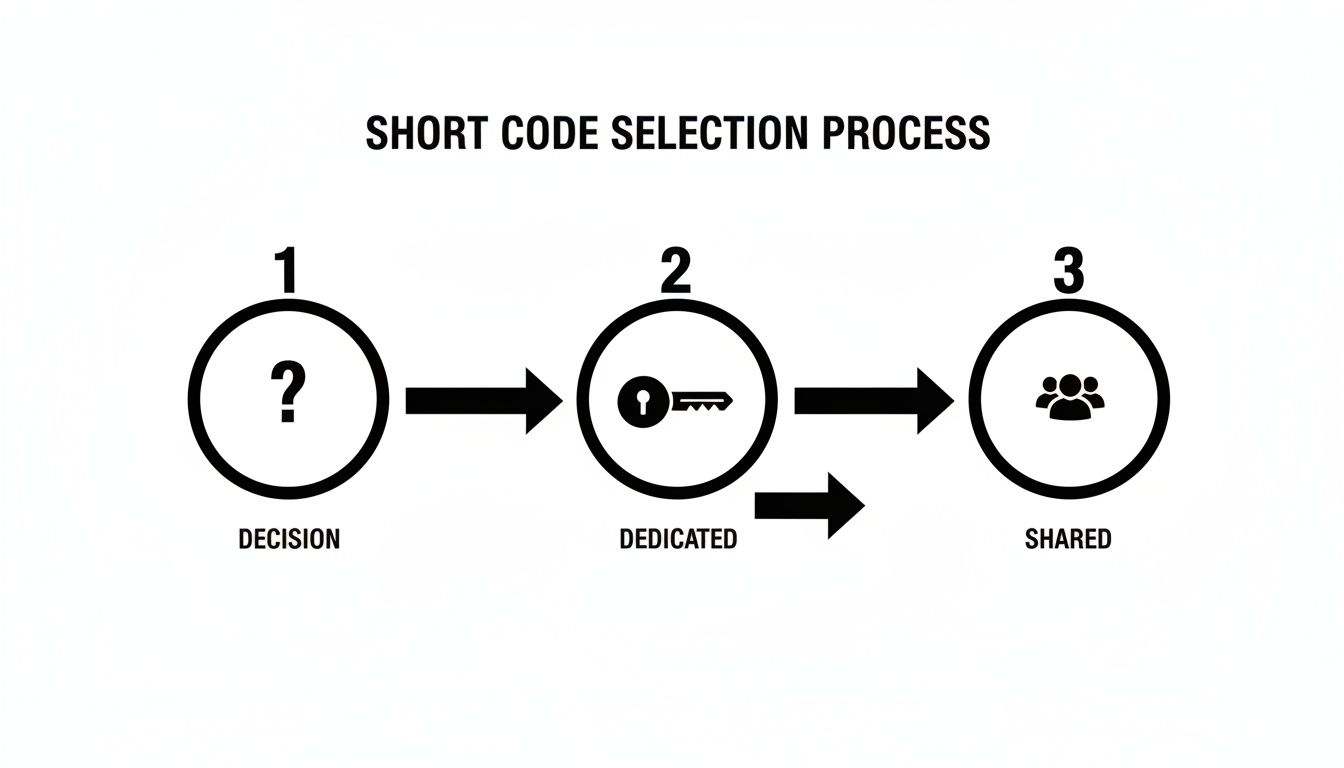
As you can see, it all starts with choosing between a private, dedicated number or a shared one. That's the first step before you even start the application and vetting journey.
That fast pass comes with some serious strings attached. To keep it, every short code campaign has to play by the rules set by organizations like the Cellular Telecommunications Industry Association (CTIA) and federal laws like the Telephone Consumer Protection Act (TCPA).
These rules aren't just gentle suggestions; they're the absolute bedrock of any respectable and long-lasting messaging program. Break them, and you're looking at huge fines and the very real possibility of carriers shutting your short code down for good.
The two biggest rules you can't bend are:
These regulations are what keep A2P (Application-to-Person) messaging a trusted and effective channel for everyone. Following the rules isn't just about dodging penalties—it's about building a respectful relationship with your audience.
The real magic of a short code isn't in the tech specs—it's what you can do with it. These little 5 or 6-digit numbers are the workhorses behind some of the most effective brand communications out there. They shine in any situation where you need speed, reliability, and massive reach.
From huge retail sales to urgent flight alerts, short codes give you a direct, trusted line into your customers' pockets. Their ability to handle an incredible amount of traffic makes them the only real choice for campaigns that have to hit thousands, or even millions, of people in minutes.
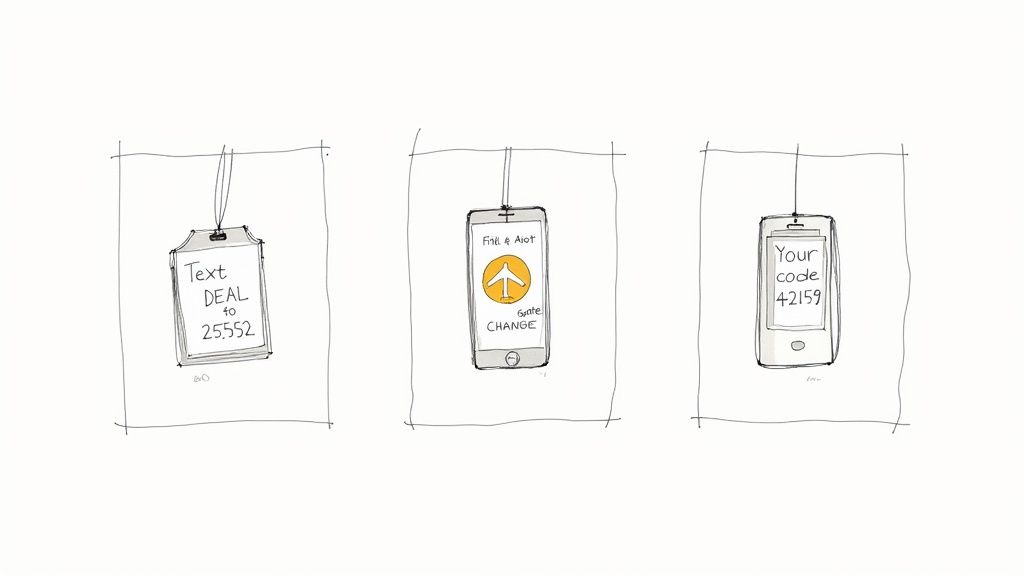
One of the most classic and powerful uses for a short code text message is retail marketing. You've definitely seen it: "Text DEAL to 25252 for 30% off your next purchase!" It looks simple, but that one instruction is a beast at driving immediate foot traffic and online sales.
A short code is easy to remember, which makes it perfect for billboards, radio ads, or signs in your store. A customer can text the keyword to opt-in, get a valuable coupon instantly, and join your marketing list for future deals. It's a win-win.
These campaigns run on urgency and create a powerful reason for customers to buy right now.
Beyond marketing, short codes are absolutely essential for time-sensitive, need-to-know information. Think about the last text you got from your airline. They rely on short codes to blast out gate changes, delays, or cancellations to thousands of passengers all at once.
This is where the killer deliverability of short codes really comes into play.
Because carriers vet them so thoroughly, messages from short codes are far less likely to get mistakenly flagged as spam. This makes sure that critical info, like a last-minute flight change, actually gets to the person who needs it when every second counts.
Other crucial alerts include things like:
Security is another area where short codes are king. Two-factor authentication (2FA) has become the standard for protecting our online lives, and short codes are the perfect way to deliver those verification codes.
When you log into your bank or email, that text with a code adds a vital layer of security. The high throughput of a short code means those one-time passwords show up almost instantly, giving you a smooth and secure login without any frustrating delays. There's a reason the biggest names in tech and finance count on them to keep user data safe.
If you want to get more advanced, you can build out entire user journeys with tools like text message funnels to guide people through more complex actions.
A smart outreach strategy rarely relies on just one channel. This is where you can pair other tools with your short code campaigns to get even better results. Ringless voicemail, for example, is a perfect partner for SMS.
This tech drops a pre-recorded audio message straight into someone's voicemail box without their phone ever ringing. It’s a great, non-intrusive way to share more complex information that just wouldn't fit in a text.
Picture this combo: you send a short code text message with an urgent alert like, "Your payment is overdue." A few hours later, you can follow up with a ringless voicemail that has a more personal touch, walking them through payment options or offering help. You’ve just created a multi-layered communication toolkit, letting you pick the right channel for the right message.
Picking the right messaging tool for your business can feel like a big decision. While a short code is the undisputed heavyweight champ for mass texting, it isn't always the only answer. You've got other powerful options in your toolkit, each with its own strengths, so it's smart to know when to use which.
Understanding the difference between short codes, 10-digit long codes (10DLC), and toll-free numbers is the key. It’s not about finding the single "best" number, but the right one for the job you need to get done.
The single biggest difference boils down to raw power and speed, or what we call throughput. Think of a short code as a multi-lane superhighway built specifically for rush hour traffic. It’s designed to blast out thousands of messages per second, making it the only real choice for huge promotions or urgent alerts that have to hit everyone at once.
In contrast, 10DLC numbers are more like local city streets. They're perfect for back-and-forth, conversational texting but have much lower sending limits. Toll-free numbers land somewhere in the middle, handling more traffic than 10DLC but still not coming close to a short code's muscle.
A short code is purpose-built for mass A2P (Application-to-Person) communication. Its tough vetting process gives it a trusted pass with carriers, so messages fly out at incredible speeds without getting stuck in spam filters.
This high-speed delivery is what makes modern mobile communication possible. The short code infrastructure is the backbone that allows 90% of the world's 7.21 billion mobile users to get an SMS, with billions of messages zipping around daily. Only short codes can reliably handle that kind of volume. For more data on this global scale, you can explore key SMS and text marketing statistics.
Your choice of number should be all about your specific goal. Using the wrong tool for the task is a surefire way to get poor results and burn through your budget.
If you want to get into the weeds on what goes inside these messages, you might be interested in the difference between SMS and MMS messages.
Sometimes, the best message isn't a text at all. Ringless voicemail operates in its own unique lane, giving you a completely different, voice-based way to connect. It lets you drop a pre-recorded audio message straight into someone's voicemail box without their phone ever ringing.
This makes it a fantastic tool to use alongside your texting strategy. You could send a short code blast for an initial alert and follow up with a more detailed, personal-sounding ringless voicemail. This kind of layered approach is perfect when you need a softer touch or have more to say than what fits in a 160-character text. By understanding all these options, you can build a truly powerful, multi-channel communication plan.
Getting a short code is a great first move, but turning it into a real engine for revenue and engagement? That takes a solid playbook. It’s not about just blasting out messages; it’s about delivering genuine value that respects your audience and keeps them coming back.
The whole thing kicks off with a killer call-to-action (CTA). This is your invitation, the thing that gets people to say "yes" and opt-in. Whether it's "Text VIP to 25252 for exclusive deals" or "Join our alerts for a 20% off coupon," your CTA needs to give people a clear, can't-miss reason to hand over their number right now.
Once you have subscribers, every single message counts. You want to be a welcome guest in their inbox, not an annoying pest. That means your texts have to be short, personal, and loaded with value.
Put yourself in your customers' shoes. What do they really want from you? Is it discounts? Insider info? Helpful reminders? Your content has to scratch that itch. A generic blast gets ignored nine times out of ten, but a personalized offer sent at just the right moment feels like a VIP service.
The power of this channel is backed by some pretty staggering numbers. SMS usage has exploded, jumping 55% in just four years. And the engagement? It's off the charts. We're talking 98% open rates and conversion rates hitting as high as 40% in recent campaigns. That's the kind of potential you unlock with a well-planned strategy. If you want to dive deeper into the data, check out the latest 2025 texting and SMS marketing statistics.
Here’s the deal: a winning strategy is always a compliant one. Following the rules set by the TCPA and the mobile carriers isn't just about dodging fines—it's about showing your customers you respect their privacy.
Think of this as your non-negotiable checklist:
A clean, permission-based list is the single most valuable asset in your short code program. It guarantees high engagement, protects your brand's reputation, and turns your text list into a communication channel people actually trust.
You can't fix what you don't measure. To keep making your short code strategy better and better, you have to track the key metrics that show you what’s working and what's falling flat. This data-first approach is how you fine-tune your campaigns for the best possible impact and ROI.
Keep your eye on these core numbers:
By watching these metrics like a hawk, you can start A/B testing different copy, offers, and send times. That's how you build a short code program that doesn't just perform, but actually strengthens your relationship with your customers.
Even with a solid plan, jumping into the world of short codes can feel a little daunting. You've probably got questions about the real-world costs, timelines, and rules of the road. That’s smart.
Getting these practical details straight before you launch your program is the key to setting the right expectations. Let’s tackle some of the most common questions businesses ask when they’re thinking about a short code campaign.
A dedicated short code isn't just another line of communication; it's a serious piece of your messaging infrastructure. You’ll want to budget for a one-time setup fee and then a recurring lease payment. For a random number, those leases usually start around $500 per month. If you want a memorable vanity code, expect that to climb to $1,000 or more per month.
The approval process, what the industry calls "provisioning," is just as intensive. It involves submitting detailed applications and going through a deep carrier vetting process to make sure you're compliant and your messages will actually get delivered. All in all, you should plan on a timeline of 6 to 12 weeks from application to the day your short code is live and ready for action.
Nope. This is a big one to remember: short codes are strictly country-specific. If you lease and get a short code approved in the United States, it will only work for sending messages to US-based mobile numbers. For any business with an international audience, this is a make-or-break detail.
If you need to run campaigns in Canada, the UK, or anywhere else, you have to lease a separate short code for each country. The alternative is to look into other options like verified toll-free numbers or specific virtual long codes built for global messaging.
This country-by-country rule is one of the most important logistical factors to consider when planning an international SMS strategy. Trying to send from a US short code to a non-US number will simply result in failed deliveries.
Many businesses wonder how short codes fit into a bigger communication plan, especially with tools like ringless voicemail. The answer is, they fit beautifully. Combining these channels is a powerful way to create a layered outreach strategy.
For example, you could fire off a time-sensitive alert using a short code text message and follow it up a bit later with a non-intrusive ringless voicemail that gives people more details without making their phone ring.
This lets you play to each channel's strengths—SMS for its incredible speed and urgency, and ringless voicemail for delivering richer information without interrupting someone's day. There are no compliance issues with using multiple channels, as long as each one sticks to its own set of rules.
Ready to build powerful, multi-channel outreach campaigns with SMS, voice, and ringless voicemail? Call Loop provides all the tools you need to connect with your audience at scale, with full compliance built-in. See how Call Loop can transform your customer communication today.
Chris Brisson
Chris is the co-founder and CEO at Call Loop. He is focused on marketing automation, growth hacker strategies, and creating duplicatable systems for growing a remote and bootstrapped company. Chat with him on X at @chrisbrisson


Trusted by over 45,000 people, organizations, and businesses like


