
See a Demo
You're just one step away from seeing Call Loop in action.
Enter your information below to watch a demo right now.

You're just one step away from seeing Call Loop in action.
Enter your information below to watch a demo right now.

The cheapest SMS tool is rarely the best one, and the most popular one isn't automatically the safest fit either. In practice, sms marketing platforms win or lose on channel mix, consent handling, carrier routing, pricing mechanics, integrations, and whether your team needs SMS alone or a coordinated stack that also includes MMS, voice, and ringless voicemail. A local business sending reminders, an ecommerce brand driving repeat purchases, a healthcare team managing patient outreach, and an agency running multiple client lists all face different operational problems, so they need different tools.
That's why the right comparison starts with the job, not the brand name. Some platforms are built for revenue automation in stores, some make SMB campaigns easy for non-technical teams, some focus on compliance-heavy workflows, and some are really developer toolkits wrapped around messaging APIs. This roundup gets to the point quickly and compares the options by what they solve, including where ringless voicemail belongs in the buying decision rather than being treated like a side feature.
Call Loop fits teams that need to run SMS, voice broadcasting, and ringless voicemail from one system instead of connecting separate vendors. That matters in campaigns where timing, compliance, and follow-up all affect results, including reminders, webinar promotion, sales sequences, and healthcare outreach. The platform combines text-to-join keywords, merge fields, segmentation, scheduling, click tracking, and rich media, so marketers get the campaign controls they expect while operations stay in one place.
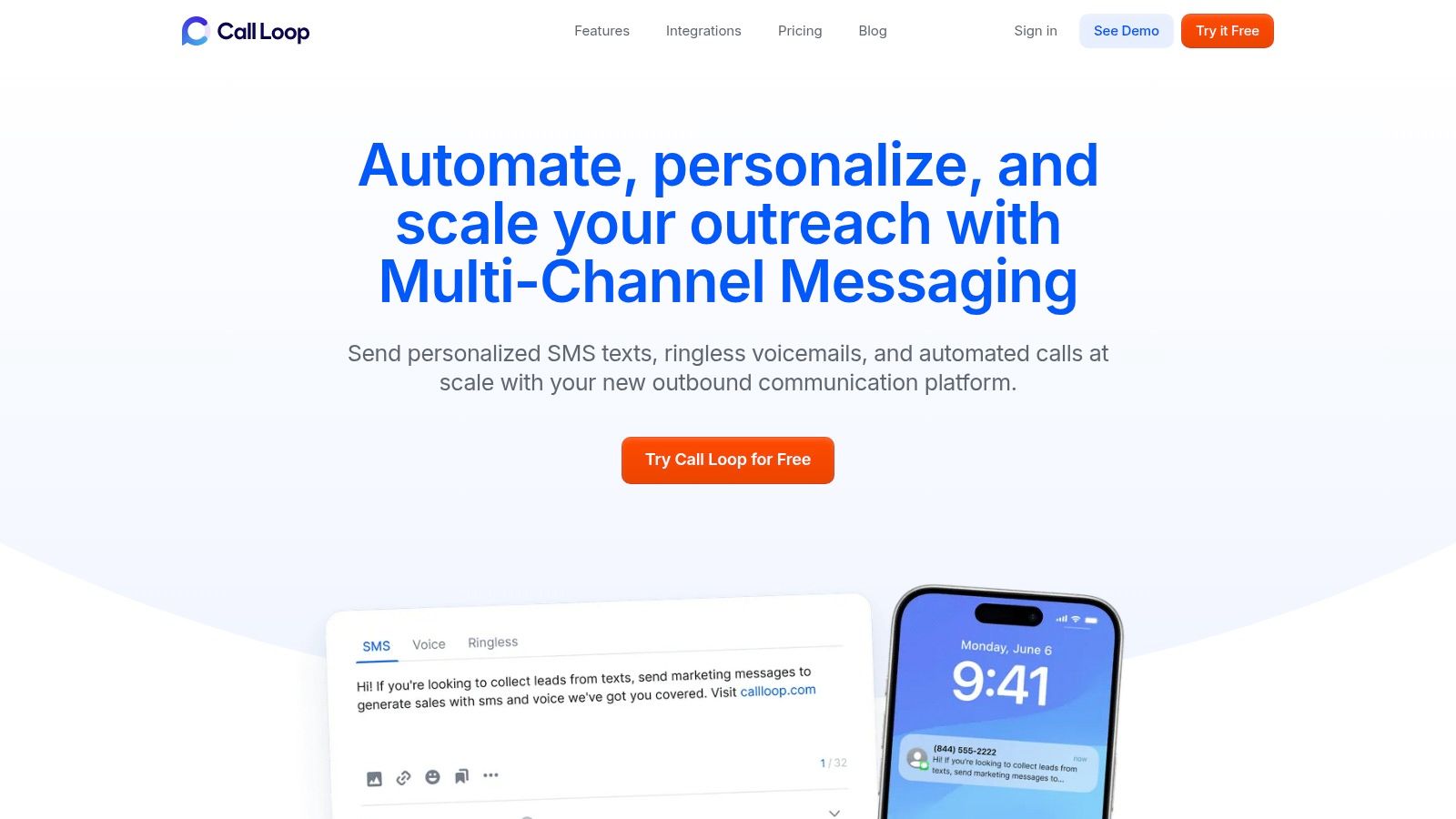
Call Loop is strongest for teams that need multi-channel drip sequences with compliance controls built in. It includes live and machine answer detection, press-1 transfers, custom caller ID, AI text-to-speech, number validation, DNC management, double opt-in, and toll-free compliance, which gives operators tighter control over contact rules and message delivery. For healthcare teams, the platform also supports HIPAA-compliant workflows, which matters when outreach moves from promotion into patient communication.
It also works well with existing tools. Call Loop integrates with ActiveCampaign, HubSpot, Keap, and 4,000+ apps via Zapier, and it supports unlimited contacts and campaigns, so growth does not force a platform change just to keep sending. The pay-per-successful-drop model for ringless voicemail is useful for teams that want costs tied to successful delivery, even though the public pricing page does not show a full rate card.
Practical rule: choose Call Loop when your outreach depends on more than one channel, because managing SMS, voice, and voicemail separately usually creates more operational friction than the software bill itself.
The trade-off is pricing transparency. The site does not publish full pricing beyond the free-trial and voicemail billing language, so buyers need to confirm total sending costs before they scale. For SMBs, agencies, event teams, and healthcare organizations that want one layer for outbound outreach, that depth is hard to dismiss. The product page points to active usage and reported outcomes, including stronger opt-in, attendance, and close-rate results, which suggests the workflow is designed for measurable execution instead of simple list blasting.
Pros
Cons
Attentive makes the most sense for ecommerce teams that want a managed, enterprise-grade SMS revenue engine rather than a lightweight broadcast tool. It's built around list growth, segmentation, analytics, and cross-channel orchestration, which is why mid-market and enterprise DTC brands keep it in the shortlist. For operators who already know they want guided onboarding and a more hands-on vendor relationship, that can be a feature rather than a cost center.
The platform's strengths sit in subscriber growth tools, including popups, tap-to-text, and checkout opt-in, plus two-way messaging, advanced flows, segmentation, A/B testing, and performance analytics. It also supports short code and toll-free options and gives buyers more internal visibility through Billable Spend reporting, which matters when finance wants to understand how carrier and message costs are accumulating.
Attentive is a smart pick when the company wants to centralize Email + SMS and use AI add-ons for personalization and automation. That combination works best when the brand already has enough volume to justify managed onboarding and performance guidance. The trade-off is straightforward, there's no public fixed price list, so the buying process starts with sales, not with self-serve checkout.
Attentive is strongest when the ecommerce stack is already serious enough to support a dedicated messaging program, not when a team just wants a cheap way to send coupons.
The limitation is cost structure and flexibility. At lower volumes, it can be expensive compared with SMB tools, and the quote-based process makes it harder to model total spend early. Still, for ecommerce organizations that care about high-touch support, unified campaigns, and clear internal spend tracking, Attentive is built for the problem they have.
Website: Attentive
Klaviyo SMS is the obvious pick for merchants already treating Klaviyo as the center of their customer data. Instead of layering SMS onto a separate system, brands can use shared profiles, segments, and reporting across Email, SMS, MMS, WhatsApp, and RCS. That unified view matters because lifecycle marketing usually fails when channels can't see the same customer history.
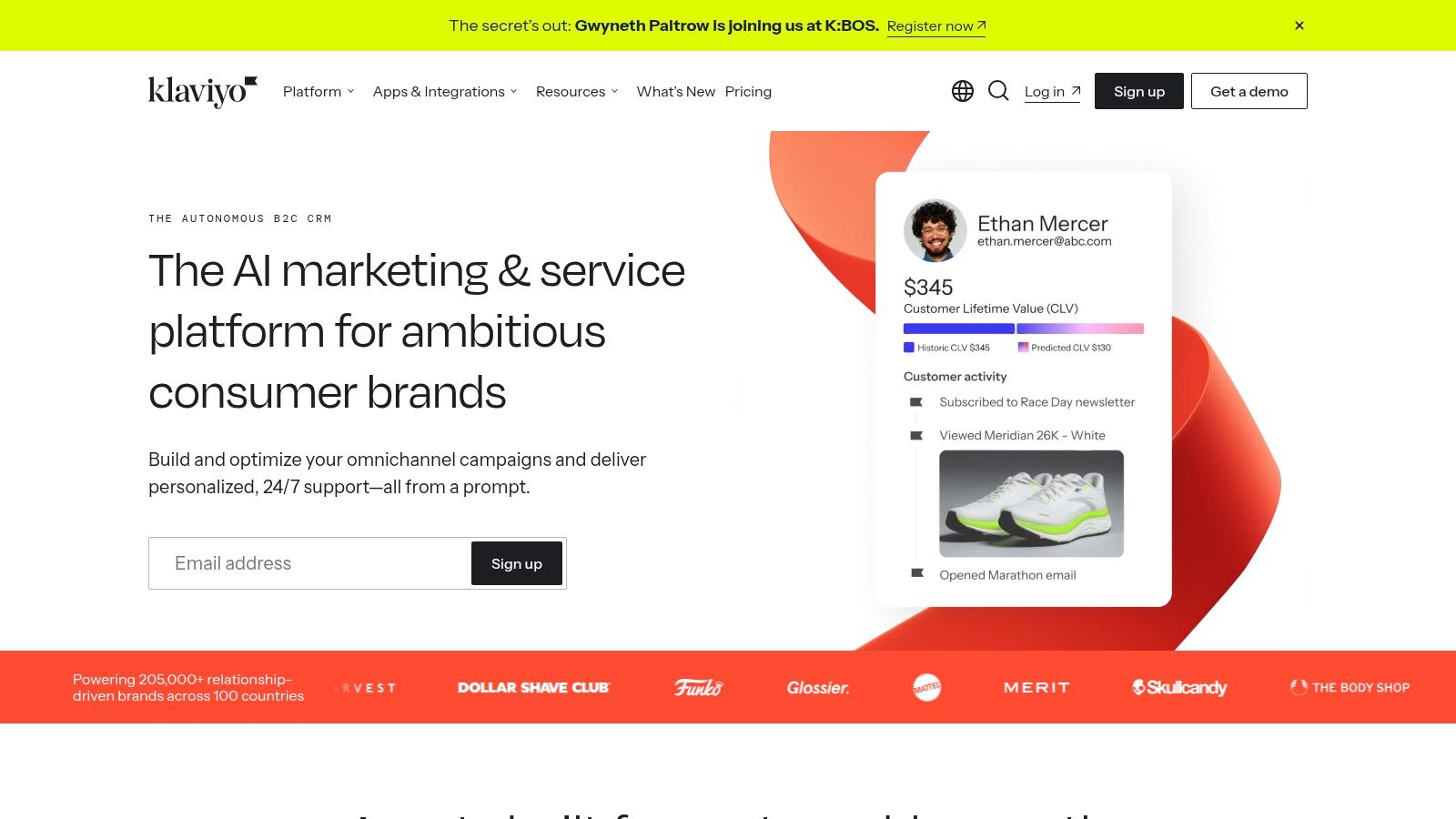
The platform fits Shopify and BigCommerce merchants that want deep ecommerce data, flow logic, split testing, and dynamic personalization without juggling separate reporting layers. Shared customer data makes it easier to coordinate cart recovery, post-purchase follow-up, and retention sequences in one place. The result is less manual reconciliation and fewer missed handoffs between channels.
Klaviyo's documentation also gives buyers more control over country and number-type settings, plus per-message cost transparency that helps teams think about expenses before launch. That's important because pricing varies by destination and number type, so the budget picture isn't always identical across markets. For established ecommerce teams, the main benefit is not just automation, it's the ability to measure the same customer across the channels that drive revenue.
The drawback is migration friction. If a team uses multiple primary SMS countries or number types, support may be needed to move between configurations, and that slows down operations. For merchants already invested in the ecosystem, though, Klaviyo remains one of the cleanest ways to coordinate store data with lifecycle messaging.
See how Call Loop compares with other SMS marketing platforms if you're deciding whether you need a unified CRM-first stack or a more outbound-focused system.
Website: Klaviyo
Postscript is the Shopify-first specialist on this list, and that narrow focus is exactly why some teams prefer it. If your store lives inside Shopify and you want a dedicated SMS layer for conversational commerce, cart recovery, and product-driven flows, the platform's design feels purpose-built. If your business runs on anything else, the fit gets weaker fast.
The strongest features are Shopify-native segmentation, triggers, two-way support, and SMS concierge, plus AI shopping tools and campaign optimization support. Postscript also offers ecommerce playbooks and revenue reporting, which gives store operators a clearer path from list growth to sales. The platform's handling of carrier pass-through fees is also more transparent in vendor materials than many SMB tools, which helps when finance wants a clearer view of true send costs.
This is a good fit for brands that want a focused SMS stack instead of a broad omni-channel tool. Merchants leaving deprecated providers often value that narrow specialization because the migration path is cleaner, and the operational language is more ecommerce-specific than generic marketing software. The downside is obvious. It's Shopify-only, so the tool is a poor match for teams that need broader platform flexibility or multi-channel orchestration outside the store.
Website: Postscript
Omnisend works well for brands that want Email + SMS automation from a single vendor without jumping into an enterprise contract. Its visual workflows and ecommerce templates make it easy to build practical campaigns, and its pricing changes in 2026 make the SMS side more approachable for many smaller teams. For brands that want one system for cross-channel execution, that simplicity matters.

The standout feature is the in-app SMS price estimator, which makes per-message cost visibility easier before a send goes out. The platform also shows clear per-message cost information and includes a Pro plan SMS credit equal to plan price, which can improve ROI for teams that send enough volume to use the included allowance. For ecommerce operators watching margin closely, that kind of visibility helps prevent surprise spend.
The trade-off is that new customers need the Pro plan for SMS, so the entry point is less flexible than pure-play email tools. Per-message costs also vary by destination and number type, which is normal in this category but still requires attention before launch. Omnisend's value is strongest when a team wants a single vendor, clean automations, and enough pricing clarity to model campaigns without a lot of back-and-forth.
Website: Omnisend
SimpleTexting is one of the easiest platforms for SMBs that want to send real campaigns without a long learning curve. It's built for teams that need mass texting, two-way conversations, scheduling, drip campaigns, and text-to-join keywords more than they need deep ecommerce architecture. That makes it a reliable choice for local services, events, nonprofits, and smaller sales teams.
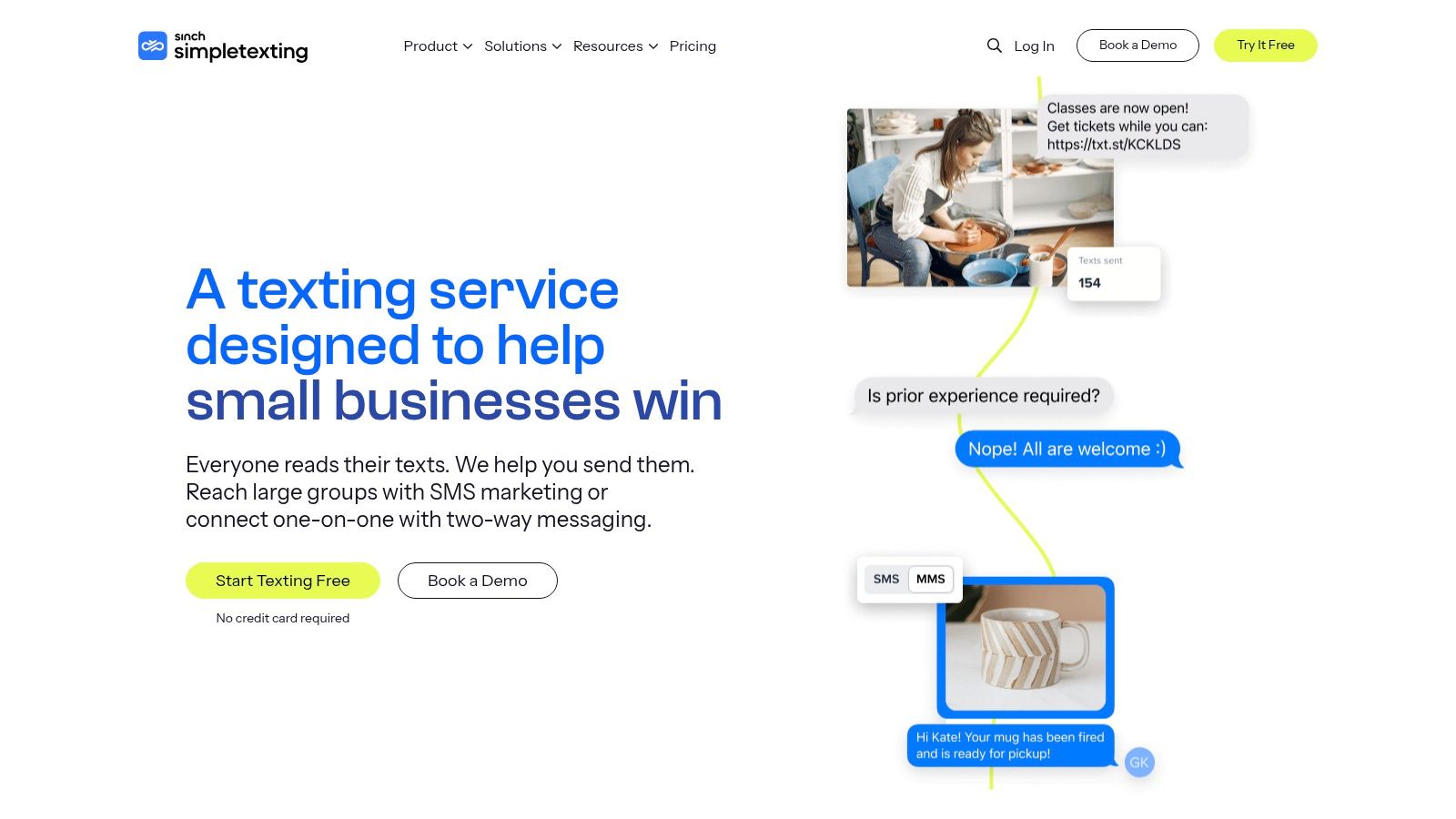
The appeal is the user experience. The team inbox, assignments, MMS support, link tracking, AI Assist writer, API, webhooks, and Zapier-friendly integrations make it flexible without turning into a developer project. It's the kind of tool that lets a front-office team run messaging without waiting on engineering or external help.
The limitation is that the platform is more general-purpose than ecommerce-specialized tools. It can absolutely support campaigns and conversations, but it doesn't go as deep on store-specific automation or lifecycle reporting as the retail-first vendors. Pricing is also credit-based, so MMS length and volume affect the bill, which means finance teams should model usage carefully before they commit.
Operational takeaway: SimpleTexting works best when speed and usability matter more than deep commerce intelligence.
Website: SimpleTexting
EZ Texting is built for organizations that want straightforward broadcast SMS with a low-friction setup process. It's a good fit for announcements, reminders, promotions, and other campaigns where the team values clarity over complexity. The product doesn't try to be everything, and that restraint can be a real advantage for smaller teams.
The platform gives users mass texting, MMS, keywords, short links, templates, and text-to-pay support, plus text-to-landline options and integrations. Its credit accounting model is transparent enough that buyers can understand the mechanics early, which is helpful when message volume changes month to month. For teams that want a basic system they can launch quickly, that predictability matters.
The drawback is that the model can get less efficient as usage grows. Non-rollover credits and MMS credit multipliers can make the effective cost feel higher than the headline plan, especially when teams send a lot of rich-media content. Advanced segmentation and commerce features are also lighter than what ecommerce-first tools provide, so it's a better operational fit for simple campaigns than for lifecycle marketing.
Website: EZ Texting
SlickText is a strong SMB option for teams that care about list growth, consent collection, and compliance support without giving up workflow automation. The platform's keywords, popups, QR codes, segments, drip workflows, and analytics dashboards cover the core needs most small teams have. It also has a clear compliance posture, which matters when the audience is in the U.S. or Canada and the buyer wants built-in safeguards.
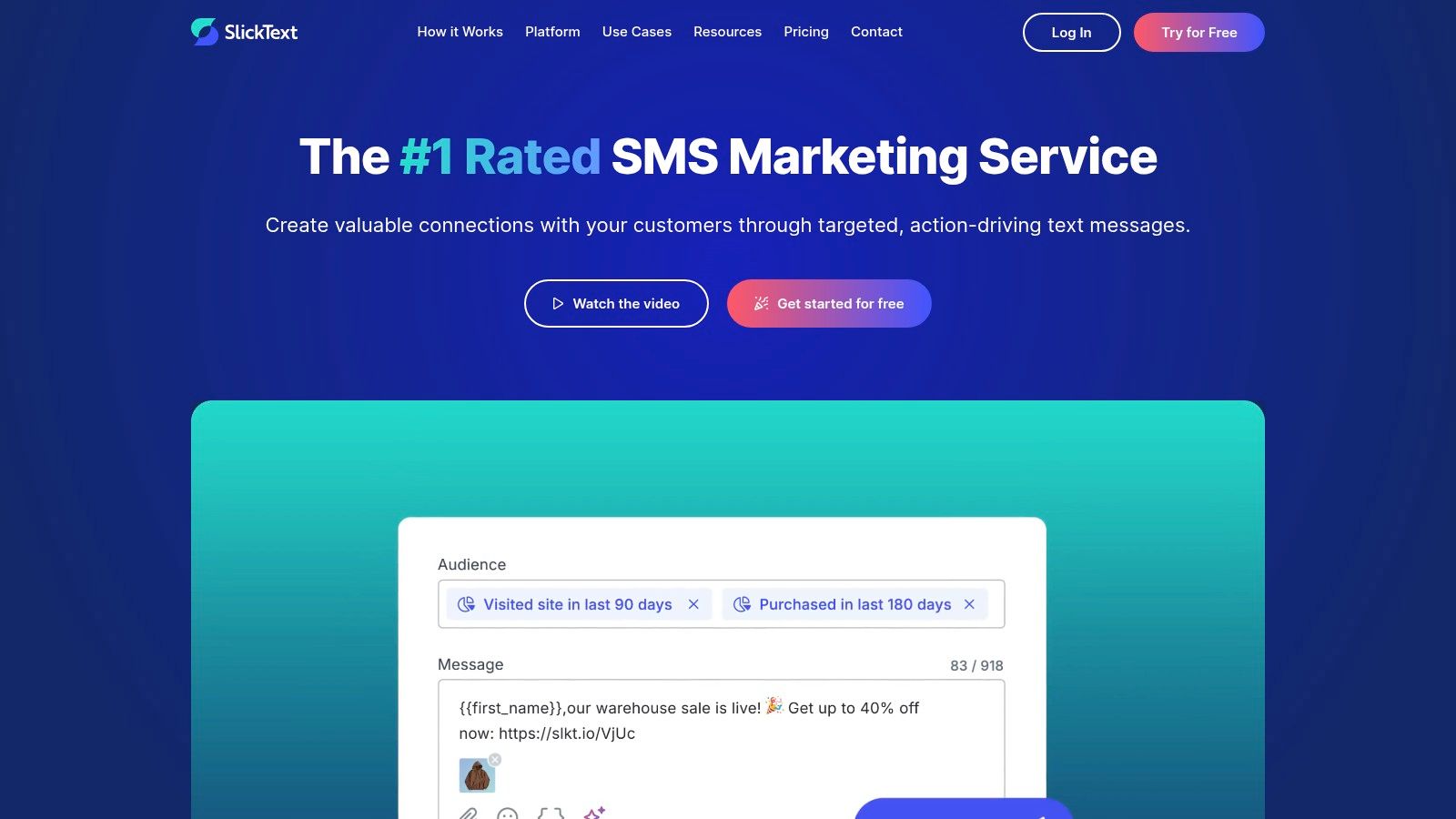
The compliance tools are the main differentiator here. SlickText includes age-gate and consent capture features, plus HIPAA-related documentation and onboarding for qualifying plans, with BAAs available for eligible customers. That makes it more credible than generic broadcast tools when the use case touches regulated data or stricter intake workflows.
The limitation is geographic scope and pricing mechanics. The platform focuses on U.S./Canada sending, so global teams need a different option, and the credit-based model means carrier fee changes and usage patterns can affect the final bill. Still, for smaller organizations that want accessible UI, broad feature access, and compliance support without enterprise overhead, SlickText has a real place in the shortlist.
Website: SlickText
TextMagic is the simplest answer for teams that want pay-as-you-go SMS with minimal commitment. It's especially useful for occasional senders, seasonal operations, and teams that need a lightweight global texting tool without signing a long contract. The web app and mobile apps keep the sending workflow practical, and the API gives more technical teams a path to automation.
The appeal is the combination of web app, mobile apps, email-to-SMS, CSV imports, two-way texting, scheduling, templates, and bundle credit purchases. That makes it easy to start small and grow only if the use case proves out. The pricing model is also straightforward enough for teams that don't want subscription complexity.
For buyers comparing options, TextMagic alternatives often come down to whether they want more automation, more outbound channels, or more compliance structure. TextMagic stays attractive because it doesn't force a big upfront commitment, but that same simplicity means fewer ecommerce-specific automations and fewer high-end workflow features than some dedicated marketing platforms.
The main cost caution is expansion. Add-ons like numbers and MMS can increase the total quickly, so teams should evaluate their expected sending pattern before deciding it's the cheapest option. If the message volume is irregular, though, the pay-as-you-go model is hard to beat.
Website: TextMagic
Twilio is the right choice when the messaging layer needs to be built, not bought. Developers use it for custom SMS, MMS, and RCS workflows because it offers broad control over number types, routing, and integration logic. For teams with engineering resources, that flexibility is often worth the setup effort.
Twilio supports short codes, toll-free numbers, and A2P 10DLC, and its pricing pages and country-specific rate cards make usage-based costs more transparent than many quote-only vendors. It also offers HIPAA-eligible services and implementation guidance, which makes it viable for regulated architectures when the technical team can handle the build. That kind of control is hard to replace if the business needs messaging embedded directly into a product or internal workflow.
The trade-off is complexity. Carrier surcharges and registration requirements make true cost calculations more involved, and engineering has to own compliance guardrails, delivery logic, and ongoing maintenance. A team that wants a ready-made marketer interface will usually find Twilio heavier than necessary, but a team that wants maximum control will see it as a strength, not a drawback.
See how to send SMS online with an API if you're deciding whether you want to build messaging infrastructure or keep it inside a managed platform.
Website: Twilio
| Product | Core channels & features | Target audience | Unique selling points | Pricing model & transparency |
|---|---|---|---|---|
| Call Loop (Recommended) | SMS/MMS + voice broadcasting + ringless voicemail; multi‑channel drips; AI TTS; link short/track; HIPAA support | SMBs, agencies, healthcare providers, event organizers | True multi‑channel orchestration, pay‑per‑successful‑drop voicemail, HIPAA & deep integrations (Zapier, CRMs) | Free trial; voicemail pay‑per‑successful‑drop; overall pricing requires sales for details |
| Attentive | High‑converting subscriber tools, two‑way SMS, advanced flows, Email+SMS | Mid‑market & enterprise DTC retailers | Managed onboarding, ecommerce playbooks, strong analytics | No public list; sales quotes; typically higher at low volumes |
| Klaviyo (Klaviyo SMS) | Unified Email+SMS + MMS/RCS, shared profiles, deep ecommerce data, flows | Shopify / BigCommerce merchants using Klaviyo email | Unified analytics/attribution across email & SMS; strong Shopify integrations | Per‑message rates vary by country/number type; some details in docs |
| Postscript | Shopify‑native SMS, two‑way, AI shopping assistant, revenue reporting | Shopify merchants focused on conversational commerce | Native Shopify segmentation & revenue playbooks; fast Shopify onboarding | Limited public pricing; many plans via sales |
| Omnisend | Visual Email+SMS workflows, templates, SMS price estimator, country tiers | Ecommerce brands wanting single-vendor Email+SMS | Integrated automations, SMS credits on Pro, clearer per‑send visibility | Country & volume‑based pricing; Pro plan required for new SMS rules |
| SimpleTexting | Mass texting, two‑way, team inbox, drip campaigns, API | SMBs, local businesses, event-driven senders | Easy UX, 7‑day support, approachable for non‑technical teams | Credit‑based pricing; costs vary with MMS and usage |
| EZ Texting | Mass SMS/MMS, keywords, templates, text‑to‑pay | Small & mid‑size organizations for broadcasts/announcements | Simple launch, payment links, transparent credit accounting | Credit model (e.g., 1 SMS = 1 credit); pricing guidance public |
| SlickText | Keywords, popups/QR, workflows, compliance aids, HIPAA docs | U.S./Canada orgs needing consent & HIPAA support | Compliance features, age‑gate, BAAs available for qualifying plans | Credit‑based model; U.S./Canada focus; carrier fee sensitivity |
| TextMagic | Web/mobile app, pay‑as‑you‑go credits, API, two‑way | Occasional/seasonal senders & small teams needing global reach | True pay‑as‑you‑go, published U.S. per‑SMS rates, no long contracts | Pay‑as‑you‑go credits; transparent per‑message rates on site |
| Twilio Programmable Messaging | Programmable SMS/MMS/RCS, short codes, toll‑free, extensive APIs | Engineering teams building custom messaging at scale | Maximum flexibility, detailed rate cards, HIPAA‑eligible options | Usage‑based pricing with country rate cards; transparent but complex (surcharges/registrations) |
The best choice depends on the operational problem, not the logo. Choose Call Loop when SMS/MMS, voice broadcasting, ringless voicemail, drip orchestration, integrations, or HIPAA-compliant workflows need to live in one system. Choose ecommerce specialists like Attentive, Klaviyo SMS, Postscript, or Omnisend when store data, segmentation, and lifecycle revenue are the main goals. Choose SMB tools like SimpleTexting, EZ Texting, or SlickText when your team needs quick campaigns, inbox management, and less setup friction. Choose TextMagic when pay-as-you-go sending is the priority, and choose Twilio when engineering control matters more than ease of launch.
Before you sign, model the cost, not just the headline plan. That means credits, MMS usage, carrier fees, phone numbers, registration, and any routing or compliance overhead your team will absorb. It also means checking consent flows, opt-out handling, deliverability reporting, regional rules, and whether the vendor gives you enough transparency to diagnose problems before they become expensive.
One more filter matters for advanced teams. If your roadmap includes ringless voicemail, don't treat it like a novelty add-on. It changes how you evaluate legal risk, timing, billing, and follow-up sequences, and it belongs in the buying process from day one.
For broader automation context, compare these tools with the top sales automation tools for 2026 and see whether SMS should stand alone or sit inside a wider outreach stack.
If you want one platform that combines SMS, voice broadcasting, ringless voicemail, and compliance-minded workflows, visit Call Loop. It's built for teams that need coordinated outreach, not just bulk texting, and it can replace a patchwork of tools with one operational system.
Chris Brisson
Chris is the co-founder and CEO at Call Loop. He is focused on marketing automation, growth hacker strategies, and creating duplicatable systems for growing a remote and bootstrapped company. Chat with him on X at @chrisbrisson


Trusted by over 45,000 people, organizations, and businesses like


