
See a Demo
You're just one step away from seeing Call Loop in action.
Enter your information below to watch a demo right now.

You're just one step away from seeing Call Loop in action.
Enter your information below to watch a demo right now.


If your team is only comparing TextMagic alternatives on SMS price and basic blast features, you're probably looking too narrowly. The bigger question is whether TextMagic still fits the way your outreach works now. Maybe you need tighter CRM sync, better team workflows, stronger compliance, or a channel mix that includes voice and ringless voicemail instead of text alone.
TextMagic is still a capable platform, but many businesses outgrow SMS-only thinking. That usually happens when reminders, lead follow-up, reactivation, and appointment outreach start living across multiple channels. A text works for one contact. A voicemail drop works better for another. A voice broadcast can move a campaign faster than a long SMS sequence.
That shift matters most for smaller teams. On Capterra, small businesses account for 83% of Textmagic reviewers, which tells you this market is largely driven by SMBs that want practical, low-friction tools rather than heavy custom infrastructure (Textmagic on Capterra). If that sounds like your business, the best replacement usually isn't the platform with the most features on paper. It's the one that matches how your team communicates.
Conventional lists also miss an important gap. Many focus on SMS marketing blasts and sales follow-up, but they barely address regulated multi-channel outreach or ringless voicemail, even though that combination is increasingly relevant for healthcare, education, and service businesses (Textline's overview of the gap in TextMagic alternatives coverage).
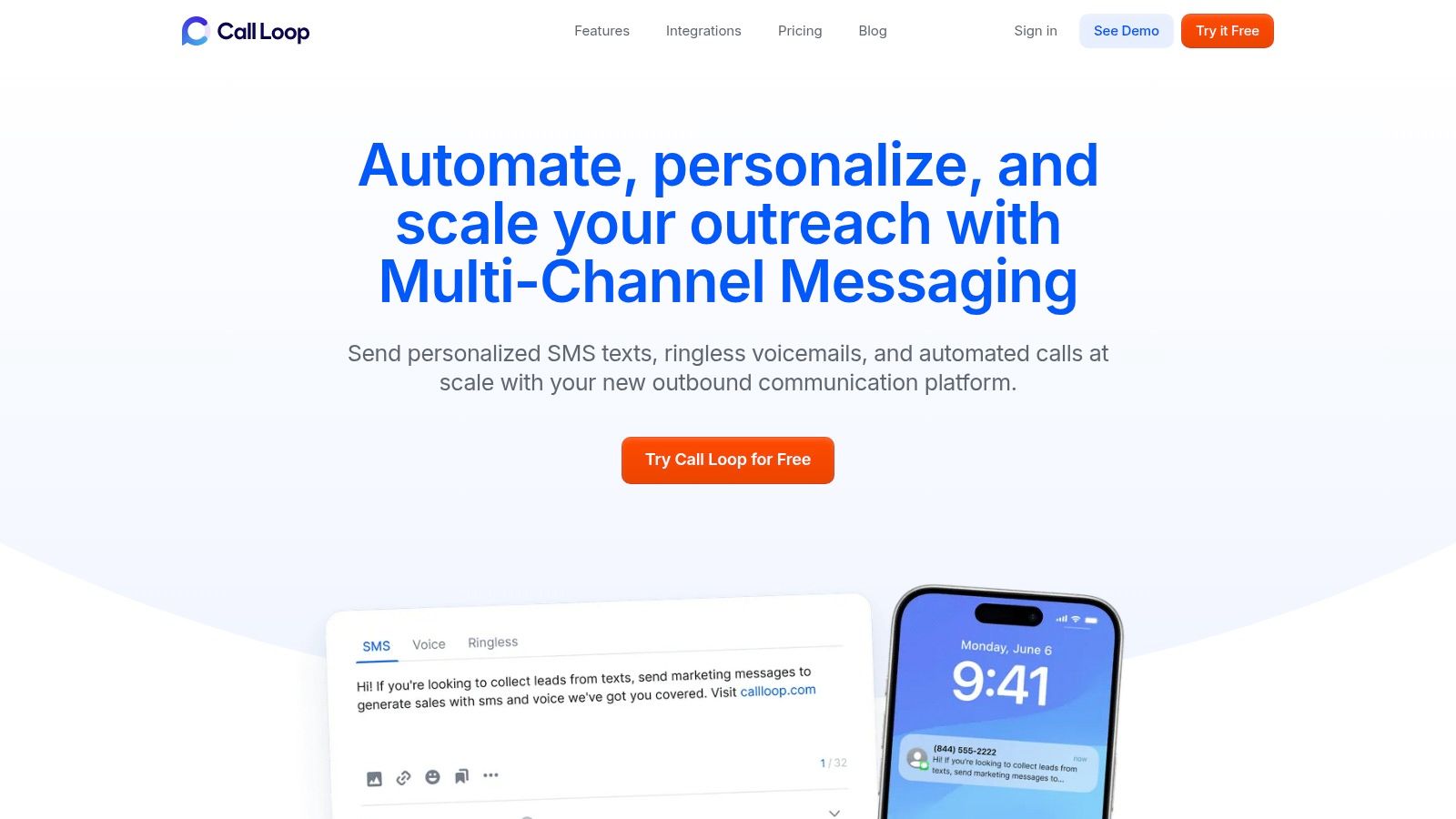
Call Loop is the alternative I'd put at the top if you're done stitching together separate tools for texting, voice, and voicemail. It's built for outbound communication across SMS/MMS, voice broadcasting, and ringless voicemail, so you can run one campaign strategy instead of juggling disconnected channels.
That matters because former TextMagic users usually don't leave just for another texting app. They leave because they want a more robust SMS, voice, and ringless voicemail platform, plus two-way texting and deeper integrations. Call Loop fits that need well, especially for healthcare teams, agencies, service businesses, and sales workflows where follow-up rarely happens in one channel only.
Call Loop also serves over 45,000 users and combines mass texting with voice broadcasting and ringless voicemail, along with text-to-join keywords, live call transfers from SMS, and double opt-in compliance for toll-free numbers (Call Loop on Capterra).
The biggest advantage is orchestration. You can start with SMS, follow with a ringless voicemail drop, and route hot responses into a live call workflow. That's much closer to how real outbound teams operate than the typical “send blast, wait for replies” model.
Ringless voicemail is the feature most comparison posts underplay. It works by creating a direct server-to-server connection with the mobile carrier's voicemail system, bypassing the public switched telephone network and depositing audio in the recipient's voicemail inbox without triggering a ring or missed call notification (how ringless voicemail works).
Practical rule: Use ringless voicemail when the message benefits from tone, urgency, or reassurance. Appointment reminders, renewals, and local service follow-up often land better as audio than as another text block.
For teams that care about message format, concise voicemail wins. A strong business ringless voicemail message is typically best kept between 20 and 30 seconds, which forces you to tighten the offer and CTA (recommended ringless voicemail length).
Call Loop is not the lightest option on this list. If all you want is occasional bulk SMS, it may feel broader than necessary. But if your team needs coordinated outreach, that extra depth is exactly the point.
A few practical strengths and limitations:
If you're building campaigns seriously, it helps to pair platform choice with channel discipline. Call Loop's own guide to SMS marketing best practices is worth reading before you migrate, because better tooling won't fix weak list hygiene or sloppy timing.
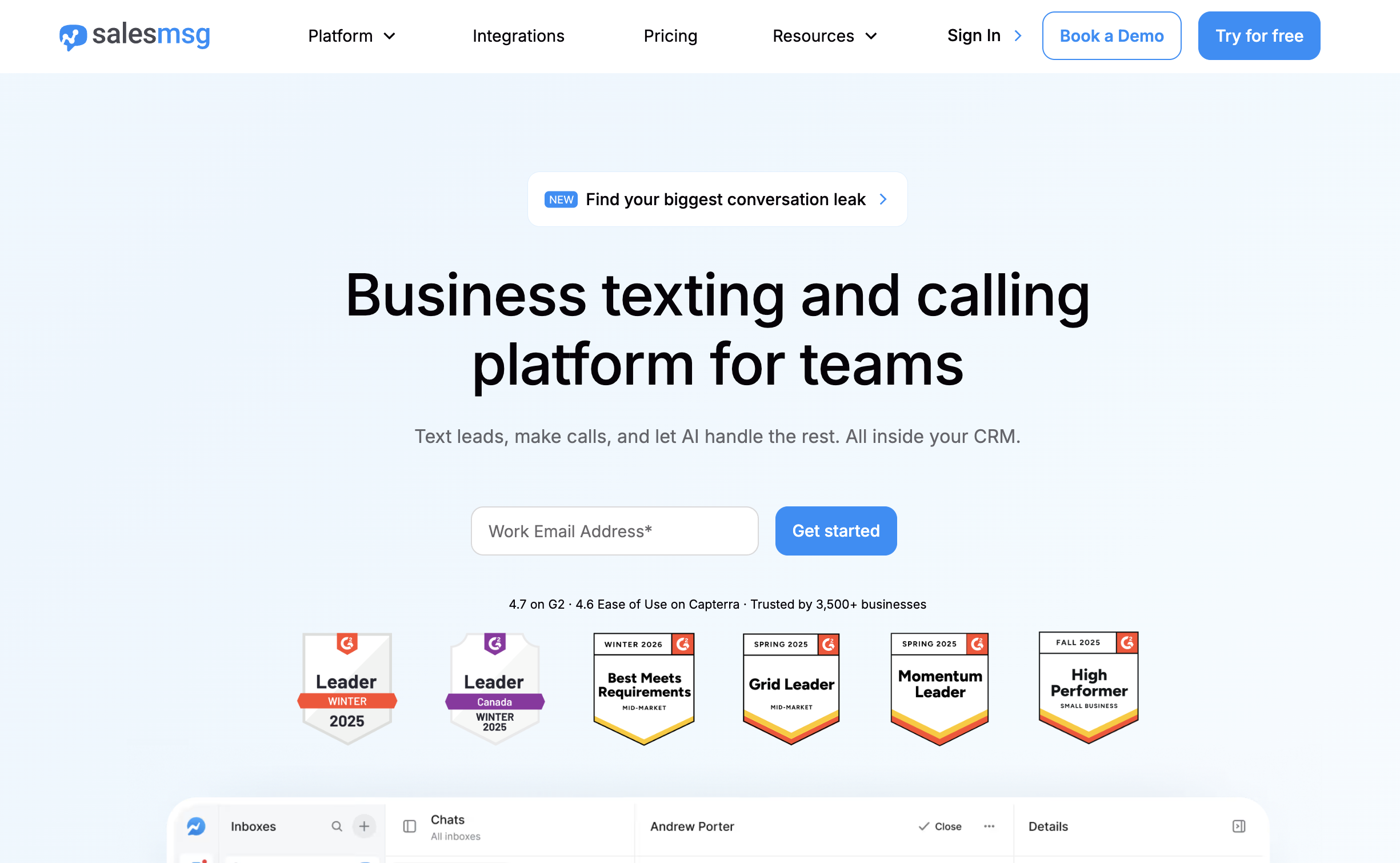
Need texting to sit inside your CRM instead of living in a separate marketing tool? Salesmsg is one of the cleaner options for that job.
It fits teams that run lead follow-up through HubSpot SMS, ActiveCampaign, or Keap and need reps to text from the same workflow they already use for calls, deals, and tasks. The product is built around two-way conversations, shared inbox handling, scheduled campaigns, drip sequences, keyword automation, call forwarding, and voicemail drops. That mix makes it more useful for pipeline management than for pure list-based SMS blasting.
The practical appeal is speed to response. Reps can text from familiar systems, managers can monitor conversations without patching together multiple tools, and handoffs are easier when messages are tied to contact records instead of a standalone inbox.
Salesmsg works well for sales and service teams where conversation ownership matters. If each lead, customer, or account has a clear rep attached, the platform gives that person a fast way to text, follow up, and keep the thread visible to the rest of the team.
A few reasons teams pick it:
Salesmsg starts to look narrower once your outreach strategy expands beyond text conversations. It can handle basic calling and voicemail-related tasks, but businesses that want to coordinate SMS, voice broadcasts, and ringless voicemail at scale will hit its limits faster. That is the trade-off versus broader outbound platforms such as Call Loop.
Cost can also become a planning issue. Per-user pricing is manageable for a small sales pod, but it deserves a closer look if you expect many reps, service agents, or location-based teams to be active in the platform at the same time.
Salesmsg is a strong fit for rep-led texting inside a CRM. It is a weaker fit for centrally managed, multi-channel outreach where SMS is only one part of the communication mix.

Need a TextMagic replacement that your team can start using this week, without handing the project to a developer?
SimpleTexting is a practical choice for that job. It focuses on SMS and MMS execution, keeps the interface clean, and gives marketing or operations teams enough automation to run campaigns, handle replies, and stay organized without much setup. For businesses that mainly need texting to work reliably, that simplicity has real value.
It is especially useful for teams running recurring outreach such as promotions, reminders, confirmations, and basic drip sequences. The platform covers the core workflow well: build lists, segment contacts, send campaigns, manage incoming messages, and keep everyday texting tasks in one place.
SimpleTexting works well for businesses that treat messaging as a campaign channel first.
That makes it a cleaner fit for marketing-led texting than for sales teams that need deep CRM ownership or outbound teams building a broader contact strategy across channels.
SimpleTexting gets narrower once SMS is only one part of your outreach mix. If your plan includes voice drops, voice broadcasting, or ringless voicemail alongside text, you will need other tools to cover those channels. That matters if you are comparing TextMagic alternatives based on how well they support a full communication stack, not just texting.
Pricing also deserves a closer look if you send a lot of MMS or longer messages. Credit usage can climb faster than expected in media-heavy campaigns, so budget planning is more important here than it is with a plain text workflow.
SimpleTexting is a solid option for teams that want polished SMS marketing software with minimal setup. It is a weaker option for businesses that want to scale outreach across SMS, voice, and ringless voicemail from one system.

Need a TextMagic replacement that feels familiar without forcing your team into a full rebuild? EZ Texting fits that brief. It stays focused on the core jobs many SMB teams need to handle day to day: bulk texts, reminders, keywords, contact lists, templates, and simple integrations.
That familiarity is the main selling point. Teams can switch over without retraining everyone around a developer-first product or a more complex outbound stack.
EZ Texting works best for businesses that still see texting as a standalone channel, or at least as the center of their outreach program. It gives you multiple sending options, including local numbers, toll-free numbers, and short code support, which matters if your current setup has outgrown a single basic number.
That flexibility helps with scale and compliance planning, especially for organizations sending appointment reminders, promotions, or recurring customer updates. You get more room to shape the sending setup around your use case without needing to build on top of an API.
EZ Texting is a stronger TextMagic alternative than a multi-channel outreach platform. That distinction matters.
If your goal is to add SMS and improve campaign execution, it can do the job well. If your goal is to coordinate SMS with voice calls, voice broadcasts, or ringless voicemail from one system, EZ Texting will leave gaps. In that case, you are not really replacing TextMagic with a broader communication stack. You are choosing a better organized texting platform.
Choose EZ Texting for ease of adoption and solid SMS operations. Choose something else if your growth plan depends on combining text, voice, and voicemail in one workflow.

Need a TextMagic alternative that helps you grow an SMS list, not just send campaigns? SlickText earns consideration for ecommerce teams that care about subscriber capture, segmentation, and automated follow-up tied to online sales.
The product is built around SMS marketing execution. Pop-ups, web forms, keywords, drip campaigns, and Shopify-friendly workflows are the center of gravity. That makes SlickText a stronger choice for brands running promotions, abandoned cart nudges, and repeat-purchase campaigns than for businesses trying to coordinate texts with calls or voicemail drops.
Its pricing model is also easier to read than some usage-heavy platforms. Instead of piecing together core features across plan tiers and add-ons, you get a clearer packaged approach, which helps smaller teams forecast costs before volume rises.
SlickText works best when SMS is part of your revenue engine and list growth matters as much as message delivery.
That focus is real, and it shapes the trade-off.
SlickText is an SMS marketing platform first. Businesses that need outbound calling, voice broadcasts, or ringless voicemail as part of the same outreach system will need another tool alongside it.
For ecommerce operators, that may be a reasonable compromise. For teams in healthcare, education, home services, or any appointment-driven model, it usually creates workflow sprawl. If your replacement for TextMagic needs to support a broader multi-channel outreach strategy, SlickText solves the texting piece well but stops short of a full communication stack.

Need a TextMagic replacement that your team can start using this week, not after a long setup cycle? Textedly is one of the cleaner options for that job. It focuses on the basics that small businesses use: mass texts, reminders, keywords, MMS, and simple contact management.
That simplicity is the appeal.
Textedly fits teams that do not want to configure a heavier communications platform just to send campaigns and follow-up messages. If your main goal is to get SMS running quickly for promotions, appointment reminders, or list growth, it covers the core workflow without much friction.
Textedly is a practical fit for businesses that want straightforward texting features and predictable day-to-day use.
The trade-off is depth. Textedly handles SMS well enough for smaller marketing and customer communication programs, but it does not give you much room to build beyond texting.
This matters if you are replacing TextMagic because you need more than another SMS tool. Textedly does not give you integrated voice broadcasting or ringless voicemail, so it falls short for businesses building a broader outreach system across channels.
That gap shows up fast in appointment-driven and sales-driven workflows. A home services company may want to text confirmations, call leads who stop responding, and use ringless voicemail for follow-up. A clinic may need reminders by text, outbound calls for schedule changes, and a backup outreach option when messages go unread. Textedly handles the first piece, not the full sequence.
For simple SMS campaigns, it is a solid option. For a multi-channel communication strategy, it is usually a partial replacement rather than a complete one.
Need more than basic texting, but not ready to build everything on raw APIs? ClickSend fits that middle tier well.
It gives you a usable web app for day-to-day sending and a broader communications stack than many TextMagic alternatives. SMS is the starting point, not the whole story. You also get access to voice, email, and fax, which makes ClickSend more relevant for teams trying to centralize outreach under one vendor instead of patching together separate tools.
That matters if your replacement criteria go beyond SMS pricing and contact lists. A business running lead follow-up or customer notifications often needs text for speed, voice for urgency, and another channel when replies stall. ClickSend supports a wider channel mix than pure texting tools, even if it does not offer the same campaign orchestration depth you would get from a platform built specifically around coordinated SMS, calling, and ringless voicemail sequences.
ClickSend makes sense for businesses that want flexibility and predictable control over how they send.
I usually put ClickSend on the shortlist for businesses that have outgrown a single-channel SMS tool but still want a product team to handle the carrier and delivery infrastructure.
The trade-off is user experience. ClickSend is more functional than guided, so marketing teams may find it less polished than tools built around campaign creation, templates, and list growth.
Its multi-channel support also has limits for businesses that want one coordinated outreach engine. You can send across channels, but you are not getting tightly integrated ringless voicemail, voice, and SMS workflow logic in the way a true multi-channel outbound platform provides. If that is the gap you are trying to solve after TextMagic, ClickSend is a broader communications vendor, not a full answer by itself.
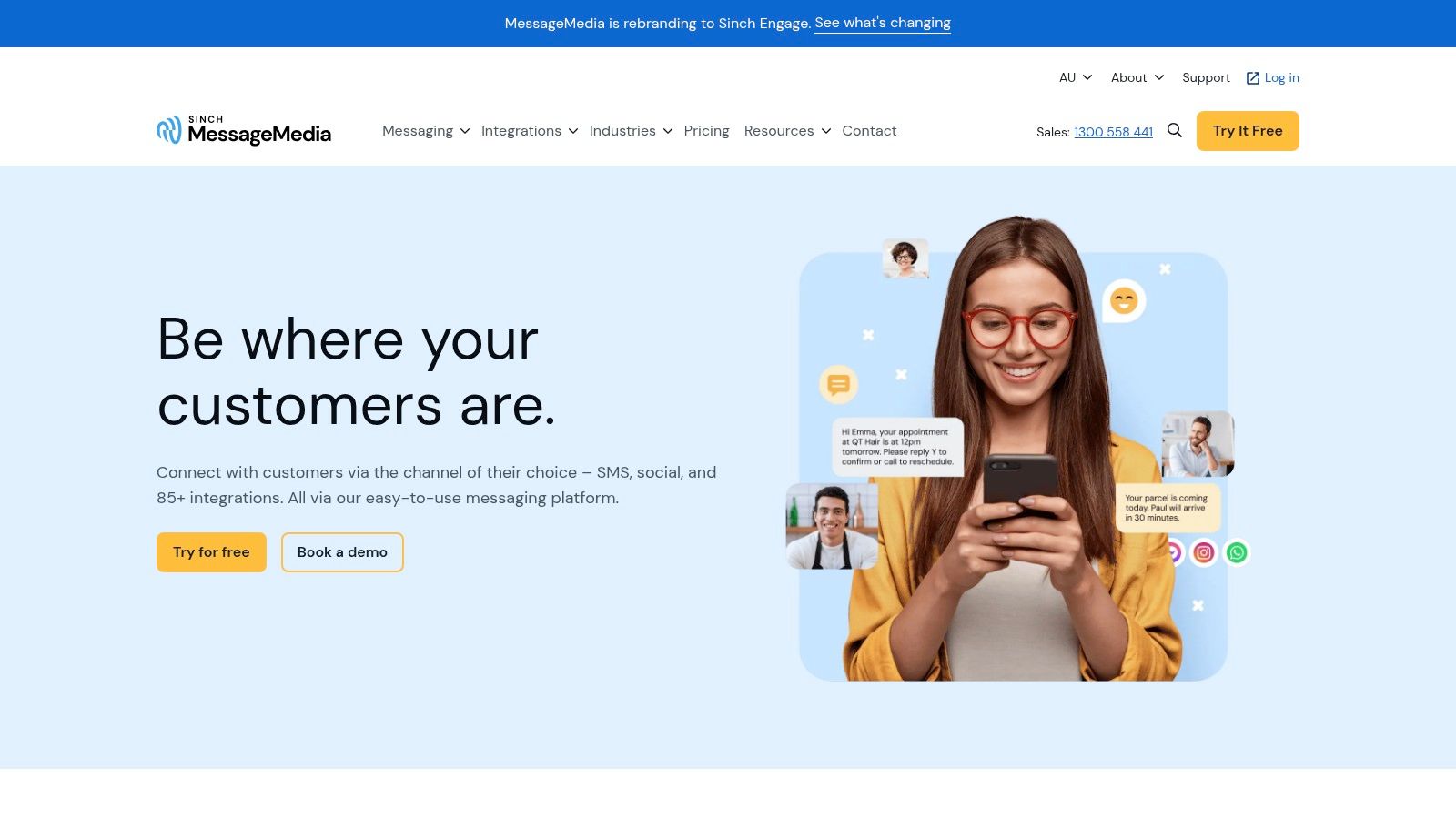
Sinch MessageMedia is a more mature business messaging platform with enterprise lineage. I'd look at it if you want portal access and API flexibility from a provider that's comfortable handling alerts, notifications, and larger-scale business messaging.
This isn't the first recommendation I'd make for a tiny team sending occasional promos. But for organizations that want a sturdier platform with integration options and operational support around sender programs, it deserves attention.
Sinch MessageMedia works well for businesses that need:
Public pricing is often less transparent than SMB buyers prefer. If you need a quick self-serve comparison, that slows evaluation.
It can also be more platform than necessary for low-volume senders. If your needs are simple, a more focused TextMagic alternative will usually feel easier to buy and easier to run.
Need a TextMagic alternative that can scale past basic texting?
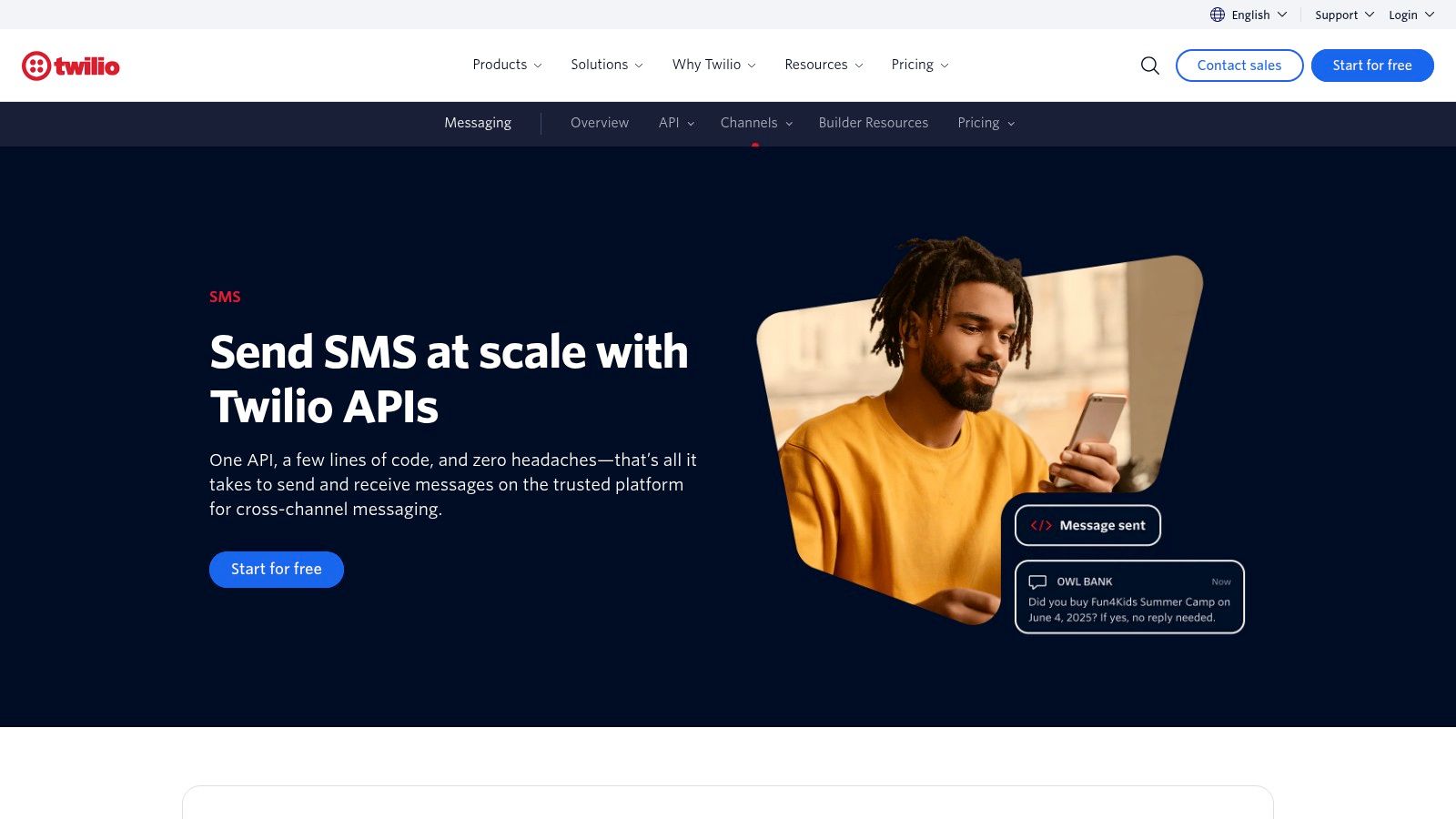
Twilio belongs on the list because it gives you raw control. You can build SMS and MMS flows into your product, connect them to your CRM, and extend into voice through Twilio's broader platform. That makes it relevant for businesses planning a true multi-channel outreach stack, not just a simpler SMS dashboard.
The trade-off is straightforward. Twilio is a programmable messaging platform first. Your team has to design the workflows, handle compliance setup, manage sender infrastructure, and build the reporting experience your users need. If your goal is to launch campaigns fast with little technical help, this usually feels heavier than TextMagic.
Twilio is a strong option for teams that want to build communication into their own systems instead of working inside a packaged marketing app.
Twilio can become expensive in real-world use even if the messaging rate looks attractive at first. Carrier fees, number costs, development time, compliance work, and ongoing maintenance all add up. I would not treat it as a cheap TextMagic swap unless the business already has technical resources in place.
It also does not solve ringless voicemail out of the box. If your outreach strategy depends on SMS, voice, and ringless voicemail working together, Twilio is often one layer of the stack rather than the whole answer.
Before investing in an API-led setup, it helps to improve lead quality with phone validation. Cleaner numbers reduce wasted sends and make custom messaging logic easier to run at scale.
Plivo is another CPaaS-style alternative for teams that want to build rather than buy a finished marketing platform. It usually enters the conversation when a business likes the API flexibility of Twilio but wants to compare network performance, architecture, or cost structure.
What makes Plivo interesting is that it tries to bridge infrastructure and campaign tooling. You get APIs and SDKs, but there's also campaign-oriented functionality for teams that want more than raw messaging primitives.
Plivo is worth considering for:
It's still not a turnkey TextMagic replacement for many marketing professionals. Non-technical teams usually won't enjoy managing an API-centric system unless another platform layer sits on top.
If your goal is to text customers tomorrow with minimal setup, choose something else. If your goal is to build messaging fully into your stack, Plivo belongs on the shortlist.
Telnyx is the most technical option on this list, but it deserves inclusion because it pushes further into carrier-grade control and programmable communications than most SMB buyers ever consider. If your company wants direct connectivity, usage-based economics, and more control over transport behavior, Telnyx is worth a serious look.
It's also one of the few options in this space that aligns naturally with ringless voicemail at the API level. That matters if your developers want to build ringless voicemail into a broader outbound system rather than buying a prebuilt campaign tool.
Telnyx makes sense when communications is part of your product or core operating workflow.
This is not the platform I'd recommend to a small sales or marketing team looking for a faster TextMagic replacement. You'll need to manage registration, compliance details, and workflow design yourself.
For developer-led organizations, that trade can be worth it. For everyone else, it usually isn't.
Ready to upgrade? Choosing a TextMagic alternative is really about choosing the communication model you want next. If your business still runs well on standard SMS campaigns, tools like SimpleTexting, Textedly, EZ Texting, and SlickText can do the job without much friction. If your team lives in the CRM and wants better one-to-one engagement, Salesmsg is a strong fit.
But a lot of businesses don't need just another texting platform. They need a better outreach system. That's where the decision gets more strategic. If you're handling reminders, lead nurturing, reactivation, follow-up, and service communication, SMS-only software can start to feel cramped fast. Voice broadcasting and ringless voicemail open up options that standard text campaigns can't replace, especially when tone, urgency, or response timing matters.
That gap is exactly why many comparison posts feel incomplete. They rank texting tools against other texting tools, but they don't ask whether your outreach should still be text-only. For healthcare, education, agencies, and service businesses, that's often the wrong frame. Compliance, channel mix, and workflow automation matter just as much as sending messages.
There's also a practical buying issue many small teams run into. Unpredictable billing is a major churn driver for SMB SMS users, and confusion around pay-as-you-go versus per-seat pricing keeps showing up in this category. That's why you should look past feature lists and pay close attention to how each vendor charges for send volume, users, and extras.
Use this process to make the switch with less risk:
The best switch isn't the fastest migration. It's the one that removes the bottleneck that made you leave TextMagic in the first place.
If you want the simplest decision rule, use this one. Choose an SMS-first tool if your needs are still basic. Choose a CRM-centric tool if reps need conversation history and shared visibility. Choose a multi-channel platform if your business depends on coordinated outreach across SMS, voice, and ringless voicemail.
If you're ready to move beyond basic texting and build a stronger outbound system, Call Loop is a practical place to start. It gives you SMS, voice broadcasting, and ringless voicemail in one platform, with automation, integrations, and HIPAA-ready workflows that fit real business communication.
Chris Brisson
Chris is the co-founder and CEO at Call Loop. He is focused on marketing automation, growth hacker strategies, and creating duplicatable systems for growing a remote and bootstrapped company. Chat with him on X at @chrisbrisson


Trusted by over 45,000 people, organizations, and businesses like


