
See a Demo
You're just one step away from seeing Call Loop in action.
Enter your information below to watch a demo right now.

You're just one step away from seeing Call Loop in action.
Enter your information below to watch a demo right now.

It's incredibly frustrating when your time-sensitive promotions get stuck in limbo. You look at your dashboard and see a wall of "failed" sends, and you know every single one is a missed opportunity. When your SMS messages are not sending, the problem usually isn't a single glitch. More often, it’s a mix of aggressive carrier filtering, poor contact list hygiene, or a simple compliance oversight.
Watching a campaign stall is a painful experience. You’ve put in the work—crafting the perfect message, timing your send, hitting "launch"—only to find out a big chunk of your audience never even got it. This isn't just a technical hiccup; it's a direct hit to your engagement, revenue, and the trust you've built with your customers.
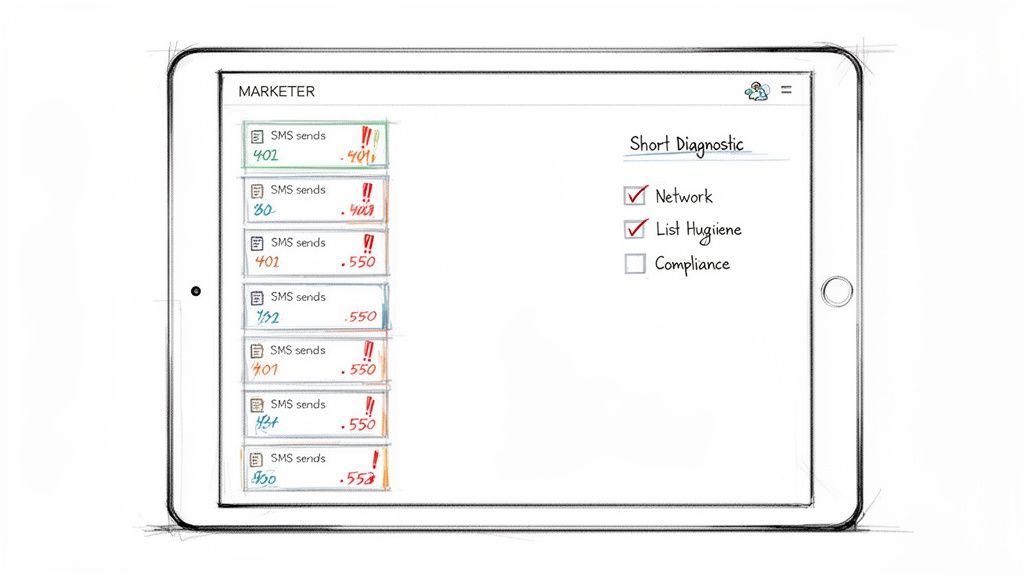
The reasons for delivery failure are all over the map, ranging from simple issues on your end to complex carrier-side problems. Getting a handle on these potential roadblocks is the first real step toward building a more reliable outreach strategy.
When you start troubleshooting, it's best to check the usual suspects first. From my experience, most delivery issues boil down to one of these core areas:
It’s also crucial to remember that network conditions play a big part. For example, during peak times like Black Friday, delivery failure rates can spike to 15-20%. The networks get congested, and time-sensitive messages like one-time passcodes and flash sale alerts get delayed or dropped. That leads directly to abandoned carts and lost sales.
A healthy SMS campaign isn't just about what you send; it's about how it's sent and who it's sent to. Proactive list management and a solid understanding of carrier rules are non-negotiable for success.
To help you get started, here's a quick rundown of what to check first.
This table should give you a solid starting point for diagnosing the most common issues we see every day.
Look, a single failed SMS doesn't have to be the end of the line. Modern outreach needs a multi-channel approach. If a text message doesn't go through, having a system that automatically triggers a ringless voicemail can be a game-changing backup.
A ringless voicemail drop delivers your audio message directly to the recipient's inbox without their phone ever ringing, making sure your communication still gets through. This strategy turns a delivery failure into another opportunity to connect.
By understanding the full spectrum of potential issues—from technical compliance to strategic follow-ups—you can dramatically improve your outcomes. You can learn more about maximizing your message reach by exploring Call Loop’s deliverability features. This foundation helps you not only fix current problems but also build a more resilient and effective communication plan for the future.
Sometimes, the real reason your texts aren't landing has nothing to do with your contact list or your sending platform. The problem is buried deep inside the complex, and frankly, pretty opaque world of mobile carriers. These networks are the gatekeepers, and their automated systems can silently block your messages without ever giving you a clear error. This makes figuring out why your SMS messages aren't sending a real headache.
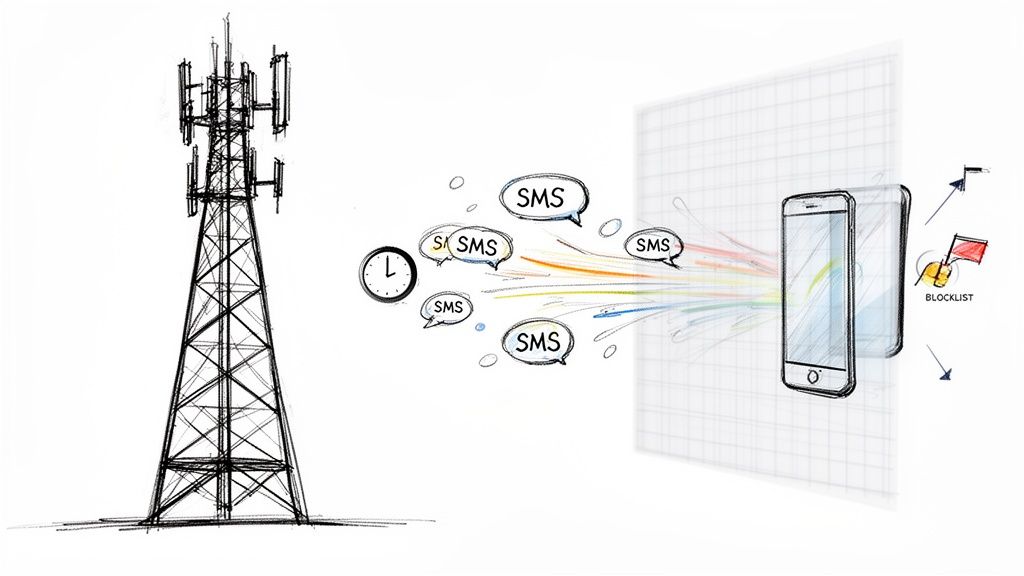
This whole process is called carrier filtering. It’s built to shield users from spam, but legitimate business messages constantly get caught in the crossfire. Getting a handle on how these filters operate is your first step to crafting messages that actually make it through.
Carriers lean on some pretty sophisticated algorithms to scan message content, sending patterns, and your sender reputation. If one of your messages trips an internal trigger, it can get dropped without a trace. You hit send, your dashboard says it’s delivered, but your customer gets nothing. It's a ghost.
A few common triggers will get your messages flagged in a heartbeat:
These filters are the silent killers of SMS campaigns. Because they don't always spit back an error code, you might not even realize your messages are being blocked until your engagement rates fall off a cliff.
Another curveball from the carrier's side is network throttling. During crazy high-traffic times—think major holidays or local emergencies—carriers will deliberately slow down bulk A2P (Application-to-Person) messages. They do this to keep the network clear for P2P (Person-to-Person) texts.
Picture this: you're launching a flash sale at noon. You schedule your SMS blast for 11:55 AM, but because of throttling, your messages don't actually arrive until 2:00 PM. The sale's over, and your big promotion is completely useless. The message eventually got there, so it’s not a "failure" in the technical sense, but it’s a total failure for your campaign goals.
The worst-case scenario is a full-on blocklisting. This is what happens when your sending number gets flagged for a high volume of user complaints or for repeatedly breaking carrier rules. Once your number is on that list, your deliverability is toast. Almost every message you send from it will fail.
This is where digging into your delivery reports becomes absolutely critical. You need to look for specific error codes that point to carrier blocks. A temporary glitch is one thing, but consistent failures from a single number almost always mean it's been permanently blocked. Getting off a blocklist is a nightmare, so preventing it in the first place is your best bet. This is exactly why getting explicit permission from your contacts is non-negotiable. To dive deeper, check out our guide on how to get express written consent for SMS marketing.
You have to monitor your SMS delivery rate. A great rate should be hovering between 90-98%. If you see it dip below 90%, that's a huge warning sign that you're dealing with invalid numbers or, worse, an emerging carrier block. Keeping a close eye on this lets you catch problems before they do permanent damage to your sender reputation.
If you’ve ruled out carrier filters as the main problem, the next place to look is your own message content. The words you choose, the links you pop in there, and how you format your text are often the real culprits when your sms messages are not sending. Carriers are looking at everything, and one wrong move can get your whole campaign shut down.

This level of scrutiny is only getting more intense. The rise of sophisticated spam and fraud attempts has forced carriers to crack down hard, making it more challenging for legitimate businesses to get their messages through. Staying on top of industry trends and best practices is essential to navigating this evolving landscape.
Mobile carriers have automated systems on constant patrol for anything that smells like spam. These filters aren't just catching obvious scams; they’re also flagging common marketing tactics that can come off as too aggressive or shady.
Simple formatting choices can make or break your delivery. For instance, typing in ALL CAPS, especially with trigger words like "FREE," "SALE," or "NOW," is a surefire way to get flagged. The same goes for plastering your message with exclamation points (!!!) or using special characters that don't play nice with every phone.
Those unsupported characters can sometimes turn your message into a jumbled mess, causing the delivery to fail. The best practice? Stick to standard GSM characters to ensure your message looks right on any device and avoids those technical hiccups.
Beyond the actual words you use, compliance is the absolute foundation of SMS delivery. If you don't get this part right, nothing else matters. It all boils down to two things: 10DLC registration and crystal-clear consent.
10DLC Registration is Mandatory: In the U.S., 10-Digit Long Code (10DLC) registration isn't just a good idea—it's a requirement for business messaging. If you don't register your brand and campaigns, carriers see your traffic as 'unregistered' and will either filter it heavily or block it completely.
Explicit Consent is Everything: You need undeniable, documented permission from every single person you text. They must have knowingly and willingly signed up. Firing off texts to a purchased list or to people who never opted in is the fastest way to get your number blacklisted.
A healthy, engaged list is your greatest asset in SMS marketing. It's far better to have a smaller list of 100 people who want to hear from you than a list of 10,000 who don't. High complaint rates will destroy your sender reputation and get your messages blocked.
This is where a double opt-in process is a lifesaver. When someone signs up, they get a confirmation text asking them to reply 'YES' to confirm. This one simple step cleans your list of bad numbers and ensures you’re talking to an enthusiastic, compliant audience, which sends deliverability through the roof.
It might sound backward, but making it easy for people to leave is crucial for deliverability. Every single promotional message you send must include clear opt-out instructions, like "Reply STOP to unsubscribe."
Honoring these requests instantly does two very important things:
A spam complaint is infinitely more damaging to your reputation than a simple "STOP" reply. By giving people a clear exit, you keep your list healthy and engaged, signaling to carriers that you're a responsible sender. You can dive deeper into these foundational strategies in our guide to SMS marketing best practices.
Putting out fires is one thing. Building a system that prevents them in the first place? That's a much smarter way to operate.
If you're constantly asking why your sms messages are not sending, it’s a sure sign your outreach strategy needs more than just a quick fix—it needs to be more resilient. The goal here is to get out of that reactive cycle. You want to build a communication flow so solid that a single point of failure, like one blocked SMS, barely even registers.
This all comes down to adopting a multi-channel mindset. Instead of putting all your eggs in the SMS basket, you orchestrate a series of touchpoints. This ensures your message always has a path to your audience, boosting delivery rates and creating a much more engaging experience for your customers along the way.
Before a single message goes out, the health of your contact list is everything.
Sending texts to bad numbers—invalid, deactivated, or landlines—doesn't just waste your money. It actively damages your sender reputation. When carriers see high bounce rates from your number, they flag you as a low-quality sender. That means their filters will come down even harder on your future campaigns.
This is where a good number validation tool becomes non-negotiable.
A clean list is the bedrock of any successful campaign. It’s a simple, automated step that prevents a whole host of common delivery problems before they can even start. As you build this out, it’s also smart to brush up on broader client communication best practices that complement a solid SMS strategy.
Think of it this way: you wouldn't send a thousand pieces of direct mail to a list of unverified addresses. Why treat your SMS list any differently? Applying that same common sense is a huge step toward building a more reliable system.
Okay, so your list is squeaky clean. Now what? The next step is optimizing your message content for both delivery and engagement. One of the biggest and most common mistakes I see is people using generic, public URL shorteners from services like Bitly. Carriers are extremely wary of these links because they’re a favorite tool for phishing scams.
A custom-branded link shortener is a much savvier move. It swaps out that generic, suspicious-looking link for one that uses your own domain. This looks far more trustworthy to both the carrier's filters and your actual customers. It’s a small change that can drastically lower the odds of your message getting flagged as spam while also strengthening your brand with every single click.
Now, let’s bring this all together into a truly bulletproof strategy. What happens if, despite all your prep work, an SMS still fails to deliver? With a multi-channel approach, that failure isn't the end of the line. It's just a trigger for the next step in your sequence.
This is where combining SMS with tools like ringless voicemail and voice broadcasts creates an incredible safety net. A ringless voicemail, for instance, drops a pre-recorded audio message straight into someone’s voicemail box without their phone ever ringing. It’s a subtle, non-intrusive way to make sure your message is heard, even if the text never made it through.
Imagine an automated workflow that looks something like this:
This kind of automated, multi-layered approach changes the game. A delivery failure is no longer a dead end; it’s just a seamless pivot. Your message finds another route, your outreach continues without you lifting a finger, and your customer gets the info they were supposed to. This is how you build a system that doesn't just fix problems—it’s designed to make them irrelevant.
Let’s be honest, scrambling to fix SMS delivery failures after the fact is stressful and inefficient. The real key to long-term success is moving from a reactive mindset to a proactive one. It's about building a solid communication strategy that anticipates and sidesteps these issues from the get-go, rather than just troubleshooting when things go wrong.
This approach means you're not just putting out fires. You're building a fireproof system with immediate diagnostics, consistent list hygiene, and smart planning to keep your deliverability rates sky-high and your sender reputation spotless.
A core part of this is having a backup plan. What happens when an SMS fails? For us, it’s not a dead end.
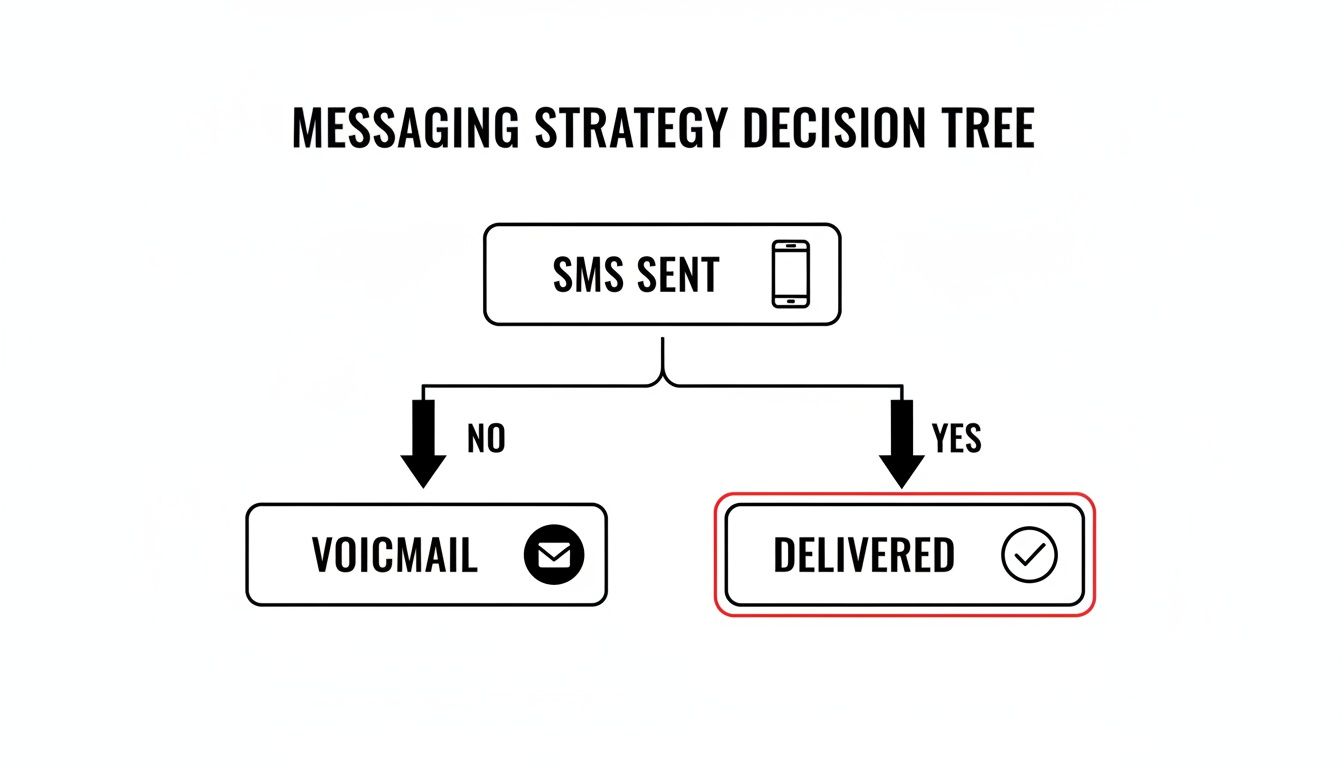
As you can see, a failed SMS can simply trigger another action, like dropping a ringless voicemail. The message still gets through, just via a different channel.
When you hit a delivery crisis, your first move is a quick audit to figure out what's broken. Don't guess. The data from your last campaign holds all the clues you need to find the root cause and focus your energy where it matters most.
Here's where to start:
Once the immediate fire is out, it's time to prevent the next one. The single most effective thing you can do is maintain rigorous list hygiene. Think of a clean, validated list as the foundation of your entire SMS strategy—it protects your sender reputation and ensures high deliverability.
Make list cleaning a routine, especially before every big send. Using a number validation tool automatically scrubs out invalid, deactivated, and landline numbers. This one step stops you from sending messages that are guaranteed to fail, which signals to carriers that you're a responsible, high-quality sender.
I always tell people to think of list hygiene like car maintenance. You don't wait for your engine to seize on the highway to check the oil. Consistent, proactive cleaning keeps your campaigns running smoothly and prevents a total breakdown.
This isn’t just about ditching bad numbers. It’s also about re-engaging subscribers who’ve gone quiet and, just as importantly, honoring opt-out requests instantly. A healthy list is an engaged list.
With your immediate problems sorted and your list hygiene on point, you can start thinking about the long game. This is all about creating scalable processes and using smarter tools to ensure your messages are always compliant, engaging, and sent at the right time.
Here are a few powerful strategies to bake into your workflow:
By layering these strategies, you build a powerful defense against delivery failures. To go even deeper, you should explore these proven SMS marketing techniques that cover the essentials of building a resilient program.
Of course, even with the best plan, some messages will fail. That's why having a backup like ringless voicemail is so critical to a complete outreach strategy.
When an SMS can't get through, having an alternative channel ensures your message isn't lost. Here's a quick look at how SMS and ringless voicemail stack up, especially when it comes to deliverability.
Ultimately, the goal is to create a system where a single point of failure doesn't stop your communication. By combining a strong SMS strategy with a reliable fallback like ringless voicemail, you ensure your audience always gets the message.
Even the most seasoned pros run into baffling delivery issues now and then. When you're staring at a list of "undelivered" messages, you need quick, no-nonsense answers. Let's tackle some of the most common questions we hear from users.
This one is incredibly frustrating. You know the number is good, so why the failure? Nine times out of ten, the culprit is carrier filtering. These are automated systems designed to block spam, and they can be pretty aggressive.
Your message might get flagged if it contains certain keywords, uses a public URL shortener like bit.ly, or if you're sending too many messages too quickly. It could also be a simple issue on the recipient's end—their phone might be off, out of a service area, or their inbox could be full. The best first step is always to dive into your delivery reports and look for specific error codes. They’ll usually point you in the right direction.
Yes, and this trips up more people than you’d think. Public URL shorteners are a favorite tool for scammers and phishers, so carriers are automatically suspicious of them. Using one is like waving a giant red flag.
The fix here is simple: stop using public shorteners. Instead, use a branded or dedicated short domain from your messaging provider. A custom URL is seen as far more trustworthy by the carriers, drastically cutting your risk of being filtered. Plus, it’s a great way to reinforce your brand.
Think of 10DLC (which stands for 10-Digit Long Code) as the official system for business texting in the U.S. It’s a registration process where you tell carriers who you are and what kind of messages you plan to send.
If you skip this step, carriers consider your traffic "unregistered." That unregistered traffic gets hit with heavy, automatic filtering and is often blocked completely. We've seen countless businesses get confused when their messages suddenly stop working, and an incomplete 10DLC registration is almost always the reason. It's no longer optional—it's an essential piece of the puzzle for good deliverability.
Getting flagged isn't a death sentence, but you need to act fast to fix it.
Once you’ve done all that, start sending again, but do it slowly. Ramping up your volume gradually shows the carriers you’re a responsible sender and helps rebuild their trust.
It's not just a good backup; it's a brilliant way to build a more resilient outreach strategy. A ringless voicemail drops an audio message right into someone’s voicemail box without making their phone ring. It’s the perfect non-intrusive follow-up when an SMS just won’t go through.
You can even set up an automated workflow where any undelivered SMS automatically triggers a ringless voicemail drop. This way, your message still gets heard, turning a delivery failure into a win on another channel. It’s a savvy move to sidestep carrier filtering and network issues entirely.
Ready to build a more reliable messaging strategy and stop worrying about delivery failures? Call Loop combines SMS, voice broadcasts, and ringless voicemail into one powerful platform, so your message always gets through. Start your free trial today and see how it works.
Chris Brisson
Chris is the co-founder and CEO at Call Loop. He is focused on marketing automation, growth hacker strategies, and creating duplicatable systems for growing a remote and bootstrapped company. Chat with him on X at @chrisbrisson


Trusted by over 45,000 people, organizations, and businesses like


