
See a Demo
You're just one step away from seeing Call Loop in action.
Enter your information below to watch a demo right now.

You're just one step away from seeing Call Loop in action.
Enter your information below to watch a demo right now.

You can have a clean dashboard and still be standing in a warehouse aisle trying to explain why a pallet isn't moving. The carrier says it's delayed, the customer success team wants an answer, and the person who knows the shipment history is buried in a thread of screenshots, ETAs, and half-finished notes. That gap between operational reality and customer communication is where most supply chain updates get lost.
What matters now isn't just knowing that something changed. It's knowing which change affects a promise, which one can wait, and which one needs a message before the customer asks for one. In a market where nine in ten respondents in McKinsey's 2024 survey still reported supply chain challenges and Deloitte said average production-material lead time sat at 79 days in April 2024, down from the 100-day peak in July 2022 but still above roughly 65 days in 2019, the organizations that stay calm are usually the ones that communicate fastest and most clearly. Those conditions show up in real operations, not just in reports, as a slower and more fragile baseline than organizations often admit (McKinsey's 2024 supply chain risk survey).
A confirmed pallet of medical supplies is sitting behind a delayed container at the port. Three clinics expect it tomorrow, the warehouse has already staged the outbound order, and the operations lead is staring at a screen full of alerts that all say something slightly different. One system shows a revised ETA, another still shows “in transit,” and the email thread has a draft apology that nobody wants to send until they know whether the partial load can be salvaged.
The problem isn't the lack of data. It's the translation step. Teams can see the disruption, but they often can't turn it into a message that tells the customer what changed, what to expect next, and what action, if any, they need to take.
The warehouse wants a freight update. Customer success wants a script. Finance wants to know whether premium freight is now unavoidable. Meanwhile, a clinic manager just wants to know whether tomorrow's delivery is still on track. That's the moment when a supply chain update stops being an internal note and becomes a trust issue.
Practical rule: if the message can't be said clearly in one breath to a customer, it isn't ready to go out yet.
If you want a useful operational lens for this kind of moment, the transport visibility tips from Logivo are a solid reference point for how visibility should feed action, not just reporting: transport visibility tips from Logivo. The point isn't more dashboards. The point is reducing the time between a slip and a message that customers can use.
Teams don't lose trust because the shipment was late. They lose trust because nobody explained the delay before the customer had to ask. A simple status note, even if it says the team is still validating the revised arrival window, often buys more goodwill than a polished update sent too late.
The best supply chain teams treat communication as part of the recovery plan. They don't wait for perfect certainty, they send the smallest accurate message first, then follow up as the facts firm up. That habit keeps the operational problem from becoming a customer relationship problem.
A supply chain update is only useful if it changes what somebody should do next. That's the cleanest definition. If a notice doesn't alter a vendor choice, a shipping promise, a replenishment decision, or a customer conversation, it's just information noise.
A weather report for operations. A port closure matters because it changes routing. A carrier's new transit-time benchmark matters because it changes the promise you can make. A regulation change matters because it changes what can be shipped, where, or how.
Working definition: a supply chain update is a confirmed change in lead time, capacity, cost, regulation, or risk that alters a decision.
That definition also separates an update from raw news. News can be interesting. An update is actionable. Internal data dumps can be accurate, but if nobody outside the team can understand them quickly, they're not communication-ready.
A reactive update starts with something breaking. A port strike, a weather event, a customs hold, a product recall. The team responds under pressure, and the best message is usually short, direct, and tied to a clear next step.
A proactive update is quieter but just as important. A carrier publishes new transit-time expectations, a supplier flags a slower replenishment cycle, or a compliance bulletin changes how the next shipment has to be documented. Those are the notices that let a team adjust before customers feel the friction.
The most useful monitoring mindset is simple. If the update changes the promise, the route, the margin, or the compliance path, it belongs in the conversation. If it doesn't, it can stay in the background until it does.
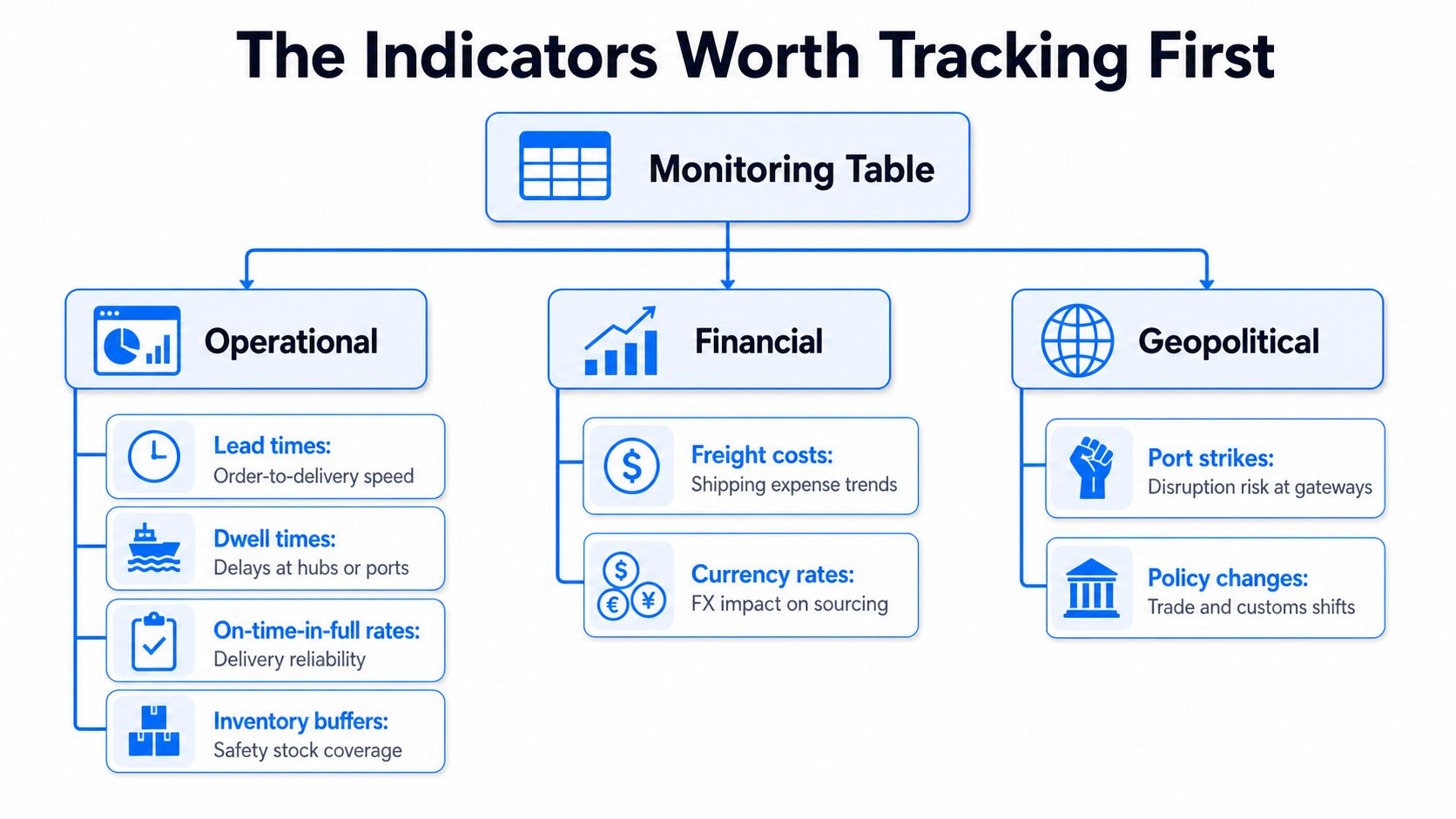
A shipment can slip, a supplier can miss a handoff, and a customer still hears nothing useful. That gap is where SMBs lose trust, because the dashboard may show activity while the customer only sees silence. The first job is to rank indicators by whether they change a promise, a route, a margin, or a compliance step. That keeps the dashboard usable, not decorative.
Lead times belong at the top because they drive nearly every downstream choice. Even after improvement from the 100-day peak in July 2022, the material lead-time figure of 79 days in April 2024 still points to a slower operating environment than pre-2020 conditions, according to Deloitte's 2024 supply chain risk survey. For SMBs, that means lead time monitoring needs to sit next to promise dates, reorder timing, and any customer-facing ETA, because that is where the delay becomes real.
Dwell time comes next, especially where handoffs create hidden delays. A shipment can move normally in transit and still stall at a port, cross-dock, warehouse, or customs point while nobody on the customer side hears about it. On-time-in-full performance is the customer-facing view of the same problem, because it shows whether the network delivered what it said it would.
Freight cost pressure, fuel surcharges, and supplier-financing health are the financial metrics that tend to matter most. A supplier can look stable on paper and still be close enough to stress that the shipping delay appears before the supplier admits it has a problem. Milken Institute's emphasis on financing underserved suppliers and the “missing middle” fits that reality, because weak supplier cash flow can spill into late replenishment, missed bookings, and more expensive recovery moves.
Regulatory monitoring works the same way. Tariff changes, sanctions, and cold-chain or product-handling rules matter because they can change sourcing options, lane design, or document requirements overnight. KPMG's supply chain trends point toward broader traceability, governance, and closer monitoring of risk hot spots down to deeper supplier tiers, which is the right direction for teams handling compliance-sensitive goods (KPMG supply chain trends). That does not mean tracking every legal bulletin. It means watching the ones that can block release, alter routing, or force a different supplier.
| Bucket | Watch first | Why it matters |
|---|---|---|
| Operational | Lead time, dwell time, on-time-in-full | Changes shipping promises and replenishment timing |
| Financial | Freight cost, supplier financing health | Affects margin and supply stability |
| Regulatory | Tariffs, sanctions, handling rules | Can block sourcing or shipment release |
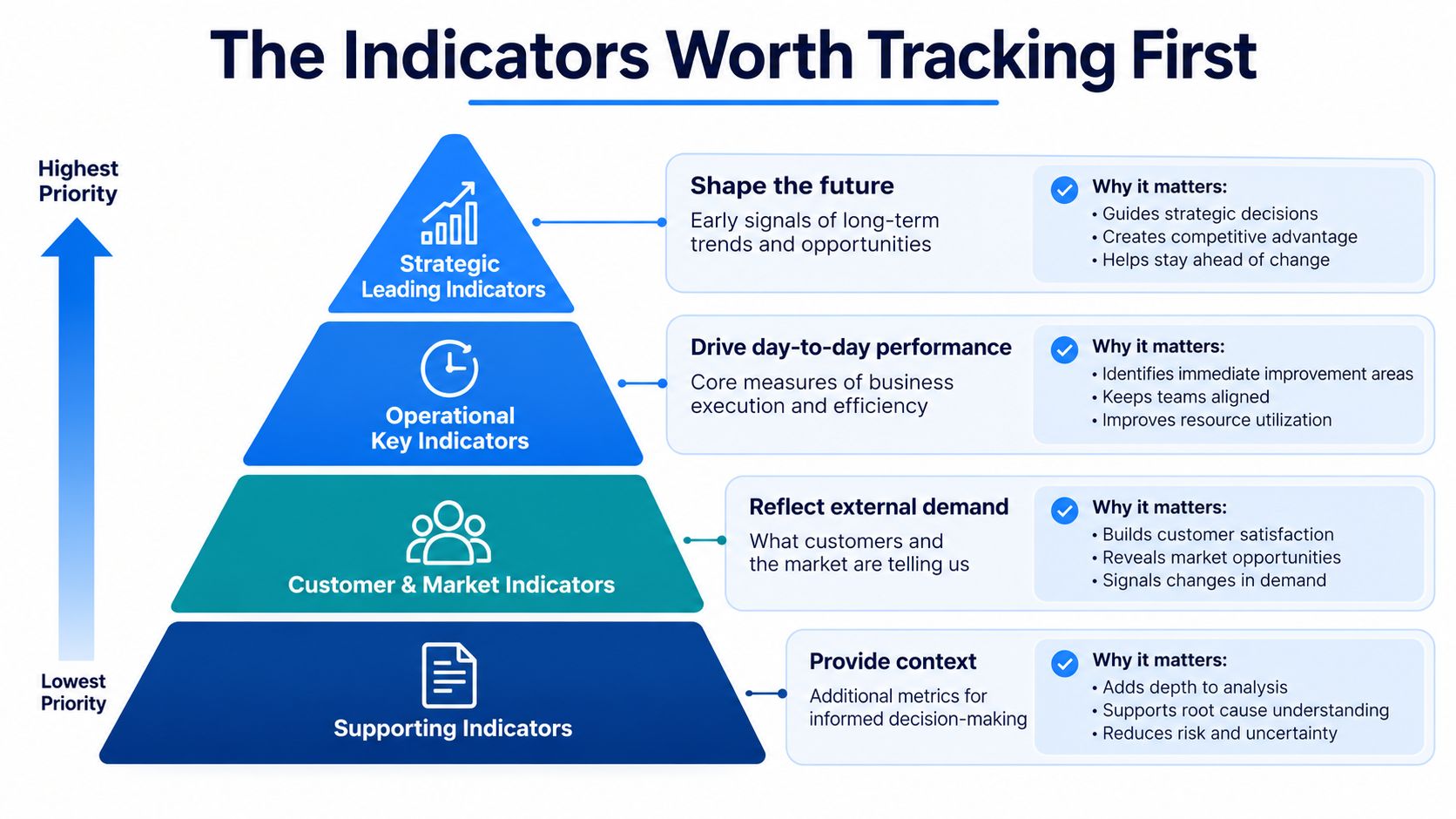
If a metric changes a customer promise or a vendor selection, it earns a permanent spot on the dashboard.
That filter is enough for most SMB teams. A shorter list beats a sprawling one because people can spot what changed, decide who needs to hear about it, and send a message before the silence starts to damage trust.
The fastest way to sharpen supply chain updates is to stop chasing scattered screenshots and start pulling from a small set of dependable feeds. Free public sources usually catch the first signal, while paid tools help confirm it and push it into the workflow.
Government trade portals, port status dashboards, and industry-association alerts give you the earliest public read on movement constraints, policy shifts, and lane disruptions. They are not always clean, and they can be noisy, but they matter because they often surface the first hard confirmation that something changed.
Industry group reports are worth watching too, especially when they point to broader operational patterns instead of a single event. ASCM's 2024 trends report ranks digitization, big data and analytics, and artificial intelligence/machine learning as the top three trends shaping supply chains, which is useful context for teams that need to decide where to focus attention first. The Penske summary of the 2024 CSCMP State of Logistics Report is also a helpful reference point, because it frames logistics pressure in a way that helps operators judge whether a local delay is part of a wider shift.
Carrier visibility tools and control-tower platforms work best when they turn public signals into exception handling. Gartner supply chain insights points toward AI-enabled visibility and decision support, which matches what teams need, a place where shipment milestones, inventory positions, and order changes can be reviewed in one workflow. That is more useful than a stack of separate reports.
Cold-chain operators need an even tighter source stack. Supply Chain Dive's coverage of temperature-controlled facilities near airports shows why node-level infrastructure matters when service levels are tied to pharmaceuticals and other sensitive goods (Supply Chain Dive). Proximity reduces handoff time, and handoff time is where temperature risk often starts.
A practical 30-minute starter stack looks like this:
That is enough to start. Most SMBs do not need a dozen subscriptions. They need one place where the next decision becomes obvious, and one communication path that tells customers what changed before silence creates doubt. For a practical framework on that handoff, see customer communication strategies.
The channel matters as much as the content. A clear message sent through the wrong medium still creates confusion, and a late message through the right medium can't recover trust that's already gone cold.
| Channel | Best for | Speed | Personal feel | Compliance watchouts |
|---|---|---|---|---|
| SMS | Short delays, ETA changes, quick confirmations | Very fast | High | Consent and opt-out handling |
| Detailed explanations, attachments, documentation | Slower | Moderate | Inbox clutter, missed opens | |
| Voice broadcasting | Live-answer audiences, urgent explanations | Fast | High | Call timing, caller ID, DNC rules |
| Ringless voicemail | High-importance, non-urgent updates that need a personal touch | Fast once scheduled | High | Consent, state rules, frequency control |
SMS is the best default for quick operational changes because it lands fast and doesn't ask the customer to hunt for the message. Email wins when the update needs context, attachments, or a paper trail. Voice broadcasting is useful when the audience is likely to pick up live and needs a real human explanation in the moment.
If the customer needs to pause, reroute, reschedule, or confirm receipt, SMS is usually the first move. If they need documents or a full explanation, email carries the detail better. If the issue is serious enough to deserve a familiar voice but not so urgent that it should interrupt a meeting, a recorded or AI-driven voice broadcast can do the job cleanly.
Ringless voicemail fills a very specific gap. It delivers a message directly to the inbox without ringing the phone, which makes it feel less intrusive than a live call while still sounding personal enough to matter. That's why it can work well for non-urgent but high-importance updates, especially when paired with a follow-up SMS that includes the callback number or tracking link.
For a broader communication framework, this customer communication strategy guide is useful as a companion view. The best systems don't pick one channel and force every update through it. They match the message to the level of disruption and the amount of action the customer has to take.
A routine change can go by email or SMS alone. A live incident usually deserves a faster first touch, then a richer follow-up. A high-value customer or a regulated shipment often needs the personal feel of voice plus a written record.
The teams that do this well think in layers. Fast first notice, then detail, then confirmation. That sequence prevents the worst failure mode, where a customer hears about a problem from operations, but still doesn't know what the company is doing about it.
Ringless voicemail is not just another voice feature. It's a different delivery method, because the message goes straight into the voicemail inbox without the phone ringing first. That mechanic changes how the recipient experiences it, how the team schedules it, and how it fits into a broader communication flow.
A voicemail drop, also called voicemail broadcast, is useful when you want the message to land with a personal tone but you don't want to interrupt the recipient's day. Busy B2B buyers, healthcare patients between appointments, parents, and field workers often ignore unknown numbers, but they may still check voicemail when it's convenient.
That makes ringless voicemail especially strong for updates that are important but not so urgent that they demand an immediate live answer. It can also be scheduled, which helps operations teams time a message to a lane event, a delivery window, or a morning follow-up window without trying to catch someone on the first ring.
The strengths are simple. You can record once, reuse the message, schedule delivery, and reach both mobile and landline inboxes. That makes it practical for teams that need consistent messaging without putting a dispatcher or account manager on the phone every time a shipment shifts.
The limitation is just as important. Ringless voicemail doesn't replace real escalation when a shipment is actively at risk or when the customer needs to choose between options immediately. It works best when paired with another channel, usually SMS, so the recipient has a callback number or a tracking link in hand.
Ringless voicemail should feel like a timely heads-up, not a pressure tactic.
That's why the channel belongs in an operational playbook, not a marketing drawer. The delivery mechanics are distinct, the recipient experience is distinct, and the use case is distinct. If you treat it like a softer version of a live call, you'll miss its real value.
For a deeper look at the channel itself, this ringless voicemail marketing overview is useful because it keeps the mechanics separate from general voice outreach. Used correctly, ringless voicemail gives an SMB one more way to keep customers informed without creating unnecessary friction.
The strongest supply chain update process is boring in the right way. A trigger fires, the message order is already decided, and the customer hears about the change before frustration has room to build.
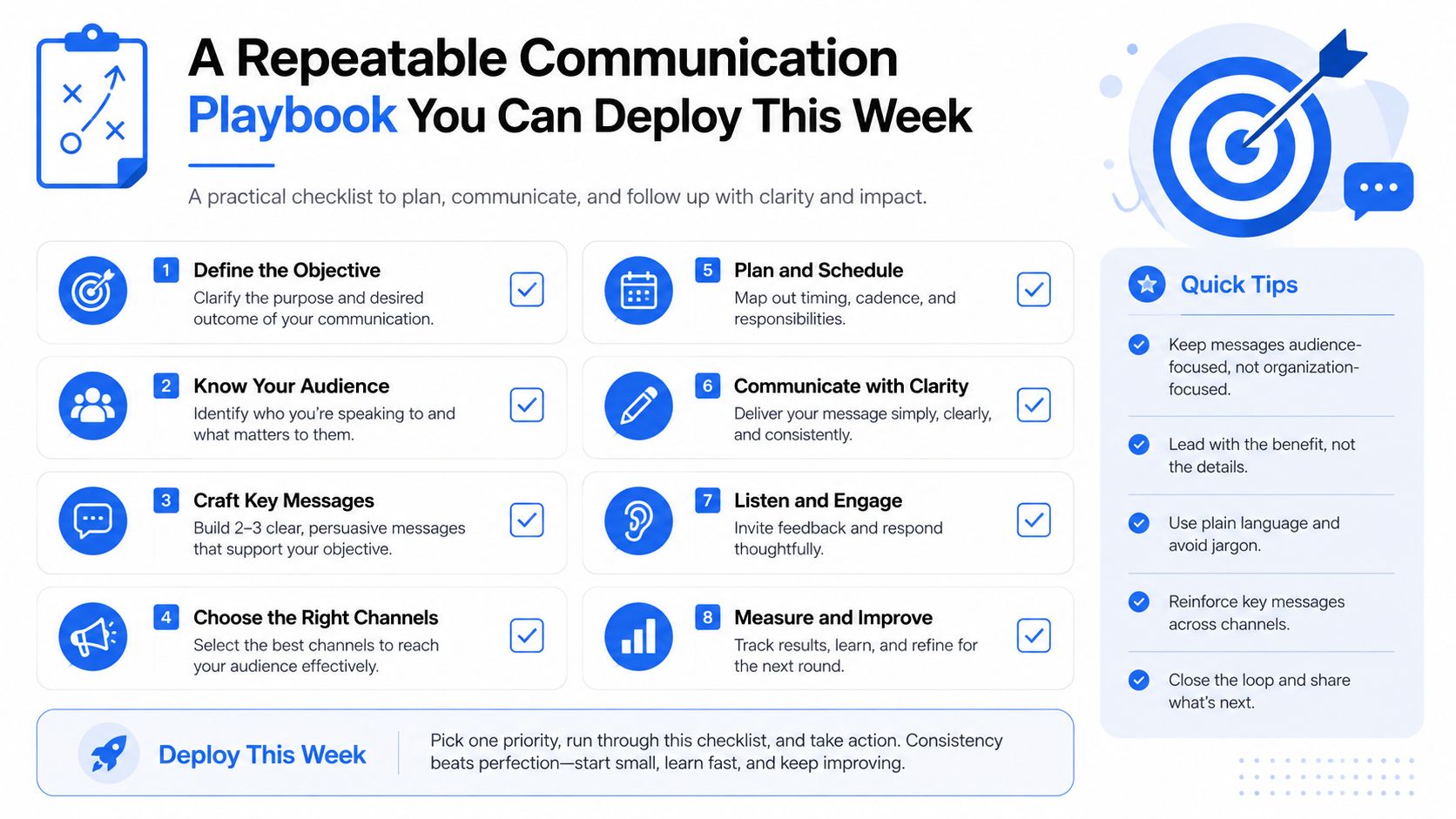
A live alert should trigger an SMS confirmation first. If the issue calls for a personal touch, a ringless voicemail can follow, and send a mass text when you need the same message in front of multiple customers fast. The email carries the detail and the record, and a reminder lands before the customer-facing commitment comes due.
That sequence works because each channel does one job well. SMS gets attention fast. Ringless voicemail adds a human touch without interrupting the day. Email preserves the explanation and the documentation trail. The reminder closes the loop before a customer has to chase an update.
Confirmed delay: say what changed, what the new status is, and when the next update will arrive. Do not over-explain the cause if the cause is still changing. Customers usually want the revised expectation first.
Partial shipment: explain what is shipping now, what is backordered, and whether the remaining line items will follow separately. That keeps the conversation tied to fulfillment reality instead of forcing the customer to infer the split.
Recovered service level: tell the customer the issue is resolved, confirm what is back on track, and restate the next milestone. That message matters because customers remember the disruption longer than the recovery unless you close it out clearly.
Consent records, opt-out handling, and time-of-day rules have to be part of the process, not an afterthought. For healthcare-related shipments or patient communications, HIPAA considerations also matter, so channel choice should be reviewed before any sensitive message goes out.
Investment in supply chain systems keeps rising because teams want better coordination across alerts, handoffs, and customer updates. That fits with the wider point about smaller suppliers being easy to miss until they become the source of the disruption.
A short prioritization checklist helps the team act fast:
That is the kind of operational discipline that keeps supply chain updates from turning into customer escalations.
Call Loop gives you a practical way to send SMS, voice broadcasting, and ringless voicemail from one place, so your team can match the channel to the disruption instead of improvising under pressure. If you want supply chain updates to reach customers faster and sound more human, visit Call Loop and see how coordinated outreach can support the way your operation really works.
Chris Brisson
Chris is the co-founder and CEO at Call Loop. He is focused on marketing automation, growth hacker strategies, and creating duplicatable systems for growing a remote and bootstrapped company. Chat with him on X at @chrisbrisson


Trusted by over 45,000 people, organizations, and businesses like


