
See a Demo
You're just one step away from seeing Call Loop in action.
Enter your information below to watch a demo right now.

You're just one step away from seeing Call Loop in action.
Enter your information below to watch a demo right now.

In a world of crowded inboxes and fleeting attention, SMS marketing stands out with a staggering 98% open rate. But simply sending a text isn't enough to guarantee success. The key to unlocking its true potential lies in crafting the right message for the right moment, turning a simple notification into a powerful conversion tool. A poorly timed or generic text can be ignored, while a strategic one can drive immediate action.
This guide provides a comprehensive collection of powerful, industry-tested text message examples designed for maximum impact. We will break down the precise strategy behind each template, from high-urgency promotional flash sales and critical appointment reminders to customer re-engagement campaigns. You'll gain actionable insights to replicate their success, learning how to combine concise, compelling copy with strategic timing and personalization to capture attention and produce measurable business outcomes.
We'll also explore how complementing your SMS efforts with channels like ringless voicemail can create a comprehensive, multi-channel outreach strategy without being intrusive. Fine-tuning these messages is a critical component of building a high-performing communication system. To maximize the impact of your text message examples and drive better results, exploring dedicated conversion rate optimization services can provide the expert analysis needed to turn good campaigns into great ones. Dive into these examples and discover how to elevate your messaging from simple communication to a revenue-driving machine.
Promotional text message examples are marketing-focused SMS campaigns designed to drive immediate sales and customer action. These messages leverage urgency and exclusivity to promote special offers, new products, or limited-time events. They are a direct, high-impact channel for communicating value and boosting revenue, often seeing conversion rates significantly higher than email.
The core strategy is to deliver a compelling offer directly to a customer's most personal device. This approach is highly effective for time-sensitive deals, as texts have an average open rate of 98%. When a customer opts in to receive marketing texts, they give you a direct line to capture their attention.
Let's dissect a classic promotional SMS:
Example:
"Hey [FirstName], it's StyleMaven! As a VIP, get early access to our Flash Sale: 40% OFF everything for the next 3 hours only. Use code VIP40 at checkout. Shop now: [link] Reply STOP to unsubscribe."
Strategic Analysis:
[FirstName] merge tag makes the message feel personal, not like a generic blast.To create high-converting promotional text message examples, follow these tips:
Promotional SMS is a cornerstone of modern mobile marketing, especially for e-commerce brands. By crafting compelling, urgent, and compliant messages, businesses can turn their SMS list into a powerful revenue engine. To dive deeper into this strategy, you can explore more insights on SMS marketing for e-commerce.
Appointment reminder texts are automated SMS messages sent to clients or patients to confirm upcoming bookings. These text message examples are crucial for service-based businesses like healthcare providers, salons, and professional offices to reduce costly no-shows and streamline scheduling. They function as a simple, effective nudge that ensures clients remember their commitments and gives them an easy way to confirm or reschedule.
This strategy capitalizes on the high visibility of text messages to dramatically decrease missed appointments, which can have a significant impact on revenue and operational efficiency. By automating this communication, businesses save valuable administrative time while providing a professional, convenient experience for their clients. A well-timed reminder is a cornerstone of modern customer service.
Let's analyze a standard appointment reminder text:
Example:
"Reminder: Your appointment with Dr. Smith's office is set for tomorrow, Oct 26, at 2:30 PM. Please reply C to confirm or call 555-123-4567 to reschedule. Thank you!"
Strategic Analysis:
To create effective appointment reminder text message examples, follow these best practices:
Automated reminders are a simple yet powerful tool for any appointment-based business. By crafting clear, concise, and actionable messages, you can significantly reduce no-shows, improve operational flow, and enhance the customer experience. For more detailed templates and strategies, you can discover more about appointment confirmation text messages.
Two-factor authentication (2FA) text message examples are transactional, security-focused SMS messages that provide an extra layer of protection for user accounts. These messages deliver a one-time passcode (OTP) that users must enter to verify their identity, typically during login or when performing sensitive actions like changing a password or authorizing a payment. They are a critical tool for preventing unauthorized access and protecting user data.
The purpose of a 2FA text is to confirm that the person trying to access an account is in possession of the associated phone number. Because SMS is delivered directly to a personal device, it serves as an effective second verification factor alongside a password. This simple yet powerful security measure is now standard practice for tech companies, financial institutions, and any service handling sensitive information.
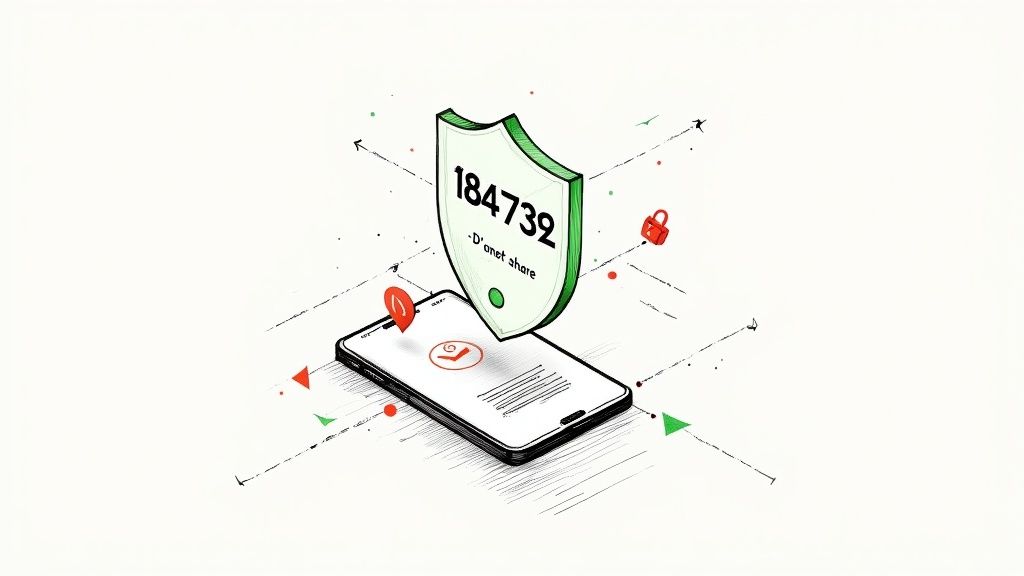
Let's break down a standard 2FA text message:
Example:
"Your [Company Name] verification code is 847392. Do not share this code with anyone. This code is valid for 10 minutes."
Strategic Analysis:
[Company Name] immediately provides context and reassures the user that the message is legitimate.To implement effective and secure 2FA text message examples, follow these best practices:
Transactional messages like 2FA texts are a cornerstone of user trust and account integrity. While they don't involve marketing, their reliability is paramount. Understanding the security aspects of SMS is crucial, and you can get more information on SMS security protocols by exploring SMS encryption.
Customer service text message examples are essential for modern support operations, providing timely updates and direct assistance through a channel customers prefer. These SMS messages are used to confirm support requests, provide status updates on tickets, deliver troubleshooting steps, and gather feedback. They significantly enhance the customer experience by offering transparent, real-time communication, which builds trust and reduces customer frustration.
The core strategy behind support SMS is to meet customers where they are, offering convenient and immediate information. Instead of forcing a customer to check their email or log into a portal, a quick text keeps them informed and feeling valued. This proactive communication can turn a potentially negative support interaction into a positive brand experience, improving retention and loyalty.
Let's analyze a common customer service SMS:
Example:
"Hi [FirstName], this is an update on your support ticket #54782. Our team is actively investigating the issue and we expect to have another update for you by 5 PM EST tomorrow. Questions? Reply to this text or call 1-800-555-HELP. Thank you for your patience."
Strategic Analysis:
[FirstName] and the specific ticket number (#54782) confirms you are addressing their unique problem.To elevate your customer support with text message examples, implement these tactics:
By incorporating SMS into your customer support workflow, you provide a superior, modern experience. This approach not only resolves issues faster but also demonstrates that you value your customer's time, turning support from a cost center into a powerful loyalty-building tool.
Transaction confirmation text message examples are automated SMS messages sent immediately after a customer completes a purchase, payment, or any other financial transaction. These texts serve as an instant receipt, providing peace of mind and building trust. They are a critical component of the customer experience, confirming that an action was successful and providing essential details for their records.
The primary function of these messages is to reduce post-purchase anxiety and improve customer confidence. By instantly verifying a transaction, businesses can prevent customer service inquiries and reinforce the security of their platform. This immediate feedback loop is expected by modern consumers and is a standard practice for e-commerce, banking, and peer-to-peer payment services.
Let's dissect a common e-commerce transaction confirmation:
Example:
"Your Amazon order #123-4567890 for a 'Smart LED Desk Lamp' has been confirmed. Total: $47.99. Expected delivery: Thu, Jan 18. Track your package: [link]. View order details: [link]"
Strategic Analysis:
To create effective transaction confirmation text message examples, follow these best practices:
Transaction confirmations are a fundamental part of customer communication. They are not just functional receipts; they are opportunities to build trust and deliver a seamless, professional experience that keeps customers feeling secure and informed.
Delivery and logistics update text message examples are transactional SMS notifications that keep customers informed about their order's journey in real time. These messages are crucial for managing customer expectations, reducing support inquiries, and enhancing the overall post-purchase experience. They cover key milestones such as order confirmation, dispatch, "out for delivery," and final delivery confirmation.
This strategy transforms the anxious waiting period into a transparent and reassuring process. By providing proactive updates directly to a customer's phone, businesses in e-commerce, food delivery, and service industries build significant trust and satisfaction. The high open rates of SMS ensure these critical updates are seen immediately, which is vital for time-sensitive deliveries.
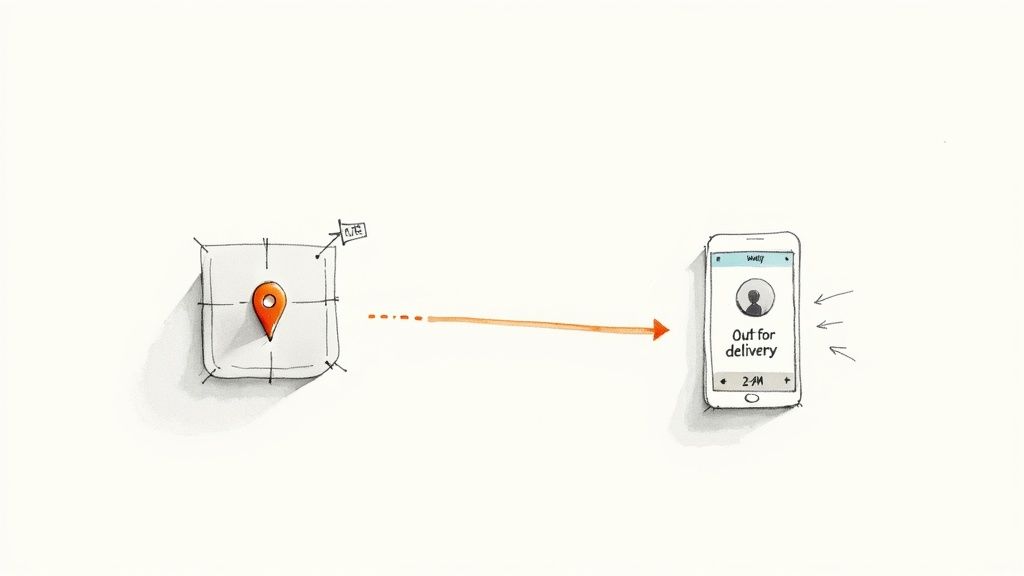
Let's analyze a typical "out for delivery" notification:
Example:
"Great news, [FirstName]! Your order #[OrderNumber] from The Gadget Hub is out for delivery. Expected arrival: today between 2-4 PM. Track your driver, Marcus, here: [link] Reply HELP for assistance."
Strategic Analysis:
[OrderNumber] allows the customer to quickly identify which purchase the message refers to, which is especially helpful for frequent shoppers.[link] gives customers a sense of control and direct visibility into the delivery process.To create effective delivery and logistics text message examples, follow these best practices:
By integrating automated delivery updates into your operations, you can dramatically improve the customer experience, reduce support overhead, and foster long-term loyalty. This proactive communication is a simple yet powerful tool for any business that ships physical goods.
Re-engagement or win-back text message examples are strategic SMS campaigns designed to reactivate dormant customers who have stopped purchasing or engaging with your brand. These messages target lapsed users by reminding them of your value and providing a compelling reason to return, such as a special discount or an update on new offerings.
The goal is to rekindle a customer relationship before it's lost for good. It's often more cost-effective to win back a past customer than to acquire a new one. By sending a timely, personalized message directly to their phone, you can break through the noise and remind them why they chose your business in the first place.
Let’s analyze a typical win-back text message example:
Example:
"Hey [FirstName], we miss you at Bloom & Petal! It's been a while. To welcome you back, here’s 25% OFF your next order. Use code COMEBACK25. See what's new: [link] Reply STOP to unsubscribe."
Strategic Analysis:
To craft effective re-engagement and win-back text message examples, consider these strategies:
Win-back SMS campaigns are a powerful tool for reducing churn and boosting customer lifetime value. By strategically reaching out to inactive subscribers, businesses can revive valuable relationships and turn them back into loyal, active customers.
Appointment booking and scheduling request text message examples are interactive SMS campaigns designed to simplify the booking process for customers. Instead of requiring a phone call or website visit, these messages allow clients to schedule or reschedule appointments directly via text or through a provided link. This method dramatically reduces friction, increases booking rates, and improves the overall customer experience by meeting them on their preferred communication channel.
The core strategy is to make scheduling effortless. By initiating the booking conversation and providing simple, actionable options, businesses can fill their calendars faster and reduce no-shows. This approach is particularly effective for service-based industries like healthcare, salons, and professional consulting, where timely bookings are crucial for revenue and operational efficiency.
Let's dissect an effective appointment booking SMS:
Example:
"Hi [FirstName], it's time to book your next dental cleaning at Bright Smiles Dental. We have openings next week. Reply with your preferred day: 1) TUE 2) WED 3) THU. Or see all times here: [link]"
Strategic Analysis:
[link]) offers a fallback for users who want to see more options or prefer a visual calendar interface.[FirstName] makes the interaction feel like a one-on-one conversation rather than an automated blast.To create effective appointment booking text message examples, follow these tips:
By streamlining the booking process through SMS, businesses can improve operational efficiency, enhance customer satisfaction, and ensure a consistently full schedule. It transforms scheduling from a chore into a simple, two-way conversation.
Flash sale and limited availability alert texts are high-urgency SMS messages designed to trigger immediate customer action. By leveraging the psychological principles of scarcity and Fear of Missing Out (FOMO), these alerts announce time-sensitive deals or low stock levels. They are extremely effective for clearing inventory, boosting short-term sales, and re-engaging subscribers.
The strategy behind these text message examples is to create a compelling reason for customers to stop what they are doing and make a purchase. With a 98% open rate, SMS is the ideal channel for delivering these urgent notifications, ensuring the message is seen within minutes. When a customer knows an offer is fleeting or a popular product is about to sell out, they are far more likely to convert on the spot.
Let’s analyze a powerful flash sale alert:
Example:
"⏰FLASH SALE ALERT from UrbanWear! For the next 4 hours ONLY, get 50% OFF all graphic tees. Our most popular designs are selling fast. Don't wait: [link] Reply STOP to unsubscribe."
Strategic Analysis:
To maximize the impact of your flash sale text message examples, use these tactics:
Flash sale and limited availability alerts are a potent tool for e-commerce and retail businesses. By creating a genuine sense of urgency and providing a clear path to purchase, you can convert subscribers into buyers and drive significant revenue in a very short time frame.
Personalized recommendation text message examples are highly targeted SMS campaigns that suggest products to customers based on their past behavior. These messages leverage data like purchase history, browsing activity, or expressed preferences to deliver relevant suggestions that resonate on an individual level. This strategy moves beyond generic marketing blasts and transforms SMS into a personal shopping assistant.
The core principle is to use customer data to anticipate needs and introduce products a customer is likely to love. By referencing a previous purchase or interest, the message feels less like a sales pitch and more like a helpful, curated suggestion. This data-driven approach dramatically increases conversion rates by showing customers you understand their tastes and preferences.
Let's dissect a recommendation text based on a past purchase:
Example:
"Hi [FirstName]! You loved the 'Astro' Blue Running Shoes. Complete the set with our new 'Astro' moisture-wicking socks, designed for the perfect fit. Get 25% OFF your pair today: [link] Reply STOP to unsubscribe."
Strategic Analysis:
To create effective personalized recommendation text message examples, follow these best practices:
Personalized recommendations are a powerful tool for e-commerce and retail brands looking to increase customer lifetime value. By sending thoughtful, data-informed suggestions, you can foster loyalty and drive repeat purchases effectively.
Throughout this comprehensive guide, we've explored a wide array of powerful text message examples, from high-impact promotional alerts to essential appointment reminders and critical customer service updates. We've dissected what makes each template effective, highlighting the strategic use of personalization, clear calls-to-action, precise timing, and compliant language. You now have a robust toolkit of proven scripts ready to be adapted for your unique business needs.
The key takeaway is that successful SMS communication is never just about sending a message; it's about delivering the right message to the right person at the right time. Whether you're re-engaging a dormant customer with a win-back offer or confirming a critical delivery, the principles remain the same: be concise, provide immediate value, and make it easy for the recipient to take the next step.
Having a library of text message examples is the first step, but the true potential is unlocked when you systematize their delivery. This is where a strategic, multi-channel approach becomes a game-changer. Imagine a customer who misses an appointment reminder text. Instead of that being the end of the interaction, what if your system automatically followed up with a non-intrusive ringless voicemail drop an hour later? This layered approach significantly increases the chances of engagement without being disruptive.
Similarly, a flash sale announcement can be amplified by sending a voice broadcast to your most loyal customers, creating a sense of urgency that text alone might not achieve. By integrating these different communication channels, you create a more resilient and effective outreach strategy that caters to different customer preferences and captures attention in a crowded digital landscape.
As you move from theory to practice, keep these core principles at the forefront of your planning:
By mastering these elements, you transform a simple text message from a basic notification into a powerful tool for driving revenue, improving customer satisfaction, and building lasting relationships. The templates provided here are your blueprint; now it’s time to start building.
Ready to bring these powerful text message examples to life and build a multi-channel communication strategy? Call Loop provides the tools you need to automate SMS, voice broadcasts, and ringless voicemails all from one easy-to-use platform. Start turning your text message strategy into measurable results by exploring what Call Loop can do for your business today.
Chris Brisson
Chris is the co-founder and CEO at Call Loop. He is focused on marketing automation, growth hacker strategies, and creating duplicatable systems for growing a remote and bootstrapped company. Chat with him on X at @chrisbrisson


Trusted by over 45,000 people, organizations, and businesses like


