
See a Demo
You're just one step away from seeing Call Loop in action.
Enter your information below to watch a demo right now.

You're just one step away from seeing Call Loop in action.
Enter your information below to watch a demo right now.


So, what exactly is a drip marketing campaign?
Think of it as a series of automated messages sent to prospects or customers over time, triggered by specific actions or dates. Instead of shouting at everyone with one generic email blast, you're delivering a steady, relevant "drip" of communication. This is how you build real relationships—by sending the right message at the right moment.
If you've ever tried to grow a plant, you know you can't just dump a bucket of water on it once and hope for the best. It needs a consistent, measured amount of water over time to thrive. Drip marketing works on the same principle. It’s all about nurturing leads and customers with a pre-planned sequence of messages, making sure they get exactly what they need, right when they need it.
But this isn't just about email anymore. The game has changed. Modern drip campaigns use a powerful mix of channels to connect with people where they actually live and breathe.
While email was the OG of drip marketing, the most effective strategies today are multi-channel. They weave together different communication methods to create a seamless and far more engaging customer journey.
Your automated sequence could look something like this:
By combining these, you create a dynamic presence that dramatically increases the odds of your message getting seen and acted on. Imagine a welcome sequence that starts with an instant SMS, is followed by a ringless voicemail from a team member two days later, and then wraps up with a follow-up text a week after that. Now you're talking.
A drip campaign's core job is to replace overwhelming, one-size-fits-all communication with a personalized, timed sequence that feels genuinely helpful and relevant to the person on the other end.
What truly makes a drip campaign special is its reliance on automation and triggers. A trigger is simply an action a user takes (like subscribing to a newsletter or abandoning a shopping cart) or a specific date (like an anniversary) that kicks off an automated sequence. This keeps your communication perfectly in context.
Once a sequence is triggered, the system automatically sends out your pre-written messages on a schedule you've already defined. This "set it and forget it" approach lets you nurture leads 24/7 without lifting a finger, ensuring no opportunity slips through the cracks.
Before we go further, let's break down the essential pieces that make these campaigns tick.
This table outlines the fundamental elements that power an effective drip marketing campaign, moving from the initial trigger to the final conversion.
These components work together to create a powerful, automated system that guides customers naturally toward a purchase or another goal.
And the results speak for themselves. This level of personalization and automation pays off big time. Businesses using drip campaigns have seen staggering lifts, with some brands achieving a 760% increase in revenue just from segmenting their sequences. By tailoring content to user behavior, you can turn casual browsers into loyal customers. If you want to dive deeper, you can explore more data on drip marketing effectiveness in this comprehensive market research.
Ultimately, this approach transforms your marketing from a bunch of isolated actions into a cohesive system that builds trust and loyalty every step of the way.
Think of a drip marketing campaign like a series of perfectly timed dominoes. One push—the trigger—sets off an automated chain reaction of messages. That trigger isn't some random event; it's a specific action a person takes, signaling they're ready to hear from you.
This could be anything from someone signing up for your newsletter to leaving an item in their shopping cart. Once they pull that trigger, your system takes over, kicking off a pre-planned sequence of messages. The beauty is, it's a "set it and forget it" process that makes sure every communication feels timely and relevant.
This visual breaks down that simple, powerful flow: a trigger fires off an automated drip sequence.
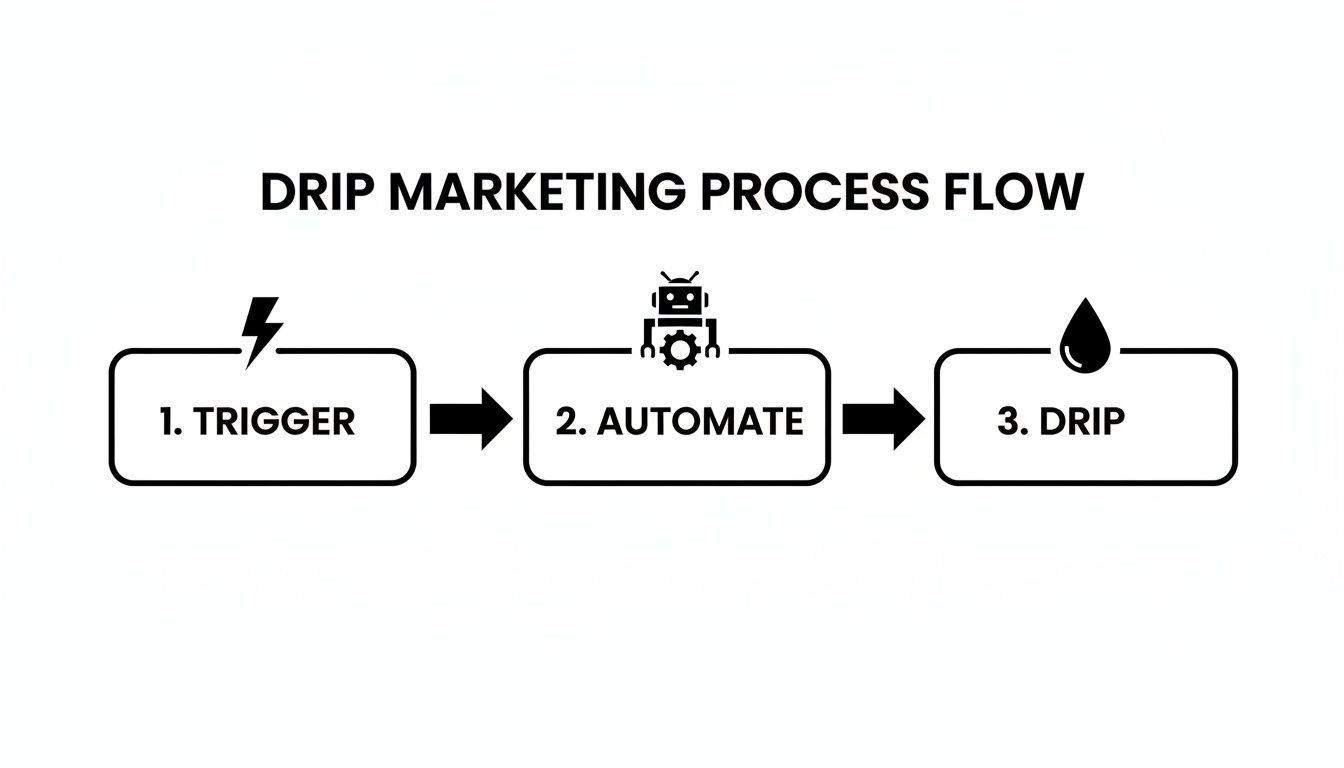
The whole thing is behavior-driven. It moves seamlessly from a user's action to a multi-step, multi-channel conversation without you having to lift a finger.
Let’s walk through what this looks like in the real world. Imagine a potential customer, Sarah, visits your site and downloads a free guide, giving you her name and phone number. Boom. That action triggers your "New Lead Nurturing" drip campaign.
Here’s how her journey might unfold:
This multi-channel approach is so much more effective than a single, aggressive sales pitch. Those built-in delays give the lead room to breathe and actually engage with your content on their own terms.
The "drip" is as much about the pauses as it is about the messages themselves. Strategic timing is what makes a campaign feel like a natural conversation instead of a robotic blast. For instance, research shows that leads are nine times more likely to convert when businesses follow up within five minutes. Your initial automated SMS handles that critical window perfectly.
The delays that follow are just as deliberate. A two-day gap before a ringless voicemail gives them time to look over the guide. A five-day gap before the final check-in keeps your brand top-of-mind without feeling pushy.
By mapping your message timing to the customer journey, you transform your outreach from an interruption into a welcome guide. You're providing value at each step, building the trust needed for them to take the next action.
Not all leads are the same, so why would you send them all the same messages? Segmentation is just a fancy word for dividing your audience into smaller groups based on who they are or what they've done. This lets you send different, hyper-relevant messages to each group.
For example, you could create separate drip sequences for:
This kind of targeting is what separates the pros from the amateurs. When you tailor everything—from your SMS copy to the tone of a ringless voicemail drop—to a specific segment, your engagement goes through the roof. You're no longer just broadcasting; you're having relevant conversations at scale.
If you're interested in setting up these kinds of sequences, you can learn more about building a marketing automation workflow to get started.
Let's move from theory to what really matters: results. This is where a smart drip marketing campaign truly shines. At its core, automation gives your team back its most precious resource—time. Instead of getting bogged down in manual follow-ups, your system does the heavy lifting, delivering the right message at the right time, every single time.
This means no lead ever falls through the cracks. Ever. Think of it as a safety net that catches every new subscriber or interested person and gently guides them down a path you've already mapped out. This consistency builds a rock-solid, professional brand image and shows customers you're on top of things from the very first hello.
Here's one of the biggest wins: drip campaigns are incredible at nurturing leads. Let's be honest, people rarely buy the second they discover your brand. They need information. They need to trust you. They need a few gentle nudges to keep moving forward. This is where drip campaigns excel, building that relationship organically.
By sending a sequence of genuinely valuable content—helpful tips, customer stories, or exclusive insights—you're educating your audience over time. You stop selling and start guiding them through their own decision-making process. This simple shift positions you as a trusted expert, making it a no-brainer for them to choose you when they're finally ready to pull the trigger.
It feels more like a helpful conversation than a hard sales pitch, which is the secret to building customer relationships that actually last.
Because drip messages are triggered by something a person actually did, they are massively more relevant than a generic marketing blast. That relevance is a direct line to higher engagement. Instead of a cold, one-size-fits-all message, your audience gets communication that speaks directly to what they just did.
The numbers don't lie. Timely, automated messages consistently crush one-off marketing efforts. In fact, SMS drip campaigns are in a league of their own, boasting 98% open rates and response rates over 45%. That just blows typical email performance out of the water. If you want to see more data on this, check out this breakdown of SMS marketing statistics.
The real magic of a drip campaign is its ability to maintain momentum. It keeps the conversation going with people who are interested but not quite ready to commit, ensuring your brand stays top-of-mind.
This sustained engagement is what naturally leads to higher conversions. By systematically building trust and delivering value, drip campaigns warm up leads until they're hot. This automated process turns casual window shoppers into paying customers, boosting loyalty and getting the most value out of every single lead you generate. It's a reliable system for making every customer feel seen—and that's what truly drives growth.
Understanding the theory behind drip marketing is one thing, but seeing it in action is what makes the concept click. The true power of a drip campaign is its flexibility. Let's break down some proven blueprints for different industries to show you exactly how you can put these strategies to work.
These examples blend multiple channels, like SMS and ringless voicemail, to create a complete, well-rounded communication experience.
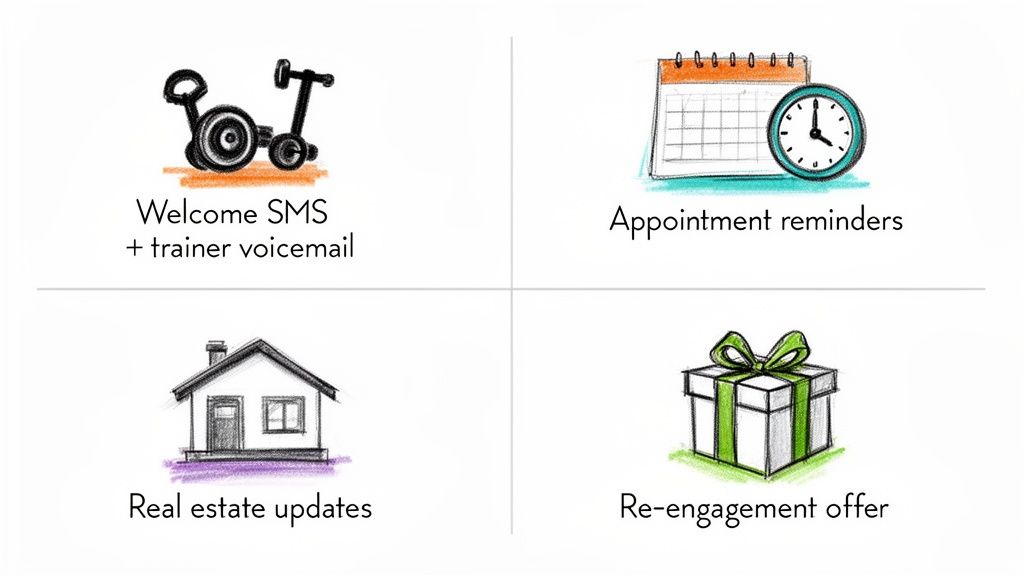
When someone joins your gym, those first few weeks are make-or-break for building habits and earning their long-term loyalty. A multi-channel welcome series keeps new members motivated and feeling like part of the community from day one.
For any business that runs on appointments—salons, dental offices, consultants—no-shows are a killer. They punch a hole right in your revenue. This simple, automated reminder sequence can drastically cut down on missed appointments.
This simple two-step process provides a huge return just by keeping your schedule full.
The sales cycle for a real estate agent can be long and winding. Drip marketing is the perfect tool to keep potential buyers engaged with timely, relevant info without you having to manually follow up with every single person, every single day.
It's almost always cheaper to win back a past customer than to find a new one. A re-engagement drip campaign can wake up those dormant contacts with a compelling reason to come back.
This is a classic move in ecommerce, where many stores find huge success when they reduce shopping cart abandonment with automated nudges.
Don't just take our word for it—the data on automation is compelling. By 2026, automation is expected to drive 37% of email revenue from just 2% of volume, with automated messages seeing 332% higher clicks than standard broadcasts. This trend is amplified by a 30-40% rise in SMS drip adoption across key sectors.
If you're looking for more inspiration, we've got plenty of other multi-channel marketing campaign examples you can build upon.
Alright, knowing what a drip campaign is and seeing some examples in the wild are the first big steps. Now, let’s get practical and move from theory to action.
Building a sequence that actually performs takes a bit of strategy, a dash of creativity, and a whole lot of respect for your audience's attention. The best campaigns aren't just a random string of messages; they’re a carefully crafted journey. By sticking to a few core principles, you can create campaigns that not only get noticed but also drive real results, turning a flicker of interest into a loyal customer.
Before you type a single character, you have to answer this question: What is the one thing you want someone to do when this sequence is over? Every great drip campaign is built on a single, laser-focused goal. Trying to accomplish too much at once just waters down your message and leaves people confused.
Is your main goal to:
That one goal is your North Star. It shapes everything that comes next—the tone you use, the info you share, and the final call to action.
When you’re working with SMS and voice messages, short and sweet is the name of the game. Your audience is probably on the move, so your copy needs to be direct, easy to scan, and valuable.
For SMS, get right to it. Use short sentences, clear calls to action, and add a touch of personalization to make it feel like it was sent just for them. For voice messages, especially a ringless voicemail drop, the script needs to sound like a real person talking, not a stiff, robotic announcement. A good trick is to read it out loud to make sure it flows naturally.
In modern marketing, trust is everything. And you build that trust by respecting people's privacy and their choices. Compliance isn't just a good idea—it's essential.
Always get explicit consent (an opt-in) before you add anyone to an automated messaging sequence. Just as crucial, every single message needs a simple, obvious way for them to opt out, like replying "STOP" to a text.
Ignoring these rules will tarnish your brand's reputation and can land you in some serious legal and financial trouble. Making consent and control a core part of your strategy is non-negotiable. If you need tools to help manage this, it's worth checking out the best drip campaign software options, as many have compliance features built right in.
One of the trickiest parts of a drip marketing campaign is figuring out the perfect timing for your messages. You want to stay on their radar without becoming a flat-out annoyance. Bombard them with messages too quickly, and you'll seem spammy, leading to a flood of opt-outs. But if you wait too long between messages, they'll go cold and forget who you are.
Try to map your messages to the natural customer journey. A welcome series might have a few messages bunched together in the first week to build momentum. On the other hand, a long-term nurturing campaign could spread touchpoints out over several weeks or even months. The key is to add value every single time you reach out, not just to make noise.
Finally, a drip campaign is not a "set it and forget it" tool. Think of it as a living system that needs regular check-ups and tweaks. Keep a close eye on your performance metrics—your open rates, click-through rates, response rates, and most importantly, your conversion rates.
This data is gold. Use it to make smart decisions. A/B test different SMS copy. Play around with the timing between messages. Try a different script for your ringless voicemail. Small, data-backed adjustments can lead to huge improvements over time, making sure your campaigns are always getting better.
A drip marketing campaign is only as good as the results you can measure. Without solid data, you're just throwing stuff at the wall and hoping it sticks. To really get a handle on how your automated sequences are doing, you need to zero in on the key performance indicators (KPIs) that actually matter to your business. This means going beyond vanity numbers and looking at the metrics that show people are genuinely engaging and taking action.
By tracking the right data, you can stop hoping your campaigns work and start knowing exactly how they're performing and where you can make them even better. This is what separates the campaigns that fizzle out from the ones that drive real growth.

With SMS, nearly 100% of messages get opened, so "open rate" isn't a very useful stat. You have to look at what happens after the text is read. That's where the real story is.
The game changes a bit when you're using ringless voicemail or voice broadcasts. Here, a click isn't the goal. You’re looking for a callback or some other form of direct engagement.
The real magic happens when you connect these channel-specific metrics to your bottom-line business goals. A high click-through rate is great, but the number that really matters is how many of those clicks turned into paying customers.
While all those other KPIs are vital for tweaking your campaigns, the most important metric will always be conversions. A conversion is simply when someone completes the goal your drip campaign was designed to drive.
So, did they actually:
Tracking this final step is how you figure out the true return on investment (ROI) for your drip campaign. By tying every text, voice broadcast, and ringless voicemail drop to a final conversion number, you get a crystal-clear picture of how much revenue your automated outreach is actually generating.
This kind of clarity is a superpower. It lets you make smart, data-backed decisions. You can double down on what’s working, ditch what isn’t, and constantly fine-tune your strategy to make sure every single message you send is contributing directly to your bottom line.
Jumping into a new marketing strategy always kicks up a few questions. To clear things up, we've pulled together the most common ones we hear from businesses just getting started with automated drip campaigns.
There's no magic number here—the right length is all about your goal. A welcome series for a brand-new customer might just need 3-5 messages over the first couple of weeks to really build that initial excitement. On the flip side, a long-term lead nurturing campaign could stretch over several months with messages spaced further apart.
The real key is to map your messages to the customer's journey. Don't just send messages to send them; focus on delivering real value at each step. Let the length of your sales cycle be your guide. It's always a good call to start simple and then add more touchpoints as you see what's working.
Absolutely. Drip campaigns are way more versatile than just being a sales tool. They're rockstars at any kind of communication that needs a timed, automated sequence of messages.
You can put them to work for things like:
This is a great question. Think of it like this: marketing automation is the entire toolbox, and a drip campaign is one of the most powerful tools inside it.
Marketing automation is the big-picture software that handles all sorts of marketing tasks automatically. A drip campaign is a specific feature of that software that sends a pre-written series of messages over time, kicked off by a specific trigger.
Basically, all drip campaigns are a type of marketing automation, but not all marketing automation is a drip campaign. Understanding that difference really helps clarify what a drip campaign is and how it slots into your bigger marketing picture.
Ready to build powerful, multi-channel drip campaigns that get results? Call Loop provides all the tools you need—from SMS and voice broadcasts to ringless voicemail—to automate your outreach, nurture leads, and drive conversions. Start your free trial today and see how easy it is to create your first campaign.
Chris Brisson
Chris is the co-founder and CEO at Call Loop. He is focused on marketing automation, growth hacker strategies, and creating duplicatable systems for growing a remote and bootstrapped company. Chat with him on X at @chrisbrisson


Trusted by over 45,000 people, organizations, and businesses like


