
See a Demo
You're just one step away from seeing Call Loop in action.
Enter your information below to watch a demo right now.

You're just one step away from seeing Call Loop in action.
Enter your information below to watch a demo right now.


Customers are already on their phones when they need you. They check availability there, compare options there, respond to reminders there, and often decide there. The problem is that many small businesses still treat mobile like a smaller desktop screen instead of the place where real conversations happen.
That gap shows up in missed appointments, slow lead follow-up, ignored emails, and offers that arrive too late. If you're asking what is mobile marketing strategy, the practical answer is simple. It's the plan for how your business reaches people on the device they carry all day, with the right message, in the right format, at the right moment, and with permission.
For service businesses, this goes beyond mobile ads and app notifications. It includes SMS, voice calls, and ringless voicemail. Those channels matter because many valuable conversions don't happen on a landing page. They happen when someone confirms an appointment, calls back, replies to a text, or listens to a voicemail and books.
A lot of businesses are still running communication like it's ten years ago. They send an email blast, maybe post on social, and hope customers come back when they're ready. Meanwhile, the customer is on a phone, skimming quickly, making fast decisions, and moving on if the path is clunky.
The shift isn't subtle. 63% of global internet traffic comes from mobile, and 69.61% of digital ad spend is projected to go to mobile according to mobile marketing statistics compiled by Salesgenie. That changes how you plan campaigns. Mobile is no longer a support channel. It's where attention already is.
For a small business owner, that means your strategy can't stop at “our site works on a phone.” A real mobile plan covers how people discover you, how they opt in, how you follow up, and how you reduce friction when they want to act.
When someone needs a dentist, a home service, a class schedule, or a callback from sales, they usually don't sit down at a desktop and research for an hour. They search, tap, text, or call. Those moments are short, and they carry high intent.
That's why mobile strategy has to include the full path, not just the first touch. If you're also refining the product or website side of the experience, this guide to web application mobile strategy is useful because the front-end experience and the outreach plan have to work together.
Practical rule: If a customer can easily read your message but can't easily complete the next step on mobile, you don't have a mobile strategy. You have a mobile message.
The most common mistake is treating mobile as a channel list instead of an operating system for customer communication. Businesses add SMS. Then maybe they try call campaigns. Then maybe a reminder workflow. But none of it is sequenced, permission-based, or tied to a business goal.
What works is tighter planning:
That's why the question isn't just what is mobile marketing strategy. The better question is whether your business is reachable in the way customers already prefer to act.
A mobile marketing strategy is a blueprint. Not a pile of tactics. If you wouldn't build a clinic, gym, or sales pipeline by randomly ordering materials, you shouldn't build mobile outreach by randomly sending texts and calls.
Strategy addresses five key questions: What are we trying to achieve. Who are we trying to reach. Which channel fits that audience and moment. What message moves them. How will we know it worked.

Research summarized by Red Stag Fulfillment reports that conversion rates can be up to 64% higher on mobile devices than on desktop computers in its mobile marketing optimization guide. That's why a mobile strategy deserves its own planning discipline. It can produce stronger outcomes, but only if the experience is designed for mobile behavior instead of copied from desktop campaigns.
ComponentWhat it means in practiceWhat goes wrong without itObjectiveDefine one business result for the campaignTeams send messages with no clear outcomeAudienceSegment by need, timing, and relationshipEveryone gets the same messageChannelsPick SMS, voice, email, or another path based on contextUrgent messages go to slow channelsContentWrite for small screens and fast decisionsMessages ramble or bury the actionMeasurementTrack replies, calls, bookings, and completed actionsYou only know clicks, not results
Businesses often assume “more channels” means “better strategy.” Usually it means more noise. Good mobile planning is about making decisions before launch.
For example, a reminder campaign for an appointment-based business might use SMS first because it's brief and immediate. A missed response might trigger a voice follow-up for customers who need more context. A ringless voicemail may fit better when you want a more personal explanation without interrupting someone's day.
A second mistake is ignoring the mobile user experience after the message. If the page is slow, the form is long, or the button is hard to tap, the campaign weakens fast. This piece of Fort Myers advice on user experience is worth reading because mobile strategy and user experience are tied together. You can't separate the message from the landing experience.
Mobile users don't reward effort. They reward ease.
If you want a working definition you can use with your team, use this:
Mobile marketing strategy is the plan for how your business uses mobile channels and mobile-friendly experiences to move a specific audience toward a specific action.
That keeps the focus where it belongs. Not on tools. On outcomes.
The fastest way to waste time with mobile marketing is to use one channel for everything. Different messages need different delivery methods. A last-minute reminder, a lead follow-up, and a promotional offer shouldn't sound the same or arrive the same way.
The core direct-outreach toolkit for most service businesses is SMS, voice, and ringless voicemail. Mobile-optimized email still matters too, especially when the message needs more detail. The point isn't to crown one winner. It's to know when each tool does the job better.
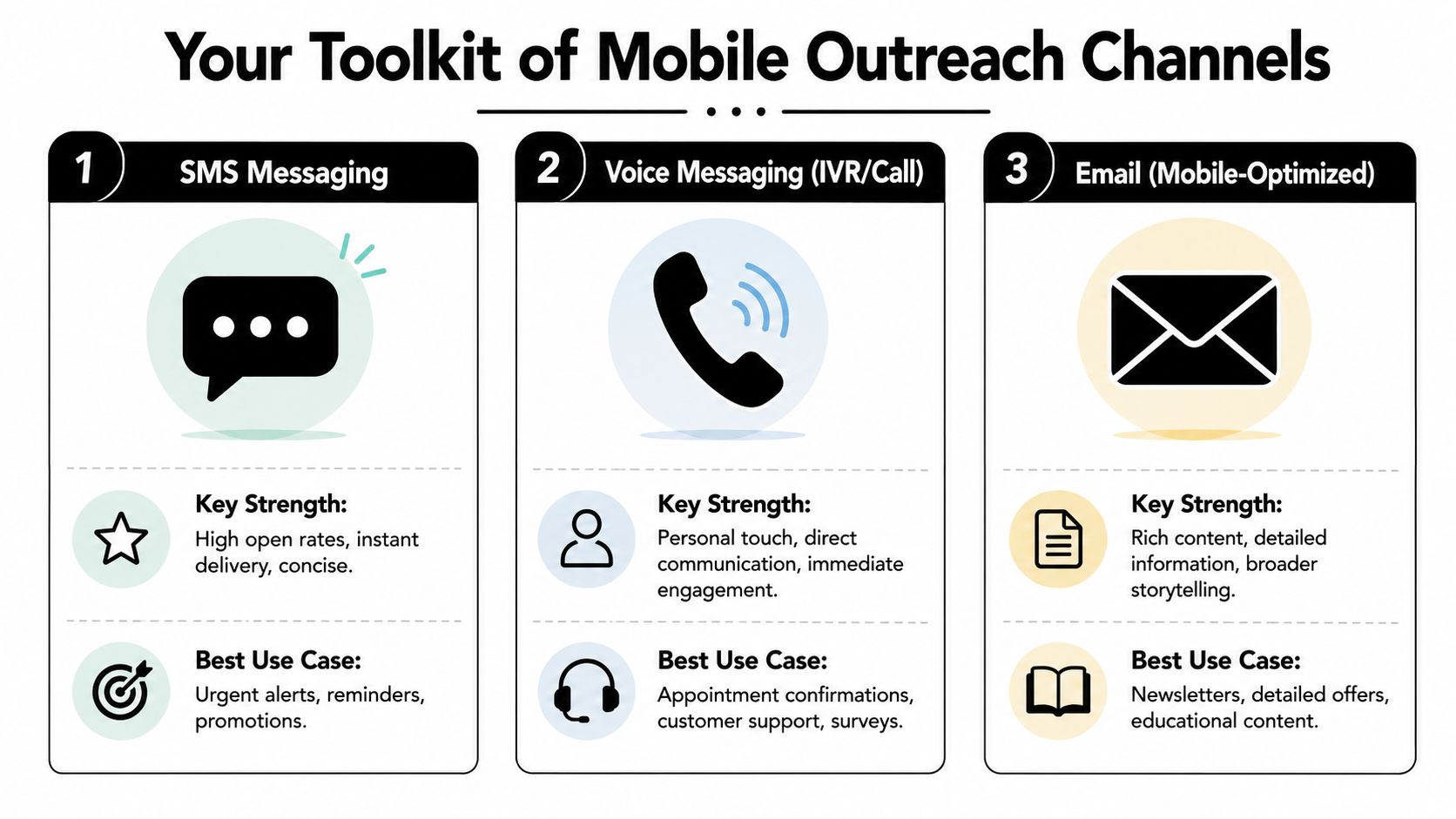
ChannelBest forStrengthWatch-outSMSReminders, promos, quick follow-upFast, concise, easy to reply toOveruse creates opt-outs fastVoice broadcastConfirmations, announcements, escalationsClear delivery for messages that need explanationPoor targeting feels intrusiveRingless voicemailPersonal follow-up, reactivation, sales outreachMore context without ringing the phoneScript quality matters a lotMobile emailRich detail, education, newslettersMore room for content and linksEasy to ignore if timing is wrong
SMS works best when the action is simple. Confirm. Reply. Show up. Use it for appointment reminders, payment prompts, event updates, short offers, and inbound keyword campaigns.
It fails when businesses cram too much into it. If the message needs three paragraphs of explanation, you probably need a different format or a follow-up sequence.
Voice broadcasts are useful when tone matters and when spoken instruction is easier than reading. That can be true for school notices, weather disruptions, healthcare communications, and urgent operational updates. Voice also helps when your audience is less likely to engage by text alone.
If your business collects contacts through physical locations or guest access points, the front-end capture experience matters too. This overview of secure network access for guests is helpful for thinking through how on-site interactions can feed permission-based mobile campaigns.
Ringless voicemail is one of the most underused mobile outreach tools for service teams and sales teams. It lets you deliver a longer, more human message directly to voicemail without making the phone ring. That makes it useful when you want to explain next steps, follow up on a lead, re-engage older contacts, or add warmth that a short text can't carry.
Used well, ringless voicemail sounds direct and relevant. Used badly, it sounds like a script dropped on a list.
A good ringless voicemail sounds like a real person continuing a real conversation.
One practical setup is to combine channels instead of forcing one to do everything. Send a text first for a short action. If there's no response, follow with voicemail for context. If the matter is time-sensitive, escalate to voice. A broader example of that sequencing is covered in this guide to winning a multi-channel marketing strategy.
A lot of content about mobile marketing stops at channels. It tells you what SMS is, what push notifications are, what mobile ads are. That's useful, but incomplete. For businesses that rely on texting and voice, critical work starts with consent, frequency control, and operational discipline.
That's why mobile marketing should be treated as a permission-based conversation system, not just a channel mix. Vibes makes that gap clear in its discussion of mobile marketing strategy and permission-based communication. For a small business, this isn't legal trivia. It's how you protect trust and keep your messages wanted.
You don't need to become a regulatory expert to do the basics well. You do need process.
For teams sending text campaigns in the United States, 10DLC compliance guidance is part of that operating discipline. Registration, use-case clarity, and carrier expectations affect whether your messages reach the inbox consistently.
Permission isn't just a restriction. It's a performance advantage. Customers respond better when they know why they're hearing from you, what kind of messages to expect, and how to stop them.
Healthcare businesses feel this most clearly. They have to balance convenience with privacy and secure handling of patient communication. Sales teams see a different version of the same problem. They need persistence without crossing into spam.
Use this internal rule with every outbound workflow:
If the recipient saw the full history of how they entered your list and how often you've contacted them, would your outreach still look reasonable?
That question catches a lot. It catches sloppy imports, over-messaging, unclear opt-ins, and bad timing.
A compliant mobile strategy usually has these traits:
Businesses that ignore this usually blame deliverability when the deeper problem is trust.
Most small businesses don't need a massive strategy deck. They need a workable system they can launch, measure, and improve. A four-step framework is enough if you apply it seriously.
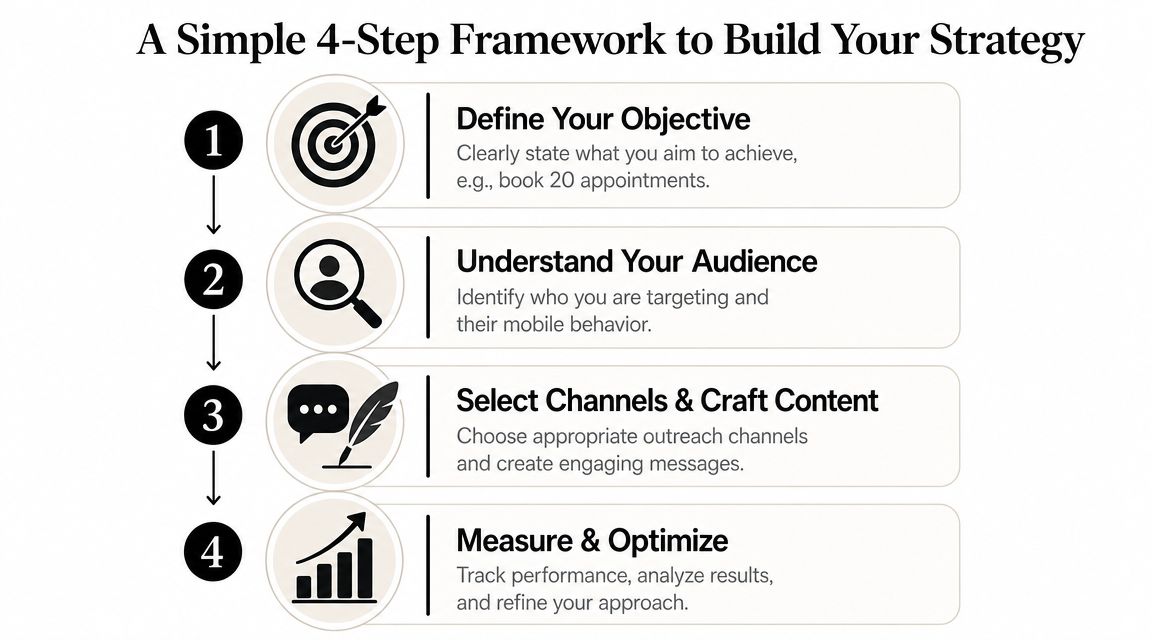
The other piece to remember is mobile friction. UWA notes in its discussion of mobile strategy that even a one-second loading delay can materially reduce sales, and it stresses responsive design, simplified navigation, and mobile-native checkout because mobile sessions tend to be short and high-intent in its mobile marketing strategy overview. So this framework isn't just about messages. It also covers what happens after the click or reply.
Pick one result that matters operationally. Not “increase engagement.” Something concrete like booked consultations, confirmed appointments, quote requests returned, or dormant leads reactivated.
Bad objective: send more texts.
Good objective: reduce no-shows for next week's appointments.
That choice shapes everything else. It tells you who to target, what to say, and which success signals matter.
Don't start with your full contact list. Start with the group most likely to benefit from the message right now.
A practical segmentation approach might look like this:
Salesforce's guidance on mobile marketing emphasizes segmentation by behavior and context across channels. In practical terms, that means you shouldn't blast the same reminder, offer, or voicemail to everyone.
One message rarely carries the whole campaign. Build a sequence around how people respond.
A common service-business flow looks like this:
This is where automation matters. Tools that support SMS, voice broadcasting, and ringless voicemail in one workflow reduce manual chasing and make suppression easier once someone replies or books. Call Loop is one example because it supports those channels, scheduling, segmentation, drip campaigns, and integrations with systems teams already use.
Keep the sequence tight. Every added message needs a reason, not just a send slot.
Don't stop at delivery or clicks. Check whether people completed the next step. Did they reply. Call. Confirm. Book. Show up.
Also review the mobile path itself:
A campaign can have decent engagement and still underperform because the mobile experience after the message is clumsy. That's why measurement has to include both communication performance and conversion friction.
A strategy becomes real when you can see it inside everyday operations. The most useful mobile campaigns aren't abstract brand exercises. They're responses to familiar business problems.
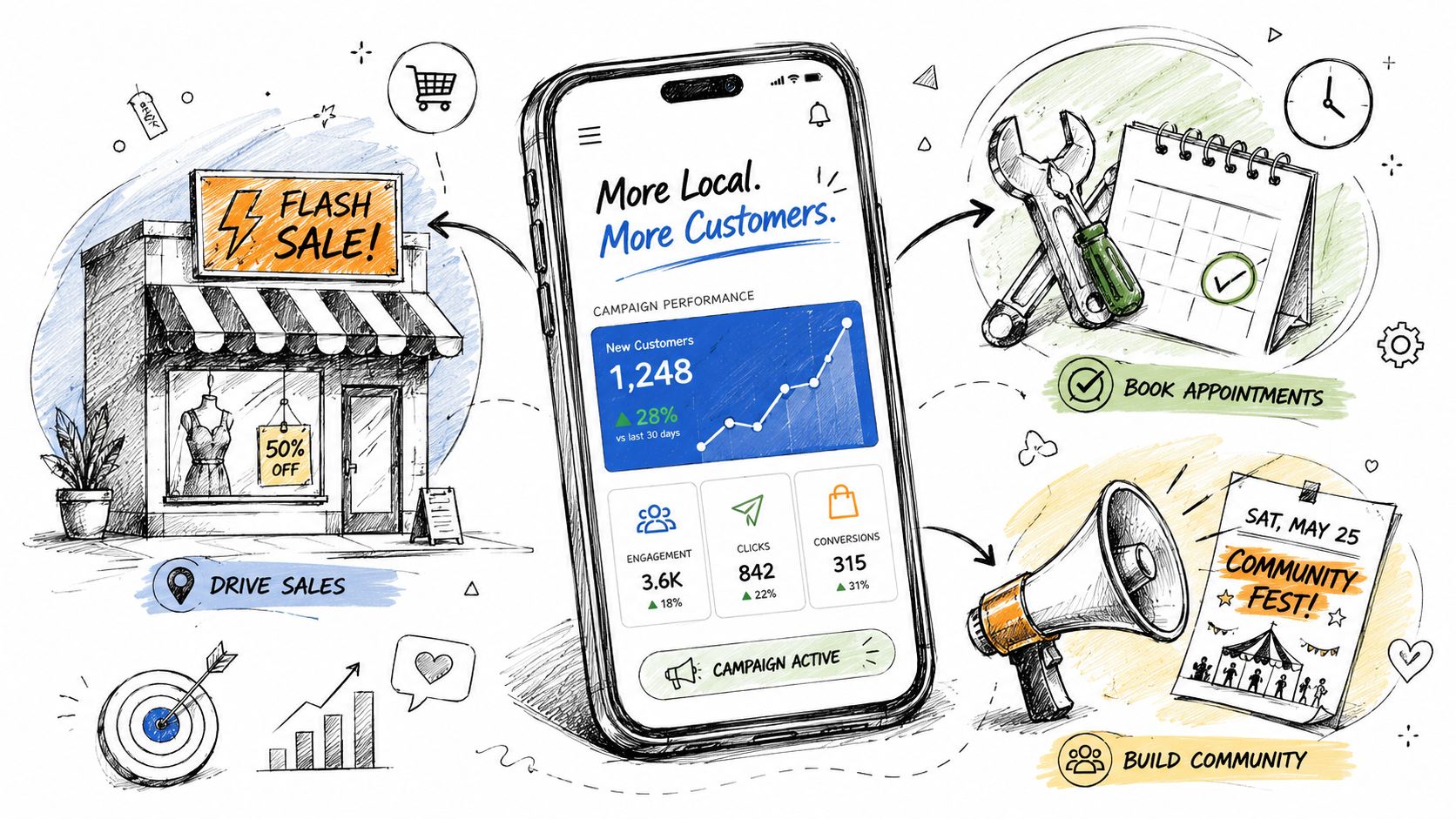
Oracle points to a major blind spot in mobile marketing content: proving ROI when the result happens outside the screen, such as a phone call, in-store purchase, appointment, or repeat visit, in its guidance on measuring mobile marketing beyond clicks and installs. That's exactly why service businesses need a different lens. Their wins often happen offline.
A clinic has a full appointment calendar, but staff spend too much time manually confirming visits. Patients miss appointments because reminders arrive too late or get buried in email.
A better setup uses a short SMS reminder first. Patients can confirm with a simple reply. Those who don't respond receive an automated voice reminder closer to the appointment. For messages that need extra detail, the clinic can use a voicemail drop with clear callback instructions.
The key measurement isn't the click. It's whether the patient confirmed, rescheduled, or showed up.
A sales rep has a list of warm leads from demos, forms, and past conversations. Calling every lead live isn't realistic, and sending the same text to all of them sounds robotic.
A better workflow starts with segmented SMS follow-up for the most recent leads. Older leads who haven't responded get a ringless voicemail that sounds personal and references the prior interaction. If a lead replies or books, automation stops the rest of the sequence.
This kind of example is easier to visualize in a campaign sequence. This mobile marketing strategy example shows how multi-touch flows can be structured around business outcomes instead of isolated sends.
Karate studios often need fast communication. Class reminders, weather updates, belt testing notices, and event promotions all work better when parents can read them immediately on mobile.
A practical setup is to use a text-to-join keyword at the front desk, on flyers, and during sign-up. Parents opt in once, then receive only the updates tied to their student group or schedule. If there's a special event or schedule change, the studio can use SMS for speed and voice for broader announcements when needed.
The campaign value shows up in attendance, fewer missed updates, and less staff time spent making individual calls.
Events create a different timing problem. Inventory changes quickly. A seat opens. Weather changes. Start times shift. Email often arrives too slowly for that kind of update.
Broadcast SMS works well for urgency. Ringless voicemail can support VIP outreach or sponsor follow-up where a more personal message matters. Voice broadcasts fit schedule changes that people need to hear clearly.
If your conversion happens by phone, at the front desk, or at check-in, don't judge the campaign only by clicks.
That's the core lesson for mobile strategy in real businesses. The channel matters. The workflow matters more. And the true result is usually something your team can observe in operations, not just in a dashboard.
The most useful answer to what is mobile marketing strategy isn't “running ads on phones” or “sending text blasts.” It's building a planned system for reaching customers on mobile with messages they want, through channels that fit the moment, with automation that supports the next step.
For small businesses, the biggest shift is thinking in conversations instead of campaigns. A text can start the interaction. A voice message can clarify it. A ringless voicemail can add a personal layer. The strategy involves how those touches work together, how permission is managed, and how outcomes are measured when the sale or appointment happens off-screen.
If your current approach feels scattered, start smaller. Pick one business goal. One audience. One sequence. Then tighten the experience until customers can move from message to action without friction.
If you want to put this into practice, Call Loop gives teams one place to run SMS, voice broadcasting, and ringless voicemail workflows with automation, segmentation, reminders, and compliance-minded outreach for real business conversations.
Chris Brisson
Chris is the co-founder and CEO at Call Loop. He is focused on marketing automation, growth hacker strategies, and creating duplicatable systems for growing a remote and bootstrapped company. Chat with him on X at @chrisbrisson


Trusted by over 45,000 people, organizations, and businesses like


