
See a Demo
You're just one step away from seeing Call Loop in action.
Enter your information below to watch a demo right now.

You're just one step away from seeing Call Loop in action.
Enter your information below to watch a demo right now.

Ringless voicemail is a simple concept with a powerful impact. It lets you send a pre-recorded audio message straight to someone's voicemail inbox without their phone ringing.
Think of it like dropping a letter directly into a mailbox. You're not knocking on the door and interrupting dinner; you're just leaving a message for them to check when it's convenient. It’s a direct, respectful way for businesses to share important updates.
Let’s say you need to tell hundreds of customers about an upcoming sale. Instead of dialing each person one by one, waiting for them to answer (or not), and then repeating your message, you could use a much smarter approach.
That's exactly what ringless voicemail—often called RVM—was built for. It’s not some kind of dropped call or a weird glitch. It's a technology designed for efficient, one-way communication that got really popular around 2016 as it became more accessible. It works by using server-to-server communication to bypass the regular phone network and connect directly with a carrier's voicemail system.
The magic is all in the delivery. A normal phone call travels through the public telephone network, which is what makes the recipient's phone ring.
A ringless voicemail message, on the other hand, takes a completely different route. It travels on a separate data path, connecting directly to the phone carrier's voicemail servers. This is what makes it so useful across so many different fields:
To make it even clearer, here’s a quick breakdown of how a ringless voicemail drop compares to a traditional call from the recipient's perspective.
This table highlights the key differences you and your recipients will experience.
As you can see, it’s not about replacing phone calls entirely, but about choosing the right tool for the right job.
The whole point is to deliver information respectfully. You let the recipient listen and get back to you on their own time, which completely changes the dynamic from an interruption to a helpful notification.
Platforms like Call Loop put this technology right at your fingertips. We give you simple tools to record your messages, upload contact lists, and schedule your campaigns in just a few minutes. You can check out how Call Loop’s ringless voicemail features are helping businesses scale up their communications.
Ultimately, it's not just about sending a message. It's about starting a conversation in a way that shows you value your customer's time, which builds stronger relationships and drives better engagement.
To really get what ringless voicemail is all about, we have to look under the hood. It’s not just a regular phone call that happens to go straight to voicemail. The technology behind it takes a completely different, more direct path to get your message delivered.
Think of it this way: a normal phone call is like mailing a letter through the postal service—it has to travel through a public system with lots of stops along the way before it reaches its destination. A ringless voicemail drop is more like a secure file transfer, sending your audio message directly from one server to another.
The magic here is its ability to sidestep the part of the network that handles live calls, known as the Public Switched Telephone Network (PSTN). Instead of actually dialing a person’s number, the ringless voicemail platform talks directly to the mobile carrier’s voicemail server.
This is the key difference. Because a "call" is never actually placed to the phone itself, the ringing mechanism never gets triggered. The whole thing happens in the background, which is why your contact just sees a new voicemail notification pop up on their screen.
The journey of a ringless voicemail seems instantaneous, but it’s actually a quick series of technical handshakes between servers. It’s a clean, logical process.
This flowchart gives you a simple visual of how your message travels directly from you to their inbox, no detours involved.
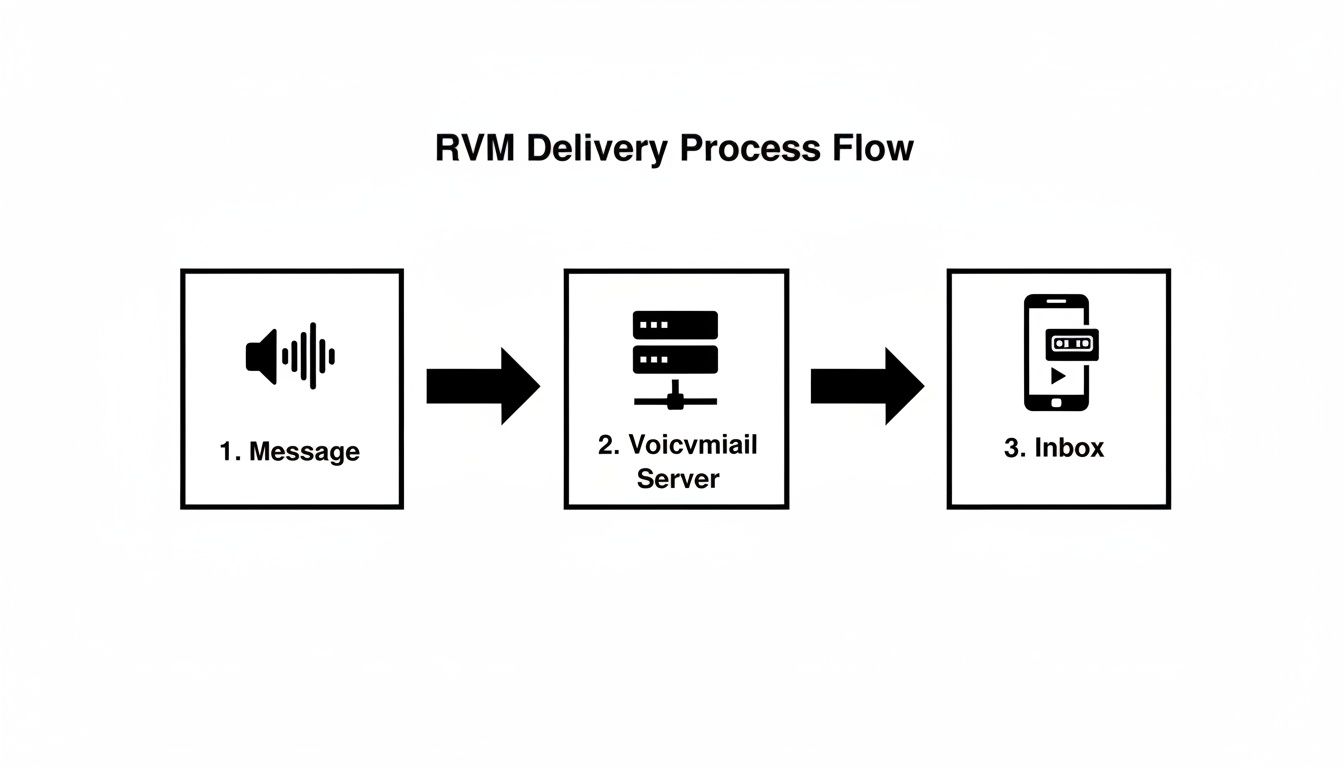
As you can see, the recipient's phone is completely out of the loop. The entire interaction is with the carrier's backend systems.
Understanding this technical flow is crucial for seeing why ringless voicemail is so effective and how it fits into compliance rules. This server-to-server approach is fundamentally different from automated dialers or "robocalls," which place actual calls over the PSTN.
By depositing the message as a piece of data instead of initiating a voice call, the technology stays non-intrusive. This distinction is at the very heart of its effectiveness and its legal standing.
This direct path also leads to incredibly high deliverability. Regular calls can get missed, sent to voicemail, or blocked by spam filters. A ringless voicemail drop, on the other hand, almost always gets through because it’s working with a system specifically designed to receive and store messages. It’s a precise, reliable way to make sure your message is waiting for them whenever they're ready to listen.
Knowing how ringless voicemail works is one thing, but the real magic is in what it can do for your business. It’s more than just dropping a message; it’s a smart way to communicate that's efficient, respectful, and gets incredible results.
The biggest win is just how non-intrusive it is. We all live in a world of endless notifications. A ringing phone demands you drop everything, often at the worst possible time. A ringless voicemail drop avoids that completely. Your message lands quietly, waiting for the recipient to check it on their own terms.
This approach immediately creates a better vibe. Instead of feeling ambushed by a live call, your audience can listen when they’re actually ready and receptive. That alone massively boosts the odds they'll hear you out.
This polite delivery leads straight to another huge advantage: crazy high engagement. Emails get buried in overflowing inboxes and cold calls get ignored, but a voicemail notification feels personal and important. It’s almost a reflex to check it.
Because of this, ringless voicemail campaigns put up some seriously impressive numbers.
When you deliver a personal, voice-based message directly into someone's inbox, you create a connection that an email or text just can't match. It cuts right through the digital noise and makes your message feel like a priority.
This is exactly why businesses in all sorts of industries, from real estate to healthcare, lean on platforms like Call Loop for everything from critical updates to special offers. When you're confident your message will be heard, your whole outreach strategy just works better.
For many businesses, this might be the most compelling reason of all: the incredible bang for your buck. Old-school outreach methods, like hiring a team for a call center, are a huge drain on time and money. Ringless voicemail flips that entire model on its head.
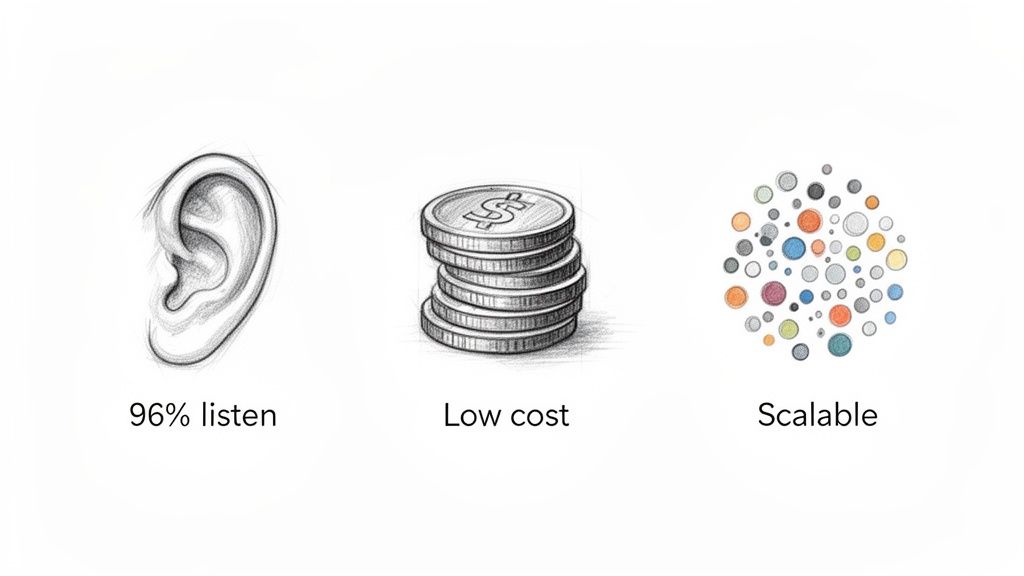
It’s wildly cost-effective and turns what used to be a massive undertaking into a simple, scalable task. A ringless voicemail campaign can cost as little as $0.05 to $0.15 per successful drop. This lets you reach thousands of people in minutes without needing a single call center agent, which slashes expenses. We've seen businesses report up to an 80% improvement in ROI just by adding RVM to their process, thanks to 90-92% delivery rates and that 96% listen rate that leaves cold emails in the dust. You can discover more about business growth from these findings.
This mix of low cost and massive reach makes it a no-brainer. One person can launch a campaign that connects with thousands of contacts in the time it would take them to make a handful of manual calls. That kind of scalability means you can send out appointment reminders, sales follow-ups, or event announcements to your entire list with a few clicks. It's a genuine force multiplier for growth.
Using ringless voicemail the right way means knowing the rules of the road. The legal landscape for communication tech is always shifting, and staying compliant isn't just a good practice—it's essential for building trust and protecting your business.
When people talk about RVM rules, the conversation almost always lands on one key piece of legislation: the Telephone Consumer Protection Act (TCPA).
The TCPA was created to shield people from a flood of unwanted robocalls and marketing texts. The core argument for ringless voicemail has been that since the technology deposits a message directly to a server without ringing the phone, it isn't technically a "call" in the traditional sense. This server-to-server delivery method is what sets it apart.
But let's be real—leaning on that technicality alone is a risky move. Legal interpretations can and do change, and regulators are laser-focused on consumer privacy. The smartest, safest, and most ethical path is to be completely transparent and respect your contacts' choices.
The absolute foundation of compliant ringless voicemail is consent. Period. Sending messages only to people who have clearly said "yes" to hearing from you is the best way to stay on the right side of the law and build a positive relationship.
Think of it this way: Compliance isn't a barrier to overcome; it's a framework for respectful communication. When you only contact people who have opted in, you're not just minimizing risk—you're ensuring your message is delivered to a receptive audience.
This isn't negotiable. It means you should never, ever use purchased lists or send messages to cold contacts who have no idea who you are.
To run your campaigns responsibly, there are a few must-follow best practices. These aren't just suggestions; they're crucial for staying compliant and showing you're committed to ethical marketing.
Beyond the big rules like the TCPA, some industries have their own strict set of compliance needs. If you're in healthcare, for example, the Health Insurance Portability and Accountability Act (HIPAA) has iron-clad rules about protecting patient information.
This means any communication, including a ringless voicemail, has to be secure and protect patient privacy. An appointment reminder is usually fine, but leaving a message that includes sensitive health details is a major no-go.
It's vital to choose a platform built with these rules in mind. Platforms like Call Loop are designed to support HIPAA-compliant communications, giving healthcare providers the secure foundation they need to connect with patients safely. To dig deeper, you can learn more about how an automated calling system can be used responsibly in our guide. Ultimately, treating compliance as a core piece of your strategy will always lead to better, more sustainable results.
Running a successful ringless voicemail campaign is about more than just recording a message and blasting it out. A little bit of strategy is what separates a message that gets immediately deleted from one that actually gets a response. The whole game comes down to three things: a solid script, a well-defined audience, and nailing the timing.
Think of it like this: just as a great email needs a killer subject line to even get opened, your voicemail needs a strong hook right at the beginning. From there, the message has to feel personal and conversational—not like some generic ad. If you get these core pieces right, you’ll be creating campaigns that don't just get heard, but get results.
Your script is everything. It's your one shot to connect with someone, offer something of value, and nudge them toward that next step. A weak script will fall completely flat, even if you deliver it at the perfect moment.
Get straight to the point. Introduce yourself and your company in the first few seconds. Then, clearly state why you’re reaching out in a way that shows the listener what’s in it for them.
A great voicemail script should feel less like a sales pitch and more like a helpful, personal note from an expert. Keep it concise, friendly, and focused on solving a problem for your listener.
Always wrap up with a strong and unmistakable call-to-action (CTA). Tell your audience exactly what you want them to do next, whether it's checking out a website, calling you back, or snagging a promo code. Make it dead simple for them to take that action.
Sending the same generic message to every single person on your contact list is a huge missed opportunity. People are way more likely to engage with a message that feels like it was meant just for them. This is where list segmentation is a total game-changer.
Segmentation is just a fancy way of saying you’re breaking your audience into smaller, more specific groups based on things they have in common. This lets you tweak your message to hit on the exact needs and interests of each little group.
Here are a few simple ways you can segment your lists:
When you personalize your outreach, you're showing your audience that you actually get them, which massively boosts your chances of getting a good response. If you want to dive deeper into creating targeted messages, you can learn how an auto voice message can be tailored for different audiences.
When you send your message is almost as important as what you say. Sure, ringless voicemail is designed to be non-intrusive, but you still want to drop it when your audience is most likely to check their phone. A message delivered at 2 AM probably isn't going to make the best impression.
Put yourself in your audience's shoes and think about their daily routine. For B2B messages, sending during standard business hours—especially mid-morning or early afternoon on Tuesdays, Wednesdays, and Thursdays—tends to work best. For B2C campaigns, you might have better luck in the late afternoon or early evening as people are wrapping up their workday or commuting home.
Platforms like Call Loop let you schedule your campaigns ahead of time. This is a lifesaver because it allows you to plan your outreach strategically and makes sure your message lands at the perfect time for engagement, no matter what time zone your contacts are in.
To bring it all together, here’s a quick look at the core components every effective ringless voicemail script should have.
A solid script follows a simple, logical flow. Breaking it down into these four components ensures you cover all your bases without rambling or losing the listener's interest.
By keeping these elements in mind, you can consistently create scripts that feel natural, deliver value, and drive the actions you're looking for.
The real value of ringless voicemail pops when you see it in the wild. Forget the technical jargon for a minute—its true power is in its flexibility. Businesses across totally different industries are using it to tackle unique communication hurdles and get real results. It all boils down to delivering the right message, at the right time, without being annoying.
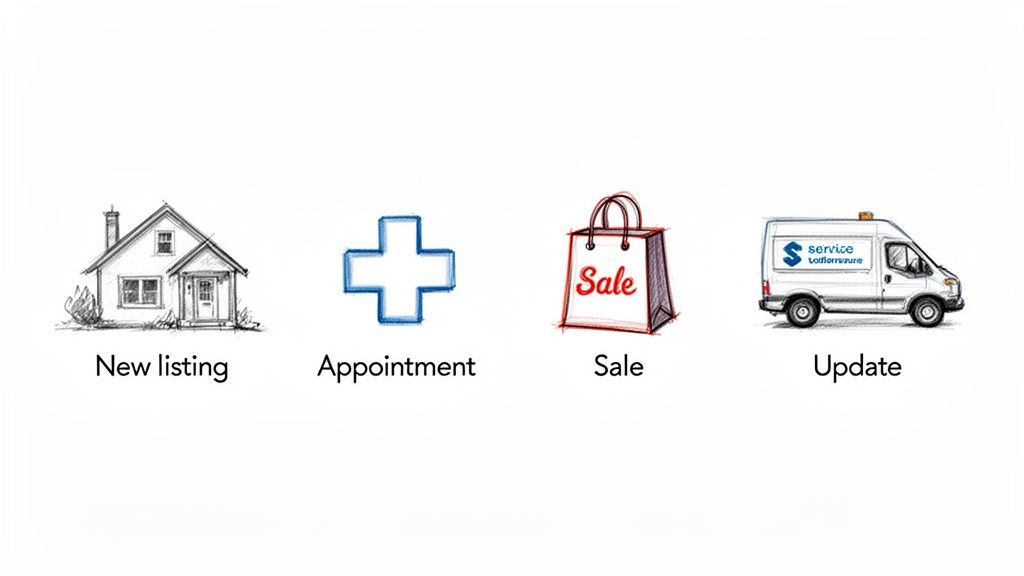
From the local auto shop to massive marketing agencies, the applications are as diverse as the businesses themselves. Each use case proves that a simple, non-intrusive message can cut through the digital noise and get a specific audience to take action.
In real estate, speed is everything. When a hot new property hits the market or a price drops, agents have to reach hundreds of prospects—fast. In competitive markets like Florida, California, and Texas, ringless voicemail has become an essential tool.
Many agents who sell over 25 homes a year use it for new listing alerts and see response rates of 5-8% from qualified buyers. Think about it: they can reach 500+ prospects in the time it would take to make maybe 20 or 30 manual calls. It’s a game-changer, and you can dig into more real estate findings here.
For doctors and clinics, clear communication is non-negotiable, but constant interruptions are a huge problem. Ringless voicemail hits the sweet spot. It’s perfect for sending HIPAA-compliant appointment reminders without blowing up a patient's phone while they're at work or with family.
A quiet voicemail drop can dramatically cut down on no-show rates. That’s a massive win for the clinic’s schedule and, more importantly, for the patient's health. It’s a gentle nudge that makes sure people get the care they need.
It's also great for non-urgent updates, like letting patients know flu shots are available or that office hours have changed for a holiday.
Retailers and marketing agencies live and die by their ability to connect with customers at just the right moment. Ringless voicemail gives them a channel with a personal feel that email and SMS sometimes lack.
Here are a few ways they’re putting it to work:
In every scenario, the personal touch of a voice message helps build a stronger relationship than a plain old text or email ever could. It makes the communication feel more human and, as a result, more important.
As we wrap up, let's tackle some of the most common questions that pop up about ringless voicemail. Getting straight answers to these will help you move forward and use this tool with confidence.
This is the big one, and the short answer is: it depends on how you use it. The legal side of things can be a bit murky and is always changing.
Ringless voicemail is generally seen as more compliant with the TCPA than traditional robocalls because, well, the phone doesn't actually ring. But that doesn't give you a free pass. The safest, most ethical path is to only send messages to people who have clearly given you permission to contact them. Always scrub your lists against the National Do Not Call Registry and make it painfully simple for anyone to opt out.
Yep, it sure can. Modern ringless voicemail platforms are built to deliver messages to both mobile phones and voicemail-equipped landlines. The tech is designed to talk directly to the carrier's voicemail server, a process that works for both phone types.
This makes it a much more versatile tool, since you aren't just limited to reaching mobile users. Keep in mind, though, that success rates for landlines can sometimes be a bit lower depending on the phone carrier and how old their systems are.
Response rates can be all over the map. Your results really hinge on a few key things: your industry, how good your contact list is, how relevant your message is, and how clear your call-to-action is.
Because it's so non-intrusive and gets listened to so often—frequently over 90% of the time—ringless voicemail consistently drives higher engagement than a lot of other ways you can reach out.
For a well-thought-out, targeted campaign, it's not unusual for businesses to see callback and response rates anywhere from 5% to 15%. If you want to hit the high end of that range, you absolutely have to test your scripts, personalize your messages, and make sure you're offering real value with every single drop. Nail those parts, and you'll see a huge boost in your results.
Ready to see how non-intrusive, high-engagement outreach can transform your business communications? Call Loop provides a powerful, compliant, and easy-to-use platform for ringless voicemail, SMS, and voice broadcasting. Start connecting with your audience more effectively today.
Chris Brisson
Chris is the co-founder and CEO at Call Loop. He is focused on marketing automation, growth hacker strategies, and creating duplicatable systems for growing a remote and bootstrapped company. Chat with him on X at @chrisbrisson


Trusted by over 45,000 people, organizations, and businesses like


