
See a Demo
You're just one step away from seeing Call Loop in action.
Enter your information below to watch a demo right now.

You're just one step away from seeing Call Loop in action.
Enter your information below to watch a demo right now.

70.22% of shopping carts are abandoned on average across 50 studies, which means most of the buyers who walk away were already halfway to a purchase, not strangers who need to be persuaded from scratch. That is why abandoned cart SMS is less of a clever marketing tactic and more of a recovery tool for intent that already exists. If you sell online, the core question isn't whether to send a text, it's how to do it without training shoppers to ignore you, chase discounts, or complain about the frequency.
The economics are blunt. Baymard Institute's long-running meta-analysis puts the average cart abandonment rate at 70.22%, and industry summaries note that figure has stayed in the 69 to 71% range for years, which tells you this is a structural checkout problem, not a temporary blip. Mobile behavior can be even rougher, with abandonment cited at 80% or higher in some datasets, and a major-market commentary notes that 40% of shoppers reportedly abandoned carts because extra costs such as shipping, tax, or fees felt too high, according to the cart abandonment statistics roundup from Cartflows. That's the key point, cart recovery SMS isn't trying to create demand, it's trying to recapture demand that checkout lost.
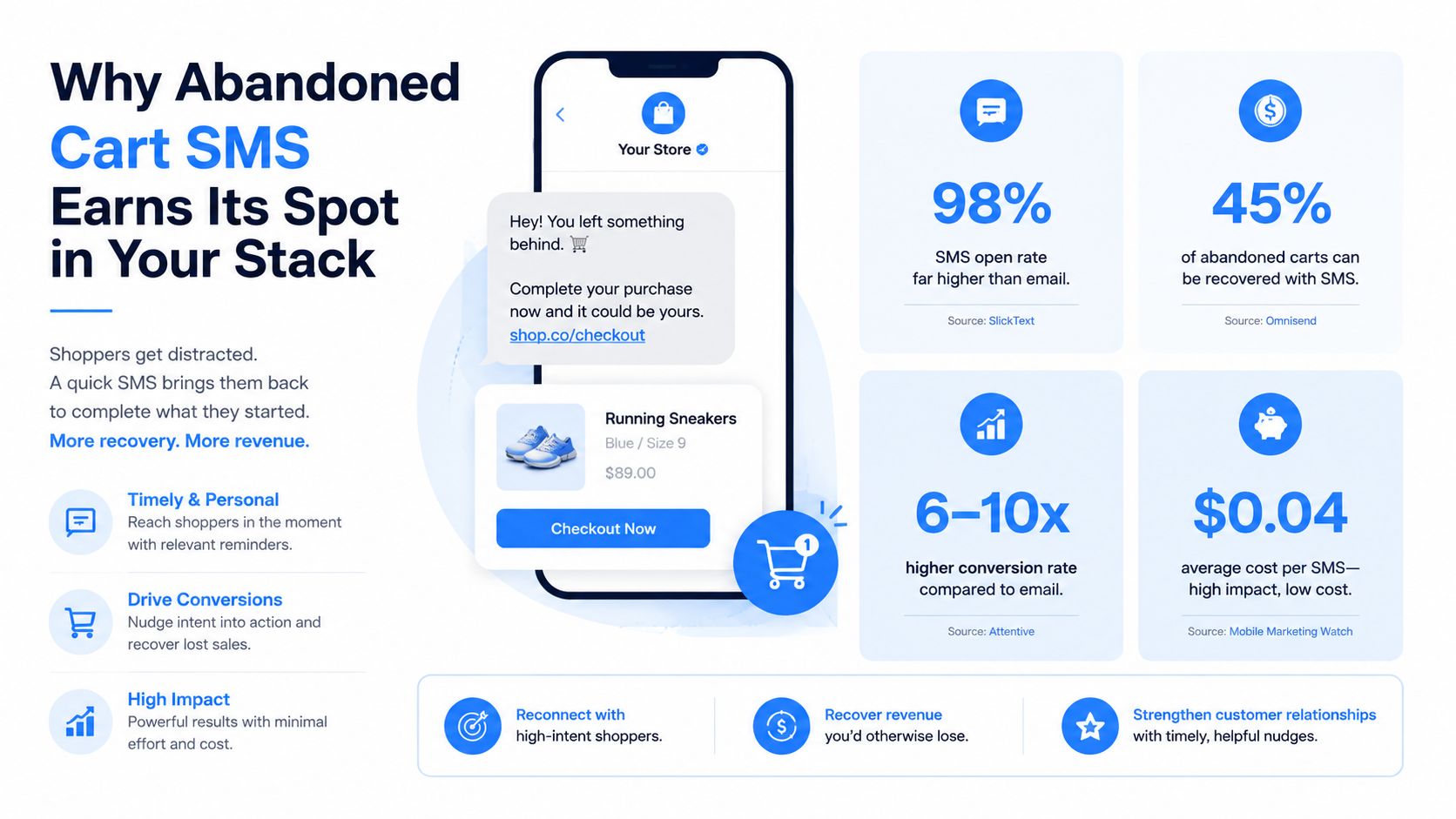
Text has a simple advantage, it gets seen fast. Industry benchmarks cited in 2026 place abandoned-cart SMS conversion at 15% to 20%, while abandoned-cart email sits around 5% to 10%. The same benchmark set says SMS abandoned-cart messages are opened in about 90 seconds on average, while email takes about 90 minutes, and that gap matters because cart intent decays quickly once the shopper leaves the site, according to the 2026 comparison from Geysera.
That speed doesn't mean SMS should be your only recovery channel. It means SMS should own the moments where the shopper is most likely to act, while email handles the longer, lower-pressure follow-up. A tighter flow usually works better than a loud one, especially when the abandoned cart was created on mobile, late at night, or after a price shock.
Practical rule: use SMS when the cart is warm enough that a direct link can finish the job, and use email when the shopper needs more context, reassurance, or time.
For merchants who are still fixing on-site friction, a resource like smarter checkout strategies for POD is useful because it keeps the recovery conversation tied to the root cause, not just the follow-up message. That's the right mindset. Text should close a gap in the journey, not mask a broken one.
The first message needs to arrive while the cart still feels current, but not so fast that it feels robotic. A good operating pattern is simple, first text within about an hour, then a later nudge if the shopper still hasn't bought, then a final touch before the flow closes. The reason this matters is the short attention window, SMS is often opened in about 90 seconds on average, so your recovery text isn't competing with inbox clutter, it's competing with whatever the shopper is doing right now.
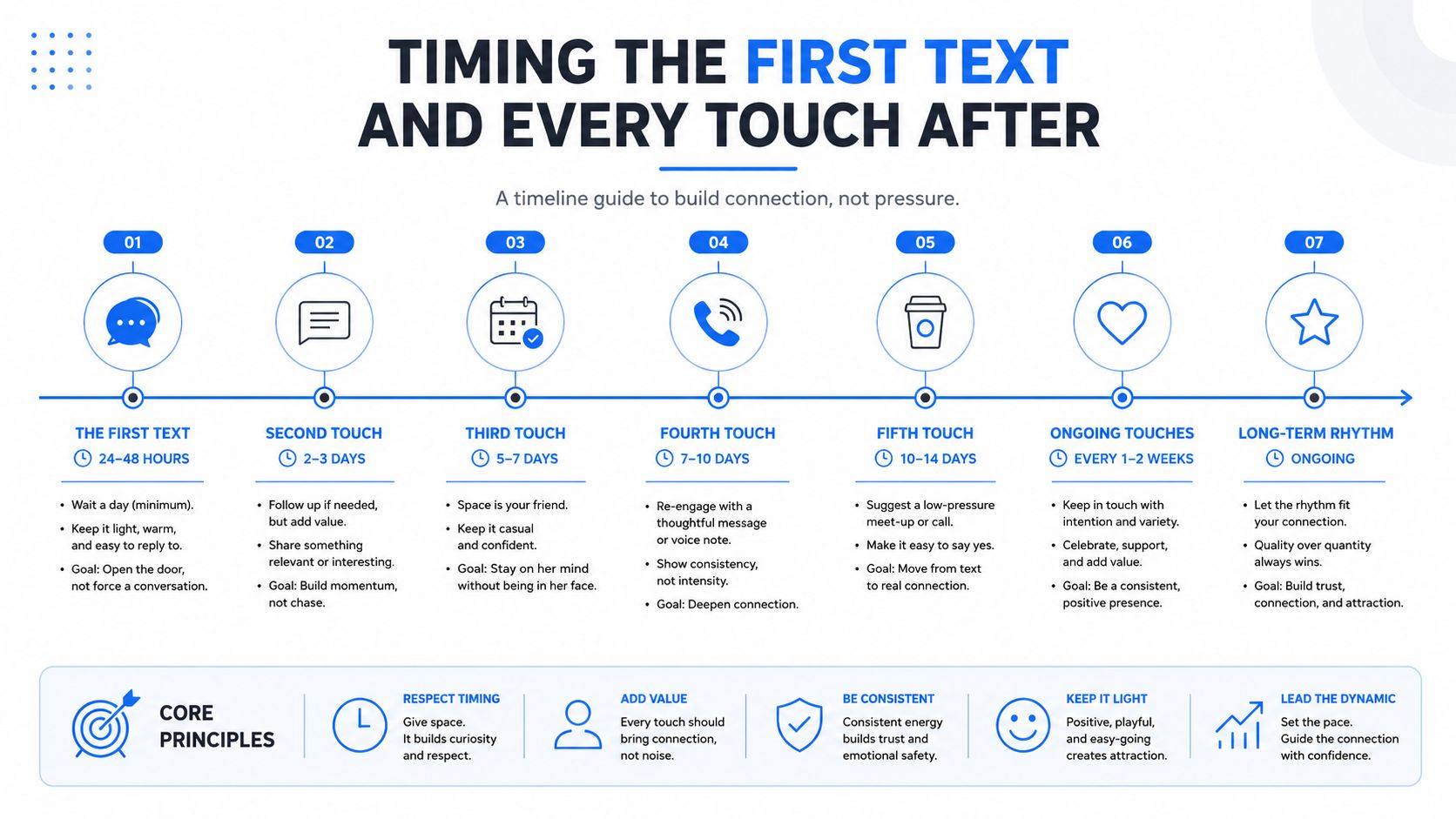
Start with the first text inside the first hour for normal daytime abandonments. That's the moment when a reminder still feels like help, not pressure. If the shopper clicks but doesn't complete checkout, the next touch should change the conversation rather than repeat the same line again.
A practical sequence looks like this:
The biggest mistake is stacking every channel at once. A recent timing guide says carts created after 10 PM local time should not receive an immediate email, overnight carts are better delayed until 8 to 11 AM local time, and SMS should avoid landing in the same hour as email because that can frustrate users or trigger spam filters, as discussed in the send-timing guide. That advice matches what I've seen in practice, people are more forgiving of a helpful reminder than a pile-up.
Send less aggressively at night, not more aggressively. The shopper's intent is still real in the morning.
If you want a scheduling benchmark for the mechanics of timed sends, the workflow examples in how to send a timed text are useful because they map the logic to actual automation behavior. The point is not to move slowly, it's to move at the right moment and avoid sending a reminder that feels like a ping storm.
The best cart recovery texts sound like a human checkout assistant, not a coupon blast. They're short, specific, and calm. If a message reads like it was written to extract a sale at any cost, shoppers notice that tone immediately and they either ignore it or wait for the next discount.
Text 1, friendly reminder
“Hi [First Name], you left [Product Name] in your cart. Your checkout link is here: [Link]. If you ran into a problem, reply and we'll help.”
This works because it removes friction first. The copy is short enough for SMS, it uses the cart item directly, and it gives the shopper a path back without making a price claim you can't support.
Text 2, objection handling
“Quick follow-up on [Product Name]. If shipping, sizing, or payment gave you pause, take another look here: [Link]. We can help if anything blocked checkout.”
This version should answer the most common hesitation, not just repeat the first nudge. If you know the cart was abandoned after a price objection, you can mention the item or the checkout step, but don't manufacture urgency. Real urgency beats fake urgency every time.
Text 3, softer close with an incentive
“Last note on [Product Name]. If you still want it, your cart link is here: [Link]. We can also add a small incentive if this was the right fit and the timing was off.”
That kind of line keeps the door open without teaching the whole list to wait for a discount. If you're using ringless voicemail, this is the touch where it makes the most sense for higher-value carts. The voicemail should be brief, natural, and linked to the same recovery path, not a separate sales pitch.
Practical rule: write the first text for completion, the second for reassurance, and the third for margin protection.
Using a first name is basic hygiene. It helps the text feel human, but it won't save a weak flow. The lift comes from showing the shopper the exact item they left behind, the price they were facing, and the timing context that triggered the abandonment in the first place.
I've seen teams over-segment themselves into uselessness. Too many micro-audiences make testing slow, and slow testing means the team never learns which message moved orders. A simpler matrix usually performs better:
| Segment | What changes in the text | Why it matters |
|---|---|---|
| First-time shopper | More reassurance, fewer assumptions | They need trust, not pressure |
| Repeat customer | Shorter copy, more direct CTA | They already know the brand |
| Mobile late-night cart | Delayed send, gentler tone | Timing matters more than repetition |
| Higher-value cart | Extra attention, maybe ringless voicemail | The upside justifies more effort |
Dynamic cart content is the workhorse. If the message shows the product name, the price, or even the exact bundle abandoned, the shopper doesn't have to reconstruct what they left behind. That's a faster mental path back to checkout than a generic “You forgot something” text ever will be.
For teams building richer audience logic, customer segmentation examples is a solid reference point because it shows how segmentation can be useful without becoming overengineered. The useful test is simple, does this split change the message, the timing, or the offer? If not, it's probably decorative.
Real personalization changes the shopping decision. Cosmetic personalization just adds a merge tag. Product name, cart contents, and targeted incentives all qualify as useful because they change what the shopper sees and how much effort they need to return. First-name-only personalization doesn't do that by itself.
If the text would still make sense after removing the merge tags, it probably isn't personalized enough.
One operational note matters here. Brands in regulated spaces, or brands carrying sensitive item data, need to be careful about what appears in a text. Keep the message specific enough to be relevant, but not so exposed that it reveals more than the shopper expects on a lock screen.
Compliance isn't a legal footnote, it's what lets the flow survive long enough to make money. A cart recovery program that collects consent sloppily, messages too often, or ignores quiet hours will run into deliverability problems even before it becomes a legal problem. The safest practical posture is to make the opt-in explicit, keep the copy honest, and keep the sequence short.
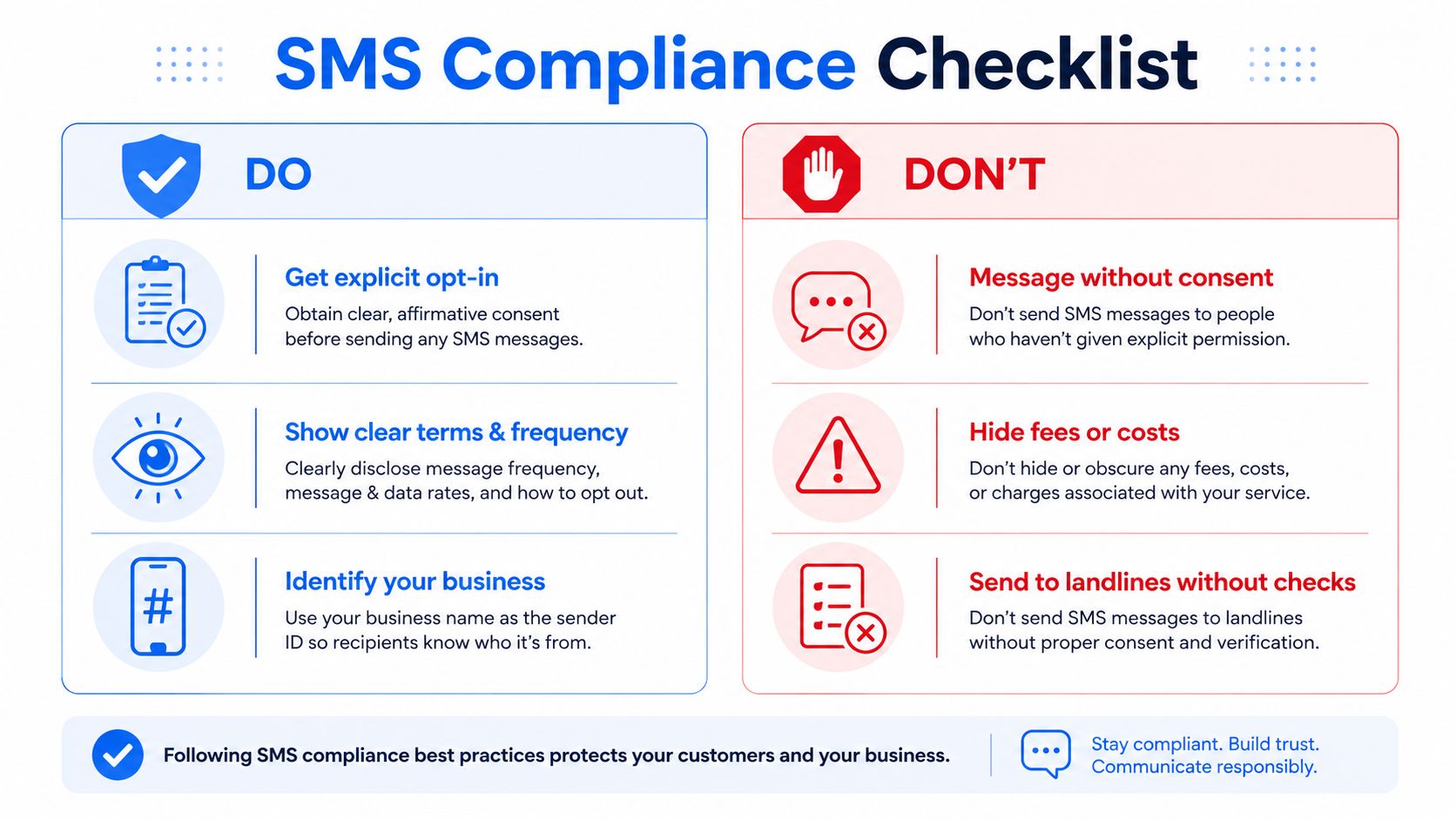
For ecommerce, express written consent and double opt-in are the starting point, not the finish line. The shopper should know they're agreeing to receive texts, and the checkout language should make frequency clear enough that the flow doesn't feel like a surprise. Under TCPA expectations, the safest assumption is that vague language won't protect you if the shopper later says they didn't understand what they signed up for.
CTIA guidance pushes in the same direction, clear identity, clear purpose, and no spammy burst behavior. That's also why the tighter guidance matters. Klaviyo's current US guidance says cart-abandonment SMS should use double opt-in, send only one SMS per recipient in the flow, and be sent within 48 hours of the trigger, according to Klaviyo's abandoned cart guidance. That's materially more restrained than the older habit of blasting two or three texts across multiple days.
For healthcare and wellness operators, HIPAA adds another layer. If cart data contains protected health information, don't casually expose it in a reminder text. Keep sensitive details out of the message body, and treat the cart recovery flow like any other patient-adjacent communication, with the minimum necessary disclosure.
A practical checkout disclosure can be simple:
The checklist in the SMS compliance checklist is helpful because it turns abstract rules into launch-day behavior. That's what matters in practice. A flow that's a little less aggressive and a lot more compliant will usually outlast a clever one that gets flagged or burned out.
The mechanics are straightforward if the stack is clean. Your ecommerce platform should fire the abandoned-cart trigger, the messaging platform should store the contact and cart data, and the sequence should decide whether the shopper gets SMS, email, ringless voicemail, or a mix of all three. The important part is that each channel has a job, instead of all of them trying to do the same job at once.
Start with Shopify, WooCommerce, or BigCommerce as the trigger source. When a cart is abandoned, pass the customer record and cart details into your messaging tool with custom fields, then use merge tags so the text can reference the actual item and checkout link. If you want a broader automation layer between systems, Zapier can connect more than 4,000 apps, which makes it useful when your store, CRM, help desk, and messaging stack don't live in the same place.
Call Loop is one option here, since it supports SMS messaging, custom fields, merge tags, double opt-in, number validation, and ringless voicemail in the same environment. It also integrates with HubSpot, Keap, and other tools through Zapier, so you can route cart status back into your CRM once the shopper clicks, replies, or completes the order. For high-value carts, a ringless voicemail drop on the third touch can complement the text instead of replacing it, especially when the shopper ignored the first two reminders.
A recording, a text-to-speech message, or a live voice drop can be useful when the cart value justifies the extra touch, but it should still feel like part of one recovery journey. The worst version of omnichannel is three disconnected messages that all sound like they were built by different teams.
If the shopper clicks from SMS to a broken checkout page, the problem isn't the text, it's the handoff.
The goal is clean orchestration. Once the trigger, data, and routing all line up, you can measure the flow accurately instead of arguing about whether the channel worked when the backend was the actual issue.
The first month should be treated like a controlled rollout, not a victory lap. You need a small set of numbers that tell you whether the flow is healthy, plus a short list of tests that change the message only in ways that matter. Anything else becomes noise.
CartBoss reported 1,999,408 delivered recovery texts from February 2024 to January 2025, with 534,974 clicks, a 26.8% click rate, and 65,566 recovered orders, which works out to 3.3% recovery of delivered messages end to end and 12.3% click-to-order conversion, according to CartBoss benchmarks. That's a useful reality check. If your program is nowhere near that kind of end-to-end efficiency, you should look at timing, landing-page continuity, and consent quality before you blame copy.
Test send time before you test anything fancy. A clean timing test often beats a copy rewrite because the window is so short. After that, test whether a small incentive helps or just compresses margin, then compare a single SMS recovery path against SMS plus ringless voicemail for higher-value carts.
A clean launch checklist saves time later. Confirm consent language, verify links, test the flow on mobile, check that the abandoned-cart trigger fires on the right event, and make sure the CRM records the outcome correctly. If the process is tight from day one, you can spend your next month improving the flow instead of fixing avoidable mistakes.
If you want a cart recovery flow that uses SMS, voice, and ringless voicemail without turning into a discount spam machine, build it in Call Loop. It gives you the messaging tools, scheduling, merge tags, and compliance features to run a tighter abandoned cart SMS program. Start with one clean recovery path, then measure what brings shoppers back.
Chris Brisson
Chris is the co-founder and CEO at Call Loop. He is focused on marketing automation, growth hacker strategies, and creating duplicatable systems for growing a remote and bootstrapped company. Chat with him on X at @chrisbrisson


Trusted by over 45,000 people, organizations, and businesses like


